“The Monty Heat Treat News” Speaks With “Dennis Beauchesne” of “ECM USA” About “AI” & “Robotics”
Today we are excited to be speaking with “Dennis Beauchesne” of “ECM USA” about “AI” and “Robotics” in the heat treat industry.
We are very pleased to be speaking with Dennis Beauchesne of ECM USA, an individual who we at “The Monty” have known for many years and consider a friend. Dennis obviously we know your background but I am sure our readers would like to know your background and how you ended up in the heat treatment industry and in particular with ECM USA. By the way I just mentioned that we have known each other for years, so I am almost embarrassed to ask what your title is.
Thank you for interviewing me, Gord, for The Monty. I am excited to be with you today and am honored to have the opportunity to speak with you. We met in 2001 and visited with you and your lovely wife, Dale, in Canada when I made our first sales calls in the Toronto area. I am ECM USA’s General Manager and am currently in charge of all sales and support activities for ECM Technologies (Grenoble, France) in North America under their USA subsidiary, located in Wisconsin between Milwaukee and Chicago. My start in the heat treat industry was by a chance meeting as a rep in the Carolinas after my 9 year stint with Despatch Industries, which ended in 1998. I bought a rep firm from Richard Kellenbarger (K&B Thermal) which included a contract with the principal – ECM USA. With his guidance and a huge amount of help from others in the heat treat realm, it has been my home for the last 25 years. I then joined ECM USA as the Sales Manager and direct employee in 2001. My question to you is – what is YOUR title, Gord??
Tell us about ECM USA and ECM Technologies, the background of both companies, the size, sales and what products you offer.
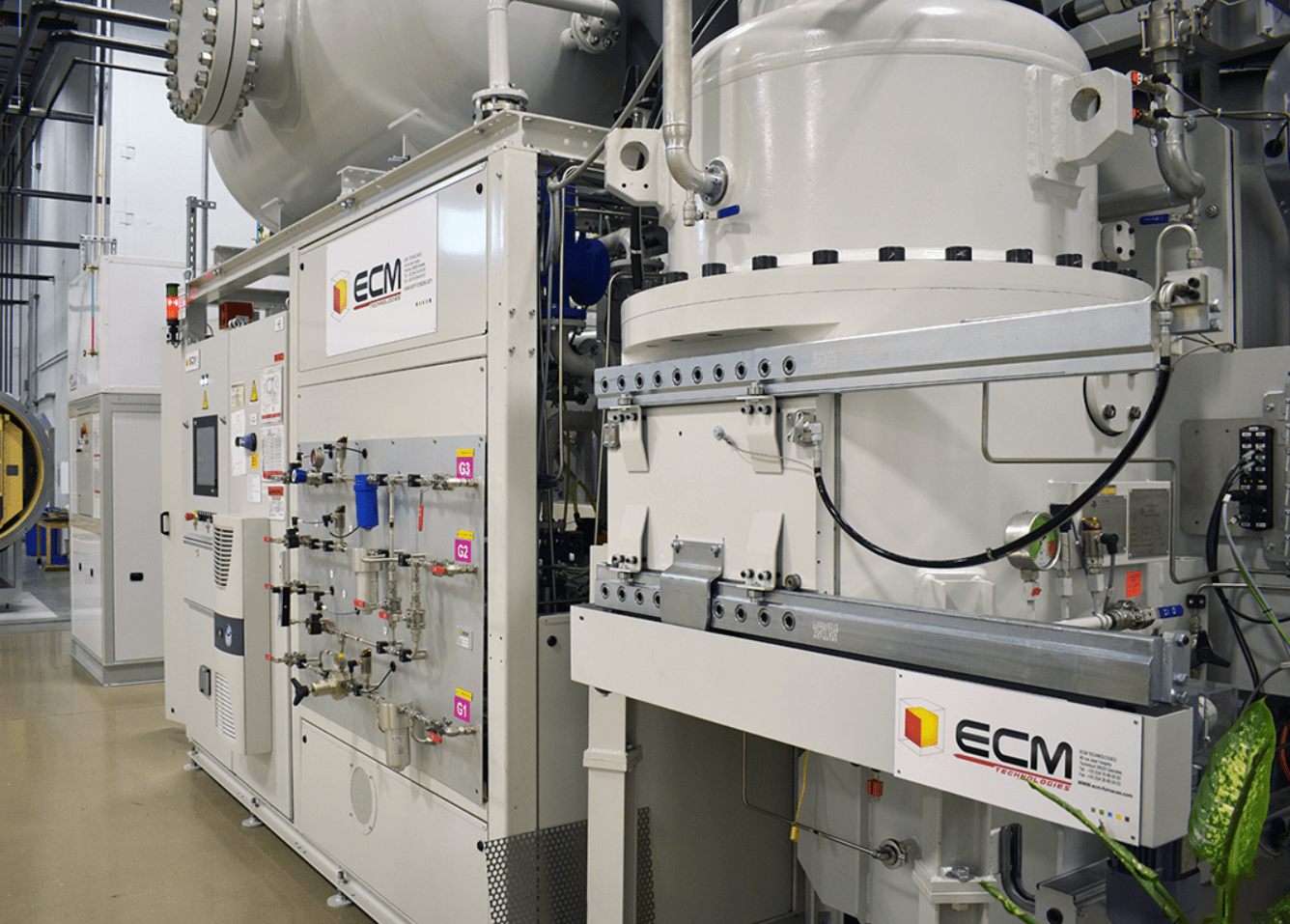
ECM Technologies is our parent company based in Grenoble, France and has been in business since 1924 in many industrial markets and industries, in which it has provided a large quantity of heat processing equipment. Over the years, the company has transitioned from atmosphere furnaces to induction, and now a large volume of the business is vacuum based furnaces. Even though ECM Technologies has large portions of business in other markets, including photovoltaics, semiconductors and vacuum induction systems, your readers would mostly connect ECM with Low Pressure Vacuum Carburizing (LPC or Vacuum Carburizing) systems. With the early successes from this process in Europe, in 1998, they started the subsidiary, ECM USA, in Wisconsin where they started installation of their signature FLEX systems all over North America. These systems are built for high production carburizing with inherent designs to provide ease of start-up and operation and a high level of safety with no flame curtains or a need for endo generators providing a high quality carburized case. These systems also utilize mostly 20 bar high pressure nitrogen gas quenching systems. Today, ECM Technologies is the second largest global vacuum furnace manufacturer with over 700 personnel all over the world.
Earlier this year, “The Monty Heat Treat News” published a list of the 15 Largest Single Location Captive Heat Treaters in North America and the ECM name was very prominent. So prominent in fact that the 3 largest in North America, Ford Sharonville (Ohio), Jatco Mexico, and GKN Driveline (North Carolina) all exclusively have ECM LPC systems – Congratulations! Now tell me why such prominent heat treaters decided on ECM.
Great question and thank you for pointing out these very high quality gear manufacturers as ECM customers. We take pride in surrounding ourselves with these prestigious customers that demand high quality metallurgy and a high level of productivity from their equipment. These customers were not easily convinced by just producing great metallurgy, but also the manufacturing and engineering capabilities needed to be top-notch, the experience that ECM acquired over the years helped to convince them that ECM was their best choice. As I mentioned, with over 700 personnel worldwide, ECM is committed to being close to the customer to support their needs with spare parts and technical support, wherever the customer is based. This was the main reason to open ECM USA and support North America as we have for the last 28 years. These systems, as you mentioned, are producing high quality gearing with 1000’s of parts each day and in some of these vacuum systems for over 25 years. We look forward to supporting them and others for many more years to come.
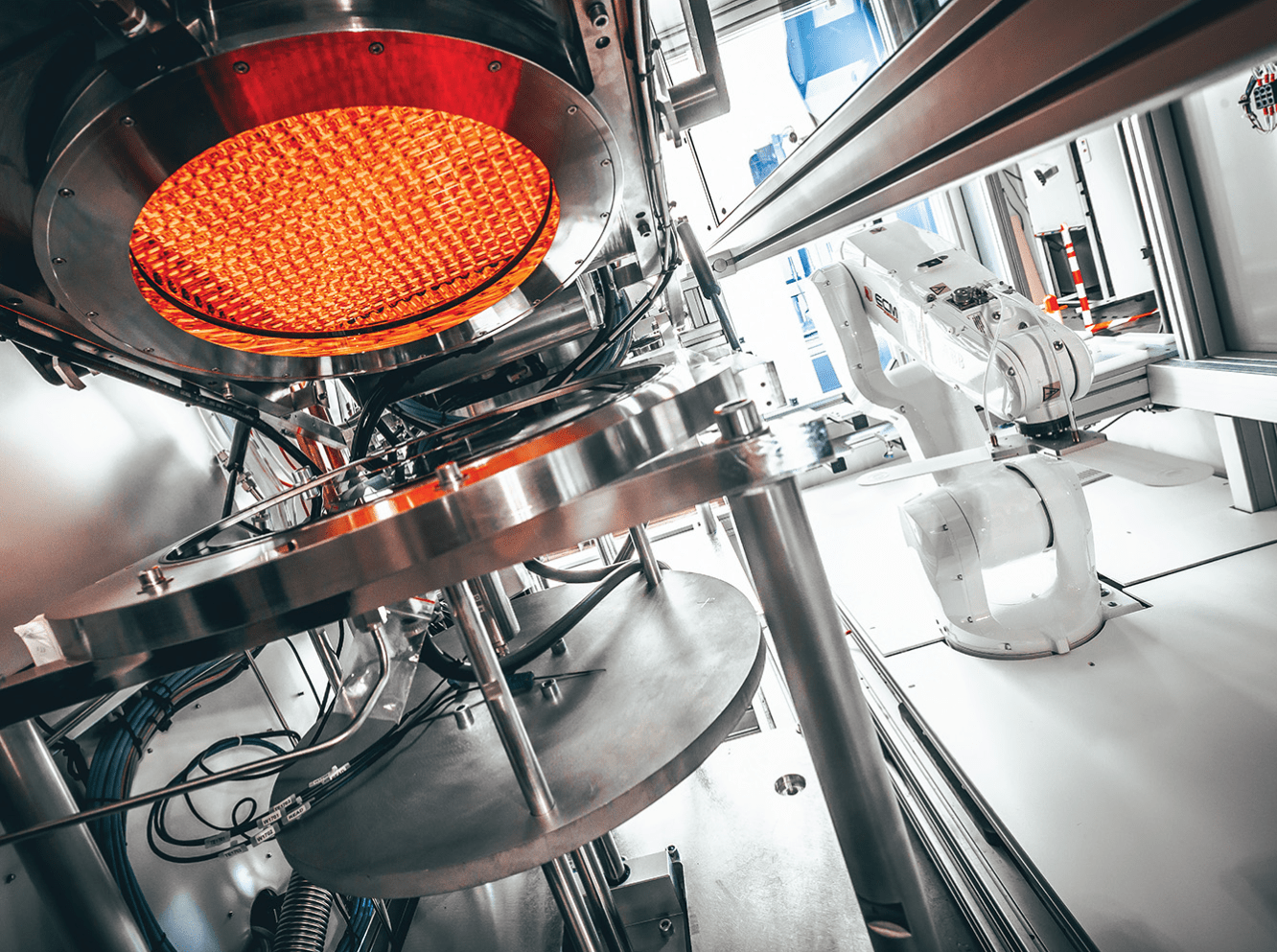
Yes, our signature product is LPC equipment, but it is all based on a modular continuous batch system. We have been manufacturing this product for over 28 years and are still finding new applications for the existing design with only minor modifications. The FLEX, NANO and JUMBO are the main systems of this modular equipment family. These systems are utilized for FNC, sintering, de-gassing, de-binding, hydrogen decrepitation and several other processes. The modular design and the ability to transfer loads under vacuum or partial pressure has a great advantage in the industry where this type of transfer is imperative. Additional equipment we provide is specific for the nuclear industry, such as vacuum induction casting and vacuum induction melting (VIM). The semiconductor industry also relies on our equipment for electrostatic chucks (E-Chucks) and single to multi-wafer processing systems. The product lines are varied, but the one thing that is the same – they are all for high-value and highly precise thermal processing.
Dennis, before we move on from LPC systems I have to say that for many heat treaters ECM is synonymous with the LPC process. Can you tell us how this process evolved and how many systems you have installed around the world?
As some of us may have learned from one of the many presentations given by “The Heat Treat Doctor” Mr. Dan Herring, the Low Pressure Vacuum Carburizing process seems to have evolved in the late 1960’s as a high pressure vacuum carburizing process that ECM eventually tailored into an efficient and highly accurate low pressure process in the early 1990’s. Once this simulation software and process was perfected and proven, several companies lined up for trials and large installations were installed in Europe in the late 1990’s. Since then, we have installed over 400 systems with over 1800 heating cells. And as a highlight, I would like to mention that in 2026 we are happy to celebrate our 500th heating cell installed in North America.
ECM USA is part of a larger global organization; can you explain how the French based ECM Group influences ECM USA and the products offered in the NA market?
ECM Group is our parent organization and is very much a part of ECM USA’s daily lifeline to our product bloodline for technical and manufacturing support. ECM USA represents several of the ECM GROUP brands (Annealsys, Cyberstar, ECM Greentech), and companies (ECM Robotics, SEMCO Technologies) and, of course, ECM Technologies products for sales and service. ECM USA provides marketing, sales and service for all these products in the North American market including any regional input necessary to service our customers.
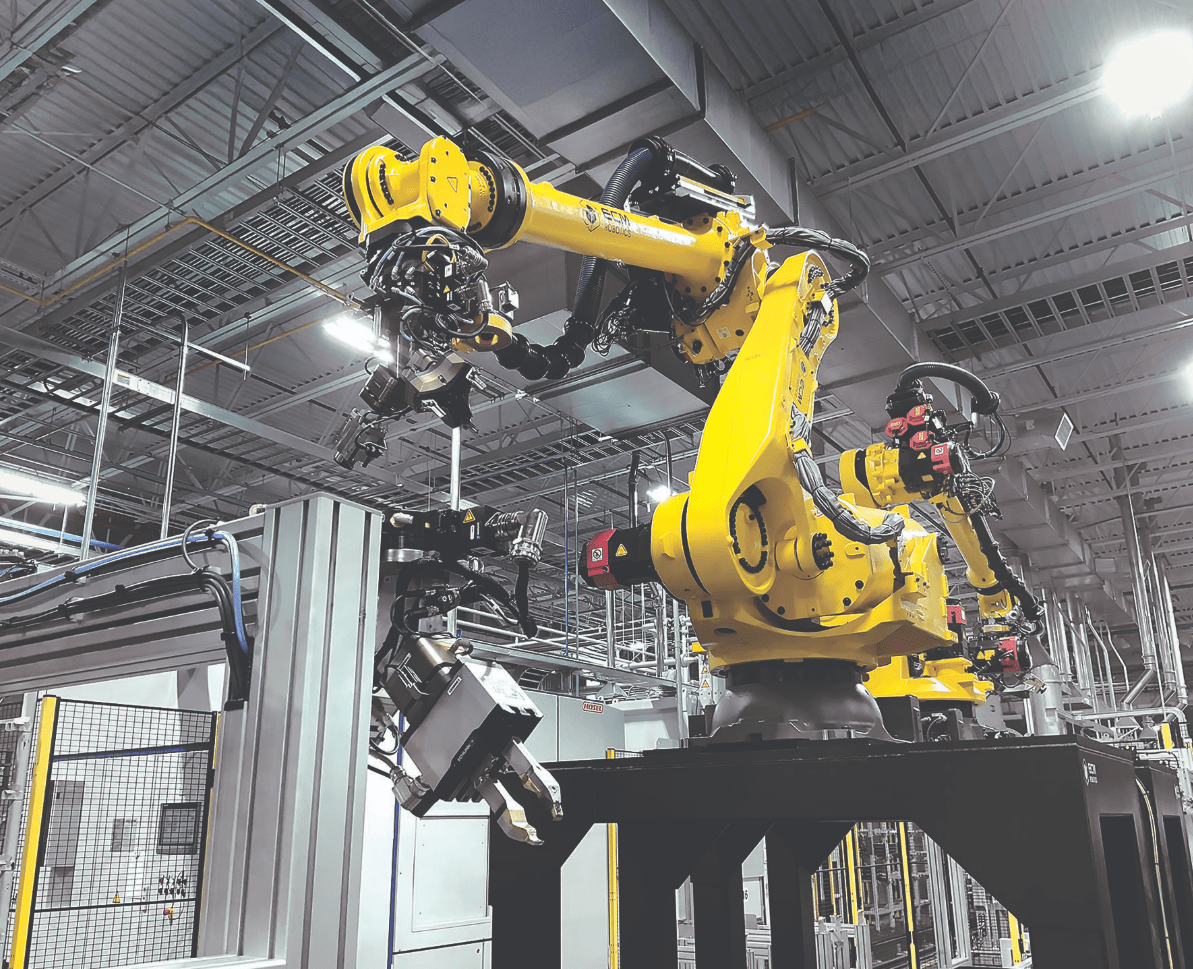
Recently you provided “The Monty” with an article about AI and robotics in the industry-I recall that you were very passionate on these topics. Currently you find few examples for both in the industry – do you feel that these technologies have advanced enough that it will soon be commonplace to see examples of both in our rather conservative industry? Along the same lines do you feel that there might be some reluctance to integrating technologies which can be perceived as taking jobs away?
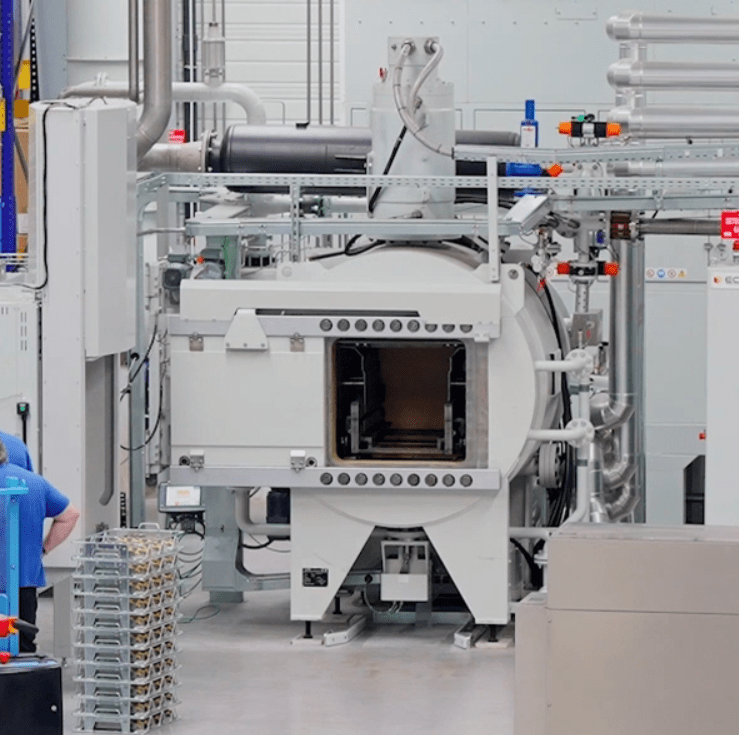
In the previous question I mentioned that the heat treatment industry is rather “conservative”, a statement which I firmly believe to be true. Your offerings, namely modular vacuum systems are a real break from more traditional types of furnaces such as batch IQ furnaces. Why are heat treaters choosing your systems over more technologies that they are more familiar with?
A number of the benefits touted by ECM about your systems revolve around environmental issues such as reduced emissions. Do you think this is a selling point with North American heat treaters? You and I have discussed this in the past and I know our positions are a little different on this question. Personally I don’t believe this is a major consideration with North Americans, but not everybody agrees with me-what are your thoughts?
My thoughts, and what we see from customers, is that most US based customers do not have strict requirements when buying new equipment and reduced emissions. However, more and more pressure is being placed on those doing business with European or large global companies. European companies are now extending their environmental requirements to all part suppliers including those coming from North America. Even smaller heat treaters bidding on parts from European connected suppliers must comply with reducing emissions output. In those situations, it is an important part of their equipment selection. We also see companies that are trying to bring heat treating in-house are choosing cleaner options, such as, a cleaner shop environment and what they exhaust through the roof. As you know, LPC or vacuum carburizing can reduce process CO2 emissions by nearly 90% compared with atmosphere carburizing – with the furnace itself emitting zero. So, yes, in many cases it is a selling point.
How have ECM systems and services paved the way for progressive thinking and advancements in heat treatment?
These systems and services have paved the way by offering a heat treater a much better metallurgical product, along with a workplace that is safer and more flexible than ever before. With the advancement of high pressure gas quenching and gas-quenchable steels, the need for oil quenching has been reduced. Therefore, by eliminating the need for oil, and to replace and clean it up, it has proven to be a huge savings for many heat treat operations. In addition, the ability to automate and be flexible about processes and products has been a huge plus with our systems. In the end, it has definitely changed the mentality of installing a pusher furnace without having the need to provide operational and maintenance support 24/7. The ECM system can be run on a 5 day shift, a single shift or any production schedule without the need for personnel when the equipment is idle. By being idle during holiday vacations, this allows companies to save an enormous amount of energy and labor, as well as, cost savings with alloy fixturing investment.
Per recent ECM advertising, your vacuum furnace technology is “ideal” to replace atmospheric/traditional heat treating technologies – I would suggest that this is a rather “provocative” statement. Can you explain your reasoning on this?
Provocative or not this is what has been happening for the last 28 years! Every major automotive manufacturer has now implemented low pressure vacuum carburizing as their choice for carburizing in North America. Customer after customer that has replaced atmosphere carburizing with LPC has seen an improvement in operational and metallurgical quality. These improvements are just not possible with how atmosphere systems operate. I am not saying that it will replace ALL atmosphere heat treating equipment, but, in most cases, it can. Everyone currently using atmosphere carburizing equipment should take a hard look at low pressure vacuum carburizing and how it can benefit their product and daily operation.
Beyond your technology, what are other factors you can apply to the success of ECM in North America?