
Since joining UPC as a Technical Sales Engineer, Bill has quickly established himself as a trusted advisor to customers and colleagues alike. His extensive background in industrial equipment, thermal processing, aftermarket services, technical sales, and customer support has enabled him to make an immediate impact across the organization while helping customers solve complex operational challenges.
Throughout his career, Bill has built a reputation for developing long-term customer relationships, delivering practical technical solutions, and leading initiatives that improve customer satisfaction and business performance. His experience spans technical proposals, aftermarket operations, customer support, and cross-functional leadership, providing him with a comprehensive understanding of both customer needs and industrial manufacturing operations.
As Technical Sales Manager, Bill will help lead UPC’s sales organization by supporting strategic sales initiatives, business development, customer engagement, and team performance. Working closely with the company’s sales, engineering, service, and leadership teams, he will help strengthen collaboration across departments while ensuring customers continue to receive the technical expertise and responsive support that have become hallmarks of United Process Controls.
“Bill has consistently demonstrated the technical expertise, professionalism, and customer-first mindset that defines our organization,” said Tracy Dougherty, President of Sales and Service. “His ability to understand our customers’ challenges, develop practical solutions, and build lasting relationships make him an outstanding choice for this leadership role. We are excited to see Bill continue contributing to the growth of UPC while helping our customers succeed.” Bill’s promotion reflects United Process Controls’ ongoing commitment to investing in talented leaders who understand both the technical and business aspects of the thermal processing industry. By developing leadership from within, UPC continues to strengthen its ability to deliver innovative products, technical expertise, and exceptional customer support to manufacturers throughout North America and around the world.
As manufacturing continues to embrace greater automation, digitalization, and process optimization, experienced technical leaders play an increasingly important role in helping customers improve efficiency, product quality, and operational performance. Bill’s knowledge of industrial processes and customer applications will further enhance UPC’s ability to support manufacturers as they navigate these evolving challenges.
Please join everyone at United Process Controls in congratulating Bill Ulrich on this well-deserved promotion and wishing him continued success in his new role.”

“AUGUST 2, 2026The AICHELIN dual-chamber continuous furnace at SEW-EURODRIVE Germany has been operating reliably in continuous service for many years. Regular maintenance and targeted modernization measures by AICHELIN Service GmbH ensure that the system always remains at the cutting edge of technology.


The overall facility covers many acres, the heat treat department is relatively new-the furnaces you see below are approximately 10 years old were built and installed by Aichelin. What you see are multi chamber batch furnaces with oil quenching designed for case hardening of gears and shafts along with washers, tempers, charge cars, shotblasting equipment and a very complete lab-in short everything required to run a state of the art heat treating department. Even a cursory glance at these pictures will show you that this is a meticulously maintained heat treat which is very much in line with the whole plant. While this installation is fairly typical of the heat treat department of a major gear manufacturer we will also say that this is a finer example than many. May 18, 2020″


As Vice President of Operations, Mr. Tabor will be responsible for leading and optimizing the company’s operational functions, with a focus on operational excellence, process optimization, product quality, and customer satisfaction. He will oversee all aspects of manufacturing and quality management while helping expand the company’s market presence and strengthen strategic partnerships that support long-term growth.
Mr. Tabor brings nearly two decades of leadership experience in the steel and industrial manufacturing sectors. A dynamic and results-oriented manufacturing executive, he has built an impressive career leading manufacturing operations, plant performance, cross-functional teams, and strategic initiatives in high-volume, safety-critical environments. His expertise includes strategic planning, lean manufacturing, process and product development, capital project execution, and developing high-performing teams and cultures.
Prior to joining Aalberts Surface Technologies, Mr. Tabor spent nearly 20 years with Gerdau, most recently serving as Vice President of HR, IT & Downstream Operations. During his last eight years with Gerdau Special Steel North America, he held executive leadership roles and helped advance operational performance and organizational effectiveness.
“We are excited to welcome Adam to Aalberts Surface Technologies,” said Mr. Wyatt. “Adam is an outstanding addition to our team. His combination of operational expertise, strategic leadership, and passion for building high-performing organizations makes him an exceptional fit for our business. We are confident his experience and vision will help accelerate our continued growth, strengthen our operational capabilities, and deliver even greater value to our customers and employees. We look forward to the leadership and fresh perspective he brings to our organization.” Mr. Tabor expressed his enthusiasm for joining the company and contributing to its continued success.
“I am excited to join Aalberts Surface Technologies and become part of an organization known for its commitment to innovation, operational excellence, and customer partnerships,” said Mr. Tabor. “I look forward to working alongside our talented teams to build on the company’s strong foundation, continue enhancing our operational capabilities, and support the next phase of growth for the business.”
Mr. Tabor earned a Bachelor of Science in Materials Science & Engineering (Metallurgy) from Michigan State University and a Master of Business Administration from Walsh College.
About Aalberts Surface Technologies. Aalberts Surface Technologies – HIP | Braze | Heat Treatment is a global leader in advanced heat treatment, brazing, and hot isostatic pressing (HIP), providing innovative solutions that enhance the performance, durability, and reliability of customer components across a wide range of industries. Aalberts Surface Technologies is part of the industry segment of the worldwide leading and globally positioned technology company Aalberts N.V., which has 123 locations worldwide and 13,000 employees. With a commitment to quality, innovation, and operational excellence, Aalberts Surface Technologies partners with customers to solve complex manufacturing challenges and create lasting value.
“AI; Controlled Atmosphere Brazing (CAB) is an industrial metal-joining process where multiple components are bonded together using a molten filler metal inside a furnace devoid of oxygen. By replacing ambient air with an inert or active gas mixture (typically nitrogen, hydrogen or argon), CAB prevents metal oxidation at high temperatures. This allows the molten filler material to flow smoothy into tightly fitting joints via capillary action, creating exceptionally strong, leak proof and aesthetically clean metallurgical bonds.”

This is the first contract between SECO/WARWICK and this customer. RASA, however, was already familiar with the Group’s technology through CAB equipment operating at other manufacturers in Turkey.
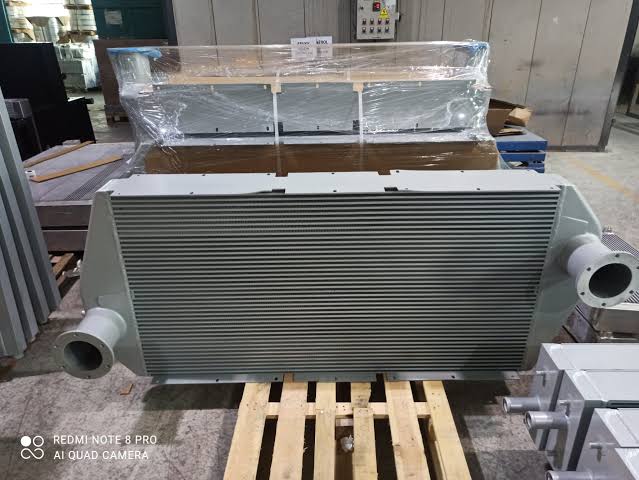
The new furnace will be used primarily for brazing large heat exchangers in the recommended vertical position. Thanks to its universal design, it will also enable the processing of standard fin-tube exchangers and plate heat exchangers. The scope of delivery will include a CAB batch furnace with a dryer, a final cooling chamber, and an external transport system.
The Turkish plant’s investment is connected with expanding production capacity, building a new facility, and broadening its product portfolio. Heat exchangers for the heavy-duty, aftermarket and industrial markets require flexible technology because individual products differ in geometry, weight, size and process parameters. In such conditions, brazing quality matters, but so does the ability to quickly adapt the equipment to changing product types.

CAB technology, (Controlled Atmosphere Brazing), is one of the key processes in the industrial production of aluminum heat exchangers. It enables durable, leak-tight, and repeatable aluminum joints to be produced in a controlled protective atmosphere. For manufacturers of radiators and heat exchangers, this translates into stable quality and greater process predictability.
The importance of such technologies is growing along with the thermal management market. According to available analyses, the global heat exchanger market is expected to grow in the coming years, driven in part by demand for energy efficiency and the development of industry, transportation, energy and cooling systems. Requirements are also increasing for heat exchangers used in vehicles, work machines, industrial installations and drive systems, where reliable cooling has a direct impact on the operation of the entire system.
(Editors Note; This interview refers several times to the recent acquisitions of Visual Shop/Cornerstone and Bluestreak. Details of these acquisitions can be found at Major Acquisitions for Heat Treatment Software Supplier).
The reported acquisitions of Visual Shop/Cornerstone and BlueStreak have created uncertainty for heat treaters that rely on those systems. The Monty’s Gord Montgomery spoke with Sefi Grossman of Combustion OS about his thoughts in this changing market for heat treaters. His company and product, Combustion OS, offers a heat-treat-specific operating system can take an operation well beyond a traditional ERP.
GORD: Hello Sefi, it seems this interview is very timely with the buzz going on, but first, how did you get into this business of heat treating and software for heat treaters?

Our journey into heat treating started when we connected with a local commercial heat treater that was looking for something custom beyond Visual Shop. They needed a more modern, flexible solution that could adapt to their operation instead of forcing their operation to adapt to the software. As we immersed ourselves in the industry, we realized this wasn’t an isolated challenge. We saw a significant technology gap across heat treating, with many facilities relying on legacy systems that hadn’t evolved alongside today’s manufacturing, automation, and data capabilities.
That realization sparked something bigger than a single customer project. Together, we decided to invest in understanding the industry, working alongside heat treaters, and building technology specifically for their needs. That journey ultimately led to Combustion OS—a platform built to help move the heat treating industry forward with modern software, automation, and real-time operational visibility.
GORD: Sefi, I am hearing a lot of “buzz” about the two major heat treat operations software platforms being merged. There seems to be some concerns out there. What are you hearing from heat treaters?
SEFI: First, Visual Shop and BlueStreak have served this industry for many years, and many successful heat-treating companies depend on them every day. This is not about criticizing those products or the people who built them.
What I am hearing now is uncertainty. Shops are trying to understand what will happen to the systems they currently use, what their future deployment choices will be, and whether they will be required to move to a different platform or commercial model.
There are also broader efforts underway within the industry to evaluate alternatives. I think that is healthy. Changing a core operating system is a major decision, and companies should be able to compare platforms, deployment models, transition plans, and long-term relationships before committing.
I do not want to speculate about another company’s intentions or repeat every rumor circulating in the market. But concerns about migration pressure, pricing, cloud-only delivery, and year-end timelines are clearly causing shops to take a closer look at their options.
Our message is simple: customers deserve a choice. Combustion OS can preserve the functionality they rely on today while giving them a much broader path forward.
GORD: For someone hearing about Combustion OS for the first time, is it another ERP system?
SEFI: It can perform the core functions shops expect from an ERP, but that is only the starting point.
Combustion OS supports the complete lifecycle from quoting through invoicing. That includes customer and part history, receiving, recipes and process control, scheduling, lot tracking, quality documentation, certifications, shipping, invoicing, and accounting integration.
That parity is important because a company cannot improve its operation if the transition disrupts the work it already performs every day. We first have to make sure the essentials are handled correctly.
From there, Combustion OS reaches much deeper into the operation. It connects the job to the process, equipment, employees, documentation, quality requirements, maintenance, laboratory work, training, and management information surrounding it. That is why we call it an operating system rather than simply an ERP.
GORD: What makes it specific to heat treating?
SEFI: Heat treating has its own language, risks, equipment, documentation, and process requirements. A generic manufacturing ERP may be able to rename fields, but that does not necessarily mean it understands how a heat-treating operation works.
Combustion OS was built around heat treating. We understand that the same part can have different recipes, specifications, approvals, testing, and certification requirements. We understand furnaces, loads, lots, process parameters, pyrometry, traceability, and the importance of preserving exactly what happened to a job.
We can also connect directly with equipment, PLCs, scales, scanners, printers, and other shop-floor devices. Instead of treating production as a separate world, the system can connect what was planned, what the operator did, and what the equipment recorded.
Every heat-treat shop is also different. Our job is not to force all of them into one rigid workflow. We start with proven heat-treat building blocks and configure them around how each shop actually operates.
GORD: On August 20, you will be speaking at the Artificial Intelligence in Heat Treat Executive Seminar near Pittsburgh. Can you give us a sneak peek at what you will be talking about?
SEFI: The seminar is being presented by Wingens Consultants in partnership with HTT, and it brings together experts from heat treating, robotics, process control, cybersecurity, law, and artificial intelligence.
My part of the conversation will focus on practical AI in heat treating. There is a lot of excitement surrounding AI, but I want to show where it can create value in a real operation today, where human review remains essential, and why AI becomes much more useful when it is connected to the operating system instead of being treated as a separate novelty.
That is the same approach we are taking inside Combustion OS: using AI to remove repetitive work, improve consistency, and help people make better decisions.
At receiving, AI can read bills of lading and customer paperwork, identify relevant information, and use it to help create the work order. An employee validates the information before it becomes part of the permanent record.
For training, the system can use a company’s approved procedures and documents to generate quizzes and reinforce understanding. Managers remain responsible for reviewing and approving the material.
AI-assisted quoting is also available today. It can help interpret incoming quote requests, organize requirements, identify relevant historical information, and prepare the foundation of a quote for review. The goal is to reduce the time spent gathering and re-entering information while preserving human responsibility for pricing, process selection, and final approval.
We are also applying local and edge-based machine learning to equipment and process information where appropriate. That creates opportunities to identify patterns and unusual conditions without requiring every piece of operational data to leave the customer’s environment.
The important point is that AI does not replace accountability. It assists the person doing the work, while the employee or manager remains in control of the decision.
GORD: How far beyond traditional ERP does the system extend?
SEFI: Production is central, but a heat-treating company is an entire connected operation. Combustion OS can support employee readiness and training, preventive maintenance, laboratory activity, quality systems, document control, dashboards, and operational KPIs.
Each recipe has data points and the data coming from the machine can help make critical decisions in quoting and pricing and even scheduling. That connection allows the system to surface relationships that are easy to miss. Is a recurring delay (furnace not loaded or unloaded, for example) related to a particular process, equipment issue, documentation requirement, or training gap? Are people spending time coordinating something that could be automated? The more of the operation that is connected, the better the opportunity to understand and improve it.
GORD: Some shops want the cloud, while others want their system kept inside the facility. What choices do you offer?
SEFI: Combustion OS can be deployed in the cloud, on premises, or in a hybrid model. The correct choice depends on the customer’s operation, security requirements, infrastructure, and tolerance for an internet interruption.
Cloud hosting can be very effective. But a plant should not lose the ability to receive work, run equipment, or ship product because its internet connection is down. An on-premises or hybrid design can keep critical functions operating locally while still supporting secure remote access and cloud services where they add value.
Local or carefully designed hybrid deployment can also make CMMC compliance easier for customers performing government or Department of Defense work. Keeping sensitive data and critical operations inside a defined, controlled environment can simplify the system boundary, reduce unnecessary exposure, and make access controls and audit evidence easier to manage.
It does not make a company CMMC compliant by itself, but it can provide a cleaner foundation for meeting those requirements.
The customer also owns its data. We are not interested in trapping a customer by making its information inaccessible. The system uses an open SQL foundation, and the deployment should support the customer’s operational and security needs.
GORD: Can a Visual Shop or BlueStreak customer realistically transition before the end of 2026?
SEFI: For a qualified shop, yes. But it has to be approached carefully, and we would never promise a date without understanding the scope and condition of the data.
We begin with a confidential transition review. We map what the shop uses today and divide it into three groups: what must be there for day one, what should be improved during the transition, and what can follow later.
For many shops, the initial core is receiving, inventory, shipping, invoicing, and light scheduling. We map and validate the data, preserve necessary history, test the business rules, train operators, and run the new system in parallel before cutover. Depending on scope and customer participation, that initial phase may be achievable in roughly 60 to 90 days.
Our objective is to create an “easy button” for the transition—not by pretending migration is effortless, but by doing the difficult mapping and validation work up front. Qualified shops can go live before December 31, 2026, provided we have timely data access, a controlled scope, and active customer participation.
GORD: We have talked extensively about the system, but tell us about the company and the people behind Combustion OS.
SEFI: Combustion OS is built on our Alpha platform, which, simply explained, is an enterprise systems builder that we have developed and continuously enhanced over the past 11 years. Alpha gives us a mature, stable foundation for building connected business and operational systems without having to start from scratch each time.
We used that foundation to create Combustion OS specifically for heat treaters. That distinction is important: the underlying platform has been developed and proven over many years, but Combustion OS has a deliberately narrow focus. We are not trying to build generic software for every industry. We work directly with heat treaters, listen to the problems they are trying to solve, and build practical tools around how their people and processes actually work.
I am a problem solver by nature. I enjoy walking into an operation, talking with the people doing the work, and finding the places where better information, software, or automation can make their jobs easier. Our team shares that mindset. We have people who build software, connect equipment, map workflows, and work directly with operators and management. The technology matters, but understanding the operation comes first.
We are privately owned and are not controlled by venture capital or private equity. That allows us to make decisions based on what creates lasting value for our customers instead of following an investment timetable or forcing every shop into the same commercial model.
We believe this is a marathon, not a sprint. If a customer needs us to sprint during an implementation, we will sprint with them. But the relationship is intended to last for years. We expect to keep learning from the customer, improving the system, and finding opportunities together long after the initial go-live.
We also do not want customers afraid to give another employee access because every login creates another fee. Software should help knowledge move through the company. Our goal is to become a trusted, long-term partner—one that understands the shop and continues helping it improve, not simply a vendor that installs software and disappears.
GORD: You have said that some of your best ideas came from mistakes. Can you give us an example?
SEFI: Absolutely. One of our biggest breakthroughs began as one of our biggest misses.
We were developing the first version of what became our Process Control and Recipe Sheet. The customer gave us five example parts, and we built a slick web interface around them. We went away for about a month, came back, and demonstrated it. The customer loved it.
Before we left, though, they asked one simple question: “How do we adapt this to the other 500 variations?”
My heart sank. We had built five very nice solutions, but we had not built a scalable system. I left that meeting feeling defeated.
Once I got past that feeling, the failure forced us to look at the problem differently. Instead of programming a separate screen for every variation, we developed what became our Alpha form system: a flexible, key/value-driven visual system that can reproduce a customer’s existing forms and workflows almost exactly.
That solved more than the original problem. Because the digital forms look familiar, training became nearly seamless. The system could also maintain value history, revisions, validations, approvals, and audit trails—things paper forms could never do reliably.
What looked like a huge miss became one of the crown-jewel modules of Combustion OS.
It also changed how we work. Five examples may show you what a process looks like, but they do not necessarily reveal the system behind it. Today we spend much more time looking for the variations, exceptions, and edge cases before deciding how something should be built.
You cannot improve a process you have only seen in a conference room. You have to understand how the people doing the work actually use it, where it changes, and why those differences exist.
GORD: Can you share an example of finding an improvement the customer had not necessarily recognized?
SEFI: At one operation, experienced people were manually coordinating furnace activities that the system could coordinate automatically. As we studied the workflow, we uncovered a significant labor-savings opportunity by connecting the equipment, schedule, process rules, and operator actions.
We are implementing that automation now, so I would not present the savings as a completed result yet. What the analysis revealed was how much time the shop was spending simply keeping information moving and coordinating routine decisions manually.
The opportunity is not just about reducing labor. It is about reducing the shop’s dependence on a few individuals carrying the operation in their heads. As the new workflow is implemented, those experienced people will be able to spend more time handling exceptions, improving quality, and optimizing the process instead of constantly keeping the basic workflow moving.
That is the difference between digitizing paperwork and improving an operation.
We are not trying to reproduce every old step on a screen. We want to understand why the step exists and whether software, automation, or AI can make the work simpler, safer, and more useful.
GORD: What should a Visual Shop or BlueStreak customer do if they are evaluating their options?
SEFI: Do not panic, but do not wait until the last minute either. Start by documenting the workflows, data, integrations, and historical information your operation depends on. Then take the time to understand what your real options are.
We will be at Furnaces North America in Indianapolis in mid October. If you would like to see whether Combustion OS could support your operation and provide a realistic transition path, go to CombustionOS.com and click “Book a Demo.”
We will take the time to understand your shop, show you what the system can do today, and discuss what a safe transition could look like. It is a working conversation—not a high-pressure
GORD: With today’s AI tools, what are your thoughts about “vibe coding” – or having someone’s nephew build a custom system as an alternative?
SEFI: The AI development tools available today are incredible. We use them ourselves to accelerate onboarding, integrations, testing, and development. In experienced hands, they can make a strong team much faster.
The risk is confusing speed with simplicity. A vibe-coded application may look great and work well during the initial demonstration. Problems appear when it encounters a situation nobody prompted for – a process exception, conflicting data, a security requirement, an equipment failure, or one of the hundreds of variations that exist in a real heat-treat operation.
If the person who created it does not understand what is happening inside the black box, troubleshooting and maintaining it can become difficult very quickly. In our industry, software also has to preserve traceability, validation, access controls, revisions, and audit evidence. Those responsibilities do not disappear because AI helped write the code.
AI is a powerful development accelerator, but it is not a replacement for experience, architecture, testing, and accountability. Personally, I would not want a vibe coder sitting on the other side of the table from an auditor – but that is just me.

The launch marks the culmination of an 18-month development effort focused on understanding how customers interact with their equipment every day. Throughout the process, Ipsen gathered feedback from operators, maintenance personnel, and management teams to develop a platform that is both intuitive and capable of meeting the evolving needs of today’s heat treaters.

Before its public release, ICON was evaluated in demanding production environments, including a leading commercial heat treater and a global aerospace manufacturer. Feedback from both organizations helped refine the platform and confirmed its ability to deliver an intuitive user experience while supporting the high standards required in critical heat-treating applications.

Customers interested in learning more about ICON are encouraged to contact their Ipsen sales representative or email [email protected]. Additional information is available at ipsenicon.com.


The Diffusion Group of Companies has completed its acquisition of Hi-Tech Steel Treating, a long-established commercial heat-treating operation based in Saginaw, Michigan. The acquisition marks another important milestone in the group’s growth strategy and further strengthens its position in the North American heat-treating market.
Founded in 1983, Hi-Tech has become a trusted commercial heat-treating provider for manufacturers throughout Michigan and the surrounding region. The company offers a broad range of thermal-processing services, including annealing, carbonitriding, induction hardening, flame hardening, stress relieving, straightening, steam treating, and other specialized processes. Hi-Tech is ISO 9001:2015 certified and CQI-9 compliant, serving customers across automotive, manufacturing, tooling, heavy equipment, medical, and industrial sectors.
The acquisition reflects Diffusion’s approach of partnering with respected businesses that have strong cultures, skilled employees, loyal customers, and proven operating histories.
“Hi-Tech represents exactly the type of company we want to build alongside,” said Tim Thompson. “It has experienced people, deep customer relationships, and a history of doing challenging work well. We have tremendous respect for what the ownership group and employees have built over the past four decades, and we’re proud to carry that forward.”
Diffusion would like to acknowledge and thank the ownership group of Jim Stone, Kevin Stone, Tom McGrandy, and Chris Muscott for the trust they have placed in the organization. Their discipline and stewardship helped establish Hi-Tech as one of the region’s most respected commercial heat-treatment providers.
Operational continuity remains a priority. Hi-Tech’s employees, leadership team, customer relationships, and day-to-day operations will continue without disruption. The immediate focus is learning from the organization’s experience and identifying practical opportunities to strengthen the business over time.

Looking ahead, Diffusion intends to draw on the group’s collective operating experience to support Hi-Tech’s next stage of growth. The company’s established position in the Michigan manufacturing market, combined with the resources of the broader organization, creates opportunities to improve systems, expand capabilities, and continue delivering value to customers.
Building a North American Heat-Treating Platform
The acquisition of Hi-Tech Steel Treating represents another milestone in Diffusion Group’s strategy of acquiring and developing high-quality thermal-processing businesses. Rather than consolidating facilities or centralizing operations, Diffusion focuses on preserving the strengths of each company while creating value through shared expertise, stronger systems, targeted investment, and leadership development.
Diffusion seeks out companies that have earned customer trust, built strong community roots, and demonstrated a lasting commitment to doing the work well. By bringing experienced operators together under a common ownership structure, the group can provide additional resources while preserving the local identity and culture that made each business successful.
“Our vision is bigger than any single facility,” Thompson added. “There are many exceptional heat-treating businesses across North America that have been built by entrepreneurs and families over generations. We want to partner with owners who care deeply about their employees, customers, and legacy, and provide a home where those values can continue. Hi-Tech is an important step, and we expect it will not be the last chapter in Diffusion’s growth story.”
With operations now spanning British Columbia, Michigan, and New York, Diffusion continues to expand its footprint while maintaining a disciplined focus on technical execution, employee development, and durable value creation. Across the group, Diffusion is positioned better than ever to meet customers’ quality, delivery, and technical-support needs through a broader North American platform of specialized thermal-processing businesses. By combining local operating strength with shared expertise, ongoing investment in cutting-edge technology, stronger systems, and process intelligence, Diffusion can deliver better service, stronger quality control, and more consistent results for customers. Supported by a fleet of trucks capable of covering thousands of miles across regions, the group can respond with the reliability, reach, and delivery performance manufacturers depend on.
About Diffusion; The Diffusion Group is a privately held industrial holding company focused on building a North American platform of heat-treating, metallurgical, and thermal-processing businesses.
With the addition of Hi-Tech Steel Treating, the group’s operating companies now include:
Precision Heat Treat (PHT) – Surrey, British Columbia (established 1989). One of Western Canada’s leading commercial heat-treating providers, serving aerospace, defense, transportation, manufacturing, tooling, mining, and industrial customers.
Nitrera Technologies – Surrey, British Columbia (established 2012). A specialized provider of nitriding, metallurgical consulting, laboratory testing, process engineering, and advanced surface-treatment technologies.
Rochester Steel Treating Works (RSTW) – Rochester, New York (established 1932). One of the oldest commercial heat-treating operations in the northeastern United States, serving aerospace, defense, medical, automotive, tooling, and industrial customers.
Hi-Tech Steel Treating – Saginaw, Michigan (established 1983). A respected Midwest commercial heat treater offering annealing, carbonitriding, induction hardening, flame hardening, stress relieving, and specialty thermal processing services.
Together, these companies offer heat treating, nitriding, metallurgical services, laboratory analysis, process engineering, quality support, and specialized thermal-processing capabilities across Canada and the United States.
The addition of Hi-Tech expands Diffusion’s presence to facilities in British Columbia, Michigan, and New York, creating a cross-border group capable of supporting customers throughout North America.
The company continues to pursue partnerships with exceptional businesses that share its commitment to quality, reliability, technical excellence, and responsible stewardship.
(This Sale Was Facilitated by “The Monty Heat Treat News”)


CVI reported orders for multiple vacuum induction melting furnaces, as well as two large-format vacuum hot presses for aerospace filtration and advanced ceramics. The company also received orders for Sintervac furnaces used in tungsten carbide and nuclear fuel sintering, together with furnaces for the production of tungsten heavy alloys, nuclear space fuel and the heat treatment of titanium additively manufactured parts.
Additional orders included Testorr furnaces for the physical testing of hypersonic carbon fibre composites (CFCs) and four LF furnaces for processing advanced carbon and graphite materials at temperatures up to 3,000°C, nuclear fuel materials development, and the metal sintering of medical components.
Bookings also remained strong during the first two quarters of 2026, reportedly giving the company one of the largest order backlogs in its history.
Founded in 1954, Centorr Vacuum Industries is celebrating its seventy-second anniversary as a manufacturer of high-temperature vacuum and controlled-atmosphere furnaces. The company has an installed base of more than 7,000 machines worldwide. It also operates a fully staffed aftermarket field service group and an Applied Technology Center providing research and development support and toll production services.”

 Visual Shop and Bluestreak Join Forces with Steelhead Technologies
Together, the three industry leaders bring decades of heat treating expertise to one platform built for margin and growth
“Calumet, MI – Steelhead Technologies announced today the acquisitions of Visual Shop and Bluestreak, two longstanding providers of job shop management and QMS software. Customers of all three companies now have access to next-generation technology to help them get ahead: an all-in-one system built on a digital production floor, with automation and AI built in to power margin and growth.
For years, Steelhead, Visual Shop, and Bluestreak have earned the trust of heat treating and metal finishing job shops across North America by delivering systems designed with the specific complexities job shops face in mind. Now these systems are joining forces. Customers are getting the best of each: the digital production floor, the industry knowledge, and the people who understand their business.

— Jeff Halonen, CEO/Co-Founder, Steelhead Technologies
Continued Investment in Heat Treating
Steelhead is accelerating its investment in heat treating to position heat treating job shops for the next generation of manufacturing, including investing in FedRAMP to meet the security and documentation standards CMMC compliance requires, and dedicating engineering, support, and product resources to fine-tune heat treating workflows such as furnace calibrations, operator certifications, sample testing, and sensor integrations. Customers will benefit from direct access to the people who know heat treating inside and out, drawing on the long-standing experience at Visual Shop and Bluestreak.

— Kevin Pluedeman, President of Cornerstone Systems (Visual Shop)

— Todd Wenzel, President and Founder of Bluestreak

— Mary Springer, Executive Vice President, ThermTech
Customer Perspective

“With Steelhead, if we need a job pulled for review in a Nadcap audit, we can look it up and have all the data right there. We don’t have to train someone with a background in metallurgy or heat treat to enter a job anymore; anyone can do it. That efficiency shows up everywhere: our lead times used to run a couple of weeks, now we’re down to ten days, and parts we used to store for ten to twelve days now move through in five to seven.”
— Vraj Shah, Quality Manager, Exactatherm
About Steelhead Technologies
Steelhead is the technology partner for heat treaters, metal finishers, and fabricators, providing an AI-powered ERP built to help job shops get ahead by powering margin and growth. Built with the production floor in mind, its ease of use enables real-time tracking of every process, giving management teams the data they need to make better decisions, faster. Learn more at gosteelhead.com.”