From the Induction heating world we have this interesting press release. “The Monty” will be following this story up with a visit to “Interpower” this upcoming week;
“ALMONT, Mich. – Interpower Induction is pleased to announce its recent acquisition of KVA Induction, furthering the reach of the world supplier’s manufacturing of induction heating equipment. The Interpower Induction group of companies now includes eight locations. Five locations are in Michigan, and three international operations are in the United Kingdom, Mexico, and India. Founded in 1983, KVA Induction has been an innovative force in the induction heating industry and will immediately serve as a primary hub for Interpower’s heat treating equipment, inductor / coil manufacturing, and heat treat development laboratories.
KVA’s heat treat reputation, agility, and growth potential were key factors leading to Interpower’s interest and acquisition.
“We believe that adding KVA Induction to our group will allow us to extend our range of induction heating machines,” said Interpower Induction President Gary Gariglio. “We look forward to working closely with the commercial heat-treating market.”
Did you like this article? Click here to subscribe to The Monty.
The link below will take you to the August 2024 edition of “The Monty Heat Treat News” the most recognized name in the Heat Treatment news industry. News items we are looking at include these;
Supplier Named in Faulty Heat Treating of Ball Studs
Bodycote Greenville (SC) Launches New HIP Facility
Barnes Group Installing Heat Treat Department at Swedish Facility
World’s Largest Single Location Commercial Heat Treater
New Hot Isostatic Press Order?
In addition to these news items feel free to browse our used heat treat equipment listings which are updated each and every week https://themonty.com/used-equipment/ Recent additions;
We are very pleased to be speaking today with Mr. Ben Grammer of Grammer Vacuum Technologies (GVT) of Coeur d’Alene, Idaho, USA. Ben and his father Bob have spent their entire lives in the heat treatment industry, a large part of which has centered around “Moly” (Molybdenum). Ben I appreciate the time today.
Thank you, Gord and Jordan. It really is fantastic to be able to sit down and talk moly for a bit—it runs in the family, as you mentioned—my dad spent a large portion of his career helping supply moly to the industry, and I never tire of hearing from people across the USA and the world who routinely ask me to say hello to him. He handed me a great legacy, and moly is a big part of that.
As with all creation, it is enjoyable to discover and study and…well really to revel in the materials we have been given. Molybdenum is not well-known, so it makes a fun study. The name derives from the Greek molybdos, meaning “lead” which is understandable given its grey color and high density. Molybdenum is a metal, and an element with the prestigious (among nerds) atomic number of 42. We get it mainly as a by-product of copper mining. It is a trace element in our bodies, important for processing proteins and DNA and breaking down toxic substances. It is also important for plant growth—some lands are barren if they don’t have enough molybdenum. Its largest use is alloying structural steels…but we deal with the tiny fraction of moly used for high temperature furnace components.
Ben some time back you spoke with us about “Grammer Vacuum Technologies” and the role it plays in the North American heat treat industry, particularly in the Northwest. Today I would like to be more specific and talk about the “Moly” portion of your business. I have been a little vague when I say “moly” business, perhaps you could tell us what you offer and how it evolved.
In short, we offer a large inventory of molybdenum and its alloys, in the form of mill products, custom parts and fixtures. The business has grown organically as we have served one customer after another over the years, and with my dad’s previous knowledge of the moly business specifically, we have been able to provide knowledgeable service from the start.
Chances are that all or virtually all of our readers with any involvement at all with vacuum heat treating will know what “Moly” is and why it is used. However the atmosphere guys might not be as familiar with this exotic material. Could you tell us why “moly” is used in the industry?
Gord, when I say, “I sell moly” many don’t know how to respond, for sure! It has a melting point of 4753°F, so it retains its strength at temperatures where stainless steels cannot go…as long as it is under vacuum or a clean protective atmosphere. It doesn’t mix with air when heated above a few hundred degrees. Or rather, it mixes too well.
So why is it used? The strength at high temperatures leads to use in load-bearing applications. An advantage moly has over graphite is that moly is not porous—does not absorb moisture and other vacuum contaminants like graphite does. So it is used when a cleaner vacuum atmosphere is needed. And where is it used? Fixtures? Heating elements? Hot Zones?
Hearth posts and hearth bars are often moly. Heating elements too, even in furnaces where the remainder of the hot zone is graphite. All-metal hot zones are rare in comparison to graphite hot zones, but still numerous nonetheless. The heat shields, element retainers, and other hot zone parts are often moly in these furnaces.
Moly fixtures, such as single or multi-level grids, can be used to attain a higher temperature than stainless alloy grids—stainless is not often used above 2000°F, where moly grids excel. Moly like cast materials does see reduced strength at higher temperatures. As an example TZM at 3000F has 25% of the strength that it has at 2000F.
Life. All heat treaters are well aware of the fact that alloy components and fixturing have a definite life span which is usually measured in terms of 5 years or less depending upon temperature, atmosphere and a few other factors. What is an expected life span for “moly” components?
Temperature and handling affect the life of moly components. Pure moly recrystallizes with extended use at or above ~2000°F and so becomes brittle, susceptible to cracking from rough handling. TZM moly alloy resists this embrittlement and recrystallizes at or above ~2500°F, but even after recrystallizing it retains more strength (~3x) and toughness, since the small amounts of Ti and Zr reduce grain growth. Because of this, TZM is often used in load-bearing applications, such as hearths and grids. As an example, our TZM grids often last ten years when treated with care. Another alloy, lanthanated moly, is great for use in thin sheet applications, such as elements and shields. When used side by side with pure moly elements in a vacuum furnace, lanthanated elements showed no distortion after a few months whereas pure moly elements began distorting. By the way TZM and lanthanated alloys are both quite common. Typically they are 5-10% more expensive than pure moly but we usually encourage using them whenever possible to extend the life of the components.
The advantages are obvious but there is one drawback and that of course would be cost. How are users able to justify using this material?
Yes, moly can be expensive—but many find that we have very competitive pricing. With good pricing and extended component life by using the right material for the right process, moly and its alloys are often justified.
Is the use of this material increasing?
Hard to know. In our experience the demand for moly furnace components is growing.
Over the years I have seen several examples of grids and fixtures provided by “GVT”-do you design and build yourselves? Is this a large portion of your business?
We do. Moly grids and fixtures are a large and steady portion of our business. We design and build custom fixtures, often with multiple tiers to increase furnace throughput. We also provide mesh baskets to hold smaller parts, as well as moly boats for processing small parts and powders in continuous applications. Other examples are clamping fixtures for brazing, and TUS survey fixtures.
Price, Quality, Delivery-what are buyers most concerned with? Along the same lines what is a typical delivery for you? Do you maintain a large inventory?
Delivery is key for many of our customers, and to that end the inventory is large and ever growing in types and volumes. Same-day shipping is a regular need, and we work to provide even custom machining as quickly as possible to meet the demands of emergency furnace maintenance. We do have some standard grid sizes in inventory, and often provide custom fixtures from inventory materials within a week or two. We also typically have no minimum order quantities—we will ship a single hex nut if that is what you need.
Thanks for having me, Gord! If you or others have any questions about moly, I am always happy to help.
“Every day the clock of change is ticking. Customer demands, safety and compliance requirements, and maximizing throughput with labor shortages are all pressing every heat treater’s operations. And the pace of change isn’t going to slow down. It’s just going to get faster. The question is, “What do you do?”
In 2024, your #1 step is to attend Furnaces North America 2024 (FNA 2024) on October 14-16 in Columbus, OH. At FNA 2024, you will be able to put focused time on talking with over 150 top suppliers in one room on the solutions you need to maximize your operations and improve efficiencies. You will also connect with top executives during 35 technical sessions to discover new ideas to your everyday challenges.
FNA 2024 produced by the Metal Treating Institute in collaboration with Heat Treat Today as its exclusive media partner, stands as the epitome of heat treating events in North America. Its attraction lies in drawing a diverse and influential crowd, including the largest number of decision-makers, buyers and top-tier executives from across the globe, for an intensive three-day summit.
Anticipated to captivate attendees from over 40 states and 10 countries, including representatives from Fortune 500 companies, FNA 2024 is more than an event; it’s a nexus for networking, forging connections, and a deep dive into the revolutionary shifts in technologies, market trends, and equipment innovations in the heat treating sphere.
In an era marked by rapid economic changes, demographic shifts, artificial intelligence, emerging technologies, labor shortages, plant automation, and evolving consumer behaviors, both commercial and captive heat treat plants find FNA 2024 indispensable. It’s not just an event; it’s a solution hub for the most pressing challenges in heat treat operations, offering insights through technical sessions, supplier interactions, and diverse social events. FNA 2024 is structured around three dynamic elements:
Learning that LASTS: The technical conference at FNA 2024, curated by industry experts, boasts 35 pivotal sessions across over 10 tracks. Topics span productivity, data, processes, equipment, standards, pyrometry, controls, materials, maintenance, emerging technologies, and business strategies in heat treating. CLICK HERE to view technical sessions.
Business that CONNECTS: The trade show is the heartbeat of FNA, featuring over 150 leading suppliers in the heat treating realm. It’s a fertile ground for attendees to meet face-to-face with industry leaders, understand current challenges, and explore innovative solutions. It’s an unmissable opportunity for key management teams to acquaint themselves with future trends and technologies. CLICK HERE to exhibitor list.
Networking is KING: FNA’s social events are engineered to foster meaningful interactions amongst attendees. Beyond the trade show and conference, these gatherings are a platform for sharing experiences, discussing new ideas, and forging lasting connections, all in a more relaxed and personal setting.
An electrifying addition to FNA 2024 is a trade show floor reception featuring a thrilling drawing, giving one fortunate attendee the chance to win big in an engaging game, where they will win either $500, $1,000 or $100,000!
FNA 2024 is not just an event; it’s a cornerstone for driving success in your plant from top to bottom. FNA 2024 takes place in Columbus, Ohio, from October 14-16, it promises to be an enlightening and enriching experience for all who attend.
Take a sneak peek of FNA 2024 and what attendees have to say: CLICK HERE.
Don’t delay on registering. FNA’s early bird special for registration ends August 15. For full details and to register and book your hotel room, if needed, visit www.FurnacesNorthAmerica.com.
Embrace this chance to shape the future of your operations at FNA 2024!
Did you like this article? Click here to subscribe to The Monty.
On a regular basis “The Monty” offers “Heat Treatment Names in the News”, a compilation of individuals in the heat treatment industry who have made recent changes. These names make our list for the week of July 30, 2024.
Glenn Ottinger, ThermoFusion. After 16 years with the company Mr. Glenn Ottinger, President & CEO is leaving ThermoFusion for new opportunities. ThermoFusion is a heat treating and brazing company located in Hayward, California, USA. https://thermo-fusion.com/
Bruno Cardoso, Braddock Metallurgical. Mr. Bruno Cardoso has just been appointed General Manager of the Braddock Metalurgical facility in Atlanta, Georgia. Bruno is an experienced heat treater having worked at various Bodycote facilities including interestingly enough one of the Bodycote plants in Brazil (which is no longer part of Bodycote). Braddock is one of the largest commercial heat treaters in North America-find out where they rank at https://themonty.com/articles/the-montys-50-largest-north-american-commercial-heat-treaters-2024/
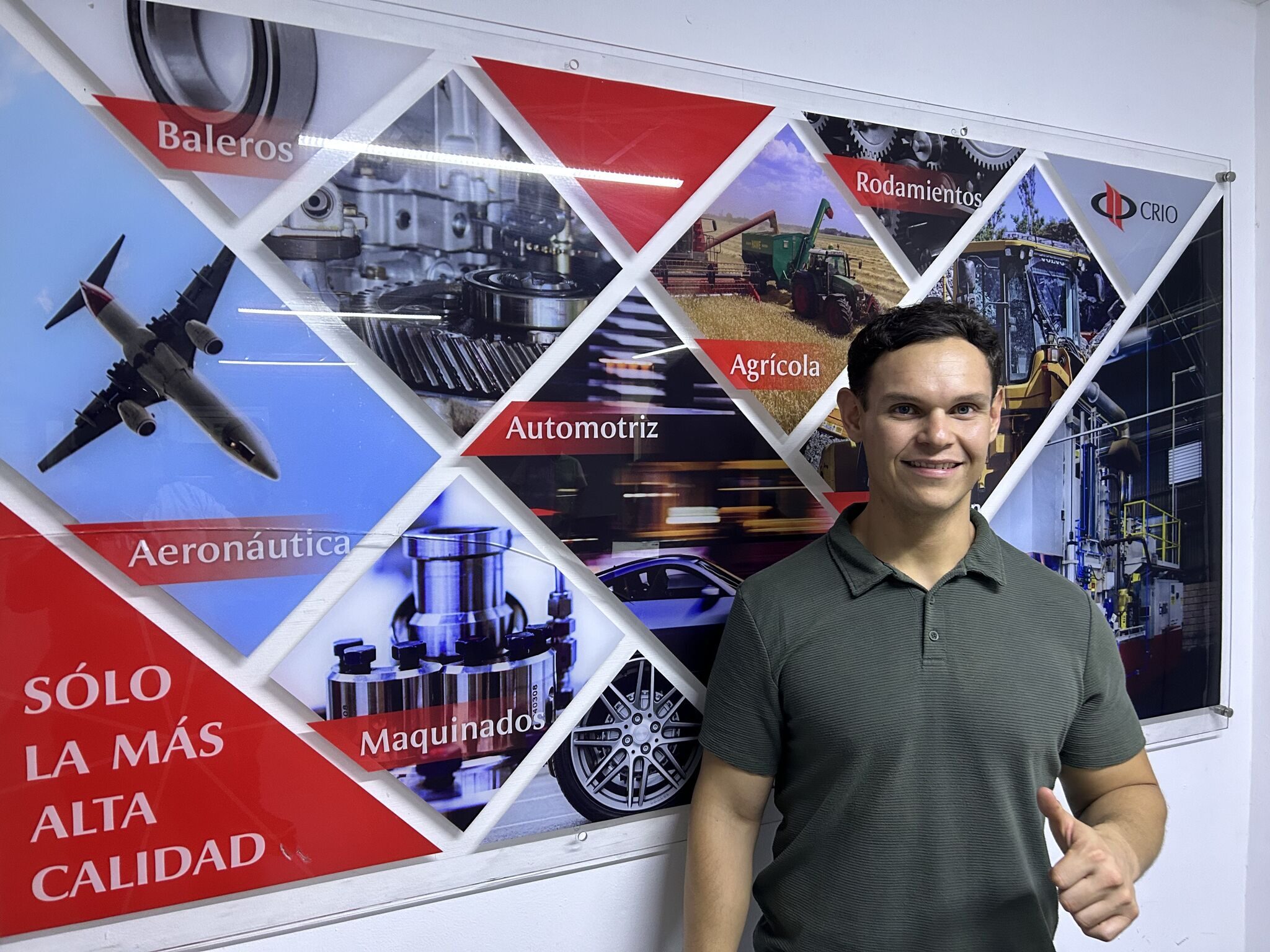
Eduardo Hernandez, CRIO Heat Treat. Crio Heat Treat one of the larger commercial heat treaters in Mexico and they have just hired Mr. Eduardo Hernandez for a “Materials & Applications” position. Crio has two locations in the country and the President is none other than “Mr. Carlos Torres”, host of the wildly popular “Heat Treat Podcast” which appears regularly on “The Monty Heat Treat News”.
Paul Westcott, Ipsen USA. Paul has been with vacuum furnace builder Ipsen in Rockford, IL, USA for over 20 years in a variety of positions. Very recently he was appointed Production Manager at the company. Ipsen is rated by “The Monty Heat Treat News” as the largest new furnace builder in North America https://themonty.com/articles/10-largest-north-american-heat-treat-furnace-builders/
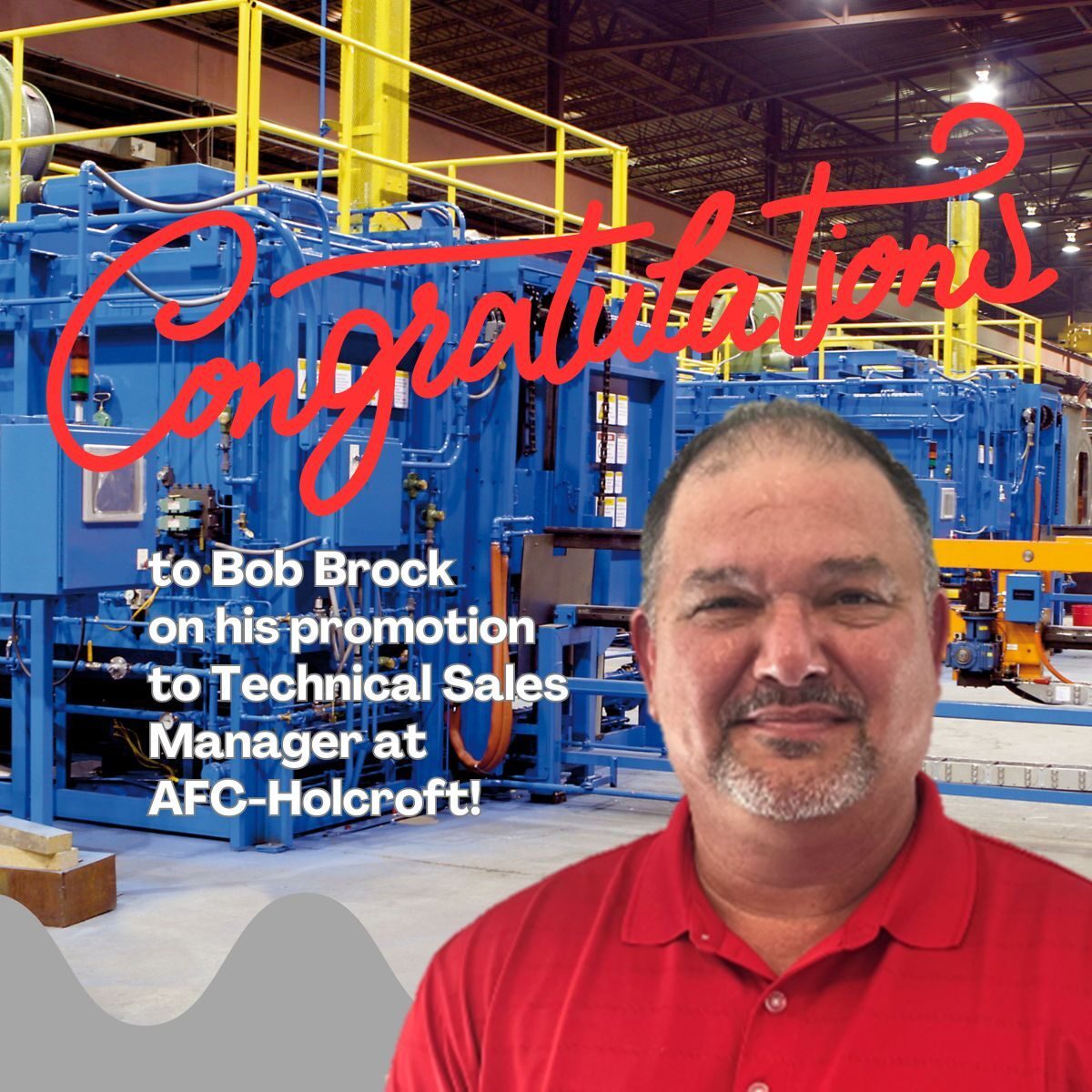
Bob Brock, AFC-Holcroft. In the world of furnace manufacturing, we see that Mr. Bob Brock has been promoted to Technical Sales Manager at furnace builder AFC-Holcroft. AFC, based in Wixom, Michigan, USA is a division of Aichelin in Modling, Austria.
Did you like this article? Click here to subscribe to The Monty.
Furnace builder ROHDE Schutzgasöfen GmbH of Hanau, Germany is pleased to announce the shipment of two pit nitriding furnaces to a customer in Switzerland. The furnaces are models TSG 150/200 and SG 70/100, the fully equipped and tested units shipped earlier this week on 3 transport trucks. Natasha Rohde had this to say about the shipment; “We were very proud earlier this week to ship two tested pit nitriding units to a customer in Switzerland. The job site is ready for the furnaces and it is expected that installation will be carried out next week with production to start shortly after that.” https://rohdetherm.de/
Did you like this article? Click here to subscribe to The Monty
UK based “Bodycote” is without a doubt the globe’s largest commercial heat treater, the firm just released their interim financial results for the six months to 30 June 2024. While the full details are available at https://www.bodycote.com/investors/
Discover Bodycote’s investor resources: financials, stock info, and corporate governance. Learn about our commitment to sustainable growth
www.bodycote.com
we have this summary from “Alliance News”;
“(Alliance News) – Bodycote PLC on Tuesday announced a profit fall as revenue declined, though it raised its dividend. The Cheshire, England-based supplier of heat treatments and specialist thermal processing services said pretax profit dived 53% to GBP26.2 million in the first half of 2024, from GBP55.2 million a year prior.
Revenue fell 5.0% to GBP399.0 million from GBP420.1 million. Bodycote however highlighted that Aerospace & Defence had “very strong growth” in the first half, with revenue in the unit up 9.9% to GBP115.7 million from GBP105.3 million. Revenue in Automotive meanwhile declined 9.8% to GBP94.4 million from GBP104.7 million.
Exceptional items costs came in at GBP28.3 million, compared to none a year prior, also hurting the bottom-line.
Despite the decline in profit and revenue, Bodycote declared an interim dividend of 6.9 pence per share, up 3.0% from 6.7p a year prior.
The company left its outlook unchanged, noting it was “well positioned with strong foundations and further opportunities to drive value”.
Chief Executive Officer Jim Fairbairn said: “I am excited by the considerable opportunities I see to unlock further value. These include fine-tuning our plant footprint, driving further improvements in operational excellence, optimising our strategy, and simplifying our reporting structure. I look forward to sharing more detail around these plans in due course.”
In a separate release, the company said it completed the first tranche of a share buyback programme last week Tuesday. Bodycote said it bought back 4.2 million shares between March 15 and July 23 for a total of GBP30.0 million. The company announced the second tranche of the share buyback programme started Tuesday and will run until maximum January 30 next year. The maximum amount of shares to be bought back under the second tranche will be 17.7 million. The only purpose of the share buyback programme is to reduce the company’s share capital, with the repurchased shares being cancelled.
Bodycote shares were 0.1% higher at 716.00 pence each on Tuesday morning in London.”
Did you like this article? Click here to subscribe to The Monty.
“More medium- and heavy-duty trucks have been recalled due to a potentially faulty ball stud in tie rods or drag links after a third-party supplier inadvertently supplied experimental parts that used an unapproved heat-treating process. Recalls from two truck makers now total nearly 8,000. In June, Paccar recalled nearly 3,900 medium- and heavy-duty trucks with diesel powertrains for a steering issue that could cause a loss of control. That number recently grew to 7,400.
In addition, Navistar has now recalled more than 500 International trucks due to incorrectly heat-treated ball studs from the same third-party supplier, USK International. USK mixed ball studs with an unvalidated heat treat process into normal production flow. Ball studs that have been incorrectly heat-treated can fracture. If the ball stud fractures, the driver may experience a loss of steering and reduced vehicle control, which may increase the risk of a crash. So far it appears that the faulty ball studs have potentially made their way into Dana, Meritor, and Paccar components.
Navistar Recalls More than 500 International Trucks; More than 500 International trucks have been recalled due to the potentially faulty ball studs. Navistar estimates 20% of the recalled trucks have the defect. The recall, dated July 26, affects certain 2025 model year International HV, HX, LT, MV, and RH vehicles.
Certain ball studs supplied to Meritor by a third-party supplier, USK International, which Meritor incorporated into certain steer axles and replacement tie rod assemblies, did not meet case hardening specifications, and there is a risk that the ball studs could be more brittle than intended. If a ball stud is more brittle than expected, it could break, which could affect steering and increase the risk of a crash.
The recalled components were experimental parts manufactured using an unapproved heat treat process that the supplier inadvertently introduced into production. The remedy components will be produced to intended specification, according to the recall notice. Meritor understands that the supplier is initiating an internal review to implement corrective actions and avoid reoccurrence when handling experimental materials and processes.
Dealers will replace the tie rod end and re-align the front axle, free of charge. When parts are available, remedy instructions and owner notifications will be distributed. Owner notification letters are expected to be mailed September 9. Owners may contact Navistar customer service at 1-800-448-7825. Navistar’s number for this recall is 24511.”
Did you like this article? Click here to subscribe to The Monty.
“The Monty Heat Treat News” Team constantly monitors the levels of interest for each of our news items, through our website and monthly magazine and also views on social media. Based upon this we are able to tell you, our readers, the most popular news items for each week. For the week starting Monday July 22, 2024 our top 3 news items included a rumor about a very large Hot Isostatic Press order in Europe, a story about a captive heat treater in the US Northwest adding a new Gasbarre, continuous annealing furnace and a “Heat Treat Podcast” with one of our favorites in the industry, Mr. Bob Hill of Solar Atmospheres.
New Hot Isostatic Press Order? For many years Hot Isostatic Pressing (HIP) occupied a fairly small but stable portion of the heat treatment market-when we think of the process, we think of castings for the aerospace industry. “Hot Isostatic Pressing (HIP) is a proven process for heat treatment, consolidation of powder, densification of products – such as castings, sintered materials, and ceramic parts – or for diffusion bonding applications. While HIP has been around for decades, we are seeing new applications in high-performance parts.” A more detailed description can be found at Wikipedia https://en.wikipedia.org/wiki/Hot_isostatic_pressing
While the market for HIP remained relatively unchanged for many years, this slowly starting changing a few years back and it now represents a very fast growing segment of the heat treat market with a number of very large installations over the past 5 years-this brings us to today’s “rumor” about a new large installation.
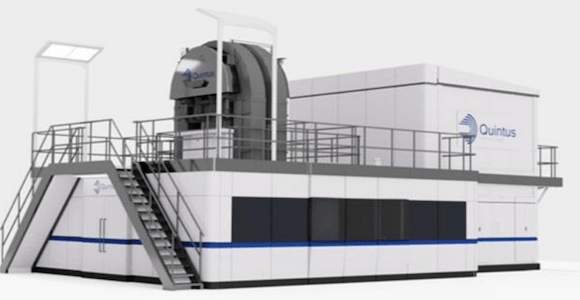
Our understanding is that a Western European commercial heat treater will be investing in a system from Quintus, a Swedish company and one of the larger players in this highly specialized arena. The rumor we are hearing is that the system will be a QIH 286 model, one of the larger presses that Quintus offers and that it is an investment of well over $20 million USD. The photo attached shows a typical Quintus QIH 286 press. https://themonty.com/new-hot-isostatic-press-order/?no_cache=1721915013
Chromalox Expansion Includes Gasbarre Continuous Annealing Furnace; In October 2023 “Chromalox” announced that they were making a major investment in their manufacturing facility in Ogden, Utah, USA an investment which includes more heat treat capacity-this announcement can be found further down. Part of this investment included a mesh belt annealing furnace from furnace manufacturer Gasbarre, a furnace which has just been received at the plant;
“Our Chromalox facility in Ogden, Utah has just taken delivery of a new state-of-the-art annealing furnace from GASBARRE in Pennsylvania. We are excited about this latest investment in new equipment, which is part of a multi-year modernization plan for our current furnace inventory worldwide and supports our goal to decarbonize our manufacturing processes, aligned with the Spirax Group One Planet Sustainability Strategy. Construction is underway to expand and modernize our facility in Ogden and the upgrades we are making to the furnaces will significantly reduce the energy consumption and CO2 emissions of the plant.” https://themonty.com/chromalox-expansion-includes-gasbarre-continuous-annealing-furnace/
The “Heat Treat Podcast” Speaks With Bob Hill of “Solar Atmospheres”; This week our intelligent, handsome and witty host Mr. Carlos Torres of the “Heat Treat Podcast” speaks with Mr. Bob Hill, President of commercial heat treat “Solar Atmospheres of Western PA” and “Solar Atmospheres of Michigan”. The entire team at “The Monty Heat Treat News” have known Bob for a number of years and have always had a very high impression of the man-we have been looking forward to hearing him share his knowledge about heat treating Titanium and “Super Alloys” which he does today.
We have to add that “Solar Atmospheres of Western PA” is a very unique in that they have the largest car bottom vacuum furnaces we have seen anywhere in the world; this photo shows one of them when it was inaugurated a few of years back. In this picture we see Mr. Gord Montgomery and Mr. Bill Jones CEO of Solar Atmospheres and Solar Manufacturing. https://themonty.com/the-heat-treat-podcast-speaks-with-bob-hill-of-solar-atmospheres/
Did you like this article? Click here to subscribe to The Monty.
“The Monty Heat Treat News” is rather proud of the fact that for a number of years now we have been offering a heat treat industry exclusive in the form of an annual list of the largest single location captive (in-house) heat treaters in North America https://themonty.com/articles/15-largest-captive-heat-treats-north-america/
The criteria are simple in that this list only includes single location manufacturing facilities and not total heat-treating capacity in North America. As an example the ZF Transmission facility in South Carolina makes this list but overall this plant is only a small percentage of the heat treating capacity ZF has in North America.
As you would expect this is a work in progress as facilities close, others add more heat treat capacity, some reduce the number of furnaces they have-all of this means that our list is constantly being modified which brings us to our story for today-American Axle & Manufacturing (AAM).
This is what Wikipedia has to say about the company; “American Axle & Manufacturing, Inc. (AAM), headquartered in Detroit, Michigan, is an American manufacturer of automobile driveline and drivetrain components and systems. AAM was founded in 1994 when a private investor group, led by Richard E. “Dick” Dauch, James W. McLernon, Raymond Park and Morton E. Harris purchased the Final Drive and Forge Business Unit from GM’s Saginaw Division. In 1999, AAM went public, and is traded as “AXL” on the New York Stock Exchange (NYSE). AAM has grown to supply various OEM manufacturers around the globe in the passenger car, light truck, and commercial vehicle segments.”
The firm has in-house heat-treating capacity at various facilities around the world, the USA, Poland and Mexico all come to mind and usually it takes the form of Batch IQ (Sealed Quench) or pusher furnaces-usually a combination of both. If you refer to our list of the largest you will see that we have the AAM location in Silao, Guanajuato, Mexico in the number 10 position-however we have reason to believe that it should be ranked much higher than that. Since the last visit by “The Monty” in 2020 we understand that more heat-treating capacity has been added and that this facility should now be rated in the 5 largest in North America-we hope that at some point we will be able to offer more details.
Did you like this article? Click here to subscribe to The Monty.