
It appears the furnaces are being built by “ProTech Thermal Services” of California, USA, a company which has been involved in the heat treat industry for some time, however to our knowledge this is their first entry into new vacuum furnaces. The firm was founded a number of years back and has always been heavily involved in vacuum furnaces offering hot zones, repairs, installs, vacuum pump services and a number of other related services. The company was founded by Mr. Keith Grier and his son Brian (it is worth noting that Keith was co founder of vacuum furnace builder “GM Enterprises” for a number of years-GM is now part of the Aichelin Group).
All we know about the “Raptor” Vacuum furnace is that it is a skid mounted, self-contained, 2 bar quenching system similar to the “Ipsen Titan” line of furnaces; they appear so far to be relatively small in size and that 2 or 3 have been installed to date. We will update you on this story as we learn more.
Over the course of a long career in the heat treatment industry, “Mr. Dan McCurdy“ has done it all; from developing some of the most advanced technologies in the industry, running one of the largest furnace controls firms in the world, President of “Bodycote North America” for a number of years and advising Private Equity (PE) firms on the commercial heat treatment industry.
We are extremely fortunate that “Gord Montgomery” of “The Monty Heat Treat News” was able to convince Dan to share some of his lifetime experience in this wide-ranging interview. Those who know Dan will not be surprised that his comments are blunt, honest and to the point-we have no doubt but that you will consider this a read well worth your while.
We are very excited to be speaking with Mr. Dan McCurdy, an individual who has had a long and varied career in the global heat treatment industry. Dan, I appreciate the time today. So where do we start off, Xtek? Cincinnati Steel Treating? Marathon Monitors? Bodycote? Let’s start with your first position in the heat treatment industry and move on with a summary of the firms you have worked with over the years.

I had two co-op jobs while at UC. The first was at International Nickel’s massive Huntington Alloys plant in West Virginia, I did hardness and room-temperature and high-temperature tensile testing on nickel alloys. My next job was back home in Cincinnati, where I was a co-op in the large captive heat treating department at Xtek. I then ended up taking my first job as a metallurgist there after I graduated in 1977.
As far as I know, Xtek still has two of the deepest pit carburizers in the world, each 6′ diameter X 20′ deep. This shop can effortlessly suspend 35,000 lb. mill pinions in these furnaces on water-cooled eyebolts, something I’ve never seen anywhere else in the world. We used a combination of Alnor dewpointers and Infrared CO2 analysis to control the furnaces and endo generators. Carburized case depths extended to 3/8″ on some components with cycles well over 100 hours at 1850F. In my time at Xtek, I helped to commission one of the first nitrogen-methanol systems (from Linde), and I installed my first oxygen probe (from Advanced Atmosphere Control Corp – AACC) in a batch IQ furnace.
My next job (1980) was as Quality Manager at Cincinnati Steel Treating (CST). This plant was both a commercial heat treat as well as a captive department for its sister company, Cincinnati Gear, who did a lot of high-precision gears for the US Navy, among others. This was a VERY different quality environment than I had experienced at Xtek. We did a lot of Gleason press quenching and the dimensional tolerances we were held to were difficult, to say the least.
During this period, I became Chairman of the local Cincinnati ASM Chapter, which was the only way to network with other local metallurgical professionals. CST was also a member of the Metal Treating Institute (MTI), so I had the privilege of attending a number of regional and national MTI meetings. I started to get to know other commercial heat treaters regionally and then nationwide. CST is also where I was introduced to how heat treatment was quoted to commercial customers. I hadn’t thought of the money side of heat treating before.
When I joined CST, the plant was still using Alnor Dewpointers for furnace atmosphere control. By this time, however, several new oxygen probe suppliers had appeared on the market, and the local Marathon Monitors rep (John Hansen, R.I.P.) insisted that I try one. I decided at some point that millivolts from an oxygen probe, in combination with a paper chart showing the relationship of probe MV and temperature to %C, was not the best way to control furnace atmospheres in real time. I derived an equation that related it all on a theoretical basis and sought out a local electronics/software expert to put that equation to work using the latest invention in the world: the microprocessor. My search landed on a local electrical engineer, also a UC graduate, named Don Riemenschneider. I got permission from CST’s owners to commit to the development of a protype instrument that would not only continuously calculate % carbon in the atmosphere at any temperature but also control it. The result was the first CST Multicarb, a prototype instrument which could control up to eight different furnaces, as long as each furnace had an oxygen probe and a natural gas control valve.
The teething pains were significant, but we got through them and started to control all the atmosphere furnaces at CST with the second version of the instrument. Lurking in the background was still John Hansen, who kept the principals in Marathon (Bill Thompson and Ted Berry) advised, and soon they were visiting the plant to have a look at the new instrument prototype.
One thing led to another, and Marathon Monitors acquired the newly-formed instrument division of CST including my services as well as those of several others including Don Riemenschneider. Marathon Monitors Inc. then proceeded to pick itself up and move from Connecticut to Cincinnati. Oxygen probe and instrument operations were combined and sales and production of complete furnace control systems commenced in earnest. It was 1984.
Marathon grew rapidly over the next few years, even adding a sales and service branch in the UK. Then, in 1989, a British Holding Company named Halma plc, listed on the London Stock Exchange, came calling on Marathon’s shareholders. Halma owned a whole portfolio of small technical manufacturing business in many industries in both Europe and America, and Marathon looked to be a desirable acquisition target. The deal happened and life continued, now under the Halma umbrella.
Marathon continued to grow and several events occurred in the years after the acquisition. Most notable were the eventual exits of the two founders, Ted and then Bill, and then the acquisition of Advanced Atmosphere Control Corp from Corning, who had previously acquired AACC and merged it into their own oxygen probe business, part of which was aimed at combustion applications. This acquisition put Marathon into several new oxygen probe markets including coal-fired power plants and glass manufacturing furnaces.
Fast-forward to 1998, I had reached a point where the business’s ever-increasing sales and profit pressures were no fun anymore and I felt I needed to make a change. I left Halma with the intent of taking a few months off to decompress and pursue other possibilities. As luck would have it, John Hubbard, former owner of Hinderliter Heat Treating whose seven (7) plants had recently been acquired by Bodycote (1996, Bodycote’s first foray into the US), heard about what I had done, tracked me down, and asked me to join him at Bodycote for a “few months” while I figured out what I wanted to be when I grew up. Bodycote had been a good customer of Marathon UK, and Hinderliter had been a good customer in the US, and I knew a number of people in both. So, I joined John and ended up staying for 25 years until I retired in 2019. During that time John himself became CEO of Bodycote before retiring some years later.
Interesting tidbit: The name “Bodycote” has nothing to do with metallurgical coatings; it was the surname of Arthur Bodycote, the founder, a fine example of a person’s surname matching a corresponding trade. He established the textile and knitwear business in Hinckley, Leicestershire, UK in 1923. At some point the textile business started to leave the UK for greener pastures (i.e. Asia), and the company needed to find new ways to survive. So, it bought its first heat treating shop. In 1972, it was officially listed on the London Stock Exchange. (ref: Wikipedia)
At Bodycote I started out doing a mixture of customer visits, technical troubleshooting in the plants, acquisition scouting, and other odd jobs, traveling around North America and the UK. Bodycote made a number of small acquisitions during this period building the US network bit by bit. Eventually, the Bodycote board decided to take the plunge and made a public offer to buy Lindberg Corp, then the largest heat treater in North America. The deal was completed and Bodycote now stood at 164 plants globally. Of course, many of the people at Lindberg already knew many of the people at Bodycote via ASM, and many at Bodycote had worked at Lindberg at some point and vice-versa. It took several years to work through the integration of two separate and distinct business cultures.
In 2006, Mario Ciampini, past President of Ipsen International in the US, decided to accept John Hubbard’s offer to join Bodycote to help with further acquisitions. Mario energized the US team on several fronts: North American acquisitions and further greenfield expansion in Asia, where we had just one plant up going in China at that point.
When John Hubbard announced his retirement as Bodycote CEO in 2008, The board brought in Stephen Harris to replace him. Stephen was not a heat treater, but he was an engineer and he clearly understood the needs and opportunities for heat treatment in the modern manufacturing world. He reorganized the plants into divisions according to what markets they mainly served: Aerospace, Defense, and Energy (ADE) on one hand; and Automotive and General Industrial (AGI) on the other. Hot Isostatic Pressing (HIP) was kept separate, as was Specialty Stainless Steel Processes (S3P). Only The AGI division was further subdivided by geography. I was given the role of President, AGI North America and Asia with 19 plants.
Further acquisitions and greenfield startups happened in Asia and North America, and my own portfolio of plants rose to around 35 (but still just 15% of Bodycote’s total). With many management board meetings in the UK and Europe, I was literally flying around the world almost every month. It was crazy. I eventually retired in 2019 at age 66. Then COVID came. I consider myself lucky to have dodged that particular bullet!
Although you retired several years ago, I understand that you have never truly retired-care to share with us what you are doing these days?
I took a few years off, determined to focus on family, hobbies (boating, music, and electronics), and phone calls with friends from the good-old days. Private Equity had already started to target the commercial heat treating industry. What I know now is that it took just one PE firm to start this rush, but clearly it was perceived by more of them to be a great idea and it’s still happening today. I got myself involved. My very first major project was looking at a failing multi-plant PE venture and attempting to explain to the owners what had happened to cause their problems.
I was able to surmise the primary cause quickly, which was poor hiring practices for key management positions. The people who had committed these sins were long out of the picture at this point, but the damage they had done left a substantial blast crater. Suffice it to say it was a target-rich environment in the plants.
I knew from experience that just about every heat treating plant had fallen into hard times at one time or another and was forced to dig itself out. At Bodycote, there was always a short list of plants with profit problems. The causes were often a mismatch between the plant’s current capabilities and/or operating methods and what the local customers needed and expected.
In the process of doing this work, I realized that some variation of these same causes can be found in almost any heat treatment shop. They don’t have to produce big losses; they usually just erode profit. I realized that hardly anyone teaches anything about how to diagnose and fix this stuff.
Of course we talked about these things all the time at Bodycote, and MTI does all sorts of things to promote fellowship and management training among member heat treaters. However, to protect members from antitrust violations, the MTI strictly enforces a policy that governs all discussions among members to prevent the exchange of sensitive commercial information that could lead to price-fixing or limit market competition.
The most authoritative written work about heat treating economics can be found in the ASM Handbook, Volume 4B (2014), written by Jon Dossett. In his section, Jon, who was a midwestern heat treater himself for many years, walks through appropriate cost calculation methods for different heat treatment processes, and it’s very good. In the end, however, overall pricing levels depend on what the heat treater’s ROC (Return on Capital) requirements are just to stay in business (on the lower end) and really prosper (on the higher end).
Back to the Controls business: When you look at control systems today what is your impression? Have we come as far in technology as you would have expected, or possibly further?
Yes and no. My years in furnace control and software were challenging and fun because we were operating on the cutting edge of several technologies: atmosphere sensors, digital control instrumentation, computer data acquisition and archiving, and computer process modelling. What we were doing back then was exciting, but it all looks so primitive when compared to what’s happening today in the overall tech space.
Today’s control and data acquisition systems are much more compact and powerful, and the interfaces are easy to navigate on nice bright color touchscreens. For example, the newest gas flowmeters from SuperSystems have no moving parts and are networked with their controllers, allowing affordable flow control for all process gases right in the process recipes. They are brilliant. I wish I could have had that sort of control at my fingertips back in the day.
Outside of LPC and nitriding, the furnaces themselves have not advanced much, which is disappointing. At one point I thought LPC with high-pressure gas quench was going to give conventional batch IQ’s a run for their money. This has not happened. It’s still not possible to do LPC in a commercial environment where what’s in the load changes every cycle. It only seems to work reliably if the recipes have been carefully tailored for an exact-sized load of specific parts. This has limited it to only certain high-volume uses.
Gas nitriding has really matured with the newer low-temperature horizontal furnace designs from Europe and control systems that allow both precision nitriding and FNC, as well as protected atmosphere tempering in the same furnace, with no pits or overhead cranes required. The accompanying process modeling software has also advanced substantially. However, nitriding remains a tricky process that can be greatly affected by the surface characteristics of the incoming parts. Sometimes it’s chemical films that are is difficult to remove, and other times it’s the “smeared metal” effect on some of the parts’ surfaces that results from dull tools used in machining. These sorts of things rarely stand in the way of successful atmosphere carburizing or carbonitriding where surface prep is less critical.
Bodycote continues to be the world’s largest commercial heat treater and they continue to be profitable – what is the secret to their longevity and “staying power”?
At any point in time, some Bodycote plants will naturally be much more profitable than others. Fast forward by 3-5 years, and the mix will have shifted: plants that were doing well now aren’t, and others that were sucking wind start to look brilliant. Customers close, or move, or lose big jobs themselves. It’s the combination of it all that makes it look like Bodycote is all working perfectly from year to year. In fact, Bodycote is essentially a global mutual fund of heat treatment plants. Management tweaks the portfolio constantly to keep the whole thing headed in the right direction. It sounds easier than it really is, because each plant represents a sizable chunk of capital as well as a valuable group of people. Unfortunately, no one has ever invented the portable heat treat shop to follow desirable customers around the globe.
Local markets around the plants themselves are also constantly shifting. There were more than 60 commercial heat treaters in the greater Cleveland area at one point: now there are fewer than 20. Bodycote’s response has sometimes been to follow the work using plants in other locations, and a few times it has followed customers all the way into other countries. A local heat treater can’t do that. There is a very good argument for being geographically diversified and Bodycote has taken this to the extreme with its global operations. Having said that, the company is not everywhere. It has sought to avoid countries where business corruption is tolerated; that’s still a sizable chunk of the world as it turns out.
There is another secret that Bodycote uses: making sure each plant stays in its lane. The automotive-focused plants don’t do aerospace work, for example, because the customers’ behavior, the quality systems, and the employee skill sets required are completely different. If a local manager comes up with a hair-brained scheme to add an induction machine to a plant without demonstrated success with that process, it gets shut down quickly.
Finally, Bodycote runs on the knowledge that all a heat treater has to sell is FURNACE TIME. Time is limited to 168 hours per week for each primary furnace. An hour running empty is lost forever once it has passed. While many heat treaters determine their weekly operating schedules based on the convenience for the human staff, the best-run Bodycote plants run 24/7 and modulate the number of furnaces that must be hot during those hours to meet the forecast demand. The shifts are staffed accordingly. Saying the same thing from another perspective: a hot furnace should not be allowed to run idle if it can be avoided. Many people outside of Bodycote find this philosophy to be counter-intuitive since labor is the highest cost in the business, but the math has been shown to work if the scheme is carried out correctly.
It is obviously critical to understand what an hour of time in each furnace is worth at the retail level, in $/hr, all in. This is a key to pricing. Another important key to pricing is determining how much labor will be required to handle the individual parts in each load. It’s obviously no good leaving a furnace idle while the shift workers are building the next load for it which requires 8 man-hours to accomplish. Adequate tooling (baskets and fixtures) are often an unexpected constraint that prevents optimum results.
The best-run Bodycote plants measure and control Yield ($/hr) and Utilization (% of a 168-hour week that the furnace had a load in it) to keep track of how efficiently the plant is running. Idling a furnace for an entire shift while there’s work sitting in front of it is an indication of a problem.
None of the above has anything to do with how the work is priced. That’s a whole other topic. But obviously, the pricing scheme must be derived from the concepts discussed above in combination with other factors including the overall return of capital expectations.
You and I had a very interesting conversation recently about the commercial heat treat industry and how it has been “discovered” by the venture capital (VC) industry. In your opinion has this been a benefit to industry?
Private Equity (PE) firms are working hard to find new industries to invest in that haven’t already been consolidated by others. It was only a matter of time before the commercial heat treatment industry came onto their radar.
The first thing PE notices about the commercial heat treating business is that it’s a service business, as opposed to a manufacturing business. The heat treater doesn’t make anything, nor does it maintain raw material or finished goods inventory. The second thing they notice is that the cash flowing through the business has a high velocity. A heat treater receives the parts and does the service within a few days, issues an invoice, and gets paid within 30 days. That doesn’t happen in classical manufacturing businesses with both raw material and finished goods inventories, where cash velocities are anywhere from 90 to 365+ days.
Then they notice that the highest costs are people, and then energy. Surely, they think, these two easy-to-understand costs can be managed better than ever under the lean financial control that PE firms specialize in.
A spreadsheet gets created that is used to convince the investors and lenders that a group of commercial heat treating shops can be put together and turned into an asset that is worth much more than the sum of the parts. The plan is to ‘optimize’ sales and costs in each acquired business for a few years and then sell the whole collection together at a profit to another, bigger investor, who is very likely to be another PE firm.
A PE project will be working toward an exit date in just a few years and is not interested in the longer term. There will also be little interest in using precious capital to acquire real estate along the way unless it’s absolutely necessary. Rather, it will very much want to lease any required real estate. This may play into a current owner’s hands, as it allows putting off his capital gain on real estate and it while providing ongoing rental cash flow over time during the owners’ retirement which may be partially offset by the continued depreciation of the buildings.
During operation, the PE firm will also not be interested in further CapEx in the business unless the projected payback is likely to be extremely rapid (< 1-2 years). Cash is reserved for more acquisitions or to pay down any debt.
The first deal gets made with a heat treater who is ready to sell and it’s off to the races.
With the former owner/operator of the business gone, the PE firm must appoint a new general manager for the shop. In the absence of any existing candidates from within, the PE firm will likely turn to someone who they already know who has managed in an PE environment before. They rely on the rest of the existing staff to tend to the technical details of heat treating, while the new manager focuses mainly on cash flow and “right-sizing” the business.
The original owner of the shop, who knew exactly how to run it profitably, has cashed the check and gone to his retirement villa leaving the operation to his former staff whom he has trained well, with a new boss who may or may not be suitable for the job at hand.
This whole cycle repeats itself with the second acquisition, and so on.
Many scenarios are possible at each shop during the PE holding period. On one hand, things could go really well, with the whole venture coming to the eventual planned exit for the investors. I have personally not seen any of these.
On the other hand, there could be trouble in any or all of the acquired shops. Many issues are possible, but high on the list are things like accurate pricing of work, quality problems, and maintenance of the equipment.
As any experienced heat treater knows, there are two ways to maintain furnace equipment: the quick way, and the right way.
The quick way involves emergency patches done in the process of taking a furnace down and bringing it right back up. If the needed parts are not on hand or in stock at a local supplier, an expedited order must be placed. This method is a bad habit: the furnaces become less and less reliable over time and start to go down even more often, sometimes with important loads in them. Maintenance overtime is given, and no one can guess what will go wrong next, or when.
The right way is to schedule every piece of equipment for quarterly shutdown and inspection, with subsequent replacement of any worn components at that time. This method requires advance ordering of critical parts (a.k.a. inventory) that may be needed based on actual records which someone has to keep.
In a developing cash crisis, the PE manager may start to take exception to the practice of structured preventative maintenance, arguing that it frequently reveals only minor problems. If this happens, it’s unfortunate because it may signal the end of preventative maintenance in the plant. Multiple key pieces of equipment can begin going down for breakdown maintenance. Unbelievably, up to 50% of the equipment in the shop may be down at any one time, with green work piling up all around. In an environment where every equipment maintenance event is an emergency, maintenance costs are as high as they can possibly be, and the customers are losing patience. The maintenance personnel aren’t very happy either, even though they are making a lot of money in overtime.
At this point, the plant is in serious trouble, and it will be difficult to climb out. The thought of preventative maintenance is totally lost in the scramble to keep equipment up and running. Nothing seems to be getting better.
The financial consequences of all this are obvious. The lost furnace hours are gone forever, and customers are starting to move on to greener pastures, and the best people in the business start to consider their options.
The ending to all of this may not be pretty. A PE firm with a portfolio of breakeven and loss-making plants is a disaster for everyone involved except the competitors. There may still be some good businesses somewhere in there, if anyone can manage to gain access to them again.
Once the crisis is roaring, the current PE personnel themselves still get vilified. This is a bit unfair because the ones who are trying to fix the problems are not the ones who caused them; those guys have moved on, now spoiling someone else’s day.
None of the above is exaggerated. I’ve seen it and worked on it. It’s incredibly difficult once the consequences of mismanagement drive a business into a cash crunch, allowing a once-thriving business to fall into disrepair and chaos. It’s certainly a target-rich environment for a retired heat treat business consultant!


Editors Note; “The Monty Heat Treat News” has recently had several articles explaining why the dramatic growth in AI centers is driving an unprecedented demand for vacuum furnaces “AI Data Centers Spiking New Vacuum Furnace Orders-Update”. This interesting press release from furnace builder “SECO/WARWICK” supports these previous articles.

SECO/WARWICK is supplying its tenth Vector vacuum furnace to a partner for producing high-performance gas turbine components essential for modern energy stability. Why are vacuum furnaces so important for today’s energy sector?
- The furnace handles extreme temperature components requiring high precision.
- The unit features a large 1200x1200x1800 mm working space.
- It supports hydrogen, argon, and nitrogen processes for flexibility. Gas turbines are critical for stabilizing renewable energy systems.
The furnace will be used to produce gas turbine components, among the most advanced structures in the energy sector. Gas turbines often operate at temperatures exceeding 1300°C, and their key components, such as blades and flow path elements, must withstand extreme temperatures, material fatigue and oxidation. That is why the heat-treatment processes for these parts require very clean vacuum conditions, stable temperature control and high process repeatability.
The Partner’s technology fleet includes approximately 50,000 wind turbines and more than 7,000 gas turbines. Solutions of this scale require technology partners capable of delivering world-class production equipment.

The unit on order is based on the proven design of Vector vacuum furnaces. The furnace has a working space of 1200 × 1200 × 1800 mm (47.2″ × 47.2″ × 70.9″), enabling the heat treatment of large components used in gas turbine production.
The furnace can operate with three process gases: hydrogen, argon and nitrogen. Two cooling gases, argon and nitrogen, are also used, allowing cooling parameters to be flexibly adjusted to the specific process. The unit features a round heating chamber with excellent temperature distribution at +/- 5°C (±9°F).
“This is our flagship model, designed for highly demanding production processes. High vacuum, temperature stability, and the ability to operate with various process gases are key here. Thanks to its large working space and refined heating system design, the unit enables the processing of oversized components while maintaining very high process cleanliness,” said Kamil Siedlecki, Sales Manager at SECO/WARWICK.
The new furnace will help support growing production and enable the heat treatment of a new generation of components used in gas turbines. These turbines play a key role in the energy transition by helping to stabilize energy systems powered by renewable energy sources. Thanks to their high efficiency and fast start-up, they are among the most important components of modern power systems.”

We understand that “Bodycote” the world’s largest commercial heat treater will be closing their Covington, GA, USA facility. While “The Monty” has visited over 50 Bodycote facilities around the world over the years this is one location we have not had the privilege of visiting. Having said that, we understand that it is a medium-size location with a mixture of smaller batch IQ furnaces and vacuum systems. The official description of this plant says little beyond this background;
“Bodycote is the world’s largest provider of thermal processing services. Heat Treatment is a vital link in the manufacturing supply chain, a value-added and proprietary special technology, which offer a unique solution for a variety of applications. Providing Heat Treatment services designed to satisfy your thermal processing needs and requirements. Our capabilities encompasses a variety of techniques and engineered processes which improve the properties of metals and alloys to satisfy the requirement of the designed applications. Heat treatment is a controlled thermal process used to alter the properties of steel and alloys. The Covington, GA Bodycote plant is certified to ISO 9001:2015.”
While no reasons have been given for this closure, we would assume that its part of the firm’s strategy of closing smaller, marginally profitable locations. No date for the closure has been given.


Jordan Montgomery, Jeff Halonen
In 2024 commercial heat treater “Metex Heat Treating Inc.” (one of the largest commercial heat treaters in North America “Top 52″ List Provides Insight Into North American Heat Treat Industry”) acquired a fellow commercial heat treater by the name of “Exactatherm” “Metex Heat Treating Ltd. Announces a Strategic Acquisition of Exactatherm Limited”.
A recent visit by Gord and Jordan Montgomery of “The Monty Heat Treat News” provides an update to the acquisition and also ties it into a recent story about an acquisition in the “ERP” heat treating software industry, a story which can be found at “Major Acquisitions for Heat Treatment Software Supplier”
Since “Metex” acquired “Exactatherm” the firm has grown to over 20 employees and added a tensile testing lab, both moves fueled by strong sales growth due to a number of factors including new investments, higher exposure caused by added marketing efforts and more conferences/trade shows. A lot of this increased exposure has been due to the strong efforts of Ms. Sheela Samy who after 36 years with the company, is adding sales to her other responsibilites. Sheela shared with us that future additions to the company might include more plasma and gas nitriding capacity along with aluminum aging although no time frame has been specified for these additions.
We quizzed “Mr. Raman Bawa”, President of “Metex” about what the acquisition of “Exactatherm” has meant for the company given that “Metex” has traditionally been very automotive oriented and “Exactatherm” is aerospace orientated-this is what he had to say;

Sheela Samy, Gord Montgomery
“Prior to our acquisition of Exactatherm we had, had little experience with aerospace (Nadcap) heat treating and quite frankly it was a challenge to us after our many years of concentrating on automotive heat treating. What we learned is that in aerospace heat treating you are more of a partner with your customers, probably because of the much smaller volumes it is more like “custom” heat treating. Automotive heat treat systems have been in place for so many years and involve such large volumes that it becomes more automated. Aerospace heat treating tends to more part specific-think 20 parts as opposed to 2 million parts.”
As we mentioned the history of “Exactatherm” is also tied to their decision to invest in an “ERP” system from “Steelhead Technologies” almost exactly one year ago-August of 2025 to be exact. The relationship between the two companies is strong enough that Steelhead chose to use “Exactatherm” in their press releases including this quote from Mr. Vraj Shah, Quality Manager, “Exactatherm”;
“At Exactatherm, a heat treater in Mississauga, ON, taking their shop floor digital has simplified training, tightened quality control, and enabled faster turnaround times. “With Steelhead, if we need a job pulled for review in a Nadcap audit, we can look it up and have all the data right there. We don’t have to train someone with a background in metallurgy or heat treat to enter a job anymore; anyone can do it. That efficiency shows up everywhere: our lead times used to run a couple of weeks, now we’re down to ten days, and parts we used to store for ten to twelve days now move through in five to seven.”— Vraj Shah, Quality Manager, Exactatherm”.
These photos show a visit to “Exactatherm” August 24, 2026 during which Mr. Jeff Halonen, CEO of “Steelhead” was in attendance. We thank the entire team at “Exactatherm” and “Metex” for their hospitality.

Vraj Sham, Quality Manager, “Exactatherm”, Jordan Montgomery “The Monty”, Raman Bawa, President “Metex”, Sheela, Samy COO, Exactatherm, Jeff Halonen, CEO, “Steelhead”
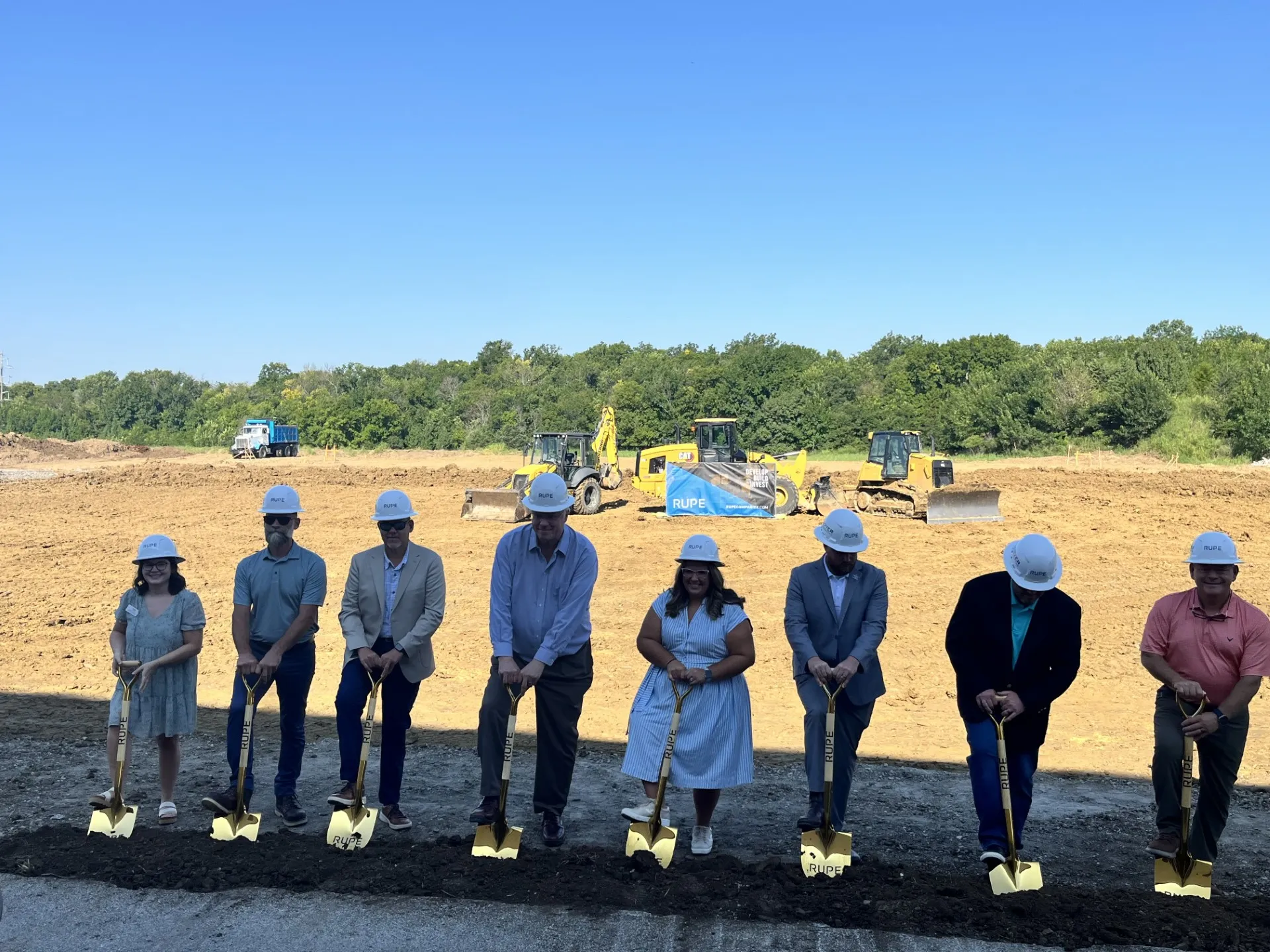 (Editor’s Note; It is the understanding of “The Monty Heat Treat News” that this expansion includes more heat-treating capacity).
“Pryer Aerospace, a leading Oklahoma manufacturer of complex aerospace components and structural assemblies, broke ground Tuesday, July 14, on a 60,000-square-foot expansion of its Claremore facility.
Founded in Oklahoma in 1965 and acquired by Argonaut Private Equity in 2025, Pryer Aerospace supports aviation, defense, and space flight programs through advanced structural assembly, precision machining, metal fabrication, and other highly technical aerospace manufacturing capabilities. Pryer Aerospace’s customers include Blue Origin, Boeing, Nordam, Orizon, and U.S. defense contractors.
The Claremore facility expansion will enhance support for existing aerospace customers and enable Pryer to expand its customer base. The expansion doubles Pryer’s manufacturing space in Claremore and cements the company’s vital role in the regional and global aerospace industry.
“This expansion demonstrates our confidence in our team, our customers, and the future of aerospace manufacturing in Oklahoma,” said Brian Gleason, Vice President and General Manager of Claremore Operations at Pryer Aerospace. “For more than 60 years, Pryer has solved some of aviation’s most challenging problems, and this investment helps us continue to build the capacity, capabilities, and workforce we need to fuel our next chapter.”

“Pryer Aerospace’s expansion shows the strength of Claremore’s global manufacturing base and the momentum behind aerospace growth in northeast Oklahoma,” said Meggie Froman-Knight, executive director of Claremore Economic Development. “This investment supports high-quality jobs, strengthens the regional supply chain, and reinforces why companies continue to choose Claremore and Rogers County for long-term growth.”
The groundbreaking brought together Pryer Aerospace leadership, Argonaut Private Equity, representatives from Rogers County, the Oklahoma Department of Commerce, Claremore Economic Development, Tulsa Regional Chamber of Commerce, Northeast Tech, Tulsa Tech, and other project and community partners.”


View of Armored HMMWV in Iraq.
Background from “The Monty Heat Treat News”; “The Monty” recently identified the growth of AI centers as a catalyst for increased vacuum furnace demand; “AI Data Centers Spiking New Vacuum Furnace Orders-Update”.
In this press release from furnace builder “SECO/WARWICK” the company points out that global growth in defense spending is also leading to major investments in manufacturing and consequently new heat treat furnaces. More on this subject to come;
“Rising military expenditure is reshaping not only the arms market, but the entire industrial supply chain. In the new reality, what matters is not only finished defense systems, but also the technologies that enable critical components to be manufactured faster, more consistently and closer to the end user. This is precisely where the importance of SECO/WARWICK Group solutions is growing: metal heat treatment, vacuum technologies, aluminum brazing and vacuum metallurgy.
Global defense spending is surging, driving demand for advanced industrial technologies like vacuum metallurgy and heat treatment to ensure the reliability of critical military components. As defense investment reaches record levels, what factors will determine long-term industrial readiness and resilience? This article highlights the key trends, technologies, and challenges shaping the future of defense manufacturing:
- Global military spending hit a record $2.7 trillion in 2024.
- Defense growth requires investment in production and manufacturing capabilities.
- Heat treatment and vacuum metallurgy are essential for component durability.
- SECO/WARWICK provides critical technology for aerospace and defense manufacturing.
- Success in defense requires combining technology with supply chain security.
The global defense sector has entered a phase of long-term growth. According to SIPRI, world military expenditure reached USD 2,718 billion in 2024, representing a real-term increase of 9.4% year on year. This is the largest annual increase since 1988. In Europe, the shift is equally clear. The European Defense Agency reports that defense expenditure by the EU-27 Member States reached EUR 343 billion in 2024, up 19% compared with 2023.”
These funds are not allocated solely to the purchase of final military equipment. Investments in production capabilities are becoming increasingly important: plant modernization, expansion of technological lines, material processes, certification, quality control and R&D. In other words, the role of the industry that is not always visible in the finished product is growing, although it determines whether that product can be manufactured in series, repeatedly and in line with the requirements of the defense sector. In this context, metal heat treatment and vacuum metallurgy are becoming part of the strategic industrial backbone of security. The quality of these processes affects hardness, wear resistance, dimensional stability, microstructure, fatigue resistance and the durability of components operating in extreme conditions.
“Today, it is increasingly clear that national security begins not only on the training ground, but also in the production plant. Even the most advanced defense system consists of thousands of elements that must be manufactured with the highest repeatability and process control. SECO/WARWICK Group does not manufacture weapons; it delivers technologies that enable industry to produce components with the required quality, durability and reliability,” says Sławomir Woźniak, CEO of SECO/WARWICK Group.
SECO/WARWICK solutions support the production of components used in aerospace, special-purpose vehicles, propulsion systems, cooling systems, turbines, gear systems, ammunition components, missile parts and space technologies. Their common denominator is the need for a stable process and full control of parameters.
In practice, this means specific implementations for specific industrial challenges. For TATA Advanced Systems, SECO/WARWICK delivered a VertiQuench line for solution heat treatment of large aluminum sheets used in the production of aircraft skins and structural components.
For a European NATO supplier, a customized Vector furnace for sintering ammunition cores was developed, removing a bottleneck in one of the key stages of production. A naval shipbuilder uses Vector technology to anneal 3D-printed parts made from metal powders, increasing its independence in the production of critical spare parts.
Rafael Advanced Defense Systems, in turn, implemented a vacuum furnace for casting titanium and nickel-based superalloys, while EcoTitanium, part of Aubert & Duval, increased its capabilities in titanium alloy recycling and refining using PAM and VAR technologies.
These examples show that SECO/WARWICK technologies support different levels of the value chain: from component heat treatment, through the production of aerospace and ammunition parts, to the metallurgy of critical materials.

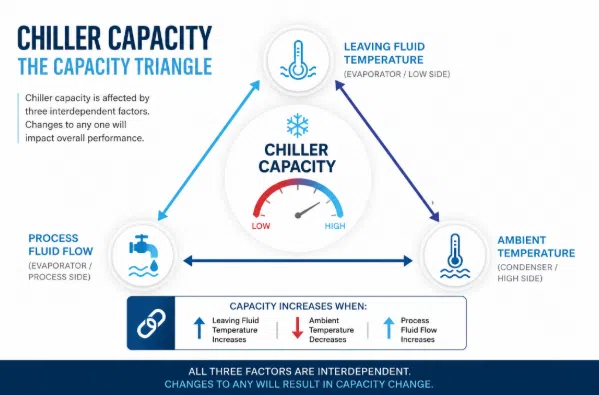
A simple way to understand this is through what we at Thermal Care call the “Chiller Capacity Triangle.” Much like the exposure triangle in photography, three main factors work together to determine how much cooling a chiller can actually provide. These three factors are Saturated Suction Temperature (SST), Saturated Discharge Temperature (SDT), and Process Fluid Flow. Changing one side of the triangle affects the other two, and ultimately changes the chiller’s capacity and efficiency.
Saturated Suction Temperature, or SST, is connected to the evaporator side of the refrigeration system. In simple terms, SST is closely related to the leaving fluid temperature coming out of the chiller. If a process requires very cold fluid, such as low-temperature glycol, the SST must also be lower. The lower the SST becomes, the harder the compressor has to work. As compressor workload increases, cooling capacity often decreases and electrical power consumption increases. On the other hand, a higher SST usually allows the compressor to operate more efficiently and deliver better capacity.
Saturated Discharge Temperature, or SDT, is connected to the condenser side of the system. On an air-cooled chiller, SDT is heavily influenced by the outdoor ambient air temperature. On a water-cooled chiller, it is related to the temperature of the condenser water entering the system. A chiller operating on a mild 75°F day will usually perform much better than the same machine operating on a 100°F day. Higher SDT increases the compressor’s workload, which reduces efficiency and lowers cooling capacity. Lower SDT generally improves system performance and reduces electrical usage.
The third side of the triangle is process fluid flow. Flow refers to how much water or glycol moves through the system, usually measured in gallons per minute (GPM). Proper flow is important because it allows heat to transfer effectively from the process into the refrigeration system. If flow is too low, heat transfer suffers and cooling performance drops. Properly optimized flow helps stabilize temperatures, improve heat transfer, and maximize available capacity.
Chiller capacity INCREASES:
When flow increases while leaving fluid temperature and ambient temperature remain constant.
When leaving fluid temperature increases while flow and ambient temperature remain constant.
When ambient temperature decreases while flow and leaving fluid temperature remain constant.
Chiller capacity DECREASES:
When flow decreases while leaving fluid temperature and ambient temperature remain constant.
When leaving fluid temperature decreases while flow and ambient temperature remain constant.
When ambient temperature increases while flow and leaving fluid temperature remain constant.
Always Compare Chillers at the Same Conditions
Because all three factors work together, it is very important to compare chillers under the same operating conditions. Two chillers may both be labeled as “10-ton” units, but if one rating is based on 50°F leaving water and the other is based on 65°F water with a lower ambient temperature, the comparison is not equal. The operating conditions completely change how much cooling the machine can provide.
Compressor horsepower is another area that often causes confusion. Many people assume that a 10 HP compressor should automatically produce 10 tons of cooling. In reality, compressor horsepower is only one piece of the puzzle. Two chillers with the same compressor horsepower can produce very different cooling capacities depending on how they are operating. A useful way to think about it is like a car engine. Horsepower matters, but fuel economy, terrain, and driving conditions also affect performance.

Optimizing a chiller for its actual operating conditions can result in major energy savings. Selecting the proper SST, designing around realistic ambient temperatures, and maintaining correct process flow can dramatically reduce electrical power consumption. Lower power usage not only reduces operating costs, but also improves long-term reliability and reduces wear on the refrigeration system.
With more than 50 years of experience, Thermal Care has extensive experience optimizing chiller systems for real-world applications. Properly matching a chiller to the operating conditions helps ensure the best combination of capacity, efficiency, and long-term performance.