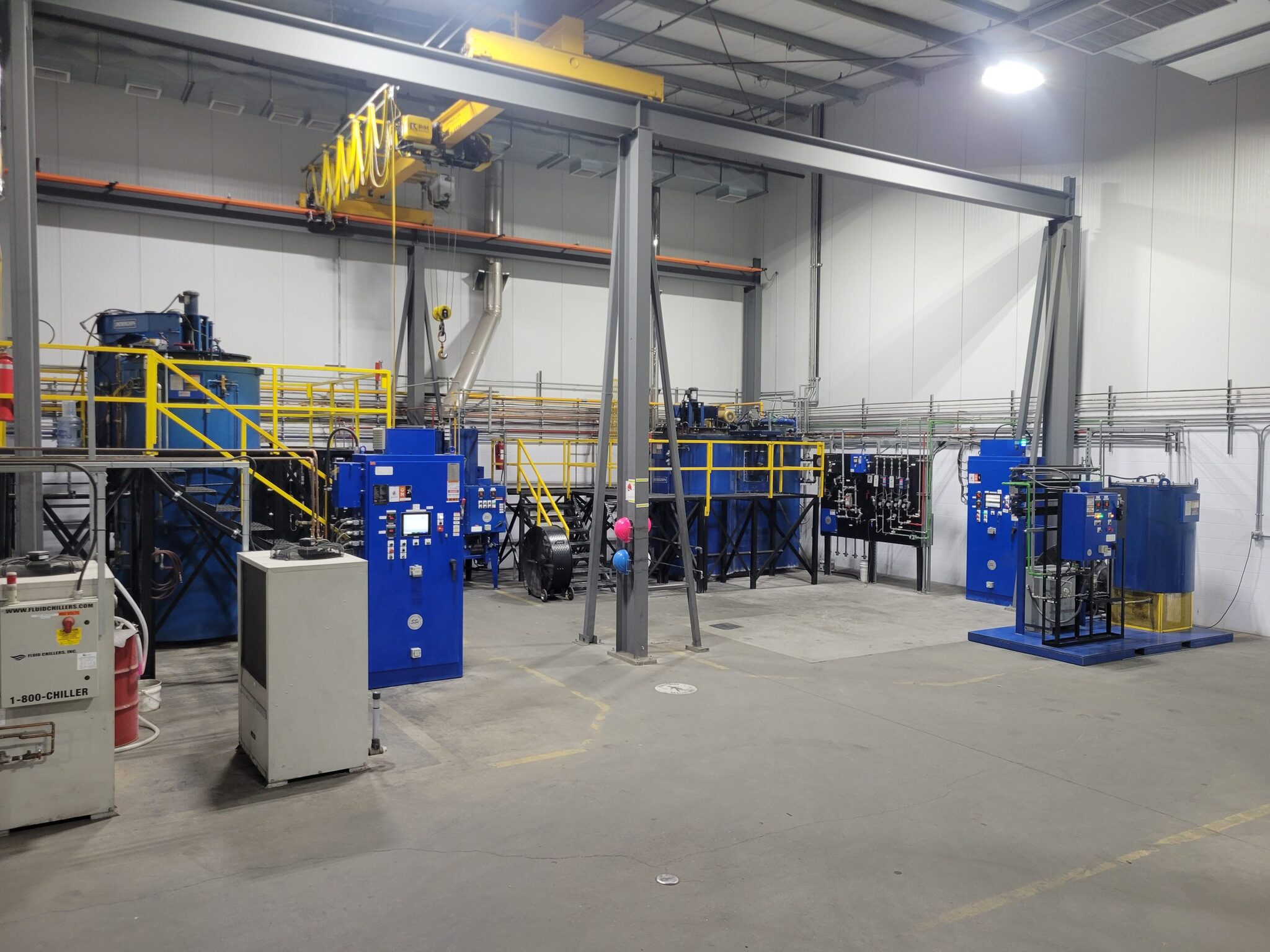
US Tariffs on imported auto parts has already had an effect on the North American Heat Treatment Industry. As an example a substantial US commercial heat treater recently temporarily closed their doors as a result of tariffs being applied on certain products coming from their Canadian customer.
This story from “NBC News” shows how interconnected manufacturing is in North America and how tariffs can affect commercial and captive heat treaters in Canada, the USA and Mexico. In this story about a North American auto parts supplier there is a reference to how the parts are shipped across the border a total of 4 times with a major commercial heat treater in Southern Ontario doing the heat treating.
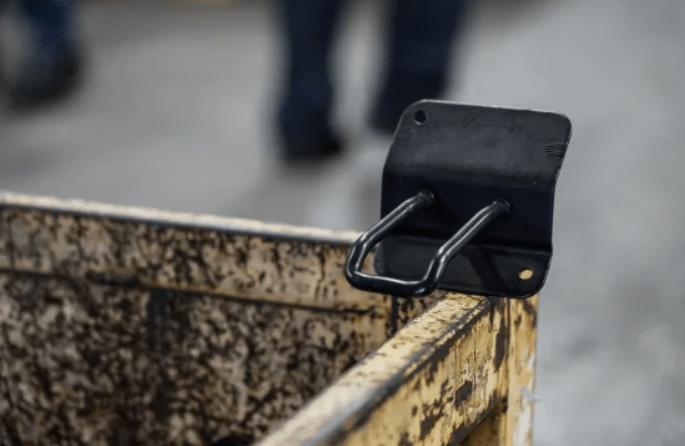
“The Trump administration wants to bring more auto manufacturing back to the United States with stiff tariffs. That could mean untangling supply chains that crisscross the border repeatedly, leaving some industry players unsure how their bottom lines will be affected. Take Brendan Lane’s striker plates, which move between the United States and Canada four times before they’re installed. The common component — one of the roughly 30,000 individual parts that go into a single vehicle — is a small metal loop attached to a slab of steel allowing car doors to latch securely in place.
“The system is set up where we’re across the border all the time,” said Lane, the general manager of Lanex Manufacturing in Windsor, Ontario, across the river from Detroit. His parts are sold to suppliers of major American automakers, including Ford, General Motors and Stellantis, and Lane said he has been making cross-border trips for his family-run company since he was 16.
Recent months have been a roller coaster ride for Lanex as President Donald Trump introduced tariffs on auto parts, steel and aluminum and Canadian imports. On Tuesday, Trump adjusted his vehicle tariffs to offer some relief from import taxes that in many cases had threatened to stack up on top of one another. Under the revised policy, automakers paying tariffs on imported cars can get reimbursed for some other levies, including on foreign-made metals, though country-specific tariffs could still apply.
Lane welcomed the changes but said tariffs are “not good” for his business. He said he remains worried about how the still-fluid U.S. trade policies will affect costs and jobs across the industry. “There’s thousands of people involved that it’s their everyday life,” he said.
American automakers have largely outsourced their parts manufacturing, mainly building only high-value components like engines, transmissions and bodies within the United States. Most other components — especially minor parts such as hoses, springs and striker plates — come from external suppliers, many of them abroad. Reshoring more of that extensive global supply chain is “not as easy as just flipping a switch,” Lane said.
His striker plates are spared the 25% U.S. duties on auto imports, which remain on track to take effect Sunday, because they comply with the United States-Mexico-Canada Agreement, which Trump negotiated during his first term. But Lane said he still isn’t sure what the long-term impacts on his business might be. “It’s tough to plan for,” he said. “We don’t know how we’re going to navigate it yet.”
Even General Motors said Tuesday that it was “reassessing” its business outlook to account for tariff impacts that are still likely to be “significant.” It promised to share more with investors “when we have greater clarity.”
Ford CEO Jim Farley told CNN on Wednesday that the latest tariff plan “clarifies things, but boy, do we have a lot of work to do with the administration.” “Affordability of parts is a really important thing for America because we’ve got to keep the vehicles affordable,” Farley said. Ford saw double-digit sales growth in March and April as people rushed out to buy cars, he added, and the company is extending its employee pricing offer through July 4.
The White House has indicated that the confusion is tactical. “President Trump creates what I would call strategic uncertainty in the negotiations,” Treasury Secretary Scott Bessent told reporters Tuesday. “The aperture of uncertainty will be narrowing,” he said, “and as we start moving forward announcing deals, then there will be certainty.”
Lane’s striker plates start with imported steel from Wixom, Michigan. Relying on American-made metal has already entailed a 25% cost hike due to Canada’s retaliatory tariffs on U.S. steel, a response to equivalent levies on foreign steel that Trump imposed in February. The Michigan steel travels across the border to the Lanex’s Windsor plant, which shapes it into striker plates. The components are then handed off to another Canadian company, in nearby Brampton, for heat treating.
Afterward, Lane drives the parts back over the border to Warren, Michigan, for plating, a process that applies a rust-protective coating. Finally, he brings them once more to Windsor, for inspection and packaging in his warehouse. Only then are the striker plates shipped to a vehicle assembly plant in the United States, where they’re mounted onto door frames.
Exactly how tariffs apply to a manufacturing process like Lanex’s matters a great deal to automakers and parts suppliers, said James Rubenstein, a geography professor who studies the auto industry at Miami University in Oxford, Ohio. “How they measure it, how they collect it, we don’t know,” he said. Trump’s 25% duties on foreign autos took effect April 3, the day he rolled out unprecedented tariffs on global imports, including a 10% baseline duty and significantly higher levels on dozens of other countries.
On April 9, Trump backtracked, abruptly announcing a temporary reduction in most of the sweeping new levies on countries around the world except for China, for which he raised the effective tariff rate to 145%. The changes also preserved his duties on Canada, Mexico, steel, aluminum and auto imports.
While major automakers applauded Tuesday’s partial rollback, they and other industry players are all but certain to pass along higher costs to drivers — both those who buy new rides and those who don’t. While the White House has said cars assembled in the United States with at least 85% domestic parts will face no tariffs, currently no vehicles meet that threshold.
In the meantime, Blair Borkowski, general manager at Cadillac Plating in Warren, Michigan, has been left for months “just taking kind of a wait-and-see approach.” Borkowski’s facility — the one Lane uses to rust-proof his steel parts — handles millions of small metal components every year, mostly for the auto industry, and serves customers across Mexico, Canada, Europe and Asia. The company has been trying to adapt to the policy turbulence as best it can. “We can make sure our customers get taken care of. We can make sure our employees get taken care of,” Borkowski said. “That’s really all we can do.”
Did you like this article? Click here to subscribe to The Monty.
“CAN-ENG Furnaces International, Ltd. is engaged in providing three separate systems amounting to over 450 feet of roller hearth furnace capacity.
The first of the three undertakings is a high capacity, roller hearth lamination annealing system. Produced for the transformer manufacturing industry, it will be supplied to one of North America’s largest transformer core manufacturers with operations in the USA, Canada, Mexico and China. The lamination annealing process is applied to transformer cores to enhance their magnetic properties and reduce core loss, ultimately improving efficiency and performance. The system integrates a pre-heat system, high temperature annealing furnace with integrated protected atmosphere-controlled cooling and accelerated cooling chamber. It is more than 300ft long and is capable of producing over 14,000 lbs/hr of atmosphere protected electrical steel core laminations used to manufacture high voltage transformer stations needed in the development of North America’s electrical distribution infrastructure.
“This project is being carried out largely to satisfy the demand for improving America’s aging and overburden power distribution network. As part of improving the nation’s power distribution network, consideration is being made to increase access to electric vehicle charging stations of which transformer cores are a critical part,” shared Tim Donofrio, Vice President of Sales, Can-Eng Furnaces International, Ltd.
The second endeavor is a roller hearth solution treatment furnace system for a tier one supplier of cast aluminum automotive components. The furnace will be used as part of a continuous T-6 heat treatment system for the manufacturing of cast aluminum, safety critical suspension components, and will serve to supply for one of America’s largest Japanese-based automotive manufacturers. These suspension components are to be integrated into future hybrid and electric automobiles produced in America by the manufacturer.
The third project is a roller hearth atmosphere mesh belt furnace system for a tier one supplier of safety critical, high value fasteners. This system is used to atmosphere, quench and temper high value, safety critical fasteners used in automotive manufacturing. The system is rated for processing over 6000 lbs/hr, and is being supplied to an existing customer with four similar roller hearth furnaces. The system supports the ongoing demands for domestic-supplied, high volume, heat treatment capacity.”
Did you like this article? Click here to subscribe to The Monty.
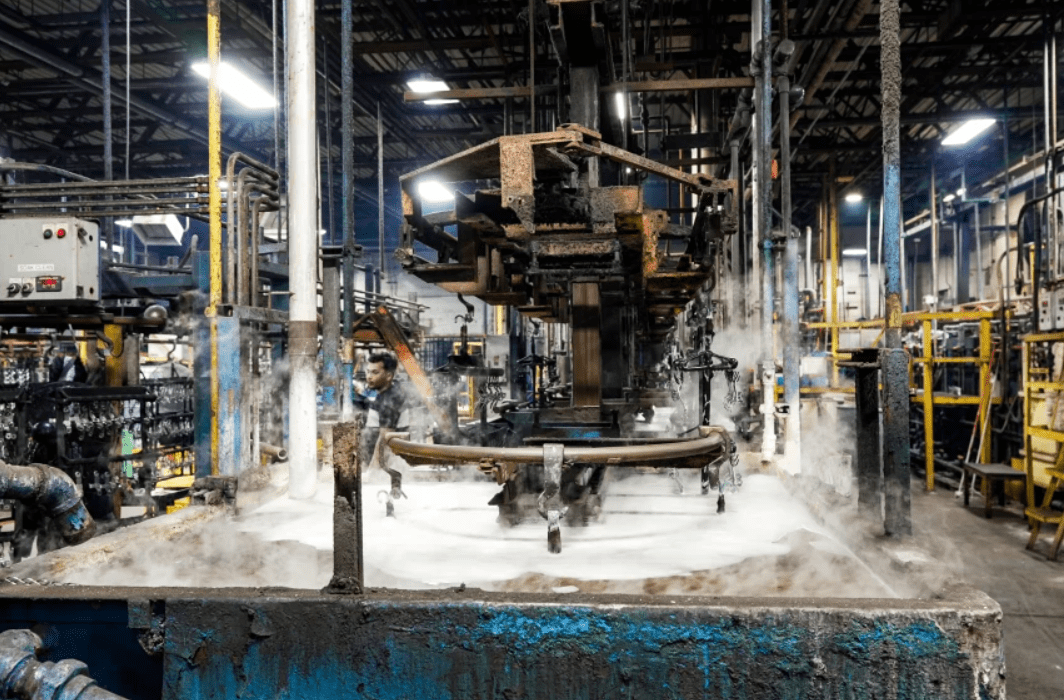
“In an industry exclusive to “The Monty Heat Treat News” we have this press release from EQI, a provider of line-ready solutions for metal products making a second acquisition in the North American heat treatment industry.
EQI Well Positioned to Serve Thermal Processing Industry with Acquisition of Ferralloy, Inc.
Spring Lake, MI 4/25/25 – EQI, a leading provider of line-ready solutions for metal products, has finalized its acquisition of Ferralloy, Inc., a global supplier of heat-resistant alloy products that also offers a comprehensive range of products and services that support heat treatment operations.
Established in 1984, Ferralloy, Inc., is based in Cleveland, Ohio. When the company was founded, it focused on heat-resistant alloy castings and fabrications used primarily in the thermal processing industry. Ferralloy, Inc., has experienced substantial growth in the years since, expanding its thermal processing offering to include investment-cast heat-treating baskets in various alloy grades, radiant tubes and furnace rolls tailored for high-temperature applications, and aluminizing, a diffusion coating process that enhances oxidation and corrosion resistance of components exposed to high temperatures.
Ferralloy, Inc., serves multiple end markets, including metal processing (heat treatment, fabrication shops, machine shops), automotive, aerospace, mining, and heavy equipment. Through commitment to process improvement, quality, and customer satisfaction, along with ISO 9001 certification, Ferralloy, Inc., has established a world-class customer base, including Caterpillar, Ford, Owens Corning, Mack, Whirlpool, and more. The company has also cultivated valuable supply relationships in China, India, and the US, enhancing the EQI global network.
“We are excited to add Ferralloy, Inc., to the EQI team,” says Blake Phillips, President and CEO of EQI.”
“Their expertise and capabilities in thermal processing and their focus on quality will drive innovation at EQI and better equip us to deliver exceptional value to our customers.”
Under the terms of the acquisition, Ferralloy, Inc., will operate as a division of EQI, enhancing its ability to deliver the highest level of quality and service to its customers. EQI and Ferralloy, Inc., ensure a seamless transition for both teams and their valued customers through collaboration and a shared commitment to excellence.
About EQI, Ltd: With an unmatched range of expertise and production capabilities, EQI is a leading provider of line-ready metal components that streamline and de-risk the supply chain for industrial equipment manufacturers. The company’s one-of-a-kind foundry network delivers high-quality metal castings, forgings, and fabrications on time and on budget. With a team of experts and locations in the U.S., Canada, China, India, Europe, and Vietnam, EQI’s tailored solutions mitigate risk and contain costs for manufacturers worldwide.
About Ferralloy, Inc.: Ferralloy, Inc. is an international company serving a global marketplace by offering competitively priced, engineered products produced in North America and Asia. Established in 1984 in Cleveland, Ohio, Ferralloy, Inc., provides total supply chain management to a diverse metalworking customer base.
For more information about Ferralloy, Inc., please visit: https://ferralloy.com/
For additional details on how EQI’s new capabilities can assist you, please contact: Phone: (616) 850-2630, E-mail: [email protected]
Did you like this article? Click here to subscribe to The Monty.
This week are charming host, “Mr. Carlos Torres” has a special treat for us in the latest “Heat Treat Podcast”. Carlos has an in depth conversation with “Mr. Andrew Bassett” of “Aerospace Testing & Pyrometry” about “Pyrometry and Industry Standards in the Heat Treatment Industry”.
Did you like this article? Click here to subscribe to The Monty.
In this installment of “Heat Treatment Industry “People News” we see that a few good people have recently made changes;
Jerry Waineo. The industry just lost a “good one” with the retirement of “Mr. Jerry Waineo” from furnace builder “AFC-Holcroft“. For over 40 years Jerry in the heat treatment industry first with furnace builder “Pifco” and subsequently with “AFC-Holcroft” after it acquired “Pifco“. Jerry’s last position at AFC-Holcroft was as “AFC-Holcroft Manager, Global Applications”. Jerry knew his stuff and was one of the calmest people we have ever met, over all the years we worked with him not once did we ever see him other than calm and relaxed. “AFC-Holcroft” is the North American division of Austrian furnace builder “Aichelin“.
Casey Hickman. For the past 23 years Mr. Casey Hickman worked at “Alcon Industries” of Cleveland, Ohio, USA a supplier of heat- and corrosion-resistant alloy castings for the heat treatment industry. Recently he made a change and took a position as Foundry Manager at “Pentair” in Ashland, Ohio, USA. His last position at “Alcon” was as Director of Operations.
Tyler Goodwin. Mr. Tyler Goodwin recently started a new position as Regional Engineer in the USA at commercial heat treater “Bodycote“. For the past almost 3 years Tyler was Maintenance Manager with the company and in a past life also worked with commercial heat treater “Bluewater Thermal“.
Eva Kong. For almost 20 years Eva has been attending heat treat exhibitions around the world as the “face” of “Hebei Shinning Metals Co., Ltd.“, a Chinese supplier of cast alloy components for the heat treatment industry. In this position she made some real in-roads into the North American heat treat industry. Very recently she became Marketing Manager for a competing company by the name of “Wuxi Junteng Fanghu Alloy Casting Co.“, Ltd. also in China.
Did you like this article? Click here to subscribe to The Monty.
Alberta Industrial Heat-Treating Inc. Marks Major Growth Milestones and Sets Sights on Expansion
Edmonton, AB – Since its founding in 2016 with just two employees, Alberta Industrial Heat-Treating Inc. (AIHeatTreating.com) has rapidly emerged as a leading provider of advanced heat treatment services in Western Canada. Initially operating from a modest 10,000-square-foot facility offering only induction heat treating and furnace tempering, the company has since undergone a dramatic transformation.
Driven by innovation and industry demand, AIHT has steadily expanded its capabilities over the years, introducing a Super-40 IQ/Temper furnace and adding two state-of-the-art Lindberg/MPH gas nitriding furnaces to its production line.
In mid-2024, the company took a bold step forward by relocating to a cutting-edge, 37,000-square-foot facility in Edmonton. The move coincided with the commissioning of a brand-new 36 x 72 x 36 Integral Quench (IQ) furnace line from Premier Furnaces, with a gross load capacity of 5,000 pounds. This advanced line includes an IQ furnace, dual temper furnaces, a parts washer, endothermic gas generator, and a charge car—solidifying AIHT’s position as an industry powerhouse.
Capping off a landmark year, AIHT also commissioned Alberta’s largest liquid nitriding system in December 2024, designed and built by Kolene Corporation. This system includes a comprehensive exhaust scrubbing unit to ensure minimal environmental impact and enhanced workplace safety.
Now employing 11 highly skilled professionals, AIHT supports clients across critical sectors such as oil and gas, aerospace, nuclear, mining, and agriculture. As a proud subsidiary of Apollo Machine and Welding Ltd., the company benefits from direct access to a world-class metallurgical laboratory. Staffed by a multidisciplinary R&D team—featuring four Ph.D. materials engineers, this facility delivers advanced testing and analysis capabilities. The lab’s capabilities include tensile and compression testing, Charpy impact testing, full-scale fatigue testing, two automated hardness testers, a state-of-the-art digital microscope, a dedicated EDM unit for sample sectioning, and facilities for polishing, mounting, etching, with an estimated output of over 600 samples per year
A testament to AIHT’s forward-thinking approach is the Apollo-Shield™ process—developed in collaboration with Apollo-Clad Laser Cladding. This patented technology combines the most effective elements of carburizing, nitriding, laser heat treatment, and induction heat treatment, resulting in ultra-hard surface layers without compromising base material integrity.
From humble beginnings to industry trailblazer, AIHT’s journey is far from over. With expansion on the horizon and innovation at its core, the company is heating up—and Alberta’s manufacturing sector will never be the same.
Did you like this article? Click here to subscribe to The Monty.
The North American heat treat industry has lost one of it’s most “colourful” members ever. Walt Paluch spent most of his working career as a Metallurgical Engineer including a long stint at what was originally known as “New Venture Gear” in Syracuse, New York, USA. Originally this transmission plant was part of “Chrysler” before being acquired by auto parts giant “Magna”. During Walt’s years as head of the heat treat department, this location was one of the largest captive heat treats in North America with 14 multi row pusher furnaces and a variety of batch IQ units. This location eventually closed with some of the furnaces being moved to Mexico.
Anybody that ever met Walt will certainly remember him.
“Walter Paluch, 68, Tipperary Hill, Syracuse, passed away on April 24, 2025 at Francis House due to complications of dementia. Born in Chicago, IL, he was the youngest son of Ted and Wanda Paluch. He graduated from Lane Tech High School and attended Triton College. He was drafted by the Cincinnati Reds in 1977 to play professional baseball and briefly became a scout for them. Walter pursued a degree in engineering at Rochester Institute of Technology (RIT). He retired from New Process Gear in the specialized field as a Heat Treat Engineer. Walter later applied his technological skills and creative interests in various photographic and video production initiatives, including the establishment of Tipp Hill Photo and Video with his wife Lori, which specialized in capturing memorable moments of weddings, sports, and other special events.
Walter loved playing baseball and didn’t hesitate to make a generous donation when a little league team asked for equipment, which even made a local news story. He was also happy to use his time and expertise helping others with computer issues and setting up Web sites.
Survivors include his wife of 20 years, Lori Capels of Syracuse; brothers Theodore and Bruno of Chicago, IL; and son Steven Paluch of San Diego, CA; sisters-in-law Leslie Kravec of Camillus, Jody Boehm (Steve) of Syracuse, and Valerie Capels (Brian Shupe) of Vermont; several nieces and nephews; and good friend Chris Taylor.
The family wishes to express deep appreciation for the compassionate care Walter received while at St. Joseph’s Hospital Unit 2-4 and Unit 1-5 as well as for the amazing and compassionate care he and the family received from the staff and volunteers at Francis House.
Per his wishes, there will be no calling hours or services.”
Going back a number of years Rotary Retort Furnaces were a common fixture in the heat treatment industry around the world-for a number of reasons the technology has largely fallen out of favor although in some applications they are still the technology of choice.
As an example, automotive parts supplier “Borg Warner” and chain saw chain supplier “Oregon Cutting Tools” both still run a number of rotary retort furnaces for components which are remarkable similar-small chain links.
However few companies are still investing in this technology and as far as we at “The Monty” know the only furnace builder which still offers new rotary retort furnace lines is “SECO/WARWICK”.
With that background out of the way it would appear that there is a demand for this technology afterall. When the USA Midwest heat treater closed down their rotary lines a buyer surfaced within a week and all the lines are destined for a new home proving that even older technologies can find a new home.
Did you like this article? Click here to subscribe to The Monty.
Ipsen announces the launch of its seventh regional Service HUB, strategically located to support customers in East Texas, as well as parts of Oklahoma and Louisiana. Officially launched in April 2025, the new HUB provides regional customers with a single point of contact for routine maintenance, preventative service, and technical support — delivering faster repsonse times from the Field Service Team.
“Ipsen sets the benchmark in our industry,” explained Cody Webb, Southwest Regional Service Manager. “Our superior service has always given us the leg up. By strategically placing Field Service Engineers in HUB regions,we are able to provide the best service possible, quickly and at a more attractive cost to our customers.” The expansion directly benefits heat treaters in the Austin, Houston, and Dallas–Fort Worth regions— particularly those in aerospace and defense, where high system accuracy and minimal downtime are critical. The Service HUB offers personalized, reliable support by assigning familiar technicians who develop deep familiarity with each customer’s equipment and processes.
“Our HUB team represents a highly-skilled, well-trained team of experts that are dedicated to providing the best service possible to our customers,” Webb explained. Ipsen Service HUB response teams help customers maximize production and reduce downtime by identifying potential issues early, and by delivering skilled troubleshooting and repair services between scheduled maintenance. In addition to improving customer service, the HUB model supports Ipsen’s workforce strategy by enabling technicians to work within dedicated regions. “Giving our team the opportunity to work closer to home is exciting,” Webb noted. “It helps us both attract and retain the best technicians in the field.”
With this latest addition, Ipsen continues to strengthen its national network of localized support, helping thermal processors stay competitive, compliant, and production-ready. Existing Ipsen HUBs serve major regions across the Pacific Northwest, Southern California, Wisconsin, Illinois, Michigan, Indiana, Ohio, Kentucky, Virginia, North Carolina, and South Carolina. Four additional HUBs are planned for launch within the next year.
Did you like this article? Click here to subscribe to The Monty.
One of the most frequently asked questions by vacuum furnace operators is “Why are my parts discolored?” While many customers may believe they’ve thoroughly tested and inspected their equipment before reaching out to us, there are often areas that might be overlooked during the inspection process.
Here is a list of diagnostic questions you should expect us to ask whenever we get this call:
Initial Data Collection
What are the cold and hot linear leak rates of the furnace?
Does the furnace reach the desired process vacuum levels and remain within specifications throughout the cycle?
Defining the Discoloration
What shows signs of discoloration: the hot zone, the parts, or both?
What color are you seeing on the parts or hot zone? (green, blue, white, black, etc.)
Physical Inspection
What is the age and condition of the current hot zone?
Are there any abnormal odors noticeable in the hot zone when the furnace door is opened?
Are there any signs of arcing heating elements and/or melted materials within the hot zone?
Are the cold walls in the furnace clean or dirty?
What is the condition of the furnace door seal?
Have you inspected and tested the pumping system to ensure it is functioning properly and obtaining the specified vacuum levels? Are all of the pump oils at the correct level and normal appearance?
Recent Maintenance
Has there been any scheduled or unplanned maintenance recently performed on the furnace?
When was the last time the heat exchanger was inspected and/or serviced?
When did the furnace last undergo a cleanup cycle? How often are cleanup cycles performed on the furnace? What are the temperatures, times and pressures used during the cleanup cycle?
Process Review
Have the materials, alloys, or recipes recently changed?
Has the cleaning process for upstream parts, baskets and/or fixtures recently changed? Have the baskets and fixtures been properly maintained and pass inspection?
Are the baskets, grids and/or racks used in other processes/equipment besides this vacuum furnace?
Leak Detection
Is the leak detector connected to the pumping system? Where on the system is it connected?
Have you verified that the inert gas supply lines are leak free?
Diagnostic Testing
If you run a process that does not utilize partial pressure, followed by a vacuum cool at the end of the cycle, does the furnace yield clean parts?
Have you wrapped a test part in titanium or stainless-steel foil (depending on the process temperature) to see whether it is the part or the furnace environment that is generating the contamination?
Has a sample of the contaminated surface been sent to the lab for a trace element review? What were the findings of the report that was generated?
As you go through this diagnostic checklist, the more answers you can provide, the quicker our experts will be able to help you uncover the solution.
If you find yourself working through this diagnostic list and you decide you need help along the way, reach out to us at 844-Go-Ipsen or by emailing [email protected]. We can offer tips and tricks, or you can make an appointment with one of our field service technicians to help you troubleshoot the issues and get your furnace back into production in a timely manner.
What Discoloration Tells Us
Yellow (from straw yellow to golden): When using argon, yellow parts signify an air or gas leak that invites atmospheric air to mix with argon. The more significant the leak, the darker the yellow coloration gets. Past a point of leak severity, parts may emerge blue instead of yellow.
Blue (from sky blue to midnight blue): While using argon, blue parts signify increasingly severe air leaks, gas leaks, or atmospheric mixing. While using nitrogen, blue parts signify smaller air leaks. Once again, the darker the color, the more severe the leak is. Blue may also indicate, copper contamination.
Green (from lime to forest green): Green parts signify a few potential problems, including:
The furnace door was left open in-between cycles, or the furnace was not kept under vacuum for an extended period
Parts were put into the furnace while excessively wet or with wet braze alloys
The furnace was run at high temperatures while in an intense vacuum, liberating chrome from the parts and fixtures
The hot zone absorbed water vapor
There may have been a copper contamination in the process
Water jacket leaks, heat exchanger leaks, traces of water, etc.
Black (from light gray to pitch black): While using argon, black may indicate a severe leak in the system. Black may also indicate carbon contamination in the process. This may happen during partial pressure carburizing, or be the result of sooty parts that haven’t been cleaned completely before thermal processing.
*Contamination layers less than 0.1 μm are transparent, and human eyes cannot distinguish the color correctly. Customers can identify discoloration based on the thickness of the contamination layer in the heating chamber or the part. Tool steels are less sensitive and can be heat-treated under a low vacuum level. Stainless steel and super alloys are susceptible to even the slightest traces of oxygen in the vacuum system.


 “In an industry exclusive to “The Monty Heat Treat News” we have this press release from EQI, a provider of line-ready solutions for metal products making a second acquisition in the North American heat treatment industry.