We understand that “Bodycote” the world’s largest commercial heat treater will be closing their Covington, GA, USA facility. While “The Monty” has visited over 50 Bodycote facilities around the world over the years this is one location we have not had the privilege of visiting. Having said that, we understand that it is a medium-size location with a mixture of smaller batch IQ furnaces and vacuum systems. The official description of this plant says little beyond this background;
“Bodycote is the world’s largest provider of thermal processing services. Heat Treatment is a vital link in the manufacturing supply chain, a value-added and proprietary special technology, which offer a unique solution for a variety of applications. Providing Heat Treatment services designed to satisfy your thermal processing needs and requirements. Our capabilities encompasses a variety of techniques and engineered processes which improve the properties of metals and alloys to satisfy the requirement of the designed applications. Heat treatment is a controlled thermal process used to alter the properties of steel and alloys. The Covington, GA Bodycote plant is certified to ISO 9001:2015.”
While no reasons have been given for this closure, we would assume that its part of the firm’s strategy of closing smaller, marginally profitable locations. No date for the closure has been given.


Jordan Montgomery, Jeff Halonen
In 2024 commercial heat treater “Metex Heat Treating Inc.” (one of the largest commercial heat treaters in North America “Top 52″ List Provides Insight Into North American Heat Treat Industry”) acquired a fellow commercial heat treater by the name of “Exactatherm” “Metex Heat Treating Ltd. Announces a Strategic Acquisition of Exactatherm Limited”.
A recent visit by Gord and Jordan Montgomery of “The Monty Heat Treat News” provides an update to the acquisition and also ties it into a recent story about an acquisition in the “ERP” heat treating software industry, a story which can be found at “Major Acquisitions for Heat Treatment Software Supplier”
Since “Metex” acquired “Exactatherm” the firm has grown to over 20 employees and added a tensile testing lab, both moves fueled by strong sales growth due to a number of factors including new investments, higher exposure caused by added marketing efforts and more conferences/trade shows. A lot of this increased exposure has been due to the strong efforts of Ms. Sheela Samy who after 36 years with the company, is adding sales to her other responsibilites. Sheela shared with us that future additions to the company might include more plasma and gas nitriding capacity along with aluminum aging although no time frame has been specified for these additions.
We quizzed “Mr. Raman Bawa”, President of “Metex” about what the acquisition of “Exactatherm” has meant for the company given that “Metex” has traditionally been very automotive oriented and “Exactatherm” is aerospace orientated-this is what he had to say;

Sheela Samy, Gord Montgomery
“Prior to our acquisition of Exactatherm we had, had little experience with aerospace (Nadcap) heat treating and quite frankly it was a challenge to us after our many years of concentrating on automotive heat treating. What we learned is that in aerospace heat treating you are more of a partner with your customers, probably because of the much smaller volumes it is more like “custom” heat treating. Automotive heat treat systems have been in place for so many years and involve such large volumes that it becomes more automated. Aerospace heat treating tends to more part specific-think 20 parts as opposed to 2 million parts.”
As we mentioned the history of “Exactatherm” is also tied to their decision to invest in an “ERP” system from “Steelhead Technologies” almost exactly one year ago-August of 2025 to be exact. The relationship between the two companies is strong enough that Steelhead chose to use “Exactatherm” in their press releases including this quote from Mr. Vraj Shah, Quality Manager, “Exactatherm”;
“At Exactatherm, a heat treater in Mississauga, ON, taking their shop floor digital has simplified training, tightened quality control, and enabled faster turnaround times. “With Steelhead, if we need a job pulled for review in a Nadcap audit, we can look it up and have all the data right there. We don’t have to train someone with a background in metallurgy or heat treat to enter a job anymore; anyone can do it. That efficiency shows up everywhere: our lead times used to run a couple of weeks, now we’re down to ten days, and parts we used to store for ten to twelve days now move through in five to seven.”— Vraj Shah, Quality Manager, Exactatherm”.
These photos show a visit to “Exactatherm” August 24, 2026 during which Mr. Jeff Halonen, CEO of “Steelhead” was in attendance. We thank the entire team at “Exactatherm” and “Metex” for their hospitality.

Vraj Sham, Quality Manager, “Exactatherm”, Jordan Montgomery “The Monty”, Raman Bawa, President “Metex”, Sheela, Samy COO, Exactatherm, Jeff Halonen, CEO, “Steelhead”
 (Editor’s Note; It is the understanding of “The Monty Heat Treat News” that this expansion includes more heat-treating capacity).
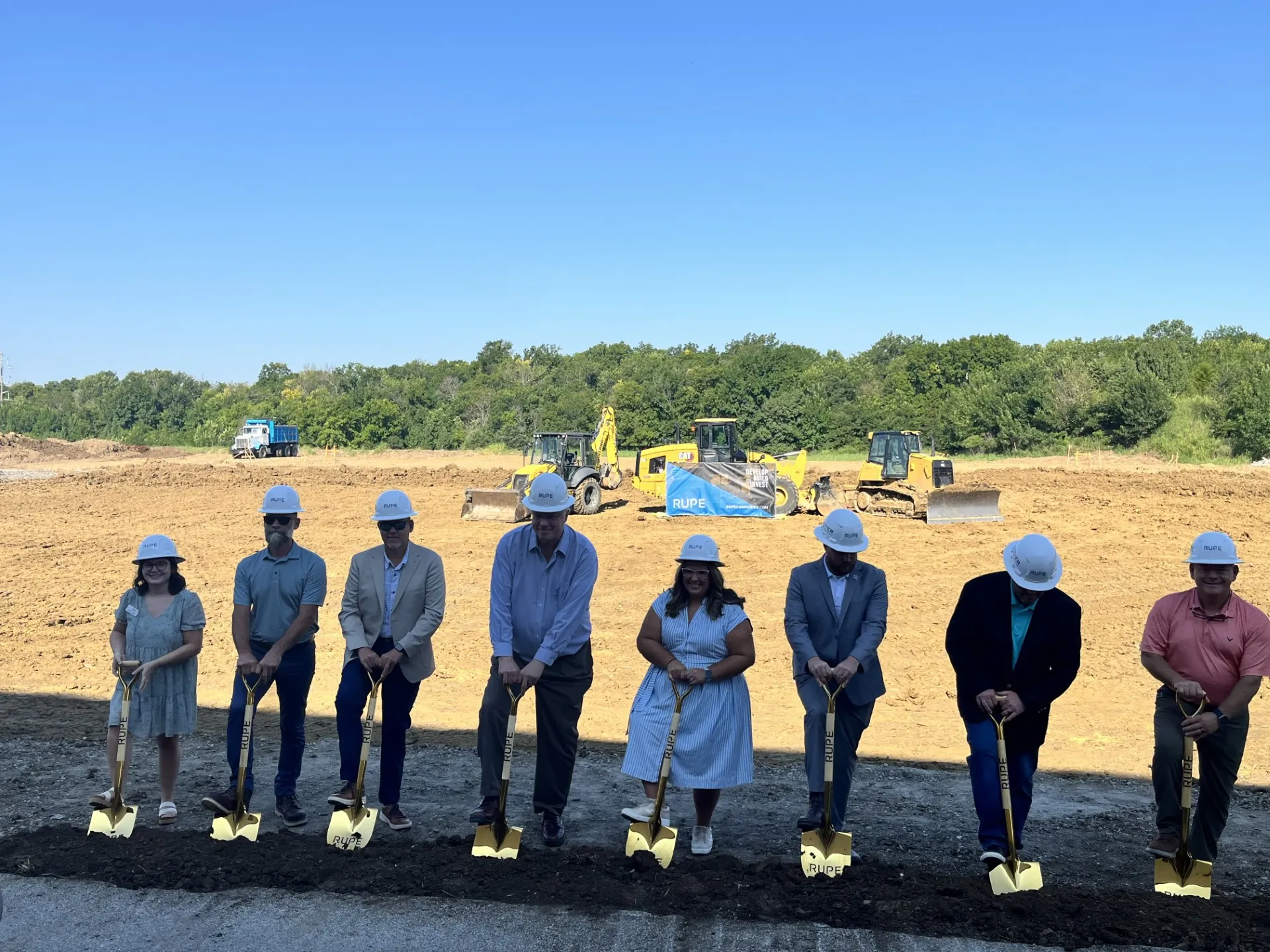
“Pryer Aerospace, a leading Oklahoma manufacturer of complex aerospace components and structural assemblies, broke ground Tuesday, July 14, on a 60,000-square-foot expansion of its Claremore facility.
Founded in Oklahoma in 1965 and acquired by Argonaut Private Equity in 2025, Pryer Aerospace supports aviation, defense, and space flight programs through advanced structural assembly, precision machining, metal fabrication, and other highly technical aerospace manufacturing capabilities. Pryer Aerospace’s customers include Blue Origin, Boeing, Nordam, Orizon, and U.S. defense contractors.
The Claremore facility expansion will enhance support for existing aerospace customers and enable Pryer to expand its customer base. The expansion doubles Pryer’s manufacturing space in Claremore and cements the company’s vital role in the regional and global aerospace industry.
“This expansion demonstrates our confidence in our team, our customers, and the future of aerospace manufacturing in Oklahoma,” said Brian Gleason, Vice President and General Manager of Claremore Operations at Pryer Aerospace. “For more than 60 years, Pryer has solved some of aviation’s most challenging problems, and this investment helps us continue to build the capacity, capabilities, and workforce we need to fuel our next chapter.”

“Pryer Aerospace’s expansion shows the strength of Claremore’s global manufacturing base and the momentum behind aerospace growth in northeast Oklahoma,” said Meggie Froman-Knight, executive director of Claremore Economic Development. “This investment supports high-quality jobs, strengthens the regional supply chain, and reinforces why companies continue to choose Claremore and Rogers County for long-term growth.”
The groundbreaking brought together Pryer Aerospace leadership, Argonaut Private Equity, representatives from Rogers County, the Oklahoma Department of Commerce, Claremore Economic Development, Tulsa Regional Chamber of Commerce, Northeast Tech, Tulsa Tech, and other project and community partners.”


View of Armored HMMWV in Iraq.
Background from “The Monty Heat Treat News”; “The Monty” recently identified the growth of AI centers as a catalyst for increased vacuum furnace demand; “AI Data Centers Spiking New Vacuum Furnace Orders-Update”.
In this press release from furnace builder “SECO/WARWICK” the company points out that global growth in defense spending is also leading to major investments in manufacturing and consequently new heat treat furnaces. More on this subject to come;
“Rising military expenditure is reshaping not only the arms market, but the entire industrial supply chain. In the new reality, what matters is not only finished defense systems, but also the technologies that enable critical components to be manufactured faster, more consistently and closer to the end user. This is precisely where the importance of SECO/WARWICK Group solutions is growing: metal heat treatment, vacuum technologies, aluminum brazing and vacuum metallurgy.
Global defense spending is surging, driving demand for advanced industrial technologies like vacuum metallurgy and heat treatment to ensure the reliability of critical military components. As defense investment reaches record levels, what factors will determine long-term industrial readiness and resilience? This article highlights the key trends, technologies, and challenges shaping the future of defense manufacturing:
- Global military spending hit a record $2.7 trillion in 2024.
- Defense growth requires investment in production and manufacturing capabilities.
- Heat treatment and vacuum metallurgy are essential for component durability.
- SECO/WARWICK provides critical technology for aerospace and defense manufacturing.
- Success in defense requires combining technology with supply chain security.
The global defense sector has entered a phase of long-term growth. According to SIPRI, world military expenditure reached USD 2,718 billion in 2024, representing a real-term increase of 9.4% year on year. This is the largest annual increase since 1988. In Europe, the shift is equally clear. The European Defense Agency reports that defense expenditure by the EU-27 Member States reached EUR 343 billion in 2024, up 19% compared with 2023.”
These funds are not allocated solely to the purchase of final military equipment. Investments in production capabilities are becoming increasingly important: plant modernization, expansion of technological lines, material processes, certification, quality control and R&D. In other words, the role of the industry that is not always visible in the finished product is growing, although it determines whether that product can be manufactured in series, repeatedly and in line with the requirements of the defense sector. In this context, metal heat treatment and vacuum metallurgy are becoming part of the strategic industrial backbone of security. The quality of these processes affects hardness, wear resistance, dimensional stability, microstructure, fatigue resistance and the durability of components operating in extreme conditions.
“Today, it is increasingly clear that national security begins not only on the training ground, but also in the production plant. Even the most advanced defense system consists of thousands of elements that must be manufactured with the highest repeatability and process control. SECO/WARWICK Group does not manufacture weapons; it delivers technologies that enable industry to produce components with the required quality, durability and reliability,” says Sławomir Woźniak, CEO of SECO/WARWICK Group.
SECO/WARWICK solutions support the production of components used in aerospace, special-purpose vehicles, propulsion systems, cooling systems, turbines, gear systems, ammunition components, missile parts and space technologies. Their common denominator is the need for a stable process and full control of parameters.
In practice, this means specific implementations for specific industrial challenges. For TATA Advanced Systems, SECO/WARWICK delivered a VertiQuench line for solution heat treatment of large aluminum sheets used in the production of aircraft skins and structural components.
For a European NATO supplier, a customized Vector furnace for sintering ammunition cores was developed, removing a bottleneck in one of the key stages of production. A naval shipbuilder uses Vector technology to anneal 3D-printed parts made from metal powders, increasing its independence in the production of critical spare parts.
Rafael Advanced Defense Systems, in turn, implemented a vacuum furnace for casting titanium and nickel-based superalloys, while EcoTitanium, part of Aubert & Duval, increased its capabilities in titanium alloy recycling and refining using PAM and VAR technologies.
These examples show that SECO/WARWICK technologies support different levels of the value chain: from component heat treatment, through the production of aerospace and ammunition parts, to the metallurgy of critical materials.

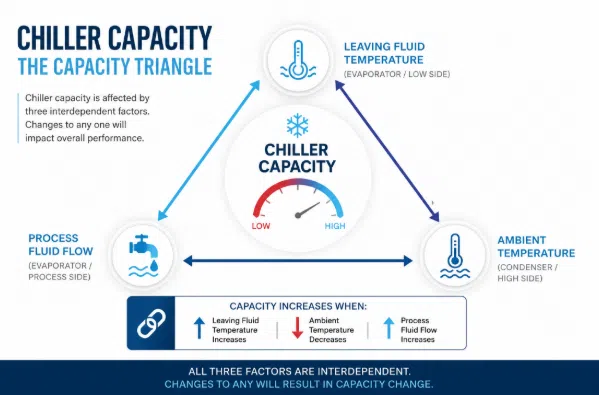
A simple way to understand this is through what we at Thermal Care call the “Chiller Capacity Triangle.” Much like the exposure triangle in photography, three main factors work together to determine how much cooling a chiller can actually provide. These three factors are Saturated Suction Temperature (SST), Saturated Discharge Temperature (SDT), and Process Fluid Flow. Changing one side of the triangle affects the other two, and ultimately changes the chiller’s capacity and efficiency.
Saturated Suction Temperature, or SST, is connected to the evaporator side of the refrigeration system. In simple terms, SST is closely related to the leaving fluid temperature coming out of the chiller. If a process requires very cold fluid, such as low-temperature glycol, the SST must also be lower. The lower the SST becomes, the harder the compressor has to work. As compressor workload increases, cooling capacity often decreases and electrical power consumption increases. On the other hand, a higher SST usually allows the compressor to operate more efficiently and deliver better capacity.
Saturated Discharge Temperature, or SDT, is connected to the condenser side of the system. On an air-cooled chiller, SDT is heavily influenced by the outdoor ambient air temperature. On a water-cooled chiller, it is related to the temperature of the condenser water entering the system. A chiller operating on a mild 75°F day will usually perform much better than the same machine operating on a 100°F day. Higher SDT increases the compressor’s workload, which reduces efficiency and lowers cooling capacity. Lower SDT generally improves system performance and reduces electrical usage.
The third side of the triangle is process fluid flow. Flow refers to how much water or glycol moves through the system, usually measured in gallons per minute (GPM). Proper flow is important because it allows heat to transfer effectively from the process into the refrigeration system. If flow is too low, heat transfer suffers and cooling performance drops. Properly optimized flow helps stabilize temperatures, improve heat transfer, and maximize available capacity.
Chiller capacity INCREASES:
When flow increases while leaving fluid temperature and ambient temperature remain constant.
When leaving fluid temperature increases while flow and ambient temperature remain constant.
When ambient temperature decreases while flow and leaving fluid temperature remain constant.
Chiller capacity DECREASES:
When flow decreases while leaving fluid temperature and ambient temperature remain constant.
When leaving fluid temperature decreases while flow and ambient temperature remain constant.
When ambient temperature increases while flow and leaving fluid temperature remain constant.
Always Compare Chillers at the Same Conditions
Because all three factors work together, it is very important to compare chillers under the same operating conditions. Two chillers may both be labeled as “10-ton” units, but if one rating is based on 50°F leaving water and the other is based on 65°F water with a lower ambient temperature, the comparison is not equal. The operating conditions completely change how much cooling the machine can provide.
Compressor horsepower is another area that often causes confusion. Many people assume that a 10 HP compressor should automatically produce 10 tons of cooling. In reality, compressor horsepower is only one piece of the puzzle. Two chillers with the same compressor horsepower can produce very different cooling capacities depending on how they are operating. A useful way to think about it is like a car engine. Horsepower matters, but fuel economy, terrain, and driving conditions also affect performance.

Optimizing a chiller for its actual operating conditions can result in major energy savings. Selecting the proper SST, designing around realistic ambient temperatures, and maintaining correct process flow can dramatically reduce electrical power consumption. Lower power usage not only reduces operating costs, but also improves long-term reliability and reduces wear on the refrigeration system.
With more than 50 years of experience, Thermal Care has extensive experience optimizing chiller systems for real-world applications. Properly matching a chiller to the operating conditions helps ensure the best combination of capacity, efficiency, and long-term performance.

Chad recently made a change and is now Sales Manager for a firm by the name of “Coronado Steel Co.” where we have no doubt but that he will do a great job. He will certainly be missed by all of his customers in the heat treat industry.
“I’m pleased to share that I recently joined Coronado Steel Co., a member of the Canerector family of companies, as Sales Manager. The onboarding experience has been outstanding, and I’m grateful for the warm welcome from the entire Coronado team. I’m excited to continue building strong relationships and serving as a strategic partner to our customers, drawing on nearly 13 years of experience in heat- and wear-resistant castings and tubular products.”
Coronado Steel is a full-service foundry headquartered in Youngstown, Ohio, offering an integrated range of manufacturing capabilities including static sand casting and centrifugal casting for radiant tube and furnace roll assemblies. Our centrifugal capabilities offer a library of dies from 3-1/2 inch OD up to 32.5 inch OD. The fabrication of high-temperature assemblies (radiant tubes, furnace rolls, calciners, etc), precision CNC machining, and metal recycling services are all performed in-house by a team of skilled teammates. The company has built its reputation on producing heat- and corrosion-resistant alloy castings, including stainless steels, cobalt alloys, tool steels, and other specialty metals engineered to withstand extreme heat, corrosion, and wear, manufactured to ASTM A297 “H-Series,” A351, and A494 standards as well as proprietary grades.
Coronado Steel serves a broad base of industrial customers across commercial heat treat, steel mills, petrochemical, refineries, industrial machinery, power generation, and glass and ceramics markets, supplying mission-critical components to manufacturers throughout North America and around the world. With decades of metallurgical expertise and a commitment to quality and reliability, Coronado Steel continues to be a trusted partner for companies that depend on high-performance castings and fabricated parts in the most demanding operating environments.

According to this press release from “AD HOC News” shares in Bodycote have jumped over 30% in 2026; “Bodycote stock advances during takeover offer period as shares gain over 30 percent in 2026”-part of the story can be found below;
“Bodycote plc (GB00B3FLWH99) stock is trading higher in 2026, with the shares up more than 30 percent since the start of the year as the company remains in a formal takeover offer period as of August 17, 2026.
The UK Takeover Panel has listed Bodycote as an offeree company with CVC Advisers Limited identified as a potential offeror, and set a Rule 2.6 deadline of 5:00 p.m. on September 2, 2026 for a possible bid to be announced or withdrawn, according to the Disclosure Table updated on August 17, 2026. The Takeover Panel Disclosure Table shows that the offer period for Bodycote commenced at 4:12 p.m. on August 5, 2026.
Market data from a share price overview indicates that Bodycote stock was trading at GBX 698 on January 1, 2026 and has increased by 31.3 percent to trade around GBX 916.50 as of August 17, 2026, highlighting a strong year-to-date performance for the shares. A detailed market overview also shows a recent quote near GBX 913.50 with a small daily change and a first-January change of more than 30 percent, indicating that the stock is trading within a relatively narrow daily range while maintaining substantial gains for 2026.
Takeover panel sets early September deadline
The takeover situation around Bodycote has crystallized in August 2026 as the UK Takeover Panel formally placed the company in an offer period and identified CVC Advisers Limited as a potential bidder, creating a clear timeline for strategic decisions.
According to the Disclosure Table update dated August 17, 2026, Bodycote is recorded as an offeree with its ordinary shares, ISIN GB00B3FLWH99, and 170,187,993 securities in issue under the offer period entry. The disclosure entry notes that the offer period for Bodycote commenced at 4:12 p.m. on August 5, 2026 and that CVC Advisers Limited was identified as the offeror at the same time, providing clarity on both the start of the process and the interested party.
Crucially for investors, the same table sets a Rule 2.6 deadline of 5:00 p.m. on September 2, 2026, by which CVC must either announce a firm intention to make an offer for Bodycote or confirm that it does not intend to make an offer, unless the Panel agrees to an extension. The Rule 2.6 timetable is a key structural feature of UK takeover rules, and in this case it gives market participants a clearly defined event date at the start of September that could materially affect Bodycote stock’s valuation depending on whether a formal bid emerges.
The disclosure also lists Bodycote’s legal entity identifier, confirming the company’s identity within the Panel’s framework, and places it alongside various other offeree companies in ongoing UK offer periods. This context underscores that Bodycote is now part of a broader wave of corporate activity monitored by the Panel, where potential acquirers are working against specific deadlines.”

“The British company Doncasters (DPC Holdings) in Mexico has confirmed that Mexicali will take over the critical work that is usually performed in the U.S., including post-casting processes and specialized heat treatments. This decision would lead to a reconfiguration of the supply chain and enhance Mexico’s role in the manufacturing of aerospace components.
During a conference call to discuss its second-quarter results, the company noted that the transformation of the Mexicali facility is proceeding in three phases. The first two phases have already been completed, while the installation of heat treatment capacity and NADCAP certification (the global quality accreditation program for the aerospace and defense industries) will soon begin the qualification process.
As a result, Mexicali could complete the production cycle without relying on third parties, while also avoiding the need to ship parts back to the United States—a key step toward reducing costs and delivery times. The introduction of advanced processes and specialized certifications points to increased demand for technical talent and deeper integration with global OEMs.
The expansion comes at a favorable time for Mexico, as the aerospace industry generates more than US$9 billion in annual exports. The country has more than 300 companies in the sector, concentrated in three main hubs: Baja California—where Doncasters already operates—which is the largest cluster with more than 80 companies and a growing specialization in precision manufacturing, engine components, and high-value-added processes; as well as Chihuahua and Querétaro.
The company has confirmed that Mexico is a participant in two strategic partnerships with original equipment manufacturers in the aerospace industry; these contracts are a key driver of Doncasters’ growth, with projections of more than US$200 million in additional revenue for the coming periods.
With global demand for engines reaching historic highs, driven by requirements from Boeing and Airbus as well as fleet renewal, Mexico is establishing itself as a strategic hub for the company. The strategic plan would begin in 2027, accelerate in the following period, and reach full capacity by 2029.”
About Doncasters; “Doncasters Group is a leading international manufacturer of high-precision alloy components and superalloys engineered for demanding environments. The company primarily serves original equipment manufacturers (OEMs) across the aerospace and industrial gas turbine (IGT) markets.
Notably, in June 2026, Doncasters went public on the New York Stock Exchange under the ticker DPC, raising $919.3 million USD in its initial public offering.”


“We’re proud to announce the promotion of Roger Birdseye to General Manager of Operations at G-M Enterprises.
Roger’s journey is a great example of leadership built through dedication, experience, and continuous growth. Since joining G-M Enterprises in 1989, he has progressed through multiple leadership roles while helping shape our manufacturing operations and supporting customers across the thermal processing industry.
As General Manager of Operations, Roger will provide strategic leadership for our daily operations, helping drive operational excellence, customer satisfaction, and continued growth.
Congratulations, Roger, on this well-deserved promotion! We look forward to seeing your continued leadership and the positive impact you’ll make in this new role.”
