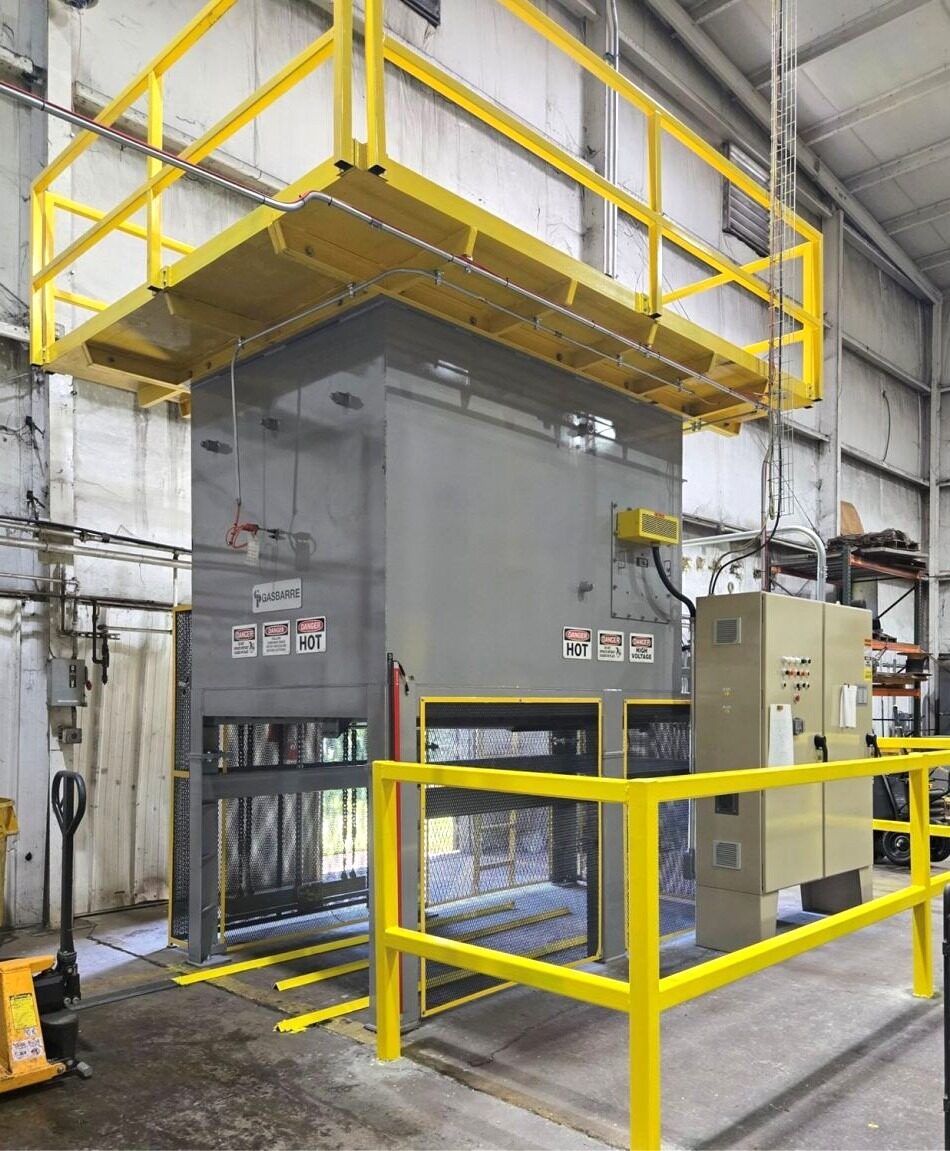
“Gasbarre Thermal Process Systems”of St. Marys, PA, USA recently installed and commissioned a brand new “Hyperquench” Drop Bottom furnace system for high performance heat treatment of aluminum alloys. The system is installed and running at the Wadsworth, Ohio location of “Aalberts Surface Technologies”(this location was part of the “Alfe Heat Treat Group before being acquired by Aalberts a number of years back).
The new furnace has working dimensions of 32″ X 32″ X 32″ and is capable of full load quenching in under 7 seconds. It can handle parts as thin as 0.020″, is Nadcap and AMS2770 approved and utilizes either water or glycol.
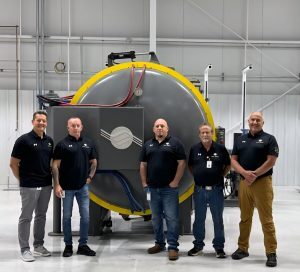
Gord Montgomery of “The Monty Heat Treat News”had the privilege of being able to visit the “Gasbarre” location in St. Marys, PA a little while back and what we saw was a modern, clean and very well equipped facility which must encompass almost 100,000 square feet-it is shown in the attached photo.
Did you like this article? Click here to subscribe to The Monty.
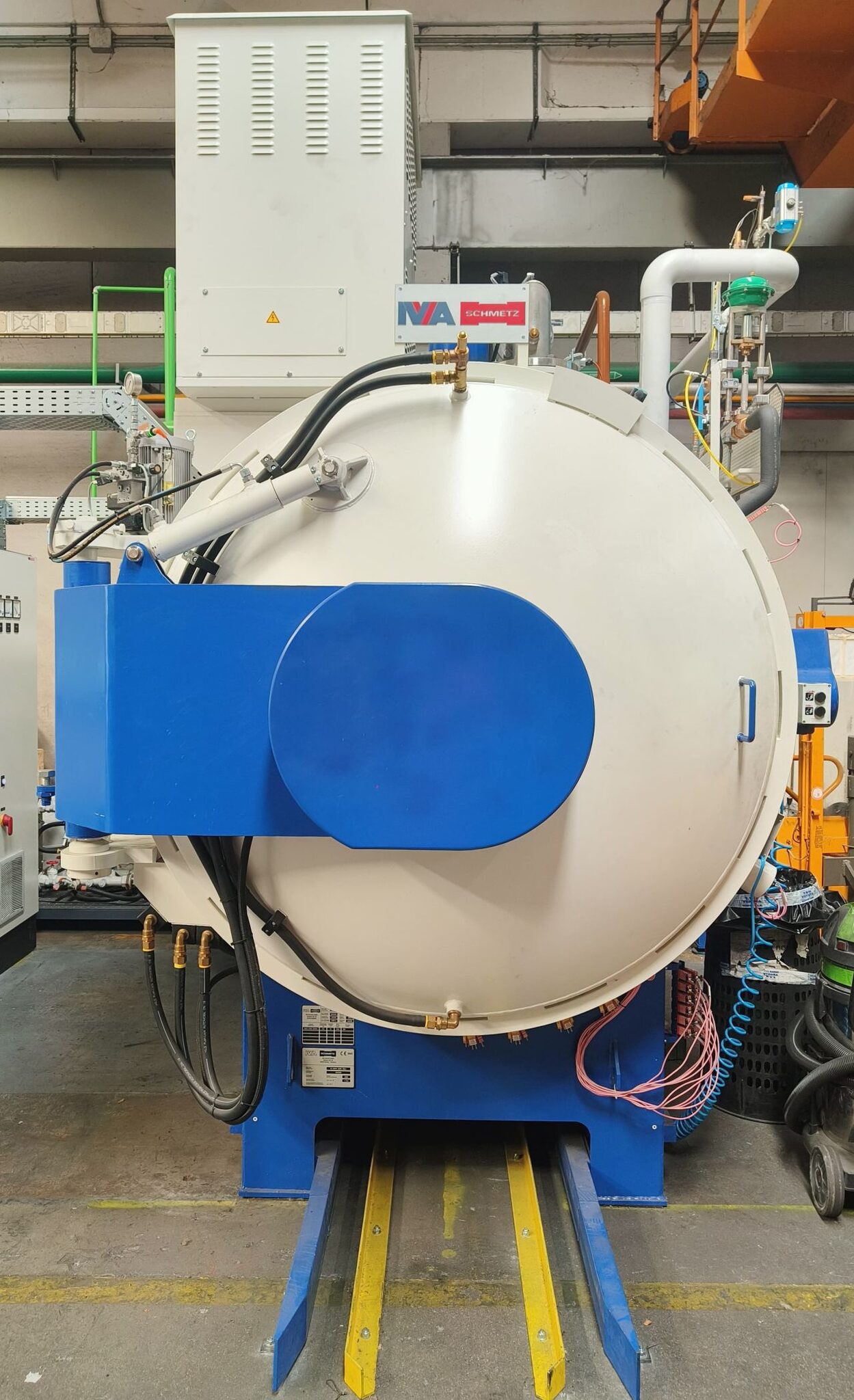
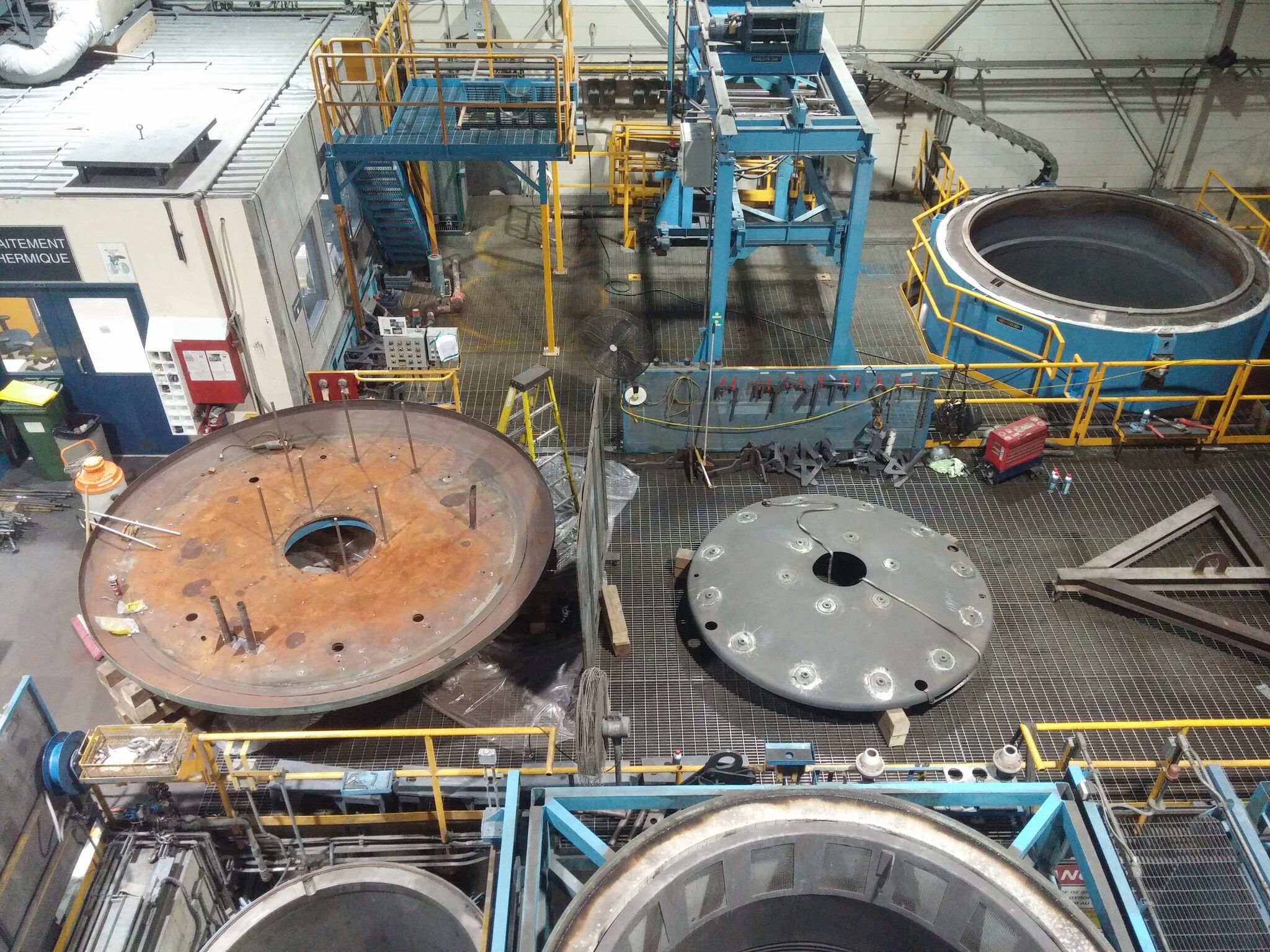
Commercial heat treater “Trattamenti Termici Nervianesi”(T.T.N.) of Italy is known for their ability to handle extremely large parts, however in addition the firm offers vacuum hardening, Plasma Nitriding, LPC and Gas nitriding for a wide variety of smaller part-vacuum hardening is our focus today.
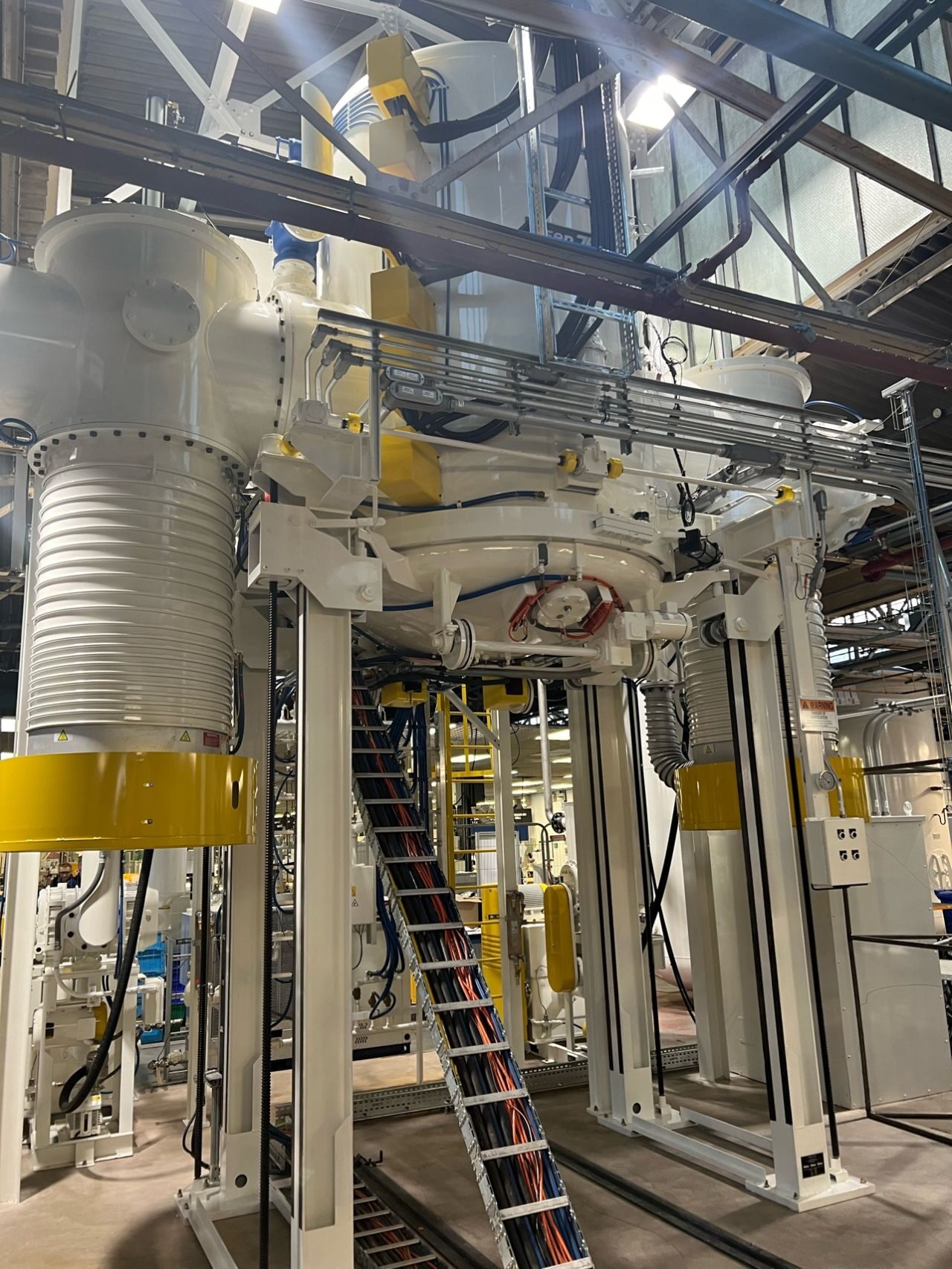
The company has just installed a new vacuum hardening furnace provided by German furnace builder IVA Schmetz GmbH at their Venata, Italy location. The new furnace is capable of 1350C (2462F), with 10 bar quenching. Interestingly enough it includes a cryogenic cooling module able to achieve temperatures down to -140°C which is a new one on us.
These photos show an example of their larger parts being processed in a car-bottom furnace along with pictures of the new IVA system.
Did you like this article? Click here to subscribe to The Monty.
▪ Located in the US Midwest this privately owned commercial heat treat has been in business for over 40 years
▪ Serves a number of different industries
▪ Offers multiple different processes including carburizing, induction hardening, FNC and vacuum hardening
▪ CQI-9 Compliant
▪ Profitable
▪ Medium sized facility
More details are available upon receipt of a signed NDA. Please contact Gord Montgomery, [email protected], 416-723-2543
The announcement about aerospace firm “Safran” acquiring “Collins Aerospace” was deemed worthy of being mentioned by “The Monty Heat Treat News”because both companies have substantial, “top end” in house heat treat facilities in many of their locations and indeed over the years a number of these locations have been mentioned by “The Monty”. As an example we would suggest this story published early in 2024 about “Safran” in Querétaro, Mexico “Aerospace Heat Treating-Safran Group S.A.”
“Safran today announces the closing of the acquisition of Collins Aerospace’s flight control and actuation activities which are mission critical systems for commercial and military aircraft, and helicopters. With this transaction, Safran becomes a global leader in flight control and actuation systems and is well-positioned for next-generation platforms.
The acquired business employs approximately 4,000 people across eight main facilities in Europe (UK, Italy and France) and Asia, and has activities in Poland, USA and India. Flight control and actuation systems from Collins are integrated on board 180 platforms, and generated revenue of around $1.55 billion in 2024 and an EBITDA of about $130 million. This business will be consolidated from August 1st, 2025 within Safran Electronics & Defense.
Olivier Andriès, CEO of Safran stated: “This acquisition offers a unique opportunity to solidify our position in mission critical flight control and actuation functions and create a global leader in this domain. It will enable us to deliver a comprehensive offering to our customers and position us extremely well for next-generation aircraft. This business fits perfectly with both our product portfolio and our DNA with a high technology content, recurring aftermarket sales and profitable growth.”
In order to meet the decarbonization ambition of the industry, the next generation of single-aisle aircraft will have disruptive architecture features and be increasingly electrified requiring a breakthrough in flight control and actuation systems. The combination of Collins’ best-in-class hydraulic and mechanical actuation capabilities with Safran’s strong know-how in electro-mechanical actuation and electronics will enable the Group to meet this challenge.
This acquisition also brings added complementarity for Safran in helicopter and nacelle actuation where the Group is already among the global leaders. In the defense segment, Safran is enhancing its offer in actuation and flight control solutions for military aircraft and missiles, reinforcing the growth of its sovereignty activities.”
Did you like this article? Click here to subscribe to The Monty.
To start off your week in the global heat treatment industry, “The Monty Heat Treat News” is pleased to offer you these exclusive news items about the industry;
“Mr. Mathew Boldman” was recently appointed Heat Treat Special Process owner at “GE Aerospace” in Springdale, Ohio, USA. Mathew has spent a great deal of time in the Heat Treatment Industry with firms such as “Aerospace Testing & Pyrometry” and “Standard Aero”.
Commercial heat treater “Atlantic Heat Treat” of Ajax, Ontario, Canada is adding more capacity in the form of two batch IQ furnaces with working dimensions of 36″ X 48″ X 36″. The company has been in the news a great deal recently as it has acquired 3 other local commercial heat treats in Ontario.
“Mr. Nick Johnson” was recently appointed Production Manager at the brand new “Vac Aero” facility in Greenville, SC. Previous to this Mr. Johnson was Plant Manager at “Accurate Brazing” (now Aalberts Surface Technologies) also in the Greenville area.
Chain manufacturer “Renold Jeffrey” in Morristown, TN, USA recently complete a major investment in their in-house heat treat department. The investment takes the shape of several gas fired 36″ X 48″ X 36″ batch IQ furnaces.
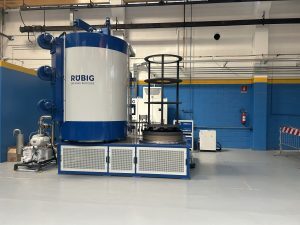
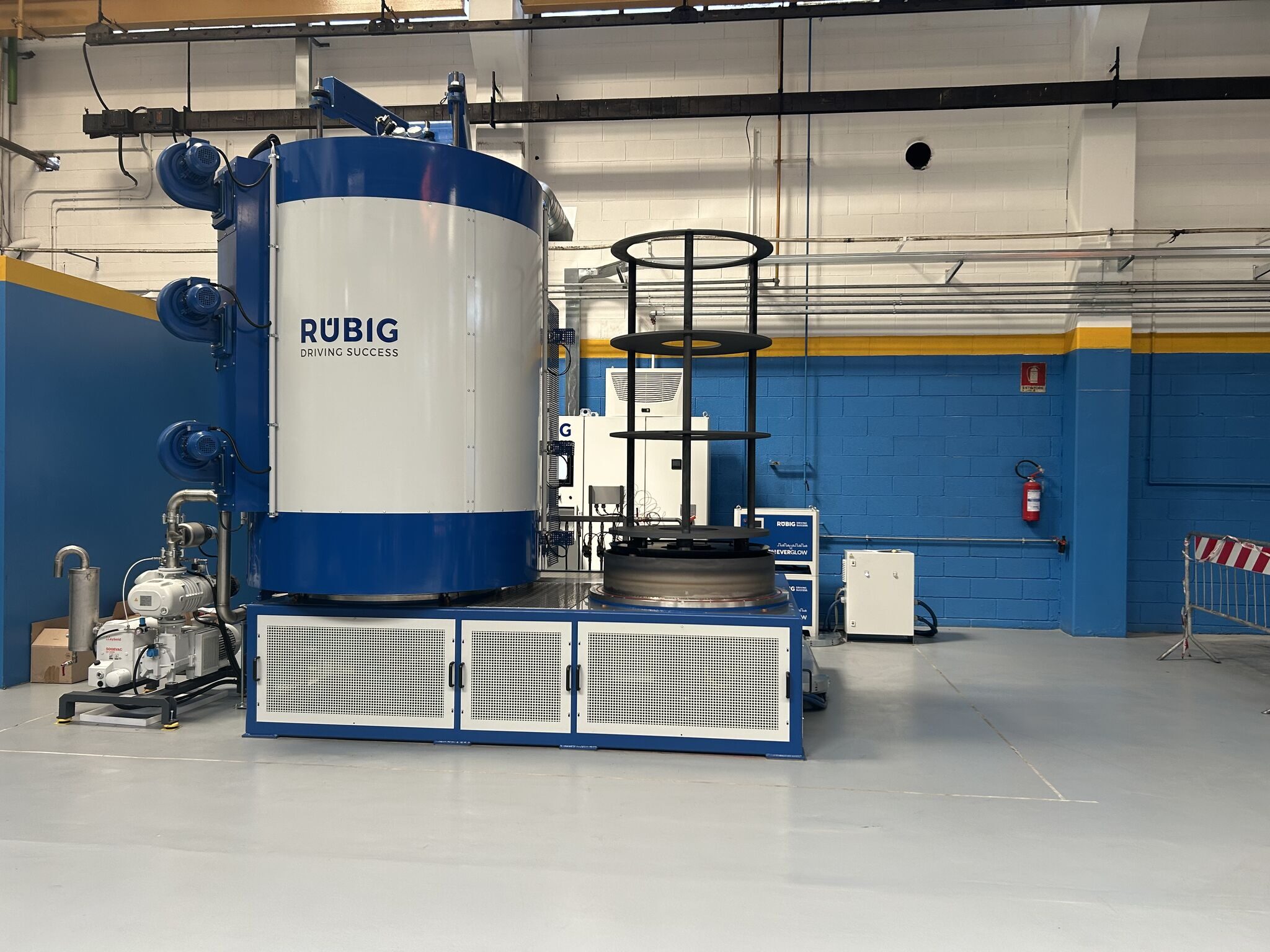
In Italy we see that commercial heat treater “Gruppo Temprasud” recently installed a brand new Plasma Nitrider provided by “Rubig” of Austria.
Controls company “Nitrex” recently landed a very nice order from an auto parts supplier in Germany. “We’re excited to announce a significant stride in digital transformation within the automotive industry, as a leading European automotive parts manufacturer, based in Finsterwalde, Germany, has successfully implemented Qmulus. This collaboration marks a key step in enhancing their operational efficiency and embracing the future of smart manufacturing. This client, a prominent player in the automotive sector, chose Qmulus to address their critical need for remote control and robust data collection from their industrial furnaces. Prior to Qmulus, they did not have an existing digital system in place, making this their foundational move towards digitalization.”
“Mr. Louis DeJesus” recently became Sales Manager for “Specialty Steel Treating” in East Granby, CT, USA-this is after many years working with “Bodycote”. “Specialty Steel Treating” is ranked as one of the “52 Largest North American Commercial Heat Treaters”by “The Monty”.
And there you have it-the absolute most up to date news about the global heat treatment industry most of which will not be found from on any other news source.
Did you like this article? Click here to subscribe to The Monty.
A supplier in the energy sector in the USA very recently commissioned a new mesh belt furnace which will be incorporated into their manufacturing process. The line which was built and installed by “McLaughlin Furnace Group” of Avilla, Indiana has working dimensions of 48” wide x 180 feet long with a max temperature of 1700 °F. The furnace is electrically heated and runs a nitrogen atmosphere. It contains over fifty zones of temperature control for tight uniformity.
Jeff McLaughlin, founder and CEO of the company commented on the new line; “While this application is a relatively new one for “McLaughlin Furnace Group”, the basic design of the furnace is one which we have a great deal of experience with. The customer is one whom we have worked with several times over the years and they presented us with an extremely ambitious time line for this project. I am very proud of the whole McLaughlin team in that they worked overtime to get the furnace delivered and up and running for the customer and at the end of the day the furnace was in production a full month ahead of schedule.”
Did you like this article? Click here to subscribe to The Monty.
While it might seem like everything to do with heat treating is increasing in cost by leaps and bounds these days one very important item for all heat treaters has remained relatively constant for some time now-high temperature alloy components.
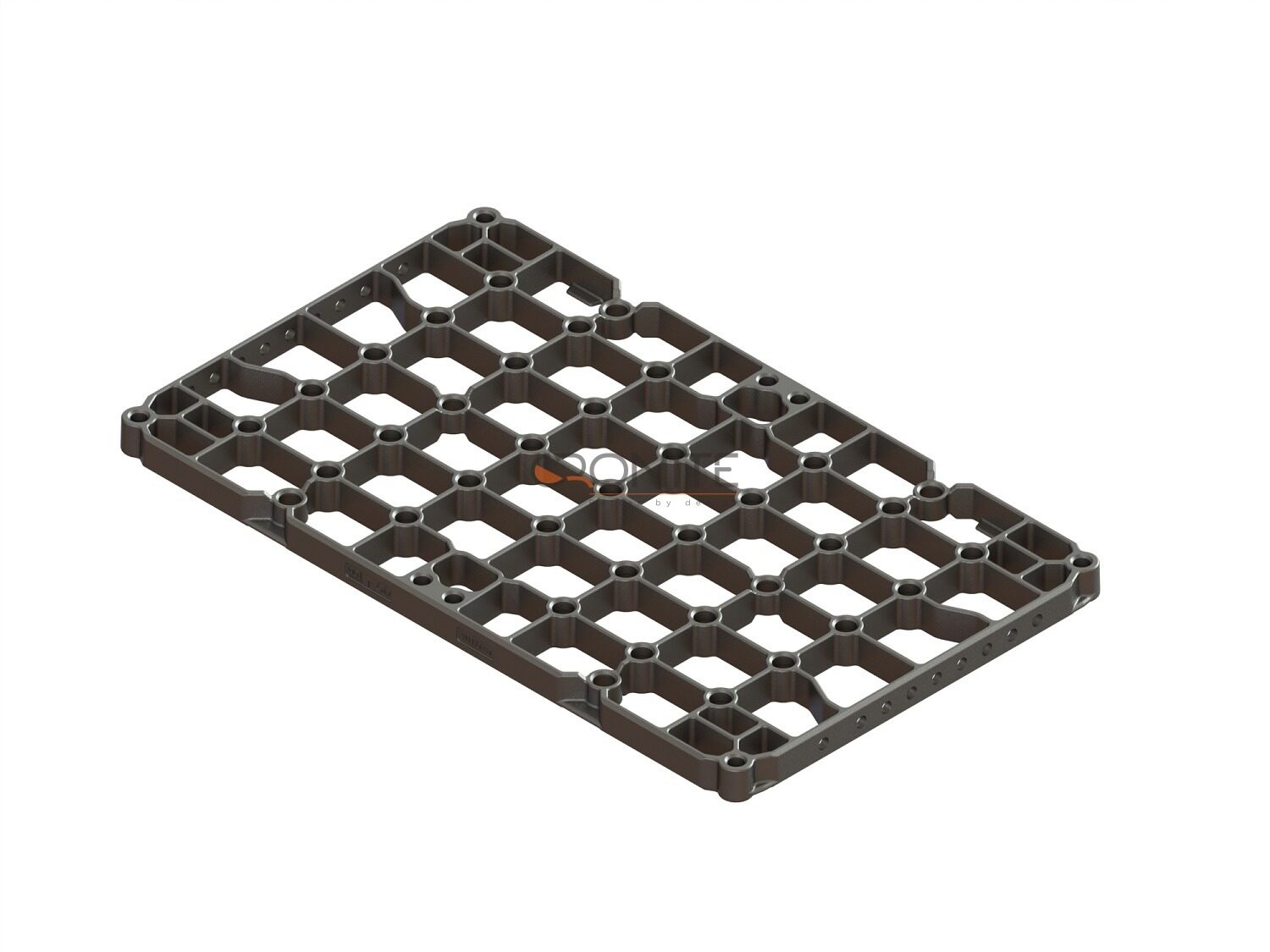
Virtually every single component and fixture in a heat treat furnace consists of some grade of high temperature alloy material, all of them either partially or largely composed of nickel. As an example, HT cast material is composed of 33-37% nickel, HU 37-41% and on the high end of the scale HX 47%. Admittedly we seldom run across HX material but certainly HT and HU are very common in the industry.
When it comes to rod frame baskets, a staple in the industry is 330 SS which contains between 34 and 37% nickel.
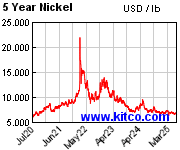
So where are we going with this? With nickel as the main component of many high temperature alloys-both cast and fabricated, nickel pricing largely drives the cost of furnace components and fixturing. If you refer to the attached chart you can see that pricing has remained relatively stable over the past few years and even shows a slight decline which means that pricing for items such as radiant tubes, base trays, baskets, muffles and fans has also remained reasonably stable.
In a very inflationary world, it is nice to see that at least something to do with heat treating has not seen enormous cost increases.
Did you like this article? Click here to subscribe to The Monty.
“Siemens Energy Global, a renowned manufacturer of heavy duty gas turbines, has chosen the SECO/WARWICK vacuum furnace with screen insulation and molybdenum heating elements. The furnace will be used mainly for brazing gas turbine hot path parts like blades & vanes.
Vector – Low Heat Loss and Good Temperature Distribution
The device on order produces very efficient and clean vacuum processes in high ranges, thanks to the use of a very good system consisting of a mechanical pump, an efficient Roots pump, and a diffusion pump. The advantage lies in the molybdenum heating chamber which ensures the required temperature distribution, and provides very high process cleanliness.
“The Vector vacuum furnace solves the Partner’s problem of heat treating an increased number of large blades & vanes requiring a high degree of cleanliness in both the brazing and annealing processes. The most important problem is handling the constantly growing production. The Vector will relieve the production burden on the current equipment in operation in the client’s manufacturing & repair facility in Berlin. This is the second furnace that we will deliver to one of the largest turbine blade & vane manufacturers. The key to this order was the guarantee of high efficiency without loss of quality,” said Maciej Korecki, Vice President of the Vacuum Segment, SECO/WARWICK Group.
The efficiency of the heat treatment processes is also influenced by the ability to cool at 1.5 bar in argon. Thanks to the inverter control, we can activate optimal cooling power during the appropriate stage of the process.
Individual Specification – the Key to Success
The unique features of this device are primarily due to the modifications that enable very clean blade & vane brazing processes.
“We worked long and hard to ensure that the furnace met all the needs and precise requirements of Siemens Energy Global. We used a molybdenum heating chamber, partial pressure system, dew point sensors, and a very efficient high vacuum system. An important aspect is also the fact that the furnace will be integrated with the client’s master system using the OPC Unified Architecture communication protocol. Thanks to this, we can connect with a wide range of machines and industrial devices. Thanks to simple integration with our devices, Partners can monitor the efficiency of entire production lines in real-time,” commented Grzegorz Głuchowski, Sales Manager, SECO/WARWICK.
Gas Turbines – The Future of the Energy Industry
Gas turbines are used in power plants to produce electricity. Their high efficiency and quick start-up make them ideal for covering peak energy demands. Gas turbines are used in the industry as a source of electricity and technological heat. They are used for many applications including oil refineries, chemical and petrochemical plants, where a large amount of process steam is required.
“This is our second SECO/WARWICK vacuum furnace. It has been adapted to our unique needs and integrated with the machine park thanks to the OPC UA protocol. It will be an important element of the production process, which focuses on green energy. The furnace will be installed in our German plant,” – according to the Siemens Energy Blades & Vanes division in Berlin.”
Did you like this article? Click here to subscribe to The Monty.
The Aerospace Industry is built on the ability to deal with extremes.
For example, at cruising altitudes, in the thinner air between 30,000 and 42,000 feet, the atmosphere outside of a commercial airplane can range from -20 °F to -67 °F.
Meanwhile, well-maintained aircraft jet engines running near maximum thrust levels can generate temps as high as 4100 °F within the combustor.
When it comes to dealing with such extreme temperature contrasts, AMETEK’s Hughes-Treitler division specializes in engineering and manufacturing advanced heat exchange systems designed to fortify aircraft engines against these extremes.
“We manufacture some of the highest performance heat exchangers in the world,” declared Chris Woods, Senior Manufacturing Engineer at AMETEK Hughes-Treitler. “Our longstanding knowledge of the products and history of manufacturing them have given us the experience needed to deliver impressive heat exchange rates within a remarkably small footprint.”
And for years, they’ve relied on Ipsen to provide them with the heat-treating solutions they need to deliver high-performance parts that can withstand these extreme temperatures.
Hughes-Treitler and AMETEK
Hughes-Treitler was established in 1947 as a precision sheet metal manufacturer in Garden City, New York. After World War II, while the immediate need for military aircraft waned, there was growing demand for commercial aircraft as Americans increasingly sought opportunities to travel. United Airlines began daily scheduled service between San Francisco and Honolulu, and Pan-American World Airlines started offering commercial flights around the globe.
Over time, Hughes-Treitler evolved to focus on designing and delivering heat transfer solutions tailored to the growing commercial aircraft manufacturing industry. As the company grew, Hughes-Treitler expanded into the defense sector, contributing to military aircraft programs. Together with companies like Airbus, Boeing, and Northrup-Grumman, they collaborated to advance innovations in thermal management needed to keep making aircraft faster, more efficient, and for commercial fliers, more comfortable.
In 2004, after more than fifty years serving the aviation industry, Hughes-Treitler was acquired by AMETEK, complementing the company’s advanced aerospace technologies and solutions. AMETEK was founded in 1930 as American Machine and Metals, changing their name in the early 1960s to better reflect their focus on manufacturing analytical instruments, precision components and specialty materials.
Plate Fin Heat Exchangers
Some of the more common parts that can be spotted at AMETEK Hughes-Treitler are plate fin heat exchangers. The first impression of a plate fin heat exchanger draws comparisons to a car radiator.
“Plate fin heat exchangers are like car radiators, except the radiator in the car contains its fluid with more simple straight walled passages,” explained engineer Chris Woods.
Plate-fin heat exchangers are one of most compact heat exchanger architectures. Outside of aerospace applications, they can be used for cars and HVAC systems. Just like in a car radiator, plate fin heat exchangers typically cool down a liquid using air.
“What we do is more like creating a box where the hot fluid is inside the box, four sides are extruded bar, while the top and bottom are cladded parting sheet with embedded brazing material within it. The box is built around the fins to contain the fluid, and the fins extract the heat out into the cold pass.”
A plate fin heat exchanger is comprised of layers of corrugated sheet metal and braze-cladded parting sheets. When placed in an Ipsen furnace, the braze cladding melts and fuses the core together. The fluid and air can then transfer heat inside this core.
The heat exchanger keeps other moving parts and flowing fluids, like oil, at appropriate temperatures within the system so that the jet engine with its thousands of moving parts can continue to operate at peak performance.
Heat exchangers also help keep the cabin and the cockpit warm at these high altitudes. “Everything has a safe operating temperature,” Woods noted. “When a customer comes to us with requirements, we’re capable of proposing great solutions. We design and manufacture products that are frequently exclusive to those customers.”
In jet engine applications, heat exchangers are essential for managing heat from friction and waste heat from electronics, enabling critical systems to function reliably and efficiently.
Identifying Thermal Processing Solutions
The AMETEK Team: Wojceich (Facilities), Vincent Su (Production Manager), Yemi (Quality Engineer), Ray (Facilities), Quyen La (Furnace Operator), David (Furnace Operator), Chris Woods (Manufacturing Engineer)
A significant part of the process of developing heat exchange technologies was finding innovative brazing techniques. “We have pictures from within our facility in older versions of the Aluminum Brazing Handbook from the 1980s,” explained Woods. “In it, you can see the salt-dip brazing that we were doing at the time.”
These days, the company is working with more than just aluminum. Inconel brazing is one of several processes running in one of the seven Ipsen vacuum furnaces at the plant. The furnaces line the heat-treating department in bright colors, their most recent addition – a striking fire-engine red Ipsen Vacuum Aluminum Brazer. “It’s too easy to be bland and pick a boring color,” Woods said with a laugh.
“We chose red as it represented AMETEK, but it’s also a fun color that stands out in our department. It makes people happy and gets people talking.” From a practical perspective, the colors also help Woods differentiate several furnaces that are closely packed together. “It’s much easier to differentiate the equipment. With bright colors, you can visually see where one furnace ends and where the next one starts.”
Several more Ipsen vacuum furnaces are operating simultaneously in AMETEK’s sister facilities in Mexico. Woods shared why Ipsen furnaces are AMETEK’s first choice for vacuum heat-treating equipment.
“We need to adhere to Nadcap AMS2750H standards, and Ipsen does a great job with the legwork. The controls are foolproof, and compliant to the standards in ways that help us calibrate the equipment easily to meet the requirements.”
Woods also shared that the Ipsen PLC interface was a significant factor when choosing their furnaces. “You can quickly train an operator to run a complicated piece of equipment doing a fairly complex process,” Woods suggested.
“It’s also nice having the same control systems across all facilities. Being able to troubleshoot minor issues and share knowledge with our colleagues in Mexico and Utah is very useful.”
And on the odd occasion when something stumps both teams? “We’ve been able to rely on Ipsen for keeping track of drawings and spare parts. The Ipsen Customer Support team has been very helpful. They encourage our self-troubleshooting and are open to taking a phone call and helping us work through a problem quickly. It’s a good dialog that way.”
In an industry that is built to handle the extremes, it’s important for Woods and the heat-treating team at AMETEK to know they can count on Ipsen for consistency and reliability.
Our paths had crossed with Bob’s several times over the years, our hearts go out to his family.
“Robert A. “Bob” Wyland, 51, of Antis Township, died unexpectedly late Tuesday night at UPMC Hamot in Erie. He was born in Johnstown, son of the late Gerald F. and Linda A. (Adams) Wyland. In 1999, he married Stephanie L. Binduga in Altoona.
Bob is survived by his wife; three sons, Steffan F., Brodee R. and Tanner J. Wyland; two grandchildren, Parker John Wyland and Finnley Taylor; two brothers, Gerald F. (Tracy) Wyland Jr. of Bellwood and Brent H. (Michele) Wyland of Virginia Beach, Va.; his twin sister, JoeAnna M. Alverson of Altoona; mother-in-law, Frances Binduga; brother-in-law, Bryan (Chris) Binduga; and countless nieces, nephews, great-nieces and great-nephews.
He was employed as an electrical maintenance engineer at Rex Heat Treat, Bedford. Bob held memberships at Bellwood Sportsmen’s Club, Cresson Sportsman’s Club, Raystown Resort “H” Dock and Liana’s Lake Park Campground, Erie.
An avid outdoorsman, he enjoyed hunting, fishing, boating and camping. Seven years ago, while fishing at Lake Erie, Bob and his sons became heroes and saved the lives of four people when their boat sank miles from shore.
Bob’s greatest joy was spending time with family, especially his boys and grandsons, and friends. He also enjoyed frying Walleye, cooking, canning and spending time at the lakes.
A visitation of family and friends will be held from 2 to 6:30 p.m. Tuesday, July 8, 2025, at Jon C. Russin Funeral Home Inc., Bellwood, where a brief prayer service will follow at 6:30 p.m. Interment will be at Blair Memorial Park, Antis Township.
In lieu of flowers, the family suggests that contributions in Bob’s memory be made to Bellwood Sportsmen’s Club. russinfuneralhome.com”