
While heat treating around the world tends to be in the doldrums these days-not great/not terrible Aerospace continues to be a bright spot as is witnessed by yet another furnace order for the aerospace industry;
 
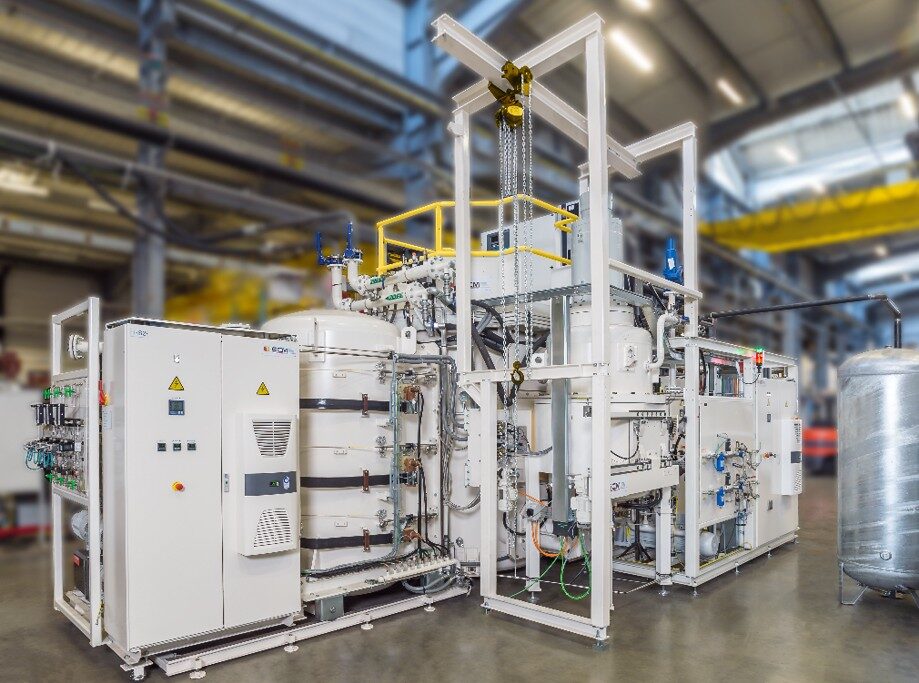
“A leading international aircraft motion-control manufacturer has once again selected SECO/WARWICK’s American subsidiary to expand its heat-treating capabilities by ordering another identical low-temperature vacuum tempering furnace following the success of their first unit. The repeat order underscores the customer’s commitment to consistent process quality and operational reliability.
 
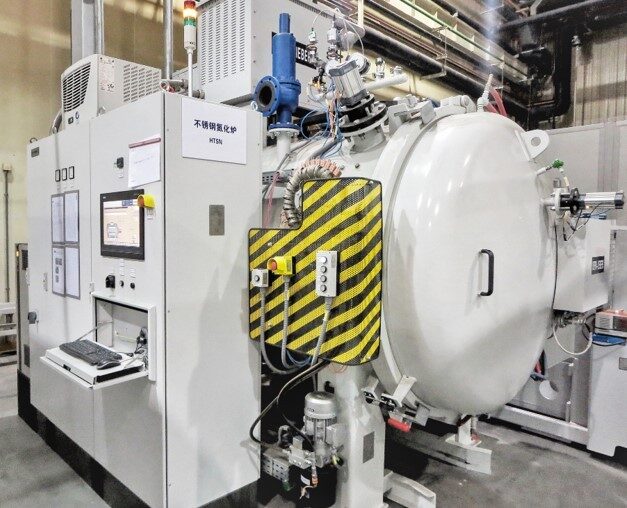
The furnace is designed for tempering, ageing, and other sub-critical heat-treat processes.  It will operate up to 1380 °F (750 °C), with a 24” × 24” × 36” (600 × 600 × 900 mm) work zone and a 1,750-lb (~800 kg) load capacity. It meets AMS2750F Class 2 TUS requirements (±10 °F – ±5,6°C) and supports nitrogen convection heating and cooling. Final cooling is handled by an internal recirculation blower and a water-cooled heat exchanger, ensuring stable, efficient cycle performance.
 
This additional unit adds to the customer’s existing SECO/WARWICK equipment installed across multiple facilities, which includes multi-chamber CaseMaster Evolution furnaces (double- and triple-chamber models) and a Vector single-chamber high-pressure gas-quench vacuum furnace.
 
Piotr Zawistowski, Managing Director of SECO/WARWICK USA, said, “This customer’s continued investment in SECO/WARWICK equipment reflects their trust in the quality and reliability required for aerospace applications. They choose to work with us not only for the consistent performance of our furnaces, but also for the high level of technical expertise and support we provide. Their repeat business underscores the strength of our technology and our long-term customer relationships.”
The Ipswich, MA, USA “Bodycote” facility is justifiably very proud of the fact that they were recently approved as a supplier to “Aerojet Rocketdyne”. According to “AI” this location provides vacuum heat treatment, hot isostatic pressing (HIP), and surface technology for aerospace components. 
 

Aerojet Rocketdyne, formerly an independent aerospace and defense leader is a major manufacturer of propulsion systems for rockets, missiles, and hypersonic vehicles. Following its acquisition by L3Harris Technologies in 2023, the company is currently undergoing a significant restructuring in 2026, where its space propulsion business is being spun off to AE Industrial Partners”.

Today “The Monty Heat Treat News” reaches back in our “Heat Treat Podcast” archives to have another look at a very interesting conversation with a very interesting guy-Mr. Andrew Bassett of “Aerospace Testing & Pyrometry”. In this episode Andrews talks about pyrometry and industry standards in Heat Treatment. 

February 18th, 2026 “The Monty” published a press release from furnace builder “SECO/WARWICK” which spoke about the firm receiving an order for a new vacuum furnace from a European supplier in the defense industry; “Increased Defense Spending Leading to New Heat Treat Investments“.
 
With many countries around the world dramatically ramping up their defense spending it is a given that defense suppliers are seeing increase heat treat requirements which is going to prove to be a “boom” to furnace manufacturing firms and commercial heat treaters.
In our article last week we mentioned 2 North American examples of this increased demand who added heat treating capacity in the past year;
 
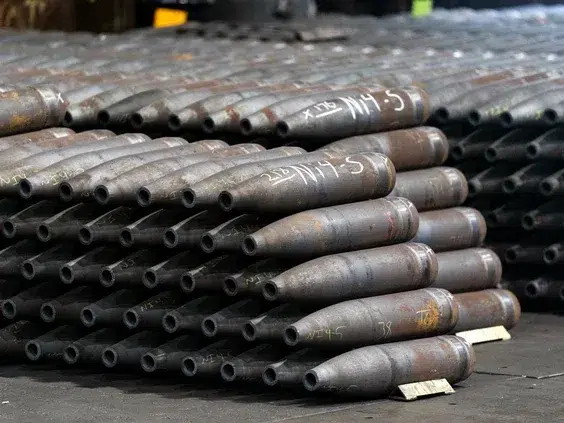
“Munitions Supplier to Open New Plant/Heat Treat; Earlier this year “The Monty Heat Treat News” had the exclusive news item below about a North American munitions supplier making a very substantial investment in their heat treat department to keep up with demand. IMT Group based in Ingersoll, Ontario, Canada is planning on a ribbon cutting ceremony next month for the new multi-million dollar facility. As mentioned earlier part of the group’s investment includes several Surface Combustion Allcase batch IQ furnaces. The investment also includes a large capacity (50 Ton) carbottom furnace for annealing of the shells, start up is happening as we speak. The investment is being financed by hundreds of millions of dollars in contracts from the US Defense Department to manufacturer shell casings such as the one in this photo.
 
“FEBRUARY 5th 2024; Munitions Supplier Adds Heat Treating Capacity. It is well known that the war in the Ukraine has put enormous pressure on increasing production of munitions, and at the top of the list this would include 105 and 155 mm artillery shells. This “war pressure demand” was bound to increase production in western countries of munitions which would include added heat treat capacity and we now have an example of this.
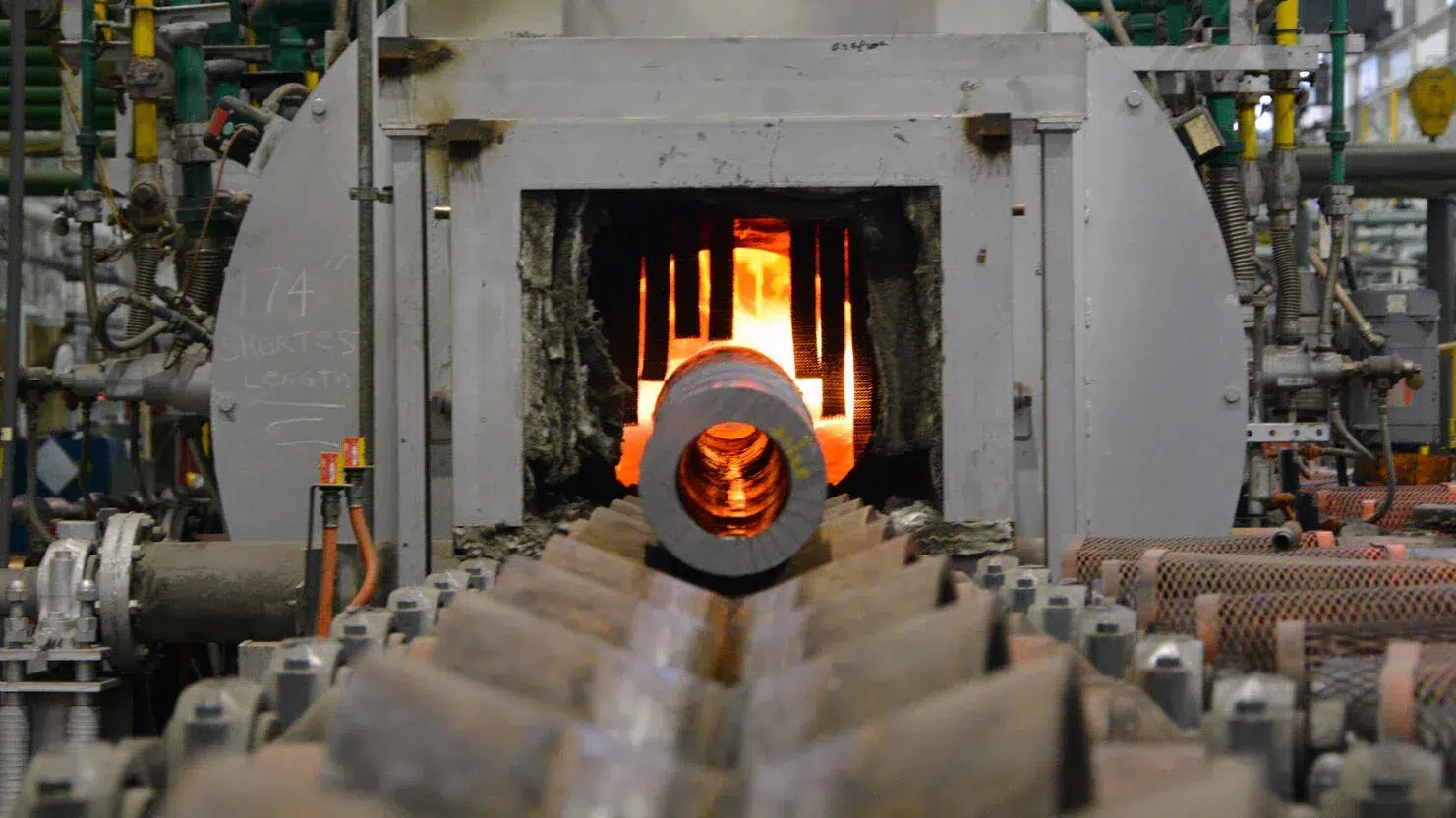
 
IMT (https://imtcorporation.com/) is located in Ingersoll, Ontario, Canada and for years now the company has produced a rather odd combination of products-truck axles and artillery shells, the mix depends upon market demand for each product. We have now heard that the munitions side of the business has gained the upper hand in the form of a very substantial order for artillery shells which is directly related to the ongoing war in Ukraine. (more about IMT Defense https://imtdefence.com/)
 
How does this change their heat treating requirements? For many years IMT has had a very modest heat treat department in the form of 2 very old Surface Combustion “Super 30” Allcase batch IQ lines. We now believe that the heat treat department will be vastly expanded with several new Surface batch IQ furnaces on the way with the expectation that installation of the units will start shortly.
 
It brings joy to the hearts of everybody at “The Monty Heat Treat News” to see a Canadian company actually adding heat treat capacity rather than the never ending story of Canadian firms closing down their manufacturing facilities.”
 
Our second example features “Watervliet Arsenal”  in Watervliet, New York which provides cannon tubes, over the past couple of years this facility added a new heat treating furnace and Endothermic Generator to be able to keep up with ramped up production; 
 
WASHINGTON — Over the past three months, the US Army’s Watervliet Arsenal has been forging more cannon tubes at a rate not seen in 40 years, according to Maj. Gen. Michael Lalor, the commander of the Tank-automotive and Armaments Command. And while there is still room to grow inside the arsenal, he said, secondary sources could offer the service with a glidepath to quickly scaling production.
 
As part of the service’s organic industry base, Watervliet Arsenal in Albany, NY, is the sole producer of cannon tubes inside the US weapons like M1 Abrams tanks, the M109 Paladin self-propelled howitzer, and the M777 lightweight howitzer. That meant there was a sudden production influx in 2022 when Washington began rushing howitzers to Ukraine to fend off Russian troops.
 
“Use of that [M777] howitzer and the volume it’s been used definitely confirmed the accuracy, the precision of that system, and also its endurance that it could fire: Those tubes had longer life than originally expected,” Lalor told reporters on Wednesday after an Association of the US Army event. 
 
“In terms of production, because you’re firing at that rate … it drives a requirement for additional canon tubes at a rate we haven’t seen in generations,” he added. While steering clear of specific numbers, Lalor estimated that Watervliet has likely tripled production over the past three years.
 
To accommodate increased production, the service revamped its manufacturing processes and modernized the facility. Although the two-star general said he believes the facility still has capacity to grow, lessons from the war in Ukraine have showcased industrial base vulnerabilities and the need to have multiple production sources to avoid a single point of failure that could leave the service without a cannon producer.
 
“I think we can produce more,” he added. “I also think it suggests that, you know, inside the army and industrial base, we’re definitely looking at it that secondary sources are going to be helpful too in a future conflict that we may have to fight.”
 
The service has begun examining its options for bringing on secondary sources, and Lalor said it has now identified “multiple” sources that, if given the technical data to produce the tubes, could have production lines up and running within 12 to 18 months.
 
“That’s if you’re moving fast, because it’s a unique capability,” Lalor said. “But, like anything else in exigence, believe you can produce at a scale and rate faster.”
 
These are only two recently examples of increased defense spending and its effect on the heat treatment industry-we have no doubt but that there will be many more and “The Monty Heat Treat News” will be here to tell you about them.
February 15th “The Monty” had a news item entitled “What’s it Worth”-a guide to used furnace values (the original article can also be found below).  
 
In this particular case an in house heat treater in the US Midwest was trying to decide whether he should try to sell an older “Pacific Scientific” batch IQ line or scrap it. In the original posting “The Monty” pointed out that the line was unlikely to find much interest due to the fact that the original manufacturer is no longer around, it is an older unit, it is much smaller than what most heat treaters need these days and to really add salt to the wound it is electrically heated which in most parts of North America is the “kiss of death”.
 
Our readers waded in on this debate and it is no surprise to us that the almost universal conclusion was “SCRAP IT”. 
 
We find it upsetting that a perfectly good, complete and updated furnace system such as this will be consigned to the scrap heap but we can’t disagree; chances of this furnace finding another home are slim to really slim. 
 
“FEBRUARY 15th 2026 POSTING; From time to time over the years “The Monty Heat Treat News” plays the “What’s it Worth” game where we look at a used furnace and give our readers an idea about what it is worth in current market conditions.
 
Today we look at a complete furnace line located at a captive heat treater in the US Midwest. The line consists of the following;
 
  1. 24” x 36” x 24” Pacific Scientific IQ Furnace
  2. Electrically Heated
  3. SSI Controls
  4. Electronic Flowmeters from Waukee
  5. Pacific Scientific Electrically Heated Endo Generator
  6. With AE Endoinjector
  7. 24” x 36” x 24” Beavermatic Washer with Smart Skim System
  8. SBS Chiller
  9. Serial # 4382
  10. The vendor in  this case is trying to decide whether this line is worth marketing or straight off to the “scrappers.”
 
The plus is that this is a complete line with updated controls, in good condition and ready to go. The minus is the brand (Pacific Scientific-as far as we know the company disappeared long ago) and the size. 24″ X 36″ X 24″ is far too small a size for anybody other than a captive heat treater with small lot sizes or a commercial heat treater in a market with small lot sizes such as the western and north eastern areas of the USA and British Colombia, Canada.
 
“The Monty” has a strong idea about the value of this furnace line but we will leave it up to you, our readers-make an offer or scrap? Cast your vote with Jordan Montgomery; [email protected]. Subject line Keep it or Scrap it-yes it has value; no call, in the scrap guys. We will let you know next Monday.” 
“AFC-Holcroft” of Wixom, Michigan (part of the “Aichelin Group” of Austria) has since their inception used a sales model shared by most North American furnace builders, namely using a combination of independent sales representatives complimented by a few direct sales people. Up until recently the company had anywhere up to 7 rep organizations covering most of the USA and Canada (Mexico is handled by their licensee “MATTSA”) but this number has dwindled and now the firm is working with 3 “rep” firms with the bulk of the US and all of Canada being handled by direct sales people. https://afc-holcroft.com/global-partners
 
There are arguments both for and against independent sales rep organizations-personally we at “The Monty Heat Treat News” have always felt that independent sales reps make the most sense in that they are only paid if they produce but we do acknowledge that there are also strong arguments for direct sales people. 
Yesterday “The Monty Heat Treat News” had a story entitled; “Mercury Marine Opens Heat Treat Department to Commercial Heat Treating“ which summed up how “Mercury Marine” in Wisconsin, USA was now offering commercial heat treating services.
 
Over the years “The Monty” has seen a number of examples of manufacturers with in house heat treating capabilities entering the commercial heat treating market and indeed we have done several articles on the topic. One such example is “Kern Liebers”-the article below was posted on our website several years ago and it describes a German firm who very successfully entered the commercial heat treating market;
 

Gord Montgomery, Li Haas, Joern Rohde

“Mercury Marine” (the outboard motor people) in Fond Du Lac, Wisconsin, USA has always had a large, diversified in house heat treatment department, a department which is characterized by a mix of older, conventional furnaces and new state of the art systems. 
 
In a very interesting development the company recently announced that they would be opening up their shop to outside work, in other words entering the commercial heat treatment industry with these capabilities;
 
Aluminum Heat Treatment; Full T6 and T7 solution and aging cycles for structural and performance-grade aluminum castings and components. Our controlled furnaces and rapid quenching systems ensure uniform hardness, strength and elongation across every part. Optimized T5 heat treatment for high-pressure die-cast aluminum parts. Our precision-controlled process boosts strength and stability while preserving surface integrity and delivering components that perform reliably and maintain an exceptional appearance suitable for the most demanding applications.
 
 
“AUGUST 30;2021; Mercury Marine Advances Heat Treating Processes with ECM Technologies Vacuum Furnace Systems with Advanced Automation
 
Pleasant Prairie, WI – August 30, 2021 – Mercury Marine of Fond du Lac, Wisconsin, recently launched a plan to upgrade its heat-treating capabilities with a move to the low-pressure carburization and high pressure gas quench system. Partnering with ECM Technologies, the new plan incorporates completely automated Nano vacuum heat treating systems. The innovative Nano system incorporates 20 bar nitrogen gas quenching along with Low Pressure Carburizing (aka vacuum carburizing). The Nano, with its versatile configuration, will operate several different carburizing, hardening, and spheroidizing processes simultaneously. This change marks a departure from Mercury’s traditional atmospheric carburization and oil quench system while benefiting from advantages that come with vacuum processing:
 
• Innovative vacuum heat treating in lieu of traditional atmosphere (elimination of intergranular oxidation & highly repeatable process with consistent results
• Employs preventive maintenance planning, remote system status access and facility information systems integration
• Relocates heat treat from a secondary location to the clean, controlled environment of the machining centers
• Converts to Small Batch processing principles to maximize process efficiency
• State-of-the-art growth with ECM’s advanced system automation and robot capability with load building and breakdown
• Controls downstream operations by matching incoming dunnage with exiting workpieces
• Takes advantage of vapor and vacuum-based pre-cleaning technology to remove multiple machining lubricants
• Incorporates cryogenic and tempering processes within the automated system
The system uses all CFC workload fixtures and ECM’s advanced automation fixture tracking to maintain a precise cycle count to know fixture life. This improvement for Mercury significantly reduces energy consumption and process cost per piece. Additionally, the vacuum process takes their heat treatment to a near-zero emissions for drivetrain components processed within the system.”
With defense spending increasing around the world “The Monty Heat Treat News” has long felt that this added spending with increase armament manufacturing and consequently heat treatment. Already we have seen two examples of this in the past year, one in New York State, USA and one in Ontario, Canada (more on this later). Today we have yet another example, in this situation a European supplier in the defense sector who is investing in a new vacuum furnace from SECO/WARWICK (please note the last paragraph in this press release from SECO-the company clearly states that increased defense spending will lead to more heat treat investment). 
 
“SECO/WARWICK has signed a contract to deliver a state-of-the-art vacuum furnace to a client in the European defense sector. The partner has chosen a proven single-chamber vacuum furnace.
 
The equipment has been customized to maximize its versatility and provide a broad range of applications for the heat treatment of steels used in the firearm manufacturing industry. In the coming years, Europe is expected to be one of the world’s key markets for investments in armaments and military modernization.
 
SECO/WARWICK has experience collaborating with the defense sector. Every new contract in this segment offers opportunities for in-depth technical consultations and engineering challenges, which contribute to the development of the company’s portfolio and know-how. Thanks to this approach, SECO/WARWICK has developed a furnace configuration that meets the needs of modern manufacturing plants focused on efficiency, reliability, and flexibility in technological processes.

The selection of the SECO/WARWICK solution resulted from a tender procedure announced by the partner. This is the first order carried out by SECO/WARWICK for this client, but it aligns with the broader context of technological transformation in the European defense industry. The transition from gas carburizing technology to modern LPC processes allows the client to significantly improve the quality and predictability of heat treatment, while also optimizing energy and process gas consumption.


“Vacuum technology in the defense industry is becoming not only a response to the need for modernizing production lines, but also a tool for building technological advantage. Firearm manufacturing requires absolute repeatability and quality in heat treatment. Our equipment meets these demands thanks to precision engineering and advanced process technology. This is an investment in safety and reliability that brings tangible benefits from the very first production cycle,” says Maciej Korecki, Vice President of the Vacuum Segment at SECO/WARWICK.
 
The contract holds strategic and technological significance—both for the client, who is modernizing their infrastructure, and for SECO/WARWICK, which is strengthening its position as a key solutions provider for the defense sector.
 
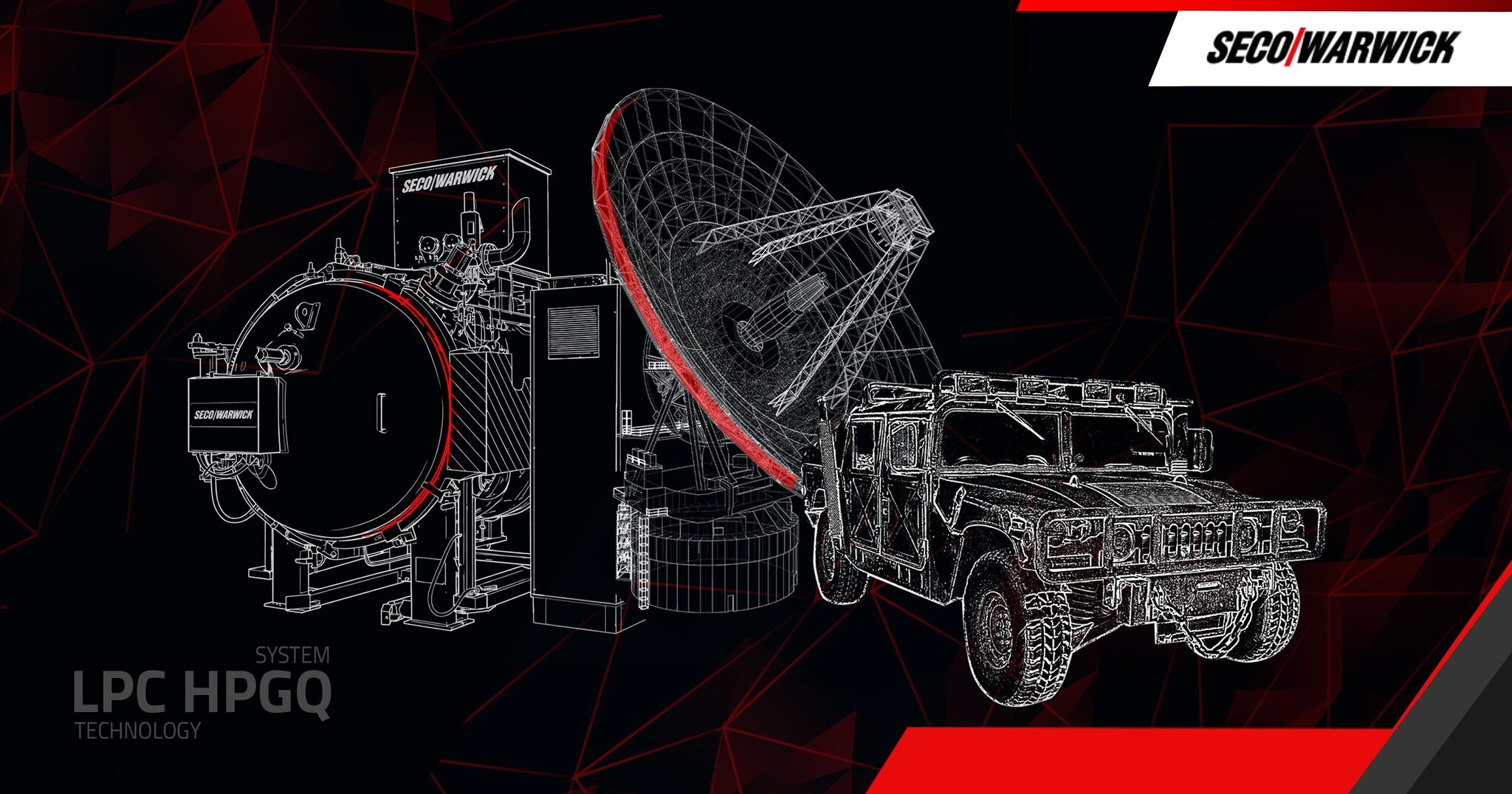
“We deliver not only equipment, but above all, the experience and knowledge of how to support industries with the highest standards. Thanks to flexible configuration, our solution perfectly addresses the needs of such clients. The applied solution combines a classic, round heating chamber—enabling the processing of oversized components—with advanced low-pressure carburizing (LPC) technology and a high-pressure gas quenching (HPGQ) system. The equipment stands out due to high temperature uniformity throughout the working space, a convection heating system that increases efficiency at lower temperatures, and directional cooling that allows precise process adjustment to the geometry of complex parts. The graphite chamber is wear-resistant and easy to service, making it a practical choice for multi-shift hardening plants,” explains Łukasz Chwiałkowski, SECO/WARWICK Sales Manager. 
 
Europe increases defense spending

In recent years, defense spending in Europe has reached record levels, reflecting the growing importance of military modernization and strengthening industrial capabilities in the context of a dynamic geopolitical situation. In 2024, total defense expenditures by European countries exceeded € 340 billion, with forecasts indicating further growth in the coming years. More and more countries are surpassing the 2% of GDP threshold for defense spending—a benchmark for fulfilling NATO commitments. A significant portion of these budgets are allocated to investments in modern weapons systems, advanced manufacturing technologies, digital solutions, and research and development. Special attention is given to modernizing industrial infrastructure related to the production of weapons, ammunition, fire control systems, and components critical for modern combat platforms. Europe is also investing heavily in developing industrial capabilities that enhance the region’s technological and military sovereignty and independence. The increase in spending is driving demand for high-quality, reliable, and repeatable processes, which directly contribute to the development of advanced heat treatment technologies used in the defense industry. Observed trends suggest that in the coming years, Europe will continue to be one of the world’s key investment markets for armaments and military modernization.”

 
Today “The Monty Heat Treat News” digs deep in our “Heat Treat Podcast” archives to come up with this golden nugget-an interview with the most enthusiastic commercial heat treater we have ever met-“Mr. Steve Kowalski” of “Kowalski Heat Treating” in Cleveland, Ohio, USA. In this exciting episode our very handsome and articulate host, “Carlos Torres” discusses with Steve how commercial heat treatment processes are evolving, the challenges the industry faces, and what innovations are shaping its future. All this and a great deal more in this episode of “The Heat Treat Podcast”.