Ben we did an interview together a few years back, an interview which can be found at “Ben Gasbarre, President Gasbarre Industrial Furnace Division” so I very much appreciate the chance to see what has changed at Gasbarre since that time. Normally I would take this opportunity to ask you about your background, however since we covered this ground in the past lets jump right into the really interesting questions, what has changed at Gasbarre since we last spoke.
The most recent press release I saw from Gasbarre was about your partnership with a Swiss furnace company by the name of “Solo Swiss”, perhaps you could give us some background about how this came about.
“Hi Gord, It is good to do this again as we have a lot going on at Gasbarre and it certainly has been a busy few years.
Gasbarre and SOLO Swiss pursued the ProfiTherm partnership because it expands what we can offer the North American market in a way that’s truly differentiated, not just another variation of traditional batch atmosphere integral quench equipment.
This wasn’t an ad hoc decision, we had a series of detailed discussions with SOLO, including face-to-face meetings, to confirm strategic alignment and long-term mutual benefit.
Strategically, it does three things:
· Proven process expansion: ProfiTherm is a well-established platform that broadens our coverage across austempering, carburizing, carbonitriding, neutral hardening, and marquenching, and we’re bringing it to North America with strong application and lifecycle support behind it.
· Differentiated system: It brings a modular bell-furnace design to North America that helps customers fit floor-space realities, adapt to changing mixes and volumes, and drive better cycle costs and lifetime value.
· Confidence to invest: It’s an exclusive North American license with U.S. manufacturing and support, which strengthens responsiveness, parts availability, and provides long-term confidence for our customers.
Ultimately, ProfiTherm aligns with many of the realities and challenges in today’s market, giving customers a compelling new option to build capacity with less risk.”
I am quite familiar with “Solo” having seen a number of their installations in various locations around Europe. Undoubtedly, they have very good furnace systems, but the “modular” style of their equipment looks “odd” to a North American eye-do you think this will be a deterrent for North American heat treaters?
Visually it doesn’t look like what North American shops are used to. In fact, it looks more like a modern automation cell than a traditional furnace, and in many ways that’s where the industry is headed.
The bigger hurdle won’t be appearance as much as awareness and early education. Once we get past that, the advantages are hard to ignore. ProfiTherm is a pitless system with pick-and-place material handling, which avoids many of the operational and maintenance challenges tied to chain-based handling, especially in quench environments. The modular set-up also helps reduce downtime exposure, because issues can be isolated rather than impacting the entire line.
Another factor today is risk perception. Heat treaters are increasingly dealing with tougher insurance requirements, and this design doesn’t carry the same “fire-breathing dragon” stigma. Flames are well controlled and often barely noticeable in operation.
Finally, with labor constraints becoming more real, this technology is designed for automation and is already proven in fully automated production cells. And as salt quenching gains interest in North America, it provides a practical, scalable path to add capacity without a major infrastructure overhaul.
The “Solo” partnership is obviously a new development and quite at odds with the perception (misperception) that many of us have about Gasbarre being primarily a supplier of sintering furnaces. Is this a perception which you feel is unfair in 2026?
It’s an understandable perception, Gasbarre was built on the success of the powder metal industry, and sintering has long been a major part of our story and installed base. That market is what launched Gasbarre into furnace design and manufacturing and drove us to later expand into higher-temperature applications and vacuum capability through the acquisition of C.I. Hayes.
And to be clear, powder metal and sintering are still core to who we are. We continue to invest there, and that customer base remains extremely important.
Where the perception becomes incomplete in 2026 is that we’ve evolved and diversified. Many of the same platforms that support sintering also apply to annealing, brazing, and glass-to-metal sealing, and our vacuum technologies including multi-chamber and continuous solutions, serve demanding applications across aerospace, automotive, and industrial markets. On the batch atmosphere side, we cover everything from standard box furnaces to large car-bottom and tip-up furnaces for tempering, stress relieving, nitriding/FNC, and higher-temperature alloy processing in markets like aerospace, commercial heat treating, forging, and oil & gas.
So yes, we started with sintering furnaces and we’re still advancing it, but we’re much more than that today in both product breadth and market reach.
Lets move on to some of your other product offerings-one that has always fascinated me is your product line of “continuous vacuum” furnaces. To this day it seems like a contradiction in terms but we know you have built a lot of this style of furnace and we know that it has been successful-is this still a popular offering for you?
Yes, and in some ways, more relevant today than ever. Our customers who run continuous vacuum furnaces are some of the strongest believers in the technology because they see the value every day. We see the same dynamic with multi-chamber batch vacuum systems as well.
The main hurdle isn’t performance, it’s awareness and initial education. Most vacuum furnaces in the market are single-chamber, and many specifications are written around that style, so moving to multi-chamber or continuous can require a mindset shift.
Multi-chamber and continuous vacuum furnaces can drive real efficiency gains because you’re not constantly thermal cycling the hot zone, reducing maintenance and replacement-part costs, improving throughput, and shortening floor-to-floor time. In the right applications, we like to say you can shorten processing from “hours to minutes,” and we have installations where customers are getting a load out every 10 minutes or less.
Vacuum processing is growing for well-known reasons, but today’s production demands, along with environmental, safety, and workplace expectations are making continuous and multi-chamber solutions increasingly attractive for departments looking to do things differently and more efficiently.
How long has it been now Ben since you started offering nitriding/FNC equipment-it seems fairly recent to me but I know it is no longer a recent development. Has this technology proven to be a success for you?
We developed nitriding/FNC equipment because we saw a clear gap in the market. Many of the established equipment providers were European-based and European-built, and our goal was to bring a competitive offering to North America that was designed and manufactured in the United States, supported by a U.S.-based supply chain.
A key part of making that happen was our collaboration with Super Systems, Inc. and their controls platform, which helped us bring a well-designed, well-manufactured solution to market. Our first installation went in during 2019, and today we have several more systems in operation or currently in production.
Has it been a success? Yes. Breaking into an existing market is never easy, but I’m extremely proud of the work our team did to establish Gasbarre as a viable North American manufacturer in this category, and I strongly believe we’ll continue expanding the installed base while driving meaningful advancements in the technology.
Obviously over the years you have branched out into a number of different styles of furnaces-care to share with us which designs have the most momentum moving forward?
Market demand tends to create the momentum, and our job is to make sure our furnace designs and product offering create the opportunity to serve it.
Leading up to the last year or so, we saw strong momentum around emerging markets like alternative energy, energy storage, fuel cells, hydrogen generation, and related areas, and we were well positioned to support those needs. That momentum hasn’t gone away, but many of those segments are still working their way into broader adoption.
More recently, we’ve seen momentum shift back toward more conventional markets like automotive, aerospace, and general industry. Again, our focus has been continuing to advance and adapt our designs to match what those customers are asking for: better efficiency, more automation, stronger safety and environmental performance, and improved overall ownership experience.
One other factor that’s hard to ignore is the age of the installed base. A meaningful amount of furnace equipment was installed in the late 80s and 90s is now 30+ years old, and we’re seeing growing opportunity in both replacement and modernization as customers look for practical ways to improve reliability, capability, and long-term performance.
Lets look at changes in furnace design, in particular changes having to do with emissions and heating choices. Europe is obsessed with energy costs (for good reason) and “emissions” and how they effect “carbon footprints”-it often appears to me that North America and Europe are going in completely different directions on these topics.
First off are you getting more requests for electrically heated furnaces? Second are your customers asking you to consider emissions when designing furnaces?
What may surprise some is that well over half of the furnaces we produce each year are already electrically heated rather than gas-fired, largely driven by our product mix and end users.
What’s changing is that more traditionally gas-fired users are now asking for a true side-by-side evaluation of tradeoffs, operating cost, utilities, and carbon footprint. In some cases, they’re acting on it through electrification or efficiency-driven replacements. We’re also seeing maintenance capability factor in more; with a tighter labor market, many plants find it easier to staff and support electrically heated systems than gas-fired systems.
So no, North America hasn’t moved to widespread “electrify for environmental reasons” yet, but electric heat and emissions are increasingly part of the mainstream design discussion.
When I last visited you in PA you had just moved into a new, larger facility, as a matter of fact it was so new that the entire facility smelled of fresh paint. At the time I remember thinking that you had an enormous amount of room to grow in the future-out of curiosity have you been able to fill it yet with new furnace orders?
Yes, we’ve been fully operational in the new facility for about two years now. We expanded from roughly 50,000 sq ft to 150,000 sq ft. We had clearly outgrown the old space, and we also knew the new footprint would take time to grow into.
What the added capacity has done immediately is enable a more structured workflow and expanded pre-shipment testing, both of which directly improve equipment quality and performance once it arrives at the customer’s site. We’ve seen solid growth over the last several years and fully intend to continue that trend.
I do want to acknowledge the team at Gasbarre. A move of that scale is a major undertaking, and we executed it with minimal disruption to manufacturing or our customers. The progress we’ve made as a company is a reflection of the knowledge, experience, and dedication of our people.
People always talk about challenges as though they are bigger these days, personally I think there has always been challenges and always will be. Having said that what are there any in particular these days that you spend a lot of time thinking about?
I agree, there have always been challenges, and there always will be. I started my career during the Great Recession in 2008, and we’ve seen plenty of change since.
What feels a little different today is how many variables are moving at once. Labor and knowledge transfer remain real issues, especially maintaining consistent execution as teams grow and evolve. At the same time, customers are pushing for lower project risk and asking more of their suppliers, which raises the bar on communication, design standardization, and performance validation. Political and geopolitical shifts add another layer, but the approach doesn’t change, learn quickly, adapt, and keep moving forward while staying focused on delivering reliable equipment for our customers.
Can you share with us any new products ideas that we will be seeing from Gasbarre in the near future? I promise we won’t share this with too many people?
I can appreciate the question, Gord! The recent SOLO partnership is a good example of how we think. Gasbarre has a long history of expanding capability through acquisitions, internal development, and partnerships so we can offer the best solutions for our customers. I won’t tease a specific new product announcement, but we intend to keep that mindset, staying close to customer needs and pursuing the right opportunities when they create real value.
One final note, and one of my favorite ones-what do you expect for the rest of 2026 and even 2027? Care to share some predictions?
Nothing I want to put in writing! Predictions don’t always age well. That said, I do think a few trends will continue. We’ll likely see more industry consolidation, and businesses like ours will keep adopting AI and automation tools to become more efficient, changing how we sell, design, build, support, and communicate, even if the fundamentals stay the same.
What I enjoy is that no two opportunities are the same. And as long as we’re using metal, we’ll need thermal processing to make it functional and perform, which means there will be a strong need for the essential work our industry does through 2026, 2027, and beyond.
Ben thanks for your time, I always enjoy speaking with you and your team-each time I do I realize how you have become one of the largest new furnace builders in North America. Sincerely Gord
Thank you, Gord. I appreciate the opportunity, and I appreciate what The Monty does to share perspectives and keep the industry connected.





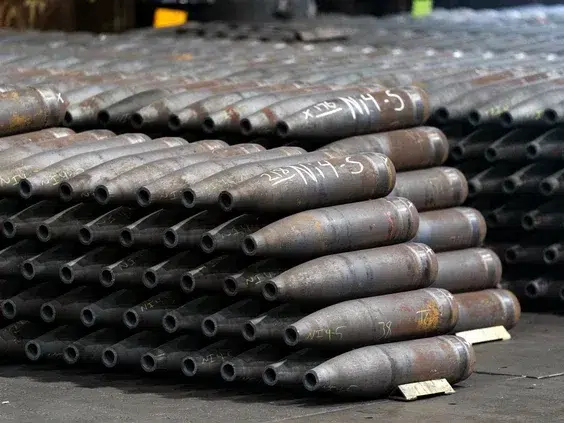 “FEBRUARY 5th 2024; Munitions Supplier Adds Heat Treating Capacity. It is well known that the war in the Ukraine has put enormous pressure on increasing production of munitions, and at the top of the list this would include 105 and 155 mm artillery shells. This “war pressure demand” was bound to increase production in western countries of munitions which would include added heat treat capacity and we now have an example of this.
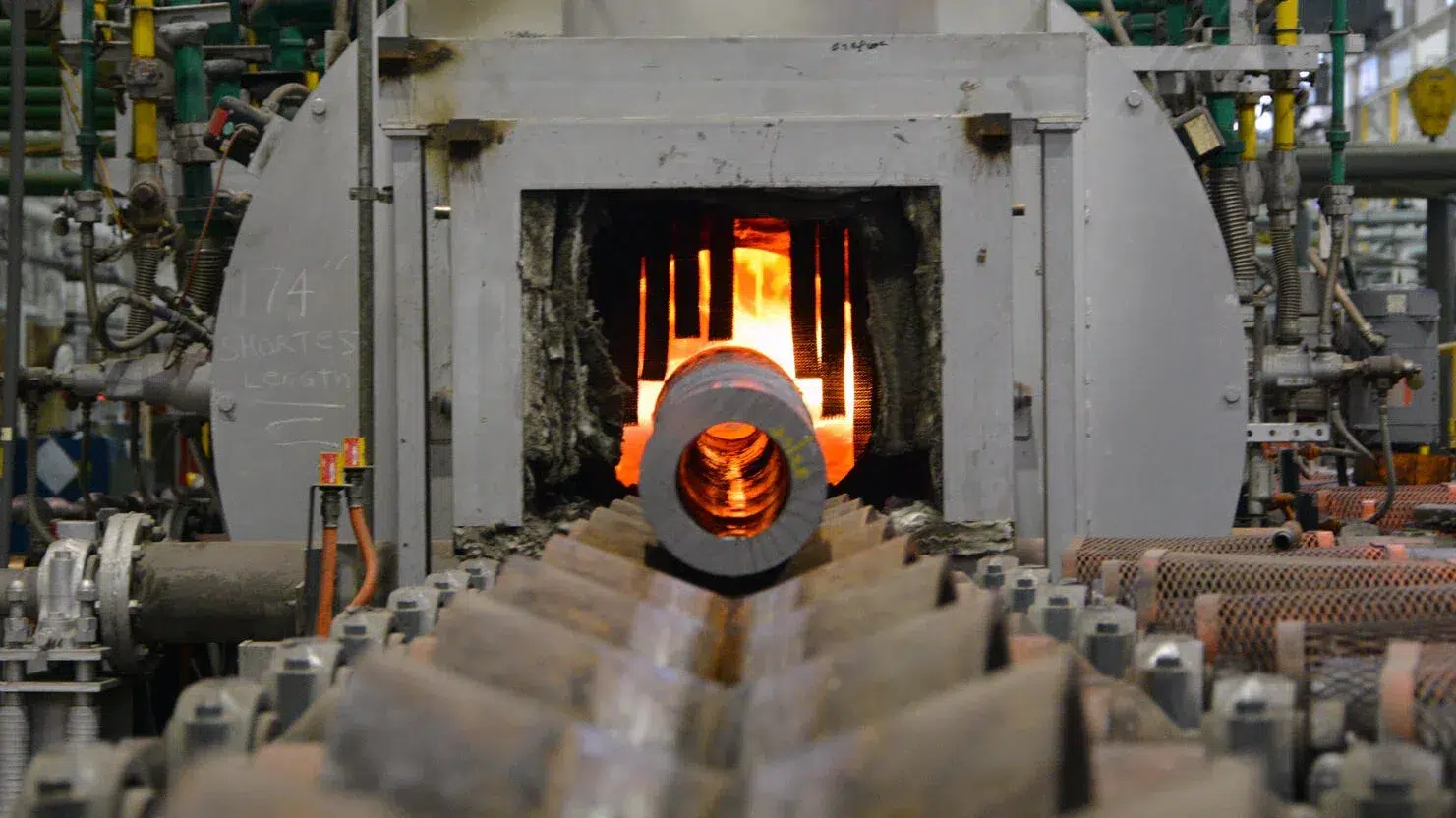 “Use of that [M777] howitzer and the volume it’s been used definitely confirmed the accuracy, the precision of that system, and also its endurance that it could fire: Those tubes had longer life than originally expected,” Lalor told reporters on Wednesday after an Association of the US Army event.
 “AFC-Holcroft” of Wixom, Michigan (part of the “Aichelin Group” of Austria) has since their inception used a sales model shared by most North American furnace builders, namely using a combination of independent sales representatives complimented by a few direct sales people. Up until recently the company had anywhere up to 7 rep organizations covering most of the USA and Canada (Mexico is handled by their licensee “MATTSA”) but this number has dwindled and now the firm is working with 3 “rep” firms with the bulk of the US and all of Canada being handled by direct sales people. https://afc-holcroft.com/global-partners