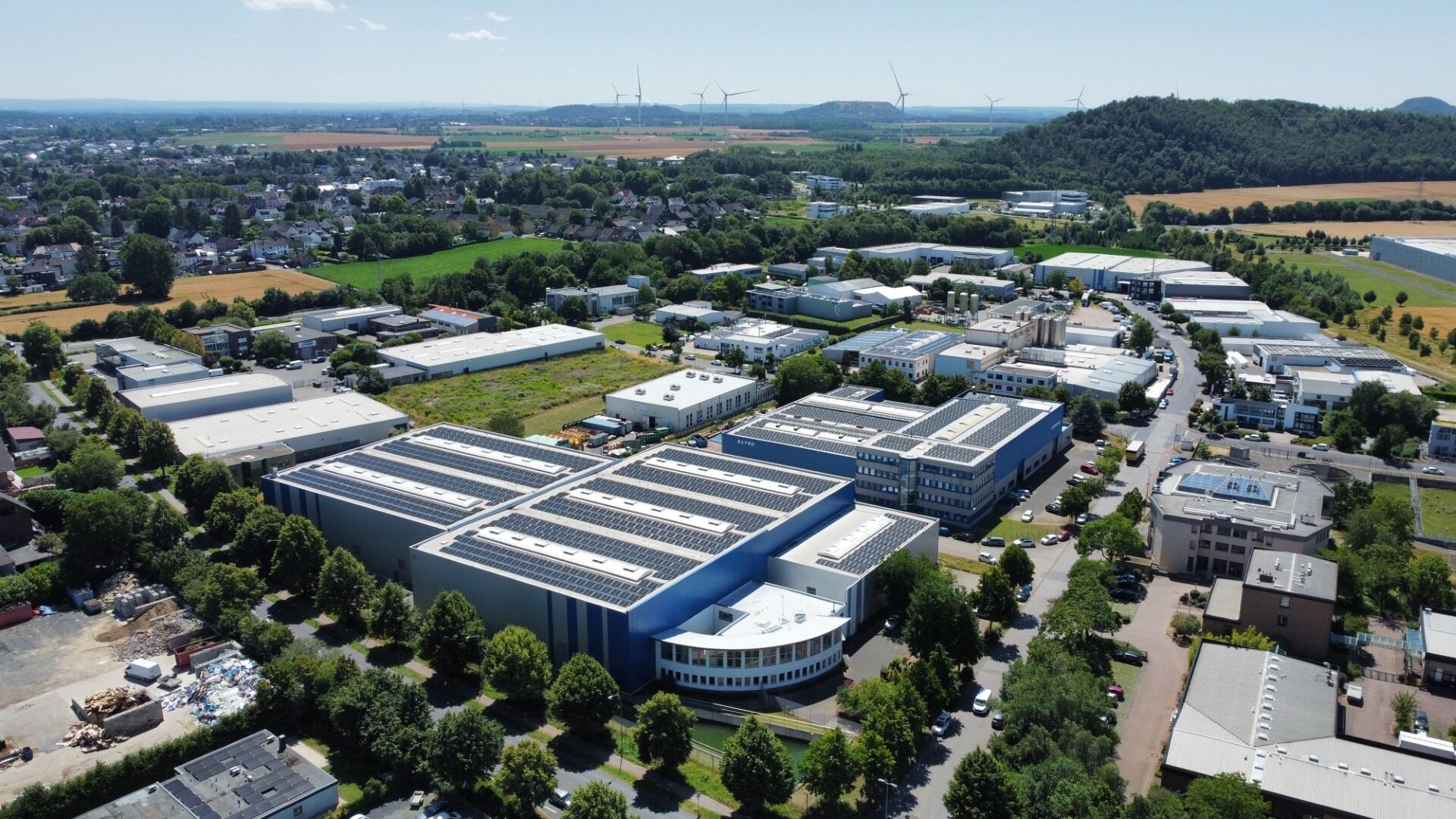
Today we have the privilege of speaking with Ms. Kirsten Baston, CEO of Eltropuls, one of the globes leading providers of “Plasma Nitriding” Systems.
Kirsten, please give us some background on yourself, your brother and the company.
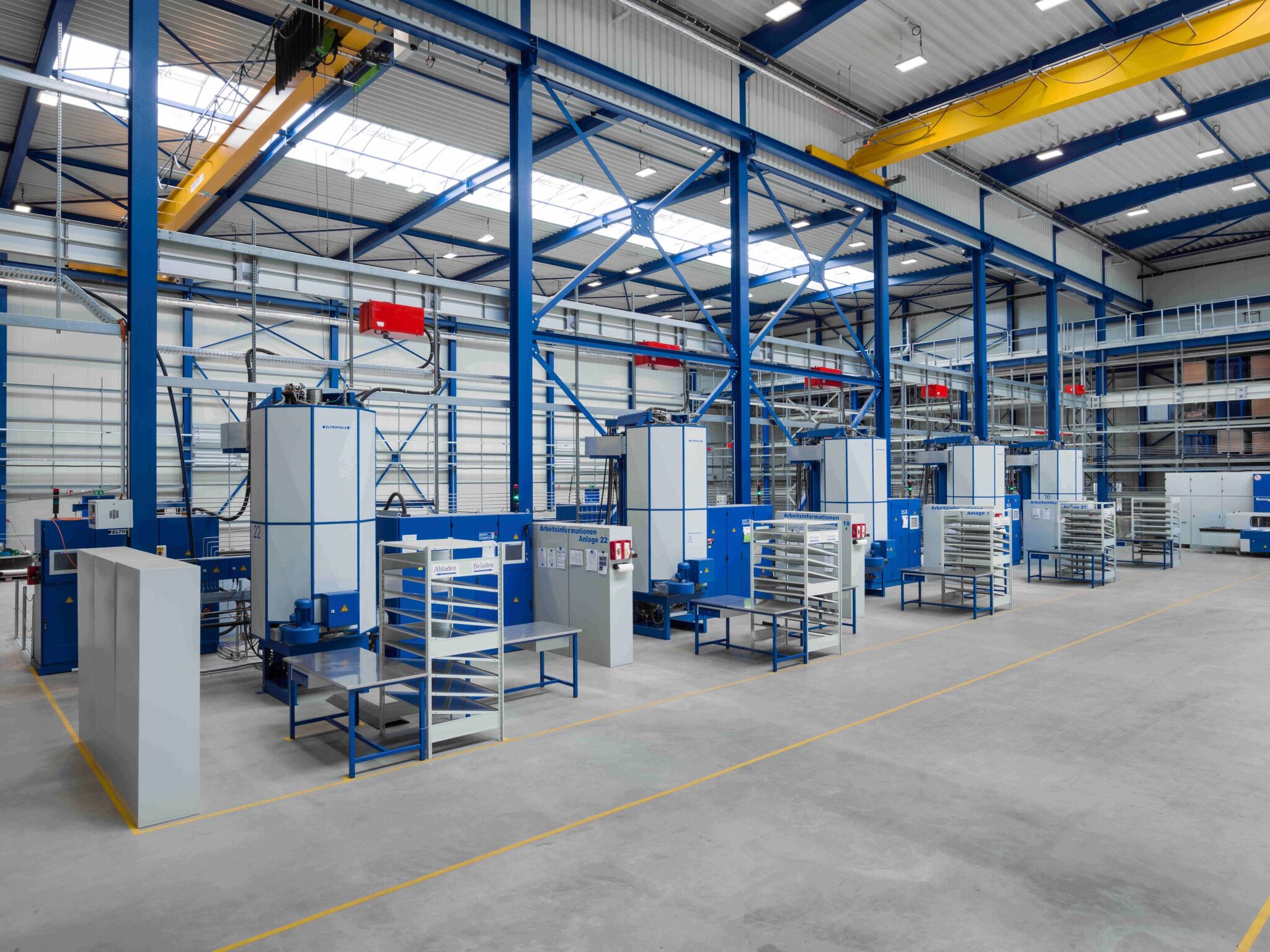
“Let’s start with our business. Eltropuls is a family-owned business which started to build plasma nitriding units almost 45 years ago! Since this time, we have continuously developed the technology. We ourselves are running 40 plasma nitriding units in our heat treatment shops. Therefore, we know how the furnaces work and how to treat components and we are happy to provide this know-how to our customers.
I personally have studied Material science and Metallurgy at Aachen University in Germany and joined the company in 2008.
My brother Marc has the same educational background, but he is also well skilled in Mechanics, Electronics and IT. Beside his tasks as a CEO of our furnace building department he is closely involved in the design of the equipment and software.”
What products do you offer?
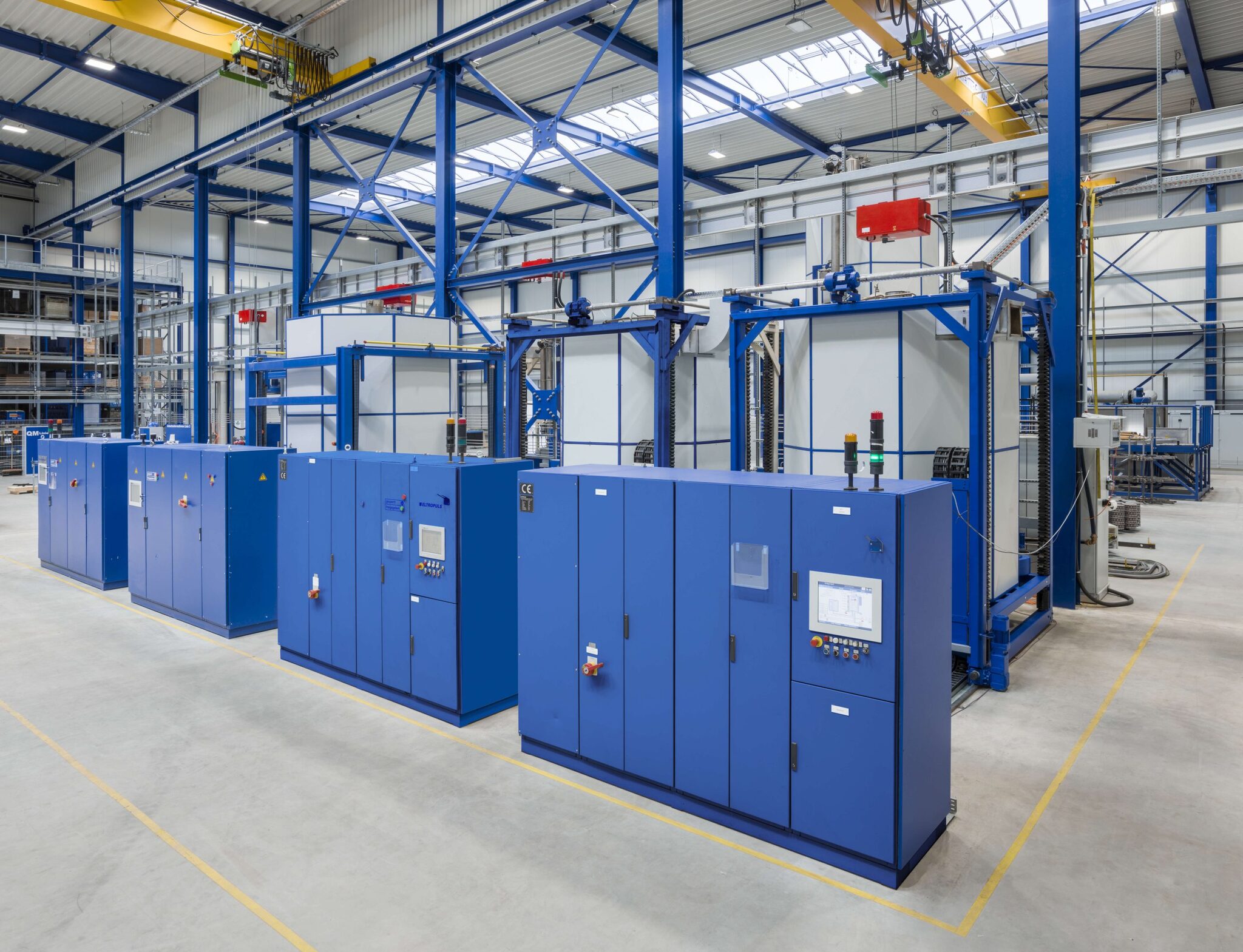
“We offer plasma nitriding and PVD-coating systems. If required from the customer we also manufacture cleaning equipment as well as fully automated loading systems for our nitriding units.
We also run a small heat treatment shop in Oxford, MI, USA. There we perform plasma nitriding, nitrocarburizing as well as post oxidizing.”
Right off the bat I have to ask, are the terms “Plasma Nitriding” and “Ion Nitriding” interchangeable?
“The answer to this is a bit tricky: Eltropuls was actually founded based on the discovery by a researcher from General Motors (Gary Tibbets) who discovered that ions in fact do not perform so called “ion nitriding” but the non ionic plasma does. So technically speaking ion nitriding is nonsense, in practice however the term is interchangeable with plasma nitriding.
When people still thought that ions were responsible for the nitriding, the process was much more difficult to control, and some practitioners even melted parts during the process. That is from our point of view the main reason a lot of people still hesitate to use “Ion-nitriding”. Before we started with our innovation of pulsed plasma a lot of power was put into the plasma to generate ions which resulted in a very hard to control process. Todays plasma-nitriding in contrast to yesterdays ion-nitriding is a process with much smaller power usage, less temperature differences and much easier control by the operator.”
I am rather embarrassed to say that after a lifetime in the heat treatment industry I have never completely understood how it works. Could you please enlighten myself and our readers?
“If you disregard the physics of the plasma, which is the part we handle as the furnace builder, the process is very similar to gas nitriding. Instead of Ammonia we use Nitrogen and Hydrogen. The plasma is created by applying a pulsed negative Voltage to the batch. The plasma then splits the nitrogen in two and creates nitrogen atoms which then diffuse into your parts in exactly the same way as the split ammonia in gas nitriding. Herein also lies one of the main advantages: Only where there is plasma is the nitrogen split, so if you mask off areas of your parts mechanically, they will not get nitrided.
Apart from that it looks like a typical heat treatment: First you heat up the batch by heating the furnace walls, this can be combined with a pre oxidation as in gas nitriding. Then you have an additional step of sputter-cleaning where the part is cleaned by a hydrogen plasma. This for example allows you to remove the surface oxide from stainless steels. Afterwards the parts get heated to nitriding temperature and held there for a pre calculated time, depending on the hardness depth required. After the time has elapsed the batch is cooled after optionally creating a black oxide layer.”
Why Ion nitriding rather than gas nitriding?
“Plasma nitriding offers some benefits that can’t be achieved with gas nitriding or that can’t be done easily, here are some examples;
Selective treatment of parts. Areas of the parts can be mechanically covered and be protected against nitriding. This allows welding, press-fitting or an improvement of the dimensional stability. This can be easily realized also in cases of mass production for instance automotive applications..
Treatment of stainless steel parts: Low and high temperature treatments are possible which lead to very high hardness (>1000HV)
Low distortion: The plasma allows for very low temperature treatments to realize best dimensional stability and to produce parts that can be assembled without hard machining.
Very high compressive stresses: Due to low temperature treatments very high compressive stresses can be generated at the surface. This is important for a lot of high-performance applications such as aircraft or motorsport applications.
Treatment of sintered parts: Dewaxing of sized sintered parts and nitriding can be done in the same treatment. The performance of the sintered parts is very good as the pores don’t get nitrided
Treatment of Titanium: Titanium can be nitrided to create a golden TiN-Layer which has an outstanding hardness of > 2000 HV. This is often used in the aerospace, motorsports and defense industries
Cost efficient due to low consumption: Ion nitriding is very cost efficient especially for big and heavy parts due to very low consumption of gas.
Safe process: Ion nitriding is a very safe process. No ammonia is needed, no explosive atmosphere can be created, no hazardous exhaust gas is produced. So, it can be easily integrated into every production facility.
Is Ion nitriding always a batch process or is there such a thing as a continuous Ion Nitriding furnace?
“Eltropuls built rotary hearth furnaces in the past but in most cases, this was not economically feasible due to the extra effort and cost you need for vacuum locks. If a continuous flow of parts is needed, for example in single piece flow machining, a small buffer space and an automated loading system is often more economic.”
What product is most suitable for Ion Nitriding?
“Hmmm, that is a very difficult question. I think the most obvious examples would be products that need selective nitriding (without painting) and stainless-steel products. I personally love the advantage the partial treatment brings to our customers, and I like to see the surprise in their faces in their faces when they see how easily this can be done.
Also, products where a manufacturer wants the heat treating to be “in line”. Plasma nitriding systems can very easily be integrated into a production line because the process is very clean.”
In Europe Ion Nitriding is very well known, but it is not well known in North America-why?
“The main reason might be that we are located in Europe. 😉
Seriously though, our first customers were actually mostly in the United States because Americans tend to be more innovative than Europeans. However, many heat treaters in the USA had bad experiences with the more primitive “Ion Nitriding” prior to the 1980s and this prejudice still seems to be around today. In Europe we had to spend a lot of time evangelizing to get rid of the bad image the process had.”
How has technology evolved over the years?
“The biggest leap in technology was when we introduced the pulsed process right at the start. Since then, we have continuously improved the process mainly in two areas. One focus is on efficiency and ease of use. Modern systems need much less energy, gas and maintenance than the original systems. The second area is on size and integration of other surface technologies. We have delivered plasma nitriding systems of up to 6,4 m diameter and above 5 m in height. Also, recently we also integrated PVD Coating into the same technology platform as the nitriding.”
What are your immediate, near-term and far-term goals for the company?
“One of the short and mid term goals is to conquer the American market. Long term we want to further strengthen our technological lead especially in the area of combined processes like Nitriding and PVD Coating.”
Thank you Kirsten, we very much appreciate you sharing your knowledge.
“Commercial Spring & Tool Company Ltd.” in Ontario, Canada has since 1973 been producing a wide variety of fasteners, stampings and clips, many of which are destined for the automotive market. During this time the firm has largely done their austempering in house, originally in a variety of mesh belt and shaker hearth furnaces. However over the years the company has done less and less in house until early in 2024 the company was down to a single older, mesh belt austemper line.
Due to shrinking volumes the furnace was not running at full capacity which led the company in mid 2024 to outsource all of the work to one of the largest commercially available sources in North America, the heat-treating divisions of furnace builder Aichelin Group. This consists of 2 locations “Atmosphere Heat Treating” and “Austemper Inc.”, both located in Wixom, Michigan, USA. In related news we recently mentioned that Mr. Mike Coburn, formally with furnace builder AFC-Holcroft has just been appointed Business Development Manager for this group.
There are many reasons for manufacturers to either bring their heat-treating requirements in house or conversely outsource their needs, but in this case, it was a fairly easy decision-running a continuous furnace at anything less than full capacity does not make any economic sense whatsoever.
This photo shows the furnace line as it looked while it was in production early in 2024.
Did you like this article? Click here to subscribe to The Monty.
“A firm which supplies metal injection molded components for the aviation industry has added to its production capabilities with a vacuum furnace. This solution will increase the capacity to provide hardening process services while meeting aviation standards required by the industry.
The Vector® vacuum furnace will process materials using an additional argon hydrogen partial pressure system, providing heating at a high level: 2192˚F (1200˚C). This is SECO/WARWICK‘s second collaboration with the company, one of the largest manufacturers offering metal injection molding technology with manufacturing capabilities including vertical integration of finishing technologies such as nickel and trivalent chromium electroplating, vacuum heat treatment and seal hardening, as well as precision grinding and CNC machining with micron tolerances.
“This partner is a global brand which has shown their trust in us for the second time by ordering a vacuum furnace, which we will now be able to service locally and more comprehensively,” said Sławomir Woźniak, president of the management board, SECO/WARWICK Group.
The furnace’s pumping system enables vacuum processes to be carried out in medium and high ranges, thanks to the use of a very good pumping system, and incorporates three process gases: argon, nitrogen, and hydrogen.”
Did you like this article? Click here to subscribe to The Monty.
In a relatively strong economy, it is a puzzler to the team at “The Monty Heat Treat News”why so many North American commercial heat treaters are closing their doors. At last count 2 in Canada have closed recently with at least 4 in Ohio having recently announced planned closings with 2 more to come-one in Michigan and one more in Ohio. The most recent closing, “Weiss Industries” in Mansfield, Ohio is mentioned below. As you will read Weiss decided to close their commercial heat-treating division in favor of their more profitable stamping division.
“Weiss Industries has been honored to provide metal stamping and heat treating services since 1948. Due to a marked increase in our stamping operations, including winning multiple long term contracts, stamping production will double in 2025 and beyond.
Weiss is thrilled to leverage our resources and efforts toward this burgeoning part of our operation. With this increased volume and after careful consideration, Weiss Industries has made the strategic decision to close our heat treating division.
The growth potential for Weiss Industries is tremendous, and this decision aligns with our mission to pursue that growth. We sincerely appreciate the trust and loyalty that our heat treat customers have shown us over the years.
While this marks the end of one chapter, it also signals the beginning of an exciting new era defined by growth, innovation, and success. We are committed and positioned to make the next 75 years of Weiss Industries even brighter than the last.”
Did you like this article? Click here to subscribe to The Monty.
Located in Greenville, South Carolina, USA “GE Vernova Inc.”, is a supplier of gas turbines for power generation and in 2024 it was ranked as the 14th largest single location captive heat treater in North America by “The Monty”. At that point in time the facility had 16 horizontal vacuum furnaces provided by several different furnace builders. At this point in time, we are unable to confirm whether this substantial investment will include expanding the location’s heat-treating capabilities.
“GREENVILLE, SC (January 29, 2025) – With global energy needs forecasted to double, GE Vernova Inc. (NYSE:GEV), America’s leading energy manufacturing company, announced plans today to invest more than $160 million and hire more than 650 new employees at its Greenville facility.
The substantial investments – the largest since the company’s spinoff in April – will help meet soaring customer demand, strengthen domestic supply chains, and continue developing cutting-edge American technology that helps power the world. The investments will also help enable U.S. energy affordability, security, resilience, and competitiveness while enabling the American manufacturing footprint to support global exports.
“These investments will have a significant impact on the Upstate today and for years to come,” said Shane Long, Supply Chain Leader, GE Vernova’s Gas Power business. “Beyond the immediate jobs additions and capacity expansion, this investment will allow Greenville to maintain and strengthen its position as the world’s center of gas turbine manufacturing.”
The investments in Greenville are part of a larger nearly $600 million planned investment across the U.S. the company announced earlier today and are the first part of a larger $9 billion cumulative global capital and R&D investment plan through 2028 across the company’s facilities in the U.S.
Currently GE Vernova has more than 2,500 workers in the state. This includes manufacturing, engineering and many other specialties. The factory has produced gas turbines for markets across the U.S. and globally since 1968.
Last year, Scott Strazik, CEO of GE Vernova, announced plans to increase global capacity of heavy-duty gas turbines more than 25% to meet robust demand. Today’s announcement is in addition to the $35 million the company invested in the facility last year.”
Did you like this article? Click here to subscribe to The Monty.
April 5th, 2025 “The Monty Heat Treat News” will be offering our updated list of the “50 largest North American Commercial Heat Treaters” (the 2024 List can be found “Here”).
This list prompts the obvious question-how big is the North America commercial heat treat pie? In other words what is the total value of commercial heat treating in North America? We will start out by saying that “The Monty Team” has seen a number of different reports over the years and the variations between each can be reasonably large-making it quite difficult to come up with a definitive number. A large part of this variation is because it is so difficult to define what exactly heat treating is.
We have come to believe that the total heat-treating market in the USA is approximately $24 Billion USD per year-this number encompasses both captive and commercial heat treating. At this point we need to mention that our list of the 50 largest commercial heat treaters is for North America which includes Canada and Mexico. While the Canadian heat treat market is quite small at an estimated 4% of the US market and falling, Mexico represents a substantially larger portion although still small compared to the USA.
Therefore, we will start with the USA number of $24 billion and extrapolate from there to arrive at the value of commercial heat treating. It is generally assumed that commercial heat treating represents anywhere from 10-15% of the total market so if we take an average of 12.5% we arrive at an estimate of a little over $3 Billion USD for the commercial heat treat market in North America.
Is this number accurate? We have piled assumption on top of generalization and thrown in a healthy dose of educated guesses so of course this number is not dead on the money,. However, we also believe it is as good a number as any others you will see out there.
Each week the “Monty Heat Treat News”looks back at our heat treatment stories from the week before and comes up with a list of the 3 most popular based upon reader feedback, website visits and social media posts. For the week starting February 17th, 2025 it would appear that heat treating of brake rotors is what excited our readers the most. These are the top 3 from most to least popular;
FNC of Brake Rotors-A New Approach; For a number of years now heat treating of automotive brake rotors has involved Ferritic Nitrocarburizing (FNC) in large tip up furnaces (generally but not always we will stress).
It would appear that “Nitrex” has come up with a different approach, one that will be in production in the very near future. The furnace system you are seeing in these photos is in the final stages of testing at the Nitrex facility in Poland. The furnace is designed for around 600,000 rotors per year based upon 46 weeks/year, 5 days a week/24 hours a day with a “charge” every 2 hours. The furnace will be the first of two destined to be installed in Northwestern Europe. This system has exceeded all design criteria from heating rate, cooling rate and layer thickness/uniformity.
As mentioned the system with be doing Ferritic Nitrocarburizing with consistent oxide layer and color. More on this story to come.
Massive Fire at Captive Heat Treater; From the“Philadelphia Inquirer” we have this story about a massive fire at aerospace fastener supplier “SPS Technologies”in Jenkintown, PA, USA. We mention this story as the company has a very substantial in house heat treat department although at this point in time it is unknown whether the fire originated there. “A shelter-in-place was still active within a one-mile radius and area schools were closed Tuesday after a 4-alarm fire ripped through an aerospace parts supplier in Montgomery County on Monday night, officials said.
Shortly after 9:30 p.m., police received multiple 911 calls of an explosion at SPS Technologies industrial complex on Highland Avenue, in Jenkintown, Abington Police Chief Patrick Molloy said at a Tuesday morning news conference. When first responders arrived, they were met with multiple explosions at the complex, he said.
Firefighters from 68 fire companies responded to battle the blaze, Molloy said, and many were still on scene Tuesday morning trying to put the fire fully under control. As of Tuesday morning, no injuries were reported, he said.
Due to concerns over air quality and water contamination, a shelter-in-place was activated for residents within a one-mile radius of the scene, Molloy said. Hazmat teams are still monitoring air quality and water runoff from the scene, but have not detected any threats to the public, he said.
SPS Technologies manufactures fasteners and other small metal equipment for the aerospace and other industries, said Abington Fire Marshal Chris Platz. Fire officials were initially concerned that if some of the heat treating chemicals used at the facility mixed, they could form arsenic, said Abington Fire Chief Mike Jones.
The company was founded more than a century ago as Standard Pressed Steel Company. The Abington complex is described as 560,000 square feet and is a source for parts throughout the aerospace industry. The site is within a few hundred feet of the nearest homes and an athletic field with several baseball diamonds.”
Since joining Ipsen in October 2023 as a Project Manager in the Retrofits Department, Hundley has demonstrated strong leadership and a commitment to continuous improvement. With a degree in industrial engineering from Iowa State University, she has applied her expertise in lean manufacturing to drive process improvements, including a Kaizen event to optimize operations and Ipsen’s ERP system. Hundley has also enhanced the project manager role by improving project organization, financial reporting, and crossdepartment collaboration. As Retrofits Manager, she will lead the Retrofits Team to improve response times, streamline pricing and proposals, and provide tailored solutions that extend equipment lifespan and efficiency, driving long-term customer satisfaction.
BTP
Chouraki rejoined Ipsen in June 2022 as Manager of Business Development and has been instrumental in launching Ipsen’s HUB service model, expanding it across six U.S. regions. He first joined Ipsen in 2015 as a Field Service Engineer before being promoted to Regional Service Manager in 2018. His extensive experience within Ipsen’s service operations, combined with his industry knowledge, makes him uniquely qualified to lead the Field Service Team. As Field Service Manager, Chouraki will oversee all Regional Service Managers and Field Service Engineers, focusing on streamlining processes, improving response times, and enhancing customer support. He will also drive the continued expansion of Ipsen’s HUBs and develop his team into subject matter experts, supporting Ipsen’s commitment to outstanding service delivery and customer satisfaction.
“We are excited for Evan and Lu to take on new roles. These two leaders have already made significant contributions to Ipsen’s success,” said John Dykstra, Ipsen’s Chief Service Officer. “Their experience and dedication to improving our operations and customer support will be key as we continue to innovate and enhance our service offerings.” Ipsen is confident that under Hundley and Chouraki’s leadership, the company will continue to drive success and further enhance customer support and service operations.
“After entering the vacuum heat treatmentVacuum Furnace market segment in the middle of last year, AICHELIN recently successfully delivered a vacuum furnace to the plant of one of the leading heat treatment and specialist service providers for thermal processes, Bodycote, in Vantaa (Finland). The furnace, with a usable space of 600 x 900 x 600 mm and a maximum batch weight of 1,000 kilograms, has been specially tailored to Bodycote’s requirements and is characterised by maximum efficiency, innovative technology and sustainability.
The vacuum furnace achieves a maximum cooling gas pressure of 10 bar, which is controlled by a frequency converter, which allows the process parameters to be precisely adjusted. “The AICHELIN solution impresses with its excellent cooling speed and energy efficiency,” says Philippe Prince, Senior Vice President Technical Services at Bodycote. Initial practical tests have confirmed the performance and high energy efficiency of the new vacuum furnace.
The on-time installation and commissioning of the furnace in Finland represents an important milestone in the cooperation between AICHELIN and Bodycote. Bodycote has selected AICHELIN as a supplier of equipment that matches its vision of advanced and sustainable vacuum technology for industrial heat treatment.
With this project, AICHELIN strengthens its position in the European market and expands its portfolio of turnkey supplies in Northern Europe with sustainable technologies that meet the growing demands of the industry.
About AICHELIN Group; The AICHELIN Group, which is part of Berndorf AG and is headquartered in Mödling near Vienna, is one of the world’s leading providers of heat treatment solutions. These include industrial furnaces, industrial heating systems, control and automation systems, Industry 4.0 solutions and services. The company’s roots go back to 1868. In addition to the traditional brand AICHELIN, AFC-Holcroft, SAFED, BOSIO and NOXMAT belong to the group, which has more than 1,000 employees worldwide. AICHELIN is represented by subsidiaries in Austria, Germany, Slovenia, France, Turkey as well as in China, India and the USA. The Group’s global presence also includes a sales network in a further 22 countries. www.aichelin.com“
Did you like this article? Click here to subscribe to The Monty.
Captive/Commercial heat treater RAMADA ACOS in Ovar, Portugal has been mentioned by “The Monty Heat Treat News” several times over the years, including this summary of the company in 2021;
“NOVEMBER 2021; Ramada ACOS is a captive/commercial heat treater located in the northern part of Portugal in the city of Ovar. The firm is another example of a company which offers some of the most “state of the art” heat treatment processes available anywhere in the world. Ramada has been in business for more than 75 years both as a heat treater and a distributor of steel for Uddeholm. The company has 13 vacuum hardening and vacuum nitriding furnaces all from French furnace builder BMI along with 8 sealed quench furnaces with oil quenching https://www.ramada.pt/pt/servicos/acos-ligas/tratamentos-termicos.html, Interestingly enough at least some of the sealed quench furnaces are from a Brazillian furnace manufacturer by the name of Brasimet which caught our attention-as it turns out because of the historical connection between Portugal and Brazil this is a not uncommon occurrence.
Since that time the company has invested in a new, automated Carburizing Line which according to this press release is now in full production;
“RAMADA AÇOS INVESTS IN NEW AUTOMATIC CARBURIZING LINE; This investment reduces delivery times and strengthens the capacity of the Iberian market to compete for larger projects.
RAMADA AÇOS is launching a new line of automatic heat treatment with controlled atmosphere and oil cooling – carburizing, carbonitriding, quenching, among others. With over 70 years of experience, the Heat Treatment unit in Ovar, Portugal is increasing its production capacity to a maximum of 9,000kg/day, with the possibility of treating parts up to 1300 mm in length and 1,500 kg.
This new heat treatment line is the result of a partnership with the supplier IPSEN, a global reference in this type of equipment. The state-of-the-art technology enables the automation and digitization of heat treatment processes, making the production unit safer, more efficient and sustainable, while also ensuring automated quality control.
RAMADA AÇOS thus strengthens its position in the Iberian market as a true partner for industries such as metalworking, moulds and others. The company combines greater production capacity with close customer support and a specialised team capable of finding the best technical solutions, focusing on quality and speed of service, competitiveness and trust.”
Did you like this article? Click here to subscribe to The Monty.
Ipsen is pleased to announce the promotion of Evan Hundley to Retrofits Manager and the appointment of Lu Chouraki as Field Service Manager.
Since joining Ipsen in October 2023 as a Project Manager in the Retrofits Department, Hundley has demonstrated strong leadership and a commitment to continuous improvement. With a degree in industrial engineering from Iowa State University, she has applied her expertise in lean manufacturing to drive process improvements, including a Kaizen event to optimize operations and Ipsen’s ERP system. Hundley has also enhanced the project manager role by improving project organization, financial reporting, and crossdepartment collaboration. As Retrofits Manager, she will lead the Retrofits Team to improve response times, streamline pricing and proposals, and provide tailored solutions that extend equipment lifespan and efficiency, driving long-term customer satisfaction.
Chouraki rejoined Ipsen in June 2022 as Manager of Business Development and has been instrumental in launching Ipsen’s HUB service model, expanding it across six U.S. regions. He first joined Ipsen in 2015 as a Field Service Engineer before being promoted to Regional Service Manager in 2018. His extensive experience within Ipsen’s service operations, combined with his industry knowledge, makes him uniquely qualified to lead the Field Service Team. As Field Service Manager, Chouraki will oversee all Regional Service Managers and Field Service Engineers, focusing on streamlining processes, improving response times, and enhancing customer support. He will also drive the continued expansion of Ipsen’s HUBs and develop his team into subject matter experts, supporting Ipsen’s commitment to outstanding service delivery and customer satisfaction.
“We are excited for Evan and Lu to take on new roles. These two leaders have already made significant contributions to Ipsen’s success,” said John Dykstra, Ipsen’s Chief Service Officer. “Their experience and dedication to improving our operations and customer support will be key as we continue to innovate and enhance our service offerings.” Ipsen is confident that under Hundley and Chouraki’s leadership, the company will continue to drive success and further enhance customer support and service operations.
Did you like this article? Click here to subscribe to The Monty.


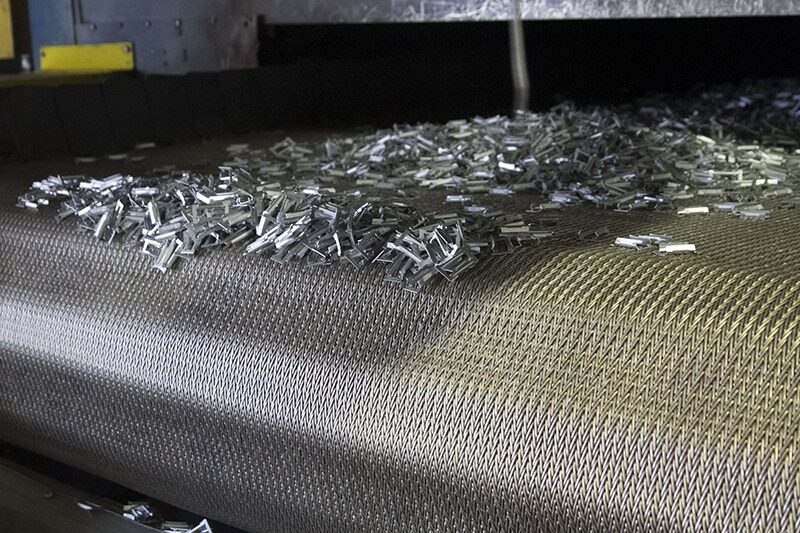 “Commercial Spring & Tool Company Ltd.” in Ontario, Canada has since 1973 been producing a wide variety of fasteners, stampings and clips, many of which are destined for the automotive market. During this time the firm has largely done their austempering in house, originally in a variety of mesh belt and shaker hearth furnaces. However over the years the company has done less and less in house until early in 2024 the company was down to a single older, mesh belt austemper line.


