(Editors Note: commercial heat treater “Aremac Heat Treating” was originally based in the western USA but back in 2017 moved to Eastman, Georgia. One of their larger customers has been “Kencoa Aerospace LLC” also in Eastman. According to this press release “Kencoa” recently bought “Aremac” and has renamed the company Kencoa Aerospace LLC.).
“Aremac Heat Treating has been acquired by Kencoa Aerospace LLC and will now be doing business as Kencoa Aerospace LLC moving forward. This acquisition represents an exciting new chapter for us—one that builds upon Aremac’s longstanding commitment to quality, reliability, and customer service while strengthening our capabilities as part of the Kencoa Aerospace family.”
About Kencoa Aerospace LLC; Kencoa Aerospace LLC, located in Eastman Georgia USA, is a premier Tier-1 supplier of multi-axis precision machined and/or sheetmetal fabricated components for spacecraft, aerostructures, jet engines, and major assemblies for commercial, military and business/regional jets worldwide. Since 1998, Kencoa has provided cost-effective aerospace solutions to our customers’ most challenging problems.
Kencoa fabricates, machines, finishes, kits and assembles machined and formed close tolerance Aluminum, Titanium and other hard metals, specialty exotic alloy such as Inconel, and composite components. Kencoa also provides engineering and program management services, supporting aircraft product lifecycles from initial product design, prototyping and flight certification hardware, to production manufacturing, to spare parts programs and Maintenance Repair and Overhaul (MRO) needs.
About Aremac Heat Treating; Aremac Heat Treating, LLC has been serving the Aerospace and commercial manufacturing industries in the western United States since 1968. We recently moved our facilities to the east coast to our current location in Eastman, Georgia and are now doing business as Kencoa Aerospace, LLC.

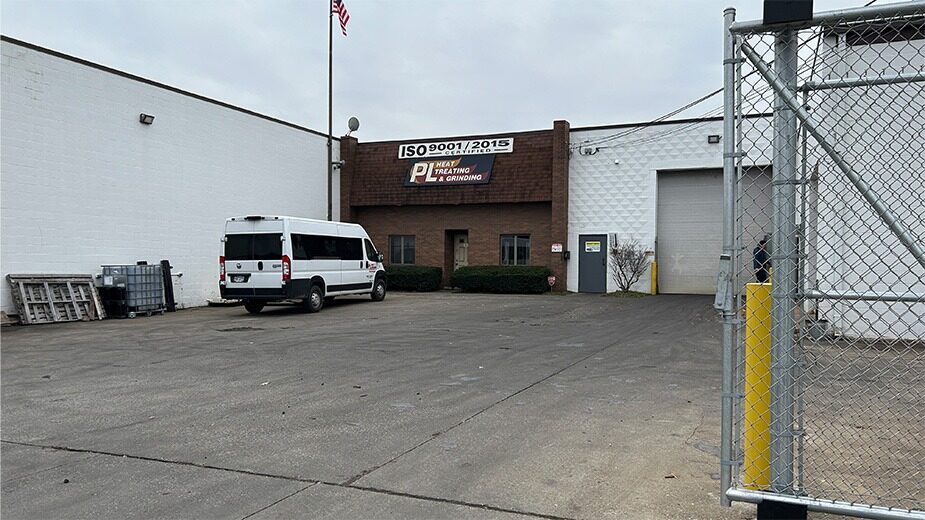
“YOUNGSTOWN, Ohio – A local partnership’s purchase of P&L Heat Treating & Grinding will put the company back under the control of its founder. Voltage Valley Capital Partners, which was co-founded by Tim Petrey, Bobby Stackhouse and Tim Carney, acquired P&L in September, according to a news release. Last week, the local venture capital group announced that Bill Pociask, who founded the industrial heat-treating company in 1978, would return as president.
“I’m excited to step back into the president role and continue building on P&L’s 47-year legacy of excellence,” Pociask said in the release.
“He’s always loved the business. He’s always been passionate about it. This was his baby, and he was excited about the opportunity to get back involved,” Petrey, who also is CEO of HD Growth Partners and founder of White Glove Payroll, said during a phone interview. “He loves his team members, his clients, his customers, and he’s still healthy enough to be an active participant in the business.”
Founded in a 2,400-square-foot facility with two employees and four heat-treating furnaces, P&L now operates from a 32,000-square-foot facility in downtown Youngstown, with 20 employees and 24 heat-treating furnaces, according to the news release. It provides a broad range of industrial and commercial heat treatment services, specializing in nitriding, vacuum heat treating, forming dies and quick turnaround solutions for steel and tool steels, serving diverse industries including automotive, mining and tool and die manufacturing.
Petrey did not disclose the purchase price. The company had been acquired in 2018 by Thermal Process Holding Inc., and Pociask stayed on for a time under its ownership as general manager.
“It’s a great business. It’s been around for many years in the community,” Petrey said.
Petrey’s partners also praised the transaction in the release.
“This transaction perfectly aligns with our investment thesis of supporting established businesses in the Mahoning Valley that serve critical roles in the manufacturing ecosystem,” Carney said.
“We’re thrilled to bring P&L back under local ownership and partner with Bill, who built this company into the industry leader it is today,” Stackhouse said.
The P&L purchase represents Voltage Valley Capital Partners’ third investment in the Mahoning Valley, the news release reported. The venture capital group focuses on investing in local businesses that don’t have a succession plan or need the group’s expertise in areas such as operations, finances or marketing, “the things that we’re bringing to the equation to be able to ensure that business can live beyond the founder one day,” Petrey said.
The intention is to ensure that P&L provides the highest level of service to its customers and that the right people are on the team “to make sure that the business has a long future ahead of it,” he added. “We would love to eventually be able to expand. We would love to eventually be able to create new jobs. That’s something that we’re certainly excited about in the future.”

Carbon and Graphite advanced materials supplier “Americarb”in Niagara Falls, New York, USA is in the process of scaling up production of critical materials for the Space industry. Part of this “ramp up” of production includes the addition of two bottom load vacuum furnaces. This photo shows the furnaces being assembled in the Niagara Falls facility just last week. This additional capacity will be dedicated to the production of materials for Solid Rocket Motors for the DOW and commercial launch industries. Production is scheduled for early 2026.
To learn more about the company we would suggest these “Monty Heat Treat News” exclusive stories;

(Editors Note: While “Oerlikon Balzers” is best known as a coatings company they do also get involved in commercial heat treating. In this case their Pell City, Alabama location also offers nitriding services.)
“BIRMINGHAM, Ala. (WIAT) — Eight people will soon be out of work after Oerlikon Balzers Coating USA closes its one plant in Pell City. The company, which operates over 30 locations across the country, announced in a WARN notice that it was closing its plant in Pell City, beginning March 31.
Oerlikon Balzers is a subsidiary of Oerlikon Group that provides protective coatings for different automotive parts. No other closings have been announced by the company.”
About Oerlikon Balzers; “Oerlikon Balzers, world-leading provider of surface technologies, develops solutions and equipment and offers services to considerably improve the efficiency and longevity of precision components and tools for the metal and polymer processing industry. Oerlikon Balzers is the only contract coating services provider with a dense coating centre network located throughout all of the major industrial regions of Europe, the Americas, and Asia. This guarantees efficient procedures, short delivery times and local customer advice and support. For 75 years, Oerlikon Balzers has stood for pioneering developments and global technology leadership in thin-film coatings.”

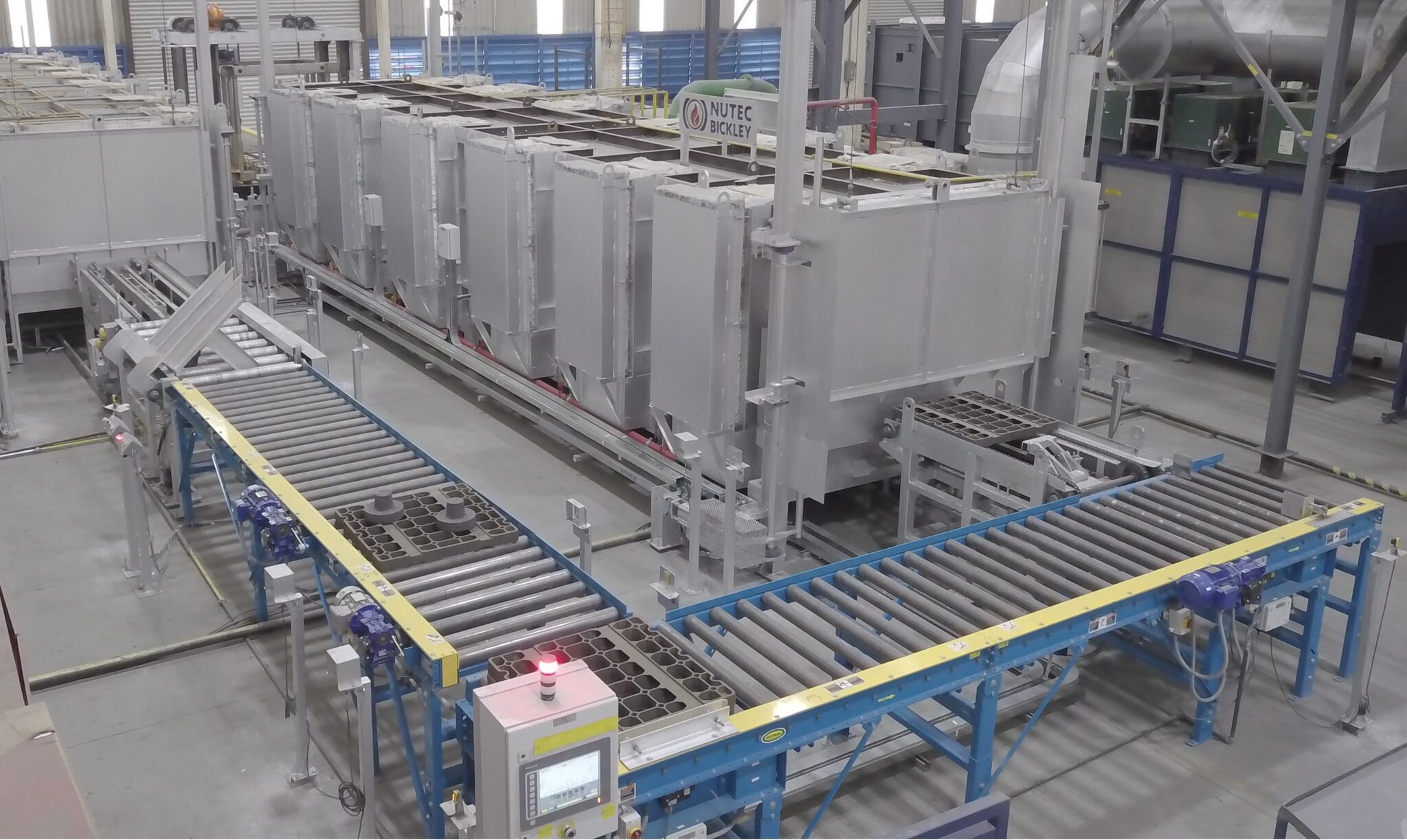
“An international, multi-billion-dollar corporation at the forefront of drivetrain technologies has awarded NUTEC Bickley the contract for a complete isothermal annealing line, due to be delivered in Q1 2026. This prestigious heat treat project is highly customized and the system has been designed in close collaboration with the customer to ensure everything meets its specific operational needs.
The contract comprises both high-temperature and low-temperature furnaces, as well as an isothermal cooling chamber and blast cooling tunnel, together with all the ancillary equipment and full material handling and conveying system. The furnaces are designed to be in compliance with CQI-9, the comprehensive audit covering the most common heat treat processes employed by the automotive industry.

At the heart of the new facility will be a double pusher tray high-temperature furnace (HTF) that will process carbon steel automotive parts. The furnace will incorporate a fully automatic electrical double pusher system with steel trays sliding over rails with idle rolls. Processing two trays across the width helps reduce the length of the line.
This natural gas unit has four automatic temperature zones, each with two high-velocity nozzle-mix burners that provide excellent turbulence and outstanding recirculation within the furnace chamber. The burners are positioned on top of the sidewalls of the unit, mounted to fire horizontally above the load.
The operating temperature is between 850°C and 950°C (1560°F-1740°F). As with all NUTEC Bickley projects, achieving temperature uniformity is a priority, and the broadest aims here are ±5°C for processes below 680°C, and ±10°C at or above 680°C. The combustion program is based on pulsed firing, with all the latest control software for this type of system.
After initial heat treating, the forged carbon steel parts are moved into an isothermal cooling chamber (ICC), also supplied by NUTEC Bickley. The exit door from the high-temperature furnace links directly to the ICC. Cycling time in the ICC varies between five and 10 minutes – with ambient air being supplied from an external cooling air fan – during which time the load temperature is rapidly reduced from 950°C (1740°F) to 660°C (1220°F), bringing it to transformation point. Tray push rate and maximum product throughput fall into sync with the furnace.
The parts are then conveyed to a second, low-temperature furnace (LTF), and again this matches the high-temperature unit in terms of tray push rate and maximum product throughput. This furnace relies on three automatic temperature control zones and has six burners. It operates at between 630°C and 700°C (1170°F-1290°F) and uses a fuel-only control system for enhanced temperature uniformity.
DCIM100MEDIADJI_0077.JPG
In addition to the HTF, ICC, LTF and BCT, NUTEC Bickley is supplying all the external and conveying equipment for this line, including entrance and transfer cars, complete with car movement system; transfer car tracks; exit transfer cars, with tray dumper unit and car movement; integrated air cooling unit; return conveyor, with electrical dolly system to move trays to the transfer car; and loading station, directly on trays at the transfer car, featuring a carbon steel basket with a lift-rotation movement via a pneumatic cylinder system. The parts handling system operates fully automatically and is linked to the whole process via the Master PLC and HMI.”

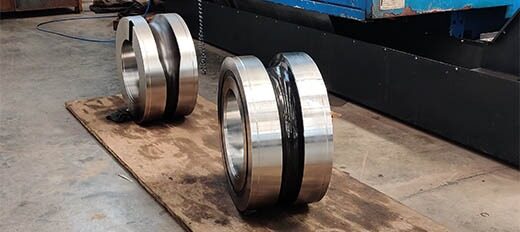
The vacuum furnace on order will be used to carry out advanced vacuum hardening processes for tools, dies and rolls. The partner will process tool steels with high thermal requirements, such as H13, H11 and D2. Until now, technological capabilities were limited by a locally manufactured furnace with a cooling pressure of up to 4 bar, which did not allow for effective processing of components requiring high-pressure gas hardening. Increasing production loads and customer requirements, including one of the key partners, prompted Bhuj Polymers to invest in next-generation vacuum technology.

Ipsen USA announces the successful ISO/IEC 17025:2017 reaccreditation of its Calibrations Lab, ensuring continued certification of inspection equipment used by Ipsen field service engineers to calibrate heat-treating systems across the U.S. and worldwide. The reaccreditation directly supports industries such as aerospace and medical where calibrated instruments are critical in producing high-precision parts. According to the International Organization for Standardization (www.ISO.org),
“ISO/IEC 17025 enables laboratories to demonstrate that they operate competently and generate valid results, thereby promoting confidence in their work both nationally and around the world.” For Ipsen customers, this means added assurance that their furnaces and heat-treating equipment aremaintained to exacting standards and remain compliant with industry specifications, such as AMS 2750, governing aerospace heat-treating processes. “Renewing our accreditation is largely a verification process, making sure that we are doing what we say we’re doing,” explained Cavan Cardenas, Ipsen Technical Training Lead.
“The reaccreditation process involves multiple audits, both internally and externally, virtually and in person, over the course of the two years since our initial accreditation.” The audits for the reaccreditation are overseen by Perry Johnson Laboratory Accreditation, Inc (PJLA), a private third-party accreditation body that validates the competency of testing and calibration laboratories. “We want to make sure that we’re giving the right instructions, following the instructions, and documenting the process,” Cardenas added. “Following this process ensures that we will continue to meet the ISO standards required by our customers, and that our system doesn’t have any blind spots.”
Luigi Moruzzi, Ipsen Customer Service Lab Technician, added: “We were able to collect our documentation and calibration certificates, making sure that all of our paperwork was up to date and confirming that they matched AMS 2750 and ISO standards. ISO reviewed our uploaded documentation and visited our lab for the audit, reviewing the documents and procedures with us, making sure that each piece of equipment that comes into the lab is inspected properly and leaves meeting strict quality specifications.”

(Editors Note; Milwaukee Forge has a substantial in house heat treating department with the ability to offer Normalizing, Annealing, Quenching & Tempering in a wide variety of furnaces)

The company, located at 1532 E. Oklahoma Ave., is now being sold to a private ownership group after being placed in receivership earlier this year. Creditors previously reported the business had at least $9.3 million in outstanding liabilities, including bank loans and unpaid invoices from vendors and equipment suppliers.
Milwaukee Forge, which has operated since 1913, is being sold to an ownership group doing business as Milwaukee Forgetech, Inc. A holding company, Milwaukee Forgetech Holdings, LLC, is registered to Phillip Prange, of Waukesha. Prange is a former lobbyist, well-connected Republican and a co-founder of the publication WisPolitics, and currently the Senior Government Solutions Architect for Fiserv. He is married to Alison Prange, managing director of Michael Best Strategies and the former COO of the 2024 Republican National Convention host committee.
The company provides heat-treating and forging services. It operates out of a 132,000-square-foot facility on an eight-acre property in Bay View owned by an affiliate.
In March, creditors petitioned in state court to have the company placed in receivership. Milwaukee County Circuit Court Judge Thomas J. McAdams granted the petition and ordered the company and its assets placed under the control of a court-ordered receiver, attorney Michael Polsky.
Initially, Polsky sought to sell the company’s assets as a going concern. However, attempts to sell the business at auction were unsuccessful. Then, in late August, Polsky sought a hearing before McAdams seeking approval of a sale to Milwaukee Forgetech. McAdams approved the sale Friday, Nov. 13.
It is the second time Milwaukee Forge has been sold out of receivership. In 2010, Mesick led an ownership group that purchased the company for $7.1 million.
City of Milwaukee Mayor Cavalier Johnson and County Executive David Crowley both wrote letters to the court in support of the sale. The officials wanted to see the company sold in order to continue operating and providing union-represented jobs. The ownership group has indicated it will represent and bargain with the unions representing Milwaukee Forge workers: the International Association of Machinists and Aerospace Workers Local 140 and the United Steelworkers.
“This is a facility with a long history of industrial production and employment that contributed to the city’s economy,” Johnson wrote.”


“Bodycote PLC on Tuesday reported improving trading momentum across most of its end markets in the four months to October 31, although group revenue growth remained held back by ongoing plant closures under its restructuring programme.
The Macclesfield, England-based metal heating company said core organic revenue rose 2.2% year-on-year in the period, an improvement on the first half, leaving year-to-date core sales down 1.4% compared with a 3.6% decline in the first six months.
At group level, organic revenue edged up 0.3% as the company continued to wind down non-core sites as part of its multiyear Optimise programme.
Year-to-date group revenue was 2.7% lower at £613 million, compared with a 4.6% drop at the half-year stage.
Bodycote said Aerospace & Defence was the standout performer, delivering ‘strong’ and accelerating growth, helped by a ramp-up in work related to LEAP aircraft engines.
Automotive and Industrial demand remained challenging but showed better year-on-year trends due to easier comparatives, Bodycote said.
Oil & Gas remained a drag, with low upstream investment in the Middle East delaying the ramp-up of recent contract wins.
The Specialist Technologies division saw organic revenue fall 1.8% in the period and remain 5.4% lower year-to-date, although Bodycote said momentum strengthened in September and October.
In HIP Product Fabrication, several defence-related contracts won in the first half are expected to drive a higher level of deliveries in the fourth quarter.
The Precision Heat Treatment division posted 4.1% organic revenue growth in the period, turning year-to-date performance positive at 0.6%. Industrial gas turbines and aerospace drove the gains, while automotive demand improved modestly.
Bodycote said execution of its Optimise programme accelerated, including revenue transfers to core sites and progress on the planned sale of 10 French automotive and industrial locations.
The company expects to have exited more than one-third of the remaining 20 non-core sites by year-end.
Looking ahead, Bodycote reiterated that second-half operating profit will be higher than the first half and ‘broadly in line’ with the £62.2 million delivered in the second half of 2024.
‘Our focus remains on execution as well as delivering on our Optimise, Perform & Grow initiatives, which will create a higher-quality, more resilient and faster-growing Bodycote,’ the company said.
Bodycote shares were 0.4% lower at 600.00 pence in London on Tuesday morning.”
Ten Ipsen field service engineers are completing Pyrometry II training through the Performance Review Institute (PRI), a national organization that focuses on certification for processes that need to meet Nadcap and AMS standards. These engineers are on track to be fully certified by the end of December 2025.
“While Ipsen has had calibrations staff on hand trained in AMS and Nadcap pyrometry standards for years, this push for expanded training helps our field service engineers better understand the fundamental technical knowledge behind the testing and results,” explained Cavan Cardenas, Ipsen Technical Training Lead. “Understanding the context behind the testing process helps our service team better understand why the standards need to be met and helps us push to meet those standards.”
The call to expand Pyrometry II certification to Ipsen field service engineers was discussed prior to the October 2025 PMI Calibrations Conference, held in Pittsburgh, Pennsylvania. At the meeting, Cardenas connected with certified trainers and industry leaders, each of whom encouraged the pursuit of expanding calibration knowledge across service lines. “We’ve typically offered field technicians a basic, fundamental pyrometry course to deliver essential information to understand physically what they may be doing on the job,” Cardenas explained, “but by offering this higher level of training to our FSEs, we can make sure Ipsen’s customers have confidence that their future Nadcap AMS audits go well, providing them with a higher level of service.”
Cardenas projects ten additional Ipsen field service engineers completing their Pyrometry II certification in the first half of 2026. Pyrometry II certified FSEs will also be expected to review updates from each AMS 2750 revision every two years, with a full recertification planned every fifth year. “It’s like we say in the ISO world: say it, do it, prove it. Training in depth about the process of pyrometry, studying calibration with industry experts, and taking those skills with us into our customers’ production line help us better explain what we’re doing, why we’re doing it, and show proof that we’ve done it properly,” Cardenas concluded. For more information on Ipsen’s pyrometry services, visit https://ipsenglobal.com/calibrations/.
