“Ipsen USA announces its next Corporate Academy class for training Field Service Engineers, part of a fast-track development strategy to continue increasing technical service capacity in the field. “We realize the importance of supporting our customers for decades after they purchase new equipment,” said Bert Landis, Director of Service and Special Projects. “We listened to our customer’s needs and moved into action.” This strategy provides a solution to drive the success of heat-treating in the rapidly growing industrial manufacturing space. Participants get 26 weeks of comprehensive classroom knowledge, hands-on troubleshooting experience and on-the-job field training. Ipsen’s expectation is that participants leave the program with expertise in servicing and maintaining furnace equipment. “As the industry’s leader in field support for not only Ipsen equipment but all equipment brands, we understand the significance of having a robust pool of qualified specialists ready to engage with customers,” said Patrick McKenna, President and CEO. Ipsen continues to grow this program, building a network of service technicians nationwide. The next class will begin January 2020.”

“Wisconsin Oven Corporation announced the shipment of one natural gas fired conveyor oven to the automation industry and will be used to cure a resin formed mat. This conveyor oven has sufficient capacity to handle up to a 104” wide x 32” long mat weighing up to 0.19kg. The industrial conveyor oven has a maximum oven operating temperature of 500°F and work chamber dimensions of 10’6” wide x 12’6” long x 6’0” high. The oven has a guaranteed temperature uniformity of ±15°F at the set point of 400°F.”

Yesterday we had a news item entitled “25 Most Influential People in The North American Heat Treating Industry – Looking Back”. It would appear that we were not as clear on this list as we should have been and this caused some real confusion. The list we posted yesterday was one that we put together back in 2009 and the purpose of the news item was to see where these people now are and what they are up to. As an example several people asked why John Hubbard of Bodycote fame was not on the list yesterday-simple in 2009 he was retired. Another person asked why we had a deceased person(Jeff Pritchard) on the list of the most influential-well in 2009 he was very much alive. So to cut a long story short the list we had yesterday was from 2009 but we are putting together our updated 2019 list. Please let us know who you would suggest for our 2019 list of the “25 Most Influential People in the North American Heat Treating Industry”. Your suggestions should be sent to Jordan Montgomery [email protected] and we will post the updated list the week of September 9th/2019.

Trends and developments in vacuum furnace technology
An overview of the technology
New technologies seem to center around a paradox; on the one hand they are welcomed as better methods to attain much improved and better results, and an enhanced quality of life. Yet on the other hand some industries resist and decry the new process technological methods. Amid the rapid revolution of material science, yet there are those who swear by the new technologies and who will invest every source possible in that technology to make their operations more productive, quality – oriented and more importantly, profitable.
Vacuum furnace processing technology has a tremendous potential, it has reached what one can consider maturity in relation to other international trends. It is a technology that will assist material scientists and their industrial associates to move into the third millennium. But first there are a few problems to address.
Observations of the vacuum processing technology
The main processes today that are using vacuum technology for metallurgical enhancement of their products are;
- Low-pressure carburizing (also known as the vacuum carburizing)
- Vacuum plasma carburizing.
- Plasma nitriding (also known as low pressure nitriding, pulsed Plasma nitriding, ion nitriding). Each one is using the technology of low pressure (vacuum) However, one has to be careful at the low-pressure selection for these processes.
- Chemical vapor deposition (also known as C V D). This is a deposition type process which can be integrated into a plasma nitriding system, whereby the nitriding is the initial procedure (which is a thermochemical diffusion technology and on completion and still in the same furnace, one can then continue with the deposition procedure for CVD).
- Physical vapor deposition known as PVD
Typical applications of these processes are for high wear (such as drills, Hobbs, milling cutters, and corrosive environments. The aerospace industry has seen fit to use these procedures for high-strength, lightweight materials, which embrace the use of additional metals such as titanium to achieve longer life than is normally associated with the more conventional furnace processes.
Pursuit of better materials.
Low pressure conditions, or vacuum technology can be used easily on the more exotic materials as well as the lower grade materials to enhance the operational quality.
One can add compounds or elements to change and improve molecular structures and Metallurgical operational results. A typical example could be the use of carbon diffusion in the case of case hardening.
Observing the aircraft and armaments industries for example, where heat treatment plays both a significant and vital role in assisting manufacturers to achieve specifications and to ensure that their products meet with guaranteed acceptable degrees of safety, reliability, and durability.
The general industrial prognosis is that heat treatment (total Metallurgical enhancements) will become an increasingly critical aspect in the pursuit of higher and better materials technologies.
Likewise, the heat treater’s role and status will also increase in importance. The automotive industry is another sector in which we can expect (and now beginning to see) a significant even illusionary process in the field of heat treatment and surface modification.
There is still a great challenge to accomplish lighter weight materials of the vehicles, while retaining and an improvement in their operational strength.
What does the future have in store in searching for the Holy Grail of materials technology and processing?
The current generation of automobiles on now featuring higher percentages of ceramics deposition and or a more effective use of carbon the enforce carbon fibers. The basic car design which encompasses high wear and the need for improved performance, while still retaining most of the basic shapes of the automobiles.
We may be close to witnessing the death of steel as we have known it as well as a decline in the use of conventional metallurgical enhancement technologies. What we are beginning to see is the birth of new processing technologies, new materials and new applications. Central to this, it is my belief that this will bring vacuum processing technology into the forefront of metallurgical heat treatment.
I also foresee even with conventional heat treatment of processing technology operations, a transition into a range of vacuum related processes and moving into the workshops of the contract heat treater with the specialized metallurgical processing and metal surface treatment knowledge.
Even if the in-house heat treatment operations of finding it increasingly difficult each day to:
- Recruit specialized labor
- some tendency not to invest in high capital processing equipment.
- The ability to maintain the equipment both mechanically and electronically (simply because of the PC/PLC process control combinations, and in some cases, to shut down the equipment for routine and preventative maintenance.
It is believed that within the next 10 years, more of the commercial heat treaters will develop themselves in the field of vacuum heat treatment processing such as hardening/tempering and as the need develops, for a cleaner more consistently heat-treated product.
In addition to this the right to foresees that commercial heat treatment companies will develop rapidly into the field of vacuum brazing on a contract basis. This will embrace the brazing industry with specialized materials that demand absolute clean processing conditions for both ferrous and nonferrous materials (particularly aluminum materials for brazing), Sintering.
As far as surface treatments are concerned, using vacuum technologies (with the exception of plasma nitriding), it is believed that the larger companies involved in strategic products will tend to explore the benefits of the vacuum related surface modification procedures such as chemical vapor deposition, physical vapor deposition, plasma assisted vapor deposition, vacuum carburizing, vacuum carbonitriding and ion implantation.

Between the years 1999 and 2011 “The Monty” several times put together a list of the 25 most influential people in the North American Heat Treating Industry-both captive and commercial heat treatment we will add. Somehow or other we got out of the habit and had forgotten about this until the other day when a reader suggested we re-visit this topic. This particular list was published in 2009 and out of idle curiosity we had a look to see how it had changed. While some individuals we have lost touch with, for the majority we are pleased to see they are still going strong (current status is in red).
Pete Batche, Bosch LLC. So why Pete? Since 2005 the heat treating standard for automotive components has been CQI-9 which covers most aspects of the heat treating process. The standard was developed by a team from the automotive industry, one of which was an individual by the name of Pete Batche (Pete is the Senior Quality Engineer at the Robert Bosch Company in Michigan, USA). While we recognize that Pete is just one part of the CQI-9 team his name kept popping up. Pete is still going strong and is currently Quality Manager / Metallurgist at Emerald Steel in Michigan and still heavily involved with CQI-9.
Bill Bernard, Surface Combustion, (new Furnaces). When introduced in the last century Surface Combustion’s, “Allcase” batch IQ furnaces completely changed the direction of heat treating. As owner and President of the company Bill has had a direct impact on the industry. While we have not heard from Bill for some time we can say that his son Bill (B.J.) Bernard is now President and CEO of the company and doing a very good job from everything we have heard.
Mr. Howard Boyer, Editor of the ASM Metals Handbooks and the Heat Treaters Guide, the bible of the heat treating industry around the world. Now Howard we have completely lost touch with.
Ingo Cremer, Cremer Furnace Company. This name is not one that many heat treaters might recognize unless you are in the powdered metal business. Ingo is founder of Cremer Furnace Company which makes new sintering furnaces which many in the industry regard as extremely innovative. In addition he is President of EPMA and has made substantial contributions to Powdered Metal heat treating development. Ingo is another individual who we have not heard from in years.
Roger Fabian, Bodycote International. Roger received more votes than anybody else on our list. A quick background says he has been in the heat treating industry since 1962 been president of MTI, now past President of ASM and was instrumental in the development of CHTE (Center for Heat Treating Excellence). His list of heat treating credentials is truly impressive. Roger retired from the industry a number of years ago although perhaps we should say partly retired as he is an Independent Management Consulting Professional.
Jeff Gwinnell, Bluewater Thermal. Jeff is CEO of commercial heat treater Bluewater Thermal the largest US based commercial heat treater. Since his arrival at Bluewater he has made substantial changes to the company mainly in the form of management. Look for further changes at Bluewater under the direction of Jeff. Jeff’s stay in the industry was relatively short and after a brief stint as CEO of Bluewater he completely left heat treating.
Stephen Harris, Bodycote International. As CEO of the largest commercial heat treater in North America (although based in the UK) Stephen decisions can have an enormous effect on the industry. Whether it is adding plants, closing plants, deciding on the direction of new equipment purchases or taking over captive heat treating operations all will affect the shape of heat treating in North America. Stephen Harris is still going strong and doing an outstanding job running the largest commercial heat treat company in the world.
Mr. Daniel Herring, (The Heat Treat Doctor) Herring Group. The only consultant in our group, Dan’s opinions have helped shape the course of heat treating for a number of companies. Dan was planning on partly retiring and going back to school some 2 or 3 years ago but we have seen no sign of him slowing down at all.
Bill Jones, CEO of Solar Atmospheres, Souderton, PA. (Commercial vacuum heat treating) and Solar Manufacturing (new vacuum furnaces). Bill is a true innovator whose research into vacuum heat treating furnaces has had a very definite impact on vacuum heat treating. My personal opinion is that there are very few in the vacuum industry that can rival Bill’s knowledge. In an uncertain world it is always nice that some things never change and one is Bill Jones of Solar. He continues to be innovation and push the envelope when it comes to vacuum heat treating.
Zia Karim has from an aerospace heat treating perspective played a major role in the development and institutions of Nadcap. At Nadcap he has held the longest position as staff engineer (not to mention at one time he was the only one global wise) forging alliances with Boeing and Aerospace primes to bring them on board. As NADCAP has had such an impact on the industry it is only fitting that Zia is mentioned. Zia Karim for some time appeared to be a rising star in the heat treating industry but at some point the star crashed and burned. We have not run across him for many years now.
The Keough Family. Bill and Chip. Very unfortunately Bob Keough the founder of AFC-Holcroft passed away this past year however the legacy he leaves lives in his two sons Chip as President of Applied Process (commercial salt heat treating) and Bill as President of AFC-Holcroft (new furnaces). Applied Process is the largest commercial salt heat treater in North America, AFC-Holcroft one of the largest builders of new furnaces. It is rather a shame but both Bill and Chip have left the industry after selling their companies. We miss working with them.
Mr. Michel Korwin, President of Nitrex Metal Inc., Montreal, Quebec. Michel is probably more responsible than any other individual in North America for the growth of Gas Nitriding. In addition his successful efforts to form a controls group, UPC will have a definite impact on the industry. Perhaps Michel has slowed down a bit but we still see him at various trade shows and he continues to have an impact on the industry.
Janusz Kowalewski, Seco Warwick, Meadville, PA. Janusz has proven to be an innovator who has taken Seco Warwick (new furnaces) into new directions. Janusz parted ways with Seco a number of years back but remains busy and active in the industry as part of Ipsen.
Scott MacKenzie, Houghton International. Scott is Technical Consultant of Houghton International, one of the largest manufacturers of quench products in the world. Scott is in turn one of their technical experts who is regularly invited to lecture. While Scott’s name would not have jumped into my mind immediately several people suggested his name. Scott is truly a staple of the heat treatment industry and can be found at various trade shows all over the world.
Doug Matson, Nadcap Heat Treat Task Group Chair. This is not an individual we are familiar with however as part of the Nadcap group Doug would have enormous influence when it comes to aerospace heat treating. As one individual said “The buck basically stops with him when it comes to heat treating and Boeing”. Doug now has over 40 years in the industry and is currently Quality & Special Processing Specialist at Boeing.
Mr. George Pfaffmann- Ajax Tocco- Induction Heat Treating. It surprised us the number of Induction “guys” that were suggested for our list. George’s name came up on such a regular basis that his inclusion was a very easy decision. George Pfaffmann soldiers on as V.P. Technology at AjaxTOCCO.
Murli Prasad, General Motors. While virtually all the names on this list are familiar to us I have to confess the name Murli Prasad is not familiar to me. Be that as it may several individuals suggested him as being part of the GM auditing team for heat treating. Murli parted ways with General Motors a number of years back and is now President/Consultant, Global Materials & Finishing Solutions.
Jeff Pritchard, Vac Aero. Jeff Pritchard is CEO of Vac Aero, builder of new vacuum furnaces and one of the largest commercial heat treaters in North America when it comes to aerospace heat treating. Founded by Ross Pritchard (who is now retired) Jeff has taken over the company and grown it into new areas such as operations in Poland and India. Unfortunately Jeff passed away at the relatively young age of 53 from cancer. He left behind a healthy growing company.
Ben Rassieur, CEO Paulo Products. No way can we ignore the President of the largest privately owned heat treat group in North America. Paulo remains the largest privately owned heat treat group in North America and Ben remains CEO of the company. Paulo has seen tremendous growth over the past few years and continues to invest in new technologies.
Dr. Valery Rudnev, Inductoheat, Madison Heights, Michigan. A name we are very familiar with and which a number of people mentioned as a real innovator in the Induction heating industry. The good Doctor is Director of Science & Technology of Inductoheat in Michigan and he is extremely active in the Induction heating industry all around the world.
Gary Sharp, Owner and President of Advanced Heat Treat Corp. in Waterloo, Iowa. Many years ago when Ion Nitriding was introduced to the North American heat treating market the technology got off to a very rocky start and languished for many years in the wilderness of heat treating. Gary saw an opportunity and has grown Advanced into the largest commercial Ion Nitrider in North America with the effect that it is now after many years seen as an excellent technology in certain applications. Gary has not slowed down in the slightest and continues to grow the company which we consistently rate as one of the largest commercial heat treaters in North America.
Geoffrey Somary, Ipsen Inc. While Geoffrey quite recently stepped into the shoes of CEO of Ipsen Inc. in North America he has been with the company for some time (albeit part of the time at VFS which is now part of Ipsen). A number of readers suggested Geoffrey’s name for the list of the basis that he is making changes at the company and that it is one of the largest new furnace builders in North America. Geoffrey’s star continues to shine and he is now at the pinnacle of Ipsen worldwide.
Steve Stormzand (Bosch/DTC). A pioneer in plasma nitriding and HPGQ. A name we are not familiar with but several individuals suggested Steve as having brought about changes in the industry because of his interest in Plasma (Ion) Nitriding and High Pressure gas quenching. Steve Stormzand continues in the industry and is now Director Facilities Management at Robert Bosch Tool Corporation in Charleston, SC.
Bill Thompson, Super Systems. While Bill did not invent the oxygen probe his effectiveness in bringing it to market with Marathon Monitors and Super Systems has meant it is very unusual to see a furnace without an oxygen probe and changed how all consequently changed how heat treaters in North America control their furnaces. While Bill is not active on a day to day basis at Super Systems, his son Steve has stepped into his shoes. Bill has now completely retired from the industry and is enjoying retirement. His son Steve has done a tremendous job of growing Super Systems.
Dr. George Totten, G.E. Totten & Associates, LLC. Dr. Totten was on our list in 2007 and remains on our list in 2009. Over the years he has provided very extensive knowledge about quenching, both from his background with Union Carbide Corporation and now as an independent consultant in Seattle, Washington. Dr. Totten remains very active in the industry and has now been with G.E. Totten & Associates, LLC for almost 18 years.
Are you exhibiting at the “HartereiKongress 2019” in Cologne, Germany this fall? “HartereiKongress 2019” being held October 22nd to the 24th in Cologne is the premier heat treating event in Germany for 2019 and your customers need to know that you will be in attendance. “The Monty Heat Treat News” can help get that message out with a very special offer. For almost a quarter of a century “The Monty Heat Treat News” has been publishing our monthly newsletter which goes to thousands of captive and commercial heat treaters around the globe. As a special for the show we are offering full page ads for $500.00 USD-half of our usual price of $1,000.00 (examples of our newsletters can be found at https://themonty.com/previous-newsletters/ ). We have spots available in both our September 1 and October 1 newsletters as well as some banner ad availability on our website https://themonty.com/
We are proud to say that with over 8,000 subscribers to our newsletter, almost 6,000 LinkedIn followers and over 20,000 visitors to our website each and every month “The Monty Heat Treat News” is the most cost effective and productive forum in the world for getting your message out to the worldwide heat treating industry!
Please let us know your questions. Jordan Montgomery [email protected]

While we have absolutely no hard data to back this up our impression has always been that the majority of fires in heat treat departments start in furnace ducting-such was the case at captive heat treater Acument Global in Michigan, USA this past week; “First responders were sent to a fire at Acument Global Technologies, located at 4160 E. Baldwin Road in Grand Blanc Township. Crews arrived on the scene early Tuesday morning, Aug. 20. Police on the scene said one of the ventilation stacks caught fire, however, its fire suppression system did activate. Employees were evacuated out of the building.”

Well if you didn’t believe us about most fires starting in ducting, this might convince you: “No one was injured in a fire that happened at 11:34 a.m. Friday atStyberg Engineering in Racine, WI, USA. The fire started from heat treat processing in the northeast corner of the building, according to a press release by the Racine Fire Department. Fire and rescue crews responded to a report of a “fire in a pipe.” When they arrived on the scene, employees directed them to the fire. They had managed to keep the fire in the heat treat ventilation system and evacuated the area. Firefighters inspected and extinguished the remaining fire on the roof. This shut down the system until the company can make repairs.”

If you still need convincing here are two more examples, both were also last week. Michigan Metal Coating we are not familiar with but ALD we know quite well as one of the most impressive commercial shops we have visited and also one of the largest in North America (https://themonty.com/largest-
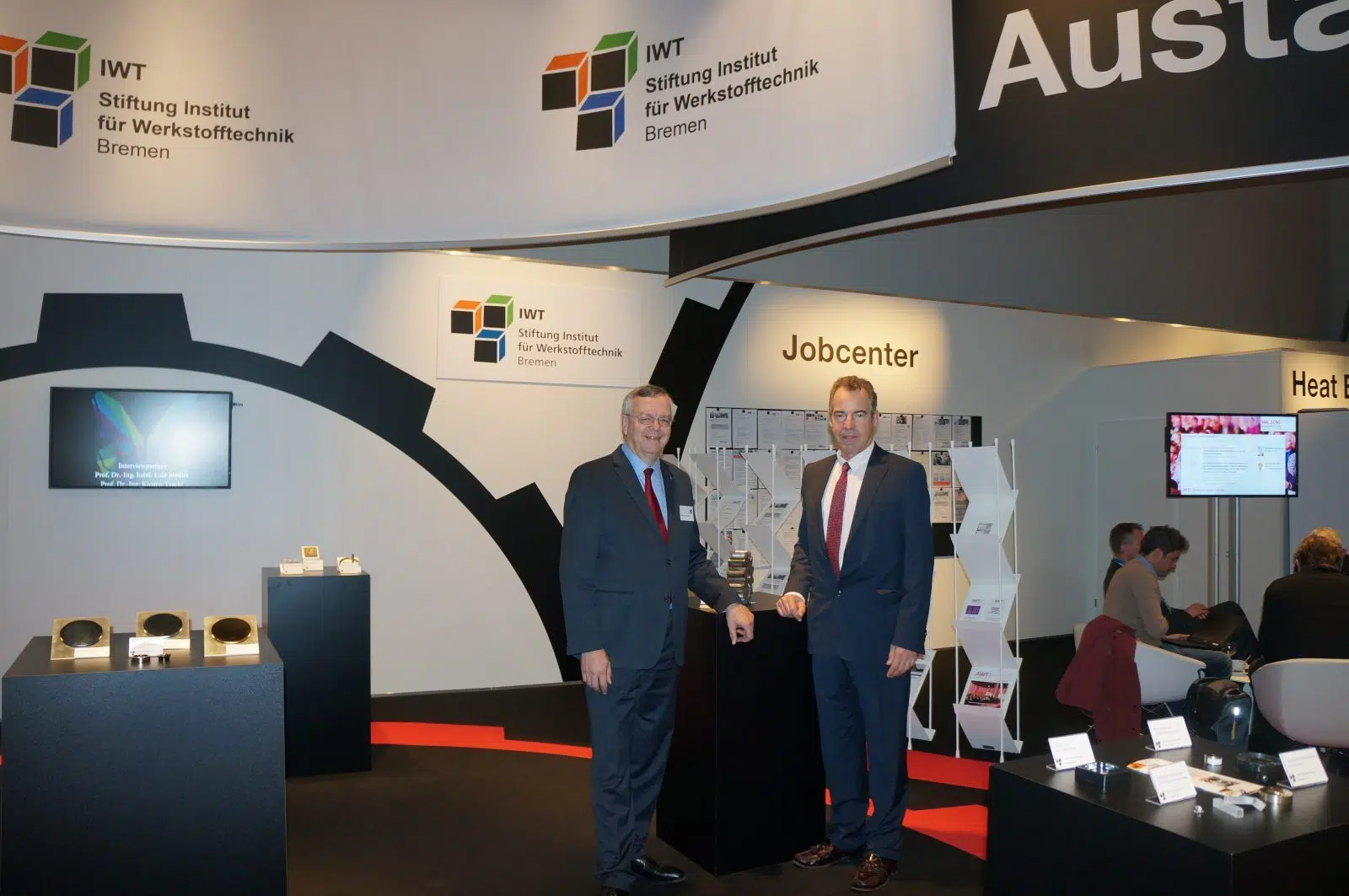
HK2019-75 the big German heat treat exhibition in Cologne, Germany is rapidly approaching (October 22-24th to be exact) and it looks to be almost sold out for exhibitors as you can see on this floorplan; https://www.hk-awt.de/

WG Montgomery Ltd., (The Monty) has now been involved in the worldwide heat treating industry for exactly 50 years and over this period we have accumulated a substantial number of photographs of various heat treats around the world-we always need to remind ourselves to share them. This photo actually has a very tragic story behind it. It was taken in Venezuela back in 2006 and in the background you can clearly see a 6 bar vacuum furnace. This furnace was moved to another location and reinstalled, however 1 year later something caused the pressure in the furnace to build up blowing the door off the front of the furnace and killing two people. It was a terrible tragedy and it demonstrates yet again that safety always has to be front and centre in the heat treatment industry.

And to round things out we have this photo which we took 2 years back in Johannesburg, South Africa. What you are looking at is Harchris Heat Treatment one of the largest commercial heat treaters in the country, processing what is for them a fairly typical part. And that concludes our Monday Morning Briefing for August 26, 2019.

Trends and developments in vacuum furnace technology
For many years vacuum processing technology was considered to be the ‘Cinderella’ of metallurgical processing technology, having had its humble beginnings in the aerospace industry, and initially used for stress relieving, annealing and normalizing of aircraft materials. The technology of vacuum has been subsequently used for the heat treatment of more exotic materials and now has found its place in the field of tool steel heat treatment and brazing process technology. The commercialization of vacuum processing technology began in the early 1940s without the realization of its potential value for the future.
The technology tended to ‘limp along’ in its growth arena thus recognizing that it was (for those who would invest in that technology). The writer believed that vacuum processing technology was in effect, Pandora’s box which began to open very slowly. As the lid of the so-called box began to open, it began to motivate furnace manufacturers and heat treaters alike, to see of the potential opportunities to be ’the vehicle’.
Vacuum processing technology began to really gain recognition in the late 1980s when experimentation to develop for example, tool steel heat treatment. This was accomplished simply by redesign of the basic vacuum furnace is to high pressure gas quenching making full use of nitrogen as the cooling medium. However, it was somewhat limited in its overpressure. During the early 1990s further development work was seriously considered to take the maximum overpressure for quenching (20 bar over pressure) using now, nitrogen blended with helium. This meant that the manipulation of the ratio of helium with nitrogen, one can now blend the nitrogen helium gas mix that will best address the appropriate cool down rate from the austenitizing temperature in order to create martensite.
In the late 1990s, further investigatory work was conducted to enable process’s such as carburizing, carbonitriding and to give to heat treaters the ability to raise the carburizing process temperature to almost 1700°F which means that one will accomplish a very short process time for the carbon to diffuse into the surface of the steel.
With the conventional integral quench furnaces, one is limited by the type of refractory insulation material, in order to reduce the cold face temperature (external furnace casing). The visible evidence of new technology in the field of vacuum processing has made a great stride in so much as it has now opened many doors for thermal processing as well as an improvement in quality assurance to the end user.
Vacuum processing technology is the vehicle that is now carrying;
- Thermo-chemical diffusion techniques such as nitriding, carbo-nitriding, Ferritic Nitrocarburizing, Carbo-nitriding carburizing.
- Thermo-chemical deposition techniques
- Ion implantation.
Vacuum processing technology is an exciting method that leads us into some very dramatic and exciting engineering concept changes, but on the other hand, it started the opening of ‘Pandora’s Box.’
By that statement I am meaning that it is exposing a skills shortage. And as the writer has witnessed many different countries there is no such thing as a labor shortage. What there is, is a skills shortage in critical in many of the technical fields. The metallurgical processing discipline is one of the industries that is faced with the skills shortage problem. Which means that there is an international shortage of skilled heat treatment technicians to allow vacuum processing technology to become the vanguard of both technology and competence.
In today’s international world, a great deal is known about vacuum processing technology, but not too much is known by the majority. That means the shop floor technicians who have the ability to ‘make or break’ the component that they are treating. The writer believes that the key to this lack of processing knowledge on the shop floor can easily be uplifted for the heat treatment technician.
Vacuum processing technology is the key to many new process techniques for industrial purposes. Along with all of the above, new materials are developing for most engineering industries such as;
- Aerospace. The writer wrote some time ago about the Moon to Mars mission and it set the writer to thinking the length of time it will take for the crew transporter from the moon and on to Mars will be a journey that has never been undertaken before by mankind. The new materials that have been developed and are being developed, the heat treatment is the key to protecting the astronauts on an approximate 10-month journey to Mars, as well has providing a safe environment for the astronauts when they reach the planet Mars. Just how long the astronauts will remain on the Mars surface is not yet known (or not yet been published) and then there is the journey back to the moon which would be again another 10 months.
- Defense. With the many conflicts that are occurring on both land and sea and air throughout the world, new materials are being developed as well as the new processing techniques. The writer means in this area, weapons of personal defense, weapons with extended ranges to be remotely controlled and delivered, all are going to require new materials and new process techniques. Once again this will necessitate for the process technicians and understanding of the materials and what treatment must be given to extend the life of the weapons. This, the writer believes is where there will be a dramatic need for the heat treatment technician on the shop floor, as it is he (that can make or break the product.

Have you received this bogus e-mail yet? Every year like clockwork attendees to the various North American heat treat exhibitions are deluged with e-mails similar to the one below advertising a contact list of all the attendees to the upcoming show. A friend of ours actually paid their money for the list and in return got crap. We have received 4 today, all written exactly the same but each with a different name and not one with a company name or contact info beyond an e-mail address. Don’t get fooled.
“Would you be interested in acquiring the Pre-registered Attendees Database of ASM Heat Treating Society Conference and Exposition 2019 ? and there will be a cost associated with the Database. Attendees: CEO/President/Gen’l Management, Technician/Operator, Project Manager, Operator, Instructor and more… Data Contains: Contact Name, Title, Company Name, Size, Physical Address, Opt-In Email address, Phone & Fax numbers etc. Please let me know your thoughts, So that I can send you the Number of Contacts available and the Pricing for it. Awaiting Response, Ashley Emery Marketing Executive.”

From West Lafayette, Ohio, USA we have this news item about captive/commercial heat treater Jones Metal Products having a new owner. As it happens we are quite familiar with this company and in 2018 we had a note about the company entitled; “Jones Metal Products-Do Captives Make Good Commercial Heat Treaters?” which can be found below the announcement about the new owner.
“WEST LAFAYETEE – Dan Erb feels that Jones Metal Products of West Lafayette is on a good business path and he intends to keep it there as he adds owner to his titles of President and Chief Executive Office of the company. It was announced Monday that Marion Sutton, chairman of the board, would be retiring and the company had sold to Erb, who came in as CEO and President in 2002. He started out in 1996 as president of Jones Zylon, which is now a separate entity and was not part of the Jones Metal sale. Sutton has not set a hard date for her retirement and said she will still be around the office here and there.
Sutton is the third generation of her family to own the metal forming company started in 1923 by her grandfather, Frank Jones. It then passed to her father, Edward Mulligan. Sutton became chairman of the board in 2000. As Sutton explored retirement, she and the board were thrilled to find Erb was interested in purchasing the company and she knows it will be in good hands. “That was a huge consideration,” Sutton said on Erb’s knowledge and experience with the firm. Erb is not anticipating any immediate changes. Customers and employees should see little difference, he said. The company has 56 workers with all living in the local area. Jones Metal Products manufactures parts for many industries such as aerospace, defense, medical equipment and lighting. It specializes in hydroforming, fluid cell forming, aluminum and vacuum heat treating, deep draw stamping and fabricating. Erb believes they weathered the Great Recession well due to investing in new equipment and skills training for its people and he sees doing more of that is what will keep them at the forefront of the industry.”
“August 2018; Jones Metal Products-Do Captives Make Good Commercial Heat Treaters? Located in West Lafayette, Ohio metal forming company Jones Metal Products Company is celebrating their 95th year in business. The company is now under the direction of Marion Sutton, the third generation of family leadership. Doing primarily aerospace work the firm has been doing vacuum and aluminum heat treating in house for a number of years before they ventured into the commercial heat treating business. Generally in-house heat treaters do NOT make good commercial heat treaters for a number of reasons (the now long gone Magna Powertrain facility in Syracuse, NY was an extreme example. Running high volume, low cost annealing work for outside customers through large pushers designed for heat treating high end automotive gears proved to be not a good idea). Anyway it would appear that Jones is an example of a manufacturer successfully doing commercial heat treating.
Over the years the company had invested in vacuum and aluminum drop bottom capacity entirely for their own products. At some point in time Jones realized that there was a need for aluminum heat treating services in their own backyard, Ohio, Kentucky and Indiana. The end result is that the firm now does about $500,000 per year in commercial heat treating (both vacuum and aluminum) a number which is growing rapidly. Our personal feeling is that one of the main reasons that the company has seen such success at commercial heat treating are their approvals which include AS/ISO, NADCAP and ITAR Registration. Whatever the reasons its interesting to see a company branching out based upon their own internal strengths.”


