Mr. Raman Bawa is President of commercial heat treater Metex Heat Treating in Brampton, Ontario, Canada one of North America’s largest commercial heat treaters and a company which focuses strongly on large volume automotive work.
In 2024 the company acquired another local commercial heat treater by the name of “Exactatherm”, a facility which focuses on aerospace heat treating.
During a recent meeting between Jordan Montgomery of “The Monty Heat Treat News” and Raman the conversation shifted to the differences between automotive heat treating and aerospace heat treating. Raman’s comments were so concise and “down to earth” that we asked if he would be willing to put them into writing-this is the result;
Jordan Montgomery: It has now been almost 3 years since you acquired “Exactatherm” and consequently entered the aerospace heat treat market. Is there a substantial difference between the two or is heating metal the same whether it is an auto part or a plane part?
Raman Bawa: The principles are the same, but our approach is quite different. At Exactatherm, we run our equipment gently to keep it running tight and keep temperature uniformity stable and robust. We use generous ramp rates that let the furnace come up to temperature slowly, and we often have long gaps between loads. It may be inefficient, but the tolerances in aerospace demand that the equipment run extremely well.
At Metex, our equipment still meets the strict standards of CQI-9, but we run it much harder and make sure we minimize any lost time between loads. That’s a must to meet the volumes and pricing automotive requires.
Jordan Montgomery: For the auto industry you need CQI-9 certifications amongst others, for the aerospace industry it is of course Nadcap-how different are the two systems? This of course leads to the obvious question-which do you prefer?
Raman Bawa: The CQI-9 requirements, while sometimes challenging, are practical and important for building a system where high-volume heat treatment can succeed. It casts a wide net across the QMS to capture the key areas required in heat treatment. With high-volume automotive work, we’re only sampling our treated product to confirm it meets spec — that kind of volume needs very strong system controls to ensure every piece is treated correctly without checking every single one.
Nadcap is deep and prescriptive on the physics of the process — it gives detailed requirements on how orders are received and stored, equipment capabilities, the conditions that must be met before processing, and in-process controls. It’s extensive across the board.
I’ll take the diplomatic answer here and say both are strong in their respective areas. CQI-9 is well suited to automotive, where we deal in pounds, not pieces — it strikes the right balance for a high-volume production environment. Nadcap’s intricate requirements, covering every area, matter when you consider the specialized nature of the industry.
Jordan Montgomery: Metex is use to eye watering volumes, for instance your website claims 80 million pounds of parts processed per year. I would have to assume that your aerospace work is measured in 10’s of thousands of parts per year. How do you get your head around these radically different volumes?
Raman Bawa: It took a while to adjust. We run roughly 300,000 lbs a day at Metex, and at that volume the pace has always been go, go, go. Most of our jobs are awarded to our customers first and then flow to us, so once we’ve gone through our approval process, we’re confident a certain volume of that part number will keep coming. That let us make every system highly efficient — order entry is streamlined, our loading process and recipes are set, and our quality checks are streamlined. We can get 20,000 lbs in from a customer in the morning and return it that afternoon, every day of the week, and our systems are built to run that accurately and consistently.
In aerospace, our customers are often medium to small machine shops. We hold approvals for many parts across a number of aircraft, but the frequency we receive those parts varies a lot, and our customers themselves often don’t have great insight into when parts will actually reach us for heat treatment. We tried building the same kind of system at Exactatherm, but the variability in when parts actually arrive made that tough to streamline. A good example is fixturing: we have a vacuum oil quench furnace that can run up to 3,000 lbs — think of it as analogous to a batch IQ. Some aerospace parts come in every month, and our furnace could fit at least three months of that production in a single load, but our customer has no way of making that many parts at once, and I don’t think the release system in aerospace could even tell us how many parts will need to be made at a given time.
Jordan Montgomery: Metex has always had batch IQ furnaces, mesh belt furnaces and induction systems whereas “Exactatherm” is generally vacuum furnaces. Did you have to fundamentally change your thinking about the different technologies and volumes? For instance, how does this effect part flow? Training for operators? Data logging systems?
Raman Bawa: With most of my experience in atmosphere furnaces, learning vacuum has been an interesting challenge. They’re simpler machines with far fewer moving parts, and since they ramp down in temperature after each load, it’s much easier to see inside. The control systems were more of a challenge — understanding the different interlocks and safeties took time. We’ve been fortunate that both companies have long-tenured employees who’ve been able to train the new people coming in.
Data logging, on the other hand, has been the same across both systems. At Metex, we’ve always strived for the most sophisticated logging and digital control systems we could get, and Exactatherm and aerospace demand exactly the same thing.
Where we do see a real difference is part flow — specifically, our ability to run the furnace back to back. With vacuum, we have to cool the furnace down before we can bring the next load in. With our atmospheric furnaces, we never ramp down — it’s one load after another. That’s a big part of why our throughput is so much higher on the atmosphere side.
Overall, given the volumes we’re processing in aerospace, when we look at new equipment, we’re looking at whether it increases our service offering — a new process, or a new prime approval we didn’t have before. With the volumes and unpredictability from our customers, the ROI has been hard to predict and with that our philosophy has had to change to “build and they will come” vs automotive where we are constantly trying to keep up with capacity forecasts and how many more furnaces do we need to add to fulfill our 2027 and 2028 promises.
Jordan Montgomery: What about profitability? Automotive heat treating is renown for laser thing margins where aerospace heat treating is considered “higher margin” work. Is this a fair statement? If so I would have to assume that the smaller volumes in aerospace are compensated by a higher margin.
Raman Bawa: Definitely. The smaller volumes are often subject to higher minimum charges, plus a premium for the Nadcap system itself. The paperwork and traceability requirements need dedicated staff to make sure the Nadcap process is followed exactly before, during, and after we run the job.
Jordan Montgomery: Now this is probably an unfair question; after many years of experience with large volume heat treating and now a couple of years of aerospace experience do you have a preference of one over the other? Can you see your direction changing either to more vacuum work or more atmosphere?
Raman Bawa: I do like both, but for different reasons. The automotive side is exciting because the parts we process end up in nearly every vehicle on the road today, and a lot of what we run is safety-critical — seats, doors, brakes. There’s real pride in knowing our work matters, and in our commitment to quality for that sector. The vacuum and specialized side is fascinating in a different way: the materials are exotic and expensive, and sometimes you can’t even fathom the end use. I remember processing parts that were going onto a rocket headed into space, and you find yourself thinking about how many people it took to get that rocket ready, and how your small piece of the process became part of something so much larger. They’re both great, each in their own way.
In automotive, we do a lot of fasteners, stampings, and cold-headed products focused on the structure of the vehicle. The materials in these parts have stayed consistent for years and are made to run in atmospheric furnaces — they don’t change from year to year, or with changes in transmission. I don’t foresee big changes here. There’s always talk of LPC being broadly introduced into the auto sector, but in our experience it’s been done almost exclusively in-house by the OEMs themselves. With automotive’s razor-thin margins, I think moving to higher-priced alloys that need vacuum processing would only make sense for a very specialized part of the vehicle — doing it broadly would drive up the cost of every part.
Aerospace uses highly specialized materials that demand vacuum furnaces. I can’t see that industry ever moving toward a cheaper material that could run in an atmospheric furnace.
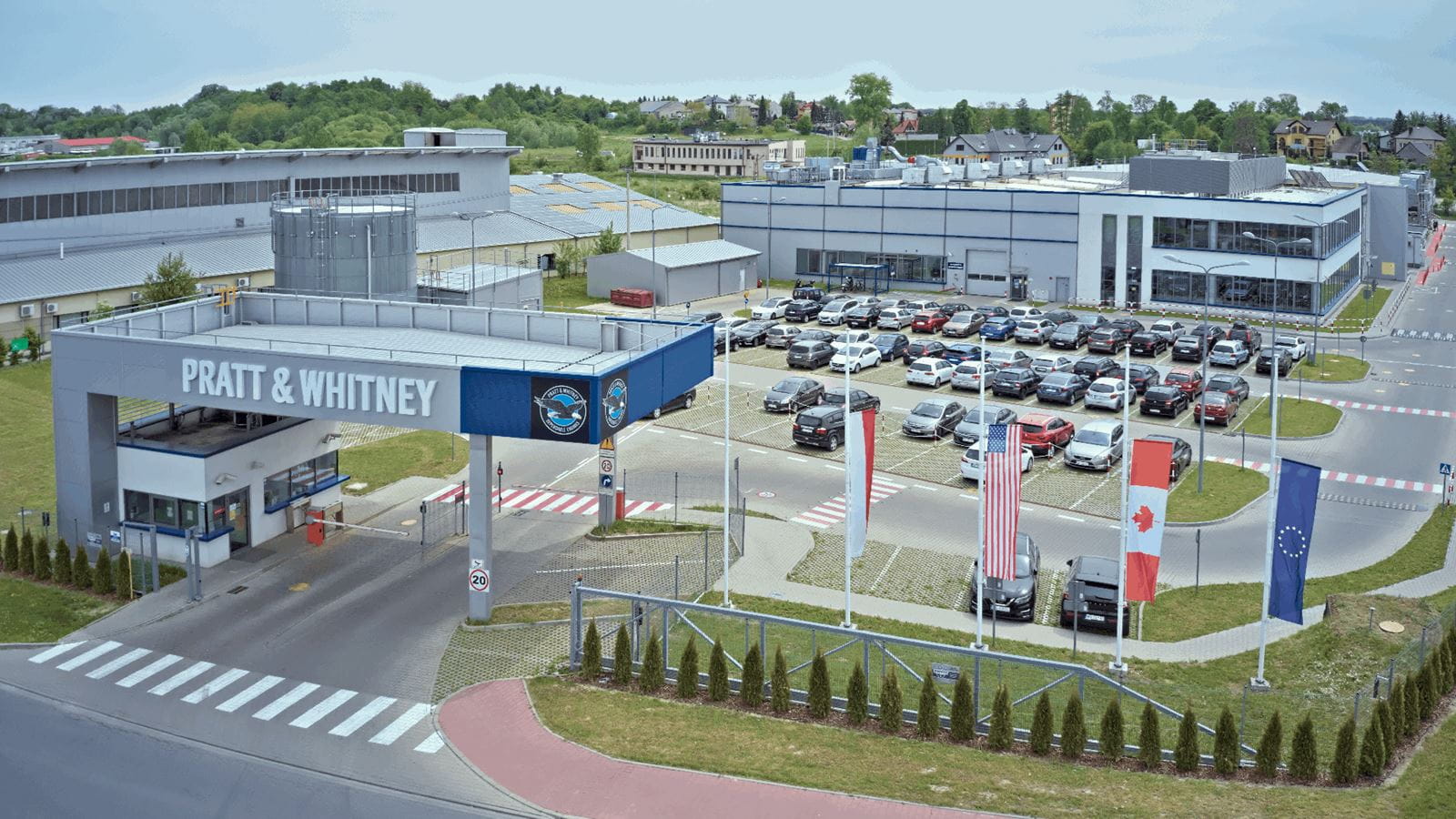
Bodycote invests more than $30 million to support Ohio’s growing aerospace sector
Investments in advanced heat treatment and HIP capacity position Bodycote to support the next generation of aerospace manufacturing in the Midwest
- More than $30 million invested across Bodycote facilities in Fairfield and London, Ohio
- New Fairfield facility expands vacuum heat treatment and brazing capacity with room for further growth
- $20 million mega HIP investment at London site significantly increases capacity for high-performance aerospace components

The investments at Fairfield and London strengthen Bodycote’s position within a rapidly developing aerospace manufacturing cluster. Alongside its established aerospace and defense industry, Ohio is attracting growing investment in areas including advanced air mobility, aircraft electrification and autonomous flight.
Bodycote has invested $12 million in relocating and expanding its former Cincinnati operation into a new facility in Fairfield, increasing vacuum heat treatment and brazing capacity and creating room for further growth. At London, approximately $20 million has been invested in a new large-scale Hot Isostatic Pressing (HIP) vessel that will substantially increase processing capacity for high-volume aerospace applications.
“These investments demonstrate our confidence in the long-term growth of aerospace and defense and in Ohio’s increasingly important role within the industry,” says Heidi McNary, President, Global Aerospace, Defense and Energy at Bodycote. “Ohio has a long-established aerospace heritage, but we are also seeing a new generation of aerospace manufacturing taking shape across the region. These developments are creating new requirements throughout the aerospace supply chain. By investing in capacity and capability today, we are positioning Bodycote close to our customers and ensuring we can continue to support their growth as aerospace technologies and production requirements evolve.”
Bodycote’s relocation to Fairfield places them closer to aerospace manufacturers and suppliers located in cities like Dayton and Columbus. As part of the relocation, Bodycote increased its number of vacuum furnaces, expanding available capacity to process higher volumes and larger components while providing greater production flexibility to support critical customer production schedules.
Much of the existing equipment was also comprehensively modernized during the move. Furnaces were upgraded, while new centralized monitoring and control provides enhanced visibility of furnace data. The additional space also creates opportunities to add liquid penetrant inspection, tensile testing and other capabilities over time, enabling multiple processes to be completed under one roof.
Bodycote has also invested in its London, Ohio facility. The site specializes in Hot Isostatic Pressing, a process that uses high temperature and isostatic gas pressure to improve the density, integrity and mechanical properties of critical metal components.

The new vessel will significantly increase throughput at London, enabling Bodycote to process several thousand aerospace components during a single cycle compared with hundreds using its existing smaller vessels. The additional scale will support high-volume jet-engine applications while creating capacity for a broader range of aerospace work.
“The Fairfield and London investments strengthen our ability to support our customers,” adds Antony Funston, Vice President, Operations, HIP & PHT, Midwest at Bodycote. “Aerospace manufacturers need capacity, reliability and increasingly close technical collaboration throughout their supply chains. By expanding our capabilities in Ohio, we can provide that support closer to our customers while creating the capacity to grow alongside them for many years to come.”
About Bodycote:
Bodycote plc is the world’s leading provider of specialist thermal processing services, delivering vital metallurgical solutions that improve the performance, reliability, and longevity of critical components. Serving customers across aerospace, automotive, energy, defense, medical, and other industrial sectors, Bodycote combines global scale with local expertise to meet demanding technical and sustainability requirements. Through its global scale the company is committed to delivering innovative solutions that advance performance, sustainability and competitive advantage for its customers. For more information, visit www.bodycote.com
-
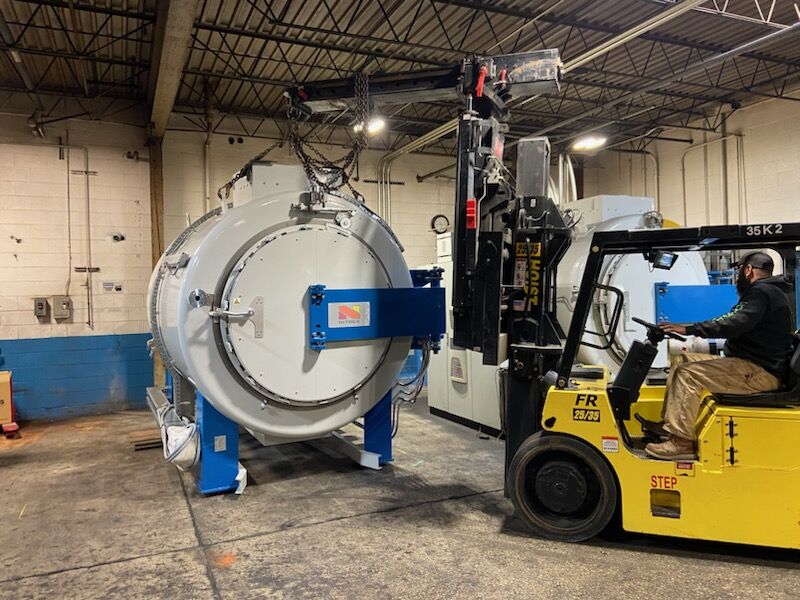
 “BWX Technologies, Inc.”, headquartered in Lynchburg, Virginia, USA supplies nuclear components. Recently the firm committed to a new, multi-million dollar carbottom furnace being provided by at USA furnace builder.
 -
-
 “Bodycote Share Price”. The worlds’ largest commercial heat treater, UK based Bodycote has been in the news quite a bit recently, mainly as it has been the target of several purchase offers-how has this effected the share price? Very positively as you can see; “Bodycote plc stock price hit a new 52-week high during mid-day trading on Thursday . The company traded as high as GBX 960 and last traded at GBX 959.50, with a volume of 15802 shares trading hands. The stock had previously closed at GBX 953.
 -
“Bodycote, Fort Wayne, IN”. Speaking of Bodycote the company has been making very substantial changes over the course of the past year, these changes include plant mergers, closures along with investments and new facilities. A recent casualty was the facility in Fort Wayne, Indiana which has either closed or will be closed.
-
“Major USA Foundry Laying off Employees”. A USA foundry and substantial supplier of cast furnace fixturing and components laid off most of their employees two weeks ago. Some employees remain but our understanding is that production has largely ceased. We will have updates on this story as they become available.
-
-
-
In case you missed it “The Monty” Talks Vacuum Furnaces with “Jay Jefsen, Furnacare”
-
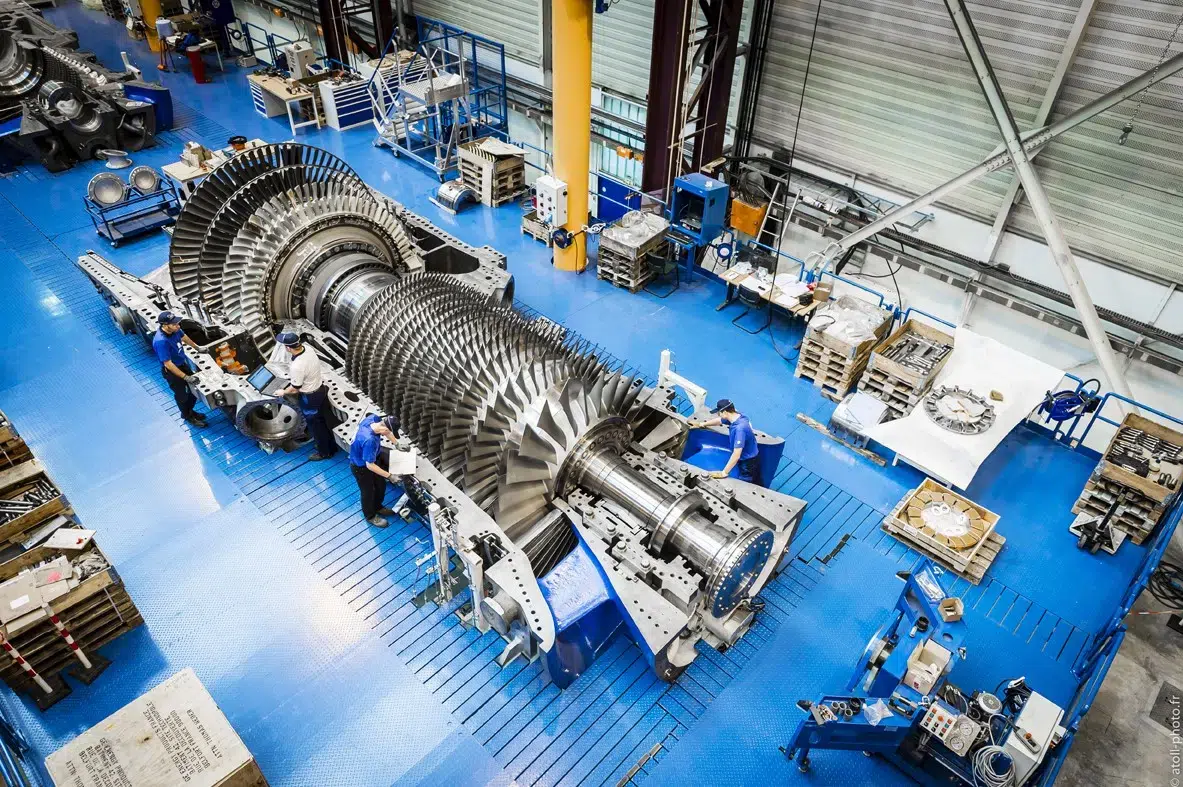 Why are vacuum furnace providers so busy these days? “The Monty” tells you; “Gas Turbine Industry Continues to Add Vacuum Furnace Capacity”


Want to know which individuals in the global heat treatment industry are making career changes these days? “The Monty Heat Treat News” updates the industry on a very regular basis for 30 years-this is our most recent update;

 Colin McDonell, Aichelin Americas; “Aichelin Americas is pleased to welcome Colin McDonell to the team as a Mechanical Project Engineer, effective September 10, 2026. Colin brings extensive experience in mechanical design, project management, and industrial engineering. Throughout his career, he has supported complex projects across manufacturing, process, and nuclear industry environments. His technical background includes mechanical systems design, CAD modeling, equipment integration, project lifecycle management, and collaboration with multidisciplinary engineering teams. This combination of engineering knowledge and hands-on project experience will support Aichelin Americas as we continue developing and delivering reliable industrial equipment solutions for our customers.”

“I’m incredibly proud and humbled to share that I have been promoted from General Manager to President of Salto Heat Treating. This is a milestone that means a great deal to me, and one that I do not take lightly. I want to express my sincere gratitude to Felix lopes for the trust and confidence he has placed in me. Being given the opportunity to lead this company into its next chapter is both an incredible honor and a responsibility I am proud to accept. To my family — thank you for your unwavering support, patience, encouragement, and for always standing behind me. None of this would mean as much without you by my side. And most importantly, to our incredible team at Salto Heat Treating — this achievement belongs to all of us. A title may belong to one person, but success is built by a team. I am extremely proud of what we have accomplished together, the challenges we have overcome, and the company we continue to build every single day.”

 Mahdi Dhaini, AFC-Holcroft; “AFC-Holcroft is pleased to announce the promotion of Mahdi Dhaini to the position of Aftermarket Sales Engineer, effective August 31, 2026. In his new role, Mahdi will report to Adam Woelber and will work directly with customers to support the continued performance and reliability of their heat treating equipment. Since joining AFC-Holcroft as an Electrical Controls Project Engineer, Mahdi has consistently demonstrated outstanding technical expertise, a customer-first mindset, and a willingness to take on new challenges. His experience in controls engineering, PLC programming, HMI development, automation systems, and project execution has made him an important contributor to AFC-Holcroft’s engineering team.

Because of these volumes and increasing demand “Monark” has continued to expand their in-house heat-treating department which means an additional pit carburizing furnace. In late 2025 “Monark” made the decision to add another pit furnace, in February of this year a pit was installed, in June the furnace was installed, and just last week the second furnace entered production. These photos show the project as it progressed.
For Related News on Pit Carburizing we would suggest these articles from “The Monty Heat Treat News”
“Is There a Shortage of Large Pit Carburizing Capacity in North America?”
“Gear Manufacturer to Add Pit Carburizing Furnaces-Decides on Used Equipment”
“USA Heat Treater Sets Torrid Pace in 2025”


(Editors Note; For background on the growing demand for vacuum furnaces based on the power generation and aerospace industries we would suggest these stories; “AI Data Centers Spiking New Vacuum Furnace Orders-Update”, “You Can’t Buy a Vacuum Furnace This Year. You Can still buy capacity! CFC Fixturing”)
“A Chinese manufacturer of gas turbine and aircraft engine components has once again selected SECO/WARWICK technology. The Vector vacuum furnace will be equipped with an all-metal hot zone that will be used for the heat treatment of turbine blades made from high-temperature alloys. This is the second delivery of a Vector single-chamber furnace to this customer in recent months and another example of a project in which a standard solution has been tailored to very precise process requirements.
This Partner operates in one of the most demanding areas of industry: the production, repair and technical servicing of turbine blades made from high-temperature alloys. These components operate under extreme temperature, load, and material fatigue conditions. In such applications, the quality of metal heat treatment has a direct impact on the durability, microstructure stability, and the operational safety of the finished part.
SECO/WARWICK’s cooperation with this Partner began with the delivery of a vacuum furnace with a graphite hot zone in 2023. Another production need emerged in 2025, this time involving a furnace with an all-metal hot zone, higher gas cooling pressure, and even more rigorous temperature uniformity. The new requirements went beyond the standard furnace configuration. The customer expected gas cooling at pressures of up to 12 bar and temperature uniformity of ±3°C (±5.4°F). By comparison, the standard configuration for this type of furnace with a metal hot zone assumes 10 bar gas cooling and temperature uniformity of ≤±5°C (≤±9°F).

The furnace will operate at temperatures of up to 1400°C (approx. 2550°F). The equipment will ensure a temperature uniformity of ≤±3°C (≤±5.4°F) and gas cooling under pressure of up to 12 bar. The maximum gross load weight will be 600 kg (approx. 1300 lb.), enabling high process quality to be combined with efficient production. The furnace has been designed to operate in a high-vacuum range of 10⁻³ Pa. Such a low pressure level helps reduce the risk of intergranular oxidation and supports the achievement of high surface quality of the treated parts. For turbine components, this is particularly important because even minor process deviations can affect the component’s long-term durability and in-service performance.
An all-metal hot zone is particularly important in processes that require a highly clean environment and a reduced risk of contamination. Combined with high temperature accuracy and controlled gas cooling, it enables the equipment to perform the processes required for advanced aerospace, energy, medical and additive-manufactured components.
“The first unit we delivered to this Partner proved its value in everyday production. That is why the order was repeated. However, the new furnace is more technically demanding. For this reason, SECO/WARWICK’s Teams in China and Poland jointly prepared a solution tailored to the customer’s process. This project demonstrates that local presence and global technological resources can work like a system of connected vessels,” says Pan Gaojun, Managing Director of SECO/WARWICK China.”

(Editors Note; The team at “The Monty” has seen first hand how replacing cast fixturing with lighter weight CFC fixturing in vacuum heat treating applications has resulted in increased throughput representing an ROI on CFC fixturing of less than 12 months-read on).
“Turbine demand is running past furnace supply, and a new vacuum furnace is still a year or two out. Some of the capacity you need is already sitting inside the furnaces you own — tied up in the fixture.
Last July, “The Monty Heat Treat News” reported that the AI data center buildout is pushing gas turbine demand into territory nobody planned for, and that vacuum furnace orders are following right behind it. Turbine lead times past five years. Siemens Energy nearly doubling unit sales in a single year. Mitsubishi planning to double manufacturing capacity by 2027.
Here is where that lands on the shop floor. A new vacuum furnace is itself 12 to 24 months out. So the heat treater who has been told to push 30 or 40 percent more through the department this year is not going to get there with a purchase order. He gets there, or doesn’t, with the furnaces already bolted to his floor.
Which makes one question worth asking out loud: how much of your existing furnace capacity is currently occupied by the fixture?

Inside that cycle the fixture is doing three jobs nobody wrote down. It is a heat sink, so it sets how long the load takes to equalize before the filler melts. It is an obstruction, so it shapes the gas flow during quench, and quench rate drives gamma prime size directly. And it is a mechanical boundary, holding thin-wall parts that will creep under their own weight at 1,200°C if the support points are wrong.
Here is the failure mode that frustrates process engineers most. The furnace passes its temperature uniformity survey. The recipe is unchanged and still approved. The operator did nothing differently. And braze quality drifts anyway, because the metal fixture has crept two or three millimeters over eighty cycles, the joint gap has shifted, and the support points are no longer where the qualification assumed they were. The evidence shows up in metallography weeks later, on parts that have already absorbed casting, coating and cooling hole drilling. You are not scrapping raw stock. You are scrapping finished airfoils.
What carbon fixtures actually do, and what they don’t; Carbon fiber reinforced carbon has an obvious appeal here, and an equally obvious sales pitch attached to it that deserves to be retired. Five times lighter does not mean five times less heat. The specific heat capacity of carbon runs around 1.8 to 2.0 kJ/(kg·K) against roughly 0.65 to 0.75 for nickel-base alloys. The honest net benefit is on the order of 1.5 to 2. That number is smaller than the brochure version and it survives being checked, which is the only kind of number worth putting in front of a process engineer.
The carburization question is the one that actually decides whether CFC gets through the door, and it has two separate answers because there are two separate paths. Direct contact above about 1,100°C will form chromium carbide in the surface zone of a nickel-base part. That path is closed by putting spacers of lanthanum oxide doped molybdenum between the carbon and the component. Molybdenum holds its shape at process temperature, it is not wetted by BNi filler metals so stray braze does not weld the part to its support point, and the lanthanum oxide dispersion keeps the material ductile even after recrystallization, where unalloyed molybdenum turns brittle. Worth saying plainly: those spacers sit in carbon contact themselves and form molybdenum carbide over cycle count. They are consumables with a service life, not fit-and-forget hardware.
The second path is the gas phase, CO forming from residual moisture and oxygen at the carbon. No contact barrier touches that one. It is handled by bake-out and preconditioning before the first production run, and any supplier who tells you a spacer eliminates carburization outright has skipped half the mechanism.
Two more things have changed on the fixture side that are worth knowing about. Load peaks can now be calculated at process temperature and designed out of the structure, instead of being buried under a safety allowance of extra mass — and since mass is heat sink, that feeds straight back into equalization time. The calculation is steady state, so it covers sag and support points at the hold, not the heat-up and quench transients. And fixtures can be individually marked, which sounds trivial until you connect it to the failure mode above. Mark the fixture and its position in the load, and cycle count, position and history become traceable. The variable that was invisible becomes a line in the record.
The part the purchasing side should read; Nobody in this market is being measured on fixture savings. On price you can win 20 percent. On schedule you can lose everything, because turbine contracts carry penalties and a failed load with the rotor shop waiting costs a multiple of the annual fixture budget. Meanwhile furnaces are sold out. Any fixture change that raises parts per load or shortens cycle time converts directly into capacity, at a fraction of furnace price and none of the furnace lead time. How much capacity is a question each shop has to answer with its own part family and its own numbers. The point is that this year it is the only capacity available. And modular systems beat discounts, because a separate drawing number for every part family costs more in administration than any rebate returns.
How to find out for yourself; Pick one part family with high volume and a known distortion problem. Record what you have now: furnace type, usable envelope, recipe, current fixture mass, parts per load, cycle time, fixture service life, documented scrap causes. Agree acceptance criteria in writing before anything goes in the furnace — part dimensional stability, metallography of the surface zone for carbide formation, joint gap, cycle time, parts per load. Then run a defined number of cycles and measure the fixture before and after. That measurement is the whole argument. Everything else is a claim. For more information contact; “Graphite Materials”
Your furnace is qualified. Your recipe is qualified. Your fixture changes every eighty cycles and appears in none of your records.”
Related Articles From “The Monty Heat Treat News”;
“CFC Fixturing-A Growing Trend?”
“Gear Supplier Invests in CFC Fixturing”
“CFC Fixtures Even For Extreme Conditions”


The new saw will provide the metallurgical laboratory with a dedicated, high-performance solution for cutting advanced alloys into samples for metallographic evaluation, tensile specimens, materials characterization, and quality assurance. Bringing this capability further in-house will help the company improve sample preparation efficiency while maintaining greater control over the testing process.
“Inconel and titanium are critical materials for many demanding applications, but their strength and other material characteristics can make sample preparation particularly challenging,” said Bob Hill President of Solar Atmospheres of Western PA. “The addition of the KASTO saw represents an important investment in our laboratory infrastructure and our ability to deliver timely, reliable metallurgical analysis.”
The investment reflects Solar’s continued commitment to technical excellence, quality, and the development of advanced in-house materials engineering capabilities.
“We’re continually looking for ways to strengthen our technical capabilities and provide better vertical support to our customers and engineering teams,” Bob added. “This equipment gives our metallurgical laboratory another important tool for working with some of the most demanding materials used in industry today.”
For additional information about Solar Atmospheres, contact Mike Johnson at 855-934-3284 x2223, email at [email protected], and visit us at solaratm.com.
ALD Thermal Treatment, Inc. Celebrates 20 Years of Operations in Port Huron
PORT HURON, Michigan, [Date]: ALD Thermal Treatment, Inc. is celebrating the 20th anniversary of its operations in Port Huron, marking two decades of advanced heat treatment services, manufacturing excellence, workplace safety, quality performance, and community partnership.
Since opening its Port Huron operation, ALD Thermal Treatment, Inc. has processed more than 500 million parts, with zero returned from the field, a milestone that reflects the company’s focus on precision, reliability, and customer confidence. The company also has achieved six consecutive years with zero lost-time accidents, demonstrating a sustained commitment to employee safety and operational discipline.
ALD Thermal Treatment, Inc. provides vacuum heat treatment services for precision manufactured components, including capabilities such as low-pressure carburizing, high-pressure gas quenching, hardening, annealing, tempering, and related processes. The broader ALD Heat Treatment Services service customers who benefit from ALD technologies without investing in their own facilities, with operations available through global centers in Germany, the United States, Mexico, and China. ALD Thermal Treatment, Inc., expertise is utilized by companies in the automotive, tooling, gear, and aerospace markets.
The Port Huron operation has earned the General Motors Supplier Quality Excellence Award in 11 of the past 12 years, including recognition as the first heat treatment services company to receive the award in 2014. The upcoming anniversary program will recognize colleagues who contributed to those GM Quality Awards, as well as employees who have been with the operation since its beginning 20 years ago.
“Reaching 20 years in Port Huron is a meaningful milestone for our company, our employees, our customers, and the manufacturing community we serve,” said Jim Muenzenberger, Senior Vice President, America’s of ALD Thermal Treatment, Inc. “This anniversary is an opportunity to recognize the people who built this operation, the customers who have trusted us, and the culture of quality and safety that continues to guide our work.”
Beyond its role in advanced manufacturing, ALD Thermal Treatment, Inc. has supported workforce development and community connection. The company hosts Manufacturing Day for high school students and offers internships for graduating students in material science or metallurgy. These efforts reflect the company’s commitment to introducing students and emerging professionals to career opportunities in technical manufacturing fields.
As ALD Thermal Treatment, Inc. celebrates this milestone, the company recognizes the employees, customers, corporate leaders, civic partners, and community stakeholders who have contributed to 20 years of operations in Port Huron.
About ALD Thermal Treatment, Inc.
ALD Thermal Treatment, Inc., located at 2656 24th Street in Port Huron, Michigan, provides advanced heat treatment services for precision manufactured components. Its capabilities include vacuum heat treatment, low-pressure carburizing, high-pressure gas quenching, hardening, annealing, tempering, and related processes. The company is part of the broader ALD Heat Treatment Services network, which provides commercial heat-treating services supported by ALD technologies and global service centers.


Our focus today is on the Port Huron, Michigan location.
This location was founded in 2005 with production starting in 2006 (hence the 20 year celebration) and features 4 ModulTherm® systems with 24 treatment chambers and 2 DualTherm® chamber furnaces which means this location has the equivalent of almost 30 carburizing systems. This capacity is boosted by 3 Gas Nitride / Ferritic Nitro-Carburizing furnaces provided by ALD and KGO.

Jim Muenzenberger, Senior Vice President-Americas, ALD TT, & Kelly Peters, Former Vice President Operations
Over the years the company has processed 474,313,474 parts (and counting) with zero parts returned which is why the plant has received the Supplier Quality Excellence Award (SQEA) from General Motors for nine consecutive years (it is certainly no secret that the focus of this plant is on General Motors transmission components).
When “LPC” was first introduced to the heat treat industry over 30 years ago, many predicted that it would take over the carburizing market around the world-this proved to be a very optimistic prediction. However, the benefits of “LPC” are beyond dispute and in some areas of heat treating it is the heat treatment process of choice especially amongst “in house” heat treaters. In the commercial field it is not as common, obviously in the case of “ALD” they have proven that the process makes sense and is very viable process for commercial heat treaters which has led to their tremendous success.
Tuesday, September 15, 2026 the company will be hosting a special anniversary celebration honoring the colleagues, customers, leaders, and achievements that shaped the facility. “The Monty” will be providing further details about the anniversary.
(Find out how popular LPC is in the “in house” heat treatment industry); “15 Largest Captive Heat Treats-North America”
(How does “ALD TT” compare in size to other commercial heat treaters)? “52 Largest North American Commercial Heat Treaters”
