Case hardening heat treatments, which includes nitriding, nitrocarburizing, carburizing, and carbonitriding, alter a part’s chemical composition and focus on its surface properties. These processes create hardened surface layers ranging from 0.01 to 0.25 in. deep, depending on processing times and temperatures. Making the hardened layer thicker incurs higher costs due to additional processing times, but the part’s extended wear life can quickly justify additional processing costs. Material experts can apply these processes to provide the most cost-effective parts for specific applications.
Case Hardening with Carburization and Carbonitriding
Carburizing
Carburization is ideal for parts requiring extra hardening on the surface for wear resistance but need a softer core for superior strength.
Carburization is a high temperature process (900 to 950°C) that involves the addition and diffusion of carbon into the steel. Those temperatures are above steel’s critical temperature, so subsequent quenching lets the carbon-rich surface form martensite while the core remains a softer ferrite and/or pearlite structure. Hardened depths can be as thick as 0.25 in., depending on the amount of time the part spends soaking at carburization temperatures.
As mentioned, the advantage of carburization is a deep wear resistance layer with high hardness. This is ideal for gears, blades, and cutting tools. Carburization creates hard, durable parts from lower cost alloyed steels and low carbon steels, such as 1008, 1018, and 8620. For alloys with higher carbon content (>0.3wt% carbon), carburization has minimal or even detrimental effects because the carbon in the original alloy could lead to a through-hardened, or bulk martensite structure. It should be noted also, that carburization temperatures cause some part distortion.
Carbonitriding
For lower carbon steels without significant amounts of alloying elements that promote hardening, adding nitrogen to the process can increase surface hardness. Adding nitrogen is called carbonitriding. Carbonitriding is commonly performed at slightly lower temperatures than carburizing (850°C), so distortion is less, but it also reduces hardening depths (for comparable processing time). The hardened surface created during carbonitriding, while thinner, does have greater hardness and resistance to elevated processing temperatures (such as tempering and stress relieving.)
Case Hardening with Nitriding and Nitrocarburizing
The alternative to the high temperature carburizing/carbonitriding is nitriding/nitrocarburizing. It also produces hardened surface layers and similar wear resistances, but it diffuses nitrogen throughout the surface layer (not carbon), and it uses sub-critical processing temperatures. Typical temperature ranges for nitriding range from 450° to 575°C. This means parts can be processed in their final machined state and undergo little to no distortion, so little post-nitriding machining is required (if any). The lower temperatures also maintain the desired core microstructure and physical properties while modifying the surface layer for the given application.
One note to consider when selecting nitriding: Inform the heat treater as to any stress relief, aging, or tempering temperatures to prevent altering core properties.
Unlike carburization, which is limited to lower-carbon-content steels, a broad range of alloys can be given surface hardnesses of 600 to 1,200 Hv via nitriding. But alloys best-suited for nitriding typically contain nominal amounts of the microalloying elements: Cr, V, Ti, Al, and Mo. Nitriding can be extremely beneficial for stainless and tool steels containing large amounts of chromium (10+wt%). These nitrided steels can have surface hardness well above 70 HRC equivalent, perfect for long-term wear resistance.
Nitriding is not limited to these types of ferrous alloys either, as low carbon steels can be hardened as well. In addition to creating a hardened, wear resistant surface, nitriding also forms a compound zone. Compound zones are nitrogen-rich layers formed on the surface during nitriding which are hard, wear-resistant (>60 HRC equivalent), and corrosion-resistant. This benefits low carbon and low alloyed steels which would not be considered for harsh environmental conditions if not for the presence of a compound zone.
Depth of hardening for nitrided/nitrocarburized alloys typically range from 0.005 to 0.030 in., depending on the process’s time and temperatures. Deeper hardened layers require more time. Compound zone thicknesses can be up to 0.002-in. thick, and it’s a function of which alloy is being nitrides, the time, and temperature. How the part is nitrided also affects zone depth. Nitriding can be performed via gas or ion (plasma).
Gas Nitriding
Gas nitriding uses cracked ammonia as the nitrogen source and is done in a positive-pressure environment. It’s ideal for large quantity batch processing and is also excellent with regards to temperature uniformity and nitriding parts with deep holes or channels. Gas nitriding is not recommended for porous parts because gas flowing through pores can cause severe embrittlement.
Ion Nitriding
Ion nitriding is excellent for selectively nitriding, since parts can be masked off from the plasma to prevent nitriding. Ion nitriding is performed by applying a potential electrical difference across an anode and the part (the
Plasma nitriding is well-suited to alloys, such as stainless steels, since it quickly breaks down passive oxide surfaces. Typically, ion nitrided steels have thinner compound zones than their gas nitrided counterparts due to the plasma’s constant sputtering. But this can be ideal for certain applications, such as gears, where contact stresses could harm surfaces with excessive compound zones.
Nitrocarburizing
In comparing nitriding and nitrocarburizing, the latter is typically performed at higher temperatures (575°C) and a source of carbon is used. The addition of carbon forms a harder, more wear-resistant, and higher lubricious layer. Thicker compound zones can also be formed by nitrocarburization. For comparison, a pure nitrogen nitriding environment forms a hard and wear-resistant layer, but less so than nitrocarburization.
So why not always use nitrocarburization?
Introducing carbon can increase the surface porosity, which is bad for parts with large contact stresses. The resulting layer is also less ductile. Material selection also drives which processing techniques are best for an application.
Questions to Ask Prior to Case Hardening / Heat Treating
This general guideline explains an array of case hardening heat treatments. But it is important for engineers to keep in mind the following questions about their part design when considering heat treatments:
- What forces are my parts subjected to?
- What environment are they working in?
- Does the application require distinct properties for the surface, core, or particular surface regions?
Did you like this article? Click here to subscribe to The Monty.
View our recent magazines and podcasts by clicking the following link. https://themonty.com/magazine/
Vacuum furnace builder G-M Enterprises which is part of the Nitrex group of companies has just appointed a
Did you like this article? Click here to subscribe to The Monty.
View our recent magazines and podcasts by clicking the following link. https://themonty.com/magazine/
It is hard to believe but a living legend in the North American heat treat industry is retiring. Bill St. Thomas has been selling new heat treat furnaces for 55 years for companies such as Aichelin, AFC-Holcroft, ECM, Seco and a host of others with his career starting and ending with Lindberg Furnaces.
As of January 1st, 2024 Bill and his famous “Rolodex” of customers names will be no more-we have this note from BIll and a link to a “Heat Treat Podcast” he did in 2023
https://www.youtube.com/watch?v=F6VaeB2iEzU
Did you like this article? Click here to subscribe to The Monty.
View our recent magazines and podcasts by clicking the following link. https://themonty.com/magazine/

The link below will take you to the June 2023 issue of “The Monty Heat Treat News”. For almost 30 years “The Monty” has been offering more news and trends about the global heat treatment industry than any other news source in the world. Our reach is global and most of our news is exclusive, meaning you won’t find it at any other source.
In this issue you will finds these topics and many more;
- European Heat Treaters Continue to Shift to Electrically Heated Furnaces
- Controlling the Nitriding Layers and Metallography by Dr. Edward Rolinski, Jesse Hyder and Mike Woods
- US Army Arsenal Commits to New Endothermic Generator
- AFC-Holcroft Names New Management Team
- Why do Manufacturers Bring Heat Treatment in House Part II
- The Industry Loses a Good One-Robert Adamski, Ford Sterling Heights, Michigan
All these stories plus 40 more.
As always the entire “Monty Heat Treat News Team” appreciates your thoughts and comments. Sincerely Gord, Jordan, Dale, Anne and Christine
The Monty Heat Treat News Magazine June 2023 Issue
Did you like this article? Click here to subscribe to The Monty.
View our recent magazines and podcasts by clicking the following link. https://themonty.com/magazine/

This news item goes hand in hand with the release on this page about Bodycote’s Trading Update for the first 4 months of 2023. “Bodycote said Wednesday that Chief Executive Officer Stephen Harris will retire next year and that revenue rose for the four-month period ended April 30 as it backed its guidance for the year. The London-listed provider of heat-treatment and thermal-processing services said Harris will step down following an orderly transition to his successor, and that a formal recruiting process will start.”
A number of years ago Gord Montgomery of “The Monty Heat Treat News” had the priviledge of interviewing Mr. Harris, that interview can still be found at https://themonty.com/project/m
Did you like this article? Click here to subscribe to The Monty.
View our recent magazines and podcasts by clicking the following link. https://themonty.com/magazine/

On May 8, 2023 “The Monty Heat Treat News” announced that long standing manufacturers rep firm Wm. Wight & Associates in the US Midwest had signed an agreement to represent Sajjan Precision Castings for high temperature alloy components and furnace fixturing (the press release can be found below and at https://themonty.com/wm-wright
As far as we know Wm. Wright & Associates are the first firm in North America to stock alloy components provided by an Indian foundry. India is of course renown for very competitive pricing so it will be interesting to see the results of this investment. Certainly if there is any rep firm in North America to be able to launch a project like this it would be the team at Wm. Wright, Jim, KC and Willy Wilbur.
Wm Wright & Associates Now Representing Sajjan Precision Castings; For those in the high temperature alloy component and furnace fixturing industry inNorth America this is an extremely interesting press release.
“MAY 8, 2023. Wm. Wright & Associates, Incorporated in the Chicago, USA areais one of the oldest heat treat rep firms in North America as they were established in 1958. For many years now they have also had the distinctionof being quite possibly the largest rep firm in North America when it comes to sales of heat treatment fixturing and furnace components. Late in 2022the firm left Wirco, a US based supplier and according to this press releaseis now working with Sajjan Precision Castings. Read on.
“Sajjan Precision Castings (www.sajjanprecision.com) is pleased to announce the appointment of Wm. Wright & Associates, Incorporated as Sales Agent for heat resistant castings in North America. Sajjan has been in business since 1935. In the last 24 years SAJJAN has developed 11,700 types of Heat Treatment Fixtures and delivered to 1,790 customers in 27 countries.
“Recently, SAJJAN has brought a new technology which is helping customers save millions of dollars just by optimization of fixtures. Sajjan has planned to use this capacity to supply the highest quality products to North America. Sajjan has already been active in the US Market serving the Food & Beverage Industry for 24 years. SAJJAN looks forward to serving the needs of the North American heat-treating market.” Vikram Chhabra, Managing Director of Sajjan Precision Castings.
Wm. Wright is a Manufacturers’ Rep group dating back to 1958 that specializes in both consumables as well as capital equipment for the Heat Treat market. They work with several of the leading manufacturers serving heat treaters. “We look forward to helping our customers succeed with the high-quality products that Sajjan Precision Castings produces.
In the short time that we have been working with them, they have impressed
us with the passion that the team supporting us has shown. They are
committed to our customers with flexible tooling, dedicated specialty
tooling, and alloy furnace components. Sajjan has molding capabilities in
green sand, chemically bonded, and investment casting. This versatility
allows them to select the proper molding process based on the geometry of
the parts our customers need. They also have the experience which enables
them to offer material recommendations that allow customers to decrease
fixture weight and increase the ratio of parts to tooling. Using the proper
material can also extend tooling life.
Sajjan will have stock trays designed for the most common furnaces. “My
recent visit to the foundry to see their operations in-person has confirmed
that we have selected the proper partner.” Jim Wilbur, President of Wm.
Wright & Associates, Inc. Please contact Wm. Wright & Associates,
Incorporated for help with your heat resistant alloy needs:
[email protected]“
Did you like this article? Click here to subscribe to The Monty.
View our recent magazines and podcasts by clicking the following link. https://themonty.com/magazine/


Bodycote, the world’s largest commercial heat treater (“The Monty Heat Treat News” The Monty Heat Treat News – 50 Largest North American Commercial Heat Treats 2022 | The Monty) has just released a trading update for the period from January 1, 2023 to April 30, 2023 which shows the company is having a good year. The entire report can be found at Reports and results – Bodycote Plc
“MAY 31, 2023; Bodycote plc Trading Update; Bodycote, the world’s leading provider of heat treatment and specialist thermal processing services, issues a trading update covering the four-month period from 1 January to 30 April 2023 (“the period”), ahead of the Company’s 70th Annual General Meeting, which will be held at 12.00pm today.
Trading Summary
We have had a good start to the year and trading in the first four months has been modestly ahead of our expectations. Guidance for the full year remains unchanged. Group revenue for the period was £281m (up 22.1% at actual rates and 16.6% higher at constant currency). Growth excluding energy surcharges was 9.5% at constant currency. Energy surcharges have steadily declined from their peak in Q4 2022 in line with the global trend in energy costs. Revenue in the period also benefitted from price increases which have enabled us to successfully mitigate the impact of other inflationary effects on our cost base.
Both the AGI and ADE businesses achieved good revenue growth in the period. AGI revenues were up 19.4% to £162m (at constant currency, up 14.4% and up 6.4% excluding surcharges), with ADE revenues 26.0% above last year to £119m (at constant currency, up 19.8% and up 13.8% excluding surcharges).
Specialist Technologies’ revenue growth was 18.4% at constant currency, 15.0% excluding surcharges, with growth continuing to outperform our Classic Heat Treatment businesses, where revenues rose 15.9% at constant currency, 7.0% excluding surcharges. Specialist Technologies saw broad based growth across all of its key end markets.“
Did you like this article? Click here to subscribe to The Monty.
View our recent magazines and podcasts by clicking the following link. https://themonty.com/magazine/


Did you like this article? Click here to subscribe to The Monty.
View our recent magazines and podcasts by clicking the following link. https://themonty.com/magazine/
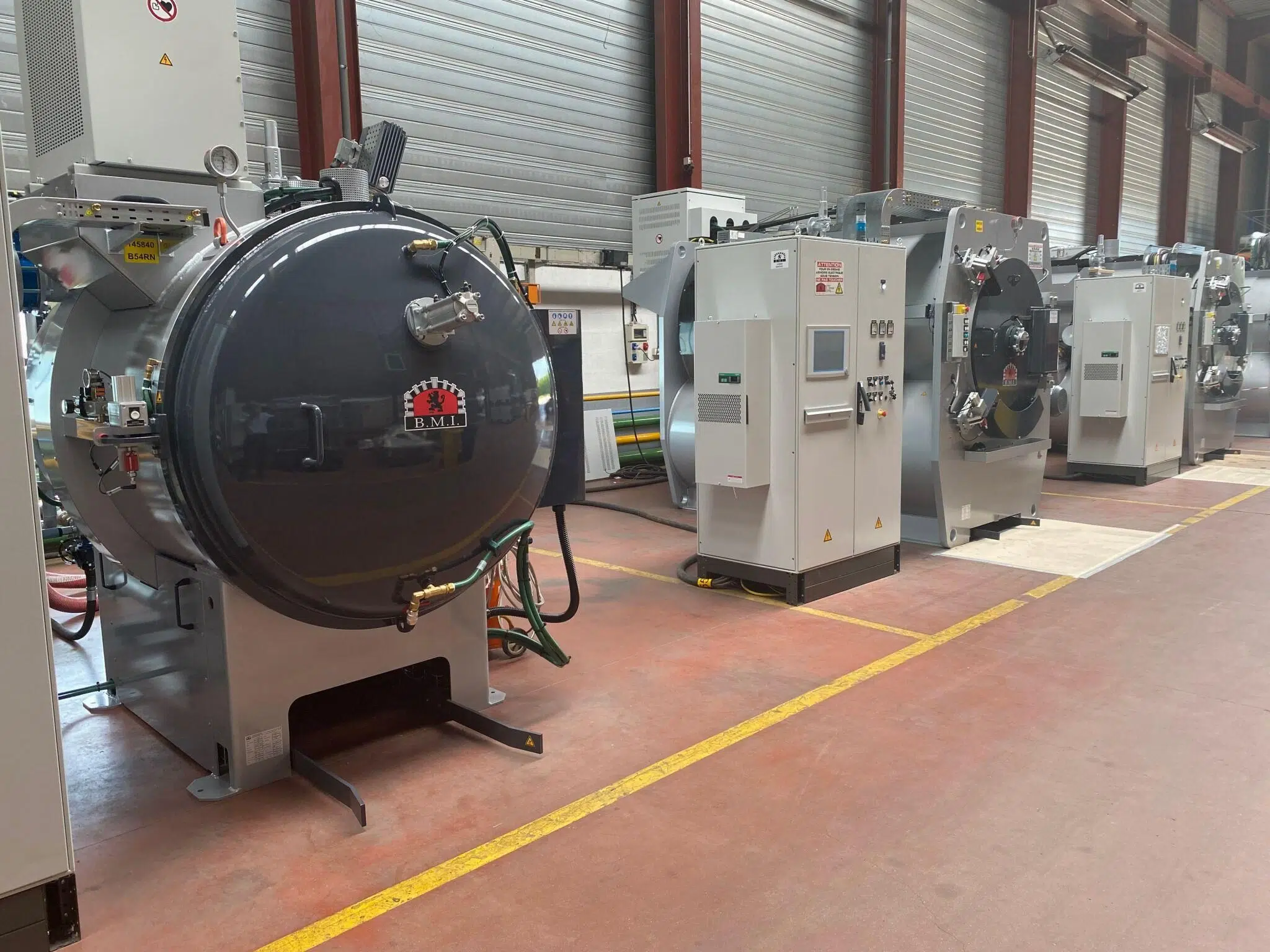
Located near Lyon, France BMI Furnaces has been offering vacuum furnaces since 1947 and enjoys a strong, loyal customer base. The company has just announced that they will be shipping to a customer in northern Spain 3 vacuum furnaces, two oil quenching units with a low pressure carburizing option (LPC using acetylene) and one low pressure nitriding unit equipped with a probe for nitriding potential.
The firm has also announced that two additional furnace will follow in July of this year, one low pressure nitriding system and one tempering furnace.
Did you like this article? Click here to subscribe to The Monty.
View our recent magazines and podcasts by clicking the following link. https://themonty.com/magazine/

The reason is that nickel quite often is the main component by % of any of the various elements which go into a casting (the same holds true for fabricated items such as wire rod baskets also). The “Nickel Institute” has a very interesting article about the various grades of heat resistant castings entitled; “Heat and Corrosion Resistant Castings; Their Engineering Properties and Applications”. https://nickelinstitute.org/me
The article is particularly interesting in that lays out in clear detail where the various compositions should be used. Page 4 breaks down the alloy composition and shows that nickel content can range from 18-22% in HK material to 64-68% in HX material, both reasonably common materials in the heat treat industry.
With those figures in mind it becomes clear that fluctuations in nickel pricing will have an immediate effect on the price of heat resistant materials used by all heat treaters. This brings us back to our original point, nickel pricing at least for the time being is relatively constant which means stable alloy costs.
Did you like this article? Click here to subscribe to The Monty.
View our recent magazines and podcasts by clicking the following link. https://themonty.com/magazine/
