 As already mentioned in many articles, the reduction of emissions as well as the energy efficiency of the entire process line are currently one of the top issues in industrial heat treatment processes, especially in Europe. As a result, the perennial questions on the minds of management and chairholders are: Is electric heating a viable option for my heat-treatment facility? Where are the limits of economic viability? What needs to be considered for chamber furnaces and what limitations in the overall process must be accepted? Beside the visually appealing alternatives such as the use of electric igniters instead of gas burners for flaring escaping process gas, some key aspects of reducing the carbon footprint are highlighted below.


Retrofits and new purchases in existing production lines – While various technical concepts are possible or can be easily adapted for new plants, the situation is more complicated for existing heat- treatment systems. Assuming that the necessary power supply is available at the factory, that the wire size is sufficient and that there is enough space to expand the switch cabinets, the number of existing gas burners and their heating capacity is a challenge in most projects.
- For standard electric heating elements, the sum of all heaters must be divisible by 3 to avoid creating unbalanced loads in the power grid.
- The use of 2- or 3-phase heaters is just being implemented for the first customers – long-term experience is not yet available.
- The heating power to be installed must be adapted to the diameters and materials (steel, ceramic, powder metallurgical based) of the radiant tubes installed. Despite the higher efficiency, a reduced power input is possible.
Active Radiant Tube Cooling – In gas-fired systems with indirect radiant tube heating, the combustion air can also be used to cool the system. This cooling is used for faster temperature reduction from carburizing temperature (920-950°C / 1690-1740°F) to hardening temperature (850- 880°C / 1570-1610°F). Without this active cooling, the process time will be extended on a case-by- case basis. Currently, there is no easy way to solve this cooling function for electrically heated heat- treatment equipment without additional technical and thus financial effort.
Heat Recovery System Proposals – Implementing advanced heat recovery systems in existing and new plants continues to be a challenge for plant engineers and operators. The pressing need to increase the energy efficiency of a thermal processing plant and minimize the carbon footprint is leading to several innovative approaches. The temperature level and its time dependence have a significant impact on the feasibility and efficiency of a heat recovery system. In addition to the classical methods of direct heat recovery via heat exchangers, also in combination with heat storage, indirect heat recovery can lower or raise the temperature level of the waste heat by using additional energy (chillers or heat pumps) or convert the waste heat into electricity. There are three main sources of wasted heat:
The main difference between a conventional gas-fired and an electrically heated heat-treatment system is the elimination of burner exhaust gases and the associated additional thermal losses. Due to the exhaust gas temperatures, this results in a reasonably usable energy potential that should be exploited. The same is true for flared process gas. However, the cost-benefit ratio must be carefully considered. Direct use of the unburned process gas is not common due to safety considerations and possible negative effects on the heat treatment process. Therefore, the greatest savings potential lies in process optimization. This refers to optimized process control and reduction/adjustment of process gas consumption. The waste heat from oil bath or salt bath quenching must be investigated with a view to reducing energy requirements. Utilization of the thermal energy released during product cooling has a high recovery potential due to the continuity of the heat input. The high energy density of the liquid medium can be used economically despite the lower temperature level compared to the hot exhaust gases.
Preparing for the future – Numerous highly volatile influences affect the decision on the energy supply of your plant which must be carefully evaluated for each factory in different locations. It is therefore reasonable to analyze all possible scenarios separately for each site, while preparing for future changes in local environmental conditions.
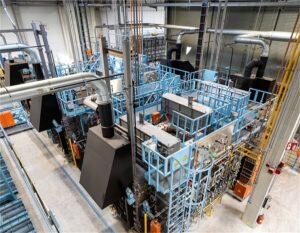
- Consideration of space requirements for possible retrofit of heat recovery systems and installation of a NOx reduction system.
- Consider alternative heating media and funding opportunities (e.g. biogas, hydrogen).

Did you like this article? Click here to subscribe to The Monty.
View our recent magazines and podcasts by clicking the following link. https://themonty.com/magazine/