Mr. Dave Farmery
President of Vac Aero
“The Monty Heat Teat News” is very pleased to offer this interview with Mr. Dave Farmery, President of vacuum furnace builder and commercial heat treater Vac Aero. Dave’s background includes almost 30 years in the aerospace industry and in this interview he brings up some very interesting points about heat treatment and the aerospace industry.
Dave first off congratulations on the new position, to be appointed as President of one of the larger vacuum furnace builders in North America is very impressive. How did this come about-I suppose what I am asking is what is your background and what road took you to where you now are?
Over the past 28 years I have been in the aerospace industry. Whether it was working for and OEM, repairing engines or landing gear or cutting chips and processing parts engaging the people to delight the customer has always been my vision. To be asked to take the leadership role in a company that has always been at the forefront of these values was one that came as an ideal fit.
It has always appeared to me that Vac Aero is 2 separate businesses, the commercial heat treating side and the furnace manufacturing division. Let’s start with the heat treating side of the equation, when did this start, how large is it and what do you specialize in?
We have been in the heat treating business for many decades. Over this time we have specialized in several discrete markets. Vacuum Oil quench where we operate 3 of the worlds largest furnaces in support of our landing gear customers. Additionally, our capabilities at the two heat treatment service units include, vacuum heat treatment, Vacuum Brazing including Honeycomb, aluminum aging, nitriding and pack aluminide coatings.
I should at this point, point out that you have a third core competency also, that of coating. Lest it be forgotten perhaps you could share with us what Vac Aero has to offer.
Vac Aero has a true Center of Excellence for surface coatings in Boucherville, Quebec. This facility has the full spectrum of coating capabilities. These range from air plasma, HVOF, HVAF, combustion spray, post coating grinding and peening as well as developing cold spray. The team delivers best in class lead time with a customer service.
The other main part of your business is the Vac Aero Furnace Manufacturing Division which builds vacuum furnaces. I am sure our readers are very interested in the history of this division, what types of furnaces you offer and the number you have built and installed over the years.
In 1971 we started to supply to a wide range and diverse range of industries and capabilities. We focussed on Vacuum furnace vs air furnaces. This continues to allow us to focus on higher technological needs as well as enabling material solutions for our end customers.
Vac Aero is part of a very small, select group of furnace builders who also heat treats. I have always thought this must offer you a tremendous advantage in that you operate the furnaces you design and build-is this the case?
Without question I feel that by running on our own equipment we have a competitive advantage. Our internal learnings ensure real time refinement of the complete vacuum furnace ecosystem, which subsequently facilitates building robust and capable furnaces in support of all industries.
You shared something with me the other day during a phone call about how you have some very ambitious plans for the furnace building division. How much can you share with us today?
As we discussed the plans for growth of this division in terms of manufacturing new furnaces, hot zone replacements and spares are significant. We are on pace to have the best year in the company’s history with significant new orders secured for 2024 as well. Our custom furnace philosophy in conjunction with some planned technological innovations will continue this trajectory going forward.
Any plans on adding new technologies to your product mix? LPC? Vacuum Nitriding? Or even something radically different from what you are now offering?
Our R&D Materials and Processes Team have just presented a long list of potential technologies and applications where we may move into. Given I am 4 months into the journey, the decisions to move ahead is a quarter or two ahead of us.
Correct me if I am wrong but a major focus in your career has been the aerospace industry. Are you seeing changes in the way aerospace companies heat treat?
There are a few subtle changes taking place in this space. I see the larger OEM’s and Top Tier Sippliers going less vertically integrated with a preference to partner with service providers via near site support or a shop in shop. This enables the niche skill of thermal and coating treatment to be done with little to no lead time impact without muddying the core business capabilities of machining or fabricating aerospace components.
Does your response indicate a move globally to support the OEM/Top Tier Suppliers.
Very simply yes that is our vision. We look to put the “International” back into Vac Aero International. These are early days but there is real time interest in providing services in several global locations. More to come as they discussions move to completion.
Lets switch gears a bit and take advantage of your very extensive experience. While you started your career in Canada you have worked all around the world, most recently in Europe for quite a number of years. What differences if any do you see between heat treating in Europe, vs; North America or Asia for that matter? Do some areas embrace new technology more than others?
Europe and more specifically the European Union have formed a multitude of committees with solid funding to enable a greener and more technologically advanced aerospace and defense industry that benefits all partner nations. This is the one differentiator I see and one that Canada is starting to move on per some recent announcements.
Vacuum vs; Atmosphere? The “vacuum guys” will tell you vacuum is the only way to go, the “atmosphere guys” will tell atmosphere is far more cost effective in most applications. Care to wade in on this debate?
My experience says the customers specifications in the majority of the instances drive the equipment selection and as such there is little to no debate in the end.
It’s challenging out there these Dave-I am sure you don’t need me to point that out. Labour shortages? Inflation? Long deliveries? Globalization or the potential switch away from it? What would you say the biggest challenge for you is?
There is no question that what feels like generational inflationary costs in conjunction with material delivery constraints remain the largest challenges. How to try and mitigate these costs to the largest extent while dealing with sub-optimal demand flow is at the forefront of our actions and discussions with our customers and partners. Additionally, given the geo-political landscape we see a new trend of some additional near shoring albeit this is in its early stages.
Many thanks for your time. We are excited to keep delighting our customers moving ahead. I look forward to our follow on call in the fall where we can look back at the progress. Cheers Dave
Dave I very much appreciate your time and look forward to speaking with you in about a year to see how your very ambitious plans are coming along. Thank you, Gord
Did you like this article? Click here to subscribe to The Monty.
View our recent magazines and podcasts by clicking the following link. https://themonty.com/magazine/

Kent Zuo
Shanghai Heat Treatment
This wide ranging interview with Mr. Kent Zuo, President of Owner of Shanghai Heat Treatment covers far more than just commercial heat treating. Kent’s thoughts on which technologies are growing, the effects of COVID both over the past two years and where the overall market is going are open and candid. If you have an interest in the Chinese heat treatment market this interview will be of a great deal of interest.
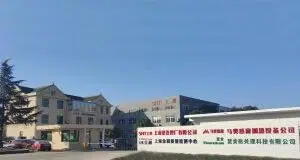
Dear colleagues, happy new year to all of you. After receiving my master’s degree from Fudan University in Shanghai in 2000, I worked in the Shanghai government department for several years. As part of China’s reform and opening-up generation, I always had a strong desire to start my own business. In 2003 I quit my job and started my own business, and in 2006 I acquired Shanghai Heat Treatment Co., Ltd and have taken the heat treatment industry as my lifelong career.
Originally, I stated that you were with Shanghai Heat Treatment Company, but I know that is not 100% correct as you involved in with several commercial heat treats. Please give us some background on your various companies and their capabilities. If possible, could you please tell us what your annual sales are and the number of employees?
Sure, I have been working in Shanghai Heat Treatment Co. Ltd., which is one of the oldest commercial heat-treating companies in China with a history going back more than 70 years. Shanghai Heat Treatment Co. Ltd was a private company until 1956, a government enterprise from 1956 to 2006, and then became private again when I bought it. During that whole time, it has been a commercial heat-treating company and that will never change.
We have all types of heat-treating processes, such as Carburizing, carbonitriding, all kinds of induction and flame hardening, laser hardening, vacuum hardening, vacuum brazing, vacuum nitriding, gas nitriding, ion nitriding and aluminum solution treatment. In 2023 we will be adding low pressure carburizing. We are a certified heat treater for companies such as GE, CAT, Schlumberger, Baker Hughes, Halliburton and so on.
Our commercial heat-treating services have annual sales of over $20 million USD and currently we have over 150 employees.
How large is the commercial heat-treating market in China on a % basis? To give some perspective it is estimated that commercial heat treating in Canada and the US is approximately 10% of the total heat-treating industry. Europe tends to be higher while Mexico and India are lower than 10% largely because of logistics problems. What would you guess it is in China?
China’s commercial heat treatment capacity was roughly 20% over the years. However, in recent years, more and more Chinese enterprises, especially larger enterprises, have been investing in their own heat treat departments which means outsourcing has dropped, currently it would be about 15%.
The last question leads us to this one, how do your companies rank out of all the commercial heat treaters in the country in terms of sales?

What changes have you seen in the market over the years in terms of equipment, business trends or attitudes?
There have been many developments in the heat treatment industry in China over the years and a large one has been the drop in energy consumption. The average energy consumption of commercial heat treaters will drop to below 350kW-h/t, and the electricity consumption of RMB 10,000 output value will drop to less than 2300kW-h.
In the next 5 years or so, we expect the percentage of vacuum carburizing will reach 20% and the percentage of vacuum nitriding will reach 10% of the market. Vacuum cleaning is another technology which is expected to see very significant growth. It is expected that Greenhouse gas emissions will be reduced by 50%, and zero emissions of pollutants from heat treatment production will be achieved.
The Chinese government will increase investment in the defense industry, so in the field of spacecraft, launch vehicles, navigation satellites, space laboratories, strategic missiles and tactical weapons, etc., very advanced heat-treating processes will be required which will require a great deal of innovation by heat treaters. New materials such as aluminum-lithium alloy, magnesium alloy, titanium alloy and other non-ferrous metals, high-temperature alloys, precision alloys, precious metals, etc. will pose challenges to all heat treaters.
In the field of nuclear power, the heat treatment of large forgings for the main equipment of AP1000 nuclear island, large forgings for the main equipment of high-temperature gas-cooled reactor nuclear island, and the heat treatment of thick-walled seamless steel tubes with high temperature and pressure resistance for thermal power generation equipment above 60MW have achieved the effect of small deformation of the overall heat treatment of ultra-long workpieces and consistent microstructure and hardness of all parts, which is essential to ensure the high reliability and long life of nuclear power units.
In the field of wind power, especially offshore wind turbine high precision gear quenching also has a very big change.
In the high-speed railway gears application induction hardening has been extensively used preceded by process simulation software. Scanning and quenching tooth by tooth has achieved the ideal effect of full tooth profile hardening, which has solved the problem of pressure quenching deformation control of large gear ring of high-speed railway locomotives.
In the field of electric vehicle auto parts, China is the world’s largest production base. Most of the supply chains of Tesla and BYD are manufactured in China, which is also one of the biggest highlights of China’s heat treatment industry over the past three years.
Let’s talk COVID and its effects on manufacturing and consequently heat treating. First question-what measures did you have to put into effect at your plants and how did it effect productivity?
Since the pandemic in 2020, China’s manufacturing industry, including the heat treatment industry, has experienced two years of ice and fire. In the first two years, the impact on China’s manufacturing industry was very small, possibly it even boosted production because of our domestic growth and are very hot export market. But since 2022, more than 100 cities in China have been in quarantine and lock down. I believe you all know that Shanghai’s has been closed for more than 2 months, during which our factories were closed. Despite the recent opening up of Shanghai, our production, including that of our customers, has often been disrupted. In 2022, the Chinese market will suffer damage.
Next question, are things back to normal yet? We are certainly hearing that a COVID wave is sweeping the country these days.
As you know on December 7, 2022, the Chinese government decided to abandon control of theCOVID-19 epidemic, and it can be said that the country is facing a very chaotic situation with a full-blown outbreak of positive infections, and most of the reports you see are objective. The proportion of positive infections in our company has exceeded 70%, and at the lowest point less than half of our personnel were working in the company. We are currently just at the peak of the first wave. It is expected that such a situation will continue for about six months before it is possible to reach North American and European levels.
Is this going to have a long term effect on your business? Perhaps we should ask what you are expecting business to be like for the next 2 or 3 years.
The current impact is very significant and is having a large impact on our business. But we expect China to gradually return to normal in 2023. And I’m still very optimistic about the next three years. Although China’s economy can hardly grow as fast as it did in the past 30 years, it is optimistically estimated to stay at about 5% growth per year. However, for high quality heat treatment services, the market is expected to maintain a growth rate of more than 10%.
We are going to switch gears and talk about technology. The first time I visited China was over 20 years ago and at that time most furnace builders were western based-is this still the case or have local builders been gaining market share?
The Chinese heat-treating industrial furnace market has changed a lot in the last 5 years, and this change will become more obvious. At present, more and more Chinese local industrial furnace companies are developed and recognized, whether it is atmosphere furnace, or vacuum furnace, or even vacuum carburizing furnace, the market share is growing rapidly.
My personal estimate is that at least 90% of the atmosphere furnace market and at least 60% of the vacuum furnace market are provided by local furnace companies. In the next 5 years, Chinese companies are expected to provide more than 50% of all vacuum carburizing systems in the county.
And what technology are heat treaters investing in? What would you estimate is the top selling heat treatment technology in China these days?
Heat treatment companies in China are heavily investing in digital and intelligent technologies to ensure product quality and improve production efficiency. All companies whether they are captive or commercial are looking at systems to automate the entire process. As an example, process simulation technology is being employed more and more often especially in areas such as bearings, and auto parts.
Kent what does the future hold for you and your companies? Do you have plans to expand into other geographic areas or perhaps into other areas associated with heat treating such as coatings?
After a painful 2022, we are still very optimistic about the future growth of the Chinese economy. High quality heat treatment in particular will continue to grow so we plan to upgrade each of our facilities over the next 5 years. This will include an increasing use of automation technologies and increasing production capacity.
We have a co operation agreement with a US company, Interpower Induction which means we will be working with them to provide induction systems in China. So far, we have orders from Caterpillar and Schaeffler in China.
Kent, I appreciate the time and look forward to seeing you again in person one of these days.
Now the door of China is reopened, and we welcome all of you to come to China and we are willing to cooperate with you to develop the Chinese market. My email is [email protected] , Look forward to meeting you soon.
Did you like this article? Click here to subscribe to The Monty.
View our recent magazines and podcasts by clicking the following link. https://themonty.com/magazine/


Andy Chen, PowerMax, Gord Montgomery, Kent Zuo, Shanghai Heat Treat
Simon Powell
Fluke Process Instruments

Today we have the privilege of speaking with Mr. Simon Powell, Business Unit Manager at Fluke Process Instruments (FPI). Simon, I understand that what you would most like to speak about today is a very interesting new product called the SV600. Before we get into it though I would like to pose a few questions to you about yourself, Fluke and Datapaq. Let’s start with yourself- how did you end up where you are today?
Sure, I joined Fluke Process Instruments 10 years ago as Marketing Director and have since enjoyed a few commercial roles including Customer Experience Director and more recently, Business Unit Leader for the Datapaq profiling business. (Your readers may be familiar with the Datapaq temperature measurement dataloggers). I am based in our UK office in Cambridge, where the core Datapaq engineering and product management teams are based.
Two years ago, I was asked to lead a small team focused on growth initiatives, launching our first product, the SV600, into the exciting new world of acoustic imaging technology!
When I think about FPI, I think about Datapaq, one of the best-known brands in the world when it comes to thermal profiling. However, I know that the Datapaq brand is just one part of what FPI has to offer. Can you tell us a bit about Fluke Process Instruments in general and the products you offer in particular?
Yes, Fluke Process Instruments is a worldwide leader in industrial temperature measurement solutions. FPI was originally made up of the three renowned brands of Raytek, Ircon and of course, Datapaq. Together, FPI became the temperature technology leader.
Our products offer top performing, rugged and dependable noncontact temperature measurement and profiling equipment – the portfolio includes a complete line of infrared sensors, line scanners, thermal imagers and profiling systems for use in today’s most demanding environments. FPI has been a pioneer of many industry firsts, market innovations and new technologies, and the brand of choice for the harshest, high-temperature industrial environments in manufacturing.
Now, we are proud to add acoustic imaging to that product stable!
The product you would like to introduce today is the SV600 Acoustic Imager. I tried to be well prepared for this discussion and did some research on Acoustic Imaging earlier this week, however I am still not entirely clear on the technology. Could you please explain in “layman’s” terms what acoustic imaging is?
Yes, I’ll try. As a non-engineer, explaining in layman’s terms is easier for me! Acoustic imaging is the use of ultrasound to produce real-time images of almost undetectable noise…to humans anyway. In other words, acoustic imaging allows us to see sounds. The units of frequency are called hertz (Hz). Humans with normal hearing can hear sounds between 20 Hz and 20,000 Hz (our ability to hear at this higher level unfortunately goes down as we get older). Frequencies above 20,000 Hz are known as ultrasound. When your dog tilts its head to listen to seemingly imaginary sounds, he or she is probably tuning in to ultrasonic frequencies, as high as 45,000 Hz. Many compressed air leaks in a factory cannot typically be heard by humans and are indeed ultrasonic, meaning above 20,000 Hz, and many can be up to 40,000 Hz.
Think of an acoustic imager as an array of sophisticated microphones which convert sound into an image. It relies on waves to produce pictures instead of vibrating sounds (the way your ear does) to show where seemingly undetectable sounds (and possibly air or gas leaks) might be. Once a technician can see an image of a sound/leak, he or she can go and repair it. We put together a great article on the history of acoustic imaging if you’d like to learn more.
Are you saying that from this “imaging” you are producing a picture showing where leaks are? Do you have an example?

And what is the technology behind this? In other words, how do you produce an image?
The SV600 is a Fixed Acoustic Imager that uses an array of sophisticated sound sensors like microphones and powerful SoundMap™ technology to translate the sounds that it hears into a visual representation so that customers can quickly locate problem areas.
While the technology sounds very impressive the question on my lips and most of our readers would be: Where did this product come from and can you give us some examples of how this benefits heat treaters? For instance, can you track air leaks or is this for gases only?
Yes, Fluke is the pioneer of this technology for industrial applications and in 2019 the Fluke ii900 handheld industrial imager was launched. As with the ‘fixed’ SV600, the ii900 is similarly equipped with an array of microphones for an expanded field-of-view and enables users to quickly and accurately locate air, gas and vacuum leaks in compressed air systems. Fluke also developed SoundSight™ technology that powered the Fluke ii900, making it easy to learn and operate. The 7″ LCD touchscreen overlays a visual image for quick leak location identification. The ii900 has been a huge success with customer maintenance teams using the ii900 for detecting previously unseen air leaks and enabling quick fixes and savings in energy costs.
The SV600 can benefit heat treaters in several ways. The use case I would like to highlight first is based on a recent application need for the SV600, by the one of largest global heat treaters. This was at a site using Hot Isostatic Pressing (HIP) where the customer wanted to monitor dangerous argon/nitrogen gas leaks on the vessel, high pressure pipe work and infrastructure which, if inhaled, can be catastrophic.
Monitoring for gas leaks in the pit area under the furnace is usually done with static oxygen monitors and a manual measurement taken by an operator wearing PPE. However, installing the SV600 enabled a continuous 24/7 remote monitoring solution, which can detect leaks in real time and raise an early alarm before any risk in low oxygen levels occur. If the SV600 detects a gas leak and sets off an alarm the exact location and image of the leak can be recorded or sent to a control room, ensuring maintenance and repair is more timely and safer, thus limiting any possible furnace downtime.
In addition to HIP facilities, the SV600 enables critical equipment and associated compressors, pumps, valves, and pipes to be monitored for air or gas leaks in other heat treatment facilities. Not only can the SV600 detect air, gas or vacuum leaks, but it can detect unwanted electrical partial discharge, which may be relevant for facilities who need to monitor switchgear, transformers or electrical machinery.
Simon I would imagine that you are way ahead of me on this one-do you see this product as being used extensively because of safety issues? Specifically in cases where nitrogen or argon might be present?
Yes, as for the HIP example given in question 6, safety is a key driver for deploying the SV600. What we have seen across many of the industries we serve, that Maintenance Managers, Production Managers, and HSE Managers want SV600 to detect, locate and visualize air or gas leaks, or sound signature changes remotely without human intervention to create a safer work environment. We have seen many portable ii900 customers considering a fixed SV600 imager where they are concerned about sending people into unsafe areas where they need to continuously monitor for leaks or where they need to monitor an area or equipment at a distance or remotely.
Finally, and again from an HSE perspective, the SV600 includes user-programmable alarms for sound level (dB) and frequency (kHz) to help facilities better meet national and international standards and ensure workers are not exposed to dangerous noise and sound levels.
It’s a tired old cliché to say that the world is a more difficult place these days and that challenges abound on all sides, however that is the way many people feel currently. Having said that what challenges are you facing these days and how are you reacting to them?
As a manufacturer of electronic instruments, the biggest challenge is probably ensuring a reliable supply of the components we use. As part of one of the largest electronic test and measure companies, FPI has been able to keep supply chain disruption to a minimum by leveraging the Group’s extensive supplier base to secure the necessary parts.
Lets talk about trends. You see a lot of different companies in a lot of different geographic areas. Are you noticing any significant changes? Let me throw out an example; with the shortage of skilled people at least some companies are looking at taking some control away from operators and putting that control into the hands of controllers and automation-is this something you have seen? Any other interesting changes?
I think the example you mention is spot on. We are seeing one of the biggest challenges for our customers is a shortage of skilled labor which is increasing the need for more automation and digitization—whether that be for maintenance, production or quality teams. Through an Ethernet network communications interface (with installed 8-wire M12 fieldbus or RJ45 connector), the SV600 can integrate into the factory network / PLC. This really helps where customers have a need to improve automation.
The SV600 can have a big impact for manufacturers of products such as tanks, heat exchangers, radiators, etc. using traditional soapy water or water baths for their leak test process. The process can be automated with acoustic leak detection on the production line and immediately notify teams of quality issues or product rejects, thereby improving productivity.

And how are we doing overall these days? Would you consider the heat treatment industry to be healthy and vibrant these days?
Generally, business is good. FPI has a broad range of products and while some markets and regions struggle, other regions and segments are growing. Europe, of course, remains challenging with energy costs rising and conflict in the region. This is offset by growth in demand for solutions in semiconductor manufacturing, in particular.
Recent FPI product launches have included some novel solutions for quench applications on the Datapaq heat treatment profiling side, and with vehicleweight reductions being a key driver for development (with electric vehicles in mind) this represents an opportunity for growth in the coming months.
Heat treatment in general has had a tough few years with COVID affecting the aerospace industry and the semiconductor supply chain hampering automotive production. That said, there are some signs of recovery with air travel increasing and new applications emerging as the electric vehicle market further develops. I think the future will be interesting, if a little hard to predict.
I very much appreciate your time and insights today Simon, thank you. Gord
Thank you, Gord, for giving me the chance to talk about this exciting new technology. We hope your readers find this of interest too. If they need more information on the SV600 visit https://www.flukeprocessinstruments.com/en-us/products/sv600-fixed-acoustic-imager or www.flukeprocessinsuruments.com, or email me at [email protected]
Did you like this article? Click here to subscribe to The Monty.
View our recent magazines and podcasts by clicking the following link. https://themonty.com/magazine/
Jim Grann
Technical Director, Ipsen
It makes our day to present to you our readers an interview with Mr. Jim Grann, Technical Director of furnace builder Ipsen. Jim is based in the Rockford, Illinois, USA facility and has the distinction of being the second longest serving employee of the company-by only one month we hasten to add. We asked Jim a number of far reaching questions, his very interesting answers can be found here.
Jim, you have had a remarkable career having started with ABAR Corp. back in 1978. Please tell us how your journey with Ipsen started.
Growing up, I worked every summer for my father who was an industrial electrical contractor with 27 employees. After high school I attended Bucks County Community College in Pennsylvania and continued spending summers working for my father. One day I noticed an ad running in the help wanted section for an organization called ABAR Corp., a manufacturer of heat–treatment equipment. They were looking for a floor electrician for the assembly of vacuum furnaces. The job sounded interesting and was only 1.6 miles from my home, so I thought, why not inquire about the posting? I made an appointment for an interview, and the wheels were set in motion.
At my interview, I was asked, “how old are you?” I answered the question. The foreman then reached over, grabbed my wrist, and flipped it over to look at my hands. He was comparing the wear and tear on my hands against what I had listed on my resume. They asked me if I was familiar with electrical prints. I answered, yes, and water and hydraulic systems. Next, the foreman opens a roll of prints and starts pointing to devices and circuits asking what we were looking at. After acing that test, The HR director says, “when can you start?”
I spent several years in that position, moved to QC, then QC Manager and sometime thereafter picked up the additional title of Field Service Manager. Ipsen merged with Abar in 1985, and in 1996, I relocated to the Rockford facility after they consolidated operations and removed Abar from the name. My duties remained the same for a few years, then I transitioned into assisting sales with new equipment, retrofits and support.
Is there anybody at Ipsen who has served longer with the company than yourself?
Mr. Craig Moller (Chief Engineer) has exactly one month on me in tenure.
My understanding is that your title is Technical Director – what does that mean in terms of what you do on a daily basis?
My title pretty much sums it up . I basically interface with every department within Ipsen. I work with our customers on process related issues, sales and special projects.
Up to this point, Jim, I have been working under the assumption that your experience has been mainly with vacuum systems, but perhaps that is an incorrect assumption. Do you also get involved in atmosphere equipment?
I do have some experience with atmosphere furnaces and related equipment at an arms length, but I am not an expert by any stretch of the imagination.
Others at Ipsen have told me you have had several roles with the company over the years, including quality control, instruction and technical support. What has been your favorite role?
My Favorite? Hmm… basically anything or anytime that I am helping others solve an issue. I have an “A type” personality, and some here may even argue compounded with a splash of OCD. I like being pulled into tasks where others may have fallen short. I enjoy the challenge. I enjoy explaining my thought process and how I arrive at a conclusion. When I’m done with a project, whomever is along side me, either a customer or a colleague, they know and understand what was done, why and how.
This is the question I have really been looking forward to asking you – what are the biggest changes you have seen in the industry since you began your career? This could include technical changes, changes in how furnaces are built, changes in how equipment is sold, pretty well anything.
This is a very broad reaching question that I could generate a book on. A few highlights perhaps being the transition from all molybdenum hot zones to graphite. 44 years ago, we were all taught that all metal hot zones were the standard and graphite hot zones were for low-end heat-treating processes. There was a lot of, “you can’t run this or that in a graphite hot zone.” Well, most of the people who said that are retired now, and the scales have nearly flipped, with graphite being the typical construction used for most applications.
There have also been many technical advances. Today, customers are requesting advanced controls functionality, energy efficiency, implementation of IoT systems, and predictive maintenance capability, such as Ipsen’s PdMetrics. Heat-treating technology has also come a long way in terms of efficiency. Customers have always come to us wanting a furnace that can handle more weight, cools faster, reduces distortion, processes faster, provides more uniform heating/cooling, has deeper ultimate vacuum levels, etc. Over the years we have been successful in finding ways to accommodate these requests to continually build better and better furnaces.
From the past, lets move to the future. With each advancement in furnace technology, we as a group tend to think that we have reached the limit of what we can do, that is until the next breakthrough happens. Is there still room to push the limits of what we can achieve? What do you see as the next big step in the advancement of heat–treating technology?
That my friend resides under the code of silence. Top level answer being, YES! There remains room for technical advancements in several areas. A few of which are currently in progress. Ipsen is always expanding its digital toolbox to optimize processes and maximize performance for our customers. We currently provide predictive analytics tools, and remote troubleshooting through augmented reality. We are on the road to using more artificial intelligence to further reduce furnace downtime and prevent failures.
Many in our industry would say that the number one challenge these days is finding good, experienced people. That being the case, does Ipsen have a plan for using technology to make up for the shortfall in experience?
I believe that technology is here to assist us and make our lives easier, but not to replace us. The COVID-19 pandemic has made it a little more difficult to obtain quality new hires (considering there are presently two jobs available for each unemployed person in the U.S.), but we have expanded our HR department and implemented internal training and advancement programs to focus on placing the right people in the right positions.
Next to finding good people, I would suggest that supply chain issues are the next major challenge these days. Several manufacturers have told me that in some cases they are forced to make design changes in new equipment when certain parts are unobtainable. Has this been the case at Ipsen?
Indeed, we are experiencing unprecedented times in the world of supply chain, but one thing remains crucial: relationships. Suppliers continue to face commodity and electronic component challenges – which will likely continue for the foreseeable future; therefore, being able to rely on our strong bond with key suppliers is more critical than ever.
For some electrical components, the standard products just aren’t available. In these situations, Ipsen’s experienced engineering group works hand in hand with purchasing and suppliers to come up with acceptable alternatives. In instances where lead times can’t be improved, long-lead items are engineered and ordered early in the project to minimize delays in the build schedule.
While Ipsen is certainly feeling the effects of the supply chain issues, we spend a lot of time communicating with our customers throughout their project so that they can adjust accordingly on their end. By adapting project schedules, working closer with suppliers, and providing creative engineering solutions, we have been able to keep up with production while minimizing disruption to our customers, and we certainly appreciate how patient they have been with us during this unprecedented period.
Let’s talk about trends in the industry. As Technical Director, I would imagine you are at the forefront of new technologies. That being the case, are you seeing any interesting trends these days? Perhaps increased demand for low pressure carburizing, more requests for nitriding, requests for larger and ever larger systems?
The demand for proven processes remains at a normal level. The request for larger and higher-pressure furnaces is on the rise. Many customers are advancing 3D printing of very small and very large components, driving changes in furnace design. We are partnered with several of these customers.
I almost forgot this question, Jim, and it is one our readers and I will be very interested in. In your many years in the industry, what is the project you remember the most? Perhaps because it was the most challenging or perhaps the biggest disaster. I am not going to ask for any names, just an idea about which project over the years was the most memorable for you.
Being honest, we have had the occasional setback, but disasters, not on my watch! Carefully reviewing compliance documents is paramount these days. It’s also important to make sure the customer truly understands what they are asking for and why, and that Ipsen understands the scope of the mission. Let’s be honest, sometimes it is ok to say no… gently though. I have been involved in so many projects, they sometimes seem to run together. We have partnered with many customers on new and bold process undertakings. Seeing these projects come to fruition and going into production is what I like and remember most.
And what does the future hold for Mr. Jim Grann? Obviously, you enjoy what you do and the company you work for. Will I be seeing you at trade shows 20 years in the future?
I am not the type of person who can sit back and relax, watching time go by. I thrive on changing environments and tasks, and I love dealing with customers. My plan is to continue my current path as long as health permits. Many people go through life punching in at 8:00 a.m. and out at 5:00 p.m. I love my job and love helping others in and out of work. My efforts don’t stop at 5:00 p.m. I, and others within the Ipsen organization, often take calls on weeknights, weekends and holidays, as I treat customers like they are family.
Did you like this article? Click here to subscribe to The Monty.
View our recent magazines and podcasts by clicking the following link. https://themonty.com/magazine/

Marco Möser
Sales Director North America, Lohmann Steel

“Well, I started as a Sales representative in 1997 working for SAFE Technologies ( Now Cronite) in Benelux and Poland. Serving the dutch speaking customers and due to my travels to eastern Europe also several Polish customers. I worked my way up to Sales Manager and my territory was expanded with East / North Germany and Denmark. I also supported Thierry Pereira (Global Sales. Director) on several large project, mostly in Europe/ East Europe as he was busy with expanding in Asia. In 2009 I was Transferred to USA, became President of North American Cronite, to support the newly build foundry in MX and set up a sales Team. I left Cronite at the end of 2015 and in the years before I have worked with a large number of customers, furnace builders and automation suppliers on various large projects globally with great success and learned a lot about the transition in the heat treat industry which was going on and made a lot of friends in the industry.”
“After that I joined Alcon and worked very close with Richard Chalet, one of the nicest guys I ever met. Unfortunately, did he pass away after being 2 years in a transitioning project of Alcon. The company was not the same anymore without him but I look back with great pleasure about the things we have realized in the period I was there.”
“In 2019 I joined Wirco as V.P Foundry Division and used my experience to help them to put their foundry back on track after the fire and support them where needed in their management Team.”
“In the fall of 2021 I had to stop and I took a large time off to reflect and think about my future.”
“So in a period of almost 25 years I have gained a lot of knowledge, experience, friends in the heat treat industry from smaller heat treat shops to fully automated transmission plants and everything in between.”

“After a period of almost 9 month taking a break and reflecting the past years I came to the conclusion that I wanted to spend the rest of my career doing what I like and what I enjoy the most. Talking and visiting customers and helping them to solve the issues and problems which occur in the always changing HT Market. I got in contact with Lohmann, Thorsten Kutsch which I knew for years and in a later stadium also the owners of Lohmann who knew me already for years. Lohmann was interested to expand but failed to find the right person with knowledge and contact on the north American market. I was interested to work with a modern, professional and well established / balanced Alloy supplier from Europe. So after a couple talk and a meeting we made a long term agreement which will satisfy both parties.”

“Lohmann is a seventh-generation family business founded in 1790 by Johann Friedrich Lohmann. The company has two locations in Witten, Germany. Witten is located in the middle of Germany near Düsseldorf. The company employs approximately 350 people at both locations. The Witten-Herbede site operates a steel mill with forge and rolling mill and produces tool steels. The Witten-Annen site primarily produces heat-resistant castings for heat treatment plants. Furthermore, wear-resistant components for shot-blasting equipment and corrosion-resistant components for the food and chemical industries are manufactured.”
“Lohmann has been in existence for more than 230 years and has a great deal of experience in the field of steel production. Our strengths are especially in the field of heat resistant steels for all applications in heat treatment.”
“It goes without saying that our quality management is certified according to EN ISO 9001.”
“In addition, we also have an environmental management system according to DIN EN ISO 14001 and an energy management system according to DIN EN ISO 50001.”
Traditionally North American foundries have had little success selling their products into the European market and visa versa which leads me to my next question; has Lohman done much business in North America?
“Lohmann has traditionally focused on the European market. In this respect, I can agree with you about the presence of the individual foundries on other continents. However, we have always been active worldwide, which includes both America and Asia. We already deliver to the USA, but Lohmann’s market share is expandable. We will work on this in the future here in the USA and Mexico and become market player in North America.”

“Basically, Lohmann manufactures all components for heat treatment. These can be castings as well as components made of semi-finished products as welded composite structures. However, our strengths clearly lie in castings. We manufacture baskets, base trays, fixtures, pit furnace fixtures, cast link belts, furnace rollers, radiant heating tubes and furnace parts such as rollers or fans. We are particularly strong when it comes to individually designed fixtures and for pit furnace fixtures and cast link belts.”
The last question leads directly into this one, what advantages does Lohman have that suggests you will be successful in becoming a supplier of note in the North American market?
“Lohmann has an enormously high level of experience and an excellent design department as well as state-of-the-art production facilities. We can meet all the requirements of the heat treatment industry and map almost all processes in-house. The customer gives us a task and we develop a concept and design, including materials consulting, FEM calculation, casting simulation, molding, casting, fettling, machining, after sales, scrap recycling and much more – all from one source. From prototype to pre-series to series production, we produce the components ourselves “Made by Lohmann in Germany”.”
Foundries have not changed much over the years-or have they? I know you are very proud of your new production facilities, what differences/improvements are end users liable to see that they might not have seen a few years ago?
“Our new production line “Modulcast” is an absolutely unique feature. The line is far above the standard of the foundry industry and exists only once in the world. Particularly noteworthy is the automation and resource efficiency. We mold and cast fully automatically and record every process step and production parameter. Resource efficiency includes energy consumption as well as material consumption and space requirements. The Modulcast production line also sets standards in terms of ergonomics, occupational safety and environmental protection. We could conduct a separate interview for the details. However, we are not only proud of our high technical standard but also of the fact that we are the first CO2-neutral foundry according to the GHG protocol in Germany and probably also in Europe. In Europe this topic is gaining more and more importance and probably the rest of the world will slowly develop in this direction as well. But that is also a separate topic which would go beyond the scope of this interview.”

“Traders with an Asian supply background always try to penetrate an existing market. In most cases, this is done exclusively on the basis of price. The established foundries, including Lohmann, have to face the competition and offer added value through design, quality, know-how, innovation, reliability and service. We notice this especially when the projects become more complex and a good concept and design is required.”
What sort of changes do you see on the horizon when it comes to alloy components and fixturing?
“I think that we will see more and more customers of the heat-treat companies and in house heat treaters to go to dedicated fixtures for the guarantee of continuous quality of the heat treated parts. The quality requirements of the heat treated parts will keep increasing and scrap will need to be eliminated as much as possible. A process which is already going on for over a decade but will be intensified even more to also the lower end of the market. I also think we will see that there will be a big change in the way companies will do business, respect – appreciation and commitment for a long-term partnership will be key words and as we have seen in the last year with the delivery shortage.”
“Also are market prices for raw materials such as nickel are very volatile. Especially the price explosion of the last months and the crash at the LME have shown how difficult it is to make a prediction about the situation in the next month’s / year ahead. In addition, there are effects related to the war in Ukraine which makes it impossible to make a prediction to where the market is going.”

Jack Cahn
Deep Cryogenic International
Deep Cryogenic Treatment-The Story Behind It

“Sure. Deep cryogenic treatment (DCT) is a -300°F (—190ºC) cold treatment that increases wear resistance and yield strength in most steel alloys from 20-70%. DCT also increases the conductivity of copper, lowers corrosion rates and significantly shrinks the heat affected zone of welds and additive manufactured items. The process is permanent, takes 2 days to complete, doesn’t change dimensional size and costs under $1.00 per pound to treat an item. The process is non-toxic, uses no chemicals and generates no environmental waste. DCT usually follows heat treatment and requires 1-2 tempering steps to eliminate hydrogen embrittlement and restore ductility. Think of it as the completing the circle of thermal treatment – going from high to low temp and then back to ambient to optimize wear and durability.”
The next logical question would be, how prevalent is cryogenics amongst captive and commercial heat treaters? Is this a well-known process?
“There are about 200 heat treaters in North America that have cryogenic chambers though most perform cold treatment and shallow cryogenics (-70°F to -240°F) to reduce retained austenite after martensitic transformation. DCT is generally accepted by heat treaters to reduce retained austenite in tool steels but it has not yet become a ‘go to’ process to address mechanical wear. It is inexpensive to provide DCT and easy to load as no fixturing is required. You can often batch load different geometries and alloys in the same run. Deep cryogenics is one of the highest profit thermal processes available to a heat treat operation.”
Then why isn’t the process more common than it is?
“Generally, it’s lack of industry awareness. Until recently, no industrial-size DCT equipment, ASTM-recognized test methods or any 3rd party qualification have been available. Both heat treating and deep cryogenics are thermal treatments but while heat treating is 10,000 years old, liquid nitrogen production and DCT have been around for only 100 years. This lack of familiarity has been a challenge and heat treaters, like most of us, generally are more comfortable with what we already know. Now that industrial customers are seeing clear evidence that DCT improves both wear item life and bottom line profit, I expect heat treaters to take another look at deep cryogenics.”

“I first discovered cryogenics in the late 1990’s when operating a 35 person, precision machine shop in the US – doing work for Jet Propulsion Lab and Lockheed. We were machining mostly nickel, kovar and titanium that burned through tooling. I wanted to reduce the high cost and wear on small endmills and drills. A friend introduced me to cryogenics and I found the process almost doubled my tooling life. More CNC spindle uptime, less labor spent changing tools, more production output. As an end user, it was a no brainer and I used DCT extensively. Later, I considered how it could improve the wear life of the items I machined for my customers. So I went into business with my wife Linda and we spent years writing research papers, developing treatment recipes and understanding the science. But no one ran a test lab, promoted the technology or conceived of scaling-up DCT equipment to reach industrial customers. So we acquired test equipment, began building large DCT chambers and opened our business in Nova Scotia in 2018. We will open a demonstration center in Alberta in June.”
You offer both the equipment, research and if I understand correctly you can provide cryogenic treatments. What is the focus of most of your attention? I will rephrase that and ask which of these services takes up most of your time?
“We do provide DCT but most of our effort is focused on building and leasing large DCT equipment and providing R&D testing for future and present customers. Besides leasing our smaller vacuum-insulated round chambers, we build the largest DCT equipment in the world. At 8’ x 8’ x 20’ with a 45,000 treatment capacity, it is the DCT equivalent of a car-bottom furnace and is the only industrial size equipment available on the market. We support all our customer leases by providing R&D, process optimization and testing – included with the lease. Although we perform metallurgical testing and microscopy, our R&D lab is primarily for applied research. We have XRD, white light interferometry and one of the only ASTM G81 gouging abrasion testers in existence in North America. We keep pretty busy.”

“DCT equipment life is entirely different because high heat erosion never impacts or affects cryogenic equipment. Our small chambers take 2 hours to install before they can operate and they can last 20+ years – operating at near-new efficiencies during the equipment life. All our machines temper as well as DCT – cycling from -300°F to 300°F to complete the process without requiring a separate tempering furnace. Although we will sell DCT equipment, in order to promote this technology we are prepared to share the expense of technology adoption with our customers by offering a leasing option.”
“We have also developed a complete industrial-size platform for lease to heat treaters that want to produce liquid nitrogen on-site from the air that we breath and use it for DCT as well as for other heat treat operations. This is a breakthrough innovation because now heat treaters don’t have to wait on high cost deliveries of bulk LN2 from gas suppliers – they can produce it on site from 240 -1,000 litres per day. Our platform includes our 36K DCT chamber, a liquid nitrogen generator, scroll air compressor, chiller and all the peripherals. We will demo this platform at our Alberta facility and provide customers full onsite installation, training and post-leasing support.”

“Historically, cryogenics has been a quirky but small market process used primarily in motor sports, firearms and machine shops. But the market is really in mining, power generation, transportation and road construction – places where abrasive wear creates high cost, lots of downtime and limits productivity. We are seeing lots of pushback against DCT from OEM’s of cast, forged and machined wear items due to DCT’s impact on their consumable sales – that’s how we know that we struck a nerve. Heat treaters respond directly to the market. It won’t be long before end users of high wear items seek out heat treaters for DCT of large parts or economy-of scale capacity to support their needs. Heat treaters will see DCT demand coming from end users, not just from manufacturers.”
When you approach a potential customer with your technology what is a typical response? A blank stare saying what are you talking about? An enthusiastic question about why haven’t you approached me before? Another way to phrase this question would be to ask how much does the typical heat treater know about cryogenics?
“Most have heard of the technology but usually not a lot more. New technologies require awareness, understanding and often field demonstrations – usually prior to adoption. These discussions take time and a collaborative effort. That’s why we decided to open our demo center. We bridge the knowledge gap by performing DCT, conducting lab or field testing and helping a customer ‘kick the tires’ by seeing the improvement with their own eyes.”
This interview would not be complete without talking about where you are located. You told me how you are located in the wilds of Alberta, Canada where wildlife is more prevalent than people-I leave it up to you to take it from there.
“Linda and I live in a log cabin in Twin Butte – surrounded by moose, Saskatoon berries and mountains that seem to rise out of the prairie. It is a very conscious and present choice. The ranch nearby runs cattle that provide an endless source of barking for our golden retriever. We have some very good friends there and beneath all those friendships is an awareness of where and how we all chose to live. Although it is only 15 minutes to our facility in Pincher Creek, it feels like another world.”
You are obviously very passionate and knowledgeable about your products, I wish you the very best of luck in the future. I have already made myself a note to touch base with you in the next few months to see how your projects are going, I and many others look forward to hearing about how the industry embraces your ideas.

Jörn Rohde
Rohde Gmbh
Jörn can you please tell us a little bit about yourself? For instance; your background, how you first got involved in the heat treating industry and how you came to become the President of Rohde Gmbh?
“I have been working with my father in the company since I was a child. My tasks have grown over the years. It started as a child with sweeping the yard, cleaning machines, helper work and with the start of my apprenticeship as an industrial mechanic (in another company) I could already work independently on furnaces in production and go on assemblies during my vacation. During my studies I was able to enter the design department and later, with my degree as a Diplom Ingenieur (graduate engineer in mechanical engineering), I was able to take over the management of this department. Later I became the managing director of the company. I can say that I have been building furnaces for 35 years and that I am now in my mid-forties.”
I know Rohde GmbH has grown quite a bit over the years. Can you share with us the size of the company, how many employees you have, and annual sales?
“We are a classic medium-sized family business. We employ 25 people and have an annual turnover of approx. 4 million euros. Our ambition is not to grow at any price and employ more people, but to keep improving our equipment and to offer our customers the best solutions worldwide with our long-established team of employees. We want to remain a family business and hope our two sons will follow the tradition and continue the company.”
What products do you have to offer and if you don’t mind me asking what product is your number one seller?
“We supply retort furnaces in various designs. Shaft furnaces, chamber furnaces, bell furnaces and our favorite, special designs. We love the challenge and new customized developments are definitely one of our strengths. Our best seller, however, is our SRU (Salt Recovery Units). These were designed by my father, a design which we continue to upgrade and we have these systems installed around the world.“
I know you have been quite successful with your line of vacuum nitriding systems, please share some details with our readers.
“We are an absolute premium manufacturer in the field. This applies to all important areas of furnace technology: lowest temperature differences, best gas distribution in the work zone, low wear due to best components also for purchased parts. We are also the market leader in energy savings. In Germany, we can undercut our market competitors in terms of price after only three years of use. After less than 15 years, the investment is recouped through the energy savings. Germany is certainly a special case due to the high energy costs, but anyone who values sustainability cannot ignore us. Direct comparisons to other market companions from Germany show that our furnaces are the most energy efficient in the market. We also have strong partners in the field of process development, such as the Leibnitz Institute in Bremen, with whom we always develop state of the technology through various research projects.”
I’m sure you have built a lot of highly specialized furnaces over the years. What’s the most interesting furnace project you’ve worked on?
“Due to the custom designed furnaces we manufacture, it is really not an easy question, as many of the furnaces were special. There is a smaller system that had to fit into a freight elevator in China including all aggregates, because we could not enter the country due to the entry regulations. Or for example plants like our Bell hardening center which hardens fully automatically and quenches in oil or salt. At the moment, special systems for catalysts for hydrogen production are a new task for us, because the product in the furnace has other properties as known. As a graduate engineer, I look for the technical challenge. The higher the demand of the customer, the more fun we have solving the challenge.”

“Yes, no one else wanted to or could build this furnace and we took on the challenge. This project was very exciting. No one had ever built a retort with a diameter of 5.5 meters (16.5’) before. As far as I know, such large furnaces were always built without a retort. We love the challenge! (Editors note; This furnace is located at commercial heat treater “Reese” in Germany and is very impressive).”
There’s a rumor floating around that you are partnering up with McLaughlin Furnace Group to provide Salt Recovery Units (SRU’s) in North America. Can you tell us a little more about the partnership and about Salt Recovery Units (SRU’s) in general?
“We have a good product and Jeff has a great company and can respond quickly in North America. I think in terms of product, quality and service, we have the same high standards. It is easy to find a salesman in any country, but in my opinion you need more. The SRU business in North America is doing well, but by building in North America we will be able to save on the transportation costs and long delivery times. Together we can simply achieve more. In the same way, we will support the McLaughlin Furnace Group in Europe. We can both benefit from sharing our existing resources and I look forward to working with McLaughlin.”

“The more salt a customer buys, the more sense an SRU makes, regardless of the furnace type.
Basically, in continuous furnaces with small parts and high surface area, the salt discharge from the quench tank is the highest. Thus, continuous flow furnaces with salt quenching are ideal for using an SRU.
The function is simple: We continuously remove water from the wash tank. In the SRU, the wash water is evaporated, the salt is separated from the carbonates and impurities, and the pure, liquid salt is added back to the quench tank either directly or solidified into salt blocks. Depending on the carbonate content of the salt, these must be removed from the unit. Initially, this is done relatively often in the salt bath until the salt returns to its original quality. But the loss of salt is significantly reduced and the quality of the product increases! The product is good for the environment, but even better for the wallet.”
We all know how much heat treaters hate ongoing maintenance when it comes to their furnaces, what’s the maintenance like for an SRU?
“Our customers need to clean the plate pack in which the contaminants settle. Turn off the unit, wait until it is cold enough to work safely, remove the plate pack and remove contaminants, then reinsert the affected plates and turn it on! That’s it. Changing gaskets, thermocouples or heating elements happens every few years. So maintenance is kept within limits.”
This is an unfair question because there are a lot of variables involved. What would be a standard ROI for an SRU unit? With the price of salt these days I can imagine the ROI has improved a lot!
“It is true that many variables play a role here, but above all it the amount of salt which the end user is replacing every year. So it is a very simple calculation for any heat treater to determine their individual ROI. 99% of the salt which ends up in the wash system is recovered and this is salt which does not need to be replaced. The only thing that contrasts with this is the cost of electricity used by the SRU and it is relatively modest. So if the system makes sense in Germany which has some of the highest electricity costs in the world it is fantastic for the American market.”
Jörn I very much appreciate the time today and look forward to seeing you at the HK22 Heat Treatment exhibition in Cologne, Germany in October of this year. Jordan Montgomery

Today we are pleased to be able to offer you this interview with Mr. Ben Grammer of Grammer Vacuum Technologies of Post Falls, Idaho, USA. Ben, I have been rather excited about doing this interview with you as I have known you and your father for many years now, as a matter-of-fact Bob Grammer and I must go back over 20 years now.
Let’s start off talking about the general background of Grammer Vacuum Technologies, when it was founded, where you are located and the territory that you cover.
Yes, Gord, happy to. My dad, Bob Grammer, founded GVT in 1992. We are located near Coeur d’Alene, Idaho (pronounced Core Duh Lane), home to the world’s first and only floating golf green. Our territory is the Greater Northwestern USA, from the Golden Gate Bridge to British Columbia, and from the Pacific Coast to the plains of Colorado.
Because of my background I am very partial to family owned businesses in the heat treat industry. What is your background and what prompted you to take over from your father?

Ben what is your territory like? For instance, a heavy preponderance of captive heat treaters over commercials? Aerospace over automotive? A growing or stagnant heat-treating market?
A lot of aerospace, some medical, some general manufacturing. Lots of knife manufacturers. Not much automotive to speak of. Steady might be a better descriptor than growing, at least overall. We have seen for instance several commercial heat treat shops in Colorado shut down. That said, there is a steady demand for heat treating in the territory. Many aerospace companies have been slow since 2020, but that will turn around.
Over the years I have seen GVT slowly evolve, a process which has been very interesting to watch. However, lets start out with your origins as a manufacturer’s rep firm. Perhaps you could give us some background as to how a rep firm works for those of our readers who are not familiar with independent sales reps.

What companies do you rep for and what products do they have to offer? Feel free to give your “principals” a free plug.
We have developed strong relationships with suppliers who are the best at what they do. In reverse alphabetic order: For high performance, industrial, air and atmosphere, batch and continuous furnaces, we rep the engineering-heavy Williams Industrial Service. When you need control upgrades, analyzers, flow meters or data loggers, turn to the industry-leading Super Systems, Inc. If you need vacuum, then SECO/VACUUM is your choice, providing high pressure gas and oil quench furnaces with all the options. The industry-standard water-cooling system is found at Dry Coolers, Inc. For freezing and tempering in the same unit, see DMP CryoSystems. For cost-competitive alloy baskets, Cooley Wire Products provides standard or custom solutions.
I would like to ask for your opinion on reps in the heat treatment industry. For many years now suppliers to the heat treat industry (at least in North America) have relied upon independent sales reps to handle their sales efforts. It has been suggested by some that with advancements in information technologies and the isolations brought about by COVID that sales reps are in danger of becoming redundant-what is your opinion? To phrase it another way what does a sales rep bring to the table? Will “road warriors” continue to have a place in the industry?
Reps aren’t going away. Workers are hard to find these days, and reps are a knowledgeable sales force with territory-specific contacts. Web meetings are a great tool, but they aren’t the same as a firm handshake and laughter over a shared meal. Plus, reps pay their own benefits and expenses, and you only pay them when there is a sale.
Earlier I mentioned that I have seen GVT evolve over the years, what I am speaking about of course is that GVT has become a significant player in supplying molybdenum to the heat treatment sector. Please tell us how this came about.

What form does this take now? For instance, I know that you have a substantial stock of moly in Idaho-is this the main part of your moly business?
We do have a large, active inventory of mill products and grids. Inventory is a large part of the business, but we also often provide non-inventory items and finished parts. We provide a substantial number of custom and standard fixtures as well.
You mention that your custom fixtures and grids business is growing-where do the designs come from?
We do the design and assembly at our facility in Idaho.
On a final note I understand that your father and founder of the business, Bob Grammer is not as involved these days. How is he doing and what is he occupying his time with these days? I am sure many in the industry are curious as to what he is up to.
Dad keeps busy! And that has not changed as he has handed the business over to me. While he is still involved in the business, he has directed much of his energy to other areas, like starting troops for Trail Life USA (a Christian leadership and outdoor adventure program for boys) throughout the Pacific Northwest. He wears several hats in the organization and loves training the next generation of men. His “leisure” time is spent in Alaska dredging for gold on his claim, teaching shooting sports, or travelling with Mom to visit his 10 (and counting) grandkids.
Did you like this article? Click here to subscribe to The Monty.
View our recent magazines and podcasts by clicking the following link. https://themonty.com/magazine/

Mr. John Dykstra
Chief Service Officer at Ipsen, USA
Furnace builder Ipsen of Rockford, Illinois recently created a brand new position, that of Chief Service Officer (CSO), an executive-level addition to the manufacturer’s U.S. Leadership Team. The man chosen for that position is Mr. John Dykstra, and we are pleased to be speaking with him today. John, before I ask you about your background, our readers and I would very much like to know, what is a Chief Service Officer (CSO) and why did Ipsen decide on adding this position?

What is the CSO Position? The CSO position is an executive-level position inside of Ipsen that is designed to strategically lead the teams inside of Ipsen Customer Service. As the CSO, I am looking at how we can expand our capabilities through strategic personnel additions and implementation of new technology solutions. These include remote support capabilities, a new online customer portal and enhanced data sharing from service visits. My goal is for Ipsen Customer Service to deliver world-class capabilities for precise and timely repairs, supported by an industry–leading parts organization, to ensure that we exceed our customers’ expectations during each and every interaction.
I have to say, I did read the press release that Ipsen issued when you were first hired and hung on to every word. You have had an interesting career, which I would like to know more about, in particular how you became part of the Ipsen team.
First and foremost, I am the type of guy that enjoys changing oil and doing repair work on my vehicles and other things around my house; it is just who I am. Over a decade ago, I was fortunate enough to wind up working in the warranty group at a defense contractor in Wisconsin. Ever since entering the aftermarket world as a service administrator, I have been fortunate enough to be entrusted with increasing levels of responsibility that gave me the ability to lead all facets of OEM aftermarket groups.
I was actually leading an aftermarket group in Washington State in the food sorting industry when I became aware of the opportunity at Ipsen. As I learned more about the position, the people inside of the organization, and the vision for the Ipsen Customer Service Team, I knew it was a challenge that I wanted to take on. This is truly a great company with many people that live and breathe vacuum furnaces, and I am excited to be here and to continue to add value to our already great offering.
Your interests, I have to say, very much caught my attention. As an avid outdoorsman and world traveller, you and I have an enormous amount in common. Do you see travel as being a large part of your new job as CSO?
Early on in my career, I became highly aware of how important it was to make customers the driving force behind anything a company does. In my mind, I call it a customer centric philosophy. In reality, it means I will be frequently visiting our customers, learning more about what they would like to see, and then developing a strategy that supports their long-term ambitions.
On a day-to-day basis what fills your time?
Presently, I have been spending a good amount of time talking with many of the team members inside of Ipsen to learn more about how Ipsen operates. Also, just before the holidays, I was able to fly out and meet with some of our customers and Ipsen personnel in the Northeast region, which was a truly informative experience. Now I am developing a strategy that will focus on evolving an already successful organization into an even better and more capable organization.
Now that you have had three months in the heat treatment industry, what is your first impression? Let me elaborate a bit – your background shows you have had a great deal of experience with aftermarket teams – Is this industry any different from others in which you have been involved?
In a short answer, no. My career has largely had me working with tactical or emergency vehicles or large commercial power generators. If those go down, they must be fixed immediately. Similarly, the requirements of Ipsen’s customers require us to get their furnaces fixed so they can continue to produce the products essential to their company.
My opinion is that one should look at aftermarket from the perspective of people, processes and products. An effective aftermarket team needs the best people, with streamlined processes, who quickly deliver superior products. Regardless of the industry you are in, if you get those three things correct, the organization should be set up for success in the long run.
With all the supply chain issues these days it must be an enormous challenge for Ipsen to keep parts in stock – how are you coping with this issue? Have prices and deliveries increased substantially?
We do maintain a robust inventory of parts to support our customers; however, depending on what is ordered, we have been witnessing extended lead times to get parts into stock. Subsequently, this has caused us to increase inventory on some hard to get parts to help ensure they are on the shelves when needed.
Additionally, we have a strong supply base, and we are able to buy in volume to help keep any price increases to a minimum. Of course, it would always be prudent for customers to ensure they are stocking common wear components at their facilities. We have had great success supporting customers in this aspect by developing and selling critical spare parts kits.
As if supply chain issues weren’t enough of a problem these days, labor shortages are also a real challenge. Since Ipsen maintains a substantial service department, I am assuming that this also requires your constant attention. My question is – are labor shortages something that keep you awake at night?
First and foremost, our service team is truly an amazing bunch of individuals who work diligently to ensure our customers’ needs are met. The level of tenure, expertise and commitment that our team members have at Ipsen is truly impressive.
It would be naive for me to say that a labor shortage does not worry me. However, we are being proactive about hiring and look forward to 2022 as a year our team continues to grow. If any technician reading this is considering a career change, I ask you to call me. 15 minutes is all I ask for. We are hiring!
With new technologies enabling remote diagnostics, like Ipsen’s PdMetrics platform, how will this effect field service engineers? I certainly can’t see a time when they will become obsolete; however, do you see them having to spend less time in the field because more information is available online?
Undoubtedly, we will need to maintain a robust Field Service Engineer (FSE) staff to complete repairs and maintain furnaces in the field. That being said, I feel as time goes on you will see a shift from reactive repairs to proactive maintenance. I can also envision a time where we do have a centralized team of service engineers watching for faults, monitoring run times, and generally being more informed and able to react to customer needs faster.
Are you personally going to be spending a lot of time visiting current customers? What I am asking is whether you see yourself in a role overseeing the service department, or will you be splitting your time between management and hands on visits?
I would say I will be in the field as much as time allows me to do so. As I have alluded to, I am a hands-on kind of guy and like to be in the field learning and understanding how we can service our customers even better than we do now. However, this is also a strategic leadership role, guiding an important part of Ipsen, which does require being in the office regularly. In short, yes, I will frequently be in the field.
And now, for the hardest question of all – what are your fearless predictions for the future when it comes to service? I am sure that, like every other aspect of manufacturing, changes are in store, changes ranging from fairly insignificant to substantial. You are the expert in this field – any thoughts on what we might see in ten years?
The one thing that is certain is furnaces wear over time and will need to be serviced. It was true 100 years ago and it will be true 100 years into the future. However, I think the evolution of how and when things are serviced will evolve. I feel the internet of things will bring in much stronger predictive analytics and repair cycles, leading to more proactive maintenance work and less reactive/emergency fixes. We will see an uptick in remote services and customer support capabilities and we will see a deeper push into technology as the primary go-to for service, support and training.
We are just seeing the beginnings of what I believe are exciting technologies with hands free wearable devices for remote support. There are really neat augmented and merged reality offerings on the market, and it seems more and more predictive and remote support capabilities hit the market daily. This is where I am seeing the market go now and I am excited about the possibilities these products bring. A simple view of the future can be found in this equation: first to know + first to act = excellence. Digital tools will enable earliest possible detection while our Ipsen Customer Service team will ensure quick action.
John I appreciate your thoughts and your time today. Thank you, Gord
Did you like this article? Click here to subscribe to The Monty.
View our recent magazines and podcasts by clicking the following link. https://themonty.com/magazine/
Mr. Brent Davis
President & CEO of Accurate Brazing

Thank you, Gord. I stepped into the role of President of Accurate Brazing at the beginning of 2021 as our founder, Steve Francis retired.
I came to the heat treat industry as a kid. I grew up in it and there is probably not a job within our organization that I haven’t done at some point in my career. Back when I was growing up, my sister and brother-in-law, Terry Profughi, were part of a family business in Cleveland, Ohio – it was called Technical Metal Processing. I would go visit them in the summers and it started with little trips down to the shop. I would go with them to work and push brooms or hang out with the guys in the shop. As I got older and through high school, I would work there in the summers making big bucks – $2.10 an hour! Wow, I was “somebody.” If they needed “somebody” to do this or that, I was that “somebody” – unloading trucks with a pallet jack; loading and unloading the furnaces; running to fetch tools; arbor presses; learning how to do little assemblies; learning to drive a forklift. I worked my way through college there. I would go to school until I ran out of money and then I’d come back and work a semester until I had enough to go back to school.
After college I went to work for K-C Aviation in Dallas, TX. I was working at Love Field on corporate aircraft designing full interiors. But after a couple of years, I got pulled back into the heat treat industry with Hi TecMetal Group. My first job coming back was in Quality. I worked under a great metallurgist and a couple of engineers in the lab, cutting up and doing evaluations – tensile testing and reports – and talking to customers. It was a good learning curve. Tearing up braze joints to figure out what was wrong. Listening and learning to the older guys that knew the business. I was a sponge. It was fun. I worked with Bob Peaslee on a lot of programs. Everybody knows him as the father of nickel brazing. I was lucky to work with him at AWS on a lot of program development and problem solving. And I was running the AWS Brazing 101 seminar for one event. Having that one-on-one mentoring and hands-on tutoring from him was huge. So many in the brazing industry learned their skills on the job, but I was lucky enough to learn straight from the source.
Then I moved into more of the engineering side working with the plant managers doing development – routers, procedures, travelers, documentations, and improving processes and improving braze joints which I had learned from the metallurgist and engineers. And from there I entered management, running the assembly department. And it just evolved from there learning from Terry Profughi how to run a business, interact with customers and strategically think as a businessman. From managing one division to overseeing two divisions. And just before I left, I took over four divisions as Regional Operations Manager.
In the early 2000’s I moved south to Greenville, SC. We had two divisions here and I acted as the Regional Sales Rep. But the economy crashed and the divisions were sold. I took a brief pause from the industry and started a company for some investors. I worked for Ionbond for a couple of years.
Then I made a connection with Steve Francis through an article that ran in The Monty. He was looking for someone to start a planned facility in Florida, but it did not come to be, due to a change in strategy by the customer and I ultimately came over to Accurate Brazing to run the Garlington Road plant in Greenville. And here we are.
Tell us about Accurate Brazing, what technologies you have available, size of the company, number of employees and the history of the company.
Accurate Brazing’s leading technologies include vacuum brazing, heat treating, and HIP’ing.
Accurate Brazing currently has divisions located in Goffstown, NH; Manchester, CT; and Greenville, SC where we have two facilities. A brief history of Accurate Brazing:
- Steve Francis founded Accurate Brazing with his brothers in 1989 in a garage as a side business.
- 2001 Expanded south and began operating new facility in Greenville, SC
- 2005 Acquired by Aalberts Industries
- 2010 Manchester, CT greenfield start up begins operations
- 2016 Added second facility in Greenville, SC to add capacity to support local customer
- 2018/2019 Expanded/renovated Greenville facility to accommodate HIP
- 3Q 2020 Added HIP services
- 2Q 2021 Second HIP unit commissioned
Accurate Brazing is part of the Aalberts group of companies based in the Netherlands which is one of the largest commercial heat treaters in the world. Can you please tell us the organizational structure of Aalberts and where Accurate fits? Perhaps a little about how many facilities Aalberts has in total?
Accurate Brazing is part of the Aalberts surface technologies group in the US, which includes sister companies Applied Process, Ionic Technologies, Roy Metals, Aalberts surface treatment, Ushers, Precision Plating, and newly acquired Premier Thermal.
Our niche within Aalberts, is that we are the leader in brazing and HIP’ing technologies. Aalberts wants to continue to invest in and grow these services and technologies.
Aalberts NV has 134 locations worldwide and is a €3.2 billion publicly traded company.
Accurate is part of the North American group which I am assuming includes Applied Process and fairly recently Premier Thermal both based in the US. Do you work closely with the other US divisions?
We do work closely with our US sister companies. We are always looking for opportunities to cross-sell services, collaborate, and share ideas and information.
Out of curiosity have you had the chance to visit many of the Aalberts locations in Europe?
A few years ago I helped start a facility in Poland with Hauck Heat Treating and Meyer Tool but have not been able to make a return trip.
And lately, due to COVID restrictions we have not been able to interact with our European divisions as much as we would like to, but there is an open invitation both ways for plant visits, like we have had in the past. The last year and a half, most of our collaborations have been locally within our groups and Teams Meetings with our counterparts in Europe.
Brent I am going to ask you a question which you may or may not want to answer. Aalberts really surprised the North American commercial heat treatment industry when they acquired Applied Process and Premier within the past few years-can we expect any more surprises in the form of more acquisitions?
Aalberts is an entrepreneurial company and is always looking for strategic acquisition and growth opportunities within North America.
I regret that to date I have not been able to visit your facility, however I have seen a number of photos and what I see is an immaculate location with quite new equipment. This prompts the question as to what the Accurate philosophy is, is your aim to be always pushing the envelope on new technologies or is it more to be able to say that you are a steady, dependable supplier who will always work with your customers? You could rephrase this question by asking why your company has been successful.
You are welcome to visit us anytime Gord.
I would say we aim for both.
We are technology driven, innovative, and always pushing the envelope for great customer service – this has always been Accurate Brazing’s as well as Aalberts’ philosophy.
Our success has come from being entrepreneurial, customer focused, and technology driven.
One of the main questions I have been itching to ask you is-why HIP’ing? Accurate has made a very substantial investment in hot isostatic pressing over just the past couple of years, an investment which must be in the millions of dollars which tells me you see a very substantial, profitable market. Why invest in HIP’ing as opposed to lets say Plasma Nitriding or Vacuum Carburizing?
Aalberts is a technology driven company and wants to stay at the forefront by investing in new technologies.
Hot Isostatic Pressing was a request from our customer base to add capacity in the region. We saw it as an easy bolt on to the thermal processing capabilities and services we already offered. We brought HIP’ing under one roof with other key services in Greenville, SC. This is something our customers like because they can get multiple processes in one location, it minimizes handling of parts, and can reduce turn times dramatically.
Our plan is to have three HIP presses in Greenville. The first HIP press was delivered in early 2020 just as COVID hit. COVID was not part of the plan, but the second press was already on order. We knew we needed a second press and even in a down economy we proceeded with our plan. Strategically we knew the economy would pick back up and we would be ready when it did. Press #3 for Greenville is coming. It is being built right now in Sweden. While our plan has been delayed some due to COVID and the aerospace slowdown in, we are proceeding, and we see a strong future for HIP’ing and HPHT.
And why HIP’ing as opposed to Plasma Nitriding? We already offer Plasma Nitriding in conjunction with our sister company, Ionic Technologies.
Perhaps I am being very melodramatic, but I have to say that the world is a very challenging place these days, I personally can’t remember a time when so many changes were going on. For manufacturers it is especially challenging because of supply chain disruptions, longer deliveries, difficulties in even obtaining some items vital to production and price increases which seen to be growing by the day. What are you seeing and how are you coping?
This is not unusual. If you’ve been around long enough you have seen these types of challenges. The only thing unusual is having them pile on all at once – whether labor or materials issues or the cyclical dynamics within individual industries or a global pandemic. We are a very diversified company and can ride out times like these knowing there will be a turn around. Aalberts and Accurate Brazing take advantage by investing in our equipment and people during these times.
As if supply chain issues were not enough to keep heat treaters awake at night there is another issue which many in the industry consider even more pressing-finding good people. Is this a concern at Accurate and if so what is the solution?
We have a very stable and mature workforce that we continue to train and retrain based on customer requirements. The need for bringing youth into the organization is a challenge but we are engaging in a lot of the academic arenas on a local, regional, and global level looking to cultivate new people coming in.
We are engaged with AWS and the Brazing & Soldering Manufacturers Committee. The BSMC committee is a tremendous resource for senior management providing them with a wealth of industry resources. It promotes programs that benefit the understanding of brazing & soldering technology and development of the industry. I sit on the C3 sub-committee, which promotes, through Ohio State and the Weld Engineers, welding courses and brazing handbooks for young talent entering the industry.
You probably didn’t know that I am quite jealous of your location in SC. Not only do you have great weather you are also in one of the fastest growing areas for manufacturing in all of North America. Would that be a fair statement and do you expect it to continue?
Yes. I think it is both a fair statement and we expect to see continued growth.
We are not in the rust belt where a lot of our competitors and customers are clustered together, but this is a growing area because of the automotive and aerospace industries. We are starting to see firearms manufacturers moving south as well.
What is lacking is a lot of the machining and casting guys who are still located up north. A lot of what is being done here is assembly.
The southeast is a business-friendly environment and the cost of doing business is very favorable.
Now for a completely unfair and unreasonable question-where as a commercial heat treater are you going? Do you expect commercials will increase their share of the total heat treating market? Are commercials looking at a bright future in the near and long term even with all of the challenges? What heat treatment technologies are going to be in the forefront going forward? My very unfair question would be; can you give us a glimpse into the future? What are your personal thoughts?
My personal thought is that we are always battling companies trying to in-source our services whether it be braze or heat treat, thinking it is commodity, an easy bolt–on process to get lean and bring in–house. Unfortunately, the companies that are large enough to do that don’t understand the real cost of what it takes.
We see the future of the market in Additive Manufacturing, Aerospace, Defense, Automotive, IGT and Oil & Gas.
Accurate Brazing and Aalberts will continue to grow by adding people, equipment, and technologies based on customer requirements locally, regionally, nationally, and globally. Aalberts will continue to invest in customer needs.