Mr. Steve Bennett
Industrial Furnace Interiors & US Element



Mr. Slawomir Woźniak
SECO/WARWICK
1) “The Monty Heat Treat News” always enjoys the opportunity to speak with one of the foremost furnace builders in the world, “SECO/WARWICK” and today is no exception. We last spoke with the CEO of the company, Mr. Sławomir Woźniak when he was first appointed CEO of the company a few years back-the interview can still be found at https://themonty.com/interviews/mr-slawomir-wozniak-president-ceo-of-seco-warwick/
Sławomir, I have to ask, how are you enjoying the experience as CEO of Seco-has it proven to be more or less challenging than you thought?
“Considering how the last five years have looked globally, I have to say that it was a huge challenge. But almost every manager of a large company can say that. No one could have predicted the Covid-19 pandemic or the subsequent outbreak of war in Ukraine. These events required decisive, quick actions from manufacturing companies, and also revalued the business and the approach to it. We decided to focus on providing services locally to reduce logistics costs, build our own independence, increase delivery’s safety and timeliness and additionally, to eliminate the risk of an interrupted supply chain. The labor market has changed, the war caused rapid changes in the rare metals and raw materials’ market, which in turn influenced a new approach to our goals and strategy. We redefined the development directions, working to improve competitiveness, at the same time we always knew that the SECO/WARWICK Group’s development must be consistent with the direction set by the green transformation. For years, we have been adapting our range to the industry’s key trends and to the our customers’ expectations. Thanks to this, our solutions allow us to increase the heat treatment processes’ efficiency and save raw materials and energy used in the processes.
So, when you ask me if it was a challenge, I can only answer: yes, it was. However, thanks to the SECO/WARWICK team, each of the daily challenges related to running this business is successfully solved. The fact that I have a professional, committed and loyal team at my disposal makes this work a pleasure.”
2) I don’t believe there is a furnace company in the world as diverse as SECO/WARWICK in terms of product offerings. Standard vacuum furnaces, sealed quench furnaces (batch IQ furnaces for North American readers), nitriding furnaces and furnaces for the steel industry-SECO/WARWICK makes them all. First off please give us a better idea about what SECO/WARWICK offers and second, this leads to the obvious question-do you stretch yourselves too thin by offering this many products?
“We are indeed comprehensive in providing solutions for metal heat treatment and metallurgy. In my opinion, and more importantly in the opinion of our Partners, this is an advantage. Today, the SECO/WARWICK Group includes companies located on three continents in five countries. This is over 4,000 implemented solutions in five product areas. Thanks to such a structured business, both local and product diversification, we serve customers comprehensively. The automotive, aviation, energy and commercial heat-treating industries use various technologies and product solutions. We can deliver them all. One manufacturer means the possibility of combining solutions and technologies, faster service or lower logistics costs during deliveries. On the other hand, for SECO/WARWICK it is also an important revenues diversification.
In recent years, we have focused on the technologies and processes’ development and standardization. Vacuum furnaces are products which are already very standardized. This allows for greater attention towards tailor-made products. Standardization also means greater experience, the needs’ broader knowledge and understanding, as well as the offered solutions’ certainty (verifiability). Importantly, they are equipped with solutions opening the green door to heavy industry. The second important decision was to invest in CAB technology and create a product brand (EV/CAB) dedicated to the electric vehicle sector. Our continuous aluminum brazing lines operate at almost all key manufacturers of electric vehicle components. We also produce them in Asia, which significantly shortened delivery times and reduced costs.
It was undoubtedly important to implement the Group’s development strategy for 2023-2026, which assumes at least double-digit revenue growth in each of our segments by 2026, and even triple-digit growth in some of them, so the plan is very ambitious. We assume that thanks to strategic initiatives, in 2026 it will be possible to achieve the Group’s total revenues of over PLN 980 million (while in 2023 we achieved a turnover of PLN 684 million) and the highest growth should be achieved in the vacuum metallurgy (VME) segment. We also assume an increase in results proportional to sales. The first year of our work under the new strategy, i.e. 2023, brought a 10% increase in revenues compared to 2022. We are working to at least maintain this trend in the coming years.”
3) This question ties in with the previous one-are there any heat treat technologies which SECO/WARWICK doesn’t currently offer that you are looking at?
“Of course, we are constantly researching trends, and our research centers are working both on improving the technology offered and on completely new solutions. However, unfortunately I cannot answer this question specifically yet, because the solutions being developed are in the key phase of research and pilot production. I assure you, however, that SECO/WARWICK will definitely surprise everyone positively more than once. We plan to provide more details in the first half of 2025.”
4) We recently had a press release from your company about how well SECO/WARWICK North America was doing-a very impressive history of your efforts in North America in the past year. What about your other geographic areas? Mainstream media keeps reporting that Europe is languishing these days in terms of investment, is this what you are finding?
“Yes, we did have an impressive year in the North American market. But other regions are doing very well too. In April, we opened a new plant in India. The plant is 4,000 square meters in size and is located in a special economic zone near Pune, where a lot of industrial factories, which are our current and potential customers, are located. We thought this investment through very carefully. India is one of the fastest developing countries in the world with gigantic production needs. Own production here means that we do not have to organize expensive logistics and transport for our furnaces. It is very important that SECO/WARWICK brand products fulfill the promise of high quality regardless of where they are manufactured. That is why we have conducted a very thorough and long training process which guarantees this quality.
The SECO/WARWICK’s strength is, on the one hand, globality and a uniform high level of know-how for the entire Group, and at the same time, locality understood as the ability to adapt to the local market needs, also in the business communication field. Today, the Chinese branch can produce 20 CAB lines, 8-10 VAC vacuum furnaces and 2-3 VME furnaces per year. Both of our production plants in China are 10,000 square meters, so we have doubled the area in the last year. We are also systematically increasing employment to meet production challenges.
When it comes to the European market, of course, globally, a production reduction can be felt on the Old Continent. This is related, on the one hand, to the high costs of doing business in Europe compared to other places, and on the other hand, to restrictive legal regulations related to ecology. However, we respond to these challenges by offering solutions reducing both costs and CO₂ emissions.”
5) Sticking with the very successful year that SECO/WARWICK North America had we have to ask-why? What led to this success?
“Indeed, all three American companies belonging to the SECO/WARWICK Group have increased their facilities’ area, the employees’ number and sales over the last few years. The first half of 2024 was exceptionally intense for American companies, because we see a very large increase in industrial activity in this part of the world. Last year, the American market accounted for 37% of the SECO/WARWICK Group’s sales. All three companies are currently expanding their capacities, enlarging production halls and warehouse areas. We also opened a branch in Mexico, to reach Partners from Latin America more effectively. We are observing increased activity of companies on the American market, hence the orders number increase. I think that we should also congratulate our sales teams in this part of the world, who with their professionalism and knowledge, convince more customers to SECO/WARWICK.”
6) COVID-19 and its effect on the global supply chain are now in our rear-view mirror, thank goodness-are things back to normal as far as deliveries and supply issues?
“Fortunately, these turbulences are behind us. It was an important lesson for business in general. At SECO/WARWICK, we decided to focus on providing services locally to reduce logistics costs, build our own independence, increase the deliveries’ safety, timeliness and additionally, to eliminate the risk of an interrupted supply chain. Today, a potential repeat of 2019 would not surprise us. We are much better prepared to cope in such an extreme business situation.”
7) Let’s talk about what really excites us and all of our readers-what is new in the world of heat treatment both for SECO/WARWICK and the industry in general? Are you seeing any really substantial changes? Are customers’ requirements changing? How about vacuum vs: atmosphere-are you seeing a drift toward vacuum over atmosphere or the reverse?
“Customer requirements have been the same for years: they want to receive a high-quality, durable, reliable, efficient and cost-effective product. In addition, there is the issue of ecology, which is increasingly being discussed in companies. At SECO/WARWICK, we implement innovative and technological solutions allowing for many ecological changes in the energy, aviation, automotive and recycling industries. In this way, we change the world for the better, ecologically, which is why we say that we create green solutions for heat treatment and metallurgy. Vacuum technologies have a number of advantages over atmosphere furnaces. Many of our customers are switching from atmosphere to vacuum. Quite recently, one of our Partners from the USA decided to decommission nine sintering furnaces after 40 years of SECO/WARWICK solutions’ reliable operation and replace them with modern solutions from the vacuum furnace family. I am convinced that there will be more such situations in the future.”
8) Speaking of vacuum vs; atmosphere-what about Low Pressure Carburizing (LPC)? It seems like just a short time ago that many predictions had LPC taking over the entire carburizing market at the expense of atmosphere, this has clearly not happened. What LPC solutions does SECO/WARWICK have and do you see this as a growing market?
“In my opinion, this is still a valid thesis. Vacuum and LPC technology will certainly gradually replace atmospheric solutions. LPC technology used in many of our brand’s vacuum furnaces allows for the process time multiple reduction and the energy and process gases’ consumption reduction, which directly affects the reduction of production costs and the CO2 emissions’ reduction to negligible values while improving the results’ quality compared to traditional technology. LOW PRESSURE CARBURIZING (LPC) is, for example, a green alternative to carburizing processes. It is used in vacuum furnaces known to the market under the brands CaseMaster Evolution, Pit–LPC and Vector. It results in a five-time reduction of carburizing time, which leads to the costs and energy consumption reduction. Therefore, this technology will undoubtedly be the heat treatment’s future. We are already seeing a greater demand for this type of equipment in the automotive and aviation industries, and both of them are, to some extent, global trends’ determinants. Of course, there will still be customers who, for various reasons, prefer atmospheric solutions, but when it comes to future trends, SECO/WARWICK is betting on vacuum.
9) As a North American we can say that CO2 emissions are a very low priority for the vast bulk of captive and commercial heat treaters, so low that it doesn’t enter into most heat treaters deliberations when it comes to purchasing furnaces, Europe of course is different. This leads to this question-do you take this into consideration with your marketing efforts? In other words, do you emphasize CO2 emissions more when you are marketing in Europe as opposed to Asia or North America?
“In our marketing communication, we want to be authentic above all. SECO/WARWICK solutions are ecological, and ecology is important to SECO/WARWICK, so we talk about it. Even in the USA.
But it is worth remembering that ecology is usually accompanied by savings related to, for example, lower process gases’ consumption. So, it is always a win-win situation. An example is the ZeroFlow technology, which allows for the technological costs’ and process gases’ emissions reduction by up to several dozen percent. Another solution – Vortex reduces the processing time of elements by up to 30% compared to other available technologies. This increases productivity, and consequently reduces energy consumption and costs. An example of an ecological and at the same time economical solution, this time from the vacuum metallurgy area, is the JetCaster VIM DS/SC DGCC vacuum casting system with a gas crystallization method. This solution is designed for the production of precise multi-variant and large-scale casting of gas turbine blades with a single crystal microstructure for the aviation industry. It shortens the crystallization time by 50%, increases production efficiency by 82%, reduces production energy consumption by 40% and limits cooling water consumption by 50%. It is hard not to see here that ecology pays off. In turn, LPC technology allows for the process time multiple reduction and the energy and process gases’ consumption reduction, which directly affects the production costs’ and the CO2 emissions’ reduction to negligible values while improving the results’ quality compared to traditional technology. These arguments, believe me, hit the nail on the head on all continents.”
10) During your time as CEO SECO/WARWICK has been very successful with both sales and profit up and market share growing-what are you most proud of?
“I am probably most proud of the new strategy implementation for the Group, which will enable us to achieve, by 2026, twice the sales growth dynamics than in the “organic” scenario. Thanks to strategic initiatives, it will be possible to achieve an increase in revenues by approximately $86 million compared to 2022, including approximately $43 million in additional revenues compared to the development scenario “business as it is” – CAGR 2022-2026 revenues in the strategic scenario +12,1%.
In line with the Group’s strategy, in the period 2022-2026, we anticipate at least a double-digit increase in revenues in each segment. A product gaining importance is the VAB solution, i.e. furnaces for vacuum aluminum brazing. I am proud of the fact that we are constantly developing, we are able to adapt to the current situation, in very different markets. We are flexible and innovative, which allows us to conquer the market. I cannot fail to mention the SECO/WARWICK team. The company today employs over 850 employees, of which approximately 60% are engineers, owns two R&D centers (in Poland and the United States) and serves customers from over 70 countries around the world. I am proud to say that SECO/WARWICK is one of the global leaders in heat treatment and metallurgy technologies.”
11) Sławomir I always enjoy our conversations; can we make a date to do another interview in 2 years? Possibly at SECO/WARWICK headquarters? Thank you, Gord
“Of course, you are always welcome at SECO/WARWICK and apparently we will see each other next year.”
Did you like this article? Click here to subscribe to The Monty.
View our recent magazines and podcasts by clicking the following link. https://themonty.com/magazine/

Mr. Roland Caminades
Avion Europe



Mr. Bob Antaya
Fluid Cooling Systems
We are very pleased to be offering you this interview with Mr. Bob Antaya, Founder and President of Fluid Cooling Systems of Burton, Michigan, USA a leading provider of cooling systems for the Thermal Processing Industry.
Bob we very much appreciate the time-let’s start off with some background-your background. By what route did you end up as the owner and President of Fluid Cooling Systems?

While we are curious about the company as a whole and would like to know about the industries you serve our focus as a heat treatment publication is mainly well, heat treating. So please tell us about FCS in general, heat treating in particular and what you have to offer the industry.
We have designed and delivered everything from a domestic booster system to a 300 lb steam heating system for process. We have a wide range of customers and see very diverse applications. Even the most diverse of applications come down to the same thing, developing a heat load and the best means to reject it. I personally have been designing cooling systems for the heat treat industry since 1998. My first two (2) systems I built when I started FCS were for the heat treat industry, each system had a total tonnage of 600 tons. That was a great start for me! We differentiate ourselves from the competition by adding value throughout our interaction with our customers. We do that in the following ways;
- We design our system based on the application and best practice, not by price point. That’s not to say we don’t go back and make changes if we are over budget, but we put our best foot forward and educate the customer on why we chose the equipment proposed.
- We can customize any solution, we are not a part number driven company
- We hold our staff to a higher level, we do this by having all of our pipe welders certified to ASME section 9, structural welders to D1.1-2020, UL Labeled control panels and licensed electricians. We also provide FEA reports on all structural items.
- We provide complete submittals that include full mechanical, wiring diagrams, electrical, component and PID drawings.
- We spend a lot of time on our staff making sure we have the right people and processes in place. We are ISO certified and ISN Registered.
- We have full repair and field service in-house that can respond in a timely manner, no subs are needed. If a customer has a water or vacuum pump go down or an emergency repair that’s needed, we can accommodate that need immediately.
- We always strive for improvement. With our patent and patent pending filtration designs our customers are assured they are getting the best equipment for the application.
- We discuss system efficiency and operating costs with customers to make sure they know the best solution for their needs. This also helps us align with corporate green initiatives.
How large is FCS in terms of sales and employees and what resources do you have that you are particularly proud of ?
In 2023 we invoiced just under 16 million with 32 employees. My greatest resource are my people. I am very proud of the company we built over the last 13 years. I show my appreciation by making sure every employee is paid over market value and have a generous bonus and PTO schedule. We are truly a best in class organization and I have my employees to thank for that.
Do you do much exporting?
We have only exported to Canada.
When I think of fluid cooling and the heat treatment industry I think mainly of cooling water for vacuum furnaces. Do you get involved in other applications within the industry?
Vacuum furnaces certainly make up the majority of our cooling applications in the heat treat market. However, we have done several very large forge projects, so induction cooling is an exciting application for us as well. A newer application that we have found success in is hot stamping.
What are the most common systems for cooling water for vacuum furnaces and the advantages/disadvantages of each?
There’s really only 2 that we promote, that being an open loop cooling tower with a plate and frame heat exchanger coupled with an atmospheric closed loop. The second being an atmospheric closed loop with air cooled heat exchanger with potential Adiabatic option. I prefer the cooling tower Plate and frame approach over the air cooled heat exchanger. The cooling tower plate and frame gives the customer more flexibility over colder water temperatures. This will allow for more diversity if the customers heat treat needs change over time.
Cooling Tower Plate and Frame Advantages
- Wider range of temperatures supplied to equipment
- Water used as the fluid, no glycol
- Inexpensive to operate
- Inexpensive to repair
- Clean closed loop
- Smaller footprint for the cooling tower
- Often times more energy efficient
Cooling Tower Plate and Frame Disadvantages
- Chemical treatment is needed for open loop portion to control biological growth and scale
- Open loop portion will need filtration
- An open loop / closed loop pump station is needed
- Larger footprint for the pump station
Air Cooled Heat Exchanger Advantages
- One pump loop
- Clean system
- no water consumption (unless using an Adiabatic option)
Air Cooled Heat Exchanger Disadvantages
- Must use Glycol in climates that get below 32F
- Coil cleaning (coils act as a great air filter), or add filter screen
- Usually uses more energy
Has fluid cooling technology changed much over the years? As an example evaporative cooling towers seem to have been around for almost literally forever-why? Is it that wonderful a technology that it can’t be improved upon or has it been improved upon? Do you see any substantial technological changes on the horizon?
I must admit, I love cooling towers, in my eyes they are perfect, by themselves or coupled with a plate and frame heat exchanger. Efficiencies have increased across most equipment. Some changes in steel processing has trickled down to the cooling tower world to the point where stainless steel construction on the wetted surfaces are being promoted for increased longevity. We have also seen fiberglass construction for cooling towers gain in popularity and performance. Adiabatic air cooled heat exchangers and magnetic bearing compressors used in chillers have been gaining market and are newer technology.
Speaking of technology-are system controls and datalogging a changing factor in cooling systems? Personally I think the largest change in heat treat furnaces are the controls-is this the same for your products?
Yes, we have been seeing a huge push on controls. We recently acquired a controls company, Gemini Automation, to make sure we are well positioned to tackle all of our control needs. Having two (2) degreed control engineers in house has given us the ability to meet any and all specifications our customers have provided. We have been using PLCs on all of our control panels since day one.
You have done some very impressive projects over the years-what would you consider to be your largest, most satisfying one?
My favorite project was for a tier one automotive supplier that needed an upgraded chilled water system for their hot stamp line. It totaled 1000 tons that cooled 12 furnaces, 12 dies, and hydraulics. We had a tight schedule to hit, which we delivered on. That might change very soon though, we are under contract to supply 8100 tons of cooling to battery plants in KY and TN.
What are your objectives for 2024? I will throw out some suggestions; a 100% growth in sales? Perhaps more exporting? New solutions for fluid cooling? What are you aiming for this year?
Our goals this year are to increase our representation across the US, increase sales by 20%, Update our website, launch our CRM/EPR System, develop two new markets.
Bob we appreciate the time and wish you the best for this year and for many years after this. Thank you, Gord

Mr. Ben Grammer
Grammer Vacuum Technologies
We are very pleased to be speaking today with Mr. Ben Grammer of Grammer Vacuum Technologies (GVT) of Coeur d’Alene, Idaho, USA. Ben and his father Bob have spent their entire lives in the heat treatment industry, a large part of which has centered around “Moly” (Molybdenum). Ben I appreciate the time today.

As with all creation, it is enjoyable to discover and study and…well really to revel in the materials we have been given. Molybdenum is not well-known, so it makes a fun study. The name derives from the Greek molybdos, meaning “lead” which is understandable given its grey color and high density. Molybdenum is a metal, and an element with the prestigious (among nerds) atomic number of 42. We get it mainly as a by-product of copper mining. It is a trace element in our bodies, important for processing proteins and DNA and breaking down toxic substances. It is also important for plant growth—some lands are barren if they don’t have enough molybdenum. Its largest use is alloying structural steels…but we deal with the tiny fraction of moly used for high temperature furnace components.
Ben some time back you spoke with us about “Grammer Vacuum Technologies” and the role it plays in the North American heat treat industry, particularly in the Northwest. Today I would like to be more specific and talk about the “Moly” portion of your business. I have been a little vague when I say “moly” business, perhaps you could tell us what you offer and how it evolved.
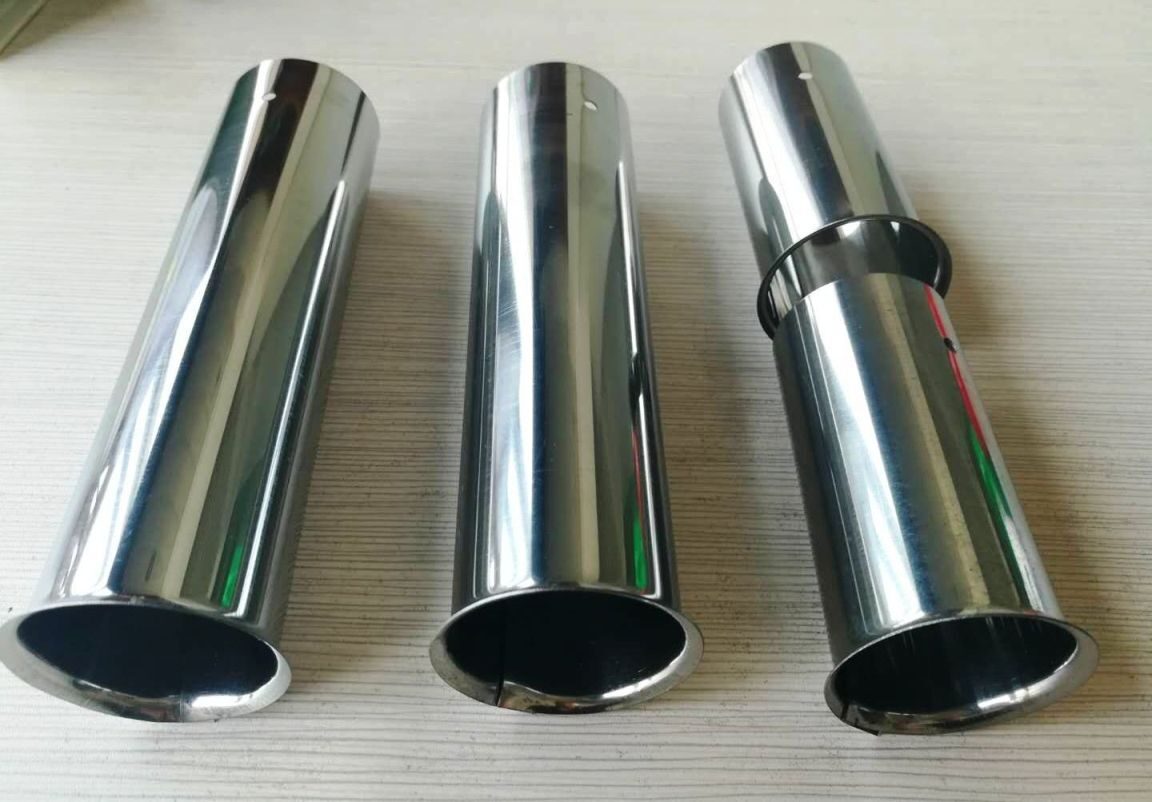
Chances are that all or virtually all of our readers with any involvement at all with vacuum heat treating will know what “Moly” is and why it is used. However the atmosphere guys might not be as familiar with this exotic material. Could you tell us why “moly” is used in the industry?
Gord, when I say, “I sell moly” many don’t know how to respond, for sure! It has a melting point of 4753°F, so it retains its strength at temperatures where stainless steels cannot go…as long as it is under vacuum or a clean protective atmosphere. It doesn’t mix with air when heated above a few hundred degrees. Or rather, it mixes too well.
So why is it used? The strength at high temperatures leads to use in load-bearing applications. An advantage moly has over graphite is that moly is not porous—does not absorb moisture and other vacuum contaminants like graphite does. So it is used when a cleaner vacuum atmosphere is needed. And where is it used? Fixtures? Heating elements? Hot Zones?
Hearth posts and hearth bars are often moly. Heating elements too, even in furnaces where the remainder of the hot zone is graphite. All-metal hot zones are rare in comparison to graphite hot zones, but still numerous nonetheless. The heat shields, element retainers, and other hot zone parts are often moly in these furnaces.
Moly fixtures, such as single or multi-level grids, can be used to attain a higher temperature than stainless alloy grids—stainless is not often used above 2000°F, where moly grids excel. Moly like cast materials does see reduced strength at higher temperatures. As an example TZM at 3000F has 25% of the strength that it has at 2000F.
Life. All heat treaters are well aware of the fact that alloy components and fixturing have a definite life span which is usually measured in terms of 5 years or less depending upon temperature, atmosphere and a few other factors. What is an expected life span for “moly” components?
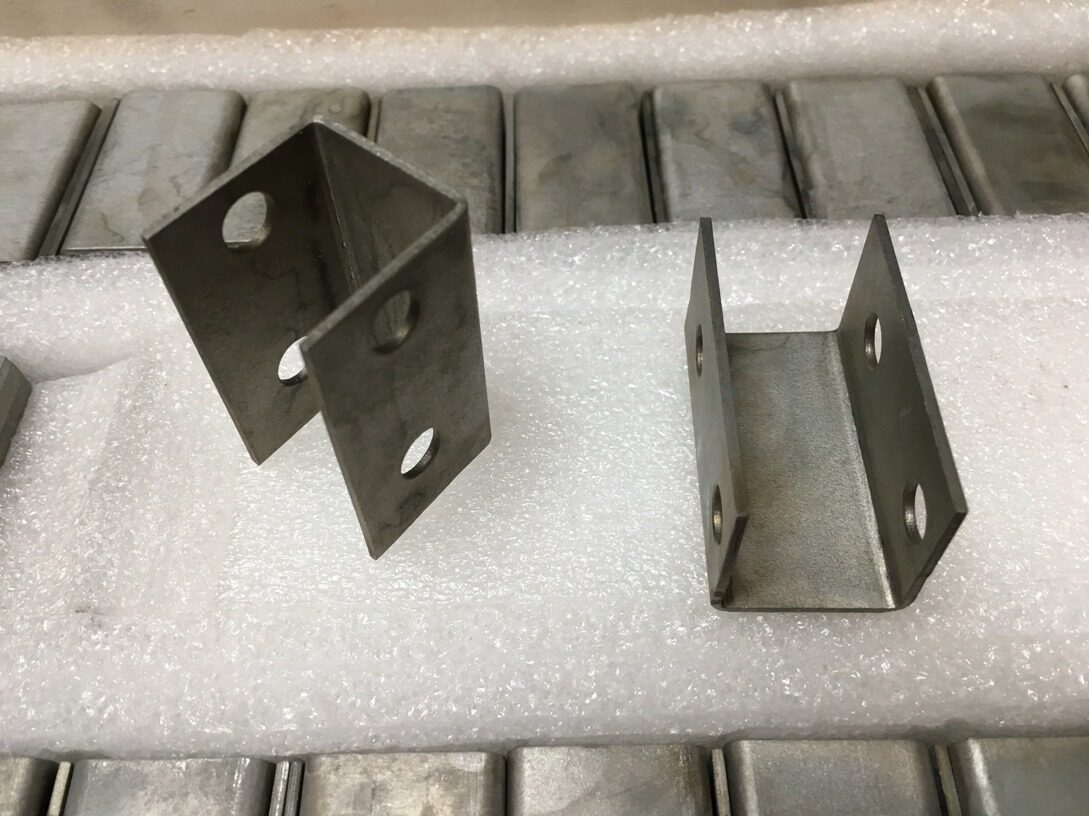
The advantages are obvious but there is one drawback and that of course would be cost. How are users able to justify using this material?
Yes, moly can be expensive—but many find that we have very competitive pricing. With good pricing and extended component life by using the right material for the right process, moly and its alloys are often justified.
Is the use of this material increasing?
Hard to know. In our experience the demand for moly furnace components is growing.
Over the years I have seen several examples of grids and fixtures provided by “GVT”-do you design and build yourselves? Is this a large portion of your business?

Price, Quality, Delivery-what are buyers most concerned with? Along the same lines what is a typical delivery for you? Do you maintain a large inventory?
Delivery is key for many of our customers, and to that end the inventory is large and ever growing in types and volumes. Same-day shipping is a regular need, and we work to provide even custom machining as quickly as possible to meet the demands of emergency furnace maintenance. We do have some standard grid sizes in inventory, and often provide custom fixtures from inventory materials within a week or two. We also typically have no minimum order quantities—we will ship a single hex nut if that is what you need.
Thanks for having me, Gord! If you or others have any questions about moly, I am always happy to help.

Mr. Carlos Torres
TORSA Group
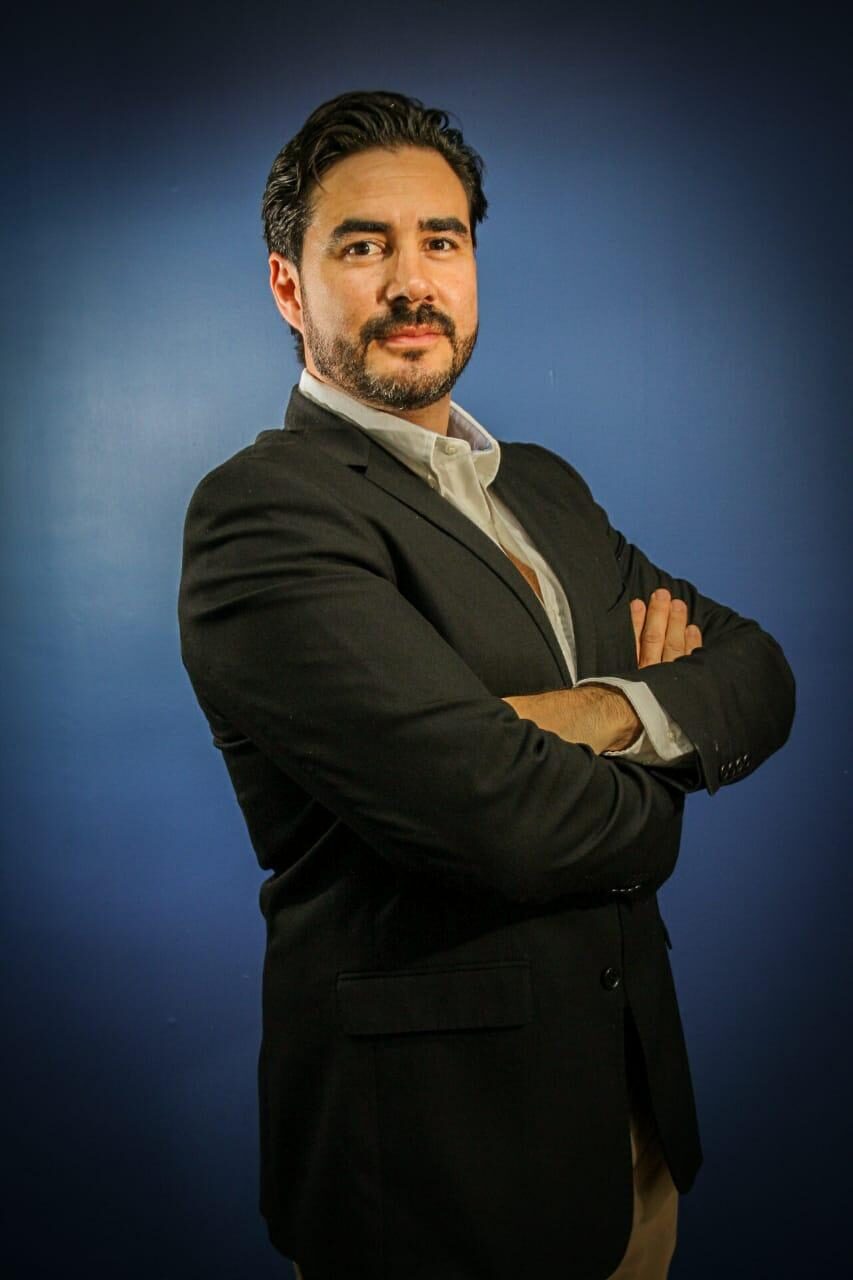
Carlos: It’s true, I wear many hats in our group of companies, and each role is a part of my journey in the heat treat industry. Growing up, I was surrounded by the hum of machinery and the smell of hot metal in our family business. Becoming an engineer was a natural path, and it led me to travel the world, meet fascinating people, and dive deep into the business. Today, as the CEO of the TORSA group, a family company my father started 40 years ago, I oversee five dynamic divisions.
Most people know me for MATTSA, which fabricates and services industrial furnaces under the AFC-Holcroft license. Crio, where I spend most of my time now, is a leading commercial heat treat company in Mexico. Then there’s Argo Steel Works, our giant that manufactures massive furnaces for various industries, and SSI Mexico, our joint venture with SSI USA. Plus, during the COVID years, I started a podcast to keep the conversation going with the best minds in heat treat, which has become a passion project of mine.
As CEO, I’m like the captain of a soccer team, ensuring each player (company) performs their role to the best of their ability while working towards a common goal. Some days, I’m on the field, actively involved in operations, fine-tuning processes, and driving innovation. Other days, I’m strategizing from the sidelines, mapping out where the industry is headed and what solutions the market will need. For instance, we are pioneering a hybrid furnace that combines electric and gas heating, aiming for cost-effectiveness and environmental sustainability. This innovation requires significant investment, but it’s all about balancing development while keeping our existing operations thriving.
2) Crio is one of the largest private commercial heat treat companies in Mexico. What strategies have you implemented to achieve and maintain this position?
Carlos: Twenty years ago, Crio was just a small heat treat shop with big dreams. Fast forward to today, and we have transformed into a powerhouse with two substantial locations, working on highly complex parts for the aerospace and automotive industries. The secret sauce? Cutting-edge technology from AFC-Holcroft and SSI, combined with a relentless pursuit of excellence. We benchmark our practices against the best, constantly updating our equipment and systems. But it’s not just about technology. Our team of metallurgical engineers is our backbone, driving innovation and ensuring we meet the highest standards. We’ve built a culture where quality is king, technology is our ally, and customer service is our mantra.
3) Mattsa is known for its partnership with AFC Holcroft of Wixom, Michigan, USA (part of the Aichelin Group). How does this collaboration work, and what benefits does it bring to your customers?
Carlos: Mattsa and AFC-Holcroft have been partners for over 20 years, a relationship that feels more like a finely tuned dance than a business arrangement. This partnership allows us to blend global innovation with local expertise. Imagine the complexity of modern furnaces—they’re like the intricate workings of a Swiss watch. By teaming up, we ensure that every cog and wheel is perfectly aligned from design to post-sale service. Most of the decisions are taken at the corporate level, but by teaming up, we ensure all the important aspects of business are taken care of from the design stage up to commissioning and post-sale service of a complex furnace line. Furnaces are getting more complex day by day, and you need an expert close by when the installation is significant—that is what differentiates us. Now that AFC-Holcroft is part of the Aichelin Group, we have an even broader range of products to offer, strengthening our position. This successful relationship allows us to provide cutting-edge solutions to our clients.
4) You have mentioned Mattsa and Crio, do you have an involvement with any other companies either in the heat treatment industry or outside of it?
Carlos: Argo Steel Works is a giant in its own right, crafting specialized steel structures for steel mills, glass, and mining sectors. Think of it as the heart of our industrial operations, pumping out robust structures that support critical industries. It’s like commercial heat treat, but on a grander scale, ensuring every part is traceable and meets rigorous standards. And then there’s SSI Mexico, our joint venture with SSI USA. It’s a finely tuned machine, so well-oiled that my involvement is minimal. SSI USA’s institutional knowledge powers our operations, ensuring we meet the high expectations of the Mexican market.

Carlos: Staying at the forefront of the heat treat industry requires a blend of foresight, innovation, and collaboration. For instance, when a large company plans to open a new facility, their initial plans are often loose with very limited information. The best projects are those where we get involved from the very beginning. This allows us to thoroughly plan and engineer the optimal solution for the customer.
We assess whether it’s better to outsource or conduct the process in-house, whether to relocate existing equipment, buy brand new, or retrofit non-functional machinery. This involves reviewing volumes, specifications, budgets, timelines, space constraints, industrial engineering requirements, plant talent, and the desired outcomes.
For example, sometimes customers envision fully outsourcing the material but want absolute control over the part and process. In such cases, we advise them to handle it in-house. Conversely, if a customer wants to manage everything internally but lacks the volume to justify the investment, we might recommend outsourcing as the more cost-effective option. We always aim to present the best business case to the customer, ensuring their competitiveness and success, which in turn ensures our success. Unlike furnace companies that push new sales, or heat treat shops that push outsourcing, we take a holistic approach to find the most suitable solution for our clients.
6) I have watched with a great deal of interest how Mexico has become increasingly competitive in the industrial sector-the growth just over my lifetime has been astonishing. What challenges do you face in this market, and how do you address them to stay ahead of the competition?
Carlos: Mexico’s industrial sector is indeed becoming highly competitive, but it comes with its own set of challenges. One common misconception is that Mexico is a cheap country to operate in: however, that’s far from the truth. Gas and energy costs here are higher than in the US or Europe, and taxes range between 30-40%.
To navigate these challenges, we focus on several key strategies. First, we continuously invest in the latest technologies and equipment to improve efficiency and reduce operational costs. By leveraging advanced technology, we can offset some of the higher energy costs and remain competitive.
Second, we emphasize building strong relationships with our customers and understanding their specific needs. This allows us to provide tailored solutions that maximize their operational efficiency and minimize costs. For example, advising a customer to retrofit old machinery only when it makes financial sense, or suggesting outsourcing when internal management isn’t feasible due to low volumes.
Additionally, we prioritize training and retaining top talent. A skilled workforce is crucial for maintaining high-quality standards and driving innovation. By creating a supportive work environment and offering continuous learning opportunities, we ensure our team is always ahead of industry trends and challenges.
7) What are your future plans for expansion or innovation within your group, both in Mexico and potentially in the broader NAFTA market?
Carlos: Our future plans for expansion and innovation are both ambitious and strategically planned. In Mexico, we aim to solidify our position as the leading heat treat provider by expanding our facilities and increasing our capacity. This includes investing in more hybrid furnaces that offer both electric and gas heating solutions, which are not only cost-effective but also environmentally friendly.
Data analytics on process costs can dramatically help save and optimize resources, yet few take the time to analyze this business data. While many analyze process data to comply with standards, staying competitive today means meeting quality specs efficiently. We focus on analyzing this data to maximize equipment output, extend furnace life, reduce downtime through proper maintenance, and decrease process times in commercial work to lower costs.
We also plan to enhance our data analysis capabilities. By integrating advanced data analytics into our processes, we can provide our customers with more precise and actionable insights, improving their operational efficiency and product quality.
The hybrid furnaces, in our opinion, are the only solution that makes sense for our market. They reduce emissions while maintaining competitive costs compared to the market and remain flexible to operate on full gas or full electricity.
Automation on production lines is also crucial. Labor is becoming more complex to train, and furnace work is demanding. Therefore, implementing cost-effective, low-entry automation from the start is essential nowadays.
In the broader NAFTA market, we see significant opportunities for growth. We are exploring partnerships and joint ventures that can help us tap into new markets and expand our service offerings. For instance, by collaborating with companies that have complementary technologies or market reach, we can offer more comprehensive solutions to our clients.
Furthermore, we are committed to sustainability. We are exploring renewable energy options and more efficient processes to reduce our carbon footprint and contribute to a greener industry. This not only helps the environment but also aligns with the growing demand for sustainable practices in the industrial sector.
By focusing on these areas, we are confident that we can continue to lead the heat treat industry and deliver exceptional value to our customers.
8) Carlos I very much appreciate your time and your candor-you have been very open about your goals and future plans. Our hope and trust are that our paths will continue to cross for many years. Thank you, Gord.
Carlos: I appreciate the opportunity and look forward to getting together with you in Mexico again-you are always welcome amigo.
Mr. Christian Grosspointner
CEO, Aichelin
Gord: “The Monty Heat Treat News” is very excited to be able to offer you this interview with Mr. Christian Grosspointner, CEO of furnace manufacturing firm Aichelin based in Moedling, Austria. Christian-I hope it’s OK to call you by your first name, I generally like to start each interview with some personal background. What is your background and how did you come to be CEO of one of the largest furnace manufacturing firms in the world?
Christian: “Yes, of course, Christian is OK for me. Fist of all, thank you for the interview and the opportunity to introduce myself and my future plans for the Aichelin Group. I have spent nearly half of my life in the mechanical and plant engineering sector of the steel industry, where I was able to gain over 20 years of experience in the management and development of international production companies in various countries. After a short excursion into the commodity business, it was clear to me that my heart beats for the project business and that I see my future there. At the same time, Aichelin was looking for a successor to Mr. Schobesberger who was about to retire and fortunately our paths crossed. I had a good feeling immediately after the first talks to Aichelin and I am very happy to have made this decision and to be at the helm of this traditional company today.”
Gord: After a year at the helm of Aichelin what is your impression of the thermal processing industry? Is it substantially the same as all industries or do you see any fundamental differences?
Christian: “It is a very large and important industry, as “thermal processing” is found in almost every industry sector in some form. What I have noticed positively is that there are very long customer relationships which are built on partnership and trust. The purchase of a new furnace is a long-term decision, and people like to fall back on reliable and proven products to minimise the risk. Aichelin has now more than 150 years of experience in the heat treatment business and is therefore a well known and preferred partner of the industry.”
Gord: The Aichelin name is known around the world when it comes to thermal processing but some of our readers might not know the extent of the company and your process offerings. Could you please give us an idea about the size of the company and the various divisions?
Christian: “Our passion is the industrial heat treatment of metallic parts and components where we provide the right solution and equipment for our customers needs. Aichelin has approximately 1,200 employees spread around the globe. Geographically, Aichelin is divided into 3 regions: Europe, North America and Asia, which are roughly equal in terms of sales. The strength of the Aichelin Group is that in all these regions there are strong local Aichelin units with local production facilities – according to the motto “Think global-act local”. Furthermore the individual units are organized in three main business areas – Plants/New equipment, Components (combustion equipment) and Service & Aftersale Support.”
Gord: What about markets? Most of my experience with Aichelin products has been with traditional heat treating furnaces, i.e.; sealed quench furnaces, pushers, cast link belt etc. My question would be how involved are you in other industries such as steel mills or foundries?
Christian: “Through our subsidiary, Bosio in Slovenia/Europe, we also offer heat treatment equipment for the steel and forging industries. Bosio is specialized in large chamber, bogie hearth and shaft (pit) furnaces. Our clear goal is to expand this product group even further in the future and to market it better through the global sales network and our global Aichelin units.”
Gord: I don’t believe there is any type of furnace which Aichelin as a group has not built over the years with one glaring exception-vacuum furnaces. Is this something which you are considering?
Christian: “Yes, that’s right, vacuum furnaces are still missing within the Aichelin portfolio. This is also a large and, above all, rapidly growing area of heat treatment and there are already ideas to close this gap as well. More on this coming soon!“
Gord: This question ties in with the one above about different technologies and types of furnaces. Are you seeing any sort of a shift in market demand-for example batch type furnaces as opposed to continuous? Larger capacity furnaces as opposed to smaller?
Christian: “In some sectors, but especially in the automotive industry, we see a clear trend towards smaller batch sizes and the desire for more flexibility in the systems to ensure a quick change between different parts. Especially in e-mobility, there is an increased trend towards e.g. LPC systems, which gives more flexibility. A trend that will also be taken into account by Aichelin in the future.”
Gord: For some time now Aichelin has been very focused on CO2 emissions, as a matter of fact we have several articles from Aichelin about this topic on our website. This is a very hot topic in Europe but not as much in North America or for that matter Asia. Do you feel that this will become a higher priority in North America and Asia in the future?
Christian: “At the moment Europe is certainly the most sensitive market when it comes to CO2 emissions and is a focus for all of our custmers. An additional boost was also given by the huge increase of energy costs in Europe over the last year. But we also see that the topic is gaining momentum in North America and Asia and is becoming increasingly important for customers there as well.”
Gord: Geographically I would assume that your strongest markets are Europe, North America and Asia. Are these markets roughly equal in size for you in terms of sales? Do you expect radical changes in the future with more sales in North America and less Asia as an example?
Christian: “Europe is currently experiencing a consolidation phase which is being intensified by the ongoing geopolitical changes. Under the current conditions, unfortunately I no longer see major growth here, but Europe is still a large and important market for Aichelin with a huge installed base. North America has been a more or less stable market in recent years, but I see potential for further growth here in the medium and long term. The biggest growth market at the moment is certainly Asia with China and India, which will probably continue for the next few years.”
Gord: Recently I had the privilege of spending some time with Mathias Wolf, CEO of your Noxmat division at the new Noxmat facility in the US. Mathias is very excited about bringing his new energy saving heating technologies to North America. Energy costs have lead to tremendous levels of interest in any technologies which will cut down on energy usage and this is true around the world. How much of a focus is this for the Aichelin Group as a whole?
Christian: “It is a big focus of the entire Aichelin Group. There are many developments to reduce the energy consumption of our furnaces (e.g. combustion technology, product preheating, process waste gas utilisation, heat exchange systems, insulation material,…) and also alternatives through electric heating. Also heating with hydrogen is currently in the development phase and the first products for this are already being offered. Aichelin also offers the so-called “GreenCheck“, where customer plants are examined for possibilities to save energy. These can then be implemented by the Aichelin service organisation at the customer’s request.”
Gord: What keeps you awake at night? Energy costs? Supply chain issues? Staffing issues?
Christian: “In general, I sleep very well because I have learned to deal well with crises and new challenges over the last few years. But of course, all three of the issues you mentioned are very challenging, but I see the issue of staffing and manpower as one of the most critical for the future. Completely new approaches and models are needed here and, above all, we also need new socio-political approaches. Work must be worthwhile again and performance must be rewarded accordingly. In addition we have to invest more in digitalization and automation to compensate for the labor shortage.”
Gord: Christian my personal observation is that you are a very energetic, ambitious individual who has great plans for the company. The question on everybody’s lips these days is what changes can we expect to see? Certainly I realize you can’t be completely open on this question but are there any changes that you can hint at?
Christian: “There are several projects we are currently working on. In addition to new products or business areas, it is particularly important to me that the individual companies of the Aichelin Group grow together even more and support each other. We live in a global world, Aichelin has locations all over the world and we have to use this asset even more and transform into one Aichelin Group. Of course, we also always keep an eye out for interesting M&A transactions to further expand the Aichelin Group.”
Gord: My final question would be what does the future look like for Aichelin and the entire industry? Forecasts about a looming recession abound but is that what you are expecting? In other words are you optimistic or pessimistic about the future?
Christian: “I am always optimistic. In our industry there are always ups and downs, which means it is very important that we are flexible and can react quickly to all challenges. Aichelin is a global player, financially healthy and can therefore also react quickly to geopolitical changes, so there is always a way to support our customers optimally and to develop the company forward. I am not afraid of the future, together with my team we will master all challenges well.”
Gord: I very much appreciate the time and insights you have provided. Thank you, Gord Montgomery “The Monty Heat Treat News”

Mr. Radek Houdek

This past week Jordan and Gord Montgomery were delighted to have the opportunity to visit the Cronite facility in Arnage, France and learn more about the company. Later on, this week we will be giving you some more details of the company along with a number of photos.
1) Today we are pleased to be speaking with Mr. Radek Houdek, Group VP Sales & Marketing, Cronite Group and Mr. Erick Garcia, President, Cronite North America. Gentlemen I have been looking forward to asking you a few questions about Cronite Group, your products, your abilities and your thoughts on the heat treat industry in general. Radek, Erick I always like to start interviews with a little bit of personal background information-if you could share with us your backgrounds and how you ended up where you are now, I am sure our readers will be as interested as I am.

I started my career in the Heat Treatment world in 2001 at Belog Guss in Czech Republic. After 4 years of successful business development in Europe, Cronite took over this company, and so began my journey at Cronite. I will celebrate 20 years of service with Cronite Group in March next year!
I started at Cronite Group as Sales Manager, responsible for Central & Eastern Europe, in 2009. I was also serving in the East part of Germany and Austria. During this period, I developed the Sales network in Eastern European countries which enabled us to double our sales within few years. In September 2010, I moved to our Headquarter in France and in March 2011 took over the position of Group VP Sales & Marketing.”
Erick: “Thanks for the opportunity to share our experience in the industry.
As an Industrial designer as my primary profession I Joined Cronite in 2015 as a designer, having already worked for the foundry industry for 4 years, the transition to design heat treatment castings was easy for me, I got to experience 3 months in our plant in France getting trained by senior designers on our manufacturing-design workflow, key functionality of our fixtures and the design process itself.
After one year of working in our foundry in Monterrey I was promoted to Design & Project manager for the US and MX. Here is when I got to meet Radek, and I started to build good networking relationships both in the US attending to all the Trade show for ASM and FNA.
Years later an opportunity to join the Mexican sales team opened up and after the Covid 19 quarantine I was very happy to jump on the road and get to work firsthand on the projects I used to manage from the design side.
In September last year, I was promoted to Sales Manager for the USA & Canada after having had good success in Mexico, now I get to Manage our Sales office and warehouse in the Cleveland area.”
2) Cronite is an international company with several different locations-please give us an overview of the company as a whole, the different facilities and number of employees. As an aside could you also give us an indication about annual sales and the relative size compared to other foundries servicing the heat treatment industry?
Radek: “Cronite reached 90 mil USD sales last year, about 80% of our business is related with heat treatment business like standard heat treatment baskets or base trays, tailored made fixtures and furnace spare parts.
With all respect to other foundries supplying the heat treatment industry, we are the only one having foundries (France, UK and China) and one production site for fabricated products in Germany, serving our customers around the world. In addition, we do have own design and R & D Center with close to 20 employees and a R&D center working on new products and alloys and new processes. Globally, Cronite Group is a company with more than 500 employees.”
Erick: “Complementing what Radek said, with a good synergy of work between R&D and our engineering department we are to determine the needed yield between thickness and strength by FEA analysis with our own alloy database that when it comes to producing our fixtures we are able to come up with optimized proposals for customers looking to improve Alloy + parts yield that results on productivity increase for our customers.”
3) I think of Cronite mainly for castings-am I right or wrong? Along the same lines there are a few different types of casting, sand casting, investment casting, centrifugal casting-what can you provide and what are the advantages/disadvantages of each?
Radek: “Gord, Cronite is not “only” a casting manufacturer. During my extended stay in USA last year, I could personally experience that Cronite is well known as an alloy supplier and not so much a producer of CFC components and fabricated products. Fortunately, we enlarged our product portfolio sold in USA last year, especially in the field of CFC/Graphite.
Cronite delivers in-house cast items such as green sand casting, Alphaset casting, investment casting and centrifugal castings. With over 100 years of experience in the design and manufacture of refractory alloy castings, we select the best production method depending on size & shape of casting as well as type of heat treatment process.
Our goal is to reach the best Total Costs of Ownership for our customers.
Additionally, Cronite offers fabricated parts like retorts or muffles as well as CFC fixtures or furnace spare parts. Cronite is offering a solution to customers. It is not only about products.”
4) I am really curious about your involvement with CFC (Carbon/Fibre/Carbon) fixturing. I am certainly very familiar with CFC fixturing but can’t help but wonder if it is in competition with your cast products. I mean why would you offer two different and competing solutions for fixturing needs? Or does each have certain advantages that make them more suitable in some applications than others?
Radek: “Cronite is not new to the CFC / Graphite market, since 1995 we have been supplying these products to
Our latest development is a Hybrid Fixture, combining refractory alloys and Carbon materials to achieve the perfect balance of cost, strength, weight, and temperature/process resistance. This technology is particularly effective for vacuum heat treatment process, atmosphere carburizing/hardening, and low-pressure carburizing with gas or oil quenching.
The principle is simple; Combine the benefits of each material to maximize load size, life cycle, and process results all while minimizing cost.”
5) Tell us about your design capabilities and how it helps your customers out. I will tell you why I phrased the question that way. A number of years ago I worked closely with a US foundry who had a reasonably substantial design department which they were rightfully quite proud of. However, they always claimed that while this was generally a very definite plus for them it was also a minus in that it raised their costs and made it difficult to compete price wise with firms that merely copied competitors designs. What are your thoughts on being able to offer designed solutions?
Radek: “I will do my best to make the story short.
Cronite has 20 designers located on 3 continents – Europe, Americas and Asia – in order to provide the right support in the same time zone.
We use 3D software as well as FEA simulation software and Topology optimisation software.
Our goal has always been to provide the best technical solution to our customers.
What are the main goals?
– Reduce the weight of fixtures and reduce the energy consumption (as less energy as possible to heat and cool the fixtures),
– Increase the number of components to be heat treated (more components per batch, less costs per component),
– Reduce the distortion / deformation of components (less scrap rate at our customer),
– Prevent any damage to customer parts (again less scrap at our customer),
– Easy loading and unloading of components,
– Improve the life span of fixturing.
I don’t want to repeat myself, but we help our customers to improve the Total Costs of Ownership.
Additionally, our R&D center in the Czech Republic, continuously develops new alloys, which helps to optimize the costs. These new alloys are not only dedicated to heat treatment but also other segments, which we supply, like Waste Incineration, Steel and the Aerospace Industry.”
Erick: “What can I add to Radek’s answer? Being a designer myself and having already worked from the manufacturing-design and product development standpoint I can say that we honor our slogan “Better by Design” and we strongly believe that, due to this great teamwork, we offer the best solutions thaks to our “Better by People” state of mind.”
6) Where do you feel you are the strongest by product? Fixturing? Furnace parts? Radiant tubes?
Radek: “Definitely, Cronite’s strength is in designing dedicated fixtures for any kind of furnace (Low Pressure Carburizing, Vacuum, Conventional, Pit furnace…). Our motto is “Better by Design”.
Additionally furnace parts like radiant tubes, furnace rolls and fans are an important part of our business.”
7) The previous questions lead directly to this one-what about stocking of spare parts? We all know that sometimes, such as in a breakdown situation delivery is more important than price-do you have many “off the shelve” items?
Radek: “North American Cronite keeps a stock of standard trays, grids, baskets, posts as well as furnace parts to help out our customer situations like a breakdown.”
8) So, if I as a customer came to you and said, Radek. Erick, I need a pusher head assembly for a 2004 Surface Allcase with working dimensions of 36” X 48” x 36” are you able to quote me what I need, or do I have to get out there with my tape measure and start drawing and measuring?
Erick: “We have a large database with the furnace spare parts with patterns to produce the majority of them, so we are able to determine a starting point of what the customer needs, but some times installations differ to what actually was built for each furnace, so it’s worth to check for any deviations from the print to the physical install.”
9) You already told us where your various facilities are and some such as the UK and France are relatively high-cost areas to do business in. How do you compete with lower cost areas such as India?
Radek: “Interestingly, you mentioned India, which we also supply from our European foundries…. How do we do that?
“Better By Design”: we offer the right technical solution.
“Better By Alloy”: we select the best alloy for the process.
“Better By People”: we provide the right service.
Honestly, I don’t see our competitors as enemies but as colleagues from industry.”
Erick: “During the last ASM trade show in Queretaro I was approached by a 75-year-old individual who has spent most of his life in the heat treatment industry-he told me he considers us to be the “Rolls Royce” of the industry when it comes to fixtures. Obviously I was pleased by this comment, but somehow I feel like our parts are very well designed and tested and should not be considered a luxury item such as a “Rolls Royce” Everything we do is designed to provide a good product, with a long life for a very competitive price.”
10) Perhaps you fellows could polish up your crystal ball and tell us where the heat treatment industry is going in 2024? Up? Down? Stable?
Radek: “I do wish I had a crystal ball to give you a precise answer. What is true at Cronite, is that we work with different scenarios to remain agile. Coming back to your question, the answer might be different by geographical area.
We can see the first positive signs of recovery in China, Europe demand is expected to remain stable, and USA should continue to grow. Globally, the start of the year is really promising for Cronite, and our target is to exceed 110 M$ in 2027.”
Gord Montgomery: “Radek, Erick I thank you for your time and your very candid answers.”
Did you like this article? Click here to subscribe to The Monty.
View our recent magazines and podcasts by clicking the following link. https://themonty.com/magazine/

Mr. Andreas Fritz
CEO of HEMO
We are very excited to be speaking today with Mr. Andreas Fritz, CEO of cleaning system experts “HEMO”. In our opinion “HEMO” offers the most advanced cleaning technology solutions in the heat treatment industry. Read on.
“The Monty Heat Treat News” is very excited to be speaking with Mr. Andreas Fritz, Managing Director of “HEMO”, a German firm known as one of the foremost in the world when it comes to cleaning systems. Andreas lets start off today with some background, why don’t you tell us about your personal background and also that of “HEMO”?
“Dear Gord, thanks for having me in this most excellent heat treatment source. I appreciate all the information you provide to us and of course being a part of it.
In 1999 I joined the company as a temporary help after school. I did whatever was necessary in any department, was fascinated by the size and technology of the machines and finally agreed to do an apprenticeship. After that I did a 6-year distance study in order not to lose the daily business and also spent 3 years at a near Nuremberg manufacturing wire drawing machines. That helped a lot to gain knowledge and different perspectives concerning organization, development of foreign markets and provision of a global service structure.
Since 2012 I have been CEO and pretty much involved in the heat treatment industry.
To be honest, customers in this industry are different than in others. The direct, honest way of talking – negative and positive – is and was very helpful especially in my first years. It is like a big family and I really like to meet these people whenever and wherever possible.”
From background let’s move on to what “HEMO” has to offer, your range of products, your capabilities and specifically what you have done in the heat treatment industry.
“We are supplying high end cleaning machines which are customized. Our machines fit into any application, any place in your heat treatment line and communicate with any operating computer system.
This starts with one tank solvent machines for cleaning after oil quenching. Half of our orders in this section are substitutes for existing spray /dunk washers because they don’t provide staple quality, costs for water disposal are increasing and the refurbishment of a hot zone of tempering furnace is also very expensive.
Our hybrid cleaning machines are very popular in cleaning before gas nitriding and LPC because the hardened parts later on are spot free and of the highest quality.
And of course, our machines run 24/7 like furnaces do. Hence the quality is of the cleanliness and the machine itself are of highest importance.”
Years ago, an individual who I had a very high opinion of, Mr. Phil Dennis of H & S Heat Treating told me that the key to good heat treating was clean parts. While Phil unfortunately passed away a number of years ago, I have always remembered his words of wisdom and have come to agree with him (although I confess at the time I wasn’t convinced). I am sure you would agree with his statement but why is it so important to have clean parts?
“Our business in the heat treatment industry started in 1996 when we sold a machine to a supplier of BOSCH. This captive heat treater delivered the parts to BOSCH and they returned them because they were not hardened. Since it was normal at that time that hardened parts were black and dirty, BOSCH Quality Manager did not even test the degree of hardness. Finally, we explained that cleaned parts before heat treatment are clean parts after that as well and after testing the parts they were accepted. From that day on cleanliness became very important in the heat treatment industry. Earlier dirty parts were supposed to be heat treated, nowadays they are scrap and will not be accepted. I’m sure this will more and more also become normal in the North American market.
Especially the scrap rate is very important in many industries. Cleaned parts have a much lower scrap rate than dirty ones. We supplied machines to the UK where parts are heat treated for Formula 1 racing cars. Due to budget caps every dollar is important for the development of upgrades that can make the cars faster. Hence many parts are manufactured individually and not as a series. When you are manufacturing one of these critical, complex parts and the heat treatment is not good, you have to dump it. This causes costs and waiting times. Hence the heat treatment shops trust our cleaning machines and reduce the scrap rate down to zero.
Last but not least clean parts protect your equipment. Dirty parts bring a lot of different chemicals into the furnaces which causes trouble in the environment due to emissions and has influence on the hardening processes because of adhesions on the furnaces’ walls. Organic residues like oil vaporize in the furnace and crack the walls. This also causes very high costs of refurbishment.”
The first time I visited your facility in Otisheim, Germany I was absolutely astounded at the quality and complexity of some of your cleaning systems. Perhaps complexity is the wrong word, let me change that to heavily engineered. This obviously means that these are not inexpensive systems, my question would be how can you compete with a cheap and dirty dunk/spray washer? Or do you try and compete with these more basic solutions?
“We do not try to compete with these washers because we are unable to do. In 1996 HEMO delivered the first vacuum cleaning machine using hydrocarbon far above its flash point for perfect cleaning and drying results to a commercial heat treatment shop.
Very important is that the whole system is running under full vacuum throughout the whole cleaning cycle – not only for the drying process.
The cleaning process is supported by high temperatures above the solvent’s flash point, pressure flooding, rotation or oscillation of the parts, ultrasonic or Organic cNp which is a kind of cyclical nucleation process – very good for blind holes e.g.
This technology causes costs in manufacturing but also provides huge benefits. Our customers really deal with facts like the costs of current spray/dunk washers including the total costs from water disposal and fresh water over the maintenance workers costs to costs of scrap parts caused by bad cleaning. Very often they find out that the total costs of our system within e.g. 10 years are even less than those of the cheap washer even though investment costs are a multiple of the spray/dunk washer.
In Germany we say, if you pay for a Volkswagen, you receive a Volkswagen and not a Mercedes.”
Some time ago I sold for a period of time vapor degreasers. In my humble opinion these were a very effective cleaning system, perhaps amongst the best ever devised but health and environmental concerns have led to their partial demise. Can you tell us what the EPA currently has to say about vapor degreasers? What is your alternative?
“A proposed EPA rule regulating perchloroethylene (PCE) will impact the parts cleaning. The rule proposes that PCE can be used in vapor degreasing, but only if a challenging ECEL of 0.14 ppm and requirements to prevent skin exposure are met. The ECEL (Existing Chemical Exposure Limit) is the workplace exposure limit determined by the EPA.
Similar regulations for more hazardous solvents such as Mehylenchloride or NPB are already law. This means that any open top vapour degreaser in the US will have to be substituted. Even closed system cannot reach the ECEL limits hence there will not be any other chance than moving to harmless solvents such as modified alcohols. These solvents are flammable but harmless under vacuum and will be the future of parts cleaning in North America like they are nowadays already in Europe.
Due to these changes in environmental and health legislation, HEMO invented and patented the first cleaning machine which was working under vacuum in 1995. Since then we have manufactured more than 2000 systems in any size and for a large variety of branches and customers. These full-vacuum systems will be the only solution to meet the governmental legislation.”
Water or solvent based systems? Both are available I know, does “HEMO” offer both and if so, what are the relative advantages/disadvantages of each?
“In our explanations we always start with the basic rule “like dissolves like”. This means that organic contamination can be removed best with an organic detergent which is in our case a solvent like hydrocarbon or modified alcohol. Quenching oil is the best example in that case. Cleaning it off with water is very inefficient. On the other hand, inorganic residues like water-based coolants cannot be removed with solvent without leaving salt residues as white spots on the parts. In that case there is nothing better than water and detergent.
Still roughly 70% of the systems sold are water-based but this number has been decreasing for decades now. We mainly focus on the solvent systems because we want to sell stable cleanliness. This is not possible by using water-based systems where the concentration of the detergent changes all the time and the quality gets worse until you change the whole bath. In our machines you never have to change the solvent and it provides continuous quality.
Sometimes we combine solvent and water in case it makes sense to reach perfect cleanliness or, like in commercial heat treatment shops, a variety of unknown contaminations are on the parts when they arrive for heat treatment. In this case we use our HYBRID and BEYOND machines.
In 2001 we invented our hybrid cleaning machines. This gives companies more flexibility and maximum clean parts because you can clean them in the same machine using a solvent and/or a water-based media.
In 2018 we invented a new technology called BEYOND. In this case you also have a water-based and a solvent-based cleaning cycle but in difference to the hybrid system, the two medias are not separated but mixed. This help getting a shorter cycle time with similar cleaning results compared to the hybrid system.”
Are your cleaning solutions dependant upon the heat trying process? For instance, would you offer the same solution to somebody doing gas nitriding as opposed to carburizing? What about LPC?
“The machines itself can be used in any heat treatment process and line but the demands for cleanliness are different. In case hardening cleanliness does not really matter. Very often the parts will have additional manufacturing steps like grinding after the hardening. Then optical issues do not play a role.
In LPC or in nitriding a clean surface is very important to have a perfect bonding layer and the heat treatment is the final step of manufacturing hence all spots or stains on the part will cause discussions with the Quality Management of the customer.”
Do you have the ability to fit into most heat treatment lines? Obvious examples would be a standard batch IQ (Sealed Quench) line? A pusher furnace? A modular LPC system?
“We can build any batch size and put our machine into any heat treatment line. That’s a big benefit for our customers because there is no need for additional handling of the parts and the line can run in full automatic mode.
Pusher furnaces are also possible. In that case the lowest cycle time is important for us. We just delivered four machines into a new case hardening pusher line in Germany. Each line had two cleaning machines, one for pre-cleaning before hardening and one for cleaning after oil quenching before tempering. The customer had more than 400 different parts. We took the shortest cycle time which was 8 minutes and checked what we need. For pre-cleaning with our Beyond system we needed approx. 20 minutes and for post-cleaning with hydrocarbon only approx. 15 minutes. Hence, we designed the pre-cleaning machine chamber to collect 3 batches and clean them at the same time because 3x 8 minutes is 24 minutes and we needed 20 minutes. The post-cleaning machines was smaller taking only two batched the same time and cleaning them in 15 minutes. The batches are collected in the cleaning chamber. After the cleaning process they are separated from each other again. We cannot be faster than physics allow us to be hence we need to be creative in the design department and finally find good solutions for our customers.
Modular LPC systems are very popular and we are also part of this market. Together with ECM we found a very good way to implement our cleaning systems into their LPC lines.”
The previous question leads to another one-where are most of your systems installed? Vacuum hardening applications? Continuous either mesh belt, cast link or pusher? LPC?
“Most of our systems are installed in Batch IQ (Sealed Quench) lines. Main reason is that we substituted the existing spray/dunk washers there. Since we are well-known in that section for decades, most inquiries still are Batch IQ size machines.
Vacuum or atmospheric keep the balance since LPC is pretty much increasing. For our technology it doesn’t make any difference.
For pusher lines and roller hearth furnaces we found a way to handle the short cycle times by collecting batches in the machine and separating them after the cleaning again. Hence this is a new but growing field for us.
Impossible still are mesh belt furnaces since we clean under vacuum and therefore you need to have a batch that is cleaned in a closed chamber.”
Are you able to share with us the names of some customers in the heat treat industry that you have worked with over the years?
“We have signed many NDAs hence it is not easy. But of course, we supply major commercial heat treaters like Bodycote, Aalberts and Braddock.
Many of the biggest global captive heat treaters also use our systems. Same counts for the big automotive suppliers and gear manufacturers.
But also, smaller heat treaters are using our systems even though the investment is quite high for them. Very often they supply a niche industrial segment or have a special way of heat treatment and combined with highest cleaning quality they can work more profitable as they could do without a good cleaning system.
Very important for us is that the main furnace manufacturers such as e.g. Ipsen, Aichelin, ECM, Rübig, regularly consult us in case of projects with high cleanliness demands. Together we then realize these projects, and both have a benefit out of such kind of collaboration.
I think that says a lot about the reputation we have in the heat treatment industry and we are very proud about that.”
Do you see attitudes in the heat treat industry changing when it comes to cleaning? I mentioned earlier that basic dunk/spray washers are probably the norm around the world. They are basic, simple to use and relatively inexpensive and probably in many cases completely adequate but nobody would argue that they are the best solution possible. Are you seeing more interest in improved cleaning solutions?
“Yes, attitude is definitely changing. Cleaning is not anymore something nobody pays for, something people will start laughing when you put it into your price calculation. Cleanliness is important and it separates good and bad quality of parts. When parts are badly cleaned, very often they are also badly heat treated. Quality assurance starts with the eyes and when a heat-treated parts is clean the first test is already passed.
In Europe it is already normal that commercial heat treaters are not only selected by heat treatment capacity anymore. It is also important if and how good they can clean the parts because. This finally became a second core competence beside the heat treatment.”
Last but not least what does the future hold for “HEMO”? Can you see more manufacturing facilities? An expanded product line? Perhaps acquiring competitors? I can promise that anything you say will be held in the strictest confidence, just between ourselves and our thousands of readers around the world.
“We are always positive and see a very bright future for our company. The size is perfect, the way we work is very efficient and the technology we offer is innovative. With our Surface Alliance, a group of specialists we are shareholder of, we are able to supply any kind of cleaning system to anywhere in the world. Last step was the creation of Washtech in Queretaro, Mexico, and the Surface Alliance Cleaning Corporation as our US sales unit.
At the moment we are working on a Joint Venture in the US to increase our sales and service capabilities. I think the US market has a huge demand for cleaning systems and we have what the market needs. But without local sales and service it will be hard hence the establishment of a local company is our first priority at the moment.
We also increase our customer base in other kinds of heat treatment such as brazing and annealing. There is a lot of potential and we are looking forward to new challenges.
Thanks very much for having me here.”
Andreas I really appreciate your time and look forward to visiting your facility the next time I am in Germany.
Did you like this article? Click here to subscribe to The Monty.
View our recent magazines and podcasts by clicking the following link. https://themonty.com/magazine/

Mr. Steven Christopher
Super Systems Inc.
We are very pleased today to be speaking with Mr. Steven Christopher of controls company Super Systems Inc., of Cincinnati, Ohio. We have always thought of Steven as having a very unique perspective into the heat treatment industry insofar as in his position as an “installation” engineer he gets to see a global perspective as well working with “front line” heat treaters.
Steven I always like to start at the very beginning which is your background-how did it come to pass that you are in your current position? Perhaps I am getting ahead of myself slightly-what is your actual position also?

Fast forward to today and this answer becomes a bit more complex. I could be catching a flight to Mexico one week to work on a furnace, driving to Phoenix the following wearing a sales shirt, then attending an MTI or Nadcap meeting the very next week. My real focus is developing the machine that is our West Coast operations. I am part of a small team, hyper-focused on captive- and commercial heat treaters west of the Rockies. We have a cradle-to-grave mentality, working closely with our sales rep network up front, then directly with customers and our Cincinnati corporate office through design and engineering phases, ultimately installing and supporting our products. It is really quite rewarding to be involved throughout the entire lifecycle, often quoting a job and years later seeing that vision come to fruition. Ask me again next week and I might have a different answer! It really changes so fast that I just try to keep up.
And what does this involve on a day to day basis? In other words when you get up in the morning what do you have to look forward to on a typical day?
Well usually I wake up in the morning to about fifty emails, you know one of the many perks in living three hours behind the rest of your team. The positive spin on this is that while emails start early, my phone doesn’t start ringing for another couple hours. So typically I focus on emails and planning early on, shifting to support & meetings once my phone starts ringing about 8am. Of course all this assumes I am not driving to LA—meaning I have to be on the road before 5am to avoid traffic!
As to what I look forward to, the answer lies in the unknown. The first thing that popped into my head when you asked this question was that scene in Forest Gump, you know “life is like a box of chocolates”. For me that is what’s so fun about my role in our organization—I never know what I am going to get. Any day could be smooth sailing or rough seas. It’s exciting to be part of an industry that is always in motion, always evolving.
I already alluded to the fact that you talk to many “front line” people during your installs, this includes engineers, metallurgists, managers as well as the individuals who run the furnaces on a day to day basis. This must lead to some very interesting questions, viewpoints and discussions-let me throw one out as an example; does the average heat treater bring up carbon footprints and emissions? Is this a concern amongst the individuals you interact with?
Ah, of course you had to ask the California guy about going green. Haha. No matter your personal opinion on the topic, it is interesting and worth discussing. So a few years ago, silence. Then a couple years ago managers and owners started to become inquisitive. It was sort of a Keeping Up with the Jones’ thing, more curious than serious. So what are others doing? Is Fred down the street doing something yet? I think a lot of people are still in this curiosity phase, but many are moving beyond it into discovery. It is no longer just management, but engineers and quality persons shifting the conversation a more technical direction. What do we need to do to get ahead of this? What can we install today to calculate such things tomorrow? How can we realistically reduce our carbon footprint? A Jim Collins would say, this is a BHAG and can be overwhelming at first. Our team has ideas, but we are navigating this along with everyone else.
At Super Systems we always talk about data, not because it’s the end game but because without it you can’t make informed decisions. Without data you can’t decide if you need to invest in another furnace or understand things like carbon footprint. We don’t attempt to answer these questions for companies, rather we provide data so everyone can make the best decisions for themselves. That is where we are in this conversation, companies want to take a first step but are paralyzed without data to make intelligent decisions.
As more and more people care about emissions, a tipping point will be reached and regulations will follow. Some will remain defiant, but eventually the government or large primes will take the first step. They will care simply because their constituents or customers will care—passing along to the average heat treater. Companies are going to be responsible for understanding their carbon foot prints and emissions. I don’t have a crystal ball, but I expect in five years everyone will care either because (1) they truly do or (2) they will be financially motivated to care. This could be punitive in nature, government regulations, fines, etc. Or could be reward-based in the form of tax breaks or a prerequisite to bid certain contracts. Either way this subject isn’t going away anytime soon and we are committed to the challenge; hoping to collaborate with a few facilities who are serious about developing this technology.
What about automating the heat treat process to a larger degree and reducing the role of the furnace operators-is this a common theme and if so what do you have to offer?
This question applies to every industry in the US. Everyone is dealing with the labor shortage and competing over a smaller workforce. I think your question is important but phrased incorrectly. We work in a really complex industry and our workforce has to remain engaged. The goal won’t be reducing the role of operators; rather equipping them with tools to be more effective & efficient. We need operators more than ever, just making better informed decisions, and quickly.
Let me illustrate, last week I visited an aerospace customer with ten vacuum furnaces. They care about AMS2750 and -69, NADCAP…all the usual suspects. So I see this guy walking around sampling argon dew point, scribbling on a paper log–this process takes him like thirty minutes. Now 3.3.1 or whatever section it is requires every three months, but this company knows if they find a dew point exceeding -60°F there it a ton of nonconformance paperwork in their future, so they do this task weekly. Thirty minutes wasted every week! Drop a sensor in line, wire it to a recorder, send a text alert to the poor guy when it approaches that limit. Even better, lock out the furnace from running. This is a situation where we don’t need to reduce the operator’s role, we need to improve their visibility. Now imagine he measures dew point for an endothermic generator, sixty minutes. Add ten other necessary yet manual inspections, eight hours. We have to find a way to increase efficiency and let operators focus on the critical aspects of heat treating.
Automating the process can mean so many things, from automated batch lines to installing a ramp-soak controller. I visit shops where operators use their cell phone timer to alert them to adjust set point on a controller, or adjust gas flows for a boost-diffuse cycle. This is a lot to ask from our operators and quite frankly unnecessary. When I see this I am just counting the extra burden and wasted hours.
I am a furnace guy without a robotics background, but obviously robots will have an increased role in the future of heat treating. In its simplest form, there lies an opportunity in manual activtiies like racking parts. A bit more complex, but still very realistic, could be robots equipped with cameras performing visual inspections. This will require some form of AI and I am excited to see how that shape our future. Certainly SSi is exploring AI’s ability to evaluate process charts to ensure quality–again not to eliminate operators, but helping them focus their time on suspect lots. The first step here is data and lots of it, data becomes the foundation that makes all this possible.
There are tons of examples like these. We always talk about having to walk before you can run. You can’t build a house without a solid foundation, and you sure can’t text Bob about his dew point without the right platform to build upon. We spend a lot of time at SSi helping facilities select hardware flexible and robust enough to meet their future vision.
This question is very closely related to the one above but is a little more specific-flowmeters. Flowmeters have come a long way in the past few years and few companies have been in the forefront as much as SSi. Care to tell us how this technology is changing and benefiting heat treaters?
We are on our second generation technology and very proud of our eFlo product line. We entered the market with a process control mindset. We wanted to ensure that a process requiring fifty cubic feet of gas did just that, time after time. Then we started getting calls about all these old motorized actuators breaking, you know the ones with the external linkage. So we started shipping a bunch of these for carburizing applications—natural gas and process air.
As we had more and more in the field the conversation shifted towards data. Users didn’t want to simply control, they wanted to understand how much they were using. They wanted to compare run to run as a leading indicator that something may have changed in the furnace. So we started to record flow rates and customer data sets grew. After a while a few business savvy users connected the dots, understanding if they knew the cost- and volume of gas used they could calculate their costs per job. So we tasked our software department with an application to calculate this, which they have. I think that is what I like most about SSi, we have three divisions that work together to deliver what the industry needs. And quite often we don’t know what that is until we are told—but trust me we listen and work towards that every day.
I think the future for flow meters relates to your previous question about carbon footprint. Gas consumption, specifically natural gas, is of course a huge component, electrical being another. We are starting to monitor these and can then offer a very precise estimate towards calculating carbon footprint.
Steven you see everybody, auto parts suppliers, aerospace companies, commercial shops, captive operations you name the heat treating and you have probably seen it. Are all of these different industries asking for pretty much the same thing when it comes to controlling their heat treating processes?
Gord, you’ve apparently never been to a NADCAP meeting. There is a room full of people from the same industry and they can’t agree on the same thing. If they can’t agree then there is zero chance that automotive and commercial or some other unrelated industry will ask for the same thing! Hell, I can’t even get a company with four locations to agree on the same controls. Joking aside, there is a lot of commonality but everyone has their own view of how controls should work. At 60,000 feet everything looks the same, but when you really listen to customers, getting closer to the surface the nuances present themselves. Imagine a Venn Diagram with circles representing the different industries, there is some overlap between the aerospace and automotive and energy circles. But in reality there aren’t five circles representative of each industry, rather there are like 10,000 circles representing each facility!
You would think that we could design a single system that satisfied all these groups, but trust me that we are thirty years into that experiment and proving it impossible. But that’s the fun part. Every time we visit a customer we get a chance to listen to what is important to them, what they consider “cool”, what do they struggle with day in and day out. That is where we thrive, listening to a unique perspective and finding a home for them in the SSi Ecosystem.
I sometimes feel overwhelmed when I see the vast variety of products which SSi has to offer the industry-what is hot these days out of everything you have to offer? Nitriding control systems? Portable gas analyzers? Gas burner monitoring systems?
Three answers here, two are what you’re looking for but the other is a bit abstract. We talked earlier about the labor crunch and everyone is forced to focus on what they do best, perhaps outsourcing the rest. So there is your abstract answer, service. Service is our most important product and always will be. If you need something, we answer the phone. If you have a problem, perhaps totally unrelated to our systems, we have the technical resources to assist. That really is a core value within SSi and just part of our culture; help people, treat everyone with respect and appreciate the urgency in situations.
But shifting back to a more traditional answer, our two largest areas of growth are flow meters and vacuum furnace retrofits. Flow meters are obvious for all the reasons previously discussed. Vacuum furnaces did not just happen overnight. Scott’s [Johnstone, SSi VP of Engineering] group has something like 200 years of combined experience. They’ve invested a lot of time into our vacuum solution and the industry response has been very positive. Let me illustrate, we call Scott’s division the systems group. They specialize in furnace retrofits, sometimes new panels and often just updating controllers and instrumentation. Historically this group is evenly balanced between vacuum, endothermic and nitriding retrofits. In 2023 vacuum furnaces represented 75% of that group’s portfolio. Why? Vacuum is interesting because there are so many quality suppliers. A lot of facilities add equipment over time—meaning they have a lot of different control platforms. Every new hire has to learn ten different systems. This explains why we’ve experienced this growth in the vacuum market. We have a common platform that works on any furnace and meets the latest industry specifications. And what does that mean really? Now these new hires are trained once and can immediately run all the equipment.
In the previous question I asked what products were attracting a lot of attention these days and one I asked about was nitriding control systems. SSi invested heavily in this technology a number of years ago. You now have a mature, proven product offering for this area-do you feel that what you have now is considered as an industry leader?
Chuck [Thomas, SSi Metallurgist] and I were part of that investment years ago coming from a nitriding background. Now SSi would have no doubt achieved success in this market even without our addition, but it sure has been fun joining a team with where we shared the same vision. Nitriding has experienced solid growth over the last decade, partly from new markets requiring more precise metallurgical properties and partly a general manufacturing shift towards near finished parts. Over this span we have listened to customers and invested appropriately. To answer you clearly, we have a great product and there are three reasons why.
First, we invested in a nitriding furnace years ago. We have a full time metallurgist helping customers develop cycles and when he is not busy with that he is conducting studies helping improve our technology. He literally hours every week trying to break what we have—and when he succeeds we fix it. We became proactive, we didn’t wait for problems to arise in the field, rather we actively went looking for them. This really pushed our solution forward a great deal.
Secondly is customer engagement. Although my wife may disagree, we do a great job listening at SSi. We visit customers and attend all of these industry activities, from NADCAP to committee meetings. Showing up is only half the battle, we improved our system by listening. We take notes and that in turn drives our research and development. I can say with confidence that listening for ten years has led to a really incredible system.
Lastly, it always comes back to service. I always joke that it is easy to heat up a furnace, but really difficult to answer the phone. I will just say that we answer the phone, always.
You have been involved in projects around the globe including Africa of all places. Do heat treating requirements and requests vary much geographically?
Ahh, a love for travel, something that you and I share. You know I am not super involved in our international activities, but I have had the opportunity to work in Asia, Africa, Europe and throughout North America. This question may be better suited for Damian [Bratcher, SSi International Director] or one of our international offices [UK, China, Mexico, India], but let me try. Let’s stick with the aerospace industry here, the reality is the major primes are European or US based—and all the specifications are approved by committee, hearing from suppliers across the globe. So the answer is culture and practices change geographically, but the underlying requirements do not.
Always love this question-what to date had been the most fun, memorable and interesting project you have been involved with? Certainly I understand that these might be mutually exclusive with fun and memorable perhaps not going together.
Certainly any international job would meet your criteria here. I mean this January I was driving down a South African highway when an elephant and rhinoceros emerged from the bush, memorable right? Vietnam, super interesting adapting our products to a different workforce. But this is the easiest question you have asked all day with one clear winner.
I know that you know Carlos and Salvador from our Mexico office. Did you know that office has grown to 21 people? Quite impressive. In 2022 they set a goal developing internal talent, building a project group capable of retrofitting any type of equipment. Now prior to this we did this type of project in Mexico, only we would have assigned a US-based engineer to manage. But now we were committed to reducing that dependence—really allowing our Mexico office to function similar to our European division. So early 2022 Damian asked me to help make that happen.
I started flying down to our Queretaro office regularly. We would meet and review furnace operation, the next trip NFPA safeties, and eventually working into our engineering standards. In these meetings they would ask really great questions, then confer as a group and you could tell they really got it. After a few visits it became quite clear they really knew their stuff, and honestly what I was presenting was just confirming what they already knew. I mean collectively this group already had decades of experience. And that is when it clicked for me. I realized they had all the necessary skills and knowledge prior to that first meeting, what I offered wasn’t to be learned—I just gave them the confidence to face the next opportunity head on.
And we had a lot of those opportunities over the last couple years. We’ve retrofitted a vacuum nitrider and quite a few batch IQ furnaces. Early on I was heavily involved, designing the system and writing much of the PLC logic. With each new project my role was reduced a bit less and less. Then finally, actually just last month, they completed their first complete retrofit on an IQ furnace. They designed and installed a brand new panel—including our Matrix process controller, PLC, VFDs for the agitators, flow meters—I mean this project turned a manual operation into a lights out furnace.
So if you are curious what checks all those boxes, what has been fun, memorable and interesting. This is without a doubt the winner. It has been a great experience working with a group of talented, ambitious engineers. But ironically, I have learned so much more from them than they have from me. This group has taught me so much about teamwork and organization. They set a very high bar for how to be deliberate and continuously improve one’s craft. I am very excited to see what the future brings for SSi in Mexico.
My last question-what do you most enjoy about your job?
Grounded people, cool places, interesting projects…I mean it’s impossible to pick just one. Last week I literally touched a part that will find its way to outer space later this year, cool right? My background was the pharmaceuticals industry where I spent 95% of my time in meetings—talking not doing. What I enjoy most about heat treat is the balance. This goes back to your first question about what my day consists of. Well sometimes I am traveling, sometimes I am in meetings, sometimes I have a wrench in my hands, sometimes I am programming from my laptop, and when I am lucky I am enjoying a glass of wine with many of the nicest people I have ever met. And keep in mind the backdrop to all of this happens to be some of the coolest factories in the world, pushing the limits of technology. Never a dull day on the front lines.
Thank you Steven I appreciate the time. Gord Montgomery