Today we are excited to be speaking with Mr. Ryan Mclaughlin, General Manager of furnace builder “McLaughlin Furnace Group” of Avilla, Indiana, USA. Ryan it was back in December, 2023 that we last had a chance for an in-depth discussion, to refresh your memory that interview can be found at “Ben Tackett, Ryan McLaughlin-The Interview”. I always enjoy these “follow up” interviews as they give us a chance to see what has changed.
We were chatting the other day and you mentioned how “McLaughlin” just received an order for a pit nitriding system along with several other inquiries which you are optimistic will turn into orders. What can you share with us about the order and can you give us your thoughts on why gas nitriding inquiries appear to be ramping up these days?
A: I can’t share all the specifics, but I can say that the order is for a gas-fired pit nitriding furnace that includes a McLaughlin dissociator/incinerator system. This is a dual-function unit that produces dissociated ammonia while also handling exhaust incineration in a single integrated system. We have installed quite a few of these systems and have had great customer feedback.
As for the increase in nitriding demand, I believe it’s driven by a continuous push across industries for improved part performance and extended life. Additionally, our recent increase in inquiries is largely due to our ability to offer shorter lead times and our flexibility in customizing equipment to meet specific customer requirements.
Historically has nitriding been a “core competency” at McLaughlin or is this a market that you are growing into as market demand grows?
A: Nitriding has been part of our capabilities in the past, but I would say it’s an area we are now actively strengthening. Our goal is to add nitriding furnaces as a core product line that we are known for. We are investing time, resources, and engineering focus into this market because we see strong long-term demand and opportunity.
At the “FNA” show in Indianapolis you introduced a brand new product for the company, a “TRU-CRYOTHERM” about which you were very excited. Perhaps you could tell us what this product is and what market niche it fills?
A: The TRU-CRYOTHERM is a dual-process system that combines a cryogenic freezer with elevated temperature capabilities, operating across a wide range from -300°F to 1200°F. This versatility allows customers to perform both deep cryogenic treatment and thermal processing within a single unit.We offer fully customizable sizes and configurations, including direct gas-fired designs. The product fills a gap in the market where there are limited solutions offering this combined capability. Our approach focuses on delivering industrial-grade, robust equipment that meets demanding production environments while providing long-term reliability.
Has it been a successful product line for you? Perhaps another way of phrasing this question is how many units have you sold and how many do you predict for 2026
A: Yes, it has been a successful launch for us. To date, we have sold five TRU-CRYOTHERM units. Looking ahead, we are targeting to double that number in 2026 as awareness grows and more customers recognize the value of this technology and the McLaughlin’s quality.
Out of all of the product lines you offer which one would you say has proven to be the most successful? Let me put is another way-is there anything you offer where you feel absolutely, 100% confident that it is the best offering in the industry bar none?
A: Without question, our TRU-MIX generator stands out as a best-in-class product. Over the past year, we have achieved record sales for this system, which validates its performance and reliability. These units have transformed customer operations by providing consistent, high-quality atmosphere control—something that is critical in heat treating. Many customers struggle with gas consistency, but once a TRU-MIX generator is installed, that concern is essentially eliminated. It allows them to focus on other aspects of their operation.
McLaughlin Furnace Group since day 1 has been extremely successful in a particular style of furnace, a style which many in the industry probably don’t associate with the company-carbottom furnaces. I am sure our readers would like to know why you excel at this product, how many you have built over the years and what is the largest you have built?
A: Car bottom furnaces align extremely well with our core strengths heavy fabrication, pulse-fired combustion systems, and custom engineering.Over the years, we have built more than 15 car bottom furnaces. We have built car bottoms ranging from over 50 feet long and 25 feet wide to much smaller units. Beyond size, our real strength lies in custom engineering solutions that significantly improve process efficiency and cycle times for our customers.
The most popular style of furnace in North America by a very wide margin is the tried and true batch IQ furnace (sealed quench for our European readers). It is also the hardest market for new (or newer) furnace builders to break into as there are a couple of long entrenched suppliers in the industry. You broke into this market 3 or 4 years ago-are you continuing to make in roads into this arena?
A: Absolutely. We are currently building multiple units and continuing to expand our presence in this market. Our TRU-CARB IQ furnace is designed to be one of the most innovative and consistent systems available. We’ve focused heavily on performance, repeatability, and ease of operation and maintenance, which is helping us gain traction even in a competitive market.
I have run across a couple of very large projects “McLaughlin” has been involved with over the years either completed or partly completed. Are you able to share any details about these projects?
A: While we’ve discussed several new equipment projects already, I also want to highlight our rebuild and retrofit capabilities. This is an area where we bring a unique perspective.We help customers upgrade and modernize their existing equipment rather than replacing it entirely. In many cases, we’ve been able to significantly improve performance and extend equipment life while saving customers substantial capital investment.
Back in 2023 I asked you and Ben to make a prediction about the heat treating market in 2024. At the time Ryan you said you didn’t have time to think about a recession and that your were predicting a great 2024. Ben concurred with that statement. So did you prove to be correct about a very good 2024.
Yes, it did. We saw continued growth in 2024 and 2025, and overall, it has been a very strong period for us and for the industry.
Last question Ryan, what can we expect to see from “McLaughlin” in 2026? New technologies? Acquisitions perhaps? Growth into oversea markets?
You can expect continued growth and expansion across several key areas. We will be increasing our presence in nitriding, cryogenic systems, and car bottom furnaces. In addition, we are expanding our service and support footprint across the United States.Overall, 2026 will be focused on scaling our capabilities, strengthening our product lines, and continuing to deliver high-quality, customized solutions to our customers.
Ben Gasbarre
Ben we did an interview together a few years back, an interview which can be found at “Ben Gasbarre, President Gasbarre Industrial Furnace Division” so I very much appreciate the chance to see what has changed at Gasbarre since that time. Normally I would take this opportunity to ask you about your background, however since we covered this ground in the past lets jump right into the really interesting questions, what has changed at Gasbarre since we last spoke.
The most recent press release I saw from Gasbarre was about your partnership with a Swiss furnace company by the name of “Solo Swiss”, perhaps you could give us some background about how this came about.
“Hi Gord, It is good to do this again as we have a lot going on at Gasbarre and it certainly has been a busy few years.
Gasbarre and SOLO Swiss pursued the ProfiTherm partnership because it expands what we can offer the North American market in a way that’s truly differentiated, not just another variation of traditional batch atmosphere integral quench equipment.
This wasn’t an ad hoc decision, we had a series of detailed discussions with SOLO, including face-to-face meetings, to confirm strategic alignment and long-term mutual benefit.
Strategically, it does three things:
· Proven process expansion: ProfiTherm is a well-established platform that broadens our coverage across austempering, carburizing, carbonitriding, neutral hardening, and marquenching, and we’re bringing it to North America with strong application and lifecycle support behind it.
· Differentiated system: It brings a modular bell-furnace design to North America that helps customers fit floor-space realities, adapt to changing mixes and volumes, and drive better cycle costs and lifetime value.
· Confidence to invest: It’s an exclusive North American license with U.S. manufacturing and support, which strengthens responsiveness, parts availability, and provides long-term confidence for our customers.
Ultimately, ProfiTherm aligns with many of the realities and challenges in today’s market, giving customers a compelling new option to build capacity with less risk.”
I am quite familiar with “Solo” having seen a number of their installations in various locations around Europe. Undoubtedly, they have very good furnace systems, but the “modular” style of their equipment looks “odd” to a North American eye-do you think this will be a deterrent for North American heat treaters?
Visually it doesn’t look like what North American shops are used to. In fact, it looks more like a modern automation cell than a traditional furnace, and in many ways that’s where the industry is headed.
The bigger hurdle won’t be appearance as much as awareness and early education. Once we get past that, the advantages are hard to ignore. ProfiTherm is a pitless system with pick-and-place material handling, which avoids many of the operational and maintenance challenges tied to chain-based handling, especially in quench environments. The modular set-up also helps reduce downtime exposure, because issues can be isolated rather than impacting the entire line.
Another factor today is risk perception. Heat treaters are increasingly dealing with tougher insurance requirements, and this design doesn’t carry the same “fire-breathing dragon” stigma. Flames are well controlled and often barely noticeable in operation.
Finally, with labor constraints becoming more real, this technology is designed for automation and is already proven in fully automated production cells. And as salt quenching gains interest in North America, it provides a practical, scalable path to add capacity without a major infrastructure overhaul.
The “Solo” partnership is obviously a new development and quite at odds with the perception (misperception) that many of us have about Gasbarre being primarily a supplier of sintering furnaces. Is this a perception which you feel is unfair in 2026?
It’s an understandable perception, Gasbarre was built on the success of the powder metal industry, and sintering has long been a major part of our story and installed base. That market is what launched Gasbarre into furnace design and manufacturing and drove us to later expand into higher-temperature applications and vacuum capability through the acquisition of C.I. Hayes.
And to be clear, powder metal and sintering are still core to who we are. We continue to invest there, and that customer base remains extremely important.
Where the perception becomes incomplete in 2026 is that we’ve evolved and diversified. Many of the same platforms that support sintering also apply to annealing, brazing, and glass-to-metal sealing, and our vacuum technologies including multi-chamber and continuous solutions, serve demanding applications across aerospace, automotive, and industrial markets. On the batch atmosphere side, we cover everything from standard box furnaces to large car-bottom and tip-up furnaces for tempering, stress relieving, nitriding/FNC, and higher-temperature alloy processing in markets like aerospace, commercial heat treating, forging, and oil & gas.
So yes, we started with sintering furnaces and we’re still advancing it, but we’re much more than that today in both product breadth and market reach.
Lets move on to some of your other product offerings-one that has always fascinated me is your product line of “continuous vacuum” furnaces. To this day it seems like a contradiction in terms but we know you have built a lot of this style of furnace and we know that it has been successful-is this still a popular offering for you?
Yes, and in some ways, more relevant today than ever. Our customers who run continuous vacuum furnaces are some of the strongest believers in the technology because they see the value every day. We see the same dynamic with multi-chamber batch vacuum systems as well.
The main hurdle isn’t performance, it’s awareness and initial education. Most vacuum furnaces in the market are single-chamber, and many specifications are written around that style, so moving to multi-chamber or continuous can require a mindset shift.
Multi-chamber and continuous vacuum furnaces can drive real efficiency gains because you’re not constantly thermal cycling the hot zone, reducing maintenance and replacement-part costs, improving throughput, and shortening floor-to-floor time. In the right applications, we like to say you can shorten processing from “hours to minutes,” and we have installations where customers are getting a load out every 10 minutes or less.
Vacuum processing is growing for well-known reasons, but today’s production demands, along with environmental, safety, and workplace expectations are making continuous and multi-chamber solutions increasingly attractive for departments looking to do things differently and more efficiently.
How long has it been now Ben since you started offering nitriding/FNC equipment-it seems fairly recent to me but I know it is no longer a recent development. Has this technology proven to be a success for you?
We developed nitriding/FNC equipment because we saw a clear gap in the market. Many of the established equipment providers were European-based and European-built, and our goal was to bring a competitive offering to North America that was designed and manufactured in the United States, supported by a U.S.-based supply chain.
A key part of making that happen was our collaboration with Super Systems, Inc. and their controls platform, which helped us bring a well-designed, well-manufactured solution to market. Our first installation went in during 2019, and today we have several more systems in operation or currently in production.
Has it been a success? Yes. Breaking into an existing market is never easy, but I’m extremely proud of the work our team did to establish Gasbarre as a viable North American manufacturer in this category, and I strongly believe we’ll continue expanding the installed base while driving meaningful advancements in the technology.
Obviously over the years you have branched out into a number of different styles of furnaces-care to share with us which designs have the most momentum moving forward?
Market demand tends to create the momentum, and our job is to make sure our furnace designs and product offering create the opportunity to serve it.
Leading up to the last year or so, we saw strong momentum around emerging markets like alternative energy, energy storage, fuel cells, hydrogen generation, and related areas, and we were well positioned to support those needs. That momentum hasn’t gone away, but many of those segments are still working their way into broader adoption.
More recently, we’ve seen momentum shift back toward more conventional markets like automotive, aerospace, and general industry. Again, our focus has been continuing to advance and adapt our designs to match what those customers are asking for: better efficiency, more automation, stronger safety and environmental performance, and improved overall ownership experience.
One other factor that’s hard to ignore is the age of the installed base. A meaningful amount of furnace equipment was installed in the late 80s and 90s is now 30+ years old, and we’re seeing growing opportunity in both replacement and modernization as customers look for practical ways to improve reliability, capability, and long-term performance.
Lets look at changes in furnace design, in particular changes having to do with emissions and heating choices. Europe is obsessed with energy costs (for good reason) and “emissions” and how they effect “carbon footprints”-it often appears to me that North America and Europe are going in completely different directions on these topics.
First off are you getting more requests for electrically heated furnaces? Second are your customers asking you to consider emissions when designing furnaces?
What may surprise some is that well over half of the furnaces we produce each year are already electrically heated rather than gas-fired, largely driven by our product mix and end users.
What’s changing is that more traditionally gas-fired users are now asking for a true side-by-side evaluation of tradeoffs, operating cost, utilities, and carbon footprint. In some cases, they’re acting on it through electrification or efficiency-driven replacements. We’re also seeing maintenance capability factor in more; with a tighter labor market, many plants find it easier to staff and support electrically heated systems than gas-fired systems.
So no, North America hasn’t moved to widespread “electrify for environmental reasons” yet, but electric heat and emissions are increasingly part of the mainstream design discussion.
When I last visited you in PA you had just moved into a new, larger facility, as a matter of fact it was so new that the entire facility smelled of fresh paint. At the time I remember thinking that you had an enormous amount of room to grow in the future-out of curiosity have you been able to fill it yet with new furnace orders?
Yes, we’ve been fully operational in the new facility for about two years now. We expanded from roughly 50,000 sq ft to 150,000 sq ft. We had clearly outgrown the old space, and we also knew the new footprint would take time to grow into.
What the added capacity has done immediately is enable a more structured workflow and expanded pre-shipment testing, both of which directly improve equipment quality and performance once it arrives at the customer’s site. We’ve seen solid growth over the last several years and fully intend to continue that trend.
I do want to acknowledge the team at Gasbarre. A move of that scale is a major undertaking, and we executed it with minimal disruption to manufacturing or our customers. The progress we’ve made as a company is a reflection of the knowledge, experience, and dedication of our people.
People always talk about challenges as though they are bigger these days, personally I think there has always been challenges and always will be. Having said that what are there any in particular these days that you spend a lot of time thinking about?
I agree, there have always been challenges, and there always will be. I started my career during the Great Recession in 2008, and we’ve seen plenty of change since.
What feels a little different today is how many variables are moving at once. Labor and knowledge transfer remain real issues, especially maintaining consistent execution as teams grow and evolve. At the same time, customers are pushing for lower project risk and asking more of their suppliers, which raises the bar on communication, design standardization, and performance validation. Political and geopolitical shifts add another layer, but the approach doesn’t change, learn quickly, adapt, and keep moving forward while staying focused on delivering reliable equipment for our customers.
Can you share with us any new products ideas that we will be seeing from Gasbarre in the near future? I promise we won’t share this with too many people?
I can appreciate the question, Gord! The recent SOLO partnership is a good example of how we think. Gasbarre has a long history of expanding capability through acquisitions, internal development, and partnerships so we can offer the best solutions for our customers. I won’t tease a specific new product announcement, but we intend to keep that mindset, staying close to customer needs and pursuing the right opportunities when they create real value.
One final note, and one of my favorite ones-what do you expect for the rest of 2026 and even 2027? Care to share some predictions?
Nothing I want to put in writing! Predictions don’t always age well. That said, I do think a few trends will continue. We’ll likely see more industry consolidation, and businesses like ours will keep adopting AI and automation tools to become more efficient, changing how we sell, design, build, support, and communicate, even if the fundamentals stay the same.
What I enjoy is that no two opportunities are the same. And as long as we’re using metal, we’ll need thermal processing to make it functional and perform, which means there will be a strong need for the essential work our industry does through 2026, 2027, and beyond.
Ben thanks for your time, I always enjoy speaking with you and your team-each time I do I realize how you have become one of the largest new furnace builders in North America. Sincerely Gord
Thank you, Gord. I appreciate the opportunity, and I appreciate what The Monty does to share perspectives and keep the industry connected.
Mr. Max Stormo
Ipsen in Rockford, Illinois, USA
We are indeed privileged today to be speaking with “Mr. Max Stormo”, “Ipsen Customer Service (ICS) Operations Manager”. In this interview Max shares with us details about how Ipsen Souderton, PA focuses on hot zone related fabrication, machining and assembly, retrofits and aftermarket parts;
Max we always like to start our interviews with a bit of personal background, for instance could you please share with us how you ended up in this new position.
“In early 2024, the timing was right as I was looking for a new opportunity. I was contacted by Ipsen regarding the open site leadership position in Souderton, and I quickly realized this could be a good fit for both myself and Ipsen. As I continued through interview process, I was very impressed with the company, product and people I met. I got the opportunity to tour both facilities, see the processes and meet many people and was very excited about the potential of joining the Ipsen organization. Ipsen matched the opportunity I was looking for, and I knew I could join the organization and be a key contributor to the vision the organization had in place for the Souderton location.
I am new to the thermal processing equipment industry but having spent a career in manufacturing, was very familiar with heat-treating and heat-treating processes. The knowledge I had was all in the atmospheric heat treating. Vacuum heat treating was new to me, and I found the technology incredibly intriguing having spent most of my career in aerospace and oil & gas manufacturing.
Significant selling points for me deciding to join Ipsen were the leadership and the employees I met throughout interview process. Ipsen’s leadership team was open and transparent and transparent throughout the process. I trusted opportunity that presented itself with Ipsen and was excited when I accept the role.”
You have a very impressive title “Ipsen Customer Service (ICS) Operations Manager” – what are your responsibilities in this position?
“As the site leader for Ipsen in Souderton, Pennsylvania, I’m responsible for all operational activities that include leading the manufacturing, purchasing, production control, shipping and receiving, and warehousing. Safety, quality and continuous improvement are critical aspects of our core values and vision for Ipsen, so I take personal ownership of these aspects. Trust, collaboration, communication and employee engagement are critical to achieving these core values and are reflective of our culture and the way we lead at Ipsen. This has been the gateway to realizing the transformational improvements that we’ve made in 2024 and 2025.”
Ipsen North America is based in Rockford, Illinois which is where furnace assembly is located, and you are in Souderton, PA. What does your facility offer? In fact, lets elaborate on that a bit, could you please tell us the size of your plant and the number of employees?
“Ipsen Souderton’s team is focused almost entirely on hot zone related fabrication, machining and assembly, serving the new equipment, retrofit, and aftermarket parts side of Ipsen. Hot zone retrofits and aftermarket parts ship directly from our factory to our customers. We also support non-hot zone aftermarket parts for our VFS customers.
(Ipsen merged with Vacuum Furnace Systems in 2007.)
Ipsen Souderton is approximately 60 employees including factory workers and support staff.”
Is it ever an issue the geographical distance between the two plants?
“The advantage of having this location is that it gives Ipsen strong representation on both the east coast as well as the Midwest. The two plants complement each other by focusing on two unique elements of our total business. In Souderton, we are heavy fabrication, machining and hot zone manufacturing focused, while the Cherry Valley, Illinois plant is primarily focused on engineering and assembly, from a manufacturing perspective. Because our focus is so different, the geographic distance works in our favor for many reasons.”
My understanding is that you have made some very substantial investments in new equipment in Souderton, please give us some details.
“Our CapEx investment strategy has been focused on automating equipment and processes. In 2024-25, we’ve added additional CNC machining centers, CNC fabrication work centers, and a fiber laser system. The driver behind this CapEx strategy is to improve quality, increase throughput, reduce lead times and improve the overall experience for our current and future customers.
We’ve also invested significant time and resources in OpEx (operational excellence) by enhancing processes, looking for opportunities to reduce steps, handling, time and travel in the manufacturing process. We want to minimize the number of times a part is touched, reduced travel times both within our factory and to our facilities and customers. We’ve also made a major investment on the system side, rolling out enhanced ERP tools and adding real-time MES capability on the shop floor.
Let’s talk a bit about hot zones. Are you able to share with us how many hot zones per year you are producing and how many you would like to be building? In other words, do you have a goal that you would like to reach?
“In both 2024 and 2025 we doubled our hot zone output. We anticipate an additional 10-15% volume growth in 2026 based on our trends and outlooks. We also fulfilled over 4,000 parts orders out of our Souderton location last year. We make all critical components in house which allows for quick turnaround to customers.”
Continuing the topic of hot zones, do you provide units for competitors furnaces, or do you focus on replacement hot zones strictly for Ipsen furnace systems?
“Approximately 90% of our business for retrofit hot zones is made of a mix of Ipsen style and VFS style hot zones. VFS continues to be a significant part of retrofit hot zone business. 10% or less of our retrofit hot zone business is comprised of hot zones for competitor’s furnace but we are always willing to review new opportunities.”
Are you limited geographically to North America or do provide your products and services to the entire globe as required?
“Because Ipsen furnaces are operating around the world, we ship all over the globe – both parts and retrofits. On any given day, we may have orders from North and South America, Europe, and Asia. We serve a global market.”
My understanding is that while you certainly have a very impressive manufacturing background, this is your first foray into the world of thermal processing equipment. After 19 months in the industry what are your impressions about heat treating equipment, Ipsen and the industry in general? Is it much different from other industries you have been involved with?
“Having spent my entire career in operations, specifically in the manufacturing industry, I’ve been associated with thermal processing of the manufactured components in every organization I have been a part of. It is a process that was either done in house in small batch quantity, or we outsourced to a third party. Ipsen has been my OEM experience in thermal processing equipment.
Thermal processing is a vital global industry and has been for generations. It continues to advance as emerging technologies and an ever-evolving industrial landscape place new demands on manufacturing. From aerospace and energy to medical and beyond, thermal processing is an essential service that supports virtually every manufacturing sector and continues to expand each year. This growth is fueled by the need to support increasingly complex applications and new product development.”
Care to make some comments about the coming year? Predictions are always tricky and I am probably being very unfair even asking the question but what are you forecasting for 2026?
“For 2026, from an operations perspective, we’re going to continue our focus on OpEx and CapEx, concentrating on quality, continuous improvement, system utilization, automation, people and culture development. These investments continue to drive our business to the next level.
Our goal is to exceed customer expectations for service, quality, and timeliness – at Ipsen we refer to it as “Quality at Speed.” Internally, we are constantly asking the questions: How do we better serve our customers? How do we push to be the benchmark that competitors have to compare themselves against?
From a customer service perspective, quality must come first in our industry. Lead time and quality expectations matter. Systems, processes and investments are all being driven from that point of view.
To that end, we are pursuing the processes of Lean Manufacturing/Continuous Improvement to remove non-value-added activities out of the process and streamline process flow. We want a continuing effort towards 5S, streamlining process flow, minimizing transportation waste, and diversifying our supply chain.
We have several new capital investments online and ready to serve our customers and our organization, with a continued focus on optimization.
The passion and pursuit of excellence is booming in Pennsylvania.”
“Mr. Francesco Pieropan”
CEO of Italian furnace builder “Meapforni“
Today we speak with “Mr. Francesco Pieropan”, CEO of Italian furnace builder “Meapforni“.
We are indeed fortunate today to have an interview with an individual who we have known for a number of years and one whom we have a very high opinion of, Mr. Francesco Pieropan, of furnace builder “Meapforni” of Italy. Francesco, I appreciate the time, lets start off with your personal background, in particular how you ended up in the heat treatment industry.
“After my university studies I met a family friend who introduced me to the world of furnace producers, this was 1984, and at the time I worked for a company called “Elsima”, which produced mainly mesh belt furnaces for brazing and sintering. My first goal was to expand the market and it was a pleasure for me to start travelling to countries such as France, Spain, USA and Canada.
Earlier this year I was able to visit your facility, the original article can be found at “Furnace Builder “Thrives” Over the Past 8 Years”, however perhaps you could in your own words tell us the history of the company?
“After many years with other larger furnace builders, some colleagues and myself, decided to group together and transform our experience in a new challenge- “Meapforni” was the result.”
What is your position with the company-I believe you have partial ownership of the company.
“Yes that is correct, I have shares of Meapforni and my position is CEO”.
My impression of “Meapforni” is that you can offer many different furnace designs, more than the average furnace builder it would appear. This is a rather “round about” way of asking what types of furnaces have you built over the years?
“When we started we decided to concentrate on the products and applications we were very familiar with and had a great deal of expertise in so we could deliver a high quality product. This is why we started with automated batch and mesh belt lines for fasteners. At the same time we were receiving requests from our customers for different applications which means we have built and delivered vacuum furnaces, nitriders , rotating and roller furnaces.”
Do you have standard product offerings, or would you consider yourself more of a “custom” design firm?
“Definitely we are a custom producer although we try to use standard assemblies and sub assemblies, but our strength is the capacity to deliver a highly tailor-made product.”
You are based in Italy but is that your largest market? Historically where have the majority of your furnaces shipped to and do you see this shifting in the short or medium term? For instance, do you see North America becoming a larger market for you?
“Yes we are based not far from Venice in the northeast part of Italy. The Italian market is not our largest, we work mainly abroad, and Europe and Switzerland are our main markets. We are concentrating on becoming more global, and for this reason we are working a lot to find agreements and alliances. North America is for sure a very important market for us and we hope to have more possibilities to start there also”
Are there any new technologies you are looking at that you have not offered before?
“For the moment we are too busy with our existing products, our focus now is to expand our applications to various fields, for example medical, aerospace and defence.”
Earlier this year you mentioned you that you had received some very interesting orders, one in particular which involved salt quenching I know you were very proud of. Are you able to share any details about this project now? Are there any other “intriguing” projects which you can tell us about?
“Yes we recently delivered a fully automatic mesh belt line to a European leader when it comes to producing garden appliances andproducts. The line was built using the latest concepts of carbon reduction technologies, has a capacity of 1 ton per hour, and was designed from scratch to fit into an existing area. We are also working on some new projects where argon is the atmosphere but at the moment we cannot say more”
The heat treat industry is seeing challenges these days but this is hardly unusual. In North America the number one issue is a shortage of good, experienced people. Is this an issue in Europe or are you facing other “problems”?
“Meapforni is facing the same scenario, although we are lucky because we are in an area where there are a lot of small and medium companies very skilled in what we produce who can help us as required. At the same time our company is working to add young, talented people that will help our existing staff.”
North Americans look at energy costs in Europe with absolute shock, how do these high energy prices effect furnace design and what solutions is “Meapforni” offering?
“You are right, Europe, especially during and after the Covid period, has faced an incredible increase of costs not only regarding gas and electrical supply for furnace heating but also for all technical gases used for heat treatment. This is why a lot of “old furnaces” are no longer competitive and have been scrapped. We have worked a lot on insulating materials quality and the way they are applied along with software modes to optimize the use of the furnace heating during every moment of production and non production time.”
Francesco how do you see 2026 shaping up for your company in particular and the heat treatment industry in general?
“Europe has faced an important deceleration over the last couple of years for reasons which are known around the world. Our company is trying to work on special niche markets and offering super personalized solutions, this we believe will help us to face a very good 2026 which is to say we are excited about the future.”
Alessandro Lorusso (COO and Shareholder), Sonia Pellizzon (CFO and shareholder), Francesco Pieropan
Jay Jefsen
Director of Sales , Furnacare Inc.
Gord: We at “The Monty Heat Treat News” have been looking forward to a discussion with Mr. Jay Jefsen, Director of Sales for furnace builder “Furnacare” of Spartanburg, SC, USA. Jay with your permission I would like to start off with some questions about your personal background and then move on to “Furnacare” and “TAV”. So starting off could you please provide us with some background-specifically how you ended up in the heat treat industry and your previous experience?
Jay:First off, I want to thank you for this opportunity, Gord. I kind of feel like “I’ve made it” now☺. You have been a major voice in the heat-treating world, and I am honored to talk with you.
I got started in the heat treat industry because of my dad (Steve Jefsen). He was the Plant Manager at Woodworth Heat Treating through the 1980s until 1992, and I used to tag along with him on Saturdays. Being in the plant at a young age gave me an early appreciation for the work. When we later moved to Murfreesboro, TN, he joined Bill Stevens at Mid-South Metallurgical, and that’s when I really became involved myself. I spent my summers and after-school hours working there, and once I graduated high school, I went full-time into a tool steel straightening apprenticeship.
My dad is still the smartest heat treater I know. Every day he found a way to teach me something practical about heat treatment—no matter how busy things were, he always made time to share his knowledge. That experience and mentorship set the foundation for my career and really sparked my passion for the industry.
Gord: By the way congratulations on becoming the Director of Sales for “Furnacare”. How and why did you choose to work with the company?Jay: Funny story, Gord — I must “come clean” on how I ended up here. Back in 2017, I was part of the MTI YES program, and during that time I became good friends with Tom Hart from SECO/Vacuum. He told me that with my background in heat treat, I’d be a great fit for selling capital equipment. I laughed and told him I’d never be on that side of the table.
Fast forward a few years, and I had to call Tom to admit I was eating a little crow. The truth is, I wasn’t actively looking to make a change when Furnacare found me. But the opportunity to help build Furnacare’s business was exciting — it gave me a chance to take the hands-on knowledge I’d gained in heat treat and use it to help other companies grow through the right equipment solutions.
Now, funny enough, Tom and I are technically “competitors,” but our friendship is one I truly value and cherish. And looking back, joining Furnacare has been the right decision — the company’s reputation, innovative technology, and commitment to its customers made the move an easy one.
Gord: I’m curious as I am sure many of our readers are-what differences have you seen between working in the commercial heat treat industry vs; selling capital equipment” I know there are obvious differences but what about the culture of each? Is there a big difference between selling heat treating services and selling equipment to heat treaters?
Jay: To me, both sides of the business ultimately come down to relationships and people. I’ve always said, “people don’t buy from companies, they buy from other people.” Whether you’re selling heat treating services or capital equipment, the customer needs to know they can trust you — that you’ll deliver on time and with the quality they expect.
The biggest difference I’ve noticed is in the rhythm of the work. On the commercial heat treat side, the business is more transactional — there are frequent jobs coming in and out, and the pace can feel very day-to-day. On the capital equipment side, the transactions are less frequent, but they carry a different weight. These are long-term investments for customers, so the sales cycle is longer, the conversations are deeper, and you really become a partner in helping them grow their capabilities.
So, while the culture of both industries is built on trust and relationships, the equipment side allows me to take that foundation and build it into something more strategic and forward-looking for the customer.
Gord: I am sure we have puzzled a few of our readers by referencing both “Furnacare” and “TAV”. Could you please clear up the difference between the two company names?
Jay: That’s a fair question — the names “TAV” and “Furnacare” do get used together often, so here’s how I like to explain it:TAV is the Italian company based in Caravaggio, Italy. They design and manufacture high-end vacuum furnaces and are recognized globally for their advanced vacuum heat treatment technologies.
Furnacare, on the other hand, is TAV’s North American presence. Importantly, we are not a rep or reseller — we are owned by TAV. Our role is to be the local arm in North America, providing sales, service, support, spare parts, retrofits, and installation. This allows U.S. customers to get direct access to TAV technology with a team on the ground that can respond quickly and understand the local market.
Gord: In the 15 or 20 years that I have been familiar with “TAV” I have noticed an enormous change in brand recognition-specifically “TAV” has become a very well-known name in the North American vacuum furnace market. How and why did this happen?
Jay: I think TAV’s recognition in North America really grew for a few reasons. When Furnacare was established as TAV’s North American subsidiary, it gave customers a local team for support, service, and guidance — which made the technology much more accessible. Beyond that, TAV’s commitment to quality, innovation, and reliability has spoken for itself over the years. And finally, their focus on building strong, long-term customer relationships has helped turn new clients into loyal partners, which really cemented TAV as a trusted name in the vacuum furnace market
Gord: Lets take this question one step further, how many installations do you currently have in North America? Care to give us an estimate on where you will be in lets say 5 years?
Jay: Right now, TAV has well over 50 vacuum furnace installations in North America across aerospace, automotive, and commercial heat treating. Looking forward, I believe we’ll grow substantially, and I’m excited to play a key role in driving that expansion for TAV and Furnacare. The combination of increasing demand for advanced heat treatment and our local support makes me confident that North America will see a significant rise in installations over the next several years.
Gord: What part of the heat treat industry are you targeting, let me narrow this question down a little. There is a substantial market in North America for relatively standard furnaces with quick delivery and very competitive pricing. There is also a market for “high end” more custom furnaces-what is your target market? Or do you have product offerings for both?
Jay: Over the past couple of years, we’ve seen a growing need for smaller vacuum furnaces that can be delivered quickly. While our primary focus remains on full-size systems, we’ve adapted by offering “standard-size” furnaces with reduced lead times — providing an effective solution for customers who need faster turnaround without compromising performance.Where TAV and Furnacare really excel is in the high-end, custom technology and process-driven side of the market. That’s where engineering expertise and deep process knowledge are critical, and it’s exactly where we bring the most value. We focus on helping customers tackle complex heat treatment challenges, optimize processes, and implement advanced solutions that go beyond standard offerings.
Gord: Lets switch gears a little and look at the financial side of the business, specifically tariffs. US tariffs are a big topic these days-with your principal manufacturing facility in Italy are you facing large tariffs and if so how are you handling this? Along the same lines will this make you look more closely at expanding your facility in South Carolina?
Jay: Ah, the dreaded tariff question! Our focus is on providing cutting-edge technology and a true partnership. Customers understand the long-term value, so tariffs don’t diminish the competitiveness or appeal of our solutions.Tariffs have had more impact on companies sourcing heavily from places like China or Mexico, but we have strong, long-term suppliers in Europe, so the only tariff is on the final product. In fact, one positive outcome has been that some business is coming back to the US, which is creating new opportunities for domestic growth and closer collaboration with our customers.
As for expanding our facility in South Carolina, it’s something we continuously evaluate strategically. For now, our priority is delivering top-tier technology and supporting our customers locally through Furnacare.
Gord: Speaking of expanding your USA facility do you see a time when you will be assembling complete systems in the USA?
Jay: Right now, our focus is on providing our customers — and future customers — with exceptional service and after-sales support. We want to make sure we don’t lose the Italian engineering excellence that TAV is known for. While assembling complete systems in the USA is something we’ll always evaluate strategically, maintaining the high level of quality and expertise from Italy remains our top priority.
Gord: Technically do you feel that TAV and your competitors are “pushing the boundaries” on vacuum heat treating? For example is there much point in going beyond 10, 15, 20 bar quenching? Is there much point at looking at different quenching gases? In other words where do we go from here?
Jay: There’s a lot to cover on this topic, but at a high level, the future of vacuum heat treating is about integrating advanced controls, AI, and cutting-edge technology. Many people focus on gas pressure — trying to hit big numbers like 20 bar — but pressure alone doesn’t guarantee results. Without the proper ancillary equipment to support it, those numbers are essentially meaningless.What really drives consistent, high-quality outcomes is the full system: smart controls, precise monitoring, the right gas, and supporting equipment working together. That’s where TAV stands out. We’re committed to providing not just high-pressure furnaces, but complete, technologically advanced solutions that help customers optimize processes, improve repeatability, and push the boundaries of what’s possible in vacuum heat treating.
Gord: Jay care to give us a prediction about where “TAV” and the heat treat industry in general will be a year or two from now?
Jay: Looking ahead, I see TAV continuing to be a leading source for vacuum technology and a primary provider in the U.S. That said, the heat treat industry is undergoing significant changes. Over the past year, roughly eight commercial heat treaters in North America have closed their doors, driven by rising operational costs, labor shortages, and the increasing complexity of heat treatment processes.It’s important to note that even the bigger players — names like Bodycote, Alberts, and others — are not immune to these pressures.
I believe we haven’t seen the last of these shifts — more shops will likely close or consolidate as these pressures continue. It’s personal for me, because my early career was in commercial shops, so seeing these closures and changes firsthand is always difficult.
As a result, many manufacturing facilities are opting to bring heat treatment in-house. This shift allows them to have greater control over quality, reduce lead times, and enhance flexibility in production. For instance, some companies have transitioned from primarily outsourced heat treatment to in-house vacuum technology, enabling them to perform processes like low-pressure carburizing and through-hardening 24/7.
At TAV, we’re committed to supporting this evolution by providing advanced, reliable technology and local expertise through Furnacare. Our goal is to help our customers navigate these changes and continue to thrive in an increasingly complex manufacturing landscape.
Gord: We appreciate your time today.
Jay:I’d like to sincerely thank you, Gord, and your team for taking the time to speak with me and for the opportunity to share insights about TAV, Furnacare, and the evolving heat treat industry. I also really appreciate you letting me tell my story. It’s been a pleasure discussing our technology, our customers, and the future of the business.
Mr. Piotr Zawistowski
President of SECO/WARWICK USA-The Interview
Today we are excited to offer an interview with Mr. Piotr Zawistowski, President of furnace builder SECO/WARWICK USA. Piotr, the marketing team at SECO/WARWICK provided “The Monty Heat Treat News” with some background information about what you have been up to in the past year-I have to say you have been busy. Before we start discussing changes at SECO/WARWICK USA, perhaps you could give us some background about how you ended up as President of SECO/WARWICK USA?
My professional career has always been associated with advanced industrial technologies – you could say that I grew up surrounded by them. In the 1980s, my father, Andrzej Zawistowski, along with his partners, founded a small company, TransVac, which became the foundation of today’s SECO/WARWICK – one of the world’s largest suppliers of industrial furnaces. As you know, SECO/WARWICK is now a global technology company with branches and production sites in Poland, China, India, and the United States, offering solutions in over 70 countries. We have delivered nearly 5,000 heat treatment and metallurgy systems supporting hundreds of companies worldwide, including leaders in the aerospace, automotive, and energy industries.
I have been working at SECO/WARWICK Group for exactly 20 years, developing in both technical and managerial roles. In 2013, I was appointed Global Manager for vacuum carburizing and oil quenching. In 2017, I co-founded SECO/VACUUM – a company fully dedicated to vacuum furnace technology in North America, which I had the pleasure of managing. In 2025, I assumed the position of Managing Director of SECO/WARWICK USA. When the decision was made to merge our two companies in the USA, I naturally took on the leadership of the integrated organization, with great enthusiasm and a strong sense of responsibility.
SECO/WARWICK has a long and distinguished history in the USA, always in Meadville, PA, I believe. I am sure that our readers, like myself, would be interested in how long SECO/WARWICK has had a presence in the USA.
That is correct. SECO/WARWICK has been operating under this name continuously in Meadville, Pennsylvania, since 1984. For over four decades, we have been developing our activities from here, serving North American customers and building a strong market position. Meadville has always been our operational and strategic center in the USA.
SECO/WARWICK has operated under its current name in Meadville, Pennsylvania since 1984, serving North American customers and acting as the company’s strategic and operational center in the U.S. The company’s American roots date back to 1900, when the Chicago Flexible Shaft Company began developing heat treatment furnaces to support its shearing tool business. Over time, the furnace division evolved and became part of Sunbeam Corporation.
In 1958, Sunbeam acquired the furnace division of Westinghouse and moved operations to Meadville under the name Sunbeam Equipment Corporation. This entity operated as a wholly owned subsidiary of Sunbeam until 1982, when Allegheny International acquired the parent company. In 1984, a group of Sunbeam executives purchased both Sunbeam Equipment Corporation and the Warwick Furnace Company, forming SECO/WARWICK — a name combining “SECO” (Sunbeam Equipment Corporation) and “Warwick.
Earlier this year, it was announced that the two US companies under the SECO/WARWICK banner were merging, SECO/VACUUM Technologies (SVT) and SECO/WARWICK (SWC). The obvious question is why. What was gained by this merger, and has it been a success?
This was a strategic decision, preceded by a thorough analysis of the market, finances, and organizational structure. The integration of SECO/VACUUM and SECO/WARWICK Corp. allowed us to eliminate duplicate administrative, managerial, and IT structures, which increased efficiency and reduced operational costs. We now operate under one strong brand, with one team, harmonized processes, and a more flexible business model. As a result, we can respond more quickly to customer needs, increase production flexibility, and expand our order portfolio. Yes, we consider this merger a success.
Thanks to this change, we gain brand clarity, a simplified structure, and higher operational efficiency. We combine engineering potential, team experience, service and sales capabilities to better meet our customers’ needs. SECO/VACUUM was established in 2017 with the goal of rebuilding the best position related to vacuum furnaces in the North American market, which I believe we have achieved, and we are now one of the main and most recognizable suppliers in this market. Operating under one brand (SECO/WARWICK) is an important step in implementing the product strategy in the North American market.
The merger of companies is the result of an analysis of the market, financial and organizational situation. The new structure will also allow us to respond more effectively to customer needs and react more quickly to dynamic changes in the business environment.
Amongst my “briefing notes” from Katarzyna Sawka, SECO/WARWICK’s VP of Marketing, is a mention that you have made a substantial investment in the Meadville facilities. What was the nature of this investment and what has it provided? In particular I am curious about whether you have the ability to build and service furnaces from the Meadville plant?
We have invested 4 million dollars in the development, expansion, and modernization of our production facility in Meadville. Supporting this expansion, the Commonwealth of Pennsylvania awarded a grant package worth 2 million dollars last year from the Department of Community and Economic Development (DCED) through the Redevelopment Assistance Capital Program (RACP). Thanks to this investment, we can fully design, manufacture, and service furnaces directly in and from the USA. This is a key element of our “Made in the USA” strategy, which the Group has been implementing since last year, allowing us to shorten delivery times, strengthen local capabilities, and respond more quickly to the needs of the North American market. The investment also included infrastructure modernization and optimization of production processes, significantly improving our operational capabilities. This year, we plan to produce the first devices in our new hall in Meadville, PA.
You have another branch of the group in the USA-RETECH in Buffalo, NY-where does this fit into the overall group?
RETECH operates independently under its own brand within the SECO/WARWICK Group. It specializes in vacuum metallurgy technologies, primarily for the titanium and aerospace industries. RETECH was not included in the merger and continues to develop in its niche, supporting the diversification and innovation of the entire Group.
RETECH’s clients include the largest players in the USA. Due to the strategic importance of these contracts, we often cannot publicly boast about them. The company is managed by Earl Good and achieves very good sales and financial results. I would add that the American company again increased its sales, this time by another 12%.
RETECH is a brand known for years in the world of vacuum metallurgy, valued for its innovative technologies, reliable products, and excellent reputation. I am pleased that it is part of the SECO/WARWICK family.
In a recent statement from the Group’s CEO, Mr. Slawomir Wozniak, he threw out a fascinating statistic, namely that SECO/WARWICK recently shipped your 5,000th unit-very impressive! Can you provide a very rough break down of this, for example what % are vacuum furnaces?
Thank you! This is an important milestone and a testament to the trust our customers place in us. Approximately 35-40% of these 5000 units are vacuum furnaces. Another 30% are atmospheric furnaces, and the rest are Aluminum Process and CAB brazing systems, vacuum metallurgy systems, and special solutions tailored to individual customer needs. I can proudly say that the American market accounted for nearly 40% of the Group’s total revenue last year, and this 5000th unit will soon roll off the American production line, which we will certainly celebrate in a big way.
Last year was a wonderful year for the company in terms of sales and profits, this appears to apply to every geographic area you operate in including the USA. To what do you accredit this? I am looking for specifics as opposed to an umbrella explanation such as “customer service”. As an example, do you win orders on faster deliveries? Is your technology more advanced that your competition? Is your pricing more attractive than others in the industry?
Several specific factors influenced our success. First, we significantly shortened delivery times. Second, we offer advanced technologies and competitive, highly sophisticated automation solutions. Moreover, our two R&D centers, one in the USA and one in Poland, allows us to conduct various research and continuous development projects for our partners, as well as creating customized solutions and highly standardized technologies or implementations which greatly distinguishes us in the industry. Third, local production and service in the USA ensures speed, flexibility, and savings. Finally, we have tapped into the growing demand in the aviation, defense, energy, and electromobility sectors, where our solutions are particularly competitive. In 2024, we achieved nearly 200 million USD in revenue, of which almost half came from the American market. In my opinion, such a result places us among the largest, if not the leader, in the industry.
Let’s talk tariffs. SECO/WARWICK has the ability to build furnaces pretty much anywhere in the world. With the current US administration applying tariffs on many imports, will this lead your company to do more manufacturing in the USA?
Our strategy was developed long before the tariffs were introduced, but the truth is that we anticipated such scenarios earlier. Tariffs and trade restrictions are one of the reasons why we are strengthening production in the USA – but it was not the only reason. Expanding the Meadville plant allows us to produce locally and avoid the complications associated with imports, which improves our competitiveness in terms of both costs and delivery times. It is also a response to the expectations of many customers who value local suppliers and short supply chains. We strive to be competitive in all markets, and the current geopolitical situation requires anticipating potential disruptions. It’s also worth remembering that for many large American companies, the fact that the equipment was made in the USA is very important. Manufacturing in the USA also means jobs and tax revenue. Although SECO/WARWICK is a global brand, we remain committed to a local development vision. These actions are part of the Group’s global strategy, which aims to strengthen the competencies and independence of all companies in their local markets. Today, we already produce equipment in China for the Chinese market and in India for the Indian market.
SECO/WARWICK has been very vocal about the fact that you are a “green” company with solutions to reducing CO2 emissions. This is an important issue in Europe but generally not in the USA. What has your experience been in promoting this to potential customers? A yawn? Thoughtful listening? Great interest?
We are definitely seeing a change in approach in the USA. A few years ago, this topic was treated with polite interest; today, we see real engagement, especially among large companies and industries subject to regulations. Our solutions not only reduce emissions but also lower operating costs, which appeals to conscientious manufacturers. This is no longer just a “European issue”—it’s part of a sustainable development strategy in North America as well. In North America, we work with companies that are subcontractors to major European corporations such as Airbus or German car manufacturers. This year, to be able to act as a supplier to such companies, it is necessary to report the carbon footprint. As a result, many American companies must implement solutions that reduce CO₂ emissions—and our technologies enable just that.
Of course, we are closely monitoring the political changes that have occurred in the USA, especially the fact that the current administration does not actively promote green initiatives. Nevertheless, we do not deviate from the chosen course. For us, ecological solutions are also economic solutions. Lower media and gas consumption translates into real savings—and that has tangible significance in business. It can be said that the reduced environmental impact of our equipment is a positive side effect.
Piotr, please take out your crystal ball and give us your predictions for the rest of 2025 and 2026.
I am cautiously optimistic. We begin 2025 with a strong order portfolio, growing momentum in the American market and new technologies ready for implementation. I expect continued growth in the area of vacuum systems, solutions for aviation and the military. We see the segment of aluminum processing and melting furnaces as an area with great development potential. We are seeing an increasing number of investments in this sector, especially in aluminum recycling. I expect record production volumes in 2025, and in 2026 we want to enter strategic sectors even more strongly and invest in innovation and proximity to the customer.
I very much appreciate the time and your honest and candid answers. Thank you, Gord
Mr. Jim Fairbairn
CEO, Bodycote
In an industry exclusive “The Monty Heat Treat News” had the very distinct privilege of interviewing “Mr. Jim Fairbairn”, CEO of the world’s largest commercial heat treater-“Bodycote”.
GM; “Hopefully Jim is OK, we North Americans tend to be fairly casual when it comes to the use of a first name. Jim I am very curious how you came to be CEO of the largest commercial heat treater in the world-in other words what is your background?
“Jim is definitely fine! In terms of my background, I’ve spent over twenty five years in general management and executive positions working in a number of different industrial companies. My two most recent roles were leading a global electrical test & measurement business, and before that a company that made high specification centrifugal fans and compressors.
I actually started my career as a design engineer in offshore oil and gas platforms so have always had an awareness of critical applications of metals and how they impact structural integrity and reliability. That’s exactly what Bodycote does and we do it really well, so when I was invited to take on the CEO role, it was a really easy decision to make. And I am really enjoying taking the company on the next stage of it’s evolution.
In my early career, Bodycote was a supplier to me so I knew their reputation and sophisticated capabilities. I have been thrilled to discover that Bodycote is exactly what it says it is, with great technology and wonderful people.
Being the CEO of a global engineering leader like Bodycote is a pinnacle moment in my career and I am really proud of the team.”
GM; Prior to this conversation I did some research and it would appear that you have been with Bodycote for almost exactly one year having joined the company in April 2024. Since that time what changes have you made to the company and what goals have been achieved?
“Yes, I joined in March 2024 and had a three-month handover period, so officially became CEO on 30th May 2024.
I do want to highlight how professional and helpful my team have been during this first year of my tenure. That type of ethos really matters to me and they all get it which is fantastic.
And also the wider leadership team – all of them really embrace challenge and change which says a lot about the quality and engagement of that important group.
In January this year, we got all our VP’s and President’s together and the energy and desire for positive change was really humbling.
I’m very happy with the progress during 2024 – quite a lot of change has already taken place. We’ve brought in some new skills and simplified the organisation structure which has helped us to move faster. We’ve revised our company strategy and laid the groundwork to reposition our business going forward.”
GM; As the only truly global thermal processing firm I always read with great interest Bodycote’s financial reports and “visions” for the future as they provide a very clear picture of the industry and where it is going. In the December 2024 “Capital Markets Event” you highlighted the creation of two strong divisional platforms with defined focus areas, can you please elaborate on this?
“Of course. What this refers to is the fact that we changed our reporting structure to operate through two technology-focused divisions: Specialist Technologies and Precision Heat Treatment. Your readers may be aware of our Specialist Technologies Division which comprises our stainless steel hardening business, our HIP business and our surface treatment business. It’s a division with a fantastic set of technologies that we will keep and we’re clear we will make every effort to grow that division both organically and inorganically.
On the heat treatment side, I really didn’t like the moniker of ‘classical heat treatment’ which Bodycote had used in the past. I felt it didn’t position properly the inherent quality of how we support and service our eminent customer base. We’re embedded in critical supply chains in aerospace, defence and automotive for example and deliver crucial thermal and surface processing of their parts so they can withstand the most arduous applications. Our wide-ranging accreditations are from years and sometimes decades of engagement with industry, so, for me, repositioning this division to precision heat treatment made complete sense.”
GM: At the same time, you made this statement; “Today we are presenting a clear vision to create an optimised, efficient and high-performance Bodycote, which will deliver sustainably stronger growth with improved profitability and resilience through the cycle.”
“We are establishing a set of compelling and achievable financial targets. We are confident in our ability to achieve these ambitions and have a clear plan to deliver on our targets. This will benefit not just our shareholders but our people, customers and partners. We are building a company that can fully realise its potential, and ensure that Bodycote’s excellence endures long into the future.”
GM: What else can you tell us about this strategy?
“There are three legs to the strategy: Optimise, which is about refining our plant footprint and improving the quality of our portfolio; Perform, which is all about increasing operational excellence and customer service; and Grow, which – unsurprisingly – is about accelerating our growth in some target areas
One of the things I’m most pleased about Gordon which came out of last year’s strategy process is our HEAT framework, which is at the heart of the ‘Perform’ leg of the strategy
This is really our internal execution structure which will enable a step change in culture, customer experience and how we can work much more closely with our customers on reducing our joint carbon footprint. We are in a service business and we want to ensure that customer experience is at the heart of what we are doing.
We’re just at a point of launching our new company values which will help embed high performance teamworking and industry leading continuous improvement, which I’m very excited about. The team and structure is in place, it’s now about execution.”
GM: Carbon footprint and CO2 reductions are hot topics for the Thermal Processing industry-I understand that Bodycote has a targeted plan for reductions, what are these plans and future goals?
“As you know we operate in an energy intensive industry, so managing our energy use as well as associated climate impacts is important for us as a sustainability exemplar. It’s also vital so that we meet our customer expectations on sustainability.
We set our first carbon reduction target in 2022 which we achieved at the end of 2024, six years early with a reduction in our carbon emissions of 29% since 2019.
We’ve recently increased our ambition to a 46% reduction by 2030 from the same baseline and the team are focused on delivering a reduction of almost half in this decade which I’m very proud of.
Meeting our ambition Gordon will require a continued focus on our operations as well as sourcing of clean energy.”
GM; Jim this question goes hand in hand with the question above and is far more controversial. While Carbon footprint and CO2 reductions are a very hot topic in Europe they are not a prime consideration in North America. To take it one step further with changes in the US political situation, reductions are becoming less and less of a consideration. How will you reconcile these two very different attitudes?
“Firstly. with energy being one of the largest costs for our industry, operating a heat treatment plant efficiently is crucial wherever you are located in the world. We must be efficient today and in the future to thrive and grow.
As you know our customers in North America are exposed to global supply chains, in sectors ranging from automotive to aerospace. The growth we all see in the demand for sustainability performance and transparency across supply chains in Europe, we are beginning to experience with our customer engagements in North America.
So Gordon there is a clear commercial opportunity in positioning Bodycote to meet their needs as well as those of their customers, such as the OEMs they support.”
GM; Bodycote is well known as a leader in bolt on acquisitions-two fairly recent examples include “Ellison Surface Technology” in 2020 and “Lake City Heat Treating” in 2024. What is your strategy on acquisitions going forward? Are you focused on “leading edge” technologies in an acquisition? A commanding market share? Possibly an acquisition based on geography? What really excites you when looking at potential acquisitions”?
“It’s clear to me that acquisitions are an integral part of the growth story of the company and the companies you mention have been really successful as part of the Bodycote group.
We’ve been working hard behind the scenes to map out where the potential inorganic growth avenues could be and we’re working on several ideas. New technologies, new geographies and new markets are all under consideration.
Many opportunities cross our desk and we reject most of them as they have to be aligned to the strategy
All of that said we also prioritise organic investment and we’ve many ideas on that front too. It’s good to have healthy competition for capital.”
GM; Twice over the years I have had the privilege of visiting the “Rolls Royce”, Derby, UK facility, a facility where “Bodycote” maintains and operates the “in house” heat treatment department. Every indication I received showed that this was and is a tremendous success. Is this a model which Bodycote will continue to pursue under your leadership?
“It’s a super facility Gordon and we have many sites across our portfolio that are equally as good and as embedded in our customer’s supply chain.
It’s a model we are keen to expand and as I’ve met customers in our key sectors inevitably we do talk about how we can be a more integrated part of their value chain. It’s when we work in close partnership with our customers that we can really add exceptional value.”
GM; What keeps you awake these days Jim? In other words, what do you see as the greatest challenges you face?
“What helps me sleep is knowing we’ve got a great team of talented and dedicated people all over the world who want the best for our customers and the company.
I would expect most CEO’s are impatient and want things to happen yesterday, so the answer is probably somewhere in there!
We have a great plan and have made some great progress and I am excited about what we can deliver together over the next few years.”
GM; On a final note, now that you are a seasoned veteran of the commercial heat treat industry how does it differ from other industries you have been involved with? Or is it that much different after all?
“Not sure about the seasoned veteran Gordon. One great thing about this industry is every day is a learning day. I try to get out to our sites to meet our teams as frequently as I can and every site visit gives me new ideas and inspiration.
There are lots of parallels with other industries I have worked in. I find it really powerful when we get our people with many years of experience of our business together with people with new ideas. It never ceases to amaze me what our teams can achieve together.”
GM: Thank you for your time, myself and the entire industry very much appreciate your thoughts.
“Great to speak to you Gordon and look forward to hosting you at one of our plants in the not-to-distant future.”
Mr. Steve Bennett
Industrial Furnace Interiors & US Element
We are very excited today to be talking heating elements with “Mr. Steve Bennett”, of “Industrial Furnace Interiors” of Sterling Heights, Michigan, USA. Steve, I understand that you are a family-owned business-as part of a family-owned business myself I have to say that I have a real affinity for other family firms. I get ahead of myself though, let me ask about your history. Perhaps you could tell us about when the company was formed when you started and what significant changes have happened over the years.
“My dad, Clyde Bennett, started IFI in 1982. As a metallurgist who spent his early years in molybdenum and tungsten materials before diving into heating elements, he was convinced he could outperform the competition. I joined full time in 2009, practically born for it. I’ve been making heating elements in the plant since I was a young teenager. With my electrical engineering degree, I brought a fresh angle to his expertise after a decade of experience in semiconductors and automotive electronics.
Back then, we were small: a handful of employees, no real systems, just tackling one job at a time. It worked perfect for low volume. Since joining, I’ve added structure—ERP systems, quality checks at every step—without losing what made us special. All our growth has been by word of mouth, no advertising. I’m sure many companies still don’t know us, but I’m proud we’ve built a solid foundation, and we’re ready to expand.”
During previous conversations you mentioned a new “brand” by the name of “US Element”. How does this brand differ from others you have and where do you intend to go with “US Element”?
“I’ve been dreaming up US Element for 5-6 years, and it’s finally here—starting April 1, all our heating element work will operate under this new brand. It’s a division of IFI, laser-focused on elements. IFI has tackled many heat treating related projects over the years, but we lacked focus. US Element lets us zero in and grow as a dedicated heating element company. We’ve set some new goals: cutting bayonet element lead times to 3-4 weeks, adding expedited options, and expanding our lineup to include some standard options. Check out https://www.uselement.com for more!”
Does everything you do revolve around heating elements? Do you have standard product offerings or are you more “custom”? What I am looking for is a very good summary about what “US Element” has to offer.
“Pretty much everything we do at US Element ties to heating elements, and historically, it’s all been custom—designed and built to order. We design & build products like bayonet elements and radiant tubes, even full furnace layouts with mounting hardware, all in 3D. But we’re shifting gears a bit. Take our plug heaters: designing them used to take 1-2 weeks. Now, by standardizing sizes, we’re slashing that time and speeding up the process. You can see some of our horizontal plug heaters in the image I shared—and these can be tweaked as needed. We also repair open-coil heaters, saving customers 25-50% compared to new ones. For furnace OEMs, our new semi-standard options mean faster turnarounds right from their design phase.”
I have some technical questions I would like to ask you but before we get into the details there is another question I have to ask; with all this talk about an “energy revolution” and “decarbonization” are you seeing an increase in inquiries? Several furnace builders have suggested to me that they are seeing more inquires about electrically heated equipment as opposed to gas-is this translating into more orders for you?
“Yes, we’re seeing more inquiries, and they’re coming from two angles. First, companies with gas furnace designs are getting pushed by customers to go electric, and we’re guiding them through the switch. Second, folks with existing gas furnaces want to convert to electric, and we’ve successfully completed several of those projects already. Electric can be more efficient—no exhaust means less heat loss—but cramming the same power into tight spaces can be tricky compared to gas. It’s all tied to this decarbonization wave, and it has definitely kept us busy.”
The last question leads into this one-how much of your business is outside of North America? I ask because the percentage of electrically heated furnaces is much higher outside of North America.
“Most of our business is right here in the U.S. We have customers across North America—including Mexico and Canada—thanks to furnace designs that started stateside. We don’t sell directly beyond that, but I’d bet our elements are heating furnaces worldwide through our OEM partners. With electric furnaces being big overseas, it’s cool to think we’re part of that shift indirectly. Who knows, maybe we’ll chase those markets ourselves someday.”
You’re probably not going to like this question because there are so many variables but I will ask it anyway; how long should heating elements last?
“I’d love to provide a number on that, but it’s not realistic. Every process is different – atmosphere, temperature profile, runtime, byproducts, etc. – they all affect lifespan. And modeling each specific case would be cost prohibitive.
Instead, we design on the conservative side, with the goal of balancing initial investment and long-term maintenance costs.”
Is most of your business directly with the furnace builders or more the end users?
“We have great relationships with several furnace OEMs and stick to working through them as our main channel. We are committed to them. But we’ve also picked up many end users over the years, especially ones with rival furnaces we’ve won over. Right now, it’s about a 50/50 split between OEMs and direct end users.”
Is a heating element a heating element no matter who builds it? “IFI” has obviously been very successful over the years, what do you do that has made you successful? Quality? Price? Delivery?
“No, a heating element is not just a heating elemenet – it’s about who’s behind it. Relationships, reliability, and solid process. Our core value, “Customers for Life” isn’t just a slogan, it’s why we’re here. Strong relationships mean faster work, fewer mix-ups, and quick fixes.
Our designs lean conservative – our design rules, developed and refined over the last 40 plus years, mean longer-lasting elements, and no risky shortcuts. We’re upfront when we hit our limits too. It all comes down to our process: relentless from quote to delivery, with customers as our partners. No design hits production without customer sign-off.”
Steve I am going to ask you to look into a crystal ball for this question-what does the future hold for you, your company, your products and industrial furnaces in general? I realize this is an unfair question to ask, however obviously you know your products and your customers very well and I (and our readers) I am sure are interested in any insights you can share.
“I’m really excited about our future. Similar to my dad, retirement is not part of my plan. I’ve built a team with almost 100 years of combined experience in the field. While others may chase products or prices, we invest in people.
We are more about evolving rather than overhauling. For example, modifications to existing element alloys that extend bayonet life inside a radiant tube.
We’re also eyeing other areas, like load banks for example. These are essentially heating elements using similar materials, just designed for a different purpose.
Small steps towards vertical integration are in the works as possible new divisions and include areas that won’t step on the toes of our OEM customers.
Electrical infrastructure is expected to grow significantly in the coming years to meet rising demand, and I expect electric furnace development (and as a result, heating elements) to benefit.”
Mr. Slawomir Woźniak
SECO/WARWICK
Several years ago, “The Monty Heat Treat News” spoke with “Mr. Slawomir Woźniak”, CEO of furnace builder “SECO/WARWICK” aboutboth his company, their products and the global heat treatment industry in general. At the time we were impressed by his candor and his openness both about “SECO/WARWICK” and the industry in general. In this interview we find that Slawomir has retained these qualities. Read on;
1) “The Monty Heat Treat News” always enjoys the opportunity to speak with one of the foremost furnace builders in the world, “SECO/WARWICK” and today is no exception. We last spoke with the CEO of the company, Mr. Sławomir Woźniak when he was first appointed CEO of the company a few years back-the interview can still be found at https://themonty.com/interviews/mr-slawomir-wozniak-president-ceo-of-seco-warwick/
Sławomir, I have to ask, how are you enjoying the experience as CEO of Seco-has it proven to be more or less challenging than you thought?
“Considering how the last five years have looked globally, I have to say that it was a huge challenge. But almost every manager of a large company can say that. No one could have predicted the Covid-19 pandemic or the subsequent outbreak of war in Ukraine. These events required decisive, quick actions from manufacturing companies, and also revalued the business and the approach to it. We decided to focus on providing services locally to reduce logistics costs, build our own independence, increase delivery’s safety and timeliness and additionally, to eliminate the risk of an interrupted supply chain. The labor market has changed, the war caused rapid changes in the rare metals and raw materials’ market, which in turn influenced a new approach to our goals and strategy. We redefined the development directions, working to improve competitiveness, at the same time we always knew that the SECO/WARWICK Group’s development must be consistent with the direction set by the green transformation. For years, we have been adapting our range to the industry’s key trends and to the our customers’ expectations. Thanks to this, our solutions allow us to increase the heat treatment processes’ efficiency and save raw materials and energy used in the processes.
So, when you ask me if it was a challenge, I can only answer: yes, it was. However, thanks to the SECO/WARWICK team, each of the daily challenges related to running this business is successfully solved. The fact that I have a professional, committed and loyal team at my disposal makes this work a pleasure.”
2) I don’t believe there is a furnace company in the world as diverse as SECO/WARWICK in terms of product offerings. Standard vacuum furnaces, sealed quench furnaces (batch IQ furnaces for North American readers), nitriding furnaces and furnaces for the steel industry-SECO/WARWICK makes them all. First off please give us a better idea about what SECO/WARWICK offers and second, this leads to the obvious question-do you stretch yourselves too thin by offering this many products?
“We are indeed comprehensive in providing solutions for metal heat treatment and metallurgy. In my opinion, and more importantly in the opinion of our Partners, this is an advantage. Today, the SECO/WARWICK Group includes companies located on three continents in five countries. This is over 4,000 implemented solutions in five product areas. Thanks to such a structured business, both local and product diversification, we serve customers comprehensively. The automotive, aviation, energy and commercial heat-treating industries use various technologies and product solutions. We can deliver them all. One manufacturer means the possibility of combining solutions and technologies, faster service or lower logistics costs during deliveries. On the other hand, for SECO/WARWICK it is also an important revenues diversification.
In recent years, we have focused on the technologies and processes’ development and standardization. Vacuum furnaces are products which are already very standardized. This allows for greater attention towards tailor-made products. Standardization also means greater experience, the needs’ broader knowledge and understanding, as well as the offered solutions’ certainty (verifiability). Importantly, they are equipped with solutions opening the green door to heavy industry. The second important decision was to invest in CAB technology and create a product brand (EV/CAB) dedicated to the electric vehicle sector. Our continuous aluminum brazing lines operate at almost all key manufacturers of electric vehicle components. We also produce them in Asia, which significantly shortened delivery times and reduced costs.
It was undoubtedly important to implement the Group’s development strategy for 2023-2026, which assumes at least double-digit revenue growth in each of our segments by 2026, and even triple-digit growth in some of them, so the plan is very ambitious. We assume that thanks to strategic initiatives, in 2026 it will be possible to achieve the Group’s total revenues of over PLN 980 million (while in 2023 we achieved a turnover of PLN 684 million) and the highest growth should be achieved in the vacuum metallurgy (VME) segment. We also assume an increase in results proportional to sales. The first year of our work under the new strategy, i.e. 2023, brought a 10% increase in revenues compared to 2022. We are working to at least maintain this trend in the coming years.”
3) This question ties in with the previous one-are there any heat treat technologies which SECO/WARWICK doesn’t currently offer that you are looking at?
“Of course, we are constantly researching trends, and our research centers are working both on improving the technology offered and on completely new solutions. However, unfortunately I cannot answer this question specifically yet, because the solutions being developed are in the key phase of research and pilot production. I assure you, however, that SECO/WARWICK will definitely surprise everyone positively more than once. We plan to provide more details in the first half of 2025.”
4) We recently had a press release from your company about how well SECO/WARWICK North America was doing-a very impressive history of your efforts in North America in the past year. What about your other geographic areas? Mainstream media keeps reporting that Europe is languishing these days in terms of investment, is this what you are finding?
“Yes, we did have an impressive year in the North American market. But other regions are doing very well too. In April, we opened a new plant in India. The plant is 4,000 square meters in size and is located in a special economic zone near Pune, where a lot of industrial factories, which are our current and potential customers, are located. We thought this investment through very carefully. India is one of the fastest developing countries in the world with gigantic production needs. Own production here means that we do not have to organize expensive logistics and transport for our furnaces. It is very important that SECO/WARWICK brand products fulfill the promise of high quality regardless of where they are manufactured. That is why we have conducted a very thorough and long training process which guarantees this quality.
The SECO/WARWICK’s strength is, on the one hand, globality and a uniform high level of know-how for the entire Group, and at the same time, locality understood as the ability to adapt to the local market needs, also in the business communication field. Today, the Chinese branch can produce 20 CAB lines, 8-10 VAC vacuum furnaces and 2-3 VME furnaces per year. Both of our production plants in China are 10,000 square meters, so we have doubled the area in the last year. We are also systematically increasing employment to meet production challenges.
When it comes to the European market, of course, globally, a production reduction can be felt on the Old Continent. This is related, on the one hand, to the high costs of doing business in Europe compared to other places, and on the other hand, to restrictive legal regulations related to ecology. However, we respond to these challenges by offering solutions reducing both costs and CO₂ emissions.”
5) Sticking with the very successful year that SECO/WARWICK North America had we have to ask-why? What led to this success?
“Indeed, all three American companies belonging to the SECO/WARWICK Group have increased their facilities’ area, the employees’ number and sales over the last few years. The first half of 2024 was exceptionally intense for American companies, because we see a very large increase in industrial activity in this part of the world. Last year, the American market accounted for 37% of the SECO/WARWICK Group’s sales. All three companies are currently expanding their capacities, enlarging production halls and warehouse areas. We also opened a branch in Mexico, to reach Partners from Latin America more effectively. We are observing increased activity of companies on the American market, hence the orders number increase. I think that we should also congratulate our sales teams in this part of the world, who with their professionalism and knowledge, convince more customers to SECO/WARWICK.”
6) COVID-19 and its effect on the global supply chain are now in our rear-view mirror, thank goodness-are things back to normal as far as deliveries and supply issues?
“Fortunately, these turbulences are behind us. It was an important lesson for business in general. At SECO/WARWICK, we decided to focus on providing services locally to reduce logistics costs, build our own independence, increase the deliveries’ safety, timeliness and additionally, to eliminate the risk of an interrupted supply chain. Today, a potential repeat of 2019 would not surprise us. We are much better prepared to cope in such an extreme business situation.”
7) Let’s talk about what really excites us and all of our readers-what is new in the world of heat treatment both for SECO/WARWICK and the industry in general? Are you seeing any really substantial changes? Are customers’ requirements changing? How about vacuum vs: atmosphere-are you seeing a drift toward vacuum over atmosphere or the reverse?
“Customer requirements have been the same for years: they want to receive a high-quality, durable, reliable, efficient and cost-effective product. In addition, there is the issue of ecology, which is increasingly being discussed in companies. At SECO/WARWICK, we implement innovative and technological solutions allowing for many ecological changes in the energy, aviation, automotive and recycling industries. In this way, we change the world for the better, ecologically, which is why we say that we create green solutions for heat treatment and metallurgy. Vacuum technologies have a number of advantages over atmosphere furnaces. Many of our customers are switching from atmosphere to vacuum. Quite recently, one of our Partners from the USA decided to decommission nine sintering furnaces after 40 years of SECO/WARWICK solutions’ reliable operation and replace them with modern solutions from the vacuum furnace family. I am convinced that there will be more such situations in the future.”
8) Speaking of vacuum vs; atmosphere-what about Low Pressure Carburizing (LPC)? It seems like just a short time ago that many predictions had LPC taking over the entire carburizing market at the expense of atmosphere, this has clearly not happened. What LPC solutions does SECO/WARWICK have and do you see this as a growing market?
“In my opinion, this is still a valid thesis. Vacuum and LPC technology will certainly gradually replace atmospheric solutions. LPC technology used in many of our brand’s vacuum furnaces allows for the process time multiple reduction and the energy and process gases’ consumption reduction, which directly affects the reduction of production costs and the CO2 emissions’ reduction to negligible values while improving the results’ quality compared to traditional technology. LOW PRESSURE CARBURIZING (LPC) is, for example, a green alternative to carburizing processes. It is used in vacuum furnaces known to the market under the brands CaseMaster Evolution, Pit–LPC and Vector. It results in a five-time reduction of carburizing time, which leads to the costs and energy consumption reduction. Therefore, this technology will undoubtedly be the heat treatment’s future. We are already seeing a greater demand for this type of equipment in the automotive and aviation industries, and both of them are, to some extent, global trends’ determinants. Of course, there will still be customers who, for various reasons, prefer atmospheric solutions, but when it comes to future trends, SECO/WARWICK is betting on vacuum.
9) As a North American we can say that CO2 emissions are a very low priority for the vast bulk of captive and commercial heat treaters, so low that it doesn’t enter into most heat treaters deliberations when it comes to purchasing furnaces, Europe of course is different. This leads to this question-do you take this into consideration with your marketing efforts? In other words, do you emphasize CO2 emissions more when you are marketing in Europe as opposed to Asia or North America?
“In our marketing communication, we want to be authentic above all. SECO/WARWICK solutions are ecological, and ecology is important to SECO/WARWICK, so we talk about it. Even in the USA.
But it is worth remembering that ecology is usually accompanied by savings related to, for example, lower process gases’ consumption. So, it is always a win-win situation. An example is the ZeroFlow technology, which allows for the technological costs’ and process gases’ emissions reduction by up to several dozen percent. Another solution – Vortex reduces the processing time of elements by up to 30% compared to other available technologies. This increases productivity, and consequently reduces energy consumption and costs. An example of an ecological and at the same time economical solution, this time from the vacuum metallurgy area, is the JetCaster VIM DS/SC DGCC vacuum casting system with a gas crystallization method. This solution is designed for the production of precise multi-variant and large-scale casting of gas turbine blades with a single crystal microstructure for the aviation industry. It shortens the crystallization time by 50%, increases production efficiency by 82%, reduces production energy consumption by 40% and limits cooling water consumption by 50%. It is hard not to see here that ecology pays off.In turn, LPC technology allows for the process time multiple reduction and the energy and process gases’ consumption reduction, which directly affects the production costs’ and the CO2 emissions’ reduction to negligible values while improving the results’ quality compared to traditional technology. These arguments, believe me, hit the nail on the head on all continents.”
10) During your time as CEO SECO/WARWICK has been very successful with both sales and profit up and market share growing-what are you most proud of?
“I am probably most proud of the new strategy implementation for the Group, which will enable us to achieve, by 2026, twice the sales growth dynamics than in the “organic” scenario. Thanks to strategic initiatives, it will be possible to achieve an increase in revenues by approximately $86 million compared to 2022, including approximately $43 million in additional revenues compared to the development scenario “business as it is” – CAGR 2022-2026 revenues in the strategic scenario +12,1%.
In line with the Group’s strategy, in the period 2022-2026, we anticipate at least a double-digit increase in revenues in each segment. A product gaining importance is the VAB solution, i.e. furnaces for vacuum aluminum brazing. I am proud of the fact that we are constantly developing, we are able to adapt to the current situation, in very different markets. We are flexible and innovative, which allows us to conquer the market. I cannot fail to mention the SECO/WARWICK team. The company today employs over 850 employees, of which approximately 60% are engineers, owns two R&D centers (in Poland and the United States) and serves customers from over 70 countries around the world. I am proud to say that SECO/WARWICK is one of the global leaders in heat treatment and metallurgy technologies.”
11) Sławomir I always enjoy our conversations; can we make a date to do another interview in 2 years? Possibly at SECO/WARWICK headquarters? Thank you, Gord
“Of course, you are always welcome at SECO/WARWICK and apparently we will see each other next year.”
Did you like this article? Click here to subscribe to The Monty.
Earlier this year “The Monty Heat Treat News” had the opportunity to visit heat treat industry supplier “Avion Europe” at their headquarters in Hagen, Germany-the end result was this article; https://themonty.com/avion-europe-a-growing-force-in-the-german-heat-treat-market-part-1-of-2/ We promised we would keep our readers updated on this growing force in the German heat treat market and as a consequence we have this interview with Mr. Roland Caminades, majority owner of the company. Roland a pleasure always to be speaking with you. Since we last spoke what changes/challenges/opportunities have you seen?
“Thank you Gord, also for me it is always a pleasure to talk to you. I think I have now followed “The Monty” for more than 20 years with great pleasure. Your background information from basically all over the world is always informative and entertaining.
“Well, to answer your question: A well-known phrase is “Time flies when you are having fun” So a lot of things have been happening,but the most breath-taking development happened with our reflective coating “CeraCoat”. For more than 12 years we tried to convince people to save energy with this relatively small investment but did not succeed. Now, with the CO2 debate and the connected charges for emissions people have started to listen. Now heavy weights like Salzgitter Group are using the material and save energy and Co2 emissions up to 10%.
As important for us is the great performance of our Polish office in Swiebodzin which we established last year. Meanwhile we are with two design engineers, our technical director, one sales engineer, an electrical and one mechanical technician. Great guys with a lot of experience in building non-atmospheric furnaces and Endogas Generators. By the way: we did not open an office in Poland because it is cheaper but because the brains are located there.”
February 8th of this year you entered into an agreement with Italian furnace builder Cieffe, an event that you were obviously very excited about, this is the summary; “Italian Furnace equipment manufacturer Cieffe Thermal Systems S.r.l. and Germany based AVION Europe GmbH & Co. KG just announced a formal strategic cooperation for services, spare parts as well as new equipment sale for the German heat treatment market. “Starting from March 1st, 2024, AVION Europe will be engaged with our German customers, suppling original Cieffe spare parts and all services around our furnace lines. This includes brick work, maintenance and revamping or upgrading productive assets to industry 4.0/5.0 of almost 600 furnaces in the German market” explains Peter Schweighofer, CEO of Cieffe International based in Zug, Switzerland.”
So, I have to ask you Roland-how has this partnership worked out so far? Have you done any interesting projects together that you can share with us?
“Yes Gord, the partnership with Cieffe was an exiting moment in the history of our company.
Since Cieffe lost its German representative a couple of years ago Cieffe was not as visible in the German Market for the last 2-3 years. Of course, the customers looked for alternatives.
Now as the representatives of Cieffe in Germany we have to regain trust in the Cieffe brand. We are happy with the first results e.g. modernisation of older furnaces, spare parts sales etc. The sale of new furnace lines easily takesseveral months and based on the extent of the project even up to two years. Therefore, we are happy to be already considered by some of our clients for projects to be realized within the next couple of months. In close cooperation with our friends at Cieffe we will succeed and regain market share very quickly.”
Let’s switch from “Cieffe” to another company you work very closely with, controls company SSi. SSi has products for virtually every aspect of heat treating but one which I know you have always been excited about is their “Autogen” system for endothermic generators. Perhaps you could explain to our readers why this product has been so successful for you?
“That´s an easy one… because the AutoGen is a greatproduct.It only lets the Generatorproduce the amount of Endogas that is needed for production, and you do not need to burn excess natural gas anymore. While almost all new generators are built with such a control meanwhile, the Autogen can also be installed as a retrofit for all old generators that still burn excess gas. When I pass a generator in a factory and see the burn-off flame I always see money being fired into the air. Don´t discuss climate change when you are not ready to save gas and CO² with such a small investment. In my opinion it’s a no-brainer…
That’s pathetic and I get pretty emotional when I see that we could do so much for our climate with such little effort. I mean we are not working in the most environmentally friendlyindustry, and we should do our utmost to do as much as we can when we have the opportunity to reduce the damage that our important industry generates. Especially when you ROI is in less than a year… Again, a no-brainer.
The largest heat treatment show in Germany this year is the HK25 exhibition in Cologne, Germany October 8-10th and I understand you will be co exhibiting with several other companies such as Cieffe, Adencon, Mivia and SSi Super Systems UK. Perhaps you would care to give your co exhibitors a bit of a plug?
“Well, to stay with the SSI products: If you like the idea of the AutoGen come to the show and see the SuperGen…it is already the next generation of add-on control systems for Endogas generators. Easier to install and smarter to control. With Adencon we work together in the field of Vacuum furnaces and represent this Turkish company in the German market. The first furnace is almost finished and due for delivery in October. We are very excited. And then of course our support for MIVIA, the new kids on the block”
Roland, you have told me a little bit about Mivia, certainly enough to “pique” my interest. If I understand correctly, they have a system which will provide an analysis of the microstructure of a part in seconds. I know I and most of our readers would be very interested in more details.
“MIVIA was at the Cologne show last year and we decided to support them based upon what they have to offer. MIVIA found a way to use Artificial Intelligence to evaluate microstructures of metal specimen within seconds. The lab guys do not need to compare the micrographs with photographs of metallic structures with the naked eye. Virtually millions of already evaluated structures are determined by the AI software and the lab guys can use their precious time to do more important things instead of comparing structures with photographs that are 20 years old or even older. Pretty slick in my opinion.”
Roland when we visited you earlier this year you showed us a very impressive new, mesh belt furnace installation at fastener manufacturer Nedschroef in Altena, Germany. Avion sold the system for Sistem Makina and was also installing it, when we saw it was just about to be commissioned. Is the furnace in full production now?
“The furnace is in full production and runs three shifts a day producing approximately 1,000kg/hr. We also modernized 3 other lines damaged in a flood two years ago, they are running flawlessly with AVION’S Scada system. We have to say thank you to all the Nedschroef people for their assistance. Even in the face of someinstallation problems they were always fair and helped as much as possible. This was and is a great learning curve but at the end we got the job done and now Nedschroef is able to produce automotive and aerospace quality (10.9).”
Related to the question above the furnace was designed and built by Sistem Makina of Turkey and the relationship between Avion and Sistem Makina was relatively new if I remember correctly. Has this relationship lead to any other furnace projects for anticipated projects?
“Since this was our first job with Sistem Makina we did not pursue further projects. We wanted to wait until the furnace was in full production and the support of Sistem Makina continued until the very end of the project. We definitely willcontinue, and the first project triggered our hunger for more.”
Germany has been in the news quite a bit recently, unfortunately for all the wrong reasons, namely a slow down in manufacturing largely due to energy pricing. How is this effecting the captive and commercial heat-treating industries?
“Your question about the German economy has to be revised after news of today…An old German saying is “ when Volkswagen has a cold, the German economy gets the flu…”The announcement of VW that a closure of production sites in Germany is no longer a “No Go”means an earthquake to the German industry. In combination with the news that ThyssenKrupp in the steel industry is also in trouble the German heat treatment industry (HTI) will suffer tremendously…Still it is true that for us as a small company we will find our niches …But the news of today mean that also the German HTI will see an unprecedented Change for the chances in the future. We still focus on our strengths, but the circumstances changed dramatically.”
Thank you for your time Roland, I very much appreciate it. Sincerely, Gord Montgomery
Did you like this article? Click here to subscribe to The Monty.

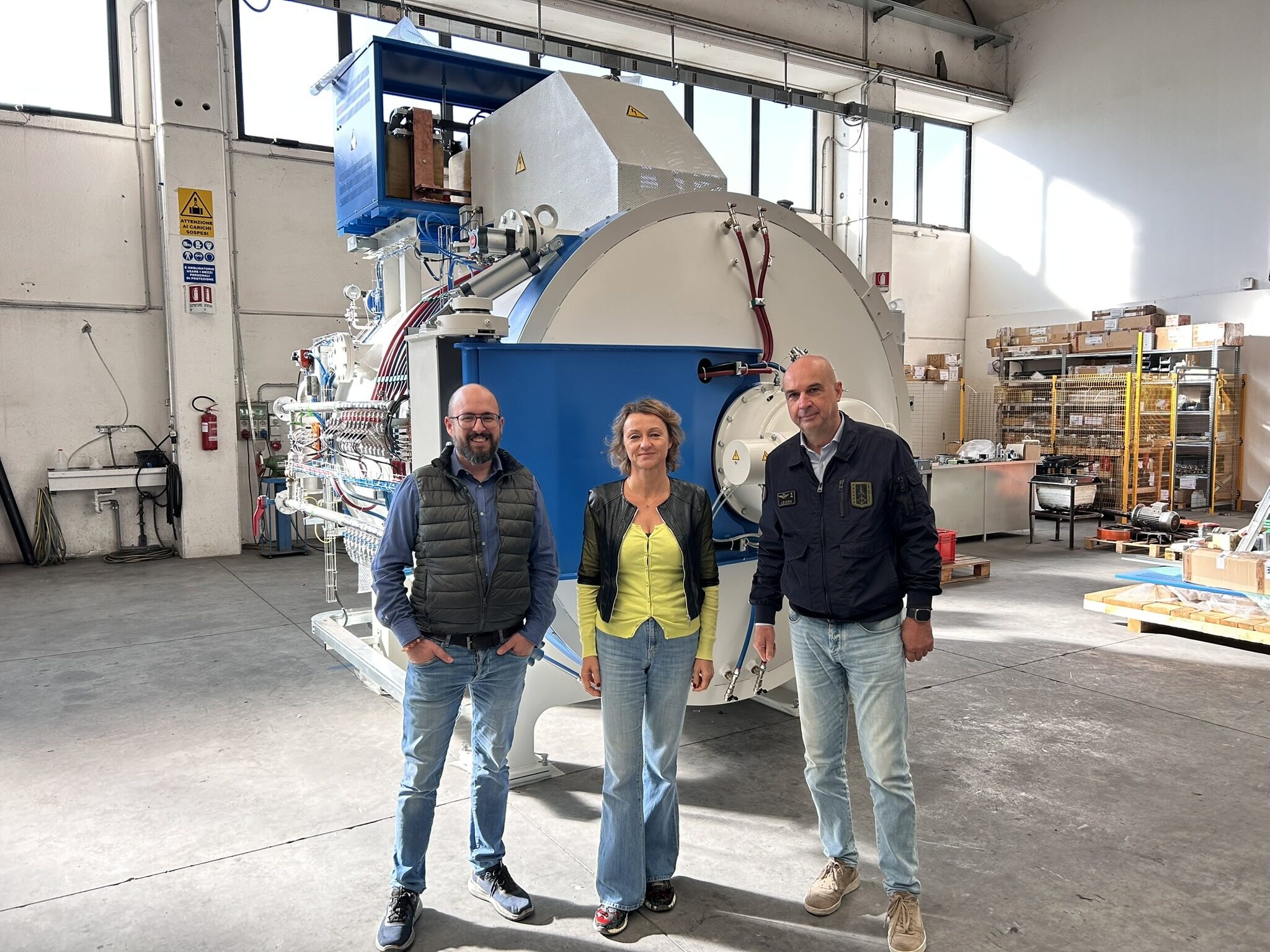
 In an industry exclusive “The Monty Heat Treat News” had the very distinct privilege of interviewing “Mr. Jim Fairbairn”, CEO of the world’s largest commercial heat treater-“Bodycote”.