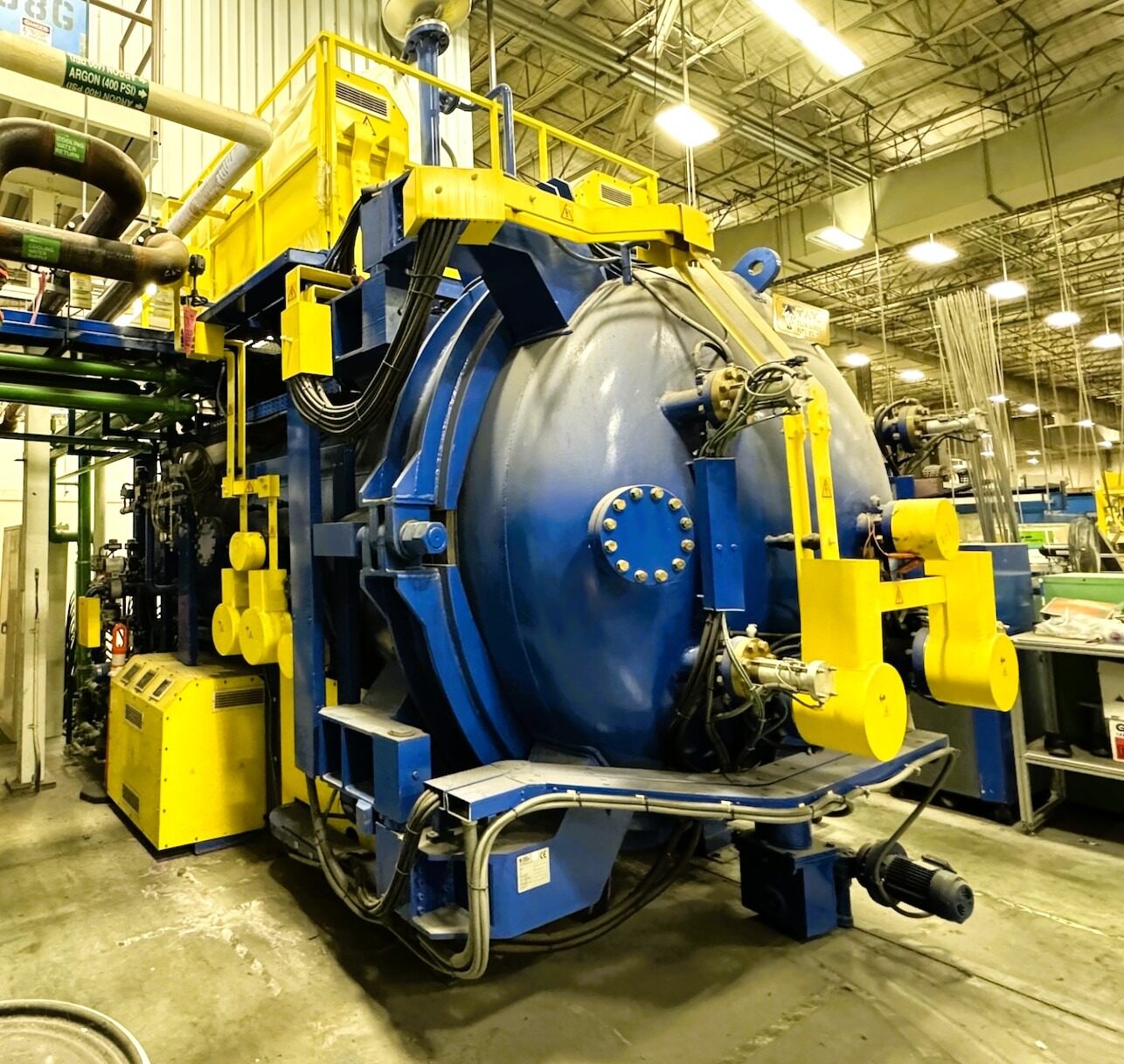
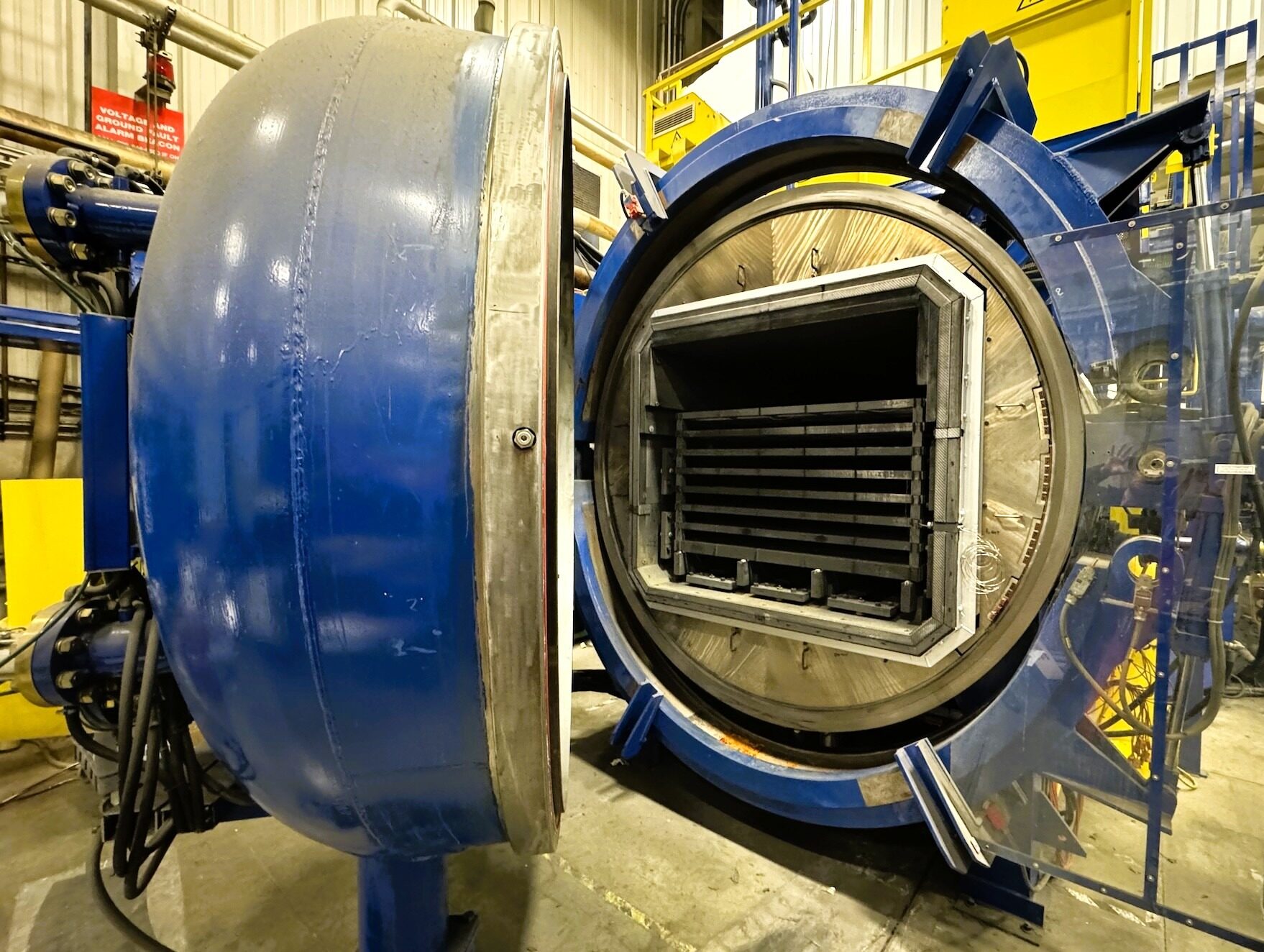
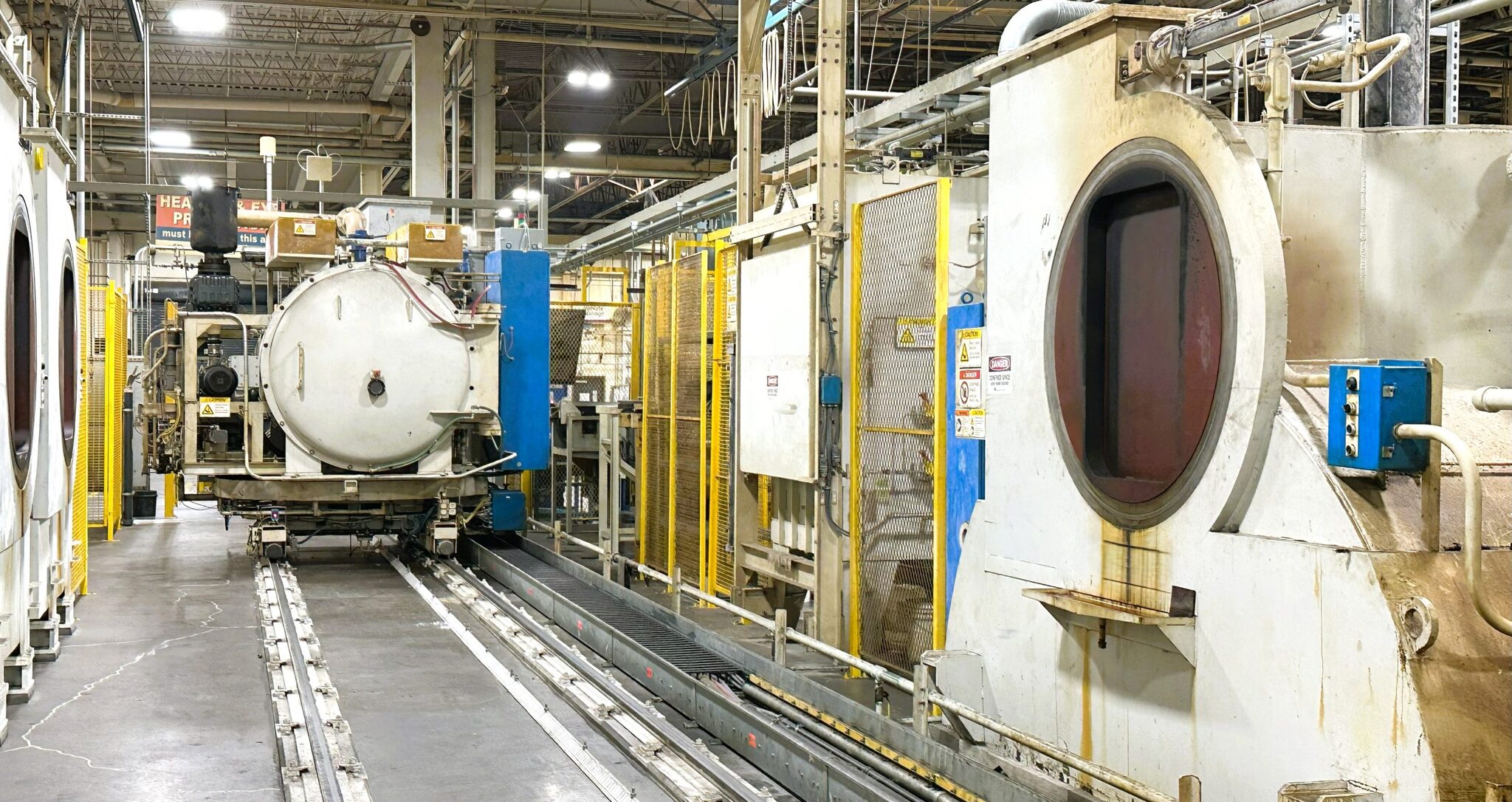
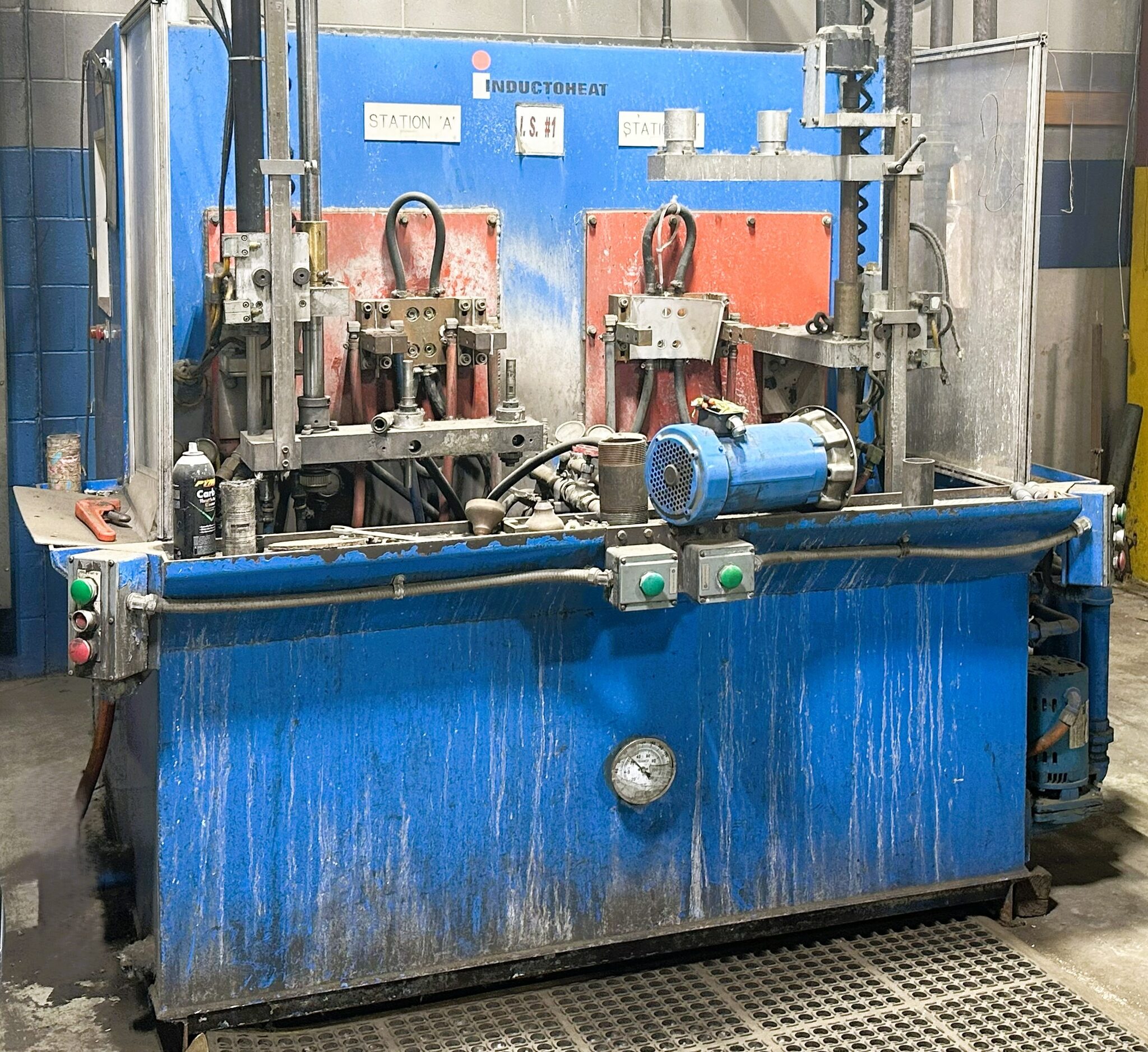
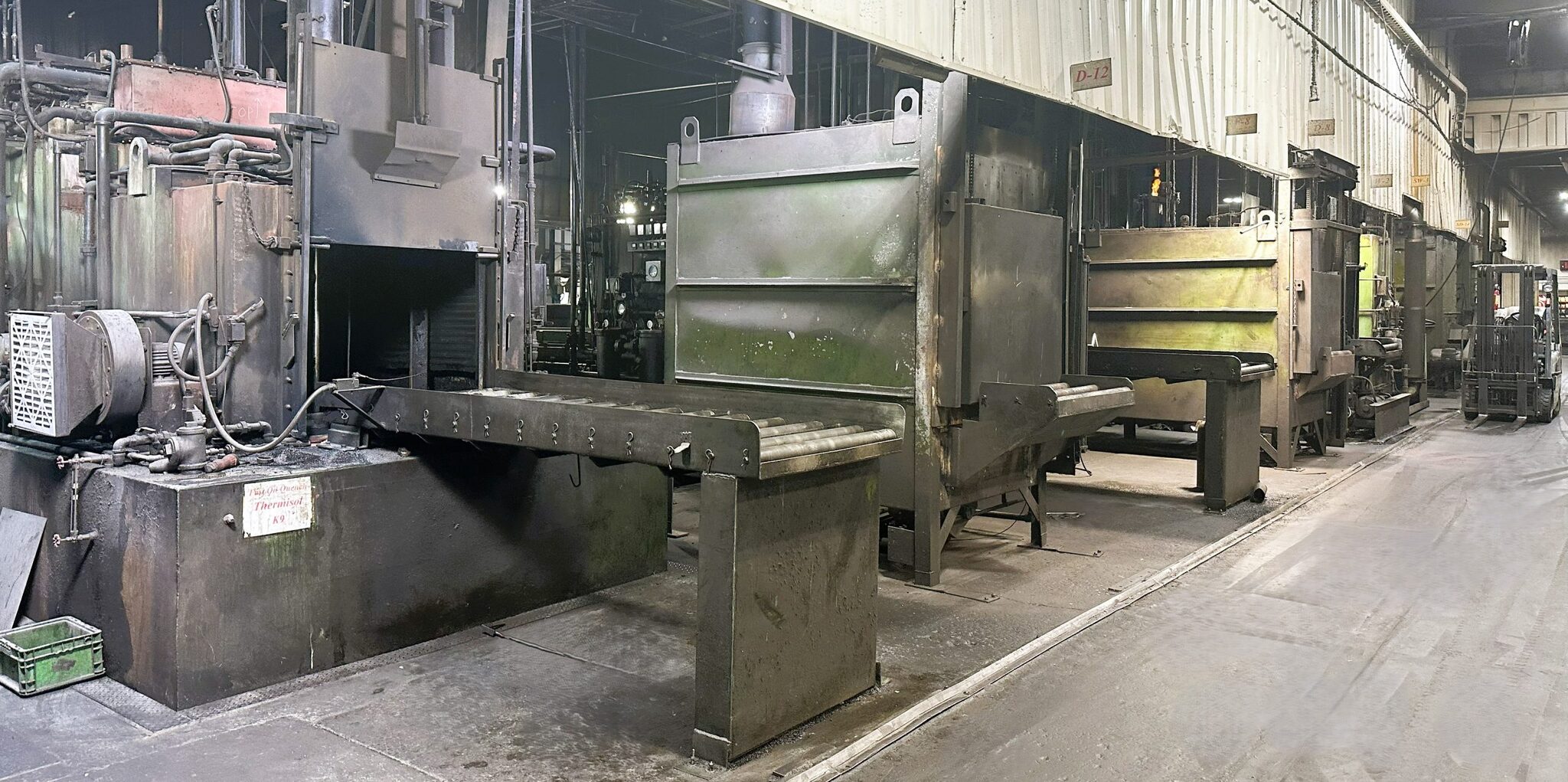
In that article we suggested the firm might be installing a very substantial vacuum furnace in the near future-we can now confirm that, that rumor has proved to be correct and “The Monty” can give you all the details in this exclusive story.
The furnace was manufactured by “TAV” and has working dimensions of 52″ X 40″ X 102″-making it not the largest in the Midwest but probably close to it. It has a maximum working temperature of 2,400F, an ultimate vacuum level of 10-3 torr (range) and up to 5-bar quenching with either argon or nitrogen. This almost new furnace came out of an aerospace facility in the western USA and was very lightly used, so much so that we would consider it in like new condition.
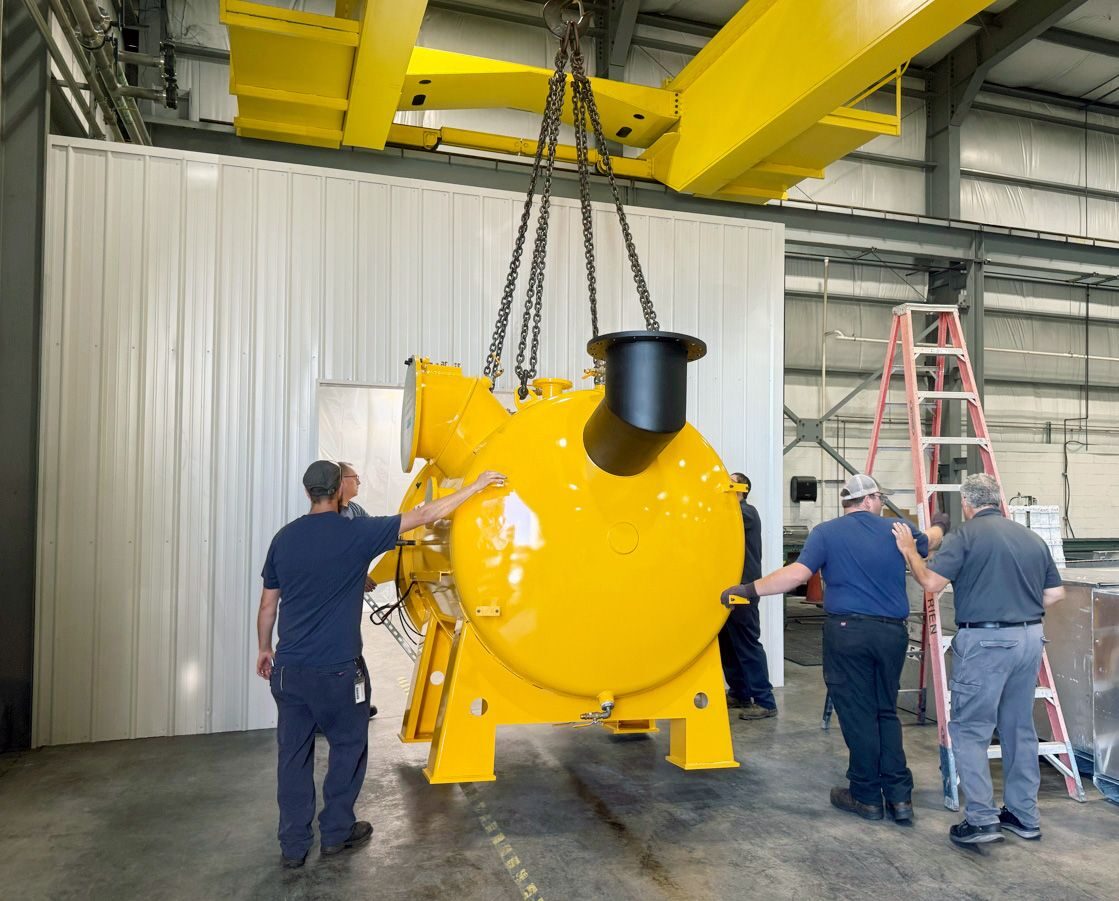
While we do not have a definite date as to when it will enter production, we would expect it to be within the next couple of months-certainly before the end of the year. These photos show the furnace at its previous location.
Did you like this article? Click here to subscribe to The Monty.
Today we are very pleased to be speaking with Mr. Philip Reese, Co-Owner of commercial heat treater “HÄRTEREI REESE” of Germany. Philip right off the bat I have to say that my German is non-existent, am I correct in saying that “Reese” is pronounced “Razor”?
That is almost correct, the last “E” is pronounced. However, while I was studying in the US, I always told people “Reese” as in “Reese Witherspoon”. That way, my name was never misspelled and don’t worry – I won’t be offended if the pronunciation is not exact.”
Philip you are becoming a pretty famous guy in the heat treatment industry-just a few weeks back I watched you on the “Heat Treat Podcast”-your comments certainly attracted a lot of attention. Despite that on the off chance that anybody missed that podcast I am going to ask you to give our readers some background about yourself personally and also your company-locations, size and capabilities.
“Our first location was founded in 1948 by my grandfather in Bochum, Germany. My father and my two uncles realized that just one location was too small for three brothers when each one of them wanted to form a business with their own different ideas.
Ulrich took a chance and opened two locations in East Germany shortly after the reunification – Chemnitz and Weimar. My father started with one furnace in Southern Germany in 1989. Each location has a very different history and developed in different markets and niches, however they always supported each other when times were tough.
I personally started working for REESE in 2018, with my brother Julian starting in 2022. Originally, I didn’t want to work in heat treatment as I have a degree in Aerospace Engineering and am still excited about everything that flies. Today, I am grateful for the opportunity to work in heat treatment, the large variety of different products we treat and the many exciting projects we work on with our customers is challenging but very interesting.”
I am in awe at the size of parts your company can handle. Over the years I have had the opportunity to see your facilities several times and each time I am astounded at the size of your parts. Can you please share with us the maximum parts size you can heat treat?
“For quench and temper as well as case hardening, the maximum dimensions are 195” in diameter and 215” in length. We find it very important that for all parts that come close to these dimensions, we have a thorough assessment about how to load them in the furnace. This might require supporting structures and/or counterweights on the load to deliver the results required-this is crucial to delivering top quality.”
As far as you know do you have any competition for parts of this size? The extension to this question would be do you have many customers outside of Europe because of your unique capabilities? Specifically, I am thinking of the closure of commercial heat treater Metlab in the USA a couple of years ago-a company which offered the largest pit carburizing furnaces commercially available in the country-did this lead to new opportunities for you?
Of course there is competition. There are multiple heat treaters around that will treat similar dimensions. However, some processes we offer at REESE are unique and even patented. For many types of welded large gears for example we offer a vertical treatment that leads to far less distortion.
Whenever a heat treater is confronted with a new part, he/she needs to wonder:
What stages of transformation happen inside the material during the process?
How strong will the design be during each stage to support its own weight?
What areas will suffer most during heat treatment?
We need to answer these questions and others before we process any parts. Having a vertical option allows us to be far more flexible and offer the best solution possible. The feedback we get from our customers is very positive. Once they adapt their planning to our results, they usually save many hours of expensive grinding afterwards.
What else are important things to consider when working with such large and individual parts?
“We put lots of efforts in the design of our loading equipment. For complicated parts, we have patented solutions to adjust our castings to the payload. I have not seen any other heat treater making such efforts.
Another important consideration is the behaviour of our furnaces during the heat treatment cycle. For smaller parts, one can assume that the result will be uniform on all parts of the surface – only influenced by the geometry. In a large furnace with large parts, it is much more important to control the process parameters everywhere. This is a bigger challenge for the design of process controls. A big furnace grows multiple inches during a typical cycle, this means advantages and disadvantages.”
Absolutely no pun intended but lets switch gears and talk about a brand-new facility you are constructing in Bochum. I understand that this will be dedicated to Induction hardening but that is the sum total of what I know-what else can you tell us?
“We started construction of our new facility a couple of weeks ago and we plan on opening in the Summer/Fall of 2026. We observed that there are a lot of changing dynamics in the market and induction hardening is becoming more popular amongst engineers. For many parts, we have the opportunity to save on energy costs by using induction.
Another point is, that induction hardening offers many possibilities to collect and use data more easily than in closed furnaces.With our older equipment, we couldn’t offer the latest features and had less chances to participate in research and developments. I’m a tech guy and if there is something new making life easier for us and our customers – I want to offer that! The new facility with new equipment and machines has been designed to meet all the requirements we estimate to appear in the next decade – I hope longer.”
What prompted this large investment, especially in light of the fact that business conditions in Europe generally aren’t optimum these days.
“We analyzed what challenges heat treatment is facing in general and in particular what challenges the processes we offer are facing. From our conversations with customers and researchers we expect a more dynamic market in induction hardening and a significant amount of innovation. Our investments don’t aim for growth. We want to improve our market position and still be among the top suppliers for heat treatment services when better days come for the industrial sector in general.”
In my previous question I suggested that business conditions in Europe these days are not great-what are you seeing?
“I don’t share the perception that conditions in Europe are bad. The know how, the industry clusters we have can’t move somewhere else. Many companies that move elsewhere quickly realize later that they were far more dependant on their suppliers and circumstances at their original location than they expected.
Energy prices are a challenge for sure. Complaining that Europe’s industry is not doing great for the moment will not solve this.”
Philip can you dig out your crystal ball and make some predictions about the future of heat treating? For instance, do you see any substantial changes in heat treatment technologies in the future?
“Personally, I don’t expect the established procedures to change a lot. Heat treatment is sometimes more art and experience than engineering-changes come slowly.
But I expect the use of data and AI to play a very important role even for small heat treaters. At REESE, we have more than 3,000 active customers with thousands of products, heat treatment processes and different parts. The data we collect there will become the commodity we are going to exploit and digitalize our experience.
The principles of heat treatment will not change, but the details of our processes certainly will. In general, there is hardly a technological product that does not include steel and heat treatment in some way. Heat treaters will be needed wherever production is happening.
Philip I thank you for your time and look forward to seeing you in the near future.
Did you like this article? Click here to subscribe to The Monty.
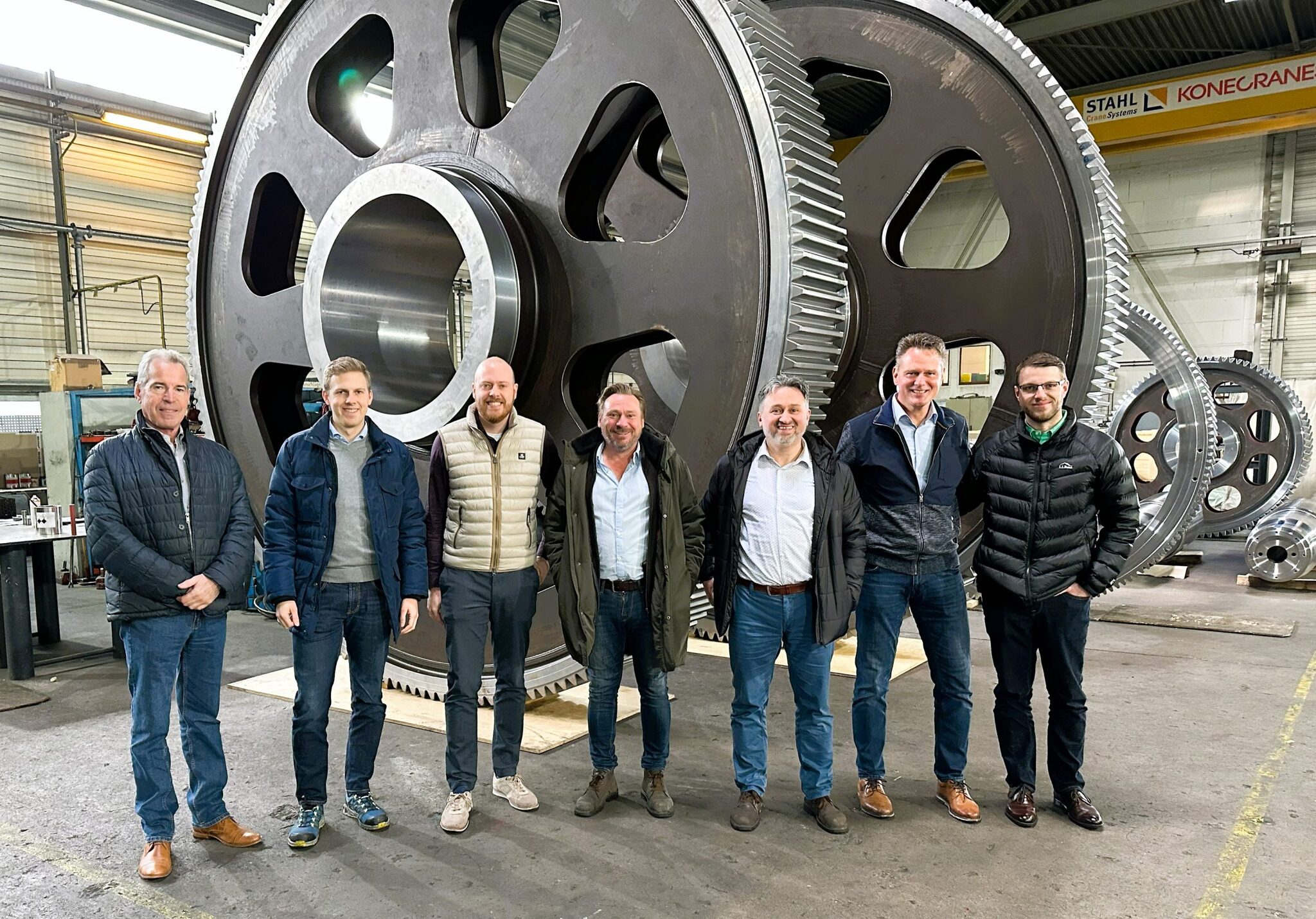
Left to Right: Philip Reese, Joachim Reese, Julian Reese
“There is no such thing as a perfect vacuum. Even outer space has a few stray atoms and molecules floating around.
A linear leak rate measures the rate at which gas atoms or molecules enter the vacuum furnace when it’s isolated from the pumping system over time. In the U.S., it’s usually expressed in units like microns per hour (μm/hr) or Torr per hour.
Monitoring the linear leak rate in a vacuum furnace is crucial for maintaining vacuum integrity—essential knowledge to ensure a consistent, repeatable heat-treatment process. Proper leak rates ensure that your parts meet specifications, indicate whether your furnace has a maintenance issue, or explain why you may be dealing with part discoloration.
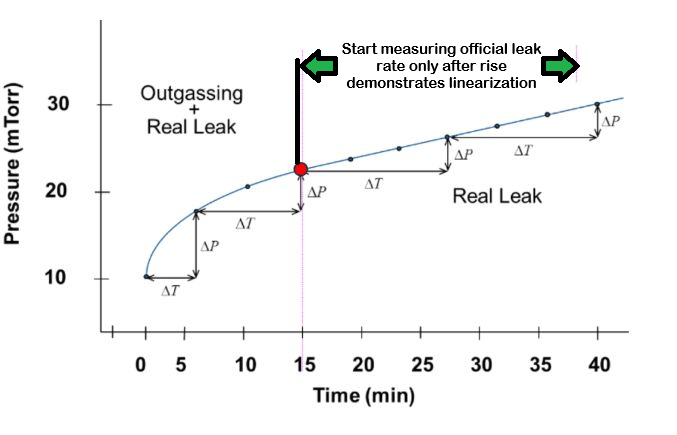
In some cases, operators seeking to establish a leak rate quickly will only sample 15 to 30 minutes to observe leak rate measurements. Extrapolating a short sample reading over an hour, particularly when that short sample may be at the beginning of a test, will rarely result in an accurate linear leak rate. Outgassing must be accounted for at the beginning of the test before one can paint an accurate picture of a furnace’s true leak rate.
The best thing to remember for your calibration testing is that the linear leak rates are reported not on a per-minute basis, but on a per-hour basis for a reason. There’s almost no reasonable way to determine a proper linear leak rate from anything less than an hour of holding the furnace in a vacuum state.
If you’re looking to get genuine leak rate information from your furnace, draw it down into a vacuum for at least one hour before you check the rate. Then, after the second hour, check the rate again. If it still appears to be higher than your target rate for optimal functionality, give the furnace another hour in vacuum and check back again. It’s important to mitigate the higher effective rate that occurred during the first hour due to outgassing by expanding your timeframe and getting a more accurate average rate measurement. Some furnace operations manuals recommend a minimum test time of four hours for this reason.
General guidelines for acceptable leak rate during vacuum furnace brazing
For materials containing titanium or aluminum: The recommended leak-up rate is less than five (5) microns per hour.
For materials containing chromium (Cr) or manganese (Mn) (but no titanium/aluminum): The acceptable leak-up rate is less than ten (10) microns per hour.
For materials containing nickel (Ni), gold (Au), etc. (without Cr, Mn, Ti, or Al): A leak-up rate of less than fifteen (15) microns per hour is considered tolerable.
Essential Considerations for Aerospace:
Process Sensitivity: The acceptable leak rate may need to be even lower based on the specific application and the sensitivity of the materials being processed. One common example: aluminum brazing.
Critical Components: For components identified as highly critical for safe vehicle operation, stricter leak rate specifications may be required to ensure both reliability and safety.
Over the years we have had reason to mention Texas commercial heat treater “Robert Gutierrez” and his Houston company “Worldwide Heat Treat” several times-most recently February of this year (Further down).
Robert is gracing “The Monty Heat Treat News” yet again for all the right reasons. “Worldwide” is reporting a very strong start to 2025 so much so that the firm will shortly have 6 very large pit carburizing furnaces in operation-these units compliment their batch IQ furnaces, 40′ long car bottom system and boronizing capabilities. In what is a very interesting development the work is coming from as far afield as Singapore, Dubai, Canada and across the USA.
While no reason was given for this new business from overseas, we would have to assume that it has to do with the fact that there is limited capacity of the pit carburizing furnaces required for treating parts such as large gears and shafts. Our belief is that Robert sensed an opportunity in a portion of the market which was being under serviced and jumped at the opportunity to fill the void.
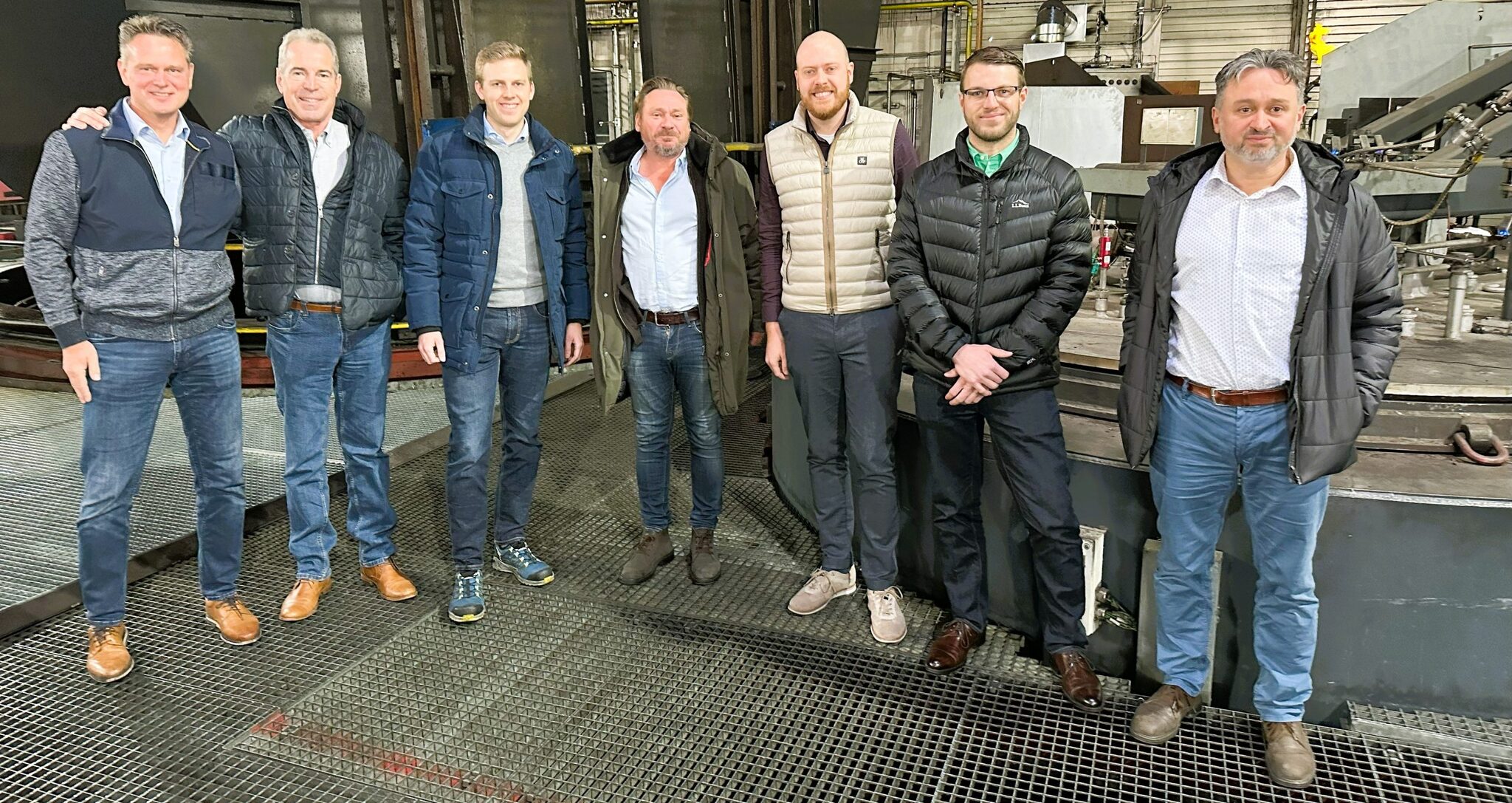
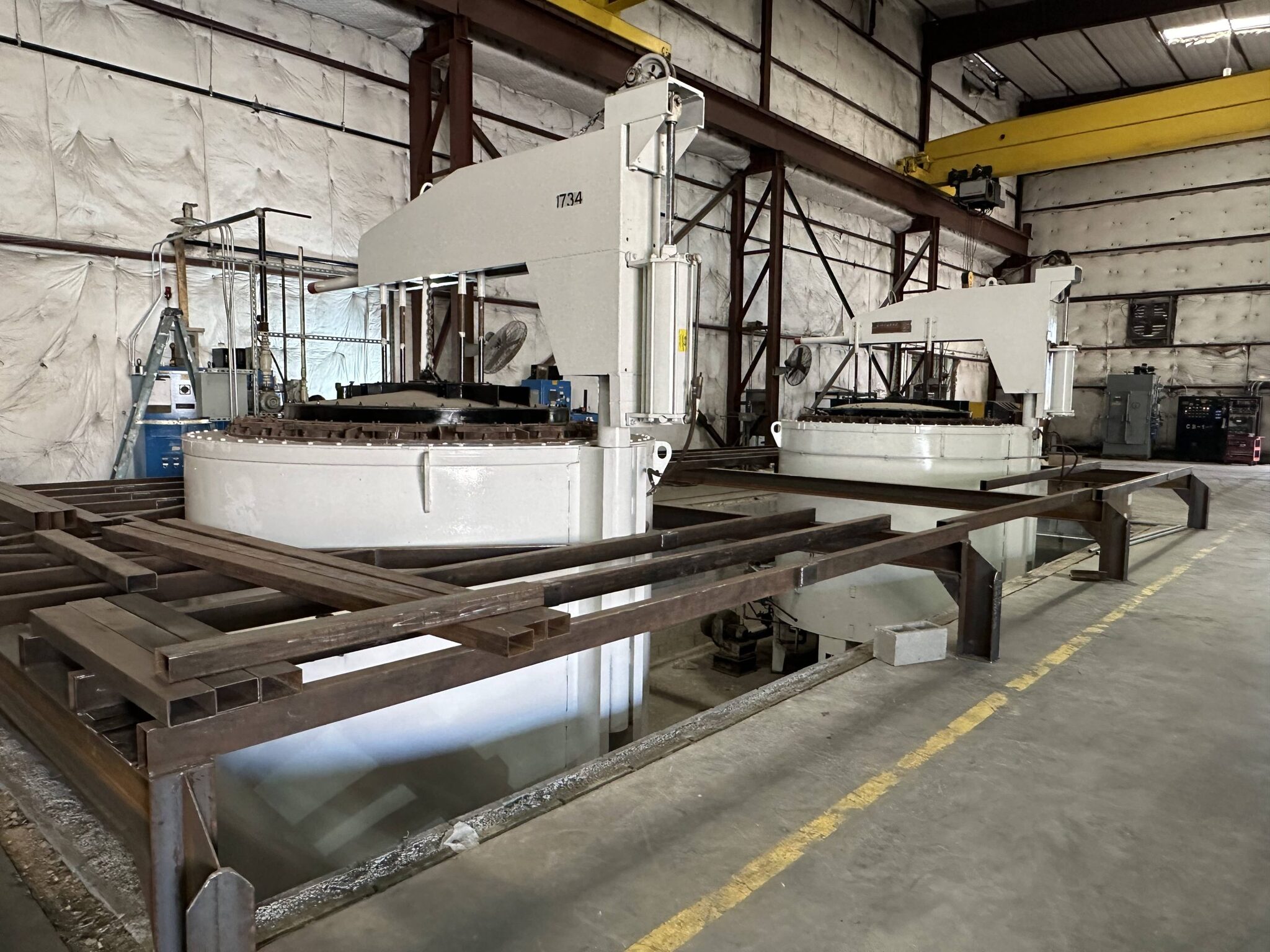
The attached photos show “Worldwide” as “Gord Montgomery” of “The Monty” saw it in February of 2025. What you are looking at are the first two pit furnaces installed by the company-obviously it has changed substantially since then. Robert is shown third from the right in the one picture.
“In 2018 Mr. Robert Gutierrez, a very well-known individual in the Texas commercial heat treatment industry started his own firm, “Worldwide Heat Treat” in Houston, Texas. Since day 1 the company has thrived by offering a number of different processes. The company has grown so much that they have just moved into a 40,000 square foot building (versus the previous one which was 9,000 square feet) and are adding more equipment. Two pit carburizing furnaces are in the process of being installed, each have working dimensions of 64″ diameter X 84″ deep and are equipped with SSi controls. Other recent or upcoming additions include a very large temper unit and a gas nitriding furnace.”
We can now announce that as of January 2025 the firm is in the process of adding a second location. The new facility, also in the Houston area is 18,000 square feet, sits on 4 acres of land and is equipped with a 10-ton crane. While the new plant will offer several different heat treat processes the focus is on “boronizing” of parts all the way up to 10 tons.
In addition to boronizing the location with have nitrogen generators and ammonia dissociated generators along with pit furnaces capable of handling parts up to 100″ in diameter X 144″ long with a weight capacity up to 10 tons (Editor’s note; last year commercial heat treater Metlab in PA closed depriving the North American market of a great deal of heat treating capacity for large gears. In our opinion this recent addition by Worldwide will help to fill a void for commercial heat treating of very large parts).
Future plans for the company include subzero treatment and a mechanical testing lab either at this location or perhaps in the form of an acquisition. “The Monty” looks forward to announcing all of these future projects as they occur.”
Due to the Labor Day Holiday, Monday, September 1, 2025 the offices of WG Montgomery Ltd., (“The Monty Heat Treat News”) will be closed. Regular news updates will resume Tuesday September 2.
Did you like this article? Click here to subscribe to The Monty.
“Solar Atmospheres of Western PA is expanding our footprint in the medical device market with the addition of a brand-new Solar Manufacturing all-metal hot zone vacuum furnace, engineered specifically for the high-vacuum processing of critical medical components. To support this growth, our existing medical clean room was doubled in size, ensuring we meet the highest standards for precision, cleanliness, and reliability. Proud to continue advancing innovation in medical device processing!”
Another example of an automated heat treat installation can be found at“Lamborghini Gear Supplier Brings Heat Treatment in House”, this is an example which has become quite common-a completely automated “lights out” batch IQ installation. While we say quite common it certainly wasn’t just 25 years ago.
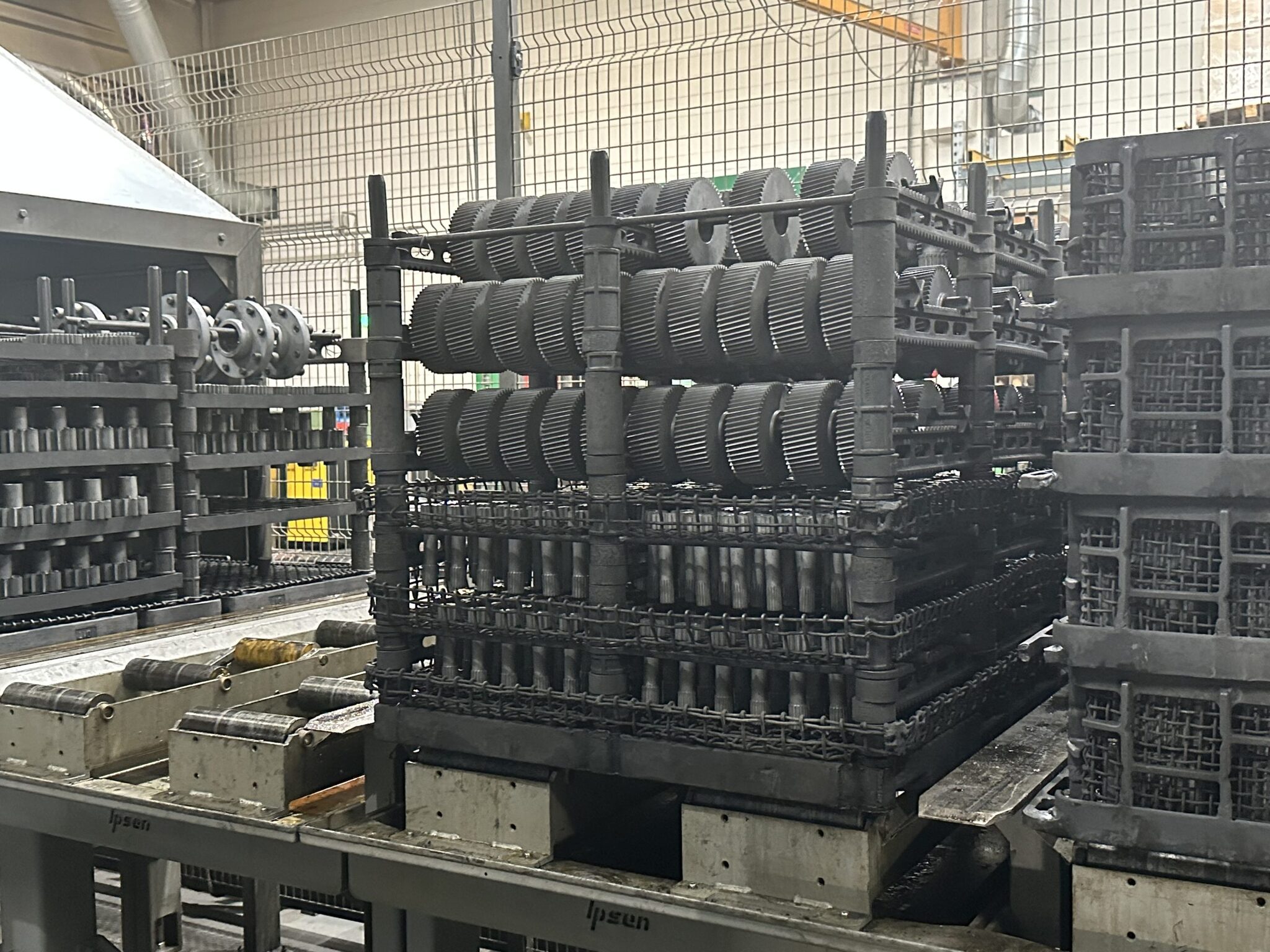
Basically parts are fixtured by hand (or largely by hand) with the fixtures placed in “racks” inside a fenced area surrounding the furnaces, tempers and washers. From here the operation becomes completely automated with a PLC controlled charge car moving the fixtured parts from the “racks” to the furnaces, washer and tempers before being unloaded and moved to a “finished” parts area.
Our first experience with such a system occurred at a Bodycote (commercial heat treating) facility in California, USA roughly 25 years ago-it was a “challenging” installation to say the least. However while this sort of automated system lacks the “sex” appeal of a robot it has become “tried and true” technology that can be relied upon to produce a consistent result.
Lamborghini Gear Supplier Brings Heat Treatment in House
In 1988 gear supplier Tecno-ingranaggi S.r.l., in Capriano del Colle, Italy was founded as a premium supplier of cutting-edge spur gears and transmission parts.
Over the years the firm’s customer base has grown to include such well-known names as Lamborghini, Dana, Caterpillar and Case New Holland to name just a few. In total Tecno-ingranaggi S.r.l., now has 120 employees producing gears for the automotive, agricultural and wind industries.
It turns out the owner of the company Mr. Giuseppe Gilberti has always had a strong desire to bring heat treating in house and with the long turn around times by local commercial heat treaters he made this a reality in 2021 (“The Monty”has always said that the number one reason manufacturers bring heat treating in house is because of long turn around times by commercial heat treaters-obviously there are two side to this story).
The end result is that in 2021 the firm installed a Sealed Quench furnace line (batch IQ to our North American readers) which consisted of 2 high heat furnaces, one endothermic generator, one washer and two tempering units all supplied by Ipsen of Kleve, Germany. This installation proved to be such a success that in 2022 the company added another high heat furnace followed in 2024 by one more high heat furnace, one more temper and one more endothermic generator.
Each of the high heat furnaces has working dimensions of 760mm X 1220mm X 760mm (30″ X 48″ X 30″) and a weight capacity of 1,000Kg (2200 pounds)-all of the furnace do strictly carburizing. Each of the furnaces is heated by natural gas although the newest furnace is capable of heating with both natural gas and hydrogen.
During a meeting with the owner of the company Mr. Giuseppe Gilberti, it was immediately clear that he is extremely pleased with his decision to bring heat treatment in house, again mainly because of the turn around time and the fact that he now has complete control over every aspect of his manufacturing process.
In house heat treatment is not perfect for every manufacturer but for some it is the correct route to go, in this case it was the correct solution for this gear supplier.
We thank our host for this tour, Mr. Corrado Tomaselli of Ipsen.
Giuseppe Gilberti, President, Tecno-ingranaggi S.r.l., Corrado Tomaselli, Ipsen, Gord Montgomery “The Monty Heat Treat News”
Corrado Tomaselli, Ipsen
SECO/WARWICK, a world leader in heat treatment technology, has signed another contract with a Global Partner from the energy industry for the delivery of a single-chamber Vector vacuum furnace with gas cooling up to 6 bar abs. This is the ninth device delivered by SECO/WARWICK to this customer. It will be used for the production of gas turbine components.
The device is equipped with a large working space (900 x 900 x 1200 mm) and a modern system enabling rapid cooling at pressures up to 6 bar, which is crucial in the production of gas turbine components.
“This Partner is responsible for generating about 30% of the world’s electricity today, and their activities play a key role in the energy transition. Long-term cooperation with such a demanding client is a confirmation of the highest quality of our solutions, and also proof that SECO/WARWICK has a significant share in the development of modern, ecological energy technologies,” – said Maciej Korecki, Vice President of the Vacuum Segment of the SECO/WARWICK Group.”
The SECO/WARWICK equipment will support the production of components for turbines used in the most demanding operating conditions. Vector provides a high level of vacuum, thanks to an advanced pumping system; convective heating up to 850°C, improved efficiency in lower temperature ranges; the capability of using three process gases (argon, nitrogen, hydrogen); precise partial pressure control to minimize alloy losses and ensure process purity, and excellent temperature distribution thanks to additional heating elements.
“This furnace is a response to the growing production needs of the client and the requirements related to the processing of a new type of gas turbine component. Our solution will increase process efficiency while maintaining the highest quality and process purity,” – says Kamil Siedlecki, Sales Manager of SECO/WARWICK.
The gas turbine market is growing
The value of the global gas turbine market for power generation in 2024 was estimated at USD 6.5 billion. It is predicted that in the years 2025–2034 it will grow at an average annual growth rate (CAGR) of 5.7%, driven by the energy transition and demand for efficient, environmentally friendly energy solutions.”
Did you like this article? Click here to subscribe to The Monty.
“McGard Industries” manufactures anti-theft devices like lug nuts, wheel locks, and marine security products, and is a leading manufacturer of mechanical anti-theft devices. The firm maintains a very large, clean and modern manufacturing facility in Orchard Park, New York, USA which is fitting as the company products can be considered “the Cadillac” in terms of quality and reliability.
Historically “McGard” has handled their heat-treating requirements through a combination of in-house furnaces and outsourcing to local commercial heat treaters.
In 2015 “McGard” started looking at “options” to their heat-treating department to make sure they had the absolute best technology available, this included looking at mesh belt furnaces lines (which was the technology used by their local heat treater) and LPC (low pressure vacuum carburizing). When all was said and done the company decided on vacuum carburizing and the investment was made in an almost brand-new system being sold by “Caterpillar”
The system was installed and upgraded in 2021 and shortly thereafter testing was completed and limited production started. However shortly thereafter the entire project was abandoned and the company made the decision to outsource most of their heat-treating needs again to a local commercial heat treater who processes the parts in a mesh belt furnace line.
While the reasons for this change of course are not entirely clear our belief is that while the LPC technology did produce very good results, some of the benefits were not required for this particular product and that outsourcing the work made more economic sense and allowed the company to focus on their “core competencies”.
“JANUARY 2022 POSTING; In Orchard Park, New York State, USA we find an auto parts supplier by the name of McGard Industries-this is how they describe themselves; “McGard is a manufacturer of high quality security products, wheel locks and chrome plated lug nuts. Our customers include some of the finest North American, Japanese and European automotive manufacturers, as well as government agencies, the military, municipalities, and the fuel industry. Since 1966, McGard has become known for its unique product designs and comprehensive service programs in these and other areas where security and safety are top priorities. Consistent high quality that insures the greatest value for our customers is the foundation of our business, and is evident in every McGard product on the market today.”
Our experience with the company shows a very well run, clean and very modern operation. The firm has an impressive captive heat treat department which was enhanced by an ALD Modultherm, vacuum carburizing system not that long ago. The complete installation was finished in 2021.”
Did you like this article? Click here to subscribe to The Monty.
Recently “Mr. Kevin Stone” of commercial heat treater “Hi-Tech Steel Treating” in Saginaw, Michigan, USA invited “Gord Montgomery” of “The Monty Heat Treat News”for a tour of his facility, a tour which took place Thursday August 14, 2025.
Founded in 1983 the firm is located in the heart of the US automotive industry and over the years the company’s fortunes have been closely tied to that of the “Big Three”-in particular “General Motors”. Shifts in the auto industry have forced the company to look at other markets which they have quite successfully done, the end is result is that a tour of the facility reveals components from industries as diverse as medical, defense and general industry.
These shifts in their customer base means that their technology offerings have also shifted and now included vacuum hardening, carburizing, nitriding, induction hardening, stress relieving, vacuum FNC and straightening.
All of this required a large facility and a good-sized work force which means the plant occupies over 50,000 square feet with over 30 employees. Like many firms in the commercial heat treat industry this is a second generation family owned business with “Kevin Stone” gradually taking over from his father “Jim”.
These photos give you a good idea about the facility and show some of the various technologies available; Batch IQ furnaces, Vacuum Hardening systems, a Vacuum FNC unit and part of the induction department. If you ever find yourself in Saginaw with time on your hands, I am sure that Kevin and his team would be glad to give you a quick tour-I can assure you they are a very friendly group.
Did you like this article? Click here to subscribe to The Monty.
 A recent article by “The Monty Heat Treat News” focused attention on a Michigan, USA commercial heat treater by the name of “Darby Metal Treating”– “Profile of a Thriving North American Heat Treater-“Darby Metal Treating”