Six Ipsen service technicians were recognized at the Ipsen Vacuum Technology Excellence Center for completing the Ipsen Field Service Engineer (FSE) Academy: Todd Jones, Casey Guinn, Craig Monaghan, Eric Gould, Alfredo Mendoza, and Dom Wirthlin. The Ipsen FSE Academy is a 14-week, intensive, hands-on training program for field technicians who specialize in servicing Ipsen vacuum furnaces. The program began with three weeks of classroom instruction, where participants learned from engineers, designers, and technical service professionals about the design, assembly, operation, subsystems, and functions of vacuum furnaces. From there, technicians transitioned to field training. Each participant was paired with a mentor and gained hands-on experience with specialty Ipsen furnaces, hot zone replacements, new equipment installations, and a variety of retrofits, each presenting unique challenges and requiring different skill sets. After several weeks in the field, participants returned to Cherry Valley for calibration training, final evaluations, and a graduation ceremony.
“As a technical trainer we naturally have strong passion for teaching others the skills required to be successful in this industry,” said Cavan Cardenas, Ipsen Technical Training Lead. “When we get a group of technicians that matches our passion level, it makes it real easy for us to get excited about the training program.” “One of the best things I learned at the FSE Academy was to network with others in the field,” Eric Gould explained. “The training gave me the ability to take the time and learn the job so that I can figure out an issue by myself, but also know that I have a team of experts I can reach out to with specialized skills who can help.”
“The experience I’ve had working at Ipsen has been overwhelmingly positive,” Todd Jones said. “The FSE Academy, the instructors and the FSEs we’ve met in the field cement this as a place I want to work for in the very long term. This program helped us develop, giving us what we need to provide value to the company and our customers well into the future.” Participants are paid throughout the program and gain real-world experience by working with key customers at leading companies across a wide range of industries. Ipsen is currently seeking Field Service Engineers to join the next academy class, projected to begin in the second quarter of 2026.
PROENERGY, a vertically integrated manufacturer of power generation equipment and services, has placed an order for four Ipsen vacuum furnaces to help meet growing demand for new fast-start gas turbines and lifecycle maintenance.
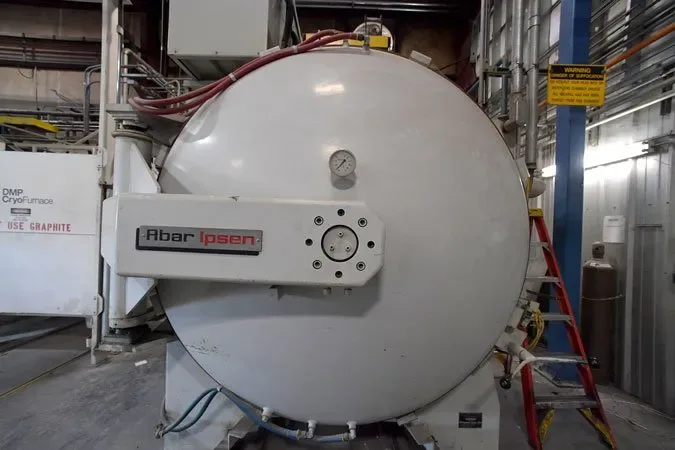
PROENERGY selected three Ipsen TITAN furnaces and a TurboTreater for use at its new location in Houston, Texas. This 455,000-square-foot Center for Excellence in Lifecycle Care will serve customers with turbine overhauls, maintenance, and onsite part repair capabilities.
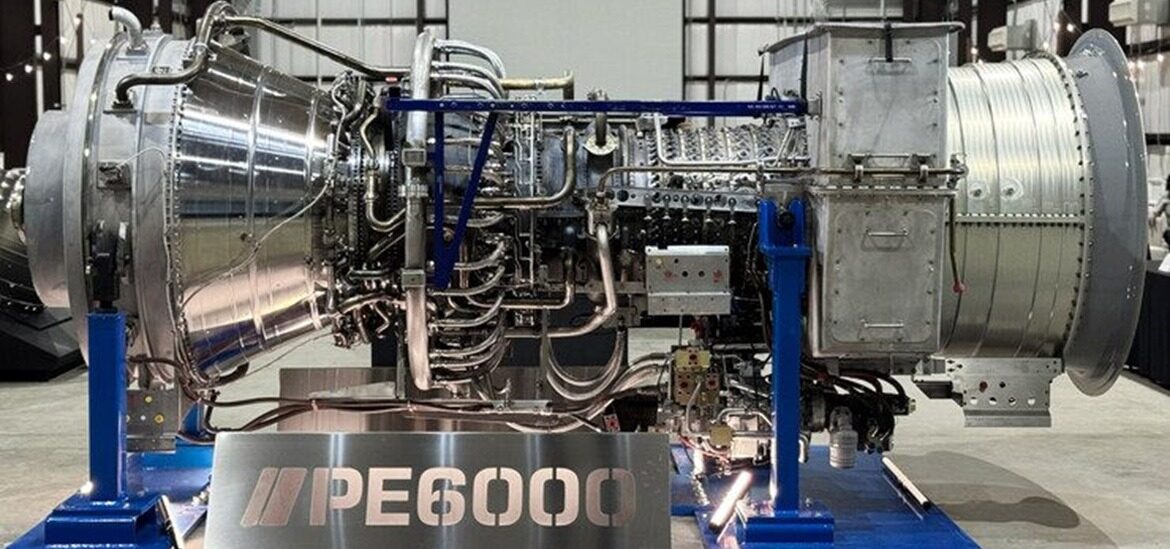
“PROENERGY customers demand high-quality turbine components to satisfy the exacting requirements of the fast-start power industry. As we expand production of the PE6000 aeroderivative engine, we also needed additional vacuum furnace capacity,” says John Spilker, Senior Vice President of Operations. “Ipsen furnaces have served us well for years in both manufacturing and repairing turbine parts. Based on the accuracy and reliability of these furnaces, we worked closely with the Ipsen team to meet operational requirements, optimize cost, and minimize lead time.” Included in this order:
• (1) TITAN H2 2-bar vacuum furnace with an 18 × 18 × 24-inch work zone and 1,000-pound weight capacity • (2) TITAN H6 2-bar vacuum furnaces, each with a 36 × 36 x× 48-inch work zone and a 3,000-pound weight capacity • (1) TurboTreater model H6672 featuring a 48 × 48 × 72-inch work zone and a 3,500-pound capacity
Ipsen USA will deliver and install these units, chosen for their efficiency and reliability across several industrial sectors.
“We have seen steady demand from customers like PROENERGY who have come to rely on Ipsen for our extensive knowledge in heat treating high-tech alloys and regional service resources in place throughout the United States,” noted Matt Clinite, Ipsen Sales Director. “We are excited to work with PROENERGY as they continue to deliver fast-start dispatchable power solutions to customers looking for safe, reliable power.” To learn more about vacuum furnaces and heat-treatment, visit https://ipsenglobal.com/vacuum-furnaces/
According to this very interesting press release a substantial USA bearing manufacture has invested in two new LPC (Low Pressure Carburizing) systems from SECO/WARWICK USA, although at the time of this posting “The Monty” is unsure of who the end customer is. Further down read the claimed advantages of LPC heat treatment for bearings;
SECO/WARWICK USA has received orders for two identical Vector single chamber vacuum furnaces from a major U.S. bearing manufacturer, reinforcing the company’s position as a leading provider of advanced heat-treatment technology in the North American market.
Each furnace features a 36″ × 36″ × 48″ hot zone, 15-bar high-pressure gas quench (HPGQ), and a horizontal loading configuration, delivering the versatility required for precision heat treatment of bearing components. The low-pressure carburizing (LPC) furnace design, known for performance and process repeatability, provides a scalable platform for both production throughput and metallurgical consistency.
Identical Furnaces, Different Applications; One furnace will augment production capacity at an established aerospace-grade component facility, while the second unit will support a newly acquired plant undergoing a multi-year modernization program. The latter site will use the furnace for a mix of production, specialty geometries, and potential R&D applications as it transitions from legacy heat-treat equipment to state-of-the-art LPC technology.
Both systems include standard SECO/WARWICK options such as a sound enclosure, automatic door, and maintenance platform, as well as customer-specified instrumentation—ensuring compliance with stringent internal quality and traceability requirements.
“These contracts demonstrate how manufacturers continue to invest in advanced LPC technology to enhance throughput, improve metallurgical performance, and ensure long-term processing reliability,” said Piotr Zawistowski, Managing Director of SECO/WARWICK USA. “We are proud to support this customer’s growth and modernization strategy with equipment designed for the highest levels of precision.”
Advantages of Low-Pressure Carburizing for Bearings; LPC is favored for high-performance bearings and precision parts due to its superior metallurgical results and efficiency compared to traditional atmospheric carburizing:
Reduced Distortion: The vacuum process minimizes part deformation, which reduces or eliminates the need for expensive post-heat treatment machining.
Superior Quality: It avoids intergranular oxidation (IGO) and surface oxidation, leading to a cleaner, more uniform case-hardened layer.
Process Control: The use of vacuum furnaces and precise gas control (boost and diffuse steps) allows for exceptional control over the case depth and carbon profile, ensuring repeatability.
Environmental Benefits: It is a more environmentally friendly process, with lower energy consumption, no CO₂ emissions, and elimination of oil or salt bath residues.
Alcon Industries of Cleveland, Ohio, USA, one of the largest North American suppliers of high temperature, cast alloy components for the heat treatment industry has appointed a new “Vice President Sales & Supply Chain”.“Mr. Justin Henderson” recently assumed this position, taking over from “Mr. Jim Demarest” who recently parted ways with the company.
(Editors Note; Ipsen is one of the globe’s largest furnace builders. According to this press release the CEO, of Ipsen, India, Mr. Shubhendra Pansee will shortly be stepping down).
“(December 16, 2025) – Ipsen Technologies Pvt Ltd. CEO Mr. Shubhendra Panse has announced his decision to leave the company by February 28, 2026. Until a new CEO is hired, Mr. Paul van Doesburg – CEO of Ipsen Germany – will support the transition
“We want to sincerely thank Mr. Panse for his dedication and many contributions to Ipsen’s success as CEO over the last twelve years. His efforts have supported the market presence and the development of our company over the last decade.
Mr. Panse leaves the company after a great rally of order intake during the last months. We are very thankful for his support and efforts.” “We regret that Mr. Panse is leaving us; he has inspired our Indian entity for over twelve years.” Ipsen is constantly working on improving its products and services. Technology leadership is our key focus. We will continue to do so in our Indian operations.”
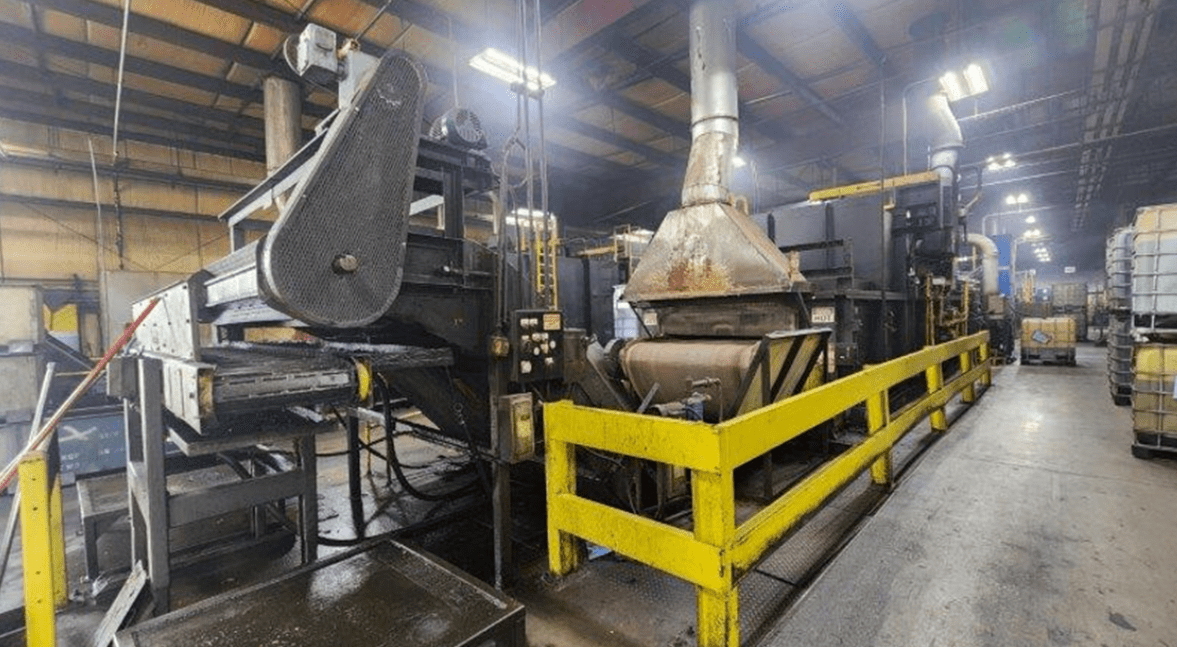
As an update to this story we can say that the closure will go ahead 12/21/2025 and unless something changes in the very near future the 3 cast link belt furnace lines will be scrapped. At one point in time cast link belt lines could be found in virtually every fastener manufacturing facility in the world, however the technology has largely been replaced by mesh belt furnace lines (except in cases of very heavy parts) so much so that it is becoming rare to see a cast link line in operation. Indeed we can’t imagine more than 1 or 2 a year are produced in North America if that.
Solar Atmospheres of Michigan Inc. is proud to announce that it has earned Nadcap 18-Month Merit Status for heat treating and brazing—an honor awarded only to organizations that consistently demonstrate the highest levels of quality, process control, and specification compliance. With this achievement, every Solar Atmospheres location nationwide now holds Nadcap merit status.
We appreciate PRI’s recognition of our team’s dedication to stringent process discipline, precise processing, and an unwavering commitment to quality in every operation.
Solar Atmospheres President Bob Hill stated: “With the purchase, name change, and relocation of our Michigan business in 2022, the PRI Nadcap standards reverted back to annual audits. The achievement of zero major findings over the past three (3) years of audits has allowed us to once again join all of our other Solar facilities across the country with Merit standing. This accomplishment further strengthens Solar Atmospheres’ promise to deliver reliable, world-class thermal processing solutions to our customers in Michigan and across the nation.”
About Solar Atmospheres of Michigan Inc.
Solar Atmospheres of Michigan Inc. is part of the Solar Atmospheres family of companies, offering a wide range of vacuum heat treating and brazing services. With a focus on quality, innovation, and customer satisfaction, Solar Atmospheres serves industries including aerospace, defense, medical, power generation, and more.
For more information about the Solar Atmospheres Michigan facility contact Chris Molencupp at (586) 264-8100 ext. 1620, or [email protected], and visit us at www.solaratm.com.
In our humble opinion “Mr. Bob Fincken”, Sales Manager for controls company “SSi” is one of the most knowledgeable individuals in the entire heat treat industry when it comes to furnace control. We are honored to be able to share his knowledge today in the form of this interview.
“Bob Fincken” in our opinion is one of the most knowledgeable and experienced furnace controls individuals in the world- we consider ourselves lucky that he is giving us some of his time today to talk about a number of topics related to furnace controls. Bob lets start off with your background and how you ended up where you are today.
“My first job after college was at a Cincinnati based company assisting with the design of circuit boards for radar detectors. It was a good start but not as challenging as I wanted. I moved on, working for a very talented design engineer, Don Riemenschneider, (who also became an employee of SSi). We were both hired contractors for Cincinnati Steel Treating (CST) and I had the privilege of starting my career working with Dan McCurdy who was employed by CST at the time. I assisted in the design and build of a product called the Multicarb that controlled carbon potential in furnaces used in this industry-I knew nothing about “heat treating” at the time. Dan had a vision of automated process control using a microprocessor and software for data collection. I found this industry to be just the challenge I needed.
Furthering my career, I worked for Marathon Monitors under another pillar of the industry, Bill Thompson, then moved on to Eurotherm which allowed me to expand my skillset but remain focused on heat treating, the industry that I find so rewarding. I am currently working for SSi and have been a part of this organization for 20 years. The team I work with here resolves new challenges every day with a customer focus that is unmatched in the industry that I am proud to be a part of.”
In your long career in the heat treatment industry what would you say is the #1 new technology introduction when it comes to heat treat furnace atmosphere control?
“From my perspective I divide this into two categories, software and hardware.
Without a doubt depending on the process, you are charged with, sensor technology, including the carbon probe, hydrogen sensor, dew point sensor and infrared analyzer changed the industry.
Sensors allowed verification of a process, in general without the sensor technology, instrumentation would not have developed into what it is today. The second category would be software specifically used for data collection.
This could be charts, custom screens any Human/Machine Interface. The interaction with equipment and validation of process allows owners, managers and maintenance personnel to view and organize, plan and react to their specific job functions with a few mouse clicks. The two combined allow for individuals to run a furnace with minimal experience, that experience is so important in this industry, as well as others that are experiencing the loss of talent through retirement.”
What other innovations would you rank as “game changing”?
“Customers looking for information regarding asset utilization has also become more prominent. You can never have too much data in my opinion and this data allows for a different approach to running furnaces. Modern equipment allows for computer calculations based on furnace data that can be used for cost analysis. Systems can now offer the cost per load using metrics like gas usage from flowmeters, electricity usage also. Every electronic flowmeter we sell has the equivalent of a built-in odometer that can be reset through software.”
When you and I entered the industry computers and software were unheard of and remained that way for a number of years. When did software and the power of computers really start to make a difference in the industry and what was the difference?
“Computer based technology didn’t initially present itself as what we use today. The analog controls on a furnace didn’t allow for easy verification of process. Analog devices didn’t have the accuracy or legibility to allow for proof of process without a magnifying glass and a flashlight to determine which notch on a dial you were reading.
The introduction of digital controls allowed for large easy to read display of process variables and the ability to connect to computers for data acquisition. Storage of analog charts had to be in a dimly lit area to reduce fading. Typically, on a mezzanine someplace or a large trailer with rows of file cabinets. Two wire or four wire daisy chain communications were the technology of choice. A bit difficult to troubleshoot but reliable.”
Let’s switch gears from the past and look towards the present and the future. Are you seeing any game changing developments which would rival oxygen probes and computer control of furnaces?
“I am unsure if this is classified as a game changer but the software capabilities of the data acquisition systems have been evolving and providing more process capabilities.
For example, Gap reasons for furnaces, whether in production, down for maintenance or following AMS2750 criteria can be identified and offered in a pie chart for utilization.
Defining maintenance schedules, offering detail on gas or electric usage and cost per load can really be helpful to commercial heat treaters. Sharing database information on parts and load routing between two different systems eliminating double entry is also a vast improvement. Automated approval for every load meeting specific requirement in the recipe is also a feature that will help quality control and delivery of product.”
This question is really a follow up to the previous one about new technologies in the industry. SSi has come up with some new products for 2025 such as Load Entry 3, “SuperGen”, and Mass Flow meters-care to elaborate on what these new products will do for heat treaters?
“Load Entry assists with recipe management and tracking by providing a single, PC-based interface to control all activities for a heat treat facility.
Load Entry allows you to enter various operations, furnaces, recipes, parts, and users, but also enables you to “apply” these items to one another as required by your facility. This allows for easy tracking, management, and information retrieval, saving you time and money. We have videos on our website which will offer a quick description on the new software. Load Entry 3 https://youtu.be/_pgfB-ynGxQ
We have recently enhanced this software module adding Maintenance and Scheduling. These two modules allow scheduling of loads and maintenance including any pyrometry activities. What makes this software unique is the ability to remove a furnace from production. The system uses SuperDATAPro to communicate thus allowing for a software lockout of the furnace. https://youtu.be/MHzz8790XxE”
The “SuperGen” uses our VMix technology for endothermic generator demand control.
The number one issue which all captive and commercial heat treaters bring up these days is the lack of good experienced people in the industry. I (and I am sure you also) hear this from heat treaters in Mexico, California, New York, Ontario pretty much everywhere that finding people is the biggest challenge there is these days. Do you feel that technology can solve this problem?
“Technology has the opportunity to reduce the burden. Sure, robots can load the furnace. Controls can guarantee the cycle runs correctly and data acquisition can provide proof of process. At the end of the day though the people in any organization are what makes the whole process effective.”
Bob you must have seen hundreds if not thousands of heat treats over the years and been involved in untold numbers of furnace projects. Which ones really stick out in your mind either for being extremely ambitious, a complete disaster or perfectly executed from beginning to end? If you can share names great, if not just an overview would work.
“I would like to stay positive here. There have been far too many projects where the controls have been outdated for years. Think about how often you change your PC for a newer model. Similar rules should apply to process controls. I can say that some of the projects have been very challenging due to some unknown factors that weren’t shared between the customer and our team until the project was started. We know now that specific questions need to be asked. For example, with a vacuum furnace, we will ask when was the last time this furnace passed a survey. Or for an atmosphere furnace, do you have any issues maintaining carbon potential.”
Is the furnace controls market a crowded one-in other words are there many capable firms competing for this business? Do you run across competition from non North American suppliers very often?
“The furnace controls market is competitive. Local suppliers, engineering firms, furnace OEM’s and the controls manufacturers themselves all compete for projects. Travel costs can be an integral part of the final price. I believe we have a reputation for customer service and the use of the latest proven technology. As with any company SSI is results driven and we have provided controls for simple and complex applications where a strong engineering and support staff makes the job flow through to completion without too many problems to overcome.
For our projects in the United States there have been very few foreign competitors. Sometimes if a furnace was manufactured overseas, they are invited into the bidding process for a retrofit. Across North America yes, we do sometimes run across foreign competitors due to the fact that each country has their own infrastructure in place and we are competing in their regions sometimes.”
You have often said that one of the biggest barometers of how busy the heat treat industry is, is by the number of oxygen probes being sold. What does this barometer or others tell you about the health of the industry as we come close to closing out 2025?
“As a manufacturer of oxygen probes we do have a unique way of estimating how many furnaces are in operation. Historically when the economy is struggling, we have the ability to evaluate the quantity of probes that are being rebuilt or purchased new.”
Bob I really appreciate your time, honesty and candor today-thank you, Gord.
“Gord thank you for the opportunity, I have worked with you for over 35 years in this industry and I continue to learn something new all the time. Our customers and my coworkers are what keep me involved in this industry. It is a pleasure to come to work everyday to provide solutions and interact with so many good people.”
Wisconsin Oven is pleased to announce the shipment of one (1) Electrically Heated Standard Draw Batch Oven (SDB Series) to a United States Military Base. This industrial oven will be used for heat treating various aerospace components.
This equipment is engineered to meet the critical safety requirements of the customer and stringent demands of aerospace heat treating. It has combination-style airflow (delivering both horizontal and vertical upward flow) to ensure optimal heating rates and consistent temperature distribution across the product. Uniformity has been verified through a Class 1 Temperature Uniformity Survey (TUS) conducted at Wisconsin Oven’s facility in accordance with pyrometry specification AMS 2750H. The system achieved temperature uniformity of ±5° F at 200° F, 700° F, and 1,200° F.
“This draw batch oven was designed with additional safety features for operators, tight uniformity, and compliance standards required by the US Military. The temperature uniformity survey was performed prior to shipment to verify compliance with AMS 2750H Class 1 requirements.” – Doug Christiansen, Senior Application Engineer
Unique features of this heat treat oven include:
Temperature Uniformity of ±5°F at 200°F, 700°F, and 1,200°F (AMS 2750H Class 1 verified)
Vertical lift pneumatically operated door with manual and automatically actuating door safety latches (to provide redundant vertical lift door safety features for personnel)
Motorized dampers on fresh air inlet and exhaust outlet to allow low temperature operation and faster cooling
15,000 CFM @ 10 HP recirculation system utilizing combination airflow and a VFD (for lowered noise level, and improved heat loss while the oven door is open
In an apparent sign of the times another long-time commercial heat treater in the USA, “Pinson Valley Heat Treating” of Birmingham, Alabama, USA has been acquired by a venture capital group. It has been widely known for quite some time in the heat-treating community that the company was for sale so it comes as no surprise that an ownership change has now been concluded. The “Monty Heat Treat News”has for some time ranked the company amongst the“52 Largest North American Commercial Heat Treaters 2025″. The official press release can be found below;
“CLEVELAND, Dec. 9, 2025 /PRNewswire/ — Weinberg Capital Group (“WCG”) is pleased to announce its acquisition of Pinson Valley Heat Treating. (“PVHT” or the “Company”), a five-decade-plus-old specialty heat-treating company that serves the aerospace and defense, industrial, and automotive end markets.
“We are excited to partner with Don Hendry, Benny Grissom, and their talented team,” said Chip Weinberg, Managing Partner at WCG. “Pinson Valley has a long history of success, and we are committed to building on that legacy by investing in its continued growth while preserving the company’s strong reputation for quality, customer service, and on-time delivery.”
Post close, Both Benny and Don will be investors in the Company and continue in their current roles. Together they commented on the transaction: “We are excited to join forces with WCG as we enter the next phase of growth. Their expertise and resources will strengthen our ability to serve our customers and expand our business. Most importantly, this transition will be seamless for our customers and partners, as our entire team will remain in place to drive future success.” Weinberg Capital Group is actively seeking add-on acquisitions for PVHT, particularly companies offering complementary thermal-processing capabilities, geographic coverage, or value-added metallurgical services.
About Pinson Valley Heat Treating; Founded in 1970, T.A. Parker and his wife, Elinor, started Pinson Valley Heat Treating using T.A.’s 36 years of experience at Chicago Bridge and Iron Co.; the Company began with one furnace, primarily doing stress relief of welded products, but today offers vacuum heat-treating, atmospheric quenching, and an array of other heat-treatment services.”





 Alcon Industries of Cleveland, Ohio, USA, one of the largest North American suppliers of high temperature, cast alloy components for the heat treatment industry has appointed a new “Vice President Sales & Supply Chain”. “Mr. Justin Henderson” recently assumed this position, taking over from “Mr. Jim Demarest” who recently parted ways with the company.




 In an apparent sign of the times another long-time commercial heat treater in the USA, “Pinson Valley Heat Treating” of Birmingham, Alabama, USA has been acquired by a venture capital group. It has been widely known for quite some time in the heat-treating community that the company was for sale so it comes as no surprise that an ownership change has now been concluded. The “Monty Heat Treat News” has for some time ranked the company amongst the “52 Largest North American Commercial Heat Treaters 2025″. The official press release can be found below;