Our news item of earlier this week about California Brazing being acquired by an equity firm shows a trend which we have been seeing for some time now and which appears to be accelerating-namely equity firms investing in the commercial heat treating industry (this is the original news item; “Trive Capital Partners Acquires California Brazing. Well we now have our first acquisition in the North American commercial heat treating industry for 2019. An equity firm by the name of Trive Capital just announced that they have acquired California Brazing with two locations, California Brazing in Newark, CA and Nevada Heat Treating, located in Carson City Nevada.”). Going back about 5 years we at “The Monty” found that with increased regularity we were being approached (and undoubtedly many others) by private equity firms looking for information about the commercial heat treating industry in North America and for that matter the world. The reasons are obvious, commercial heat treating can be a very profitable business if done correctly and equity firms over the past few years have become more and more aggressive about improved returns. The result is that over the past few years a number of commercial heat treaters have either been outright acquired or accepted investments from equity firms. A few names that come to mind are Nitrex Inc., Premier Thermal, Bluewater Thermal, California Brazing, Alfe Heat Treating Inc., Diamond Heat Treat, P&L, Certified Heat Treat, Hudapack, Commercial Steel Treating Corp., and Applied Process. Is this trend good bad or indifferent-it really depends upon the equity firm and their objectives. Will this continue-we would say yes but it is becoming more difficult as there becomes fewer and fewer good profitable companies interested in selling. Our conclusion? We wish we had a heat treat for sale. (by the way for a list of the largest commercial heat treaters in North America https://themonty.com/largest-commercial-heat-treaters-in-north-america-october-2018/ )

Paulo is the second largest commercial heat treater in North America and we are always pleased to mention what they are up to. This press release caught our attention because Andy Muto (who is mentioned) has just been promoted to Operations Manager. Andy is the son of long time Paulo employee Bob Muto. Bob is famous in the industry as a male model-in the picture below he is third from the right-perhaps his smiling face looks familiar as for years he has been associated with advertising for one of the vacuum furnace builders.

“Paulo is excited to announce changes within the Cleveland Plant leadership. Both promotions are internal; developing leaders from within is a focus of our Human Resource team. Andy Muto has been promoted from Production manager to Operations Manager, and Keith Blackford has been promoted to 1st Shift Manager from 3rd Shift Manager. Andy is replacing Tom Buckeye, who is retiring in Spring 2019. Andy has a BSBA in Operations Management from The Ohio State University and worked in logistics prior to joining Paulo in 2014. He began as an Area Manager, and was promoted to Production Manager in January 2017. Plant Manager Bob Muto commented, “Andy’s interpersonal skills have been beneficial both in helping to develop the Cleveland Team and in building stronger relationships with our customers. He has been instrumental in training Team Members and improving information flow down.” Andy added, “I’m excited for the opportunity. This allows me to be at the forefront of driving us to continually progress and improve as a team. I will strive to increase the value we add for our customers and for Paulo as a whole.”

“Keith Blackford joined Paulo in 2008 as a 3rd Shift Supervisor in the Vacuum Department. Keith was promoted to Off Shift Manager on 3rd Shift in February 2017. In his new role as Shift Manager on 1st Shift he will be responsible for the Vacuum Department, which consists of over 30 Vacuum Furnaces, and the Thermocouple Wire Department. Andy Muto commented, “There are specific adversities and challenges that one can face during the overnight shifts. One must be self-sufficient and accountable to be effective at the role. Keith has proven himself here and thus he has proven himself to be a great fit for the 1st Shift Manager role. We are looking forward to this transition with great excitement as we know Keith is as well.”

From international heat treat consultant David Pye [email protected] we have an article about Nitriding.
The process Nitriding is a diffusion process and not a deposition process. It is a diffusion procedure that is reliant on a nitrogen source, and a low thermal process temperature (which, by looking at the Iron Carbon Equilibrium diagram is in the ferrite/cementite region of that diagram) just as the process of carburizing and carbo-nitriding processes are.
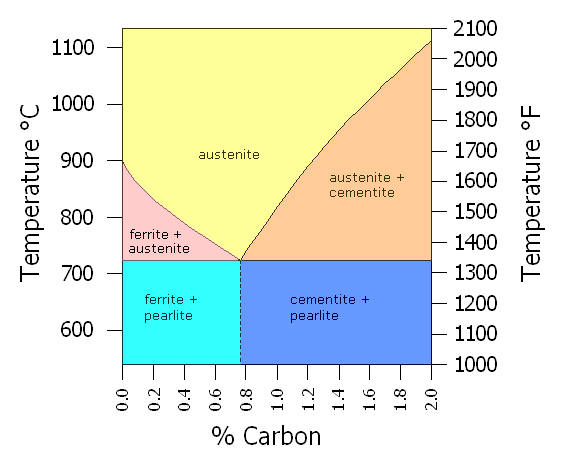
However, there are significant differences in the two surface hardening process techniques;
- A lower process temperature (determined for steel by selecting a process temperature below the steels prior tempering temperature by some 50°F to say 70°F, and of course making considerations for the possible potential for distortion).
- Surface metallurgy and mechanical properties (different surface phases and diffusion zone metallurgy)
Machlet of Elizabeth, New Jersey was granted a process patent granted in 1908. The German metallurgist (Dr. Adolph Fry of Krupp Steel) was granted a European process patent in 1923. This led Krupp Steel to develop and market selected steels which were then known as Special Nitriding Steels or better known as the Nitralloy steels by Thomas Firth and John Brown Steels in the United Kingdom.
The process principle is based on the simple premise of the limits of solubility of nitrogen in iron. In other words, nitrogen will diffuse in the iron or steel very easily with the application of heat and will interact with the some of the alloying elements. (This also includes Iron)
The chemistry of the process is extremely simple and uncomplicated. The source of nitrogen is ammonia for gaseous nitriding. The surface reaction and the decomposition are as follows:
- 2NH3 + heat 2N + 3H2 (Equation 1)
- 2 N +3H₂ → N₂ +3H₂ (Equation 2)
- Kn = pNH ₃/pH₂ 3/2 (Equation 3)
The initial decomposition is to separate the nitrogen from the hydrogen of the ammonia (nitrogen source). For a fraction of a second, the nitrogen is atomic, which will react with the steel being treated which then diffuses into the steel surface. The hydrogen acts as a dilutant gas and also a reducing gas to assist in reducing surface oxide contaminants. The steel surface acts as the catalyst to assist in the gas decomposition.
The ratio of nitrogen to hydrogen in the ammonia decomposes to a ratio of 1 part nitrogen to 3 parts of hydrogen. This is a very important observation to note when defining what type of formed immediate surface metallurgy is required for the application of the part being nitride.
From the decomposition of the gas, atomic nitrogen will react the steel surface and begin to diffuse into the steel. The nitride forming elements that will react with the atomic nitrogen and form stable nitrides are as follows:

It should not be forgotten that Iron is also considered as a nitride former. However the resulting nitrides do not exhibit high hardness values, but assist in the improvement of the steels resistance to corrosion.
Nitriding methods.
At least 4 different, yet basic different methods of applying the nitride process to steel and are:
- Gaseous nitriding (using ammonia as the nitrogen source)

Ammonia gas molecule
- Salt bath nitriding (using a cyanide based salt such as KCN and NaCN) (Potassium Cyanide and Sodium cyanide)
- Plasma nitriding process techniques can also be known also as Glow discharge nitriding, or Plasma nitriding Continuous DC nitriding, Pulsed Plasma nitriding.
The decomposition of the ammonia to release both nitrogen and hydrogen diffusion is very similar with each of the above methods except with the Plasma nitriding. Time, temperature and material chemistry will also influence the;
- Surface metallurgy
- Surface hardness
- Core hardness
- Diffusion zone enrichment
- Nitride networks

Severe Nitride Networks

Metallurgy
The final metallurgy (As seen in the Illustration below and by the gaseous process methods or salt bath methods) will be formed as seen in the lower illustration) comprise of the following results in the order of observation (microscopically)
- Compound layer ( also known as the white layer), because the immediate surface etches out white with a cross sectional examination of the formed case) The compound layer comprises of two phases known as Gamma Prime (ỳ) and Epsilon nitride (έ) The compound zone formation can be controlled by adjustment of the process gas flows(or salt bath chemistry)
- Diffusion zone. This is where the nitrogen has reacted with the alloying elements to form stable nitrides with the appropriate alloying elements.
- The transition zone. (this is the area from the diffusion zone to the core material)
- This is the original core metallurgy of the steel being nitrided.
The exception to the above will be nitriding by plasma techniques and nitriding by dilution techniques.

General nitride surface metallurgy of the formed case
Plasma
What do we understand as “plasma”? There are many forms of natural plasma,such as;
- Lightening
- Aurora Borealis (Northern Lights!
A simple generated fluorescent light is a plasma light source with can be colored by various internal gases.

Plasma Ball

Ball Studs under Pulsed Plasma Assisted Nitriding Conditions
The thermal process requirement can be accomplished by Continuous DC generated Plasma, or be a combination of variable pulsed plasma, in conjunction with an electrical external heat source
Plasma nitriding has the distinct advantage of being able to control the ratio of nitrogen to hydrogen in order to control the resulting surface metallurgy of the nitriding process. The formed compound zone can be constructed of:
- Dual phase (ỳ and έ)
- Single (Mono) phase (ỳ or έ)
- No compound layer
It can be said that “fixed process chemistry = fixed resulting surface metallurgy, but variable process chemistry = variable surface metallurgy”
This can simply be accomplished, by control and adjustments of the ratios of molecular nitrogen to hydrogen.
Steels for Nitriding
Any steel will nitride, simply because of the presence of iron. However they will not produce the same hardness values because of the steel chemistry’s. The iron will assist in the surface corrosion resistance by the formation of Iron Nitrides.
Below is a general group of steels that will nitride. The list is by no means complete:
- Cast Irons. Cast iron grades will nitride without any significant difficulty. The problem then arises because of the cast iron density and The ability of the nitriding to nitride cast iron has been known for many years and is not new. A new use has been developed for cast irons, which is the nitriding of cast iron forming dies for the surface hardening of large auto bodies (such as the tractor in tractor/trailer. This has been pioneered by European and USA die manufacturers with commercial heattreaters.
- Alloy steels. Most alloy steels will nitride. However care needs to be taken when considering the choice of steel for nitriding and in particular with the carbon content. It is not generally necessary to have a high carbon percentage in the steel to give high core hardness in order to support the formed case. A carbon content of approximately 0.45% maximum is considered acceptable. Once again, please be aware that the carbon content of the steel will affect the ratio of gamma prime to epsilon phases in the compound layer.
- Tool steels. The typical tool steels for nitriding will be the Hot Work series of tool steels. The High Speed Steels will nitride very satisfactorily, as will the Air Hardening tool steels. There are some applications where the D series are nitrided, but care should be exercised when selecting the D series for nitriding.
- Stainless steels. All of the stainless steels will nitride. This is because of the ability of chromium to form high surface hardness values. However some will nitride easier than others. The martensitic stainless steels are perhaps the easiest to nitride. All of the other stainless steels require some form of surface de-passivation to remove the chrome oxide layer on the immediate surface of the stainless steels. Once the chrome oxide surface layer, then the stainless steel has lost its corrosion resistance.
A general note for accomplishing a good and sound nitrided structure.
It is a mandatory requirement that the surface is free from surface contamination such as is seen below
Illustration of possible surface contaminations

Sincerely David,
Pye Metallurgical International Consulting
www.heat-treatment-metallurgy.com
Hampton Va 23669
Tel;757 968 1007
Representing Ionitech of Sofia Bulgaria
Shortly before Christmas we posted a photo of the largest Plasma nitrider RÜBIG Industrial Furnaces had ever built-we now have a few more details. The unit will shortly be in operation at a gear manufacturer in China who is providing ring gears to the wind industry. With an effective diameter of 2,2 m it is the largest cross section plasma nitriding equipment produced to date by RÜBIG. The application of nitriding increases especially in drive systems fabrication because the low level of distortion makes the follow-up procedures, such as re-grinding and shot blasting, obsolete and thus significantly reduces costs. Coupled with the fact that as opposed to traditional heat treatment no toxic gases are used and no open flame is needed it would appear to be a good fit. In this photo we see Leon Zhao a service engineer with RUBIG China along with Manuel Frei, Markus Saxinger and Philipp Humer of RÜBIG, Austria.

Interesting the number of ovens Wisconsin Oven built in 2018-a quick calculation shows that Wisconsin shipped on average a new piece of equipment every 1.6 days or 4.3 per week which is pretty cool. “2018 was another strong year of growth for Wisconsin Oven. During the year they shipped an impressive 224 pieces of equipment to companies in industries such as composites, aerospace, technology, and automotive. This equipment included a mix of custom and standard batch and conveyor ovens that were used for curing composites, treating aluminum castings, post curing refractory material, and stress relieving automotive springs. This year the Wisconsin Oven team installed the world’s largest composite cure oven. This oven is a significant accomplishment in their drive to be the leading supplier of composite curing ovens in the world. The continued growth led to many new employment opportunities. As many companies have experienced, with a strong economy comes the challenge of acquiring and maintaining quality employees. Another challenge in the manufacturing sector is the increasing skilled trades gap. Dave Strand, President, and CEO, had been noticing for years the need for more skilled trades workers in the job market and in 2018 made his dream of Wisconsin Oven Universal Training Center (WOC-U) a reality. At the new WOC-U center, experienced Wisconsin Oven production personnel and engineers provide specialized training to help prepare the workforce of the future. The students are paid during their training and many are hired to full time upon graduation.”

Well we now have our first acquisition in the North American commercial heat treating industry for 2019. An equity firm by the name of Trive Capital just announced that they have acquired California Brazing with two locations, California Brazing in Newark, CA and Nevada Heat Treating, located in Carson City Nevada. Both locations were owned by Rich Penrose, a very well known individual in the North American heat treating community. It has been pretty common knowledge for some time that the company was for sale with rumors suggesting that the buyer was an equity firm but this is the first definite news. Sales for the two locations are estimated to be between $25 million and $30 million USD per year. The first picture below shows Rich Penrose along with Pat McKenna who is now the President of Ipsen, USA and the second photos shows Nevada Heat Treating.
“Trive Capital (“Trive”), the Dallas-based private equity firm, is pleased to announce it has partnered with California Brazing (“Cal Braze” or the “Company”). Founded in 2002 and headquartered in Newark, California, the Company is a leading manufacturer of complex, high tolerance components for space, aircraft connectivity, specialty electronic and various defense applications. Cal Braze specializes in CNC machining, metallic and ceramic vacuum brazing, and heat-treating services for both OEM and Tier 1 defense and communication customers. The Company operates out of two facilities in the San Francisco Bay Area and Carson City, NV, delivering turnkey manufacturing of mission critical parts that include satellite waveguides, antenna sub-systems, cold plates and other thermal management devices.
“We are excited to partner with California Brazing management in support of the next phase of the Company’s innovation and expansion,” commented David Stinnett, Partner at Trive Capital. “We believe the California Brazing team has built a differentiated capability and reputation for supporting highly engineered components that will benefit from increased funding into satellite, aircraft connectivity and defense electronic sectors. Trive looks forward to providing capital and resources to help the business achieve continued growth and value to its customers.”
California Brazing President & CEO, Rich Penrose stated, “California Brazing’s unique value proposition and recent investment in new capacity and capability has resulted in tremendous growth. We look forward to continuing this momentum and chose to partner with Trive based on their knowledge in the sector, operational approach and shared vision for the future. Our mission is to deliver best-in-class services and support to our customers, which we believe will be further enhanced with the Trive partnership.”


International heat treat consultant David Pye gives us these thoughts on tempering;
“The need for tempering to temper after the austenitize and quench procedure
A favorite television program for me (and I suspect many other heat treater’s) called ‘Forged in Fire’ shows and demonstrates the early forging techniques that were used to make knives, swords, axes and so on. It further demonstrates the importance of good heat treatment in order for the weapon to be functional. However I have observed quite a few omissions in the heat treat procedure.
- When the implement is quenched after austenitizing, there is very little agitation of the blade to break up the initial vapor blanket. This means t(in my opinion) that the blade is not being effectively quenched for the first stage of the quench procedure.
- The second omission (and perhaps the most important), there has yet to be a broadcast that demonstrates the most important thermal treatment to make the implement functional which is tempering!! If the implement is not tempered correctly, it can be too soft (and bend, or not hold its edge) or too hard (and the implement chips or breaks!!). Good heat treatment makes the product; bad heat treatment breaks the product.(This particularly applies to the tempering procedure)
Hardness; The as quenched hardness is the first noticeable event and if the implement has responded to its given thermal treatment. Check the hardness simply with a 6” fine cut file. The file is usually heat treated to 62HRC to 64 HRC. If the file bites into the as quenched steel, than it has not been fully transformed into martensite, and is below 62HRC. If the file skids off the as quenched steel, it means that the appropriate transformation to martensite has occurred. It is a simple and quick test to observe if the appropriate transformation has occurred. This should be conducted prior to tempering the implement.
Tempering; The purpose of tempering is to develop both the toughness and ductility of the austenitized and quenched steel implement. Tempering can also be considered as a stress relieving procedure to relieve the brittle nature resulting for the austenitizing and quenching procedure. Depending on response of the steel to the austenitizing temperature, we must now select the appropriate tempering temperature to ensure functionality of the as quenched implement. It is that tempering temperature and the time at that particular temperature, that will determine the final hardness. Generally, there is usually no noticeable change in hardness to the steel (through hardened or surface treated by carburizing) at a temperature of say 300℉. The final and functional tempered hardness will depend on;
- Selection of the tempering temperature
- Residence time of the steel at the tempering temperature
- Material chemistry (carbon and alloys content present in the treated steel implement)
- Type of martensite present in the microstructure
- Retained austenite (if present after quenching)
The type of martensite that is present in the steel will be determined by the carbon content of the steel. As stated previously in the first article the two types of martensite are;
- Lath martensite (steels with low carbon content present)
- Plate martensite (steels with carbon content above 0.60%)
You will find that most tempering data related to hardness will display a decrease in hardness in hardness and an increase in toughness. This will apply to the plain carbon steels as well as the alloy steels and some of the tool steels.
Steel Response during tempering; The high alloy tool steels such as;
- A Series
- D Series
- H Series
- HSS Series
Some of the above steels will require a double temper, whereas the AISI alloy steels will only require a single tempering treatment. The above steels will begin to exhibit an increase in hardness at tempering temperatures from approximately 800℉ up to approximately 1100℉. The temperature will depend of course on the hardness required in relation to the material chemistry and mechanical and metallurgical properties required. The tempering data graphs that are published by steel making companies are based on a 1” maximum cross section. The study of the Jominy End Quench hardenability tests for that particular steel analysis will give a good indication as to the as quenched hardness value for cross sections that are greater than 1”. However, you can make up your own tempering diagrams simply by keeping an as quenched/as tempered log to keep a record of;
- The material being tempered
- The material maximum cross section
- The temperature selected for the tempering procedure
- The material as quenched hardness
- The time into the furnace
- The time up to the tempering temperature
- The time out of the furnace
- The tempered hardness results
From the above data, you will be able to make up reasonably accurate tempered hardness date for any of the steels that you deal with in your facility. By David Pye, Pye Metallurgical International Consulting, Hampton Virginia www.heat-treatment-metallurgy.com”

Stack Metallurgical Group (SMG) will be entering the Hot Isostatic Press (HIP) market in 2019 with the addition of a QIH 286 “Mega-HIP” manufactured by Quintus Technologies. Based in Västerås, Sweden, Quintus is widely-regarded as the global leader in high-pressure equipment and solutions. The addition of HIP will further expand the service offerings of SMG to key customers in the aerospace, medical implant, additive manufacturing, and power generation industries.
The equipment being constructed for Stack will offer some of the largest capacity available not only in the Northwest United States, but around the globe. It will be equipped with Quintus’ proprietary uniform rapid cooling and features a large-capacity work zone of 63 inches (1,600 mm) in diameter and 102 inches (2,591 mm) in height, allowing densification of large batches at 29,000 psi (2,000 bar) and a maximum operating temperature of 2280°F (1,250°C).
“We are truly delighted to bring large-scale HIP capacity to the Northwest U.S. market,” according to Doug Puerta, CEO. “HIP is a complimentary service to our existing portfolio of offerings. Stack has always worked closely with its clients to make smart investments in support of their metal processing needs. By expanding into HIP, we’ll be in a position to offer a really outstanding value proposition of capability, capacity, quality, and service.” Dave Ederer, Chairman of SMG adds “This is an important extension of Stack’s business philosophy of providing new technology to its established customer base.”
“Stack HIP” will be based in a brand-new 25,000 sq. ft. facility in Albany, OR. This will be the fourth location for SMG, and will complement existing heat treat and metal processing facilities in Portland, OR, Spokane, WA, and Salt Lake City, UT. Construction of the new HIP facility is underway and will be completed in mid-2019, with equipment installation to immediately follow.

2019 marks a very special anniversary for “WG Montgomery Ltd.”, and “The Monty”. Way back in 1969 WG Montgomery Ltd. was founded by the writer’s father William Gordon Montgomery as a manufacturers representative firm selling new heat treating equipment-2019 marks our 50th year in business. 2019 also marks the 20th anniversary of “The Monty”, the worldwide heat treating publication. While William passed away in 2017 at the age of 82 we know he would be very pleased to see that his business lives on and continues to serve the worldwide heat treating industry.

Auto parts supplier and captive heat treater Dana Corp., in Glasgow closed down some time ago (as we mentioned) and the surplus equipment was put on the used market. This included 3 Surface Combustion 3 row pusher furnaces which were in use up until December 2017. The lines were complete and in various conditions ranging from mediocre to pretty good but our prediction was that they were unlikely to find a buyer due to low demand these days for pusher furnaces. As it turns out our prediction was correct and the lines are being scrapped. Heat treaters can rejoice in the Nickel Pricing these days as you can see in the chart below. To cut a long story short there appears little likelihood of alloy pricing changing substantially in the near future.

Back in September of 2017 commercial heat treat New Britain Heat Treating in CT, USA suffered a devastating fire (the original story will be in our archives). Unfortunately fires are not an uncommon occurrence in our industry but what is always frustrating is that it is usually impossible to find out what caused the fire-it is important that our industry as a whole learns from our mistakes. In this case the fire would appear to have been caused by a malfunctioning motor.
“NEW BRITAIN – A malfunctioning motor that caused a machine to overheat started the spectacular blaze at New Britain Heat Treating Corporation Sept. 17 that roared for hours, officials said. Employees inside the building were changing a motor to a machine that cools the equipment that heats up during the metal treatment process when the equipment overheated causing oil to turn to vapors, said fire inspector Ryan Stewart, the lead investigator in the case. “The vapors created a fireball,” Stewart said. The cause of the fire has been determined to be accidental, Stewart said. The employees were not injured and were able to get out of the building at 126 Whiting St. before the heat treating business burst into flames. Firefighters arrived within minutes to find flames shooting out of all of the front windows of the building. Black smoke could be seen for miles. It took about 90 minutes to get the blaze under control with firefighters pouring foam, not water, on the flames from a ladder truck due to the chemicals inside the building. The fire roared back up about 30 minutes later forcing city firefighters to call in foam units from Hartford and Waterbury. In all firefighters spent about eight hours battling the blaze and putting out hotspots. Two firefighters who came in contact with chemicals while fighting the fire were treated and released from a local hospital. Due to the damage from the fire and the chemicals inside the building has been condemned by the city.”

It has now become “old news” about Thermal Process Holdings buying commercial heat treater P&L Heat Treating in Youngstown, Ohio, USA, however we ran across this interesting little summary in the local Youngstown newspaper; “YOUNGSTOWN, Ohio (WYTV) – A Youngstown company closed 2018 with a major change and is ready for another one in a few months. P&L Heat Treating on Wood Street was sold in December to Thermal Process Holdings. The company was started in 1978 by Bill Pociask. It has grown from two employees to 16. P&L does heat treating of various dyes in vacuum furnaces, which heat up to over 2000 degrees. Today, it does more work in two weeks, handling millions of pounds, than it did in an entire year when the company was started. P&L has two dozen furnaces and offers a wide variety of heat treatment services, all done in Youngstown. “The sale was important because the company will grow here, stay here, and our people will have good jobs and a potential to grow their own positions here, and our customers are extremely important because there is no way I would want this company just to end and leave everybody in limbo,” said Pociask. P&L Heat Treating will start an expansion project in the spring and plans to reach out to the Cleveland area for more work.” In Germany we hear that furnace builder KGO has landed an order from a German commercial heat treater for a brand new vacuum nitriding furnace. We visited KGO just a few months back and took this picture of the KGO team.

“Souderton, PA, January 4 – Solar Atmospheres recently awarded the title of CEO Emeritus to Roger A. Jones, FASM. The honorary title was conferred by the company, and announces his semi-retirement as Solar Atmospheres’ CEO, the culmination of 45 years of leadership and service to the vacuum heat treating industry.
A 1974 graduate of Hocking Technical College (Nelsonville, Ohio), Roger began his professional career in the heat treating industry at ABAR Corporation. Jones left ABAR in 1978 to join the newly formed Vacuum Furnace Systems Corporation (VFS), working with his father and VFS founder, William R. Jones FASM. In 1983, Roger assisted the founding of Solar Atmospheres, Inc., serving as Vice President until 1993. Jones was promoted to President in 2001, and eventually to CEO in June 2017, overseeing operations of all four heat treating facilities.
As a member of several professional societies, Jones has provided leadership and has received numerous industry awards, primarily from the American Society of Materials (ASM) and the Metal Treating Institute (MTI). Jones has been recognized time and again for his outstanding commitment and service to the vacuum heat treating industry.”
