In our humble opinion “Mr. Bob Fincken”, Sales Manager for controls company “SSi” is one of the most knowledgeable individuals in the entire heat treat industry when it comes to furnace control. We are honored to be able to share his knowledge today in the form of this interview.
“Bob Fincken” in our opinion is one of the most knowledgeable and experienced furnace controls individuals in the world- we consider ourselves lucky that he is giving us some of his time today to talk about a number of topics related to furnace controls. Bob lets start off with your background and how you ended up where you are today.
“My first job after college was at a Cincinnati based company assisting with the design of circuit boards for radar detectors. It was a good start but not as challenging as I wanted. I moved on, working for a very talented design engineer, Don Riemenschneider, (who also became an employee of SSi). We were both hired contractors for Cincinnati Steel Treating (CST) and I had the privilege of starting my career working with Dan McCurdy who was employed by CST at the time. I assisted in the design and build of a product called the Multicarb that controlled carbon potential in furnaces used in this industry-I knew nothing about “heat treating” at the time. Dan had a vision of automated process control using a microprocessor and software for data collection. I found this industry to be just the challenge I needed.
Furthering my career, I worked for Marathon Monitors under another pillar of the industry, Bill Thompson, then moved on to Eurotherm which allowed me to expand my skillset but remain focused on heat treating, the industry that I find so rewarding. I am currently working for SSi and have been a part of this organization for 20 years. The team I work with here resolves new challenges every day with a customer focus that is unmatched in the industry that I am proud to be a part of.”
In your long career in the heat treatment industry what would you say is the #1 new technology introduction when it comes to heat treat furnace atmosphere control?
“From my perspective I divide this into two categories, software and hardware.
Without a doubt depending on the process, you are charged with, sensor technology, including the carbon probe, hydrogen sensor, dew point sensor and infrared analyzer changed the industry.
Sensors allowed verification of a process, in general without the sensor technology, instrumentation would not have developed into what it is today. The second category would be software specifically used for data collection.
This could be charts, custom screens any Human/Machine Interface. The interaction with equipment and validation of process allows owners, managers and maintenance personnel to view and organize, plan and react to their specific job functions with a few mouse clicks. The two combined allow for individuals to run a furnace with minimal experience, that experience is so important in this industry, as well as others that are experiencing the loss of talent through retirement.”
What other innovations would you rank as “game changing”?
“Customers looking for information regarding asset utilization has also become more prominent. You can never have too much data in my opinion and this data allows for a different approach to running furnaces. Modern equipment allows for computer calculations based on furnace data that can be used for cost analysis. Systems can now offer the cost per load using metrics like gas usage from flowmeters, electricity usage also. Every electronic flowmeter we sell has the equivalent of a built-in odometer that can be reset through software.”
When you and I entered the industry computers and software were unheard of and remained that way for a number of years. When did software and the power of computers really start to make a difference in the industry and what was the difference?
“Computer based technology didn’t initially present itself as what we use today. The analog controls on a furnace didn’t allow for easy verification of process. Analog devices didn’t have the accuracy or legibility to allow for proof of process without a magnifying glass and a flashlight to determine which notch on a dial you were reading.
The introduction of digital controls allowed for large easy to read display of process variables and the ability to connect to computers for data acquisition. Storage of analog charts had to be in a dimly lit area to reduce fading. Typically, on a mezzanine someplace or a large trailer with rows of file cabinets. Two wire or four wire daisy chain communications were the technology of choice. A bit difficult to troubleshoot but reliable.”
Let’s switch gears from the past and look towards the present and the future. Are you seeing any game changing developments which would rival oxygen probes and computer control of furnaces?
“I am unsure if this is classified as a game changer but the software capabilities of the data acquisition systems have been evolving and providing more process capabilities.
For example, Gap reasons for furnaces, whether in production, down for maintenance or following AMS2750 criteria can be identified and offered in a pie chart for utilization.
Defining maintenance schedules, offering detail on gas or electric usage and cost per load can really be helpful to commercial heat treaters. Sharing database information on parts and load routing between two different systems eliminating double entry is also a vast improvement. Automated approval for every load meeting specific requirement in the recipe is also a feature that will help quality control and delivery of product.”
This question is really a follow up to the previous one about new technologies in the industry. SSi has come up with some new products for 2025 such as Load Entry 3, “SuperGen”, and Mass Flow meters-care to elaborate on what these new products will do for heat treaters?
“Load Entry assists with recipe management and tracking by providing a single, PC-based interface to control all activities for a heat treat facility.
Load Entry allows you to enter various operations, furnaces, recipes, parts, and users, but also enables you to “apply” these items to one another as required by your facility. This allows for easy tracking, management, and information retrieval, saving you time and money. We have videos on our website which will offer a quick description on the new software. Load Entry 3 https://youtu.be/_pgfB-ynGxQ
We have recently enhanced this software module adding Maintenance and Scheduling. These two modules allow scheduling of loads and maintenance including any pyrometry activities. What makes this software unique is the ability to remove a furnace from production. The system uses SuperDATAPro to communicate thus allowing for a software lockout of the furnace. https://youtu.be/MHzz8790XxE”
The “SuperGen” uses our VMix technology for endothermic generator demand control.
The number one issue which all captive and commercial heat treaters bring up these days is the lack of good experienced people in the industry. I (and I am sure you also) hear this from heat treaters in Mexico, California, New York, Ontario pretty much everywhere that finding people is the biggest challenge there is these days. Do you feel that technology can solve this problem?
“Technology has the opportunity to reduce the burden. Sure, robots can load the furnace. Controls can guarantee the cycle runs correctly and data acquisition can provide proof of process. At the end of the day though the people in any organization are what makes the whole process effective.”
Bob you must have seen hundreds if not thousands of heat treats over the years and been involved in untold numbers of furnace projects. Which ones really stick out in your mind either for being extremely ambitious, a complete disaster or perfectly executed from beginning to end? If you can share names great, if not just an overview would work.
“I would like to stay positive here. There have been far too many projects where the controls have been outdated for years. Think about how often you change your PC for a newer model. Similar rules should apply to process controls. I can say that some of the projects have been very challenging due to some unknown factors that weren’t shared between the customer and our team until the project was started. We know now that specific questions need to be asked. For example, with a vacuum furnace, we will ask when was the last time this furnace passed a survey. Or for an atmosphere furnace, do you have any issues maintaining carbon potential.”
Is the furnace controls market a crowded one-in other words are there many capable firms competing for this business? Do you run across competition from non North American suppliers very often?
“The furnace controls market is competitive. Local suppliers, engineering firms, furnace OEM’s and the controls manufacturers themselves all compete for projects. Travel costs can be an integral part of the final price. I believe we have a reputation for customer service and the use of the latest proven technology. As with any company SSI is results driven and we have provided controls for simple and complex applications where a strong engineering and support staff makes the job flow through to completion without too many problems to overcome.
For our projects in the United States there have been very few foreign competitors. Sometimes if a furnace was manufactured overseas, they are invited into the bidding process for a retrofit. Across North America yes, we do sometimes run across foreign competitors due to the fact that each country has their own infrastructure in place and we are competing in their regions sometimes.”
You have often said that one of the biggest barometers of how busy the heat treat industry is, is by the number of oxygen probes being sold. What does this barometer or others tell you about the health of the industry as we come close to closing out 2025?
“As a manufacturer of oxygen probes we do have a unique way of estimating how many furnaces are in operation. Historically when the economy is struggling, we have the ability to evaluate the quantity of probes that are being rebuilt or purchased new.”
Bob I really appreciate your time, honesty and candor today-thank you, Gord.
“Gord thank you for the opportunity, I have worked with you for over 35 years in this industry and I continue to learn something new all the time. Our customers and my coworkers are what keep me involved in this industry. It is a pleasure to come to work everyday to provide solutions and interact with so many good people.”
Wisconsin Oven is pleased to announce the shipment of one (1) Electrically Heated Standard Draw Batch Oven (SDB Series) to a United States Military Base. This industrial oven will be used for heat treating various aerospace components.
This equipment is engineered to meet the critical safety requirements of the customer and stringent demands of aerospace heat treating. It has combination-style airflow (delivering both horizontal and vertical upward flow) to ensure optimal heating rates and consistent temperature distribution across the product. Uniformity has been verified through a Class 1 Temperature Uniformity Survey (TUS) conducted at Wisconsin Oven’s facility in accordance with pyrometry specification AMS 2750H. The system achieved temperature uniformity of ±5° F at 200° F, 700° F, and 1,200° F.
“This draw batch oven was designed with additional safety features for operators, tight uniformity, and compliance standards required by the US Military. The temperature uniformity survey was performed prior to shipment to verify compliance with AMS 2750H Class 1 requirements.” – Doug Christiansen, Senior Application Engineer
Unique features of this heat treat oven include:
Temperature Uniformity of ±5°F at 200°F, 700°F, and 1,200°F (AMS 2750H Class 1 verified)
Vertical lift pneumatically operated door with manual and automatically actuating door safety latches (to provide redundant vertical lift door safety features for personnel)
Motorized dampers on fresh air inlet and exhaust outlet to allow low temperature operation and faster cooling
15,000 CFM @ 10 HP recirculation system utilizing combination airflow and a VFD (for lowered noise level, and improved heat loss while the oven door is open
In an apparent sign of the times another long-time commercial heat treater in the USA, “Pinson Valley Heat Treating” of Birmingham, Alabama, USA has been acquired by a venture capital group. It has been widely known for quite some time in the heat-treating community that the company was for sale so it comes as no surprise that an ownership change has now been concluded. The “Monty Heat Treat News”has for some time ranked the company amongst the“52 Largest North American Commercial Heat Treaters 2025″. The official press release can be found below;
“CLEVELAND, Dec. 9, 2025 /PRNewswire/ — Weinberg Capital Group (“WCG”) is pleased to announce its acquisition of Pinson Valley Heat Treating. (“PVHT” or the “Company”), a five-decade-plus-old specialty heat-treating company that serves the aerospace and defense, industrial, and automotive end markets.
“We are excited to partner with Don Hendry, Benny Grissom, and their talented team,” said Chip Weinberg, Managing Partner at WCG. “Pinson Valley has a long history of success, and we are committed to building on that legacy by investing in its continued growth while preserving the company’s strong reputation for quality, customer service, and on-time delivery.”
Post close, Both Benny and Don will be investors in the Company and continue in their current roles. Together they commented on the transaction: “We are excited to join forces with WCG as we enter the next phase of growth. Their expertise and resources will strengthen our ability to serve our customers and expand our business. Most importantly, this transition will be seamless for our customers and partners, as our entire team will remain in place to drive future success.” Weinberg Capital Group is actively seeking add-on acquisitions for PVHT, particularly companies offering complementary thermal-processing capabilities, geographic coverage, or value-added metallurgical services.
About Pinson Valley Heat Treating; Founded in 1970, T.A. Parker and his wife, Elinor, started Pinson Valley Heat Treating using T.A.’s 36 years of experience at Chicago Bridge and Iron Co.; the Company began with one furnace, primarily doing stress relief of welded products, but today offers vacuum heat-treating, atmospheric quenching, and an array of other heat-treatment services.”
One of our most popular stories of the year was entitled;“Why Are So Many Heat Treat Shops in North American Closing Down”?The story prompted so many thoughts and comments that the team at “The Monty” felt is well worthwhile to elaborate on the reasons why commercial heat treat shops appear to be closing at an increasing pace and to add a few more reasons as suggested by our readers.
We pointed out a number of causes for these closures but at the end of the day there is no single overarching reason, looking at closures over the past couple of years suggests a mix of economic, operational, and market factors. Here are a number of the main ones;
1) Consolidation Through Acquisitions; Many closures stem from larger companies buying smaller ones and then shutting down redundant facilities to streamline operations. For example, Thermal Process Holdings acquired Certified Heat Treating in Springfield, Ohio, and closed the plant, moving equipment and work to other sites within their network. This pattern reflects broader industry consolidation, where bigger players absorb smaller shops to reduce overlap and boost efficiency.
2) Tariffs and Rising Costs; Trade tariffs, particularly on imported materials or equipment, have increased operational expenses, making it harder for some shops to remain profitable. This has been cited as a contributing factor in multiple closures. (An example of a shop closing because of increased tariffs would be AMAC Industries of Cleveland, Ohio).
3) Shift to In-House Heat Treating by Manufacturers; Some manufacturers are bringing heat treatment processes in-house to cut costs and improve control, reducing demand for external commercial services. This trend has led to lower volumes for independent shops, forcing some to close.
4) Overcapacity and Market Uncertainty; The commercial heat treat sector has excess capacity relative to demand, exacerbated by slowdowns in key industries like automotive. Economic uncertainty in these sectors has prompted adjustments, including closures to right-size the market.
5) Outdated Technology and Lack of Investment; Shops relying on older equipment or processes struggle to compete with modern, efficient alternatives. Without upgrades, they face higher maintenance costs and reduced competitiveness, leading to unprofitability-witness the departure of small batch IQ furnaces and pusher lines both of which were once mainstays of the heat treatment market.
6) Poor Management or Retirement; In some cases, closures are due to mismanagement (including stupidity and incompetence as we have mentioned in the past) and retirement. An example of retirement would be Katy Heat Treat in Texas which shut down in mid-2025 as its long-time owners sought a change.
7) Low Profit Margins; Overall profitability issues, driven by the above factors, make it unsustainable for marginal operations to continue. Even with a stable market, shops without strong niches or efficiencies are vulnerable.
Not all heat treat segments are equally affected—some areas like aerospace or specialized services are expanding.
Watch for continuing coverage from “The Monty” about changes and trends in the commercial heat treatment market.
Recently we posted an article entitled “Will ‘Boronizing’ Providers Need a New Source for ‘Boron Powder’?” In response Mr.Ralph Hunger, CEO of “BorTec USA LLC” very kindly sent us this update.
BorTec was the original source of the boronizing powder previously distributed by Avion Manufacturing. We have since taken over these activities directly and established BorTec USA LLC, with a production and distribution site in Tennessee. From this location, we manufacture boronizing media “Made in USA” for the North American market. Beyond boronizing powders and pastes, BorTec USA also provides commercial boronizing services for applications in pumps, valves, oil & gas, and agricultural equipment, and manufactures boronized OCTG tubing for demanding energy-sector environments.
By way of introduction, BorTec is an internationally recognized specialist in boriding and boronizing technologies, with decades of experience developing advanced surface-hardening solutions for highly demanding applications. The company is known for its deep process expertise, high-quality boronizing materials, and close collaboration with customers to extend component life and performance. With BorTec USA LLC, we are pleased to combine proven European know-how with local U.S. production, service, and technical support.”
SBS Corporation, a global provider of high-performance thermal processing and industrial cooling technologies, announced today that it has received a significant order for its Vac Air vacuum furnace cooling system from a prominent U.S. manufacturer specializing in hypersonic platforms.
The order represents a major milestone for SBS Corporation as the company continues to expand its footprint in advanced aerospace, defense, and high-temperature materials processing markets.
“We are honored to support one of the nation’s most forward-leaning developers of hypersonic systems,” said George Smith, CEOof SBS Corporation. “The Vac Air is engineered to deliver exceptional thermal stability, operational reliability, and precise control—capabilities that are essential for processing the high-performance materials used in next-generation flight technologies.”
The system builds on SBS’s industry leading support of critical manufacturing workflows, including thermal treatment and component conditioning for extreme-environment applications.
This contract underscores SBS Corporation’s commitment to advancing U.S. industrial capability and supplying critical infrastructure for strategic manufacturing programs.
The system is scheduled for delivery in Q1 2026.
December 4th“The Monty Heat Treat News” reported on an ongoing auction in the western USA featuring an unused “Ipsen Titan” Debind/Sinter System”-the original story can be found further down. As far as we are aware the furnace sold for $45,000 USD at auction-now here is the really interesting part of the story. Very shortly after the auction concluded the furnace appeared for sale on “E-Bay” with an eye watering asking price of $385,000 USD-somebody is trying to hit a home run with this furnace!
(Editors Note; We have since learned that over the years Ipsen has built in total 37 debind and sinter vacuum furnaces of which 28 fell into the Titan DS family of products. However only 3 have had working dimensions of 12″ X 12″ X 24″, most of the others have had working dimensions of 36″x36″x48″).
We will keep you updated on this story.
“DECEMBER 4th 2025; Last week an Ipsen“Titan” Vacuum Debind/Sinter furnace was included in an auction taking place on the USA West Coast. While the Ipsen “Titan” vacuum furnace has proven to be extremely popular with heat treaters around the world, this is a very unusual version of the unit-so unusual in fact that our understanding is that only 3 have ever been built.
It is a Model DS 121224 which proved to be a vacuum debind/sinter system with working dimensions of 12″ X 12″ X 24″, built in 2023 with a surge tank, water cooling system and numerous spare parts. It would appear that it was originally sold to an end user in Washington who scrapped the entire project, meaning this system was probably never used or even installed.
While the auction is ongoing, it has as of 11:30 AM, November 4th received numerous bids with the current highest being $45,000 USD, this for a furnace which new would have had a sale price of approximately $500,000 USD.
It will be interesting to see what the final “buy” price is, while it is a beauty of a furnace it will be of interest to only a small % of manufacturers in the world”.
We are very proud to welcome our newest advertiser, “Riedhammer”of Germany, the world’s leading Kiln Plant Manufacturer Design, and a firm heavily involved in the construction of systems for the production of lithium-ion battery powder materials. Their ad can be found on this page and an example of their work can be found in this photo.
(AI Overview; CAB furnaces, or Controlled Atmosphere Brazing furnaces, are industrial systems that join aluminum components like radiators and condensers using a non-corrosive flux in a pure nitrogen environment, providing precise heating for high-quality, oxide-free bonds, essential for automotive, aerospace, and HVAC parts. These continuous or semi-continuous systems involve degreasing, fluxing, drying, and brazing stages, offering cost-effectiveness and high throughput for mass production, differing from vacuum brazing by using flux for certain alloys.)
“SECO/WARWICK – a global expert in controlled atmosphere brazing technology – will deliver two EV/CAB lines for a long-standing Chinese Partner. One of the installations will be launched in China, and the other in Mexico. These are further orders confirming a strong, long-term technological partnership.
The story began 15 years ago, when the existing equipment was first used for the production of heat exchangers for trucks, passenger cars, and new energy technologies. The Partner has dominated the heat exchanger sector for years, being the first private company in the industry to be listed on the Chinese stock exchange.
The CAB furnaces on order were designed to meet the stringent requirements of the automotive industry for the production of components for commercial vehicles and to ensure long-lasting and reliable operation in demanding industrial conditions.
Both lines are modern aluminum brazing solutions dedicated to the production of key cooling system components for electromobility and classic automotive applications. The line with a belt width of 1900 mm, destined for the Chinese location, was designed for battery cooling plate production, while the 1800 mm wide line, which will go to Mexico, will be dedicated to the production of automotive heat exchangers.
“We are proud that one of the leaders in automotive thermal management consistently chooses SECO/WARWICK technology. Our CAB lines are proven, precise production tools for electromobility, which not only meets current market needs, but also fulfills future requirements regarding automation, efficiency and ecology. Recently, we celebrated the 15th furnace for the 15th anniversary of cooperation with this Partner. Now we can add two more devices to the list,” commented Piotr Skarbiński, Vice President of the Aluminum and CAB Product Segments at SECO/WARWICK.”
Founded in 1985 “Mid-South Metallurgical” of Murfreesboro, TN can be best described as a mid sized, “full service” commercial heat treater in that it offers vacuum hardening, carburizing, tempering and black oxide coating. The firm was purchased by a very competent, hardworking individual by the name of Mr. Clif Coleman roughly 20 years ago who did a very good job of modernizing and updating the facility over the years.
Very unfortunately present business conditions in the North American commercial heat-treating industry led to the decision to close down the company December 19th of this year.


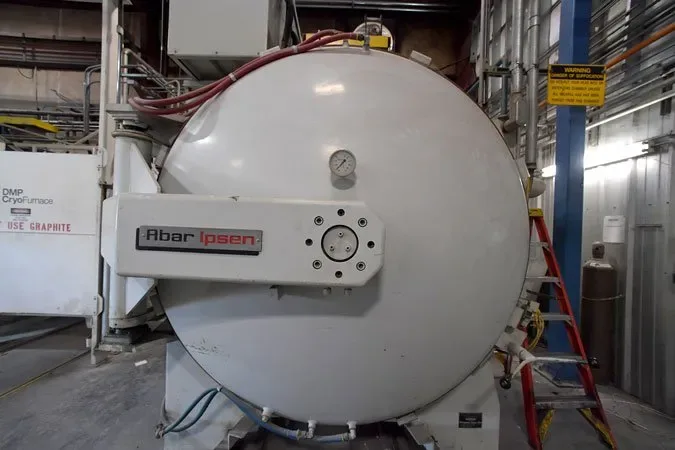 In an apparent sign of the times another long-time commercial heat treater in the USA, “Pinson Valley Heat Treating” of Birmingham, Alabama, USA has been acquired by a venture capital group. It has been widely known for quite some time in the heat-treating community that the company was for sale so it comes as no surprise that an ownership change has now been concluded. The “Monty Heat Treat News” has for some time ranked the company amongst the “52 Largest North American Commercial Heat Treaters 2025″. The official press release can be found below;

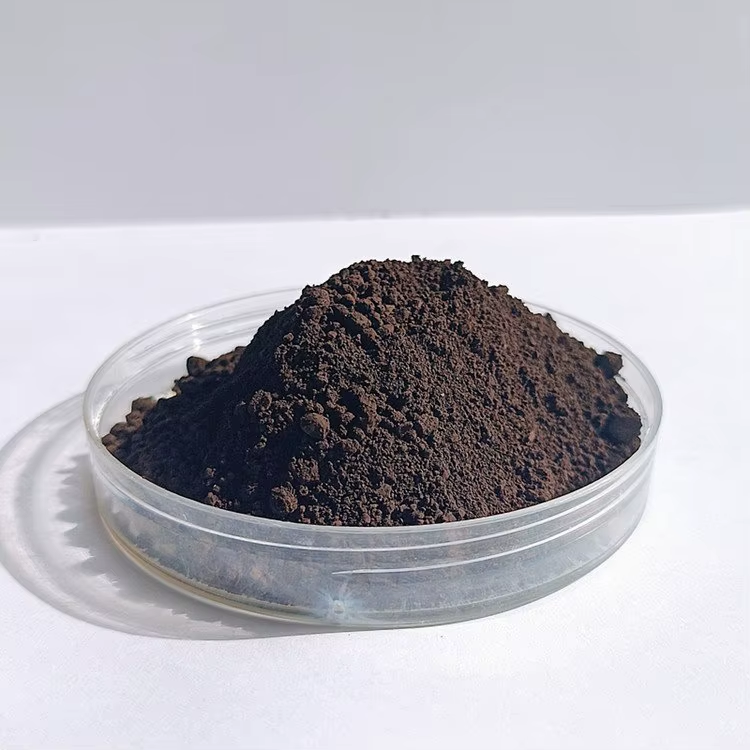
 SBS Corporation, a global provider of high-performance thermal processing and industrial cooling technologies, announced today that it has received a significant order for its Vac Air vacuum furnace cooling system from a prominent U.S. manufacturer specializing in hypersonic platforms.