AHT senior metallurgist Jake McCann discusses effective case depth and total case depth when it comes to nitriding and carburizing surface treatments.
Thermochemical surface treatments such as nitriding (or carburizing) diffuse nitrogen (or carbon) into the surface of steel alloys. The diffusion layers increase the surface and near-surface hardness of the material, providing enhanced tribological properties (wear resistance, coefficient of friction, Hertzian contact stresses, etc.). Rightfully so, these heat treatments are often named “case hardening” type processes, since there is a hardened layer on the outside of the material leaving the internal material softer.
Two Methods to Evaluate the Diffusion Layer (Case Depth)
Effective Case Depth (ECD)
Effective Case Depth (ECD) is defined as the depth to a particular hardness value. On a metallographic mount, microhardness testing (Vickers- HV or Knoop- HK) is performed at standard intervals (this is called a “microhardness traverse”) on the cross-section. The resultant hardness values are plotted against the depth for each indentation. The depth to the desired hardness value is then interpolated.

Figure 1. Graph (microhardness vs depth) associated with Figure 2.
In Figure 1, the red horizontal line represents 50 HRC equivalent (513 HV). The intersection of the red line with the hardness curve (purple) determines the resultant ~0.016” effective case depth (at 50 HRC).
Total Case Depth (TCD)
Total Case Depth (TCD) is defined as the full or complete depth of atomic (nitrides/nitrogen or carbon) diffusion. For some steel alloys, TCD can be evaluated visually after etching with an appropriate acid to reveal the diffusion layer. For steel alloys that DO NOT reveal the diffusion layer, a microhardness traverse is performed. The resultant hardness values are plotted against the depth for each indentation. The full microhardness traverse is used to calculate the TCD, based on the extent of hardness drop from near-surface hardness to core hardness.
Note: TCD is typically defined as the depth to 50 HV or 50 HK above the core hardness average. Alternatively, TCD can be defined in other ways, such as the depth to 110% of the core hardness average.
In Figure 1, the green horizontal line represents the core hardness average of 334 HV. The blue horizontal line represents hardness value of 50 HV points above the core hardness average (50 HV + 334 HV= 384 HV). The intersection of the blue line with the hardness curve (purple) determines the resultant ~0.022” total case depth.

Figure 2. Nitrided medium alloy steel showing compound zone (white layer) at the surface and nitride diffusion zone. Hardness indentations shown are produced using Vickers indenter (HV).
Microhardness Traverse Profile
Figure 1. Graph (microhardness vs depth) associated with Figure 2.
Figure 2. Nitrided medium alloy steel showing compound zone (white layer) at the surface and nitride diffusion zone. Hardness indentations shown are produced using Vickers indenter (HV).
Case Depth Common Uses
Carburizing

Figure 3. Carburized and Quenched 8620 alloy showing higher hardness and carbon content martensite near the surface.
For carburizing treatments, case depths are usually defined as “ECD to 50 HRC” as this usually coincides with total carbon diffusion depth and the martensitic transformation (quenching) of the applied carbon diffusion. For common carburizing steel alloys (e.g. 8620, 9310, 5120, or 1018), “ECD” is most used because of the universal resultant case hardness for this process type.
Figure 3. Carburized and Quenched 8620 alloy showing higher hardness and carbon content martensite near the surface.
Nitriding
For nitriding treatments, case depths are usually defined as “TCD”. This is mainly because the resultant case hardness varies greatly from low alloy steels to high alloys steels.
- For nitrided LOW alloy steels (such as 1018), case hardness within the diffusion zone may peak at approximately 300 HV (~30 HRC eqv).
- For nitrided HIGH alloy steels (such as 17-4 PH), case hardness within the diffusion can easily exceed 1000 HV (above the HRC scale).
Because of this non-uniform resultant hardness of nitrided steels, it disallows the use of ECD to be used to compare case depths of different alloys.
For some highly alloyed steels, such as stainless steels, the total case depth (usually observed visually after etching) is approximately the same as effective case depth due to the abrupt change from case hardness to core hardness. Reference Figure 4.
Figure 4. Nitrided stainless steel (17-4 PH) showing sharp transition from case to core. Hardness indentations shown are produced using Knoop indenter (HK).

Figure 4. Nitrided stainless steel (17-4 PH) showing sharp transition from case to core. Hardness indentations shown are produced using Knoop indenter (HK).
What Affects Case Depth During Case Hardening?
For optimum diffusion to occur with either process type – nitriding or carburizing – the surface of the material should be clean and free of surface oxidation and heat treatment scale.
For carburizing applications, the combination of carbon diffusion and sufficient case depth are necessary to produce the effective case depth. If the parts are not quenched or insufficiently quenched (e.g. slack quench or slow cooling), carbon diffusion would remain, but the case properties would remain soft since the quenching operation has not yet produced the case hardening.
For nitriding applications, core hardness can play a crucial role in determining the ECD. Core hardness serves as the foundation upon which the case is built – nitriding improves the already-established core hardness. Considering two specimens of identical alloy (chemical composition), but varying core hardness, when nitrided under the same conditions, the specimen with the higher core hardness will exhibit a deeper effective case depth.
AHT Quality: Focusing on Your ECD Specification
Prior to nitriding, AHT often tests the incoming hardness of parts to identify any potential issues, ensuring that any concerns are addressed before processing.
When sending parts with an ECD requirement, it is helpful to also provide a sample piece of material that has undergone the same heat treatments as the parts in the order. While AHT includes sample materials in every load, discrepancies between the condition of our sample materials and the submitted parts can lead to skewed metallurgical results.
On a regular basis “The Monty Heat Treat News” updates our readers on well-known individuals in the global heat treatment industry who have made recent career changes-this is our September 11, 2026 update;
 Jay Jefsen, Furnacare; Vacuum furnace builder “Furnacare” (TAV) in Spartanburg, SC has just announced that Mr. Jay Jefsen, previously Sales Manager with the company has been promoted to General Manager, USA. Jay brings with him a very impressive resume which includes commercial heat treating and capital equipment sales. Jay Jefsen, [http://Vacuum furnace builder “Furnacare” (TAV) in Spartanburg, SC has just announced that Mr. Jay Jefsen, previously Sales Manager with the company has been promoted to General Manager, USA. Jay brings with him a very impressive resume which includes commercial heat treating and capital equipment sales.]“The Monty Talks Vacuum Furnaces with Mr. Jay Jefsen, Furnacare”.
 Rick Clift, IMT Elemental; With over 40 years’ experience in the North American heat treat industry, the announcement by “Mr. Rick Clift” that he is retiring at the end of September 2026 marks a real loss to the heat treatment industry. A metallurgical engineer by background Mr. Clift started his career with “Atlas Steel” (now Valbruna ASW Inc.) in Welland, Ontario, Canada over 40 years ago. His career has made several twists and turns over the years which led to some time as metallurgist and heat treat engineer at auto parts supplier “TRW Products” in St. Catherines, Ontario. After a brief return to Atlas Mr. Clift joined commercial heat treater “H & S” in Port Robinson, Ontario (now called IMT Elemental) in 2001 as corporate metallurgist. “Heat Treat Industry Losing a “Good One”-Rick Clift”.

The company, based in Hagen, Germany, had been a key supplier of components, spare parts, and furnace installations to the European industry since 1994. After the closure of “Avion” Roland quickly pivoted and is now a German corporate consultant and property management executive based in Hanover, Germany.


And that is your “Heat Treatment Names in the News” update for September 11, 2026.

“JUNE 26/2026 USA Commercial Heat Treater Closes Their Doors; Earlier this week, Phoenix Metal Treating, located at W190 N11350 Carnegie Drive in Germantown, Wisconsin, officially closed down. This 40 year old family owned company operated several medium sized Beavermatic and Ipsen batch IQ furnaces and catered largely to the local automotive parts suppliers. Unfortunately their largest customer closed down and the remaining work was not enough to justify keeping the business going.”

While it is hard to describe a vacuum hardening line as famous, in this case the adjective certainly fits. Built by “ALD” in 2008 for “Caterpillar” this line was originally designed as an “R & D” project as it was able to offer a number of different processes;
“ALD Holcroft ModulTherm Fully Automated High-Production Vacuum Heat Treat Line, New 2008, Upgraded in 2020 with (3) New Vacuum Furnaces & Washer, New Owner Purchased in 2014. Maximum Temp: 2,300°F, Consisting of (4) Heat Treat Furnaces, Air Temper Furnace, (2) Washers, 20 Bar Nitrogen or Helium Quench with Reversible Air Flow, Oil Quench, Rail Mounted Charge Car Equipped with Heated Vacuum Chamber”.
After a relatively short trial period of time “CAT” abandoned the project and put the system up for auction at which point auto parts supplier “McGard” in Upstate, NY, USA purchased the line in a rather surprising move. We say surprising as “McGard” had been successfully processing their parts in a very cost efficient manner in a basic quench and temper line-why the company decided to change to a far more expensive processing method remains a mystery to most.
The project did not produce the expected results and subsequently the line was shut down before processing any significant production volumes. Since that time, it has languished on the used furnace market will little interest shown. We now have word that the line will be auctioned this fall with bidding already open.
“ALD” is a premier furnace builder, well respected around the world, however this system having originally been built as an “R & D” project is not a good fit for virtually any firms doing high volume production. Perhaps the auction will attract some attention, however after so many years on the used market we do not expect significant interest in the system.

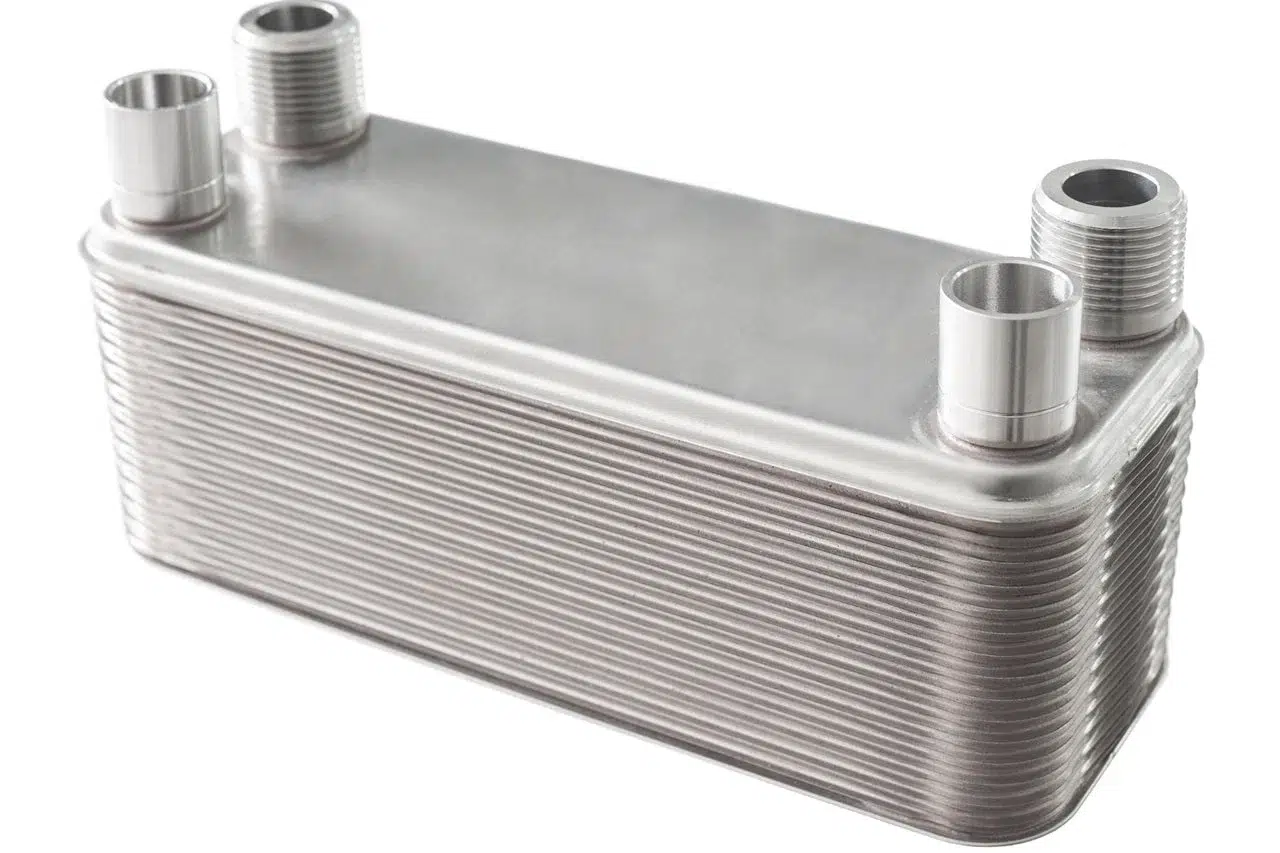 “A U.S.-based cooling systems manufacturer has selected the Universal CAB Batch Furnace from SECO/WARWICK for aluminum brazing, equipped with a thermal degreasing furnace, a dryer, a final cooling chamber, and an external transport system. The solution will enable the company to launch in-house production of brazed heat exchangers, shorten response times to market needs, and reduce dependence on external suppliers. The first collaboration with the SECO/WARWICK Group.
A U.S. manufacturer is adopting SECO/WARWICK’s Universal CAB Batch Furnace to gain in-house aluminum brazing capabilities, ensuring production independence and process flexibility.
- SECO/WARWICK provides a complete aluminum brazing line to a U.S. partner.
- The system includes a batch furnace, degreasing furnace, dryer, and cooling chamber.
- The solution enables in-house production of large plate-and-bar heat exchangers.
- The furnace design offers high flexibility and future scalability.
- Controlled nitrogen atmosphere ensures high quality and repeatable results.
The equipment will be delivered to the company’s plant in Pennsylvania, the same state where the American subsidiary of the SECO/WARWICK Group is also located. The solution will primarily be used for aluminum brazing of large plate-and-bar heat exchangers, used in the heavy-duty segment and the aftermarket. The new line will include the Universal CAB Batch Furnace for aluminum brazing, a dryer, a final cooling chamber, and an external transport system. In addition, a continuous thermal degreasing furnace will be supplied to properly prepare components before fluxing and brazing. This configuration will allow the process to be carried out in a controlled protective atmosphere, ensuring high brazing quality, repeatable parameters, and stable production of heat exchangers with various designs.
The purchase of SECO/WARWICK technology addresses one of the partner’s most important challenges: the need to become independent from its current suppliers of brazed heat exchangers.

Brazing large heat exchangers
The solution on order is designed primarily for brazing large plate-and-bar heat exchangers in the recommended vertical position. Thanks to its versatile design, the furnace will also enable the effective brazing of standard fin-and-tube heat exchangers as well as plate heat exchangers. The Universal CAB Batch Furnace enables manufacturers to respond flexibly to changing market needs without investing in multiple, specialized production lines.
“The deciding factors behind the selection of our technology are the advantages that matter in everyday heat exchanger production: convection heating and cooling, short setup and process times, high nitrogen atmosphere purity, temperature uniformity and a modern control system. This partner was looking for a solution that would allow them to start their own heat exchanger production without locking it into a single product geometry. The Universal CAB Batch Furnace offers that flexibility and can also be upgraded in the future from a batch system to a semi-continuous configuration,” emphasized Maciej Stempniewicz, Deputy Director of CAB Technology Sales.
One of the key advantages of SECO/WARWICK CAB batch furnaces is the ability to run the process in a clean nitrogen atmosphere while maintaining high temperature uniformity and steep heating profiles. In practice, this translates into high brazing quality, process stability and repeatable results. Convection heating and cooling shorten cycle times, which directly affects production efficiency and operating economics.
The Universal CAB Batch Furnace is a compact solution with a smaller footprint and lower investment, installation, and operating costs compared with more extensive continuous systems. At the same time, the furnace design allows for future expansion to a semi-continuous configuration, increasing production capacity. For the U.S. customer, this means a safe entry into in-house CAB production without the need for an immediate investment in a large continuous line. The company gains a technology that meets its current production needs while also supporting future business growth.
The system supplied will be complemented by equipment supporting the entire technological process. The continuous thermal degreasing furnace will prepare components before fluxing, the dryer will ensure proper load preparation before brazing, the final cooling chamber will stabilize the final stage of the process, and the external transport system will streamline product flow between successive stages of the line. This integrated configuration improves production repeatability and reduces the risk of process errors.
The contract was completed through the cooperation of SECO/WARWICK’s U.S. operation, Retech and SECO/WARWICK engineers in Poland. It is an example of the synergy within the Group and the joint use of sales, engineering and technological expertise on the North American market.”


A metallurgical engineer by background Mr. Clift started his career with “Atlas Steel” (now Valbruna ASW Inc.) in Welland, Ontario, Canada over 40 years ago. His career has made several twists and turns over the years which led to some time as metallurgist and heat treat engineer at auto parts supplier “TRW Products” in St. Catherines, Ontario. After a brief return to Atlas Mr. Clift joined commercial heat treater “H & S” in Port Robinson, Ontario (H & S is now IMT Elemental) in 2001 as corporate metallurgist.
Mr. Clift told us yesterday (and we paraphrase) that he is very proud of the fact that he has passed his lifetime experience along to his successor and that he is very pleased by the fact that the next generation is well prepared for the future.
Mr. Clift has been very involved in “MTI” (Metal Treating Institute) over his long career and is well known to many in the North American commercial heat treat industry. He will continue his part time career of teaching metallurgy at the local college.
“IMT Elemental” is one of the largest commercial/captive heat treaters in Canada.


A Chinese manufacturer selected SECO/WARWICK to supply a large-scale nitriding furnace, citing the proven reliability of their existing equipment and the efficiency of ZeroFlow technology. Why did the customer choose this solution, and what benefits does the new furnace provide for aluminum die nitriding operations?
- New furnace supports aluminum die nitriding, improving wear resistance and extending component life.
- The customer selected SECO/WARWICK based on more than 10 years of proven equipment performance and operational reliability.
- ZeroFlow technology delivers precise, repeatable, and economical results.
- The unit features a 2,500 kg load capacity and high-temperature uniformity.
- The project also combines European engineering expertise with local Chinese manufacturing, providing both advanced technology and strong regional support.
The new furnace will be used primarily for nitriding dies used in aluminum profile production. The process increases the wear resistance of treated components and extends their service life, which directly supports production stability, finished profile quality, and the operating economics of the tool shop.
The need for the investment emerged as the customer developed a new production site in Shenyang. Before making its decision, the company analyzed the performance of furnaces from various manufacturers, including suppliers already present in China’s nitriding technology market. Ultimately, it chose SECO/WARWICK once again.
This choice was based on experience, not claims. The first SECO/WARWICK furnace has been operating at the Partner’s facility for ten years, making its everyday performance the most important point of reference when evaluating the new investment and selecting both the supplier and the technology.
“In heat treatment, trust is built cycle by cycle. The customer did not return to us because it remembered a previous purchase, but because it had observed the quality of our equipment in operation, the repeatability of the results, and its practical reliability over many years. In this project, the ability to deliver a large-size furnace while maintaining the process quality expected by a tool manufacturer serving the aluminum industry was especially important,” says Maciej Korecki, Vice President of the Vacuum Furnace Segment at the SECO/WARWICK Group.
The furnace to be delivered will have impressive dimensions: 1000 x 1000 x 1500 mm (approx. 40 x 40 x 60 in). Its maximum gross load will be 2500 kg (approx. 5500 lb). The equipment will provide a temperature uniformity of ±5°C (±9°F).”
At the heart of the solution is the proprietary ZeroFlow technology, a modern form of controlled gas nitriding. The process makes it possible to precisely shape the structure and properties of the nitrided layer while reducing process gas consumption and post-cycle emissions.
For manufacturers of aluminum extrusion dies, this means the ability to obtain a durable and repeatable nitrided layer that supports tool wear resistance during intensive operation. In aluminum profile production, this is especially important because die quality affects extrusion process stability, tool life, and the parameters of the finished profile.
“The market for components used in the automotive, electromobility, transportation, and aerospace industries increasingly requires repeatability from suppliers. In the case of aluminum profile dies, the goal is not only to increase surface hardness. What matters is full control over the process and the ability to achieve identical results for successive loads. ZeroFlow technology gives this Partner exactly this advantage: a high-quality nitrided layer, process efficiency, and rational use of utilities,” explains Pan Gaojun, a representative of SECO/WARWICK China.
The equipment will be the largest nitriding furnace of this type ever delivered by SECO/WARWICK China. The project requires close cooperation among SECO/WARWICK Group teams. Combining European engineering expertise with local production in China will ensure both high technological quality and efficient execution, as well as support close to the customer’s facility.
Local production does not mean compromising on standards. The headquarters team and the local company are jointly responsible for the quality of the solution, from design through manufacturing to commissioning and operational support.
For SECO/WARWICK, the project is an important step in developing the gas nitriding segment in China and across Asia. It shows that even in a highly competitive market, a customer’s decision can be driven by real operating experience, process quality, and a supplier’s ability to execute a demanding project in a model that combines global know-how with local presence.
This flexible model enables SECO/WARWICK China to expand its product portfolio across Asian markets while significantly shortening delivery cycles. Customers in Asia also gain direct access to internationally advanced products and technical expertise, empowering them to accelerate their own development and stay competitive.”


(Editors Note; Over the years “The Monty” has spent some time investigating the heat treat market in Turkey and we can attest to the fact that in terms of size and technology it rivals many of the globe’s largest heat treat markets).
Istanbul, Mödling. Aichelin has successfully delivered, installed and commissioned a new vacuum heat treatment system for Ayhan Takım Çelik A.Ș., one of Turkiye’s leading suppliers of tool steels and engineering materials. The investment expands the company’s heat treatment capabilities and supports the processing of premium-quality tool steels with consistently high process reliability and precision, including materials used for demanding aluminium extrusion and die casting tooling applications.
The supplied system comprises a vacuum gas quench furnace with 10 bar nitrogen quenching and a vacuum tempering furnace. Designed for workloads of up to 1,500 kg, the installation combines oxidation-free heat treatment with precise temperature control, enabling outstanding material properties, excellent surface quality and highly reproducible process results for demanding tool steel applications.

The system has been fully integrated into the customer’s production environment following successful commissioning and final acceptance. The project reflects the close cooperation between both companies – from engineering and manufacturing to installation and start-up – and demonstrates Aichelin’s commitment to delivering tailor-made solutions that create long-term value for its customers.
“This project reflects our commitment to delivering reliable, high-performance vacuum heat treatment solutions tailored to our customers’ needs. Together with Ayhan Takım Çelik, we have implemented a system that combines proven vacuum technology with outstanding process reliability, consistent quality and energy efficiency. We are proud to support our customer’s long-term growth and theircapability to provide premium heat treatment solutions for high-performance tool steels serving demanding industries, including aluminium extrusion and die casting.” – Andaç Güzel, Director, AICHELIN ST Vakum Fırınları A.Ș.
With this successful project, Aichelin once again demonstrates its expertise in advanced vacuum heat treatment technology, supporting customers worldwide with innovative, reliable and energy-efficient furnace solutions for premium tool steels used in demanding industries, including aluminium extrusion and die casting.
About Aichelin ST Vacuum; Aichelin ST Vacuum, headquartered in Mödling, Austria, with its Turkish subsidiary Aichelin ST Vakum Fırınları A.Ș. develops and manufactures advanced vacuum heat treatment systems for demanding industrial applications. As part of the internationally active Aichelin Group, the company combines decades of experience with innovative furnace technology.”
