“Recent Trends and Developments in Vacuum Furnace Processing Technology for the Heat Treatment of Steel.
- The future of metallurgical thermal processing technology is changing on almost a daily basis. This development has been necessitated towards clean critical heat treatment, as well as metallurgical thermal surface treatment developments.
- Confidence by metallurgical processing engineers, heat treaters, manufacturers of furnace equipment, has grown in leaps and bounds during the past two or three decades.
- Vacuum furnace technology has been known and used by engineering industrialists who have had the foresight to develop this process technology as the vehicle with the potential to accommodate many of the new thermal metallurgical transformation for many of today’s engineered and manufactured products.
What is the real impact of vacuum furnace technology and where is it heading?
Rapid and major industrial developments in conjunction with industrial science has helped many people in many countries to enjoy a better quality of life with new engineered products.
Sadly, there are three disturbing of interrelated tendencies that seem to arise in the wake of a major new technological development;
The technology often hovers in the background for many years before accomplishing any significant popularity both metallurgically and financially which would lead to more tangible benefits for the industries who require almost what can be said to be, ‘a perfect metallurgical transformation by the application of heat. ’
The Technology Paradox.
New metallurgical processing technologies seem to censor around a paradox. On the one hand, they are often welcomed as a more effective and efficient means to attain better metallurgical results and an enhanced quality of life yet on the other hand, the new technologies are very often resisted and decried.
Amid the rapid evolution of material science, one finds vacuum furnace technology that encountered such a similar fate. We find that on the one hand there are those who swear by it and who will invest every financial resource possible in that technology to make their operations more productive, quality oriented and obviously profitable.
Vacuum furnace technology has now achieved a tremendous potential to grow well into the future considering current and projected international trends. It is the technology that will help material science and their industrial associates to move comfortably into the third millennium but first there are problems to address.
The knowledge basis of vacuum processing technology is now becoming an accepted as a means to accomplish a thermal metallurgical transformation, on a repeated basis and very well controlled base process technology, which is to develop process technologies for processing thermal to thermally treat more complex metal alloys.
Vacuum thermal processing technology has an important role to play in the field of brazing of complex geometrical nonferrous alloys such as aluminum alloys.
Metallurgical Thermal Treatments Under Low Pressure Conditions.
Moving away from equipment and into process technologies, vacuum heat treatment has progressed dramatically from the simple annealing forward stress relieving processes to incorporate many various surface modification processes.
For example, the deposition of an exotic metal compound onto a metal substrate or the diffusion of gaseous elements into the surface of a metal or material composition.
Some of the thermal surface treatments that are currently being process utilizing
low pressure conditions are;
- Low-pressure carburizing. This now allows the metallurgist the ability to carburize at higher selected process temperatures for carburizing. The caution here is that the austenitizing of the carburized surface still follows the principles of careful temperature selection in order to transform the surface into a controlled martensitic form.
- Low-pressure plasma carburizing. This procedure is still perhaps in its infancy and will most likely consume some time before it becomes a well-accepted and standard method of carburizing utilizing plasma. The unique feature of plasma carburizing is that the process gas consumption is now at a minimal utilization because the hydrocarbon process gas is only required at the surface of the component being carburized rather than necessitating the need to fill the process chamber with the hydrocarbon gas.
- Plasma nitriding. Plasma nitriding is a low temperature process which utilizes either nitrogen-based gases such as ammonia or varying ratios of molecular nitrogen and molecular hydrogen and is now a proven and accepted method of nitriding.
- Chemical vapor deposition. This procedure makes use of low pressure conditions to deposit to deposit onto the surface of a component, a high hardness, hard wearing metallic deposition such as titanium nitride, titanium and carbon nitride etc.
- Physical vapor deposition. This procedure is particularly attractive because of its low operating temperature of approximately 1000°F (550°C)
Not all of the processes mentioned require a high hardness or wear resistance, some components may call for a combination of wear and corrosion resistance.
Typical applications of these procedures are generally utilized for high wear conditions, and corrosive conditions. Components that are generally seen to be utilized by these processes are cutting tools, hydraulic equipment and components that are likely to be subjected to either high wear conditions, or corrosive conditions, or a combination of high wear and corrosion resistance.
What Has The Future In Store?
The future automobiles will more than likely feature high percentage of ceramics and or carbon reinforced carbon fibers. The basic automotive designs which would include resistance to abrasion (such as crankshafts, valves transmission products will remain the same but within a process of design even dilution based on marketing, costs safety factors.
Material compositions may shift radically in the very near future.
The commercial heat treater as well as the captive/in-house heat treater is finding it increasingly more difficult each day to;
- Recruit specialized and knowledgeable personnel.
- The process technology generally requires high capital investment.
- Maintain and control the equipment both mechanically as well as electronically.
- To achieve maximum equipment utilization to ensure a sound return on investment.
- To provide personnel for quality assurance and examination of the metallurgical conditions achieved.
The Skills Challenge.
The world continues to face a serious skills shortage in critical technical fields and it is the writers prognosis that this plight will continue and may well even deteriorate if we as industrialists, technologists do not create enough synergy and force to help create an education and training revolution between now and the next millennium.
A basic school education and a little University or technique on education will no longer suffice. The next requirement will be the dire need for continuing education at virtually every level and in every sphere of industry.
It is the technician that is operating the heat treatment furnace and the process control of the desired metallurgy that can literally ‘make or break’ the component.
The writer strongly believes that the person on the shop floor is the person who needs to gain an understanding and a grasp of;
- Material analysis.
- Performance of materials.
- An understanding of the process that has to be conducted and many other supportive disciplines necessary to ensure good quality metallurgical results.
This will require the development of an education and training system that will enable us to remain at the vanguard of technology, with confidence and competence. It will also have to make was more quality minded, productive, innovative and strategic in our thinking.
In addition to this we have to be more cost-conscious and entrepreneurial rather than making goes complacent enough to settle for the survival same that so often characterizes modern industry.
Good heat treatment makes the product, bad heat treatment breaks the product!!”

To add to this recent press release we have this photo of Accurate Brazing getting ready for their new HIP unit.
“Västerås, Sweden, November 19, 2019 – Accurate Brazing, a full-service provider of specialized heat treating solutions, added Hot Isostatic Pressing (HIP) to its thermal processing capabilities earlier this year. “Based on overwhelming feedback from the marketplace, we are pleased to be moving forward with our second Hot Isostatic Press from Quintus Technologies,” says Steven Francis, president of Accurate Brazing. Both presses are of the model QIH 122 M URC®. They are equipped with the Quintus proprietary uniform rapid cooling (URC) feature, which combines HIP and heat treatment in a single process. This process is called High Pressure Heat Treatment (HPHT), and it streamlines the steps involved in material densification and heat treatment. This innovative approach also enables all processed components to cool uniformly, resulting in minimal thermal distortion and non-uniform grain growth. “The Quintus technology allows us to shorten lead times, improve product metallurgy, and eliminate some additional outside operations, which is very attractive to our customers,” says Mr. Francis. Accurate Brazing serves the aerospace and power generation industries, as well as other sectors that demand high quality and short lead times. Many of Accurate Brazing’s customers utilize additive manufacturing (AM). “The versatility of the Quintus units makes them well suited for our service business model,” says Mr. Francis.

“Wisconsin Oven is pleased to announce the shipment of one (1) Natural Gas (Direct) Fired Continuous Duty Conveyor Oven to an American manufacturer. This conveyor oven will be used for stress relieving steel snap rings used in automotive parts. The oven has a maximum operating temperature of 650°F and a work zone of 2’2” W x 10’0” L x 1’0” H. Temperature uniformity of ±20°F at a set point of 550°F per the customer requirements was verified with a profile test to meet AIAG specification CQI-9. This stress relieving oven, when preheated, has sufficient capability to heat 350 pounds of steel parts per hour from 70° F to 550° F. Heated air will be delivered in a horizontal airflow configuration through a fully adjustable boxed duct (louvered openings are factory preset), located along the length and across the height of the work chamber.”

A scrap dealer approached us recently about a bunch of surplus heat treating equipment located in Indiana at a facility that use to produce hand tools. He had been tasked with the job of getting rid of all the equipment and he hoped to find some value in the furnaces and endothermic generators. All of the equipment was built by Surface Combustion a recognized brand and consisted largely of old mesh belt furnace lines and a couple of old 5600 CFH generators. While the dealer didn’t like our answer the honest answer which we provided was that this equipment has scrap value only. The generators are the pre multi-retort style and lack air cooling and atmosphere control while the furnaces are relatively small and in very poor condition. It’s always a shame to see equipment “scrapped out” but in this case it is a no brainer.

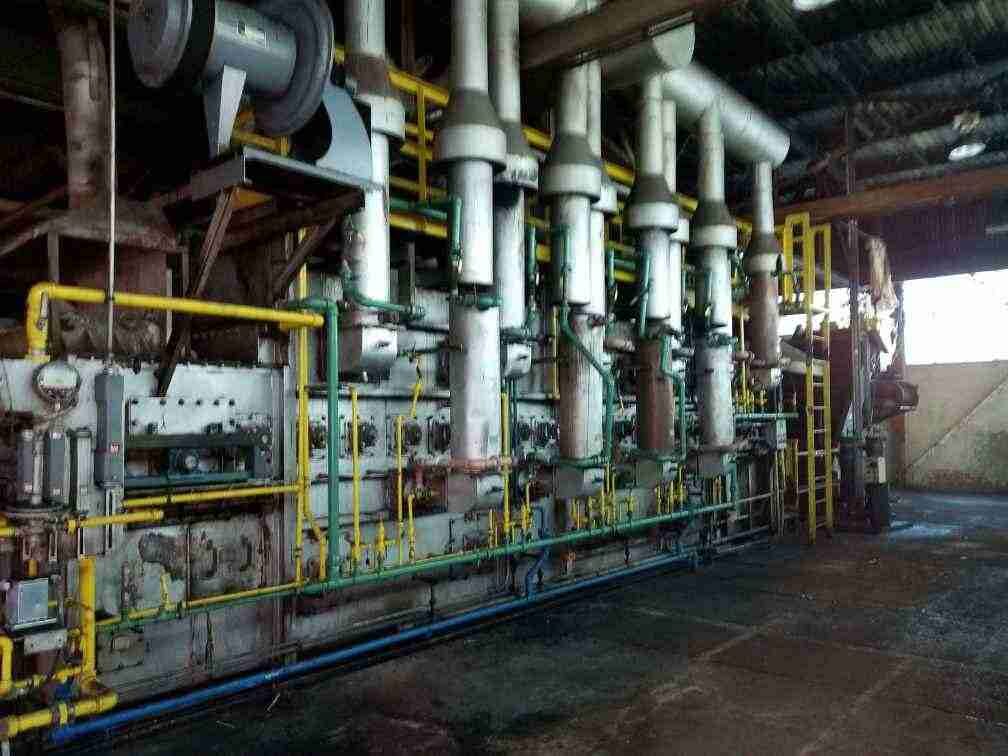
It is now almost exactly two years since we had the news item below about commercial heat treater Paulo expanding into Monterrey, Mexico (the original press news item is below, please note that since that time Ben Crawford has left the company). Well obviously this has proven to be a very good decision on the part of Paulo as already the company is adding more furnace capacity as you can see in this photo.
“November 2017 PRESS RELEASE; At the recent heat treat show in Columbus, Ohio we spent some time speaking with Ben Crawford, VP Operations for Paulo and one of the topics which came up was the new plant in Monterrey. While we can’t share all the details we heard we can provide this update.
“Paulo is excited to announce Aldo Rodriguez as General Director of our Monterrey, Mexico location. Aldo is an experienced leader with 20 years leading Mexico based manufacturing operations. His roles have included positions in Quality, Engineering, and most recently General Manager at international aerospace suppliers. He earned degrees in Mechanical Engineering and Business and has continued his education earning Quality and Leadership certifications throughout his career. Aldo has been a leader in several manufacturing organizations including AMT, SME, and FEMIA (Federacion Mexicana de la Industria Aerospacial). Aldo is currently overseeing construction of the Monterrey facility and visiting other Paulo locations to learn our systems, including PICS, and sharing his experience. In addition to those responsibilities Aldo has also begun recruiting key personnel for his team. Aldo’s focus on lean principles while generating high quality and financially productive results will benefit not only Paulo’s location in Monterrey, but all locations as his knowledge is shared.
Aldo reports to Ben Crawford, Vice President Operations, who comments “We are well into construction of Paulo’s first facility outside of the US. Most excitingly Aldo Rodriguez has joined as Generl Director overseeing the Escobedo facility. Aldo strengthens our experience in automotive, aerospace and doing business in Mexico. I’m thrilled to work alongside Aldo implementing our growth plans.” Aldo added, “I feel very proud and honored to be part of this team. Paulo is a model company with great systems, business philosophy and strong values. With the addition of this Mexico operation, the company establishes its presence in a growing market that is actively seeking qualified Special Process service providers; Paulo is the answer to that need.” Founded in 1943, Paulo is one of the largest providers of heat treating, brazing, and metal finishing solutions in North America. Headquartered in St. Louis, Paulo operates six divisions servicing the Midwest and Southeast regions of the United States and northern Mexico.”

The vendor of this bottom load vacuum furnace which is located in the US North East is offering this furnace for the price of removal [email protected]
Model VVFC, Serial number #57411. Working dimensions of 48” X 48”. Max. temp 2300F. 225KW heating power. 2 speed 25 HP cooling fan. Increased internal heat exchanger coils. Insulated hot zone with moly hot face. Stokes 412 mechanical pump with ROOTS CONNERSVILLE 1016 booster. New SSI programmer/controller. Built 2/6/78. Graphite heating elements and graphite hearth. Installed but not in use. Good condition. Overall footprint dimensions = 15ft wide X 12ft 6” wide X 21ft high. Overall height includes safety barrier for personnel and aluminum channel beam assembly for fan motor removal.
Price Of Removal

Recently we have had a number of news items about the Growth in “HIPPING” in the heat treatment industry. This article from commercial heat treater Paulo tells us why this process is growing in popularity;
“Additive manufacturing has steadily asserted itself as a viable method for producing complex components in aerospace, medical and other high-performance applications. And if you hang out in metallurgy circles (who wouldn’t want to?), you can’t hear “additive manufacturing” without also hearing about hot isostatic pressing (HIP). That’s because the process, which applies high heat and high pressure to densify parts, has shown promise in improving the performance of high-performance additive manufactured components. While that’s the most popular use case for HIP, it’s far from the only one.
HIP applications
HIP is recently popular thanks to the prevalence of additive manufacturing for high-performance aerospace parts or medical devices like artificial hips, but the process is over 60 years old.
HIP was initially developed as a diffusion bonding technique. In diffusion bonding, high heat and pressure work together to weld similar or dissimilar metal surfaces without filler materials. Metallurgists soon observed that those process characteristics also improved mechanical performance by eliminating casting porosity (a term referring to the small bubbles of gas that can form during the solidification process of cast metals) and imparting a homogenous grain structure throughout the whole part.
Porous parts or parts with variable grain structures are less durable and cannot stand up to the stress of severe service.
A phenomenon similar to casting porosity occurs during an additive manufacturing technique called powder bed fusion. The process naturally leaves small voids within parts. Those small voids can cause big problems if they aren’t eliminated. (We discuss the intersection of powder bed fusion, HIP and superalloys in this article.)
In addition to use alongside additive manufacturing and diffusion bonding of parts, HIP is typically specified as a densification process complementary to powder compaction and sintering and metal injection molding. It’s most often specified in aerospace, medical & dental, oil & gas, power generation, firearm and jewelry manufacturing.
Our HIP equipment
The HIP vessel recently installed in Paulo’s Cleveland Division is a Quintus Technologies QIH 122 unit with uniform rapid cooling capabilities. Its work zone is 25.9 inches in diameter and 68.9 inches in depth. It can process parts in a maximum of 12 layers at five inches deep each. Our initial testing of the unit has revealed some pretty impressive capabilities:
- Max temperature = 2,425 F (1329 C)
- Max pressure = 30 ksi
- Max cooling rate = 900 F (500 C) per minute under select conditions
- High temperature uniformity = typically ±10 F throughout the work zone
The rapid cooling capability of our HIP vessel is comparable to vacuum furnace quenching. These properties make it possible to HIP and solution treat parts simultaneously, imparting decidedly better metallurgical properties while reducing turnaround time.
Materials ideal for HIP
A wide array of materials can be HIP’ed in the high-pressure argon environment our unit creates. Such an atmosphere is ideal for:
- Carbon steel
- Tool steels
- Duplex, martensitic and austenitic stainless steels
- Nickel-based alloys
- Cobalt-based alloys
- Titanium
We’re still evaluating how well we can HIP aluminum and magnesium. Trials currently in progress will help us determine whether residue left behind after processing these materials will impact future HIP cycles.
HIP advantages
A common critique of HIP among some manufacturers is that it’s a costly, unnecessary extra step in the manufacturing process. The word “overkill” comes to mind, and it’s true that some thermal processors aggressively market the process to manufacturers who make parts for which HIP may not be a metallurgical necessity. But when it’s appropriately specified, HIP gives manufacturers several compelling advantages both upstream and downstream in their production process.
Design & manufacturing freedom – Some parts feature highly complex shapes that are too complicated for traditional forging or casting. In response, manufacturers have either sacrificed performance with watered-down designs or added costly processing time by designing parts in pieces and then joining them via brazing. But the pressurized gas used in HIP finds its way into internal passages and blind features of complex parts, ensuring they achieve specified metallurgical characteristics while reducing the traditional failure risks.
Mechanical characteristics – HIP has been shown to enhance key mechanical characteristics such as ductility, toughness, yield strength and corrosion resistance. Fatigue, impact, wear and abrasion resistance can also improve. We’ve also observed that HIP’ed parts end up with less “data scatter.” Reducing data scatter enables design engineers to more accurately understand material performance and to know more precisely where the material’s limit exists. They can then design according to that known information.
Optimized manufacturing – Whether parts are additive manufactured, cast or forged, integration of HIP can streamline manufacturing. First, the combination of additive plus HIP’s densifying and solution treating capabilities mean more manufacturing stages can be accomplished in fewer steps. Second, manufacturers concerned about porosity can allow it to occur knowing that HIP can correct the issue.
Simultaneous treatment – Older hot isostatic presses were typically designed with thicker walls which impeded quick cooling. That eliminated simultaneous treatment from the equation (and led some to believe the process was unsafe). Rapid quenching is built into our new HIP vessel, allowing simultaneous heat treatment and hot isostatic pressing. The resulting time savings is significant. Improved performance of parts treated in this manner has also been observed.
Reducing scrap – There’s always variability in manufacturing; the risk of scrapping some parts is ever-present. But HIP can help reduce scrap in two ways. First, it can be incorporated into regular production of parts with tricky designs to make up for potential upstream process deficiencies. Second, it can be applied as needed if a one-off problem occurs in a single batch. In either case, the potential savings is compelling.
As we said above, HIP isn’t new. But new doors are opening. As modern manufacturing methods continue to emerge, the competitive landscape will change.
Are you ready for it?

As you can see Carmine has worked at commercial heat treater Vac Aero in Oakville, Canada for 33 years but next week will be his last day. Carmine is a good man who did a very competent job running one of the largest commercial heat treats in Canada. This photo shows Carmine and his wife just a few weeks ago.
“Just sending you this email to inform you that after over 33 years of service at VAC AERO International, I have decided to retire my position as Director of Oakville Thermal Processing Division effective December 23, 2019. This was not an easy decision to make as I passionately enjoyed my time at VAC AERO. Throughout the years, I have grown with the company and have met some fascinating people. I would like to take this opportunity to thank you as you have definitely helped me forge a successful career.”

“To support rapid growth within their mechanical testing department, Solar Atmospheres of Western Pennsylvania has recently invested in a new Haas ST-10 CNC lathe.
The Haas ST-10’s 6000rpm spindle features an automatic tool changer with a 12-station, bolt-on tool turret, allowing Solar’s machining center to automatically change tools at the push of a button. This results in significant time- and cost-savings over Solar’s original TL-1 Haas lathe, which requires up to five manual tool changes to produce one tensile specimen. The investment in an automated lathe results in a 50% savings in the production of a variety of round tensile specimens. The TL-1 lathe will be retained as back-up in the case of an unexpected breakdown.
The increased machining efficiency of the Haas ST-10 improves turnaround for the customer at the final stage in the thermal process, obtaining the tensile test results of processed materials. Previously performed by an outside company, the opportunity to bring this testing in-house saves the customer time and money. Says Bob Hill, President of Solar Atmospheres of Western Pennsylvania, “This new CNC machining center will ultimately support our overall goal of becoming Nadcap Laboratory Testing AC 7101 approved. We have learned in the past that keeping these processes in-house is a benefit not just to Solar, but to our customers, as well.”
For additional information about Solar Atmospheres, contact Mike Johnson at 1-855-934-3284 or [email protected], and visit us at www.solaratm.com.”

“Armida Oradei, General Manager at American Heat Treating, a leading heat treating facility in the Northeast, is pleased to announce a substantial expansion in their capacity with the installation of a new batch furnace. The newly installed line is composed of a 36″ x 48″ x 36” IQ BeaverMatic oil quench furnace with a stainless steel spray/dunk post wash and two tempering furnaces with nitrogen capabilities. An endothermic generator and a charge car are also included in the line.
“This installation enables us to bring in new business and new customers to AHT. We have a great team here at AHT. Everybody is very motivated, enthusiastic and dedicated to our company,” said Oradei. This is the second large investment the company has made since Ms. Oradei joined AHT. The first one was the introduction of an induction machine, which at the time was a new technology offering that helped to expand AHT’s ability to support its customers.
Visit www.americanheattreating.com <http://www.americanheattreati
About AHT; American Heat Treating, Inc. (AHT) located in Monroe, CT, was founded in 1981 to serve the saw blade and tooling businesses. Today the company serves a wide variety of industries, and it has become one of the finest and most versatile heat treating facilities in the Northeast. AHT provides pick-up and delivery services in the southern and central areas of Connecticut. AHT offers several heat treating processes including continuous austempering, tempering, neutral hardening in salt, batch and continuous hardening, carburizing, carbonitriding and induction hardening. We can carbon restore, normalize, and homogenize. Vacuum processes such as hardening, annealing, brazing, tempering, aging, precipitation hardening, and stress relieving are also available. AHT strives to maintain a high level of customer satisfaction and is committed to strengthening the business by reinforcing the emphasis placed on quality, service, and on time delivery. These are just a few of the things that make American Heat Treating a valued partner to our customers.”

