Mr. Paul Cairney and Mr. Scott Bodemann
Solar Atmospheres proudly announces the addition of Tom Gundic to our Greenville, South Carolina facility. Gundic has accepted the position of Plant Manager, bringing with him over 14 years of vacuum heat treating and brazing experience, with significant time spent leading teams in the highly demanding environment of Nadcap and AS9100 quality systems.
Solar Atmospheres Southeast President, Steve Prout says, “We are excited to have such a uniquely qualified manager leading our Greenville operations team. Tom will be a tremendous resource in ensuring Solar remains a provider of exceptional vacuum thermal processing with unparalleled customer service to the US Southeast.”
For more information about the Solar Atmospheres Greenville facility, visit www.solaratm.com, or contact Mike Paponetti at 864–970–0111 ext. 1406, or [email protected].

In the world of metallic heating elements the name Kanthal is one which everybody recognizes and this press release emphasizes that. This acquisition shows that the company is very serious about growing their presence in North America and adds on to a previous acquisition, that of Custom Electric in Wixom, Michigan back in 2018. We understand that the Thermaltek name will continue as it is so well recognized. We at “The Monty” had the privilege of visiting Kanthal in Sweden a couple of years ago and we have a photo to prove it (below).
“Sandvik acquires privately owned Thermaltek Inc., a manufacturer of high temperature furnace systems and metallic heating elements headquartered in North Carolina, USA. “Through this acquisition we add further strength to our leading position in industrial heating, a strategically important growth area for our Kanthal division within Sandvik Materials Technology., says Göran Björkman, President, Sandvik Materials Technology. “This acquisition is yet another important step for Kanthal to expand its global offering of sustainable industrial heating. I am pleased to welcome all employees at Thermaltek into the Kanthal family”, says Nicklas Nilsson, Vice President, Kanthal. In the 12-month period ending in September 2019, Thermaltek generated revenues of 13 million USD with its 30 employees and strong sales network in North America. Thermaltek will continue to go to market under its own brand. The transaction is closed and Thermaltek will be reported as part of the division Kanthal within business area Sandvik Materials Technology. The parties have agreed not to disclose the purchase price. The deal is neutral to earnings per share from the start.
Sandvik is a high-tech and global engineering group offering products and services that enhance customer productivity, profitability and safety. We hold world-leading positions in selected areas – tools and tooling systems for metal cutting; equipment and tools, service and technical solutions for the mining industry and rock excavation within the construction industry; products in advanced stainless steels and special alloys as well as products for industrial heating. In 2018, the Group had approximately 42,000 employees and revenues of about 100 billion SEK in more than 160 countries within continuing operations.
Kanthal® is a world-leading brand for products and services in the fields of sustainable industrial heating technology and resistance materials. The company is part of the Sandvik Group and has a strong tradition in innovation and extensive investments in R&D.”


To start off our Monday Morning Briefing for January 6 we have these really interesting photos from Geoff Mowry of Graphite Furnace Systems of Gardner, Massachusetts, USA. Shortly before Christmas, Geoff finished one of four 2350C high temperature vacuum sintering furnaces with working dimensions of 50” X 36” X 96” for a European customer. The customer was in such a hurry that he chartered an Antonov 124 transport plane out of the Ukraine to fly to Pease Air Force Base in New Hampshire to pick this up so it arrived before Christmas. The results you can see below.


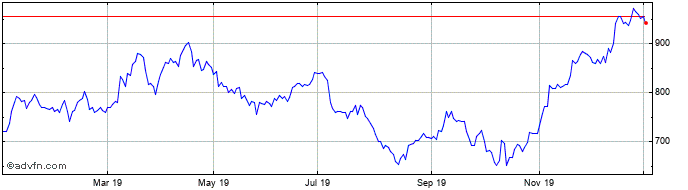
Just before Christmas we had a press release from the world’s largest commercial heat treater, Bodycote entering into an agreement to acquire Ellison Surface Technologies (the abbreviated press release is below). How did the financial markets react? Positively which caps off a good year for the company. “Bodycote, the world’s leading provider of heat treatment and specialist thermal processing services, has entered into an agreement to acquire Ellison Surface Technologies (‘Ellison’), creating one of the world’s largest providers of thermal spray and engineered coating surface technology services to the aerospace industry. Ellison’s business, based in North America, is highly complementary to Bodycote’s existing Surface Technology business. It is primarily focused on the aerospace market. It will be integrated into Bodycote’s surface technology and aerospace business, which itself has seen strong structural growth in recent years. Gross consideration for the acquisition will be $200 million (£154 million). When adjusted for tax benefits worth at least £30m, net consideration for the transaction is approximately £170 million. The consideration will be settled using Bodycote’s existing committed credit facilities.”
Lets go to people news now. Mary Springer of commercial heat treater Thermtech in Waukesha, Wisconsin, USA has been named to the inaugural list of Notable Women in Manufacturing, spotlighting accomplished professionals throughout the region by “BizTimes”, Milwaukee. In France Jean-Christophe Guerin recently became Sales Manager at commercial heat treater THERMI LYON after working at Bodycote for many years. THERMI LYON is a family owned company and is the second largest heat treater in the country after Bodycote. Norm Bennett was recently promoted to Brazing and Thermal Process Engineer/Operations Manager at Braddock Metallurgical in Boynton Beach, FL. Braddock is the largest commercial heat treater in the US Southeast.
Continuing on with people news we see that IFHTSE (International Federation of Heat Treating & Surface Engineering) has a new President in 2020. Dr. Eva Troell takes over from Scott Mackenzie. At furnace builder ECM in Kenosha, Wisconsin, USA, Mr. Vincent Esteve was recently promoted to Business Development Manager, previously he was an application engineer with the company. Mitch Fahrney has returned to captive heat treater Seacast in Marysville, Washington after a few years at Heat Treatment Australia, in California. This photo shows part of the HTA facility in Santa Fe Springs, CA.

We mentioned last year how American Axle & Manufacturing closed down their facility in Charleston, SC, a facility which included a reasonably large heat treat department. The facility is now empty with most of the heat treat equipment going to a captive heat treat in the US. Late last year we mentioned how there was a very large and rather unusual Abar Ipsen vacuum furnace for sale at an Aerojet Rocketdyne location in California. It was included in an auction which was held there recently but in spite of that it remains on the used equipment market. And on a final note we have this photo of Jordan Montgomery of “The Monty” attending the recent open house at Paulo in Cleveland, Ohio when the company showed off their brand new HIP unit.

Several readers asked us if the recent explosion at aircraft manufacturer Beechcraft in Wichita, Kansas was related to the heat treating department because the cause appears to have been a nitrogen line exploding (details below). We have no inside knowledge but our understanding is that the heat treat furnaces are in a separate building to the one where the explosion took place. The little we know about this indicates that the explosion was in a building dedicated to composites and which includes an autoclave.
“WICHITA, Kan.—More than a dozen people were injured Friday when a nitrogen line ruptured at the Beechcraft aircraft manufacturing facility in Wichita, Kansas, causing part of the building to collapse, authorities said. Daniel Wegner, deputy fire chief for Sedgwick County, said the explosion happened at around 8 a.m. at the facility, which is in the eastern part of the city. John Gallagher, the county’s emergency medical services director, said 11 people were taken to hospitals and four were treated at the scene. No one was killed, but one person has potentially serious injuries, he said. Worker Robert Baker said he was inside the building when the explosion occurred but was on the opposite side of the facility. He told The Wichita Eagle that he saw the walls flex. “There was dust and debris, even from the other side,” said Baker, 36, who has worked at the plant for about a month. “Dirt in the air permeating through the walls coming down the hallways and stuff like that.” He added: “That was the most scared I’ve ever been in my whole life, and I’m not easily rattled. But when the walls start flexing and it sounds like the roof is about to cave in, I get pretty panicked and scared.” Joel Schepis, who lives in a neighbourhood west of the Beechcraft plant, said the explosion rattled his house and dust and debris fell through cracks in his ceiling. Stephanie Harder, a spokeswoman for Beechcraft’s parent company, Textron Aviation, said that the company has accounted for all of the workers and visitors who were at the plant at the time of the explosion. Investigators are working to determine what caused the explosion. Another Textron spokeswoman, Sarah White, said the company also is investigating the effect of the explosion on the company’s facilities. “Textron Aviation’s first concern is tending to the safety and security of our people,” White said. Wegner said the explosion happened when a 3-inch (7.6-centimetre) liquid nitrogen line ruptured. The rupture was contained, but gas continued to vent, although it posed no risk to nearby residents, officials said. “The plant closed or shut down for the holiday season so the numbers that would have been here, were not, so it was a skeleton crew,” Wegner said. The cause of the blast is under investigation. Harder said the structure where the explosion happened is part of a complex of buildings and houses the business’ composite manufacturing and experimental aircraft.”

“The process of pulsed plasma ion nitriding can now be seriously considered to be a mature and accepted procedure for the surface treatment process of pulsed plasma ion nitriding.
The method of plasma ion nitriding was initially developed by Dr’s Berghaus and Wenheldt during the mid-1920’s up to the early 1930’s. The process was based on the use of partial pressure vessel which was back filled, with nitrogen and hydrogen at a partial pressure within the process vessel and an electrical charge was introduced to create the plasma glow.
Although this was seen as a unique procedure, it was not fully controllable simply because it relied upon a constant electrical (cathode anode system) voltage.
During the early to mid-1970s/1980’s considerable research work was conducted at the University of Aachen in Germany by Dr’s Stramke, Gruen and Stein . Their work examined the ability to utilize a variable voltage system and also to incorporate the ability to vary the process cycle time (voltage on and off).
It was with this technology that the process control rapidly changed from a difficult process control ability, to an ability that was now bringing an almost perfect controllable process system.
The process now can act in a similar manner as in electroplating system operates with the anodic and cathodic principles. The furnace hearth plate is now
connected as the cathode and the furnace vessel wall is connected as the anode. When the process chamber is filled with the appropriate process gases, the process gases act in exactly the same manner as a liquid electro plating system would operate.
What advantages does pulsed plasma ion nitriding technology present to the aluminum extrusion company and in particular to the die maker whose responsibility it is to both manufacture and maintain the particular extrusion die.
1.0). The process temperature can be reduced to accommodate both temperature sensitive steels as well as geometrically sensitive tool designs.
2.0) The process temperature ramp up to the operational temperature can be preprogrammed without unnecessary gas consumption. This is simply because the whole system is at a negative pressure condition within the process vessel
3.0) Low energy consumption in both process gas and plasm energy.
4.0). Pre-cleaning of the die is accomplished by what is known as sputter cleaning, which can be likened to that of atomic shot blasting.
5.0). The process uses only environmentally friendly, and nonpolluting gases.
6,0). Lower operating costs in spite of a higher capital investment as opposed to gas nitriding or salt bath nitriding.
7.0). No effluent.
8.0). Minimal maintenance procedures necessary.
9.0). Lower operator costs because the process is controlled by PC PLC systems. However, there is still the operator costs for loading and unloading the process chamber.
10.0). The system can be successfully integrated into a production line without any offensive smells which can arise from ammonia gas nitriding.
11.0). Better metallurgical control and a better case formation and case uniformity.
12.0) Process temperature control records the component part temperature rather than the vessel temperature necessary in the process of gas nitriding.
13.0. Overheating which was previously a problem on plasma nitriding before the use of pulsed technology can now be eliminated, simply because of the voltage control, Pulse duration, and Pulse repetition.
14.0). By the introduction of a very small amount of methane to encourage the formation of an epsilon nitride compound layer, the die life can be extended dramatically than with conventional methods of nitriding.
The aluminum industry is striving for excellence with economical advantages. Throughout the industry, extrusion techniques are continually being updated two more efficient methods of manufacture, improved methods of presenting the billet to the die, improved RAM designs have also taken place and been integrated to, improved methods of die making have also taken place with the advent of the EDM method of die making. All these are designed to improve the efficiency of the extrusion process.
But only a very limited amount of investigative work has been carried out on the heat treatment of the die itself. This is the point of the whole process that can either make or break the die (literally) the production throughput, and the efficiency of the press.
Ion nitriding using the pulsed Plasma technique is a process which offers the aluminum industry the option of controlling the diffused die case formation to create the optimum metallurgy suitable for both die and press.
It is now becoming a process which has gained wide acceptance in Europe, Eastern Europe and the Far East, because of its consistency of results, controllability of metallurgy reviews press down time reduced die correction, improved throughput. All of these aspects can only improve the aluminum industries return on in investment, but will also improve its overall profitability and efficiency of the industry in a competitive international environment.”

P & L made our news section approximately 1 year ago when the company was acquired by Thermal Process Holdings. As a follow up to that story we have this interview with the founder of the company Mr. William Pociask, an interview which appeared in a local newspaper “The Business Journal” of Youngstown, Ohio. You will notice in this interview that Bill mentions an addition to the facility and several new furnaces. The new furnaces he refers to include two Nitrex nitriders and a Seco vacuum temper(which are already on site) and 2 Remix vacuum furnaces which will be arriving at the end of the second quarter of 2020 to compliment the Remix units the company already has. Remix by the way is a Polish furnace builder and as far as we can tell the only vacuum furnaces Remix has installed in North America are at this facility.
“William Pociask sees his life as the actualization of the American Dream. Emigrating from Poland at 10 – ironically, he notes, he now lives in Poland, Ohio – he learned English, attended Catholic schools and later Youngstown State University, then worked for a local tool and die company, delivering materials for heat treating to another tool and die firm in the area. From that experience, he saw a need for an independent heat-treating company where people could take their work rather than take it to a competitor that might put its own work first, he says. That spurred him to found P&L Heat Treating and Grinding Inc. 41 years ago. He owned the company until last year when he sold it to Thermal Process Holdings Inc. Pociask is now its general manager. The company started with heat treating aluminum extrusion dies, then moved into grinding, forging and stamping dies, as well as parts for the railroad and mining industries. It now offers an array of heat treating, hardening, tempering and nitriding services. It provides services for products as small as styluses for record players upward to 8,000-pound pieces.
“We do quite a bit for automotive,” Pociask says. Its customers include Ohio Star Forge, which produces parts for Japanese automakers, and suppliers to Ford and Dodge. The company produces dies for heavy-equipment manufacturers such as Caterpillar and International Harvester. P&L is preparing to wrap up a 10,000-square-foot expansion to its existing 25,000-square-foot space at 313 E. Wood St. in Youngstown, which has been expanded a couple of times over the years. Already, three furnaces are on-site that will go into the new building, with four more ordered and set to arrive in summer.“It’s all about growth,” Pociask says. “In the next two years we want to get at least 50% more work into this facility and two years later we want to double the amount of sales.” Annual sales are approximately $4 million, and he hopes to increase that by $1 million by the end of 2020. Just over a year ago, Pociask completed the sale of P&L to Thermal Process Holdings, based in Elkhorn, Wis. He had received an email inquiring as to whether he would consider selling the heat-treating shop. Thermal Process Holdings looks for “well-run, privately owned organizations that are looking for the next stage of growth or to continue the name of the organization [and] expand where the owners have been taking the business,” says Ken Robinette, regional vice president. “Our targets are primarily organizations that don’t have a succession plan and the owners are getting to the point where they’re looking to the next step of their lives, which might be a little less about career and being business owners and a little more about being retired and enjoying family,” Robinette says.
Pociask has five children, all of whom “went their own ways and did their own dreams. You have to love what you do and I do love it to this day.” P&L was attractive because the heat-treating market is fragmented, Robinette says. There are many heat-treating companies, but few have embraced technology and innovation to the degree as P&L. Further, the company focuses on a unique market segment – the tool and die industry – that complemented Thermal Process Holdings’ other business segments. The companies concluded the deal in November 2018, after about a year of discussions. Pociask, who visited other Thermal plants before agreeing to the sale, says joining with the company gives P&L the ability to increase its expertise, and to shop at better prices for the products it uses. “A year later, I’m very proud that I did this. Their goals and their thoughts are just like mine,” he says. “They treat our employees very well and they value our customers, processes and so forth.” The welfare of his employees was his main concern, Pociask adds, to ensure that the people who have worked at P&L for “many, many years continue to be treated properly.”
Roger Kowal is one of P&L’s 20 employees. He began working there 37 years ago and runs a Blanchard grinder, used for rotary surface grinding. “It’s been a good source of employment. We’re taken care of – hospitalization and decent pay,” Kowal says. “It’s a good environment to work in.” Beyond the physical expansion and additional equipment, P&L is preparing for growth by bringing in at least five – possibly 10 – production employees over the next year. Pociask says he is looking at hiring the company’s first salesman. “We got our customers from word of mouth. Our customers sold us,” he says. The goal is to expand P&L’s customer footprint beyond its current 100-mile radius. Among the new opportunities Pociask envisions is with Lordstown Motors Corp., the startup that has plans to manufacture electric trucks at the former General Motors Lordstown Complex. Current customers include Pennex Aluminum Co., which does extrusions for automaker Tesla. P&L is in the midst of developing a new proprietary heat-treating process that should be ready by June. How long Pociask remains with P&L is up to him, although he will remain well into next year as the expansion is completed and the new equipment is brought online, Robinette says. “It’s [Pociask’s] desire to spend less than every waking moment working on P&L, so it’ll be a partnership, and we’ll develop that as we go. Certainly for the next six months it might be a little more full time than part time,” he says. “We’d like to keep him around as an adviser and consultant for as long as he feels interested.” The P&L team “has been very open-minded to the things that we’re trying to do with the platform,” Robinette adds. Pociask says he’s proud that he sold P&L to Thermal, “a very good organization that will take this business to the next level.”

We are pleased to be able to offer you this interview with both Mr. Scott Bodemann, President and Mr. Paul Cairney, Heat Treat market manager, of Nitrogen Generation Technology company South-Tek Systems of Wilmington, NC, USA.
I always like to start off our interviews with a bit of background, for instance what is your background and how did you get involved with nitrogen generating systems?
Scott: “Thanks Gord and great to chat with you. I have been with South Tek for over 15 years and have enjoyed being a part of the Company’s expansion over the years. We were established in 1997 and our sole focus is on the design and manufacturing of nitrogen (N2) generators. Our USA based engineering/manufacturing headquarters is located in Wilmington, NC. Our systems range in size from the dimensions of a small briefcase (1 LPM) on up to flow rates exceeding 30,000+ SCFH. In addition, nitrogen purities range from 95% on up to 99.999% (10 ppm) and pressures can exceed 6,000 PSI.
We supply nitrogen generators into a multitude of markets; Fire Protection Systems (FPS), Food Packaging, Food Storage, Medical, Automotive, Heat Treating, Laser, Electronics, 3D Printing, University, Military, Corrosion Control (Power Plant and FPS), Laboratory, Food Service, Pharmaceutical, Chemical, R&D, Materials. Customers include those as large as Fortune 100 Companies to small privately-run business, all of which realize significant savings over purchasing nitrogen from gas companies. Our technology allows them to control their costs long into the future.”
The focus of “The Monty” is very narrow, heat treating only so we will frame all of our questions around the field of heat treatment. First off why? Why buy a nitrogen generating system when it is so simple to go out and lease a bulk nitrogen storage tank?
Paul: “There are a multitude of compelling reasons to invest in a nitrogen generation system with STS. 2 main reasons are:
- COST
- CONTROL
COST-The cost of buying bulk gas and the added expense of delivery, tank rental, hazmat fees etc. are essentially eliminated with your own nitrogen generation system. The average cost of buying liquid bulk is around $1.00 per CCF; and the cost of generating your own with a South Tek Systems generator is around 10 cents per CCF. And, with the gas company, you are paying for nitrogen that you do not fully get to use due to daily/weekly vent off. This vent off can be up to 2% waste daily.
CONTROL-When a company uses liquid bulk nitrogen, they are tied to a gas company and, very often, a long-term contract. With our system, we have fully automated N2 on demand. And, no missed deliveries, escalating costs or contracts to sign. Moreover, liquid bulk costs continue to increase, and the end user has no control over these costs.”
What do you see at South-Tek as the best heat treating applications for your systems?
Paul: “We can apply our N2Gen nitrogen generators to a wide variety of heat treating applications, but some are certainly more suited than others. Probably the best fit for us, and where we focus the most attention would be a continuous flow atmosphere with N2 as an atmosphere component or N2 itself. These would include N2/H2, N2/CH4, or just N2 for cover gas in N2 tempering, stress relieving, normalizing, annealing, hardening, CAAB (continuous atmosphere aluminum brazing), etc. Another continuous flow application would be N2/methanol atmospheres for carburizing and neutral hardening. Chamber purging prior to FNC or nitriding or any other atmosphere process is another popular usage. We have also supplied systems to feed N2 into vacuum degreasers that require a N2 flow.”
What are the more challenging applications in heat treating?
Paul: “Emergency purging becomes challenging in some plants because of the infrequency of outages in combination with the volume of gas required to have on hand to purge all atmosphere furnaces simultaneously (enough to flow at e-purge rates for as long as it takes to cool the load). However, we do have alternative technology that does not generate N2 on demand but tops off HPC (High Pressure Cylinders) over a determined amount of time so our customer is ready for the next emergency purge.
Gas quenching in vacuum furnaces is a good application for our systems (we can achieve the high purity required) so long as the quench pressure is not significantly high.”
How much nitrogen does a company need to use before it makes economic sense to install a nitrogen generating system?
Paul: “Our systems are sized and specified for a wide range of flow capacity and purity. Because of that, we can make a good economic case for about any capacity situation, especially when the users demand is steady. With nitrogen generation technology, machine capacity (i.e. flow) and purity are inversely related, so the payback will always be better with lower purity applications since the size of the system is reduced. Many times, we find a customer does not need the 99.998% purity that they initially believe they do. A lower, but suitable purity improves the economic payback of the N2 generation process.”
What would a typical payback period for a system be? Even better do you have any case studies you can point to with lots of figures to show investment and payback?
Paul: “Typically, a South-Tek N2GEN system can reduce costs by up to 90% compared to the cost being charged by the gas company. The Return On Investment (ROI) is oftentimes very quick when the equipment is capitalized; however, should the customer finance the equipment, operational spend is reduced providing an immediate ROI.
One great example to share is HONDA USA in Anna, OH. This particular customer reduced their spend on liquid bulk by 70%. Moreover, there was a larger reduction in manpower associated with managing the bulk supply and handling deliveries.”
How many systems do you estimate are installed and in use in North America?
Paul: “We would estimate there are hundreds of nitrogen generators installed for Heat Treat applications in North America. This is not a new technology and as more users realize that there is an alternative to working with gas companies, the popularity of these systems continues to become more widespread.”
I have to ask this question, if this technology is so great why are there so few systems in use in the heat treat industry?
Paul: “This is a fallacy as many systems are currently installed in the heat treat industry and their popularity continues to increase. We are hearing more and more, “Why pay a premium for a gas that I can generate myself?” However, as with any technology, and with a different way of operating, change takes time.
Additionally, many customers cannot make the transition as quickly as they would like due to being held captive by a 5-7-year gas contract. As customers face this, they oftentimes make it a key strategic planning objective to time their exits accordingly and make the switch as quickly as possible.
Furthermore, early versions of nitrogen generation technology utilized membrane technology which is not nearly as robust as South-Tek’s current Pressure Swing Adsorption (PSA) technology. PSA systems require less demand from the air compressors and are significantly more energy efficient. This leads to much better reliability and significantly reduced operating costs.”
In reviewing these questions I see that every single one refers to nitrogen, but I have been missing an obvious question-what about other gases? Heat treaters use lots of different gases, have you ever looked at producing other gases? Could your technology be used for other types of gas generation?
Scott: “Nitrogen makes up 79% of the air we breath, meaning that it is the most abundant gas in our atmosphere. Therefore, it is the most cost effective to generate on site. Other gases simply are not as cost effective to generate (or feasible to generate) on site in the volumes that are needed for Heat Treating applications.”
How is business for you these days and could you share with us about future plans for South-Tek?
Scott: “Business is very good. South-Tek continues to grow year over year, and our company is moving onward and upward every day. We have recently transitioned operations only a few miles from our previous facility into a custom designed, newly upfitted 66,000 sq. ft building. This comes at the right time as we were close to full capacity and were outgrowing our previous production space. We have also added over 20 new employees in the last 12 months.
This exciting move is part of a strategic investment to boost production and overall operational excellence. Furthermore, this facility will allow for easier access to major highways. South-Tek continues to be the nation’s leader in nitrogen generation systems and as part of our expansion, we are committed to developing the highest quality technology for Heat-Treating applications.”
I appreciate the time today Scott and Paul, thank you. Gord


Based in Rockford, Illinois, USA Diablo furnaces appeared almost from nowhere back in 2017 to start offering heat treat furnaces, primarily Batch IQ furnaces. The company claimed business was quite good and that they were rapidly gaining widespread acceptance in the North American heat treating industry, however just before Christmas the company closed down for good. The market for new furnaces in North American remains quite strong these days so we are not entirely sure what caused the company to close after such a short period of time. The news items below appeared on “The Monty” back in 2017 when the company was started and provide background on the company.
DECEMBER 1/2017; “There is a relatively new furnace builder in Illinois by the name of Diablo Furnaces which we have run across a couple of times over the past year. The design of furnace they are marketing is very similar to the old Beavermatic design (Of course Premier Furnace Specialists Inc. of Farmington Hills, Mich., acquired the intellectual property assets of BeaverMatic Inc. of Rockford, Ill., back in early 2015). Well we certainly know why the design is similar, at least three of the employees at Diablo used to work at Beavermatic; Burk Glogowski, Richard Claeyssen and Sue Harrod are all ex employees of Beavermatic proving once again that for good or for bad people entering the heat treating industry rarely leave the industry or wander far from home which in retrospect is probably a good thing.”
JUNE 14/2017 POSTING; “MACHESNEY PARK, ILLINOIS – June 14, 2017 – A company that built a niche servicing and refurbishing million dollar machines in the gear industry launched a spinoff company to build a new line of heat treating furnaces for those same customers. The new operation, Diablo Furnaces, saved five employees from the unemployment lines and Diablo is looking to add more. Machine Tool Builders was founded in 1995 to rebuild and re-control – add new controls to modernize machinery – large machines that make gears or work on gears. The company does this work for large national conglomerates such as Boeing and Caterpillar but also for local firms including Forest City Gear and Rockford Toolcraft. MTB eventually diversified into selling foreign brands as well, such as Germany-based Burri Grinding and Dressing Machines, Switzerland’s Donner+Pfister and HERA Hobbing Machines from South Korea.
Several years ago, MTB saw an opportunity to break into a related industry. When a gear is finished it has to be baked in a furnace to make it harder. Without the heat treating, the soft metal would wear down in a day. Machine Tool Builders began servicing and refurbishing heat treating furnaces. Many of those furnaces were built by a decades-old Rockford, Illinois firm. When that company closed suddenly and its assets sold to a Michigan company, MTB added key personnel from that firm and began using that institutional knowledge to design and build new furnaces under the name Diablo Furnaces. Diablo builds internal quench, temper/draw, box and car bottom furnaces that are custom built for each customer, based on material, temperature range, volume and available floor space. Diablo launched in February with five employees and a goal to do $6 million in sales this year. The company was 50 percent to that goal by the end of April. Diablo now needs more workers to keep up with market demand.”

“Bodycote, the world’s leading provider of heat treatment and specialist thermal processing services, has entered into an agreement to acquire Ellison Surface Technologies (‘Ellison’), creating one of the world’s largest providers of thermal spray and engineered coating surface technology services to the aerospace industry.
Ellison’s business, based in North America, is highly complementary to Bodycote’s existing Surface Technology business. It is primarily focused on the aerospace market. It will be integrated into Bodycote’s surface technology and aerospace business, which itself has seen strong structural growth in recent years.
Gross consideration for the acquisition will be $200 million (£154 million). When adjusted for tax benefits worth at least £30m, net consideration for the transaction is approximately £170 million. The consideration will be settled using Bodycote’s existing committed credit facilities.
Ellison’s business generated revenues of $50m (£38m) in 2018, with associated pro-forma EBITDA of $8m (£6m). Based on results year to date, it is anticipated that Ellison’s revenue for 2019 will be $58m (£44m) with pro-forma EBITDA of $12m (£9m). This expected revenue growth of 16%, and its associated 50% increase in pro forma EBITDA, reflects the fact that Ellison has been successfully gaining share in the civil aviation business, which will also provide a solid foundation for further revenue and profit growth in future years. It is anticipated that the Ellison business will be immediately earnings enhancing to the enlarged Bodycote business. Ellison employs almost 400 people across six sites located across the United States, Canada and Mexico.
Commenting on the transaction, Stephen Harris, Group Chief Executive of Bodycote plc, said ‘Ellison’s business is one that we have long respected and is a perfect strategic fit for Bodycote’s aerospace and Specialist Technologies’ businesses. Ellison has been successful in winning new business in recent years and it will be very complementary to Bodycote’s existing Surface Technology business.’
Completion of the transaction is contingent on various regulatory filings’ processes; it is anticipated that the transaction will complete during the first quarter of 2020. Bodycote was advised by Credit Suisse on this transaction, while the sellers were advised by Lazard.
Acquisition Update Conference Call
Stephen Harris and Dominique Yates will be hosting a conference call for analysts and investors to discuss the acquisition in detail at 8.00am on January 7th.
Participant’s dial in number : +443333009261 (Direct)
Participants will be asked for names only, no PIN required
For further information, please contact:
Bodycote plc
Stephen Harris, Group Chief Executive
Dominique Yates, Chief Financial Officer
Tel No +44(0) 1625 505300
FTI Consulting
Richard Mountain”
