 Out in Wichita, Kansas, USA we see that Metal Finishing Company is proud to announce that we have been approved by Northrup Grumman for Heat Treatment to AMS 2759/3. In addition to this photo we have this summary of the company from 2016;
“Metal Finishing began aerospace and commercial heat treating operations in August 2012 when plans developed for a state of the art Aluminum Heat Treat facility located within our Murdock street campus. Under the leadership of long-time industry veteran Gene Westphal, our Aluminum Heat Treat developed quickly into a strong supplier for local industry. As we listened to our growing customer base for aluminum heat treating we determined there was a significant need for new steel heat treating capability in Wichita, and in 2014 our Steel Heat Treat operations were born.
Metal Finishing Steel Heat Treat began offering commercial processing for low alloy steels, stainless steels, tool steels, and titanium in late 2014. In June of 2015 we received initial Boeing approval for aerospace steel heat treat and followed up quickly with full NADCAP accreditation in September 2015. We now have Gulfstream and Spirit approvals as well and continue to pursue certification from other significant Aerospace OEMs.
Our Steel Heat Treat facility is currently capable of carburizing, normalizing, annealing (full anneal and sub critical), stress relieving, tempering, aging, precipitation hardening, and carbon restoration in atmosphere or vacuum. In addition we can perform specialized cryogenic treatments in the temperature ranges of -100F to -240F.
We currently have the capability to process materials such as: mild steels in cold or hot rolled condition; medium to low carbon steels with medium to high alloy content; austenitic, martensitic, and PH stainless steels; Inconnels, titaniums, and tool steels. Equipment currently in service includes (2) 2 bar vacuum furnaces, (2 ) integral batch furnaces, a compact furnace for small lots, and (7) tempers of various sizes. Future growth is already underway with the recent acquisition of an additional vacuum furnace and ongoing retrofit of another integral batch furnace. In addition we provide full laboratory testing services including hardness testing, micro-hardness and case depth analysis, decarburization, and tensile pull capabilities. We anticipate future expansion into the areas of low temperature nitriding, brazing, and induction capabilities. “
Did you like this article? Click here to subscribe to The Monty.
View our recent magazines and podcasts by clicking the following link. https://themonty.com/magazine/

Park Thermal based in Georgetown, Ontario, Canada has been supplying the heat treatment industry since 1938 which is a quite remarkable record. Alas as we previously mentioned this supplier of quench salts and new and used heat treating furnaces recently closed their doors for good. Today (Wednesday, May 26th) almost the final act is being played out as the remaining equipment is being auctioned off. A quick review of the available items reveals a long list which includes a number of low temperature ovens and misc. furnaces with manufacturing equipment and odds and ends thrown into the mix. We said that this was “almost” the final act, there might be one more item which needs to be resolved and that is the salt side of the business. Park has always mixed and bagged quench salts on site and at least one company very seriously wanted to acquire this part of the business. While an agreement had been reached it was never quite consummated-we will keep you posted on what happens.
Did you like this article? Click here to subscribe to The Monty.
View our recent magazines and podcasts by clicking the following link. https://themonty.com/magazine/


Gasbarre Thermal Processing Systems is pleased to announce the shipment of a high temperature pusher furnace to a supplier of specialty tungsten alloy products in the eastern United States. The furnace is designed for high temperature sintering with operating temperature capabilities up to 2750°F (1510°C). The system is electrically heated using molybdenum elements and utilizes the latest in refractory materials for efficient operation. The pusher system processes trays 8” wide x 12” long under 100% hydrogen atmosphere and includes an automated return conveyor for effective loading and unloading. Gasbarre was selected as the equipment provider based on their extensive knowledge of high temperature sintering and proven ability to service and support the customer.
With locations in Livonia, MI, Cranston, RI, and St. Marys, PA, Gasbarre Thermal Processing Systems has been designing, manufacturing, and servicing a full line of industrial thermal processing equipment for nearly 50 years. Gasbarre’s equipment is designed for your process by experienced engineers and metallurgists that understand your requirements.
Did you like this article? Click here to subscribe to The Monty.
View our recent magazines and podcasts by clicking the following link. https://themonty.com/magazine/

Mid South Metallurgical is owned and run by Mr. Clif Coleman, an individual we interviewed a little while back. His interview can be found at https://themonty.com/project/c
“Mid-South Metallurgical will add gas nitriding heat treatment processes to its service offerings in the 4th quarter of 2021. Construction has been underway to make way for this new equipment. The final concrete pour was completed this past weekend. Installation of equipment will follow.
Gas nitriding is often used on components subject to heavy loading, as the process provides a surface hardness that is resistant to wear, galling and seizure. The process also improves fatigue strength and corrosion resistance. In addition, the process is performed at low temperatures with no quenching necessary – thereby minimizing distortion. Applications include gears, crankshafts, valve components, mining/drilling equipment, tooling and molds, and firearms components, to name a few.
“We are excited to introduce this process to our line of heat-treating services to serve existing customers and new customers,” President/Owner Clif Coleman says, “This investment is yet another big step in the growth of Mid-South Metallurgical. Stay tuned for more updates.”
Did you like this article? Click here to subscribe to The Monty.
View our recent magazines and podcasts by clicking the following link. https://themonty.com/magazine/


From Industrial Heat Equipment Association of which “The Monty Heat Treat News” is a proud member we have this report about the health of the industry. Everything which IHEA suggests in this report is coming true as we speak and has been reported in “The Monty” recently. Inflation, long deliveries and shortages are all becoming the order of the day.
“April 2021 Be careful what you wish for – you just might get it. This somewhat offset warning has rarely been as accurate as it is now when looking at the economy of 2021. At the start of the year there was some optimism regarding the recovery but it was tempered by the reality of a pandemic that was far from over and a host of economic indicators that remained weak. The optimists thought there was potential for economic growth in the 4.5% range, but by March even the less enthusiastic were asserting that growth of 6.5% or even faster was likely. This is great news, right? Yes and no to some extent. With growth come the challenges of growth – inflated prices, shortages and bottlenecks go along with sudden jumps in demand. Right now, the industry is getting slammed daily with higher priced commodities. Copper, aluminum, steel, lumber, nickel, iron ore, oil and petrochemical products of all kinds. For crying out loud, the price of Grape Nuts went up and there is a shortage anyway. This is one of the three planks of inflation (along with wages and overall money supply).
Most of the country is not seeing wage hikes, although manufacturing, construction, transportation, and some other areas where needed skills are in short supply have been seeing hikes for some time. The money supply issue will become more obvious through the summer. The company that is getting hit with these higher commodity prices has very few options. They can absorb the price hikes for a while and hope that they go back down, or they can hike their own prices in response. This latter tactic is only feasible if there is tolerance in the consumer sector. If the competition is willing to swallow that price increase in order to maintain market share or the consumer finds some kind of substitute good there is not much wiggle room and costs dig into profits quickly. Everything in this month’s report points to further growth and that is good except when it isn’t. This growth means that inflation threats are here to stay for a while. The question is how long. The two drivers are as they always are – demand and supply. The demand side is pushing inflation for the moment – there is too much for the producers to keep pace with. The suppliers were not ready for this level of demand and remain a little cautious as far as how long that demand holds. If the demand is real and it seems to be, the producers will begin to ramp up to meet that demand as they will start to covet market share and gaining that advantage will rely on being a little more price competitive than the other guy. The potential hitch in this process is the money supply driver for inflation referred to earlier.
In normal circumstances there is a limit to inflation tolerance that stems from the willingness and ability to pay the higher prices. If the consumer confronts the higher price and decides that it is just too high or they simply don’t have the money, they will refuse to pay the inflated price. If there is money available the consumer then has to decide if they want what is on offer. The estimate is that there is close to $5.5 trillion in excess savings worldwide so now the consumer will complain about the higher price but then they will shrug their collective shoulders and pay anyway because they want the good or service on offer and they have the money to pay for it. Those that will be left behind will be those that don’t have the money set aside or lack the ability to increase their personal money supply – the fixed income consumer and the company that is locked into their current pricing structure. Given that many manufacturers are selling into larger companies and assemblers they often lack the ability to adjust prices, so they watch their own costs rising at the same time they are unable to hike the price they charge to their own clients. At this point the expectation is that inflation pressures will ease by the end of the summer or early fall as the producers catch up with demand, but all it takes are some unexpected crisis situations such as the shutdown of the Colonial pipeline and inflation is driven faster. This is the season of hurricanes and storms capable of creating issues that cascade through the markets and there is more fragility in the system than has normally been the case.”
Did you like this article? Click here to subscribe to The Monty.
View our recent magazines and podcasts by clicking the following link. https://themonty.com/magazine/
Eaton Vehicle Group in Hastings, Nebraska, USA has announced plans to close the gear manufacturing facility and move production to San Luis Potosi, Mexico-details can be found in the press release below. Part of the reason for the move according to the company is that the scale of heat treating in the NE facility is not cost efficient. The Hastings facility includes batch IQ capacity. San Luis Potosi has over the years become a prime destination for auto parts manufacturers and consequently a “hotbed” of captive and commercial heat treating.
“A manufacturing company in Hastings plans to close. Members of Eaton’s management team met with employees at the facility on Wednesday to announce the company plans to consolidate gear manufacturing. Right now, the plant manufactures gears for use in automotive differentials and industrial applications. Eaton Vehicle Group spokesperson Cara Klaer said the work being done in Hastings will be transferred to another Eaton manufacturing facility in North America, with the transition expected to be completed before July 2022. She said the production of differential gears will be transferred to their plant in San Luis Potosi, Mexico as Eaton’s Vehicle Group continues to adjust its footprint to best serve our customers. This consolidation will allow for operational efficiencies and increased utilization by capitalizing on existing gear machining and heat-treating scale in SLP.
“This closure is not a reflection on the Hastings employees’ contributions or their commitment to the business,” said Klaer. “We understand this announcement brings uncertainty for employees and their families, and we plan to provide support throughout the transition.” Klaer said the Hastings facility has about 83 employees. Adding that Eaton will be offering outplacement assistance, training and severance packages to impacted employees in good standing at the company. All employees are eligible and highly encouraged to apply for roles at other Eaton locations.”
Did you like this article? Click here to subscribe to The Monty.
View our recent magazines and podcasts by clicking the following link. https://themonty.com/magazine/


Out in Wisconsin, USA powdered metal component supplier SSI Sintered Specialties is going to add more heat treat capacity in the form of a high-temperature refractory metal-lined vacuum furnace from Elnik Systems. The furnace, which is scheduled for installation in September 2021, will join a growing number of furnaces at SSI’s technology center in Janesville, Wisconsin. Along with providing customers advanced powder-metallurgy processing, this investment positions SSI to immediately target the addition of metal 3D printing to its portfolio and the expansion of its current metal injection molding (MIM) operations. The company had looked at a number of different options when considering more heat treating capacity including used but ultimately decided they like the idea of a new furnace system.
Did you like this article? Click here to subscribe to The Monty.
View our recent magazines and podcasts by clicking the following link. https://themonty.com/magazine/

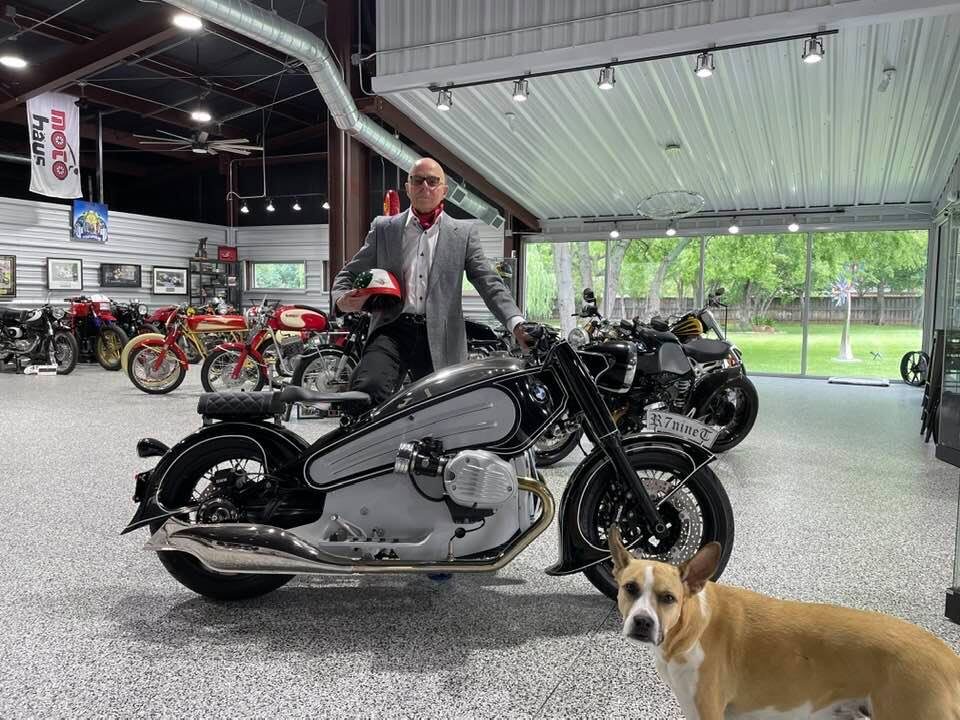
To start off the week we have this “human interest” story featuring Mr. John Hubbard, Chairman of the Board of Thermal Process Holdings and previous to that CEO of commercial heat treating giant Bodycote. Anybody who knows John knows that he has always been a fanatic on motorcycles. So much so that he just completed his own, private museum in Texas featuring his collection-it can be seen in the photo. John was recently featured in the “Heat Treat Podcast” which can be found on this link https://www.youtube.com/watch?
Did you like this article? Click here to subscribe to The Monty.
View our recent magazines and podcasts by clicking the following link. https://themonty.com/magazine/
May 2021 we had a news item about how heat treating of automotive components has seen a dramatic decrease worldwide over the past 2 months due to assembly slowdowns caused by a global “chip” shortage (the original news item is below). As automotive heat treating is the largest segment of the heat treatment industry the effects have rippled through the industry effecting both captive and commercial heat treaters as well as industry suppliers.
However it would appear that the pain will be short lived and that by July of this year automotive heat treating will be in a very healthy position. Let’s correct that statement, automotive heat treatment will actually be in an extremely healthy position.
Several automotive parts suppliers with large in house heat treatment departments, companies such as ZF Industries, Dana, Eaton Corporation, Borg Warner and Linamar have told us that they have been advised by their customers to be prepared for a return to full production by late June or early July at the latest. To elaborate on this a little further all have been advised to limit maintenance shutdowns and summer holidays because pent up demand for new vehicles will require full production. This comes after many industry suppliers have just come off either plant slowdowns or full shutdowns.
“Automotive Heat Treating Slows Due to “Chip” Shortage
Why is the largest heat treating segment in the world, that of automotive heat treating seeing a substantial drop these days?
In early 2020 when COIVD-19 was hitting the world automakers cut back computer chip orders as auto sales slumped which lead to temporary plant closures. Electronics manufacturers, which have enjoyed very strong sales during the pandemic quickly scooped up the excess supply. However since that time car and truck sales have rebounded far sooner than anybody anticipated and automakers have been scrambling ever since to obtain new “chip” supplies in a very tight market. The result has been that all automakers have been forced to close assembly plants in North America, Asia and Europe.
As an example GM recently announced it would shut production at two US plants — in Spring Hill, Tennessee, and Lansing Delta Township, Michigan, in the coming weeks. GM also extended shutdowns at the Fairfax Assembly plant in Kansas City, Kansas, and the CAMI plant in Ingersoll, Ontario, which have both been idled since February 8. And it will continue the shutdown at the Lansing Grand River assembly plant, which has been down since March 15. In addition, GM is halting Chevrolet Blazer production at the Ramos Assembly plant in Ramos, Mexico, during the week of April 19, although that plant will continue to build the Chevy Equinox.
Autoweek Magazine summed us the situation this way; “The chip shortage itself is rooted in the early weeks of the pandemic last spring when the automakers largely shut down, and when suppliers producing microchips for automakers had turned their capacities in the direction of computer and gaming console makers. When the auto industry experienced a sudden bounce-back in most major markets last fall, suppliers were not able to shift away from contracts with these electronics companies, who had experienced rapid growth in consumer demand during lockdowns around the world.
Different automakers have weathered this storm differently so far—some have even stockpiled weeks worth of chips—but the shutdowns at US plants and continued production disruption is expected to continue for months due to these shortages. Some chip makers are already working on expanding their manufacturing footprints, but given the time needed to get new assembly facilities up and running, this is unlikely to have a measurable positive effect for quite some time.
In the meantime, automakers are expected to scramble for chips and endure shortages as the car buying season picks up steam and heads into the summer, just as vaccination campaigns in the US and elsewhere reach a point where demand for new vehicles could seriously ramp up. Just how long these shortages could last is a matter of some debate, but even aside from it, the growth of increasingly complex infotainment systems in cars points to another pressing issue: The semiconductor industry will have to adjust not only to the current shortage, but also prepare for emerging trends in auto manufacturing as a whole, as multiple automakers turn increasingly to tech-heavy electric cars.”
The end result has been that auto parts makers with in house heat treating departments and commercial heat treaters concentrating on the auto industry have in many cases have seen a drastic slowdown in production. One very large auto parts maker and captive heat treater in the US recently told us that in March of this year the company set records for the amount of heat treating they did in house, April in turn is looking to set records for the number of furnaces shut down. This leads to the conclusion that when the chip shortage is corrected the pent up demand for new vehicles will lead to record amounts of auto production and with it a corresponding amount of heat treating.”
Did you like this article? Click here to subscribe to The Monty.
View our recent magazines and podcasts by clicking the following link. https://themonty.com/magazine/

This week “The Heat Treat Podcast” speaks with our good friend Mr. Paul Cairney of South Tek, one of the leading providers of on site nitrogen generating systems. We are very familiar with the company and the technology and would highly recommend this technology for any company using large volumes of nitrogen. We include this photo of the company taken in 2019 at their headquarters in North Carolina, USA.
Did you like this article? Click here to subscribe to The Monty.
View our recent magazines and podcasts by clicking the following link. https://themonty.com/magazine/