“Paulo recently earned Honeywell approval for Hot Isostatic Pressing at the Cleveland Division. The approval which has no restrictions and covers all HIP processing was earned after completion of an onsite audit of the Cleveland plant. The Cleveland Division provides state-of-the art HIP services, including pressures up to 30,000 psi. The plant is also home to over 30 vacuum heat treatment furnaces which creates a one-stop-shop for parts that require both HIP and heat treatment. The rapid cooling of our HIP vessel even enables combined cycle HIP and heat treatment for some materials.
Hot Isostatic Pressing has been used to densify investment castings for decades and has recently gained popularity as a post-processing step for additively manufactured parts. Additively manufactured components for Aerospace and Space often require HIP and a subsequent solution treating step to achieve the material properties necessary for their performance.
Will Rassieur, VP Sales, commented, “Customer specific approvals are the ultimate sign of trust. They demonstrate the abilities of our equipment, team, and processes. We’re excited to add Honeywell HIP to our list of approvals and look forward to working both Honeywell directly and with their suppliers.”
Founded in 1943, Paulo is one of the largest providers of thermal processing and metal finishing solutions in North America. Headquartered in St. Louis, Paulo operates six strategically-located divisions across the U.S. and Mexico. We deliver quality results with datagineering: blending the best in automation, data, and human expertise.”
Did you like this article? Click here to subscribe to The Monty.
View our recent magazines and podcasts by clicking the following link. https://themonty.com/magazine/

 BMT Aerospace of Belgium has just acquired Engineered Heat Treat in Madison Heights, Michigan, USA in a rather surprising turn of events. Engineered Heat Treat is a family owned commercial heat treat run by Ron and Greg Philbosian. Read on for all the details.
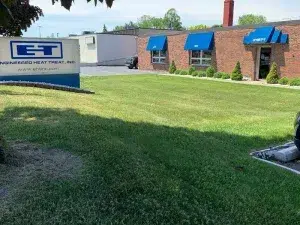 “BMT AEROSPACE JULY 26, 2022; We are proud to announce that Engineered Heat Treat, LLC (EHT) will join the BMT Aerospace division. EHT is a successful business which executes heat treatment for several industries (e.g. Aerospace, Agriculture, Automotive, and military). EHT is a family business to its core and origins back to 1959. Brothers, Ron and Greg Pilibosian, are currently leading the company and will continue to do so with a direct reporting line to Benoit Reynders.
A logical step; EHT is already a well-known supplier to BMT Aerospace US and has been for many years. Due to this new cooperation, we will be able to perform our heat treatment in-house. This means that BMT Aerospace US will have a vertically integrated production process just like BMT Aerospace in Belgium and Romania. A big added value for us and our customers!
This acquisition brings together BMT Aerospace’s high-end gear manufacturing capabilities in Fraser, Michigan, with one of the leading heat treatment providers in the Detroit area. For BMT Aerospace, this is an important step into the future and supports the strategic transformation we are going through. We believe this acquisition provides a great opportunity to accelerate the value we bring to our customers.
Fully vertically integrated; A big part of this deal is accelerating BMT Aerospace’s operational performance through supply chain integration. Operational excellence has always been our strategic mindset. Integrating EHT’s capabilities with BMT Aerospace’s services will allow us to manage lead time and drastically improve response time.
Based on our experience with BMT Aerospace’s vertically integrated plants in Belgium and Romania, we strongly believe that supply chain integration is key to operational and financial independence.
In addition, this transaction advances BMT Aerospace’s plans to grow as a consolidated supplier and accelerate our global strategy to become a ‘single-source’ partner to our customers. Vertical integration provides the insurance against supply chain disruptions and improves flexibility. We’re excited to welcome our new colleagues in the BMT Group and the BMT Aerospace division in particular!”
Did you like this article? Click here to subscribe to The Monty.
View our recent magazines and podcasts by clicking the following link. https://themonty.com/magazine/


As a bonus feature we are including this photo of Steve at his facility in Oshkosh, a photo which was taken in 2020. He is shown standing in front of some of the largest salt quenching, batch IQ furnaces ever built anywhere in the world. We now leave the stage for Carlos and Steve.
Did you like this article? Click here to subscribe to The Monty.
View our recent magazines and podcasts by clicking the following link. https://themonty.com/magazine/
US Bearing manufacturer RBC Bearings recently put on the used furnace market an unused shaker hearth furnace line along with an associated salt bath/rinse system. Both items were installed, tested and then shut down meaning they are basically unused items. The reasons for these offerings goes back to the beginning of the Pandemic which saw the aerospace market fall off of a cliff-both of these items were designed for heat treating thin section titanium sleeve bolts for the aerospace industry. When demand dropped, orders were cancelled and the whole project disappeared. You have to wonder how many times this story was repeated around the world.
Did you like this article? Click here to subscribe to The Monty.
View our recent magazines and podcasts by clicking the following link. https://themonty.com/magazine/

Earlier this year we had this news item about commercial heat treater Bluewater adding more furnace capacity at their St. Marys, PA, USA facility. We can now say that the 36″ X 72″ X 36″ batch IQ furnace is now on line and producing parts. As a footnote to this story we can say that Bluewater has made our list of the 50 largest commercial heat treaters in North America for 2022. This list can be found at https://themonty.com/project/t
MAY 1, 2022 Commercial Heat Treater Adds Batch IQ Capacity; April 18th as part of our regular “Monday Morning Briefing” we mentioned that commercial heat treater Bluewater Thermal in St. Marys, PA, USA was in the process of adding another batch IQ furnace “The Monty Heat Treat News” with the assistance of the “Bluewater Team” can now provide you all the details about what the firm is adding and what they currently have. https://themonty.com/commercia
“The new equipment being added to our Saint Marys, PA facility consists of:
Surface Combustion Super 36/72 Allcase Batch I/Q Furnace (36x72x36)
Surface Combustion Super 36/72 P/M Uni-Draw (36x72x36)
We took delivery on April 6 and are in the process of start-up/commissioning this week. This is our 5th Super 36/72 Surface Allcase I/Q and our 7th Super 36/72 Uni-Draw to be added to our Super 36 line. We have been seeing significant growth in both our automotive and lawn & garden powder metal business segments leading to the need for additional batch capacity. We also offer:
A Surface Combustion Super 30 line consisting of:
(3) Super 30 Allcase Batch I/Q Furnaces (30x48x30)
(5) Super 30 Box Temper Furnaces (30x48x30)
(2) Surface Combustion 48″x35′ 4 Zone Mesh Belt Furnace Lines with inline quench, post-wash and Belt Uni-Draw temper
(3) L&N (Lindberg) 28″ Diam x 48″ Deep Pit Steam Atmosphere Furnaces
Surface Combustion Rx (5 Retort) 15,000 cfh Endothermic Generator (New in 2018)
Our Ridgway facility (Editors note; Ridgway is just down the road from the St. Marys facility) is purely an induction shop specializing in high volume, mostly automotive powder metal parts (Sprockets, Gears, Turbine Hubs, Carriers, etc) and consists of:
Dual Spindle Ajax-Tocco Scanner (40kW / 135-400kHz Dual Power Supplies)
Quad Spindle Ajax-Tocco Scanner (40kW / 135-400kHz Quad Power Supplies, Two work stations)
5 Spindle Fully Automated Taylor Winfield Scanner (25kW / 125-400kHz x5 Power Supplies) Inline Belt Temper Furnaces supporting all machines/work stations”
Did you like this article? Click here to subscribe to The Monty.
View our recent magazines and podcasts by clicking the following link. https://themonty.com/magazine/

Nitriding has an old history of development and applications. It has been used for more than 100 years to improve wear and corrosion resistance as well as fatigue strength in many engineering components made of steels or cast irons [1-8]. This process was modified and enhanced very quickly by introducing carbon-bearing gases to the atmosphere and causing alloying of the upper portion of the hardened layer, resulting in even better properties of the layer. In this way, nitrocarburizing was introduced. The precipitation of nitrides and carbonitrides as well as the nitrogen supersaturation of the ferrite, respectively, cause an increase in surface hardness and generation of compressive residual stresses [3].
Depending on the specific application, the process can be adjusted to produce a layer with the proper structure required for it. The nitrided layer has essentially two sublayers; the compound zone (CZ) at the surface also called white layer (WL) and below, a layer formed by nitride precipitations called the diffusion layer (zone), see Fig. 1.

Gas Nitriding
Nitriding is done typically within temperature range 400-590°C (752-1094°F), which is below Ac1 temperature of the iron-nitrogen system and because of that, it is called ferritic nitriding or just nitriding [1-6]. If processing temperatures exceed the upper temperature range, nitrogen austenite is formed resulting in the presence of an additional sub-layer which its structure depends on the cooling rate [3, 4].
Nitriding Compound Zone (CZ)
The compound zone structure depends on the process parameters and the chemical potential of nitrogen used. The Lehrer diagram describes those parameters and the resultant nitrogen content in iron. Utilizing the Lehrer diagram allows for prediction and control of the amount of nitrogen introduced into the surface of steel [1-6]. At low nitriding potential, CZ is thin or could be completely eliminated, see Fig. 3.


As can be seen above, when nitriding potential is high, thickness of the CZ can be significant and it may contain the Epsilon nitride with the higher nitrogen content. Presence of this nitride accelerates growth rate of the CZ, see Fig. 3 and 4.
Properties of the CZ depend on its structure and the amount of nitrogen in it. Also, as mentioned before, thickness and properties of CZ can be modified by introducing carbon atoms in it.
Nitrocarburizing
Nitriding modified/doped with carbon is for increasing CZ thickness to the range 10-40 µm (0.0004-0.0016”) and formation of Fe3(C, N)1+x phase and the process is called Nitrocarburizing.
The reactivity of the process gases used for gas nitriding and nitrocarburizing treatments is characterized by means of the potentials of nitrogen, carbon, and oxygen, which are defined as nitriding potential, carbon potential, and oxidation potential [3].
Gas Nitrocarburizing
This process is called nitrocarburizing and also FNC (Ferritic Nitrocarburizing) [2]. FNC is an extremally important method of surface hardening for the components made of low-alloy, low-carbon steels although it is quite often also used for other steels when a high hardness as well as excellent corrosion resistance are required. Optimization of the structure for superior corrosion resistance is achieved when both nitriding and carburizing potentials of the nitrocarburizing atmosphere are controlled and when percentages of nitrogen and carbon introduced into Epsilon Layer (Fe2CN) is about [C]/ [N + C] = 0.02–0.2 [3, 6].

Gas nitrocarburizing shall be carried out in an automated mode, maintaining set parameters of temperature and nitriding with carburizing potentials as recommended by ASM Standard [1]. The process is controlled and maintained automatically at each stage. Recommended values of nitriding and carburizing potentials for temperatures are also listed there.
Nitriding Potential and Carburizing Potentials are defined in the following way:
The nitriding potential is a measure of the nitriding capability of the nitriding atmosphere, which determines the surface nitrogen concentration in iron at a given temperature, and is described by the following equation:

Carburizing Potential
The carburizing potential is a measure of the carburizing capability of the carburizing atmosphere, which determines the surface carbon concentration in pure iron at a given temperature, and is described by either of the two following equations [1]:

The differences between the hardness profiles of nitride layers of unalloyed and alloyed steels are well known. Hardness of diffusion zone in unalloyed steel is very low. Therefore, hardness of the treated component depends on presence of the sufficiently thick compound zone. In situations like that nitrocarburizing is the proper option. It provides sufficient wear protection of the surface. Its corrosion resistance is also very high, much better than resistance of the compound zone produced by nitriding and chromium plating [3, 6].
It should be noted that additional corrosion resistance can be achieved when there is a magnetite oxide layer produced during post-oxidizing step on top of the compound zone [6].
On the other hand, if a good bending and rolling fatigue resistance of the high alloy steels, such as M-50 or 4340 is needed, the best properties are achieved when compound zone is absent or minimized. In those situations, a good diffusion with a high hardness needs to be produced. In those situations, nitriding is used.
In contrast, today, in the case of bath FNC, a deliberate change of the effective chemical potentials of nitrogen and carbon, is still not possible. Therefore, in these processes, the control of the structure of the nitrided case is empirical [3].
Ion Nitriding & Nitrocarburizing
Ion/plasma nitriding and nitrocarburizing is another option for treating ferrous alloys components [7, 8]. This method is excellent when treating very precise parts requiring local protection from the treatment, especially those made of stainless steels or sintered metals. The method is characteristic of a “low-nitriding potential” which allows to limit easily thickness of the compound zone even without very sophisticated control of the process. In many applications, the epsilon type CZ can be produced by doping plasma with methane or other hydrocarbon. Thickness of the compound zone can be limited to not more than 10 µm without loosing all the properties and benefits of such a layer. Those results cannot be obtained so easily when the other methods are used.
Who is Doctor Glow?
Dr. Edward Rolinski, aka Doctor Glow, has been studying the plasma/ion nitriding phenomenon since the 1970s and is arguably one of the most knowledgeable people in North America when it comes to nitriding.
The doctor has written countless articles and whitepapers in industry publications and manuals. Some of his most noteworthy contributions include the chapter on “Controlling Plasma Nitriding” in ASTM International (2017) as well as “Nitriding of Titanium Alloys” in the ASM Handbook (2016).
Did you like this article? Click here to subscribe to The Monty.
View our recent magazines and podcasts by clicking the following link. https://themonty.com/magazine/
In South America, Brazil to be exact, commercial heat treater Nitrion Do Brazil continues to expand, this time with a brand new 15 bar nitrogen quenching SECO/WARWICK vacuum furnace. Nitrion has a fascinating history which goes back to it’s origins in Munich, Germany many years ago. Since it’s inception the company sold the Munich, Germany location to Bodycote while at the same time making substantial investments in the Brazil location. Just last year the firm installed 4 new vacuum nitriding systems, with this investment it means the company has become one of the largest in the entire country.
“JANUARY 2021; Nitrion Do Brazil Makes Major Investment in Vacuum Nitriding Capacity; Last week we had a rumor about commercial heat treater Nitrion Do Brazil making a major investment in more vacuum nitriding furnaces, today we can say that the rumor was true and at the same time offer a few more details. This photo shows furnaces #2 and #3 which were recently installed at the plant in Feliz, Brazil. Installation and commissioning started 2 weeks ago and parts are being tested. Installation and start up were performed by Don Longenette of A + Heat Treating of Ohio, USA. The fourth KGO furnace will be delivered in a couple of months. Pictured with these furnaces is Rodolfo Porto, Nitrion Quality Analyst. Nitrion offers both plasma (ion) nitriding and gas nitriding and with this additional equipment Nitrion is probably the largest commercial nitriding company in all of South America.”
“APRIL 2014; Nitrion Technology/SECO/WARWICK do Brasil. The story behind this press release is rather interesting. Nitrion was a commercial heat treater located in Munich, Germany which was owned by a fellow by the name of Michael Motschmann. Michael had two locations the one in Munich and a second in Guaramirim/SC,Brazil both of which offered a very interesting Plasma Nitriding technology which was developed and designed by Nitrion themselves. Roughly 10 years ago Nitrion in Germany was sold to Bodycote (which still operates the plant) largely based on the very impressive profit margins and also on the fact that at the time Bodycote planned to use this technology in a number of their plants around the world. Michael kept the plant in Brazil and as far as we know still owns it although we don t know this for sure. According to this press release furnace builder SECO/WARWICK do Brasil in conjunction with Nitrion will be marketing this technology in South America.”
“Nitrion Technology/SECO/WARWICK do Brasil Have Signed a Cooperation Agreement. The Brazilian companies Nitrion Technology Ltda (Guamirim/SC) and SECO/WARWICK do Brasil Ltda (Jundiaí/SP) have agreed on a cooperation agreement for manufacturing and marketing of modern cold wall plasma nitriding installations for the South American market. These modern installations for the eco-friendly plasma nitriding process without ammonia will be manufactured by SECO//WARWICK do Brasil Ltda. with Nitrion® -technology and the technological support of Nitrion Technology Ltda. Nitrion Technology Ltda has more than 30 years of experience in the German sister companies and brought by constant development the installation technology to perfection using the Nitrion®-cold wall plasma technology. This technology is used with success globally already and can be offered via this new sales channel to many potential new customers. Existing systems at Nitrion do Brasil Ltda (Guaramirim/SC) can be used for samples, test parts, pre-series production and as backup solution for the South American continent.”
Did you like this article? Click here to subscribe to The Monty.
View our recent magazines and podcasts by clicking the following link. https://themonty.com/magazine/


“SECO/WARWICK SUPPLIES A CUSTOM ENGINEERED VACUUM METALLURGY FURNACE FOR THE AVIATION INDUSTRY; It will be a two-chamber vacuum melting and casting furnace with vertical loading designed to produce high-quality equiax castings. This is the sixth order from this customer. The furnace is equipped with additional functions including crucible translational motion and mold heater. The task of the 150kW heater is to heat the mold in the furnace before pouring. The melting power is 150kW. The vacuum melting and casting furnace with a 25 kg load capacity will have a valve separating the melting chamber from the mold chamber and a gate separating the vertical loader from the melting chamber. This configuration allows the system to carry on processes one after the another without having to aerate the melting chamber. The furnace will be able to use both the multiple-use crucible and one-shot liners.
“Our Asian branch is developing very dynamically. We have a production facility in China that allows faster delivery of equipment to our partners in the region. We are also able to significantly reduce the production costs and become a competitive supplier” – says Sławomir Woźniak, CEO of SECO/WARWICK Group.
“I am glad that our partner is cooperating with us for the sixth time. This shows that for such a significant player (the aviation industry) we are the company of the first choice for metal heat treatment and vacuum metallurgy. We have built this trust with the quality of our solutions, timely deliveries, but also thanks to excellent and local after-sales service,” added Liu Yedong, Managing Director of SECO/WARWICK China.
The Asian market is responsible for almost 30% of SECO/WARWICK Group’s annual sales and almost half is generated by the aviation industry. These are not only customers from China, but also from South Korea and Japan. The Japanese market, commonly associated with precision, high quality, and reliability, has very high expectations of its partners and suppliers. Orders from Asia include the full range of vacuum metallurgy furnaces including PAM, EB, VIM and VAR.”
Did you like this article? Click here to subscribe to The Monty.
View our recent magazines and podcasts by clicking the following link. https://themonty.com/magazine/

 “The Monty Heat Treat News” has completed their 26th annual list North Americas largest commercial heat treaters-the 2022 ranking can be found at 50 Largest Commercial Heat Treats in North America | The Monty. It is no surprise to anybody that UK based Bodycote remains the largest in North America by a wide margin and we can add that they are also still the largest on the planet.
The North American history of Bodycote makes for interesting reading. While the company entered the US market in the 1990’s it was really two acquisitions which lead to the company becoming the largest in its field in North America. The first was September of 1996
when the company acquired the seven Hinderliter Heat Treating plants in the USA and Canada. John Hubbard (owner of Hinderliter) who became CEO in 2002, also joined Bodycote as part of this acquisition.
The second major step in the evolution of Bodycote North American occurred in 2001 when the Company bought Lindberg Corporation, the largest heat treatment business in the USA at the time. Critics suggested that Bodycote overpaid for Lindberg, while this is quite possibly true it did lead to the company becoming the giant that it now is.
The attached photo shows the Bodycote, Derby, UK facility which is located on the premises of Rolls Royce. “The Monty Heat Treat News” has had the privilege of seeing this location twice over the years the last time just a few months ago. We can attest to the fact that it is a top notch location.
“Without a shadow of a doubt UK based Bodycote is the largest North American commercial heat treater and indeed the largest globally. Want to know exactly what the company’s sales are? As a publicly traded company their financial results are easily found at https://www.bodycote.com/
For the purposes of this report we are only looking at Bodycote’s North American sales and operations. The company reported 2021 sales in North American to be $300 million USD, with 72 plants in the USA, 3 in Canada and 4 in Mexico. We are not privy to anticipated sales in 2022, however we would assume there will be an increase in line with what most other commercial heat treaters are seeing.”
Did you like this article? Click here to subscribe to The Monty.
View our recent magazines and podcasts by clicking the following link. https://themonty.com/magazine/

Vacuum furnace manufacturer, Solar Manufacturing of Souderton, PA, USA recently shipped two vacuum furnaces to a customer in the New England region, adding to their previous purchase of two furnaces from a couple of years ago. All four furnaces have a 24″ x 24″ x 48″ working hot zone and are primarily used for vacuum stress relieving.
Did you like this article? Click here to subscribe to The Monty.
View our recent magazines and podcasts by clicking the following link. https://themonty.com/magazine/
