Last week “The Monty Heat Treat News” featured our most recent “Heat Treat Podcast” which featured Mr. Mark Podob, President and owner of Metlab Heat Treat in Wyndmoor, PA, USA-the podcast can be found here Magazine & Podcasts | The Monty
What made this podcast especially interesting was the fact that Metlab has the largest, commercially available pit carburizing furnaces in North America as illustrated in these photos. You could certainly make the case that this is becoming “older” technology but in our mind this is real heat treating and we have yet to come across another technology which can offer the same results at the same prices.
Did you like this article? Click here to subscribe to The Monty.
View our recent magazines and podcasts by clicking the following link. https://themonty.com/magazine/


With great fanfare at least one competing heat treat news website announced that a Canadian Aerospace company by the name of Cyclone Manufacturing Inc., recently installed a “heat treat oven” funded courtesy of the Canadian government. “The Monty Heat Treat News” looked into this and we can add the most important details. This oven is a Drop Bottom Furnace for Aluminum parts designed and built to NADCAP specs. It features a 6 second quench delay, working dimensions of 48” X 48” X 72”, a maximum temperature of 1200F and a temperature uniformity of +- 5F. The oven will be installed at the firm’s location in Milton, Ontario, Canada.
“MILTON — On Jan. 17, Adam van Koeverden, MP for Milton, along with Rechie Valdez, MP for Mississauga–Streetsville, visited Cyclone Manufacturing Incorporated (Cyclone) to see how the Government of Canada’s investment’s of over $9 million is helping the company to expand its capacity at its Milton facility. In September, MP Valdez, on behalf of the Honourable Filomena Tassi, Minister responsible for the Federal Economic Development Agency for Southern Ontario (FedDev Ontario), announced the investment at one of the three Mississauga locations.
This investment through the Aerospace Regional Recovery Initiative, will help Cyclone expand its facilities in all locations in order to become more productive and competitive. The expansions will include a heat treatment oven at its Milton facility and a temperature-controlled production area at one of its Mississauga facilities. These improvements will allow Cyclone to become more productive and competitive, while also transitioning to greener operations by including more environmentally friendly technologies. This project will support 110 jobs in the region and enhance the company’s ability to create new and larger parts.
“Small- and medium-sized aerospace businesses, like Cyclone, are developing new and innovative products that will position Canada as a leader in this field. With investments into businesses like this, our government is helping to create and maintain thousands of jobs, contribute to a growing economy, and finding new ways to reduce Canada’s carbon footprint,” said Filomena Tassi, Minister responsible for the Federal Economic Development Agency for Southern Ontario. “This project will help Cyclone expand in a green way, boosting competitiveness and supporting 110 local jobs while contributing to the growth of the aerospace sector here in southern Ontario,” said Adam van Koeverden, Member of Parliament for Milton.”
Did you like this article? Click here to subscribe to The Monty.
View our recent magazines and podcasts by clicking the following link. https://themonty.com/magazine/

SBS Corporation is pleased to announce that it has partnered with Obsidian Technical Group for Sales and Technical Service across much of the eastern United States. The partnership will add value to SBS customers by providing additional onsite product support capability and turn-key installation options throughout the region.
“SBS is thrilled to partner with the experienced, knowledgeable team at Obsidian. As we near the 50-year anniversary of SBS, we’re focused on broadening our offerings. Obsidian’s turn-key approach to heat treating solutions allows us to support the SBS product line from sale to installation.” says George Smith, President of SBS. “We’ve always enjoyed working with the Jossarts, and we’re confident that this partnership with them will allow us to focus on underserved aspects of the heat-treating industry installation and service.“
Obsidian launched in 2022 to support both heat-treating departments and equipment manufacturers by providing a wide range of services including product training, technical support, installation, and equipment upgrade services.
Jason and Eric Jossart first worked with SBS in 2014 when they were designing a new endothermic gasgenerator at Atmosphere Engineering. “SBS took the time to work with our engineers to help develop a heat exchanger with custom mounting hardware to fit into our compact product footprint.” recalls Jason Jossart, then President of Atmosphere Engineering. “The knowledgeable team at SBS responded quickly to our questions and provided all the technical information and drawings required to make that product launch quite successful.”
“The quality product offering and ‘customer first’ approach at SBS is why we are happy to partner with George and his team. We think it’s a natural fit for both our companies to work together to support the industry.” says Eric Jossart – Vice President of Sales. SBS Corporation is a United States based heat treatment solutions company in Sarasota, Florida, that has been providing the world with engineered products for fluid cooling, heating, filtering and controlling since 1974.
For more information about SBS Corporation, visit sbscorporation.com or reach out to George Smith [email protected] or call 248-844-8200. To learn more about Obsidian Technical Group, visit obsidiantechnicalgroup.com or contact Eric Jossart at [email protected] or contact 414-331-4264
Did you like this article? Click here to subscribe to The Monty.
View our recent magazines and podcasts by clicking the following link. https://themonty.com/magazine/

German Furnace Builder IVA Schmetz of Menden, Germany becomes the latest vacuum furnace builder to enter the vacuum carburizing (LPC) market with a product called “CARB PLUS” which utilizes acetylene as the carburizing gas. Their first system is completed, tested and accepted and will be going to a German customer. The firms brief press release is below;
“After successful acceptance, we are pleased to deliver our first vacuum furnace with the CARB PLUS system to a German customer. The CARB PLUS system enables low-pressure carburizing of components in a vacuum furnace with gas quenching using acetylene. We are looking forward to the commissioning!”
Did you like this article? Click here to subscribe to The Monty.
View our recent magazines and podcasts by clicking the following link. https://themonty.com/magazine/

Fastener manufacturer and captive heat treater Atlas Copco recently installed an in house nitrogen generating system to replace their bulk liquid storage system at a UK location. A summary and the reasons behind this decision can be found below (at the risk of ruining the story cost savings were the main factor).
With little added maintenance and substantial cost savings is this a trend which will sweep the heat treat industry?
30 years ago “The Monty Heat Treat News” witnessed their first in house nitrogen generating system installation at a FAG bearing plant in North America, a system which FAG deemed a real success. And yet 30 years later very few captive or commercial heat treaters anywhere in the world use such technology-why?
‘The Monty Heat Treat News” would certainly agree that the systems work and work well, maintenance is modest and cost savings are substantial so we are as puzzled as anybody as to why these systems are not more common.
We can say that aerospace heat treaters are always concerned about purity from in house generating systems although such systems offer a purity of up to 99.999%. We have long speculated that many aerospace heat treaters are just not willing to risk purity being an issue.
Another common theme is that heat treaters sign long term contracts with their bulk nitrogen providers, 5 year terms as an example are quite common. The end result is that for most heat treaters looking at a nitrogen generating system when they have 3 years left in a nitrogen contract makes little sense.
And perhaps it is the oldest excuse in the world that prevents large scale change-it is far easier to stick with a proven, long term solution than to invest in what many might regard as a newer less common technology.
Be that as it may “The Monty Heat Treat News” would suggest that while we would recommend to everybody with nitrogen requirements that’s they look at this technology we also don’t believe for a second that it will become mainstream in the near or even medium term.
“To meet growing demand from vehicle builders for its specialised self-piercing rivets and tools – and to ensure 24/7 continuity of output from its Deeside production plant – Atlas Copco Industrial Assembly Solutions has installed an on-site nitrogen generation system that feeds its heat treatment hardening process operation and overcomes dependence on vendor-delivered supply of the gas.As automotive assembly applications become more complex, with new hard-to-join materials, and others that cannot be welded, self-piercing rivets and tooling provides the answer. With its annual output in the order of 1 billion items, it is essential for Atlas Copco Industrial Assembly Solutions (formerly known as Henrob) to maintain the integrity and continuous performance of its rivet hardening furnaces, which are critical to end-product quality. The reliable supply of nitrogen, and its purity level, plays a vital part in the process.Until recently, liquid nitrogen was supplied in bulk to site from the vendor, then vaporised for delivery to the production heat treatment furnaces. The purity level of the delivered nitrogen was 99.999%, but calculations proved that if the nitrogen supply could be set at 99.8% purity, it would reduce the running cost of a very high purity gas which was not necessary for the process.The case for on-site nitrogen generationIt was this anomaly, among other factors, that convinced the production management team to opt for an on-site nitrogen generation system to be supplied by the company’s sister organisation, Atlas Copco Compressors.On-site NGP+ generators provide nitrogen between 95-99.999% purity. They offer a more sustainable and much lower cost of ownership solution than reliance on gas delivered in cylinders or bulk liquid supply. Nitrogen gas is continuously available from an NGP+ whereas cylinders and bottles require transport and handling, which impacts on the environment, as well as time-consuming administration and paperwork.Operating with the latest pressure swing adsorption (PSA) technology, the NGP+ plug-and-play generators, when connected to an existing clean, dry compressed air installation, offer an independent, dependable, and flexible supply of premium grade nitrogen at the process application’s required purity levels.“The heat treatment of the rivets changes the material’s mechanical properties. We have to control the atmosphere of the furnaces for carbon content to make sure we do not either de-carb or carburise the parts,” said Carlo Sementa, Manufacturing Engineer at Atlas Copco IAS UK Limited.He continued: “We have a state-of-the-art control system alongside gas analysers, which are used for verification of atmosphere chemical composition. The nitrogen is used as a blanket to prevent oxidation of the steel parts and as a safety purge.”The heat treatment processIn the heat treatment process, the procedure is to crack liquid methanol and, with the addition of nitrogen, deliver a consistent chemical composition to the furnace. Propane and air are also used in the process to fine tune the chemical composition that is needed to maintain the carbon content of the steel.Nitrogen is being supplied to the furnace 24/7 in varied quantities dependant on requirements, e.g. production or standby. At the end of a production cycle, the furnaces are purged with nitrogen to remove the combustible gases. After this procedure, it can take up to eight hours before a production run can start again due to recreation of atmosphere, an interval that differs slightly from furnace to furnace.Precise controlThis need for precise control of the nitrogen volume and purity level is one of the major benefits of the Atlas Copco NGP+ nitrogen generator system, which has been designed from the outset to protect the process application and the users’ equipment investment.By default, NGP+ generators feature an automatic off-spec check purity control so that nitrogen with a purity level less than the pre-set threshold can never reach a sensitive application. At the same time, feed air conditions such as temperature, pressure and pressure dewpoint are continuously monitored by fail-safe sensors. When not matching the generator requirements, the feed air is blown off automatically before entering the machine to eliminate the risk of contamination and damage to components.The compressed air system.The source of clean dry compressed air feeding the on-site nitrogen generation process at the Deeside plant is an Atlas Copco GA 15-37 VSD+ FF (full feature) rotary screw compressor with integrated refrigerant dryer and quality air ancillaries downstream. These include coalescing filters, to remove liquid water and oil aerosols plus an active carbon filter tower to deal with oil vapours and hydrocarbon odours. Output from the rotary screw compressor is at the rate of 7.3 – 43 l/s of 7 bar air.With its innovative vertical design, the GA 15-37 VSD+ is a game changer in the compressor industry. It offers Variable Speed Drive as standard, a compact, direct drive, oil cooled iPM (permanent magnet) technology motor, and a small footprint thanks to its in-house design. All features have been developed to reduce energy consumption by an average 50% and to assure uptime even in the harshest conditions.Protecting the production processThe whole on-site nitrogen generation system has been designed with duty standby so that from a safety and servicing perspective it can easily be switched over from running both units to a single machine when needed. There are two receiver tanks for air and nitrogen respectively as a secondary back up in case the system should stop working for any reason, and, for additional safety, there is a restart system.As Carlo Sementa observes: “We are pleased to report that currently it is all running very nicely 24/7 and, although production cycles vary in frequency and duration, as a precaution we have to keep the furnaces’ atmosphere fully on at all times because of the extensive stabilisation time cycle. The really good news is that I am not at the mercy of suppliers and relying on vendor deliveries of nitrogen anymore.”Return on investmentAtlas Copco Industrial Assembly Solutions production costs have already been reduced as a consequence of the energy efficiency of the installation and by the freedom from dependence on costly deliveries of over-spec nitrogen supplies. Additionally, the return on capital investment will see a payback completed within one and a half years from the system’s installation.”
Did you like this article? Click here to subscribe to The Monty.
View our recent magazines and podcasts by clicking the following link. https://themonty.com/magazine/
Abbott Furnace Company is pleased to announce it will be hosting two Continuous Furnace and Brazing Symposiums in May of this year. The first symposium will be held in Charleston, South Carolina, from May 10-12, 2023, at the Francis Marion Hotel. The second symposium will be held in Aguascalientes, Mexico, from May 23- 25, 2023, at the Fiesta Americana Hotel. Brazers from around the world can join some of the world’s experts in brazing carbon steel, stainless steel, brass, and aluminum. Abbott Furnace Company’s two-and-a-half-day symposiums cover brazing fundamentals, filler metals, joint design, troubleshooting, and the new AIAG CQI-29 – Brazing Special Process Assessment. Abbott Furnace’s symposiums are an excellent opportunity for beginners and experienced employees to learn from the experts in the areas of:
- Furnace Brazing
- CQI-29
- Continuous Furnace Maintenance
- Atmosphere Control
- Wire Mesh Belts
- Furnace Optimization
- Furnace Safety
- Troubleshooting
- Filler Metals
- Fundamentals
- Joint Design
- Part Preparation and Cleaning
In addition, individual attendees will be able to interact personally with the lecturers to address more specific questions and troubleshooting issues. Attendees can bring their problem parts and burning questions directly to the experts. Abbott Furnace’s Symposium is ideal for brazing engineers, maintenance personnel, product designers, and anyone involved in the production of brazed components for the automotive industry. For more information about Abbott Furnace Company, please visit abbottfurnace.com, contact Dustin Yetzer at [email protected] or call 814-781-6355.
About Abbott Furnace Company. Abbott Furnace is an industrial furnace manufacturer with 40 years of experience designing and producing some of the industry’s most reliable and high-performing industrial continuous process furnaces on the market. Abbott Furnace is a leading producer of industrial sintering furnaces, annealing furnaces, tempering furnaces, brazing furnaces, heat treat furnaces, steam treat furnaces, industrial ovens, and specialty furnace products.
Did you like this article? Click here to subscribe to The Monty.
View our recent magazines and podcasts by clicking the following link. https://themonty.com/magazine/

“Ipsen USA looks forward to celebrating its 75th anniversary this year, having just completed a record-breaking 2022. Ipsen’s Service, Parts and New Equipment departments each reached historically high sales levels, contributing to record revenue. Apart from 2020 (pandemic), Ipsen has maintained a six-year trajectory of increasing year-over-year sales.
Like many global organizations, last year was particularly challenging—from instability in Eastern Europe to regional pandemic issues, increased staffing requirements and supply chain disruptions. Still, Ipsen sustained high production volume and minimized customer disruption by implementing adaptive project schedule management, partnering with key suppliers on accelerated delivery programs, and selectively re-engineering time-critical solutions.
Now in its 75th year of business, Ipsen looks forward to building on its tradition of innovation, continuing to provide customers with world-class equipment and support.”
Did you like this article? Click here to subscribe to The Monty.
View our recent magazines and podcasts by clicking the following link. https://themonty.com/magazine/

In the past “The Monty Heat Treat News” has taken a close look at one of the largest and most insular of heat treatment markets, that of Japan. We say insular because the Japanese heat treatment industry lives to support Japanese manufacturers and they do this with Japan built heat treat equipment. The story overseas is no different, Japanese heat treaters abound around the world, particularly in North America and they are all largely dedicated to supporting Japanese auto parts makers again almost exclusively with equipment built in Japan. With that background behind us we read with great interest in interview with Mr. Masataka Watanabe, President of Parker Netsushori Kogyo (PNK), parent company of Nihon Parkerizing Group, one of the largest commercial heat treaters in the world. In this interview which appeared in Worldfolio Magazine he talks about his partnership with French furnace builder ECM, the types of heat treatments his company can offer and the difficulties in heat treating components for electric vehicles.
As a footnote to this interview we would like to point out that their Parker Trutec Division in the US is ranked as one of the largest commercial heat treaters in North America by “The Monty Heat Treat News” https://themonty.com/project/t
 Established in 1956, Parker Netsushori Kogyo (PNK) forms part of the wider Nihon Parkerizing Group and is striving forward on a mission of growing global sales through increased new development of its heat-treating technologies. Company president Masataka Watanabe explains some of the elements behind the growth.
The Japanese industry has come under huge pressure in recent years from regional competitors in Korea, Taiwan and China who have replicated Japanese processes and products but at a much cheaper cost. Nevertheless, we still see Japanese firms retaining leadership in high-mix-low-volume fields. Could you give us your take on the advantages of Japanese monozukuri?
I believe that the power of Japanese monozukuri is gradually weakening. Looking at our regional competitors, China, South Korea or Taiwan, we really have to think about how much our Japanese monozukuri power is still going to thrive, and I am not certain to what extent it is going to. I think our company’s monozukuri is a bit different from the general Japanese monozukuri, which is about using craftsmanship to create niche, unique and specific components. That power is related to the Japanese monozukuri. In that sense, Japan still has the capability to produce in a high-mix-low-volume production style. The way I see it, however, we will not be able to sustain Japan’s economy just by doing that. PNK’s monozukuri spirit is surely responding to the needs of the customers and ensuring the delivery of high-quality services to them. By doing that, we are able to satisfy and delight our customers.
Many detractors in the media are pointing out that Japan’s monozukuri is under threat by the population decline. Recently, Nikkei published an article stating that Japan needs 6.75 million foreign workers in order to sustain economic development by 2040. These demographic pressures are shrinking of the domestic market and making it harder for companies to recruit staff. How is your company reacting to those population changes, especially in terms of your Business Continuation Plan (BCP)?
PNK has two major policies that we are moving forward with. The first policy is to sell our products globally, and the second is to move ahead with automation and robotization of our domestic plants – our chemical plants or heat-treating factories. Our company is made up of three business divisions, one of which is manufacturing and selling chemicals. In that division, we are not only looking to sell our products domestically, but we are also aiming to strengthen our overseas sales. It is good timing to do so, especially with the depreciation of the yen. We have given the go signal to our chemical plants to push forward full automation. Through this policy of automation, we will be able to supplement the work done by older people who will eventually retire and leave the plant. Moreover, we can stabilize the quality through automation. For the equipment division, we are also asking them to strengthen the sales of their plants overseas. More than just creating something on our own, I am telling our employees to form a partnership or an alliance with component manufacturers, for example, that is not limited to domestic manufacturers but also expanding to overseas manufacturers. Lastly, I have told our heat-treating division to expedite the automation of their plant and factories to reduce the costs and lead to a high-quality accomplishment. PNK is proceeding with these initiatives so that we can respond to the aging population, declining birthrate as well as the shrinking market that is a result of the present demographic situation.
The fully automatic ICBP vacuum carburizing furnace is PNK’s joint development with ECM Technologies, a French company with which you have had relations since the 1990s. It has a special cold lining which can reduce CO2 emissions. Could you explain this technology in more detail to our readers and how it helps reduce CO2 emissions?
ECM has been our long-term partner, and we have been doing co-development and sales together. Controlling CO2 emissions is recently becoming stringent. This kind of vacuum heat treatment is becoming a trend globally. Hence, we want to take hold of this good opportunity and expand ICBPs. In the Japanese domestic market, these are the ECM’s high-quality ICBP furnaces.
Even our Japanese clients now want to reduce their CO2 emissions. Rather than using their existing conventional heat treatment furnaces that release CO2, they are going into vacuum heat treatment. We are receiving more and more inquiries and needs from them. For them to consider procuring our furnaces, we are trying to explain their merits, such as their ability to reduce CO2 emissions. Another significant merit is concerning the aging of the population. There are many matured technicians with craftsmanship in manufacturing automobiles or components. However, with them going away, the vacuum furnace comes in handy because it can be operated with just one click of a button. With that, we will not need to have so many of those matured technicians anymore. Because we want to contribute to society, ECM and PNK actively exchange detailed information to expand these products. PNK’s policy is to sell these vacuum furnaces along with other furnaces that can contribute to the reduction of CO2 emissions, but we want to sell ICBPs to contribute to achieving a sustainable society or SDGs as a company. These vacuum or new types of furnaces tend to use electricity. Therefore, if the Japanese government does not have a secure electricity policy, then CO2 emissions will not be reduced. It is the same thing with EVs.

Besides ECM, we are also looking for tie-ups and alliances with foreign heat treatment companies.
Since its establishment in 1956, PNK has become a comprehensive heat treatment company today. What are some of the most key technical milestones you would identify in your history? What are some of the key products that you are looking to showcase to the world?
PNK started with isonite treatment, which is a liquid salt bath nitriding and a molten heat treatment technology. It was developed by Degussa in Germany, but we were the ones that first brought it into Japan and further developed it. At that time, isonite treatment was openly accepted by the automobile industry, then it expanded from there. We had 25 factories in Japan doing the isonite treatment. To respond to that trend within the Nihon Parkerizing Group, PNK supplied the chemicals and equipment. In the second phase, the customers started to require more than isonite; they wanted gas-heat treatment furnaces. We borrowed the technology from Degussa for the initial phase, once again, then later sold it. With that history, we were able to come up with our unique design in manufacturing to develop our own gas furnaces. I think that was the second stage. The third stage was reached when we partnered with ECM and sold the vacuum furnaces in Japan. It continues to sell very well in the Japanese market. In the fourth stage, which has not been too long ago, we changed the sales strategy for our furnaces. Instead of selling all kinds of furnaces, we decided to target certain furnaces to be sold from PNK. Hence, we are a more specialized furnace provider than a comprehensive furnace provider. We are trying to focus on selling vacuum furnaces, austemper furnaces, isonite equipment and gas nitriding furnaces. There are reasons for deciding to focus on these four types of equipment. We chose to proactively sell vacuum furnaces because it is very helpful in CO2 emission control. In the austempering treatment furnace market, we have the largest share and we want to keep it that way. By selling these furnaces, we also sell the chemicals that go along with them, making a synergistic effect. Isonite equipment is our responsibility because we are the only one that does it. We also sell chemicals, so we will keep on sustaining this business. Finally, we resolved to move ahead with selling the gas nitriding furnaces since we were able to develop a special gas nitriding furnace with an integrated nitrogen control system, which is an added value.
Of course, we will not decline requirements and requests for a certain furnace from our customers. We will respond to their needs, but we want to focus on these equipment furnaces. Since we are a small company, we need to concentrate and input our assets into specific areas. Therefore, we made up our minds to employ this strategy.

We make sure to dig into our customers’ needs and issues in order to gain a more comprehensive understanding. After which, we develop the equipment or processes that best fit their needs and issues. We consider ourselves to be a heat treatment consultant company that develops technologies together with our clients. With automobile and automobile component manufacturers transitioning to EVs, it was made evident that they do not have many heat treatment or material technicians anymore. The lack of this is an issue that they cannot solve on their own, and that is where we come in to support them. Ultimately, we want to introduce the best fit equipment or heat treatment for them. Our next R&D policy states that if the technology to be developed is not number one or number two in Japan and globally, we should not develop it. I keep saying that if we are developing a technology that is in the third or fourth position, it would be better to partner or have a co-development with the leading two manufacturers. Once we are behind on a certain technology, regardless of whether we invested talent or money, we will not be able to keep up with those that are already ahead of us. Rather than trying to keep up, we should be borrowing their capabilities. It is all about open innovation. We are co-researching with universities and other companies to regain momentum in those lagging technologies. A new technology that we were able to develop is the nitrogen control system for our nitriding treatment process, which was developed based on the needs of our customers. We have high expectations for this technology.
As an example, EV gears expel a lot of heat because their rotation speed is very fast. A normal heat treatment, including the vacuum heat treatment, softens the hardened workpiece, but that does not happen using the nitriding process because it is resistant to heat. This process has not been used until now, as it is heat-resistant, and the depth is shallow. With our system, however, we can tackle that depth issue and go down deeper. Furthermore, due to the low heat treatment temperature, gear distortion is lessened. After a normal heat treatment process, a grinding process happens to improve the accuracy. Since there is not much distortion with the nitriding process, we do not need that grinding process at all. Hence, our system is receiving a lot of attention for EV gears, so we are hoping this can be further introduced through PR. We are also concentrating on reusing – a regenerative treatment, such as regenerative aluminum or chemicals.
You provide the Palnic and Pal coat thin film deposits for electronics. Electronic miniaturization has been advancing each year, and the latest Apple chip has 10 billion transistors. Hence, there is a huge need to dissipate heat with these electronic devices. How are your surface treatments and technologies helping to meet that trend in the electronic industry?
Palnic is actually developed by our parent company, Nihon Parkerizing, treatment. I am not really sure to what extent that can apply to miniaturized components. With regard to extremely precise components, we are still unsure how much our heat treatment process or surface treatment technology can be applied. Because we are a big, specialized company in the surface treatment field, there are already many examples where our technologies are being used in precise components. We are thinking about exploring other fields that have yet to use heat treatment and technologies. A new area or market will be the energy field, like the components for wind power generators. Since they have already started to use heat treatment, a market already exists. We are trying to advertise our products and technologies aimed at that market and maybe semiconductor equipment components that are also now requiring heat treatment. Moreover, we are attempting to go into aluminum brazing, which is another specialized unique process. When I was in Europe last week and talked with several heat treatment companies and equipment manufacturers, they expressed the same opinion as I have. If we only focus on the automobile sector, then our sales will not be stabilized. We all agreed that we need to pursue diverse fields and advertise our products & technologies in different areas. We plan to move in that direction.
Which countries will be on your road map in terms of your expansion? Moving forward, which particular countries or regions will you focus on for growth, and what strategy will you do to set up there?
Our three business divisions employ different overseas strategies. Southeast Asia is one appealing market for our chemical division, and we are considering having sales agents to actively do our sales. Europe is also an attractive market for chemicals. We can either deploy sales agents or take advantage of our existing partner companies there to sell our products. We are eyeing China as well, but there are numerous local companies that sell very cheap products. Although it can be a bit difficult for us to do business there, China is a potential market. Therefore, we want to have our sales agents in China and go ahead with the sales.
For the equipment division, we want to strengthen our sales in the Southeast Asian market because the automotive industry is changing. We want to further pursue that market since we see that there is an increasing need for vacuum furnaces. Currently, we have jobbing plants in South Korea and China. However, at this stage, we are not thinking of adding more to those. It is probably going to be Nihon Parkerizing that will further increase our foreign jobbing plants.
That is how we want to push forward with our global strategy. We do not want to take so much time in implementing them, so we will go with deploying sales agents and partnering with foreign firms that have the same requirements as us. We already have the expertise and experience that allow us to build good relationships with foreign partners, and we want to expand that to other partners in overseas markets.
Imagine we come back four years from now for your 70th anniversary as a company and have this interview all over again. What would you like to tell us? What are your dreams for the company, and what goals would you like to have accomplished by then?
We are often called a comprehensive heat treatment company, but my dream is to go into specialized heat treatment. Rather than offering a wide range of heat treatments, we want to become a more specialized company. We want our clients to think that if they rely on PNK for the specialized technology they need, PNK can respond to them. In this field, people will be rushing to us for their needs to be solved. In case we cannot become a specialized company that responds to the customized needs of our clients on our own, we have to look for their solutions with global partners. By working with them, we can find and collect information globally that will enable us to provide the optimal heat treatment for a particular client. We want to become a customer centric company while providing our specialized technology. If we can successfully achieve that, we will be able to contribute to society, satisfy our customers and be more profitable.
Did you like this article? Click here to subscribe to The Monty.
View our recent magazines and podcasts by clicking the following link. https://themonty.com/magazine/
Earlier this week we had our most recent “Heat Treat Podcast”, this one featuring Mr. Mark Podob, President and owner of Metlab Heat Treat of Wyndmoor, PA, USA (this and all of our previous “Heat Treat Podcasts” can be found at Magazine & Podcasts | The Monty ). What made this podcast so unique is the fact that Metlab with the largest commercially available pit carburizing furnaces in North America holds a very unique position.
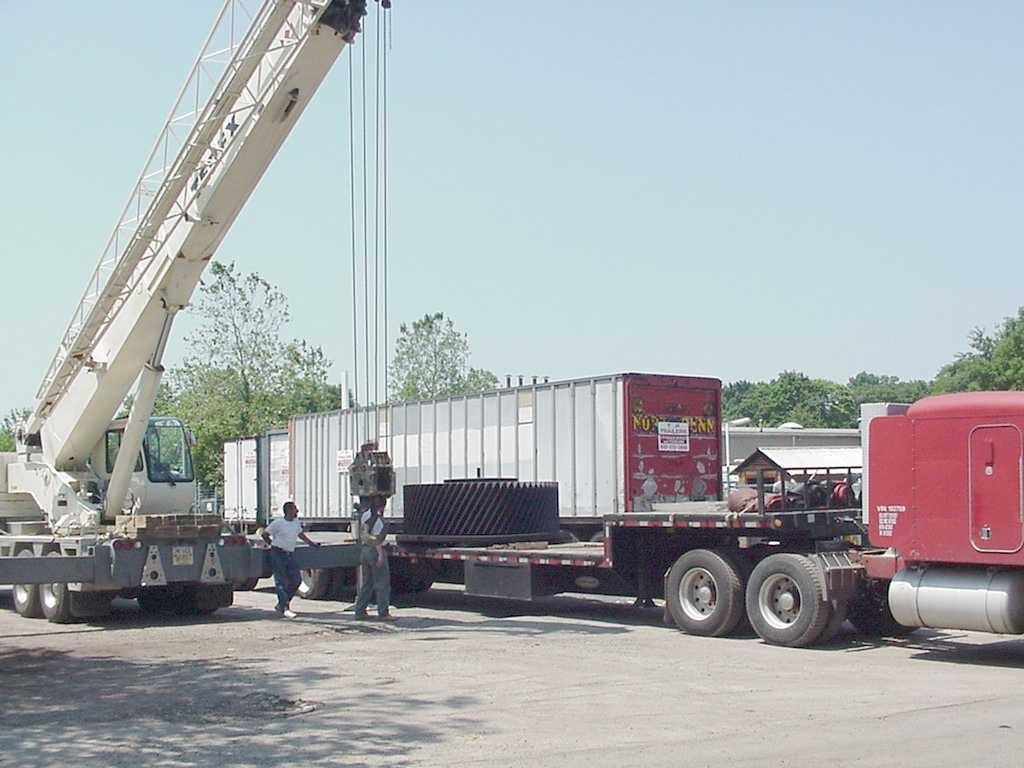
As an example Mark sent us these photos of what is a relatively typical job for the company, but a very “untypical” job for most heat treaters.
What we see in the first photo is a 35,000 pound gear with a 10’ OD and a 4’ face width arriving at Metlab for processing. This gear is being quenched from 1550F, has a 0.250” effective case depth and surface hardness will be HRC 60 after tempering. The second photo shows the gear with masking and in a fixture being quenched. While this is a very substantial part by any standard it is by no means the largest gear or shaft which the company has processed.
Did you like this article? Click here to subscribe to The Monty.
View our recent magazines and podcasts by clicking the following link. https://themonty.com/magazine/

Energy efficiency measures as well as emission reduction have become a top priority for large energy consuming industrial sectors like the field of industrial furnaces and kilns. The change in the international energy policy has important significance for the industry in terms of reducing CO 2 emissions.
When analyzing different heating systems from the point of view of sustainability four key aspects have to be considered:
- availability of energy
- energy costs
- carbon-footprint (total carbon-footprint)
- technical feasibility / frames
So, at the end of the day, it might be a compromise to decide upon electric heating or different gas heating systems depending on the local situation. Although the background of the carbon footprint respectively total greenhouse gas emissions will not be discussed in detail, it is nevertheless important to outline the relation between the energy source for heating and CO 2 emissions. Table 1 shows a rough overview of different heating systems. The following data should be understood as orders of magnitude only. This shows that, due to local differences in electricity generation, no general statement can be made regarding gas heating vs. electric heating with regard to CO 2 emission.

Based on this data, it is necessary to further exploit the optimization potential of gas burners. Especially when talking about heat treatment plants with heating capacities in the range of 300- 800kW (1,000,000-2,700,000BTU/h), recuperative single burners with 30-60kW (100,000- 200,000BTU/h) are state of the art in Europe. Meanwhile, efficiencies up to 85% in combination with single ended or U-tubes are feasible – 30% savings in gas consumption (in comparison to burner without preheating of combustion air). With increasing air preheating NO x emissions might also increase. Up to now, this has only been taken into account to a limited extent; in contrast to large combustion plants, central exhaust gas cleaning systems are not considered. In the following two approaches for NO x reduction will be given:
Flameless combustion [4]
Flameless combustion is based on mixing gas and air in such a way that no stable flame can be formed, while exhaust gases are recirculated back into the combustion area. Therefore, it is possible to avoid temperature peaks and achieve low NO x contents. It has to be mentioned that this technique is limited by a minimum temperature. Below safety temperature (750°C / 1400°F) the burner is operated as a standard burner.
Selective catalytic reduction (SCR) [5]
The concept of SCR using ammonia respectively urea to reduce the NO x content was already adapted for the automotive industry years ago. This principle can also be used for single burner units using urea injection and a single catalyst unit (vanadium/titanium dioxide-based). The temperature limits of use (due to chemical reaction kinetics) must also be pointed out for this technology. Figure 1 shows a high efficiency recuperator burner with an additional SCR system.

Beside ecological and economical aspects the technical issues must be considered as well. Electric heating systems might be limited by the power because of limited space. Strip heating elements (Figure 2) gives to possibility to use higher power density in combination with lower surface load, this gives a positive effect on service life. Nevertheless, it is important to keep in mind that electric heating elements must be connected sensibly to ensure a symmetrical load on the power grid.

However, it quickly becomes apparent that there is not one single measure that can be considered as the general problem solver. Rather, it is a bundle of measures to get closer to the goal of CO 2 -neutral heat treatment. However, it is necessary to critically scrutinize the heat treatment processes as such in order to be able to break new ground.
Did you like this article? Click here to subscribe to The Monty.
View our recent magazines and podcasts by clicking the following link. https://themonty.com/magazine/