“Since its establishment in 1987, Topçesan Topbaş Çelik Sanayi ve Ticaret A.Ş. has stood as a pillar in the Turkish steel forging industry. Operating from its facility in Nilüfer/Bursa, the company has solidified its position as a leading integrated steel processing manufacturer, supplying forging, molding, and machining components to various industries.
As part of their strategic efforts to enhance forging capabilities, Topçesan recently invested in a Nitrex system. Specifically, they acquired the NXK-812 compact batch-type furnace with a 1,200 kg capacity, designed for nitriding and nitrocarburizing forging dies. These dies are utilized in the production of engine parts, transmission components, and chassis parts for vehicle manufacturing, catering to automotive clients like BMW, Tofaş, Fiat, and ZF Group across Europe and Türkiye.
By integrating nitriding and nitrocarburizing processes into their operations, Topçesan aims to prolong the lifespan of their forging dies, increasing component production while reducing tooling costs. The system includes an ammonia dissociator, which is essential for precision control over nitriding potential, particularly when treating specific alloys that must align with AMS 2759/10 and AMS 2759/12 specifications.
Topçesan opted for Nitrex based on their favorable experience with a local commercial heat-treating company providing Nitrex nitriding services. Encouraged by the resulting performance improvements, they made the strategic decision to harness these advantages internally, integrating them into their operations.
Utku Inan, the Nitrex sales representative in Türkiye, commented, “This marks the first collaboration between Topçesan and Nitrex, and we’re truly excited to embark on this journey together. Our shared goal is to pursue operational excellence and maximize product potential within the forging and automotive supply chain industries. Nitrex is committed to delivering innovative solutions that enable our clients to achieve their operational objectives efficiently and sustainably.”
Topçesan is making a strategic investment that will not only enhance its in-house capabilities and cost efficiency but also contribute to a more efficient and sustainable future. According to Marcin Stoklosa, Nitrex Technical Sales Manager, “The operating software of the Nitrex system ensures optimal production media and utility consumption throughout the process, providing the customer with detailed analysis after each operation. This technological advancement underscores our commitment to customer satisfaction and operational efficiency, ensuring superior performance.”
ABOUT NITREX. NITREX is a global leader in providing turnkey heat-treating solutions and cutting-edge technologies since 1984. Pioneering advancements Nitreg® controlled nitriding and Nitreg®-C controlled nitrocarburizing enhance application reliability and performance while upholding stringent standards in quality, safety, and environmental sustainability. Our expanded technology portfolio includes Nitreg®-S and Nano-S™, optimizing stainless steel applications for greater wear resistance and durability, as well as Smart ONC®, which elevates corrosion resistance to new heights. Supported by superior technical expertise, every NITREX turnkey system ensures optimal performance throughout its lifecycle, safeguarding your investment for years to come. Let NITREX bring expertise and excellence to your project!”
Did you like this article? Click here to subscribe to The Monty.
View our recent magazines and podcasts by clicking the following link. https://themonty.com/magazine/


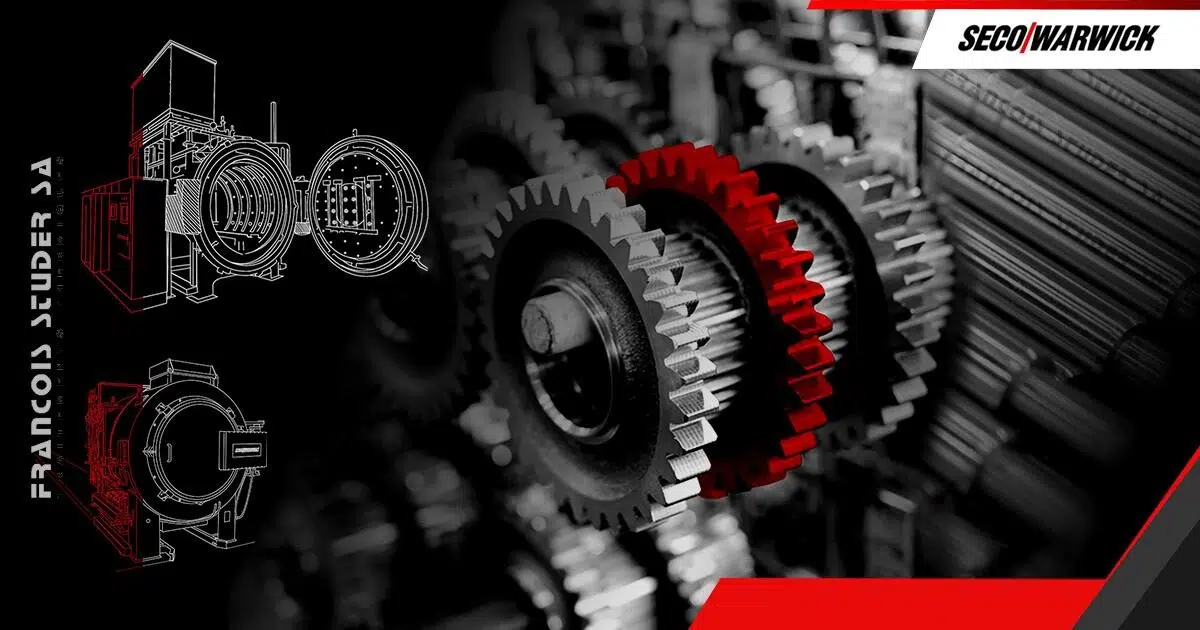
The vacuum furnace on order by the hardening plant enables efficient processes to be carried out at a very good vacuum level, in both medium and high ranges. The round heating chamber allows the placement of oversized loads. Combined with dedicated LPC, HPGQ technology and a high vacuum system, the furnace will fully meet the customer’s requirements for hardening and carburizing a wide range of various parts. The solution has a large number of options – it is equipped with FineCarb® vacuum carburizing, pre-nitriding for PreNitLPC® carburizing technology, and LPCN low-pressure carbonitriding.
The partial pressure system used helps to prevent evaporation and sublimation of alloying elements from the load surface during the vacuum heat treatment or vacuum brazing process. Partial pressure control is important when processing many materials to prevent the heating chamber evaporation and contamination. Isothermal quenching provides better control of the cooling process by automatically managing the load temperature and the gas blower motor control using a frequency converter. The carburizing and low-pressure carbonitriding LPCN options, which the furnace for François Studer SA is equipped with, enables precision processing to increase the steel surface hardness during the entire thermal process.
The second furnace on order is a horizontal retort furnace for gas nitriding using ZeroFlow technology and for high tempering with vacuum purging.”
Did you like this article? Click here to subscribe to The Monty.
View our recent magazines and podcasts by clicking the following link. https://themonty.com/magazine/
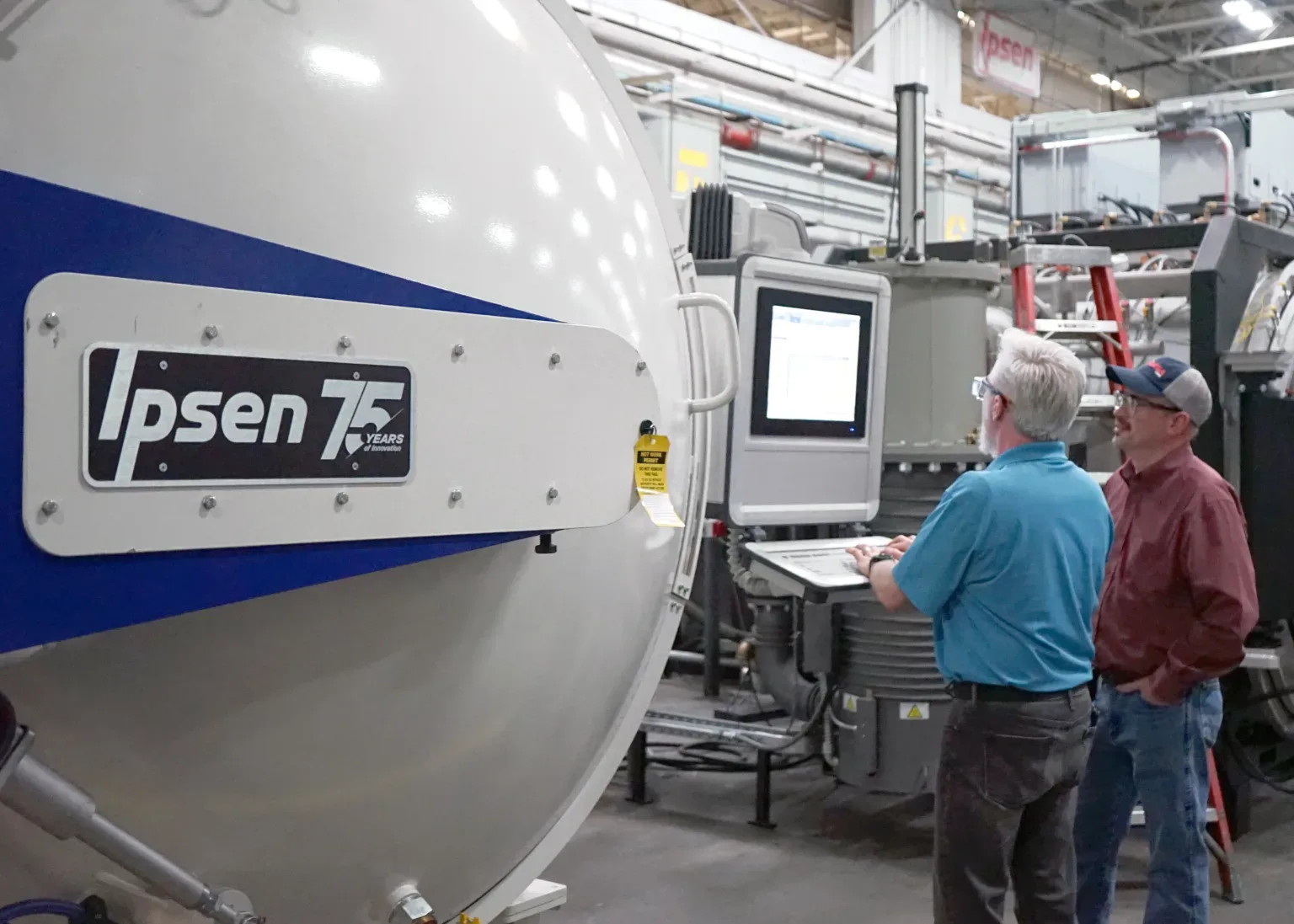
“Newington, CONNECTICUT (June 7, 2024) – Sousa Corp., based in Newington, CT, recently installed its second Ipsen Turbo²Treater vacuum furnace to its production line, expanding its capacity to meet a steady demand for metal treating services.
Andrew Sousa, Vice President of Sousa Corp., explained why the added capacity was so important: “We’ve had three large vacuum furnaces running twenty-four hours, seven days a week. We had the workload to support purchasing another furnace, and there are always new customers coming out of the woodwork, finding us by word of mouth. Demand remains strong.”
Sousa Corp. chose to add the second Ipsen Turbo²Treater to their line because of their confidence in and success with their first Turbo²Treater, purchased in 2016. The Ipsen Turbo²Treater provides users with a square hot zone design, reaching temperatures of up to 2,400 degrees Fahrenheit, handles a capacity of up to 1,800 pounds, and is designed for energy efficiency with uniform heating and cooling. Ipsen Turbo²Treater vacuum furnaces also provide users with high-pressure gas quenching up to 12 bar.
“Ipsen makes a really nice furnace. The Turbo²Treater does a lot of things really well. Ipsen’s support has been very good for us, and we like to have spare parts that are interchangeable between the first and second furnace,” Sousa explained. “Our operators didn’t have to learn the ins and outs of a completely new machine. When you start with something familiar, you’re ahead of the game when you already know how to run and maintain (the new furnace.)”
Sousa Corp. does heat treating for a variety of industries, including aerospace, medical, fasteners, defense, automotive, and machine parts. The Sousa Corp. is a third generation, family-owned business that traces its company’s history back to its predecessor Bennett Metal Treating Co that was incorporated in 1915.
For the full customer profile on Sousa Corp., visit Ipsen’s website at https://ipsenglobal.com/knowledge-center/customer-profile-the-sousa-corp/.”
Did you like this article? Click here to subscribe to The Monty.
View our recent magazines and podcasts by clicking the following link. https://themonty.com/magazine/

|
|

 “FEBRUARY 8, 2022; John Hubbard, Chairman of the Board of “Thermal Process Holdings” announces the recent acquisition of “Rockford Heat Treaters” of Rockford, Illinois, USA. With this acquisition the firm now has 6 commercial heat-treating facilities all located in the US Midwest. As is the case with all acquisitions made by “Thermal Process Holdings”, “Rockford Heat Treaters” will continue as an independent location continuing to build on their past successes. The two owners/operators of the firm, Tom and Ted Deutsch will be staying on in their current positions. This marks another step in “Thermal Process Holding’s” long stated goal of become one of the largest commercial heat treaters in the US through acquisitions.

Today we are speaking with Mr. Mark Heninger, an individual whose experience in the vacuum heat treating industry is almost unsurpassed. Mark lets start off with your background-how you came to work for Ipsen, your positions over the years and what your current position entails.
My Career Path:
1980: Graduated from Weber State University in Ogden, UT. Joined Lindberg, Chicago, IL, as an Application Engineer in their equipment department. My father, Thomas Heninger, served as VP & General Manager at the time, he worked there for over 40 years. I first met The Heat Treat Doctor Dan Herring while he managed the Lindberg Lab.
1990: Transitioned to Ipsen, working within their Engineered Components Group under Bob Mullins. Joined alongside Marty Benegalia, now a successful Texas-based sales representative. Had the opportunity to collaborate with industry veteran Bill St Thomas while based in Michigan.
1997: Returned to Ipsen’s Cherry Valley, IL, location as the Engineered Components Manager. Subsequently took over equipment sales from Tim Adams, reporting to President & CEO Mr. Mario Ciampini.
August 2024: Celebrating 34 years with Ipsen as Director of Equipment Sales. I’m grateful for the mentorship and support of Mario Ciampini, Geoffrey Somary and Patrick McKenna throughout my time here.
We hear a lot about additive manufacturing these days-are you seeing this as a large new potential market for Ipsen and if so what Ipsen products are specific to this industry?
Ipsen recognizes the significant growth potential within the metal Additive Manufacturing (AM) market. Our existing portfolio of vacuum furnace models can be well-suited for debinding and sintering, a crucial step in the metal AM process. Laser Powder bed fusion based printing which doesn’t require a debinding stage can be easily handled by standard vacuum furnaces.
However, we acknowledge the challenges associated with binder removal, particularly the large volumes and diverse materials involved. To address this, Ipsen offers a range of Debind and Sinter vacuum furnaces in various sizes specifically designed to optimize the debinding processes.
Along the same lines I have to assume that the aerospace industry remains one of Ipsen’s largest market segments. Are there any new products planned for this area?
Ipsen has enjoyed a strong partnership with the Aerospace industry since the Abar days of the 1960s, continuing through the Abar-Ipsen merger. Our continued ventures into vacuum compression brazing furnaces have further solidified our commitment to this critical sector.
While core aerospace processes may remain relatively unchanged, Ipsen’s furnace technology has continuously evolved to meet ever-increasing demands. This includes advancements in:
Temperature Uniformity: Our furnaces deliver tighter temperature control, ensuring consistent material properties throughout the process.
Precise Instrumentation: Sophisticated control systems offer unparalleled precision, enabling compliance with stringent aerospace manufacturing requirements.
By staying at the forefront of furnace technology, Ipsen empowers aerospace manufacturers to achieve the highest quality and performance in their products.
Are furnaces getting larger or smaller on average?
Yes! At Ipsen, we understand that no two customer requirements are exactly alike. That’s why we offer a wide range of customizable vacuum furnace solutions to perfectly match your specific needs.
We stock popular industry sizes (24″ x 24″ x 36″ and 36″ x 36″ x 48″) for quick turnaround times. But if you need a custom solution, Ipsen can still deliver the perfect vacuum furnace to meet your most demanding process requirements.
Our comprehensive portfolio encompasses a vast selection of horizontal furnace sizes, ranging from compact (12″ x 12″ x 24″) to large-scale units (72″ x 92″ x 156″). Additionally, we offer vertical furnace options up to 130″ in diameter.
Since you started in the industry have you seen a change in how furnaces are sold and marketed? The old adage says that “people buy from people” meaning that a personal relationship is very important in selling but is this still the case?
Early in my career, the mantra “no see ’em, no tell ’em, no sell ’em” perfectly captured the essence of industrial sales. Building strong, face-to-face relationships was paramount to success.
While relationships remain important, the rise of social media and a more dynamic workforce have permanently altered the game. Trade show attendance has steadily declined, reflecting a shift towards alternative information channels. Customers can now access a wealth of product details and technical specifications through virtual meetings and online resources.
Gone are the days of finalizing furnace orders at trade shows. Today’s industrial salesperson must embrace a digital-first approach, leveraging online tools and virtual communication platforms to build trust and effectively connect with customers.
Years ago, Ipsen introduced the “Titan” vacuum furnace which at the time was rather controversial due to the fact that it was regarded by some as a commodity in that it was a mass produced furnace. Certainly, there are variations between “Titans” but my understanding was that by standardizing on many of the design concepts significant cost savings were realized. Now all these years later I think most would agree that the “Titan” has been an unqualified success. How many have been sold and does the future continue to be bright for the product?
Launched in 2009, the Ipsen Titan has become a cornerstone of our platform product line. With over 400 units sold and counting, the Titan consistently outperforms expectations, solidifying its position as a leader in the vacuum furnace market.
We are committed to ongoing innovation, and the next generation Titan 3.0 is already in development. This commitment to advancement ensures our customers have access to the most advanced and reliable vacuum furnace technology available.
The Titan caters to a wide range of applications. It’s available in both 2-bar and 12-bar quench capabilities, offering flexibility for various process requirements. Additionally, the Titan can be configured for vacuum tempering, Debinding and Sintering, and even comes in a vertical configuration to maximize floor space efficiency.
The Titan’s success has garnered significant industry attention, with some competitors attempting to emulate its design philosophy. This is a testament to the impactful solutions the Titan delivers.
Recently I had a conversation with a European furnace builder who was adamant that many decisions in the European heat treatment industry are driven by CO2 emissions. His contention was that this issue is profoundly affecting the type of equipment that is being purchased. I was equally as adamant that while perhaps this is true in Europe it certainly is not true of the North American heat treat industry. What are your thoughts? How often do you see this as a consideration?
Europe has emerged as a front runner in driving CO2 emission reductions within the heat treatment industry. This focus on sustainability is reflected in the increasing frequency with which our larger, multi-equipment customers prioritize reduced carbon footprints in their inquiries. Our facility in Kleve, Germany has recently received an award for their ATLAS GREEN atmosphere furnace recognizing their efforts to reduce the CO2 footprint.
At Ipsen, we recognize the importance of environmental responsibility. We are actively taking steps to address this growing concern, not only by reviewing and optimizing our furnace designs for energy efficiency, but also by collaborating with our vendor base. We are exploring their product initiatives that contribute to a reduced carbon footprint throughout the entire equipment lifecycle.
By prioritizing eco-friendly solutions and fostering collaboration throughout the supply chain, Ipsen is committed to helping our customers achieve their sustainability goals and contribute to a cleaner future for the heat treatment industry.
I want to draw on your many years of experience for this final question; what is the number 1 change you have seen in vacuum furnace design over the years?
Among the exciting advancements in heat treatment technology, high-pressure gas quenching (HPGQ) stands out. The ability to achieve quench rates exceeding those possible with traditional methods, thanks to cooling motor horsepower now surpassing 900 HP, is truly remarkable.
This innovation directly addresses a growing need from our customers. They’re increasingly requesting larger furnaces capable of handling parts with very thick cross sections while achieving rapid quenching speeds similar to those demonstrated in successful tests like the GM die block project.
HPGQ’s ability to combine faster quenching with improved process control holds immense potential for various heat treatment applications. We’re committed to exploring this technology further and collaborating with our customers to unlock its full potential.
I’m incredibly grateful for the rewarding career I’ve had at Ipsen. Over the years, I’ve had the pleasure of collaborating with countless talented individuals. Today, I’d like to express my sincere appreciation to two colleagues who have significantly impacted my success: Craig Moller, our Chief Engineer, and Jim Grann, our Senior Technical Director.
Their unwavering support and expert counsel have been instrumental in my professional development. Their guidance has empowered me to excel in my role and consistently deliver exceptional results.
While I may be the one expressing gratitude, success at Ipsen is truly a team effort. I’m fortunate to be surrounded by such a knowledgeable and supportive group of colleagues.
Mark I appreciate your time today, thank you. Gord
Did you like this article? Click here to subscribe to The Monty.
View our recent magazines and podcasts by clicking the following link. https://themonty.com/magazine/
