“The Czech commercial heat treatment company CZECHmetal s.r.o. has selected SECO/WARWICK technology. The company has purchased a horizontal, two-chamber CaseMaster Evolution vacuum furnace equipped with an oil quenching system and an option for vacuum carburizing.
CZECHmetal is upgrading its Olomouc plant with a custom SECO/WARWICK vacuum furnace to boost production efficiency, precision, and capacity using advanced carburizing technologies.
Project key points: / SECO/WARWICK is installing a custom CaseMaster-D vacuum furnace at CZECHmetal. / The furnace features FineCarb, PreNitLPC, and LPCN technologies. / The system is custom-sized to fit existing plant infrastructure. / It offers improved efficiency, process repeatability, and faster quenching. / The deal highlights the rising demand for vacuum tech in Central Europe.
The system will be installed at the plant in Olomouc and will significantly increase the heat treater’s production capacity. The new furnace will replace an older unit, providing higher efficiency, cleaner processing, and greater repeatability of heat treatment parameters.
The contract with the Czech commercial heat treatment company confirms the growing importance of vacuum technologies in Central Europe.
„The Czech Republic is a very important market for vacuum technologies. We see increasing demand for modern carburizing and hardening processes, particularly in the machinery, automotive and tooling sectors. We are pleased that CZECHmetal is joining the group of our partners in the region. Geographic proximity, ease of communication, and fast service support foster long-term cooperation,” said Maciej Korecki, Vice President of the Vacuum Segment at SECO/WARWICK.
“The system supplied is a two chamber vacuum furnace (CMe-D) equipped with an oil quenching system and the advanced FineCarb vacuum carburizing technology, featuring a custom-designed heating chamber measuring 700 × 1200 × 700 mm (27.6″ × 47.2″ × 27.6″), tailored specifically to the customer’s requirements. As a result, the new furnace can be installed in place of the existing unit without modifying the current plant infrastructure.
The design is based on proven technology, comprising a heating chamber and a charge-loading/unloading vestibule with an oil quench tank. The system enables cooling of the charge in two media – dynamically in an inert gas (1.5 bar abs) above the oil surface, or by immersing the charge directly in the quench oil.”
Solar Atmospheres of San Diego, a leading provider of high-performance vacuum heat treating, is pleased to announce the appointment of Karla Clement as the company’s new Quality Manager.
Karla brings a wealth of experience and expertise to this crucial role. Her extensive background in quality management aligns perfectly with Solar Atmospheres’ commitment to excellence and customer satisfaction.
“We are thrilled to welcome Karla to the Solar Atmospheres team,” said Derek Dennis, President. “Her dedication to quality and proven track record will be invaluable as we continue to uphold our high standards.”
Karla will be instrumental in overseeing our quality management systems and ensuring compliance with industry standards. We are very excited to have her on board and look forward to her contributions.
For more information about vacuum heat treating services at Solar Atmospheres, visit solaratm.com, or contact Frank Trujillo at 866-559-5994 ext. 1333, or [email protected].
Tuesday June 30 “The Monty Heat Treat News” will publish our annual list of the 52 largest commercial heat treaters in North America for 2026, the only such list in the world. This year’s list will feature a number of changes as some companies expand, others contract which leads to come firms being removed from our list with others being added.
“Worldwide Heat Treat/Houston, Texas. “Worldwide Heat Treat” in Houston, Texas was founded in July of 2018 by Mr. Robert Gutierrez as a 6,000 square foot facility offering small batch atmosphere heat treating. After a tremendous growth spurt, only doable by a consistent volume of work from our loyal oil and gas customers, the company moved into their current location of 40,000 square feet under roof and added employees to bring our employee count to 32 presently. We now offer some of the largest vertical atmosphere / carburizing capabilities in the USA. We can accommodate up to 90.00″ diameter x 140.00″ long parts in our largest pit furnaces.
We can process up to 38′ long in our car bottom furnaces for various types of heat treat processing. Due to our growth, we have opened a second location, “Worldwide Bor-X” here in Houston this past year. We are currently offering gas nitriding and boronizing up to 72.00″ diameter x 95.00″ long at this current moment in our line of pit furnaces. We will be installing another 2 pit furnaces in the 3rd quarter of 2026 to add to our fleet. This location started off with just 1 employee last year and we are up to 10 employees at this time and we anticipate adding an additional 5 throughout this year. We anticipate opening up several more plants around the USA that offer these types of services. “
Earlier this week, Phoenix Metal Treating, located at W190 N11350 Carnegie Drive inGermantown, Wisconsin, officially closed down. This 40 year old family owned company operated several medium sized Beavermatic and Ipsen batch IQ furnaces and catered largely to the local automotive parts suppliers. Unfortunately their largest customer closed down and the remaining work was not enough to justify keeping the business going.
(Editor’s Note; In this press releaseMaciej Korecki, Vice President of the SECO/WARWICK Group’s Vacuum Segment states; “This order will support the production of components for gas turbines”. Recently “The Monty Heat Treat News” published an article entitled, “AI Data Centers Spiking New Vacuum Furnace Orders”which at least partially explains why demand is so strong for gas turbines).
“SECO/WARWICK will deliver an advanced single-chamber Vector vacuum furnace with gas quenching to one of the world’s most demanding markets—the Japanese high-tech sector. This is SECO/WARWICK’s first vacuum furnace order for this Partner.
The equipment will be delivered to a company specialized in the heat treatment of metals and the production of precision components for the energy, medical, automotive and machinery industries. The contract is being executed in cooperation with SECO/WARWICK’s Japanese vacuum segment trading partner.
The single-chamber Vector vacuum furnace is built on a horizontal structure and will feature a heating chamber with impressive working zone dimensions of 1016x1016x1524 mm (40″ x 40″ x 60″), allowing for the heat treatment of large and oversized components. The round heating chamber ensures excellent temperature distribution at ±5°C (±9°F). Additional heating elements in the doors and the rear wall further enhance temperature uniformity and reduce heating and soaking times.
The heart of the vacuum system is a powerful setup based on two mechanical pumps, a Roots pump, and a diffusion pump supported by a holding pump, enabling high operating vacuum and very clean heat treatment processes such as annealing, aging and brazing. The partial pressure system protects the batch surface from alloy element sublimation and minimizes the risk of contamination in the hot zone. The blower-based quenching system provides quenching pressure up to 6 bar abs., which is crucial for new types of blades and gas turbine components that require fast, controlled cooling while maintaining high material structure quality.
Japan: A Demanding Market; Entering the Japanese market with an advanced vacuum furnace is significant not only for business but also for branding.
“Japan is an extremely demanding market, very technologically mature and traditionally difficult for non-Japanese companies to enter. The fact that a renowned customer is investing in our solution confirms the highest quality of SECO/WARWICK technology. This order will support the production of components for gas turbines, which play a key role in improving energy efficiency and reducing CO2 emissions,” said Maciej Korecki, Vice President of the SECO/WARWICK Group’s Vacuum Segment.”
“AGF DEFCOM” is excited to announce the addition of a second Solar Atmospheres Mentor Pro furnace to our growing machine lineup. This investment reinforces our commitment to providing customers with exceptional quality, faster turnaround times, and reliable production capacity. The new furnace significantly increases our heat-treating capabilities by expanding available processing capacity and improving workflow efficiency across our operations. With two Mentor Pro furnaces now in service, AGF DEFCOM can better manage production demands, reduce scheduling bottlenecks, and maintain consistent delivery performance for our customers. Adding a second furnace also enhances overall productivity by allowing more jobs to be processed simultaneously. This increased flexibility helps shorten lead times, speed up turnaround times, and ensure we can continue meeting customer requirements without compromising quality. As our business continues to grow, strategic investments like this enable AGF DEFCOM to stay ahead of customer needs while supporting future expansion. We are proud to strengthen our capabilities and look forward to delivering even greater value through improved efficiency, capacity, and service.”
(About the author; Vanessa Pfeiffer is Director of Strategic Market Development for Aerospace & Defence at Bodycote. She is responsible for identifying and accelerating strategic growth opportunities across the aerospace and defence sector, working closely with customers, operations, and commercial teams to support long-term business development initiatives.
With more than 10 years of experience in strategic marketing, business development, and market leadership, Vanessa has worked across aerospace, power generation, and other highly regulated industrial markets. She holds an Executive MBA from HEC Lausanne and is passionate about helping advanced technologies and manufacturing capabilities create safer, more resilient, and more sustainable industries.)
From New Product Introduction to Full-Rate Production: Why Heat Treatment Partnerships Matter in Aerospace
Aerospace OEMs and Tier 1 suppliers are increasingly turning to specialist heat treatment and surface finishing partners for rapid and scalable support across the New Product Introduction lifecycle, says Vanessa Pfeiffer, Director Strategic Market Development Aerospace, Defence & Energy
From New Product Introduction to Full-Rate Production: Why Heat Treatment Partnerships Matter in Aerospace Aerospace OEMs and Tier 1 suppliers are increasingly turning to specialist heat treatment and surface finishing partners for rapid and scalable support across the New Product Introduction lifecycle, says Vanessa Pfeiffer, Director Strategic Market Development Aerospace, Defence & Energy
Aerospace manufacturers are under growing pressure to scale new platforms without compromising quality, capacity, traceability, cost control or delivery certainty. As programmes move from design and qualification into industrialisation and full-rate production, every process step must be capable of delivering repeatable performance at pace – especially where components are safety-critical, tightly specified and destined for long service lives.
Heat treatment and surface finishing remain critical to aerospace performance. As modern engines and structures operate at higher temperatures and stresses, thermal and metallurgical process history becomes more tightly coupled to design outcomes. With the right techniques and controls in place, demanding requirements for fatigue life, creep resistance and fracture toughness can be met consistently — not just in trials, but across repeatable production.
Head on landing airplane (Boeing 787)Aerospace technologies are ever-evolving, too. More autonomous platforms will increase the complexity of metallurgical processing. Further into the future, new flight options such as hydrogen propulsion and possibly even hypersonic flight will introduce a more fundamental shift through new materials, environments, and failure mechanisms.
That makes metallurgical processing far more than downstream production steps. For OEMs and Tier 1 suppliers, specialist metallurgical providers are increasingly acting as strategic partners for industrialization and supply chain resilience. They help de-risk the journey from New Product Introduction (NPI) to series production, maintain continuity of supply, and scale production globally.
Increasingly, OEMs and Tier 1 suppliers are looking beyond technical processing capability alone, prioritising industrial partners with globally qualified production networks, multi-process capability, scalable capacity and operational redundancy to support industrial ramp-up and long-term programme resilience.
Why heat treatment and surface engineering matter
So, let’s look at the key stakeholders in the NPI programme for an aerospace component requiring heat treatment and/or surface coatings. There are three primary organisations involved. These ecosystems are led by original equipment manufacturers (OEMs) like Airbus and Boeing, who are responsible for the overall aerospace platform, defining requirements, and ensuring specifications are met. Then comes the component maker. Typically, these are Tier 1 or 2 supply chain partners that help design and build components for major systems, such as engines, landing gear, structures, and actuation and control.
Thirdly, there is the heat treatment and metallurgical service supplier. These companies often provide a portfolio of services. Heat treatment technologies might include case hardening, tempering, solution and ageing treatments, annealing, and normalising to help ensure component strength, hardness, toughness, ductility, fatigue performance and wear resistance, while preserving dimensional stability. These heat treatment processes are often applied to applications such as gear shafts and actuator shafts/rods.
Surface coatings represent another set of processes that prolong component life and protect them from environmental factors such as corrosion and abrasion. These might include high-velocity oxygen-fuel and plasma spray processes, and organic, ceramic, and polymer coatings applied to parts such as combustion liners and transitions, compressor blades and landing gear parts.
Meanwhile, some heat treatment and metallurgical process suppliers, such as Bodycote, also provide specialist services, like Hot Isostatic Pressing, which uses high heat and pressure to transform metal into a 100% dense solid. This technique is critical for high-integrity parts in demanding aerospace applications such as turbine blades and vanes, brackets and mounts and landing-gear interface components.
Design and process definition
On NPI programmes, in particular, OEMs, component manufacturers, and specialist heat treatment and surface finishers form close tri-party relationships, often as early as possible in the design cycle. These early-stage interactions can add significant value across the aerospace ecosystem – from design through to delivery and MRO – and are particularly important for long-lifetime platforms that can last decades.
So, what do those NPI relationships look like in the real world? Often, they begin at the design and process definition stage. Here, engineers, methods teams, and quality specialists from all three organisations get together to define the materials, processes, and testing requirements for a specific NPI component. Key programme outcomes must be defined, including performance requirements, preliminary component designs, initial specifications, and the identification of critical materials and properties.
In today’s more integrated supply chains, heat treaters and surface finishers advise on specifications and optimise processes for efficient industrial production. This technical consultancy includes advising on part design for manufacturability. Consequently, these organizations are often locked in early on multi-year aerospace platforms, delivering value from end to end.
Feasibility and qualification
The next stage in NPI development is feasibility and qualification. Here, input from specialist metallurgical providers helps streamline processes, often through the elimination of certain machining or grinding workflows. At this point, with the specifications and initial designs in place, component suppliers such as machining companies, forging houses, and casting shops translate them into actual manufacturing workflows.
Again, metallurgical process providers play an important role, helping validate feasibility, interpret requirements, and ensure parts are produced safely and consistently. With comprehensive material and process testing capabilities, specialist providers can collaborate with component suppliers to develop specific heat treatment cycles, temperature profiles, and surface hardness targets, while running Design of Experiments to optimise processes.
Prototyping and early trials establish technical trust and determine who is positioned to support the programme during industrialization. Structured trials and process validations, often including microstructure analysis, provide the component supplier with confidence for consistent production capability and adherence to quality system compliance.
Transition to series production
As the part moves into development, the NPI phase marks a transition from engineering and process specialists to production teams, with the focus shifting to operational performance. Metallurgical process specialists help demonstrate process repeatability and quality control, while developing predictable cycle times and scheduling for reliable execution that aligns with customer sales, inventory, and operations planning (SIOP).
The expectation here is for the specialist provider to demonstrate proven expertise in NPI-to-series handover methodologies, resulting in consistent lead times, accurate yield deliverables, and rigorous quality compliance, thereby eliminating the risk of bottlenecks for the component maker. Proactive communication ensures transparency and visibility into project progress.
Meanwhile, effective, flexible, and scalable production strategies are put in place to support strong capacity planning for demand fluctuations. Suppliers must be equipped to manage “short cycle” customer requirements when necessary, often going over and above contractual expectations. And stringent traceability and monitoring need to be put in place for optimized performance.
Long-term production
Long-term production comes next. Successful full series production depends on how well metallurgical process providers can integrate with customers’ operational rhythms. Large suppliers rely on structured SIOP systems and expect partners to meet forecast and capacity requirements. Aerospace programmes can run for many years, and OEMs seek long-term agreements with the supply chain – often through dual-supplier strategies – and based on investment commitments that deliver continuous improvement and capacity growth.
Heat treatment and surface finishers must demonstrate access to worldwide production networks, while maintaining backup and mitigation strategies to enhance supply chain resilience and address single-source concerns. A proven willingness to invest in capital equipment and automation to reduce costs and enhance efficiency can provide a sustainable long-term advantage. These providers must be resourced to manage any operational issues, while providing flexibility for customers’ internal versus external processing mix.
These capabilities are crucial to long-term supply chain resilience. Geographic flexibility and dual-source strategies reduce operational risk, allowing work to be transferred between sites when required. This helps maintain continuity, even during the most severe demand spikes. Metallurgical partners are therefore not only evaluated on technical capability, but also scalability, multi-site redundancy and long-term programme stability.
The power of partnership
With decades of experience in the aerospace sector, Bodycote can support all stages of the NPI lifecycle and enjoys preferred status with many major aerospace companies, including Airbus, BAE Systems, Boeing, Honeywell, Pratt & Whitney, and Rolls-Royce.
Knowledgeable and experienced teams of engineers, scientists and technicians can provide technical support at the design, testing and qualification stages, with services including design-to-cost, spec interpretation, engineering feasibility, test optimization and NPI readiness.
This is backed by a global network of aerospace-approved facilities that supports flexible capacity allocation, multi-site redundancy and scalable production across aerospace programmes. This operational flexibility helps customers maintain continuity across fluctuating production schedules and long programme lifecycles.
Ultimately, aerospace OEMs and Tier 1 suppliers are increasingly seeking strategic manufacturing partners like Bodycote to help next-generation platforms reach for the sky.
(Texas Heat Treating is a family owned commercial heat treater which will be on “The Monty’s” list of the “52 Largest North American Commercial Heat Treaters” which will be published the week of June 29th)
“June 2026; Texas Heat Treating is pleased to announce that the company is now registered with the U.S. Department of State’s Directorate of Defense Trade Controls (DDTC) under the International Traffic in Arms Regulations (ITAR).
This registration authorizes Texas Heat Treating to receive, handle, and process defense-related articles, technical data, and services that are subject to ITAR requirements. Our ITAR registration further demonstrates our commitment to supporting customers in the aerospace, defense, and other regulated industries while maintaining strict compliance with applicable U.S. export control regulations.”
Since we are in the midst of the world’s largest sporting event of 2026 “FIFA World Cup 2026™,please allow us to use a “sporting” term for the title of this press release.
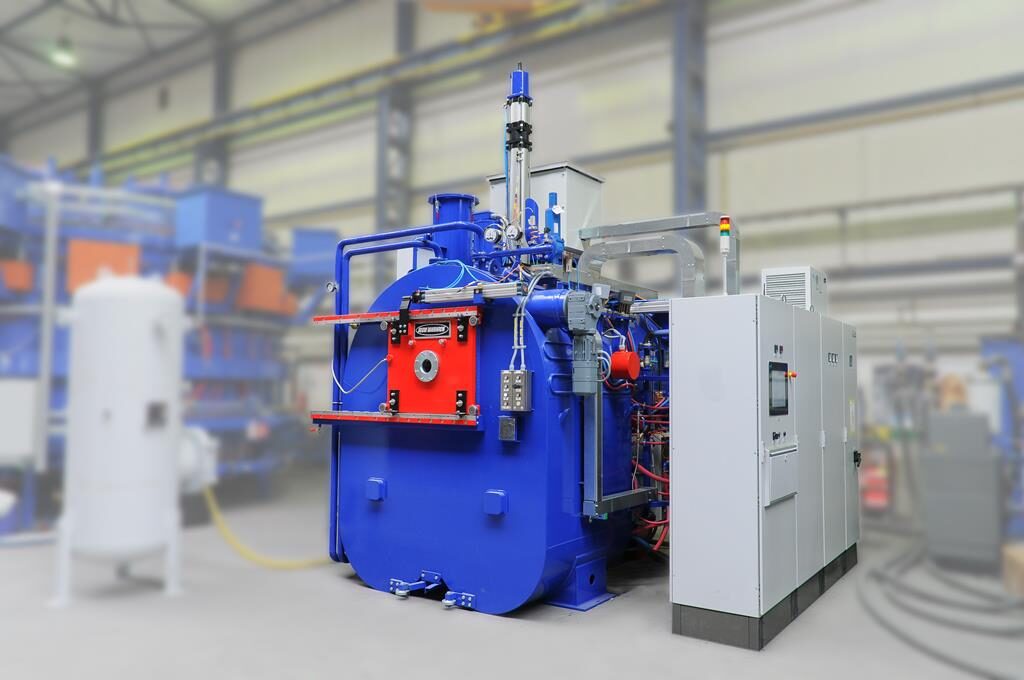
“McLaughlin Furnace Group” of Avilla, Indiana, USA is pleased to announce that in the past few months they have seen an unprecedented surge in interest for nitriding systems which has resulted in 3 orders (a hat trick in soccer and hockey parlance means 3 goals-hence our use of the term) in just the past few months. The orders come from two different in house heat treaters and while not all of the systems are exactly the same, each system is very similar. As an example one of the gas fired systems has working dimensions of 36″ X 72″ with a weight capacity of 5,000 pounds, an operating temperature of 850F-1250F, +-15F with an Inconel 600 Retort.
“John Hillenbrand”, Sales Manager for “McLaughlin” had these comments;
“We have seen a significant increase in RFQs for nitriding over the past few months which has led to 3 new pit nitrider orders. The nitriding market is booming and needs new capacity now. We pride ourselves on being able to provide the highest quality furnaces in a fraction of the time. Ultimately, this was key in being awarded these new nitriding furnaces. As an example, while our competition was quoting 34 weeks, we were able to offer a delivery of 16-18 weeks-a delivery which we are on track to meet. “
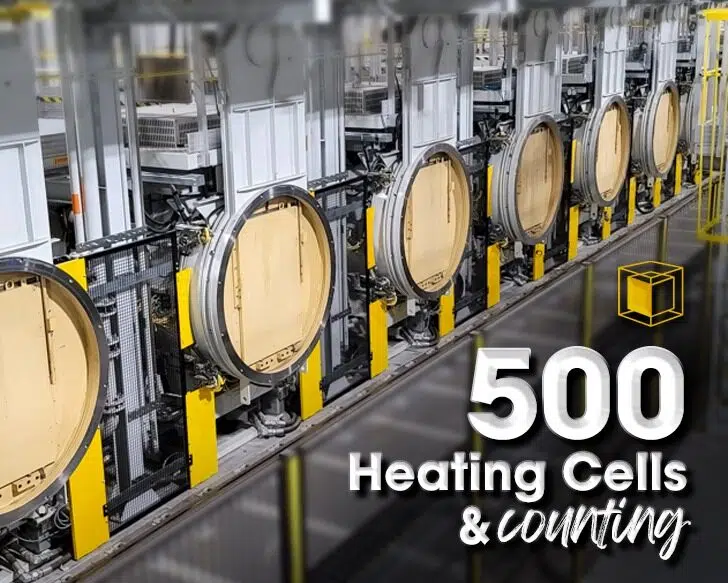
Pleasant Prairie, WI – June 22, 2026 – Just over a year after celebrating a long-standing automotive customer’s achievement of processing their 1,000,000th load through their ECM vacuum furnace systems, ECM has achieved another major accomplishment – the commissioning of the 500th heating cell in North America (Canada, USA & Mexico).
These furnaces range from single-cell to large-scale multi-cell installations with multi-process capabilities, such as: LPC, FNC, nitriding, brazing, sintering, debinding, degassing, high pressure gas and oil quenching, and more. Over the past five years, many of these installations have incorporated ECM Robotics for material handling and integrated pre-/post-processing equipment to create fully automated, all-inclusive manufacturing solutions. This milestone reflects the continued confidence that commercial and captive heat treaters place in ECM technology, service, and expertise. ECM remains committed to delivering advanced furnace solutions and services, and we look forward to supporting the North American heat treat industry with the next 500 heating cells & beyond.
About ECM Technologies. ECM Technologies is an innovative low pressure vacuum furnace manufacturer with headquarters in Grenoble, France. With subsidiaries and ventures around the world, including ECM USA located in Pleasant Prairie, Wisconsin USA. ECM’s global presence is well known in the automotive, aerospace, nuclear, energy, electronic, induction and 3D additive industries. With such versatile product lines and service capabilities, ECM is the ideal furnace system supplier for heat treatment processes ranging from rapid thermal processing (RTP) to low pressure vacuum carburizing (LPC). Our service capabilities include advanced automation, robotics, after sales, spare parts, on-site training and more.










 Since we are in the midst of the world’s largest sporting event of 2026 “FIFA World Cup 2026™, please allow us to use a “sporting” term for the title of this press release.