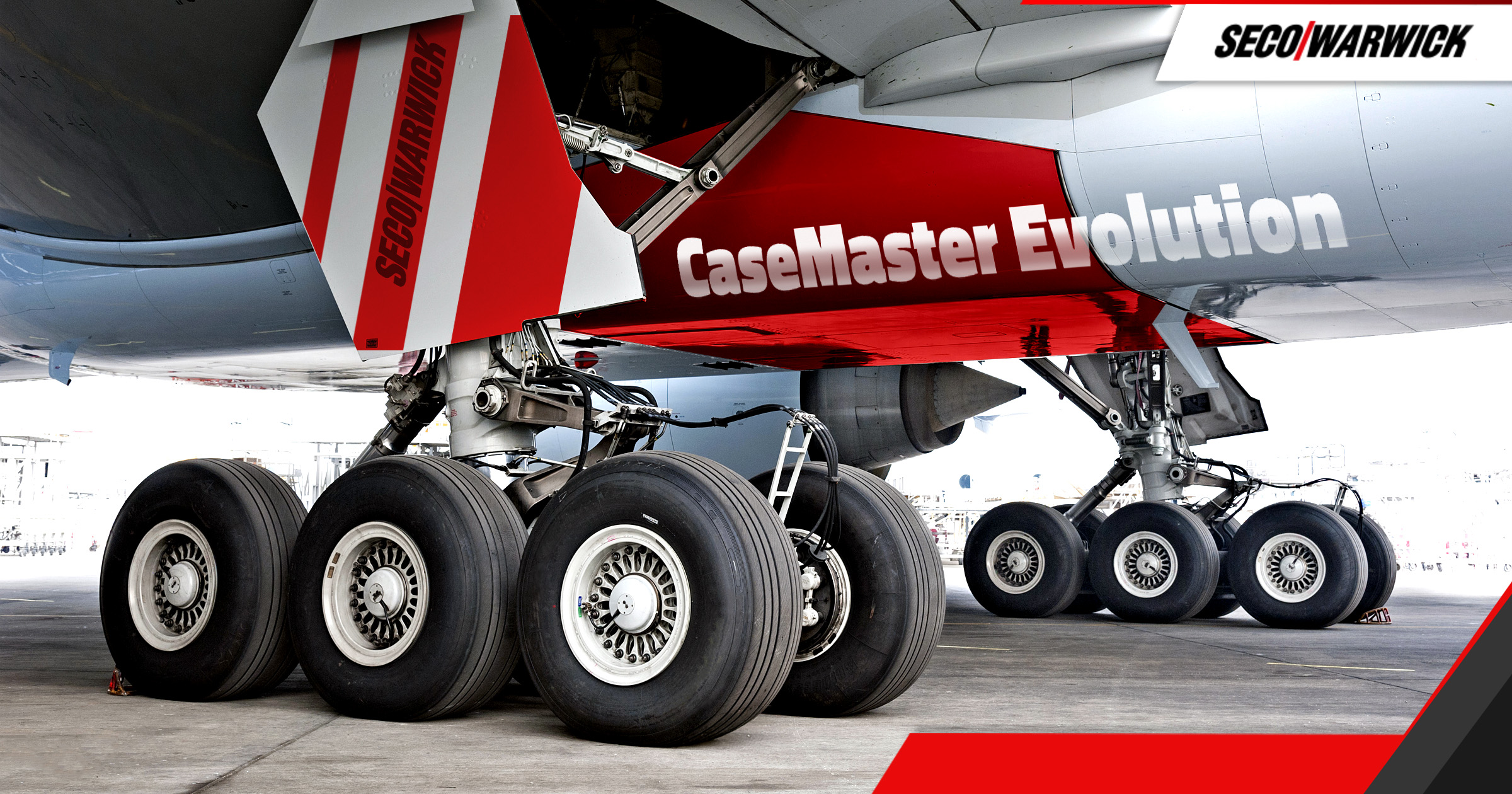
Aerospace Landing Gear Supplier Adds More Heat Treating Capacity From SECO/WARWICK
"Poland continues to strengthen its position as one of Europe's key aviation production hubs. One of the pillars of this position is advanced heat treatment technologies, such as SECO/WARWICK solutions used by global component manufacturers. The latest example is the signed contract for the supply of a horizontal CaseMaster Evolution dual chamber vacuum furnace with oil quenching for the aerospace sector.
The new system will increase the heat treatment capacity of the Polish plant for aircraft landing gear components manufactured for the world's largest civil and military aircraft producers. The CaseMaster Evolution furnace on order is the largest standard dual chamber oil quenching unit in the SECO/WARWICK portfolio. It combines a heating chamber with a loading/unloading vestibule equipped with a quench tank enabling cooling in either an inert gas or oil, depending on the requirements of a given part.
 "This contract clearly shows how far Poland has come in the global aviation sector. From a supplier of simple components, we have become a significant producer of advanced landing gear and airframe structures, and our vacuum furnaces operate in facilities that manufacture parts for aircraft flying on every continent," says Maciej Korecki, Vice President of the Vacuum Segment at SECO/WARWICK.
"CaseMaster Evolution is a design that combines a large working space, reliability and high energy efficiency, which today is just as important as the metallurgical parameters themselves," he adds.
The furnace enables the heat treatment of large dimension landing gear components while maintaining excellent temperature uniformity of the load. Graphite insulation and heating elements ensure stable operation in demanding serial production conditions, and the heating system provides fast, uniform heating across a wide temperature range, shortening the total cycle time. High efficiency oil circulation ensures excellent load penetration and fast, uniform cooling, both of which are crucial for the fatigue strength of critical components."
A key distinguishing feature of this design is the ability to cool in inert gas inside the quench vestibule above the oil level, at pressures up to approx. 1.5 bar absolute, with forced gas circulation via a fan in the chamber ceiling. This allows the cooling path to be adjusted to the geometry and requirements of a given part — from classic oil quenching to combined sequences that minimize distortion while maintaining the required mechanical properties. A dew point sensor at the inlet of process gases eliminates the risk of moisture condensation and unwanted oxidation, while convection heating significantly improves efficiency during the heating phase.
"This Partner knows SECO/WARWICK solutions very well and has its own operational experience with CMe vacuum furnaces. On one hand, this facilitates technical discussions because we speak the same process language; on the other hand, it sets the bar very high, as each new investment must genuinely increase production quality, efficiency and production economics. The new unit addresses a specific operational challenge - the growing number of landing gear components that require heat treatment, with very high process repeatability. The additional furnace will increase the capacity of the existing hardening department, allow better workload distribution between lines, and create a safe buffer of production capabilities for new programs or peak order periods," says Jędrzej Malinowski, Sales Manager at SECO/WARWICK.